The One Mistake That Can Shorten Your Georgia Muscadine Harvest
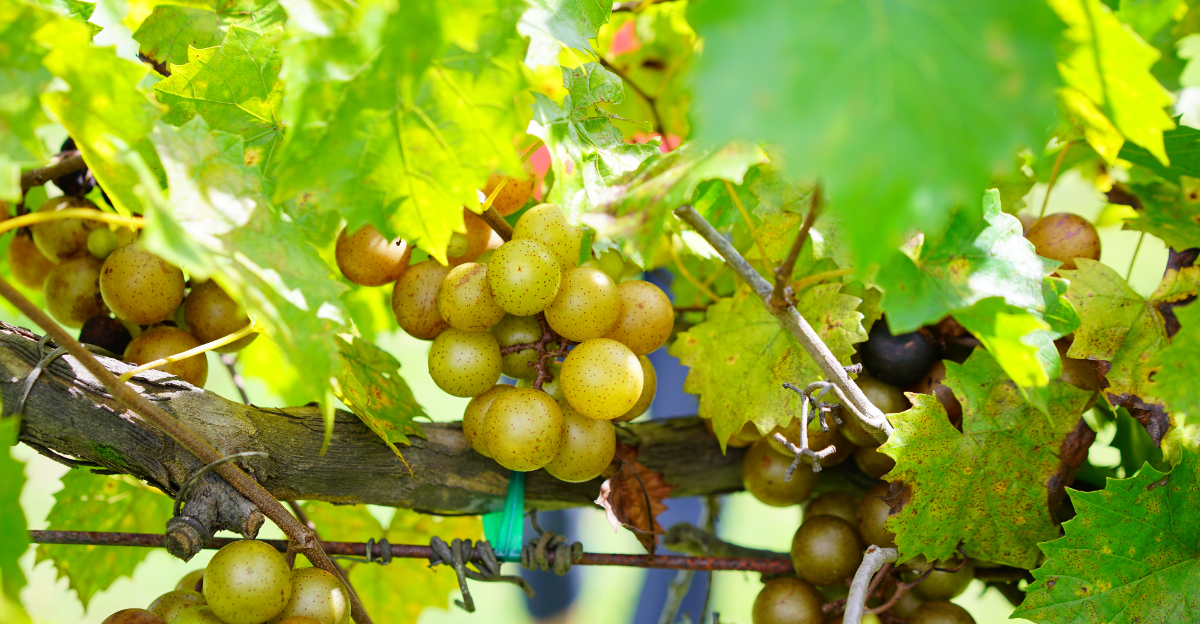
Muscadine vines can stay loaded with fruit for weeks when everything goes right. One simple mistake can quietly bring that harvest to an early finish without many people noticing.
The vines often look perfectly healthy while production begins slowing down. That is why the real cause is so easy to miss.
Harvest season is about more than picking grapes as they ripen. The way you handle the vines during this time matters more than most people expect.
Many muscadine growers in Georgia unknowingly make the same mistake every year. A small change in timing can keep the vines producing much longer.
Do not assume the harvest is ending on its own.
The right approach can help your vines keep producing instead of slowing down sooner than they should.
1. Pruning Fruiting Vines During Harvest Reduces Later Pickings
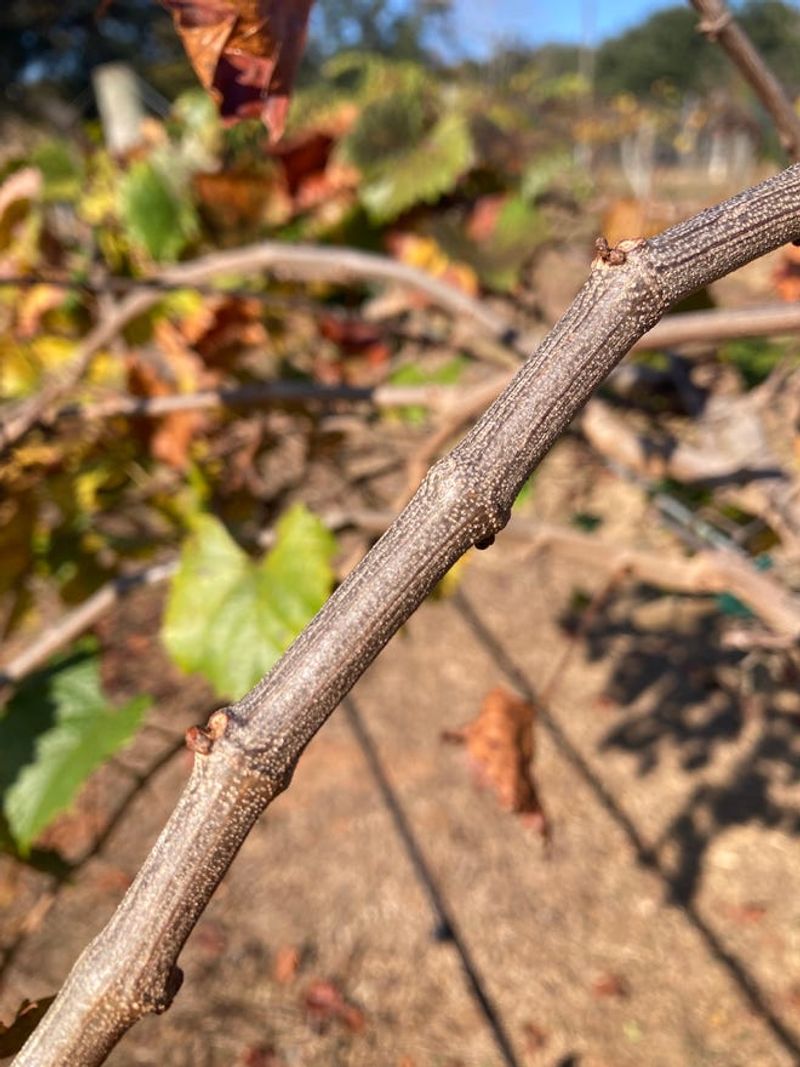
Cutting back a vine that is still producing fruit is one of the fastest ways to shrink your harvest window. Muscadine vines ripen in waves, not all at once.
When you prune active canes during picking season, you remove the growth that is still feeding developing clusters.
Grapes need a connected system of leaves, canes, and roots working together to push sugar into each berry. Interrupt that system mid-season, and the remaining clusters may ripen unevenly or drop before they reach peak sweetness.
Muscadines in the Southeast are known for producing over several weeks if the vines stay healthy and undisturbed. Pruning during that window shortens the production cycle and puts stress on a plant that is already working hard in the summer heat.
Growers sometimes confuse routine cleanup with necessary pruning. Removing a few stray shoots is not the same as cutting back canes that carry fruit.
Knowing the difference matters a lot when your goal is a longer, heavier harvest.
Save major pruning for dormancy. Let the vine finish what it started.
Your patience during harvest season tends to pay off with more fruit in the bucket by the end of the picking cycle.
2. Remaining Clusters Still Need Healthy Leaves
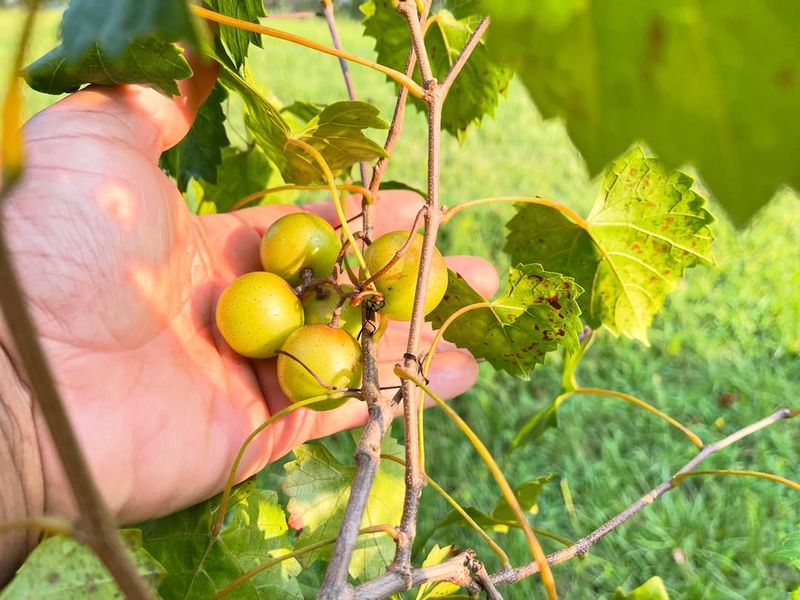
Leaves are not just background scenery on a muscadine vine. Every leaf is a solar panel pulling energy from sunlight and sending it directly into the fruit.
Strip too many leaves during harvest season and you cut off the fuel supply the clusters depend on.
Muscadine grapes are still actively ripening even after the first round of picking begins. Clusters that look almost ready need those surrounding leaves to keep doing their job.
Removing foliage too early can slow ripening and reduce the final sugar content of the fruit.
Leaf removal is sometimes recommended for airflow and disease prevention, but timing matters. During active harvest, the priority shifts toward supporting fruit development rather than vine shaping.
Aggressive defoliation mid-season often does more harm than good.
Healthy leaves also help protect clusters from sunscald. In the intense late-summer heat common across Georgia, exposed fruit can suffer surface damage that affects flavor and shelf life.
Keep the canopy reasonably intact while picking is still underway. Light thinning to improve airflow around problem areas is fine, but pulling leaves away from clusters that are still sizing up works against the vine’s natural process.
Your Georgia Garden Changes Every Week. Your Plan Should Too.
Gardening in Georgia changes quickly throughout the season. Every Friday you’ll receive a simple weekly plan showing exactly what to plant, prune, fertilize, harvest, and protect so you never miss the right timing.
Let the foliage do its job through the end of the harvest season.
3. Remove Only Broken Or Damaged Growth
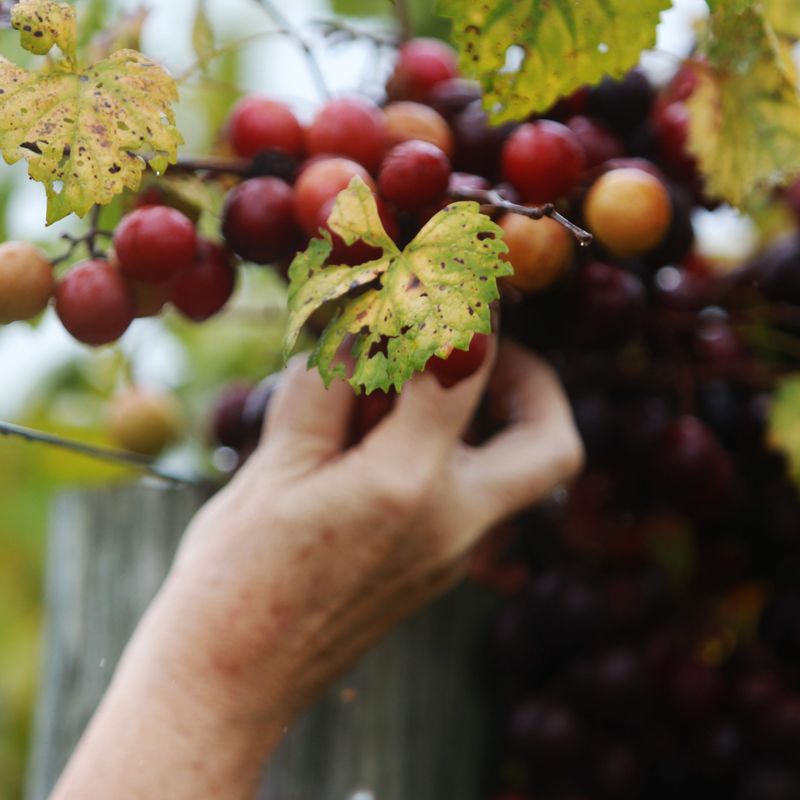
Not all pruning is harmful during harvest season. Broken canes, split wood, and growth that is visibly diseased or damaged should come off right away.
Leaving that material on the vine creates entry points for fungal problems and wastes the plant’s energy.
The key is being selective. Target only what is clearly compromised.
A cane that snapped in a storm or a shoot that shows signs of mildew does not need to stay on the vine. Removing it promptly can actually protect the healthy growth nearby.
Muscadine vines grown in humid climates are prone to certain fungal issues, especially late in the season when moisture levels stay high. Damaged tissue tends to attract problems faster than healthy wood does.
Quick removal of broken growth can reduce the spread of those issues before they affect your fruit.
Use clean, sharp tools when making any cut. Dull blades tear tissue instead of cutting cleanly, and that rough wound takes longer to callous over.
A clean cut heals faster and leaves less opportunity for infection to set in.
Selective removal of broken or damaged material is smart maintenance, not aggressive pruning. Done carefully, it actually supports vine health during the harvest period without disrupting the production cycle you worked hard to build all season.
4. Even Moisture Helps Fruit Ripen Evenly
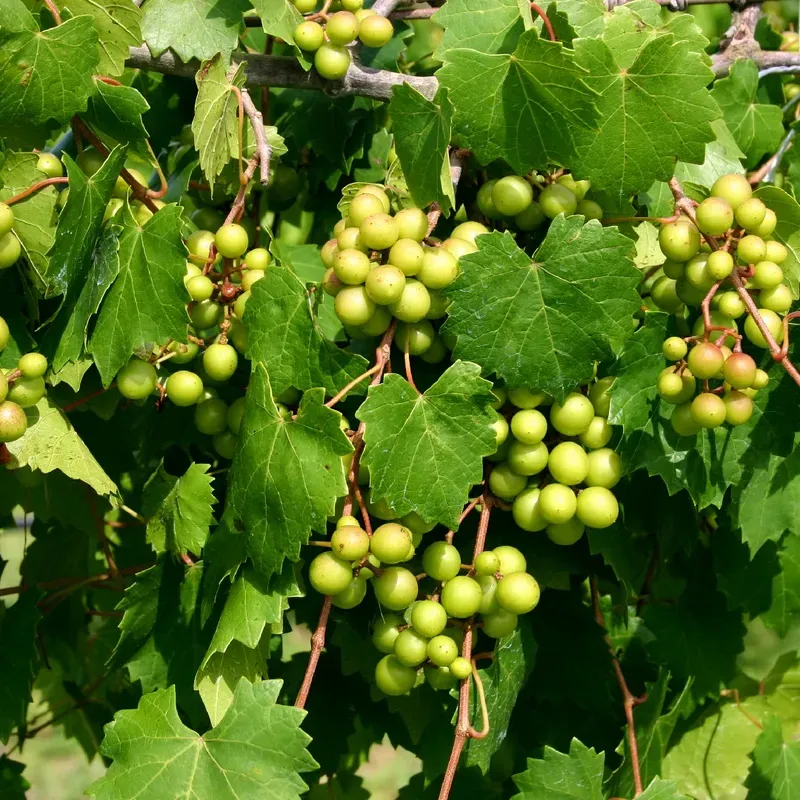
Watering habits during harvest season have a direct impact on fruit quality. Muscadines that go through cycles of drought and heavy watering tend to produce fruit that cracks, splits, or ripens unevenly across the cluster.
Consistent soil moisture keeps the ripening process smooth.
Uneven watering causes the vine to take up water too quickly after a dry spell. Berries that are nearly ripe can swell faster than the skin can handle, leading to splitting.
Split fruit attracts insects and mold almost immediately, which shortens your picking window.
Drip irrigation or slow, deep watering at the root zone works better than overhead sprinklers for muscadines. Wet foliage during warm, humid weather increases the risk of fungal issues, especially later in the season when nights start cooling off slightly.
Mulching around the base of the vine helps retain soil moisture between watering sessions. A two-to-three inch layer of wood chips or straw can reduce the swings in soil moisture that lead to fruit cracking and uneven ripening.
Watch the forecast and adjust your watering schedule accordingly. Heavy rain followed by dry weeks is common in the Southeast.
5. Healthy Canes Support Next Year’s Crop
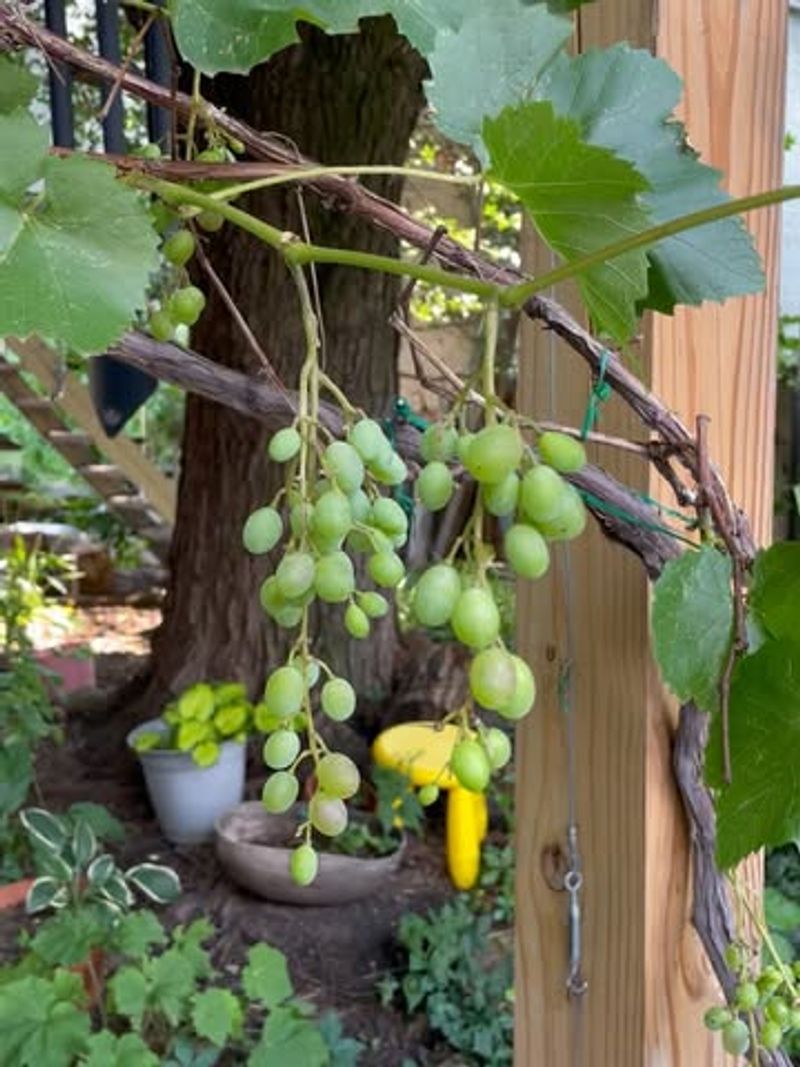
What you do to your vines during this season sets up what grows next year. Muscadines produce fruit on one-year-old wood, which means the canes growing right now are what will carry next season’s crop.
Damaging or removing too many of them mid-harvest creates a real production gap later.
Strong, healthy canes develop through the growing season. By the time harvest starts, those canes are already storing carbohydrates that will fuel spring growth.
Stressing the vine during this period by heavy pruning or root disturbance can reduce those reserves before the plant even goes dormant.
Muscadine growers who focus only on the current harvest sometimes overlook the vine’s longer cycle. A plant that gets pushed too hard in August and September often starts the following spring with less vigor.
Lower vigor typically means fewer flowers and smaller clusters at the next harvest.
Protect your canes during harvest by being careful with ladders, picking equipment, and foot traffic around the vine.
Mechanical damage to canes during picking is more common than most growers realize, and it adds up over a full season of multiple pickings.
A vine treated well during harvest tends to come back stronger.
6. Harvest Every Few Days As Grapes Ripen
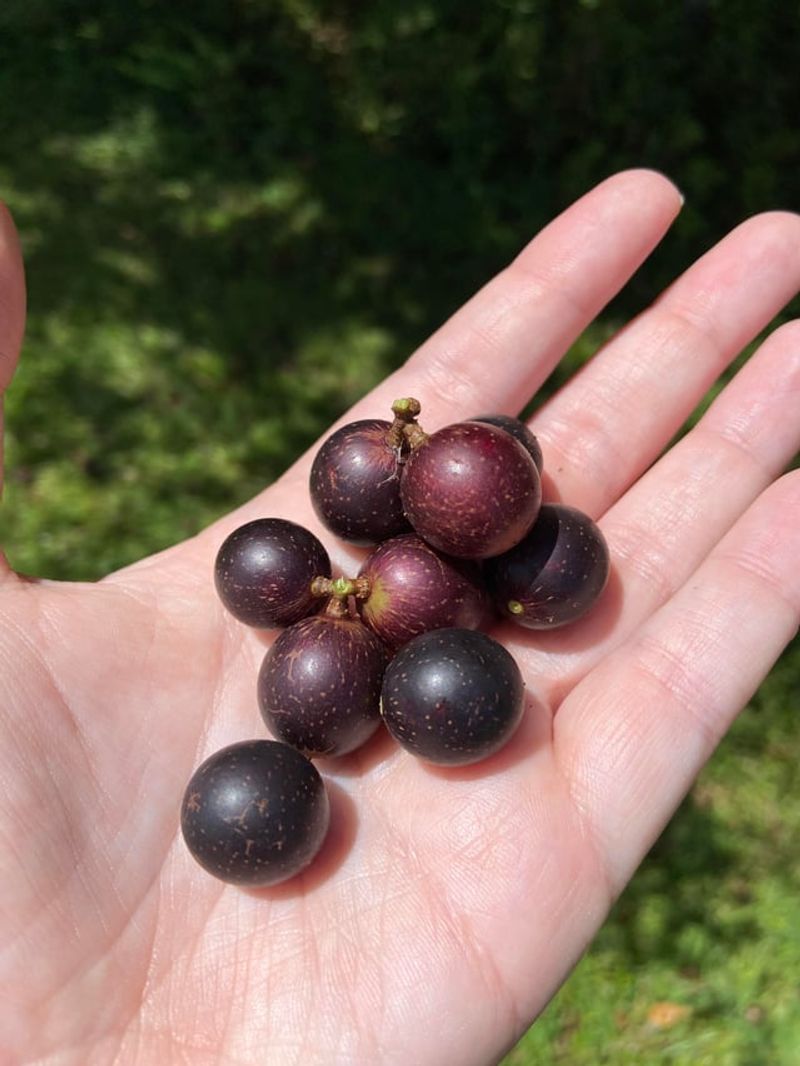
Muscadines do not ripen all at once, and waiting for every berry to be ready before picking is a mistake that costs you fruit. Ripe muscadines that stay on the vine too long will drop on their own, often before you get back to them.
Picking every few days keeps ahead of that natural drop.
A regular picking schedule also signals to the vine that fruit removal is happening. Clusters that get picked on time tend to hold the remaining unripe berries in better condition than clusters left hanging past their peak.
Checking the vine every two to three days during peak season is a practical habit that pays off.
Muscadines have a natural tendency to ripen from the outside of the cluster inward. Picking individual ripe berries while leaving others to continue developing is normal and expected.
Pulling an entire cluster before all berries are ready wastes fruit that would have been worth picking a few days later.
Overripe muscadines also attract yellow jackets and other insects quickly. A vine covered in soft, overripe fruit becomes harder to work around safely and can spread fermentation odors that draw more pests to the area.
Building a consistent harvest schedule takes a little extra effort, but it stretches the picking season and reduces waste.
7. Wait Until Dormancy For Major Pruning
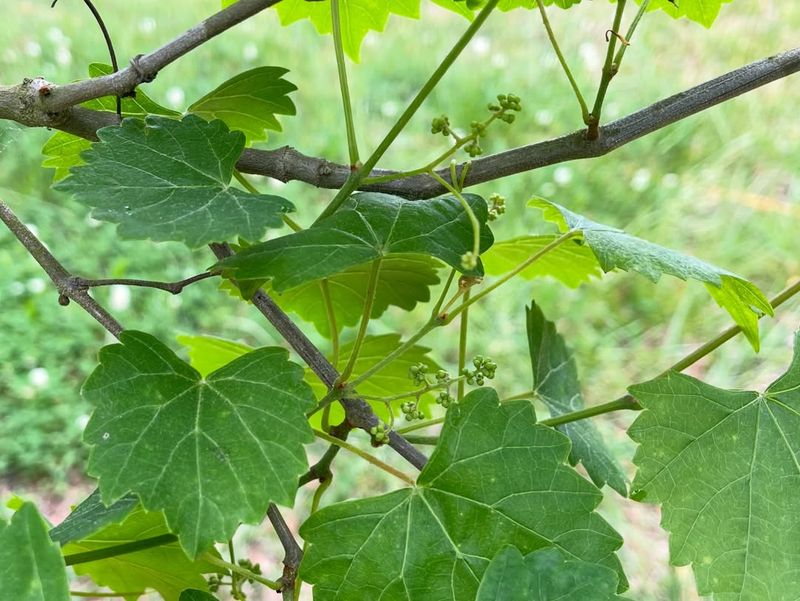
Major pruning belongs in late winter, not during harvest season. Muscadine vines go dormant after the leaves drop, usually between December and early February depending on local conditions.
That dormant window is when the vine can handle significant cutting without disrupting active growth or fruit production.
Pruning during dormancy reduces the risk of introducing disease through fresh cuts. With the vine at rest, wounds callous over more slowly but also face less biological activity that could allow fungal or bacterial problems to take hold quickly.
Dormant pruning also gives you a clear view of the vine’s structure. Without leaves blocking your sight lines, it is much easier to identify which canes to keep and which to remove.
Selecting the best wood for next season’s production is a more accurate process when you can see the full framework clearly.
Muscadines respond well to annual dormant pruning when it is done with a clear plan. Leaving too much wood leads to overcrowded growth and reduced air circulation.
Removing too much can reduce the fruiting potential for the following year. Finding the right balance takes practice but gets easier with experience.
Waiting for dormancy protects both current production and future yield. Resist the urge to reshape the vine in late summer or fall.