The One Thing Ohio Gardeners Must Do To Roses Before The First Hard Frost

Ohio roses can look healthy right up until one cold night changes the stakes. By late fall, the flowers may be gone, the leaves may look tired, and the shrub can seem ready to fend for itself.
That is exactly when one task matters most. A hard frost does more than end the season.
It tests how well your roses can handle the months ahead, especially after Ohio weather swings from mild afternoons to sudden freezes.
The right move helps protect the part of the plant that must carry next year’s growth, while the wrong move can leave it far more exposed than it looks.
You do not need a long winter checklist or a shed full of supplies. You need the right moment and one simple preparation before temperatures drop for good.
Skip it, and spring may reveal the mistake long after you had a chance to correct it.
1. Give Roses A Deep Drink Before Freeze-Up
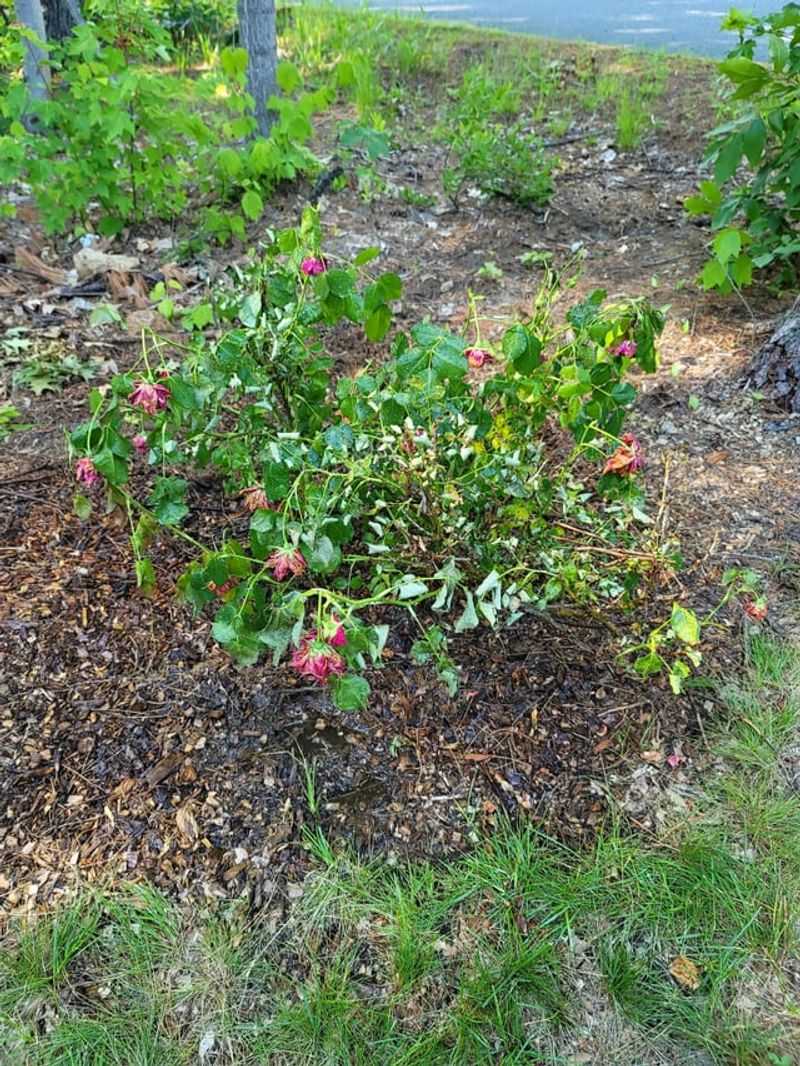
Healthy roots heading into winter start with one straightforward action: making sure the soil around your rose bushes holds enough moisture before the ground locks up. Ohio State University Extension guidance supports watering roses as needed until the ground freezes, rather than stopping at the first sign of cold weather.
The goal is moist soil in the root zone, not soggy ground that stays wet for days on end.
A thorough, slow watering moves moisture deeper into the soil where roots actually live. Lightly wetting the surface a little at a time does not reach those deeper layers as effectively.
Letting water soak in gradually gives the root zone a much better chance of holding useful moisture through the season.
Recent rainfall, your soil type, how well your yard drains, and the age of your plants all help guide whether supplemental watering is needed. Sandy soils dry out faster than clay-heavy ground, so conditions vary from yard to yard.
Check the soil a few inches down before watering. If it feels dry at that depth, a good deep watering is worth doing before colder temperatures settle in for good.
2. Dry Roots Make Winter Much Harder
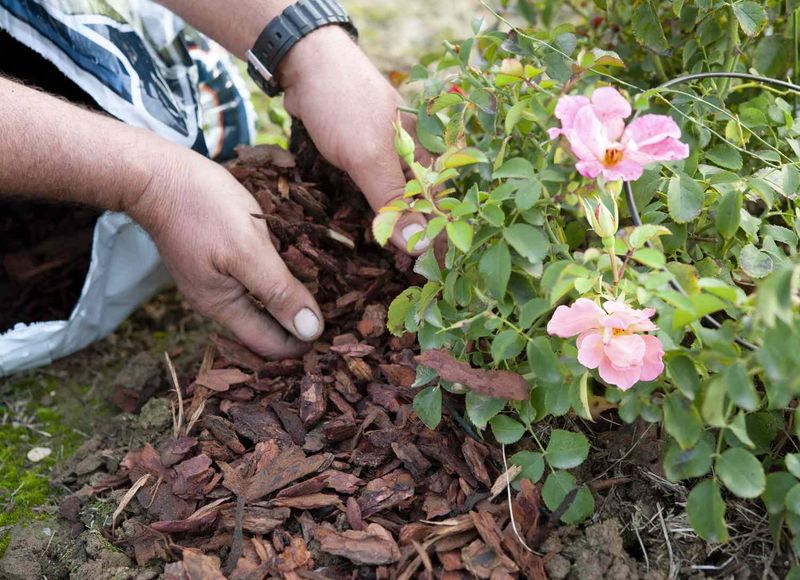
Below the surface of a quiet fall garden, roots are still doing real work. Even after flowers fade and canes stop putting out new growth, the root system continues drawing nutrients and moisture from the surrounding soil.
Heading into winter with dry soil around those roots adds stress that the plant then has to manage during the coldest months.
Dry autumn weather is common across the state, and it does not always come with obvious warning signs. A few weeks without meaningful rainfall can leave the soil around your rose bushes much drier than a quick glance at the surface suggests.
Pushing a finger or a small trowel a few inches into the ground near the root zone gives a much more honest picture of actual moisture levels.
Supplemental watering becomes useful precisely when natural rainfall is not keeping up. Established roses handle short dry spells better than younger plants.
Your Ohio Garden Changes Every Week. Your Plan Should Too.
Gardening in Ohio changes quickly throughout the season. Every Friday you’ll receive a simple weekly plan showing exactly what to plant, prune, fertilize, harvest, and protect so you never miss the right timing.
Still, a prolonged dry stretch in fall deserves attention regardless of how long the bush has been established. Addressing dryness before hard freezes arrive is far simpler than trying to compensate after the soil has tightened up.
Checking soil moisture regularly during dry fall stretches is a small habit that pays off when cold weather finally takes hold.
3. New Rose Bushes Need Moisture Most
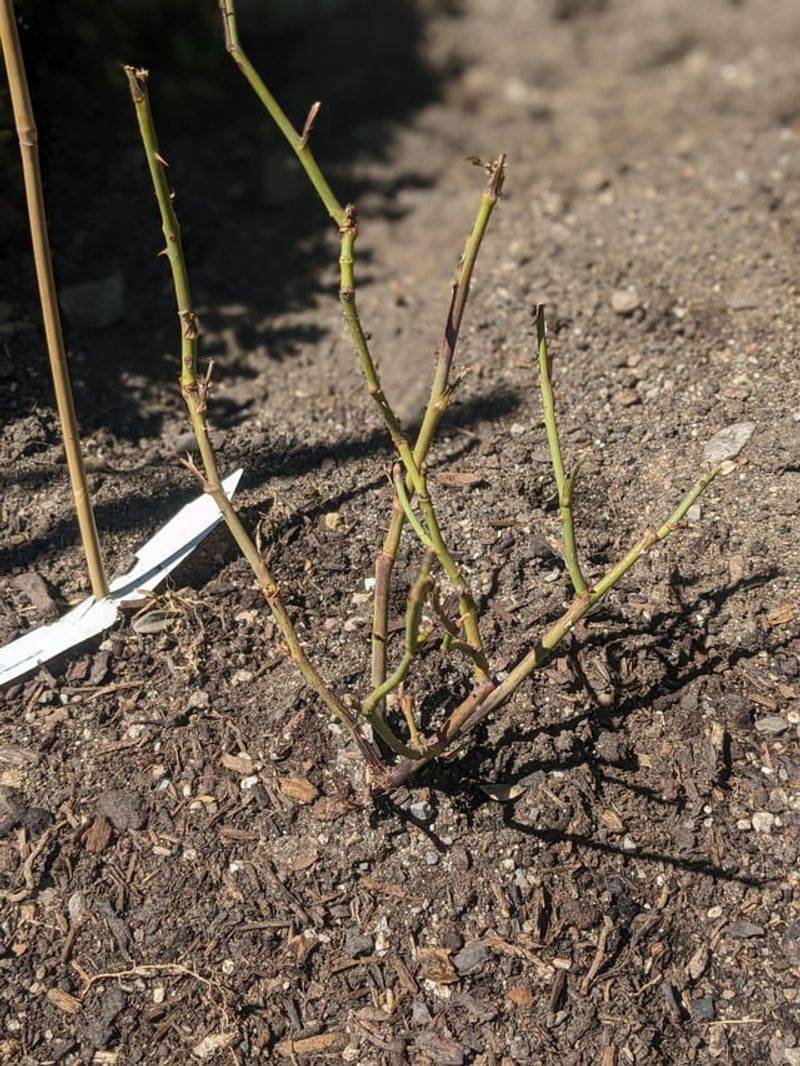
A rose bush planted during the current growing season faces its first winter with a root system that has not had years to spread and anchor itself.
Younger plants simply have less established root structure than a mature shrub that has been growing in the same spot for several seasons.
That difference matters a great deal when dry fall weather rolls in.
Ohio State guidance and university Extension resources consistently point to newer plantings as needing closer attention during dry periods. A recently installed rose has had limited time to push roots outward and downward into surrounding soil.
Checking the root zone of a young plant more frequently during dry fall weather is a straightforward way to keep it from entering winter already under stress.
Roses planted during the previous season also benefit from extra attention, even if they are no longer brand new. Their root systems are more developed than a first-year plant but may not yet match the reach of a fully established shrub.
Check the soil a few inches down near the base of any rose planted within the last couple of seasons. If the ground feels dry at that depth, water slowly and thoroughly at the root zone.
This helps the plant enter cold weather with adequate moisture reserves.
4. Soak The Soil Without Wetting The Leaves
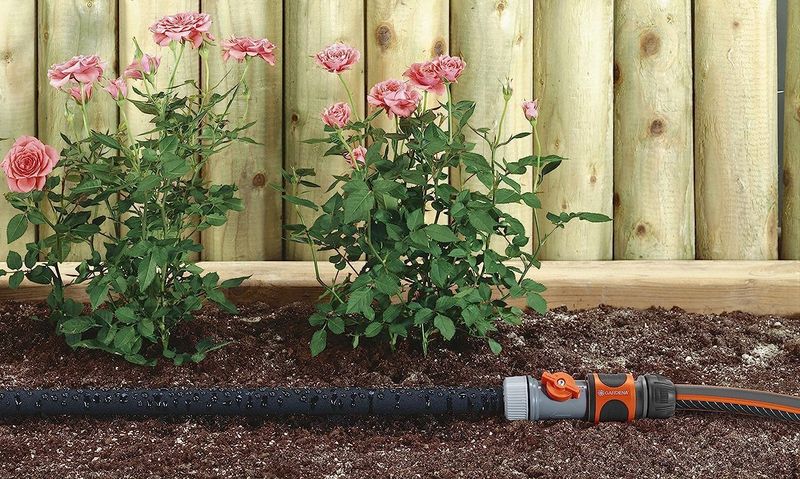
Pointing the water right at the soil makes a noticeable difference in how effectively moisture reaches rose roots. Direct water toward the base of the plant rather than spraying it overhead.
This keeps the moisture focused on the root zone before cold weather arrives. Slow and steady delivery gives water time to move downward rather than running off the surface.
Wet foliage is not a concern when rain falls naturally, but when gardeners are in control of the watering, there is little reason to routinely soak the leaves. Horticultural guidance generally supports keeping foliage as dry as possible when you control the watering.
Consistently moist leaves can create conditions that encourage fungal problems. A watering wand, a garden hose set to a gentle flow, or a soaker setup all allow you to put water right where it belongs.
Slow watering also allows heavier clay soils to absorb moisture without runoff. A fast blast from a hose can send water sheeting across the surface before it has a chance to soak in.
Taking a few extra minutes to let water move into the ground at a comfortable pace means the root zone ends up with far more usable moisture. Getting water deep into the soil is the whole point, and a little patience with the process makes the effort worthwhile.
5. Stop Fertilizer Before Cold Weather Arrives
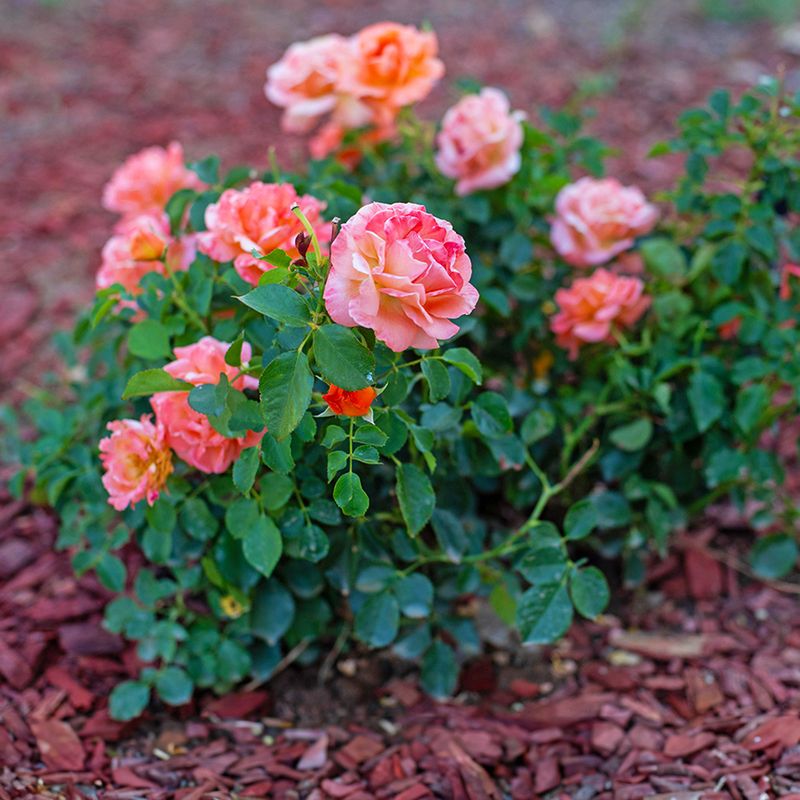
Late in the growing season, a fading rose bush can look like it needs a boost. Fewer flowers, slower growth, and tired-looking foliage might make a bag of fertilizer seem like the right answer.
Reaching for it at this stage, however, works against what the plant is naturally trying to do as cooler temperatures arrive.
Ohio State rose-care guidance recommends against using nitrogen-heavy fertilizers late in the season. Nitrogen encourages fresh, tender new growth, and shoots that push out in fall do not have enough time to harden off before freezing temperatures arrive.
That soft new growth is far more vulnerable to cold injury than canes that have had time to mature and firm up through the season.
Slowing flower production is a normal part of the seasonal transition, not a signal that the plant needs feeding. Letting roses slow down on their own schedule is exactly what sound fall care looks like.
Fertilizer applied at the right time earlier in the season has already done its job. Hold off on additional feeding as temperatures begin dropping consistently.
This gives canes and roots a better chance to settle into the slower pace required by cold weather. Focus your energy on soil moisture instead, which is where fall attention genuinely pays off for the plant heading into winter.
6. Leave Rose Hips To Start The Slowdown
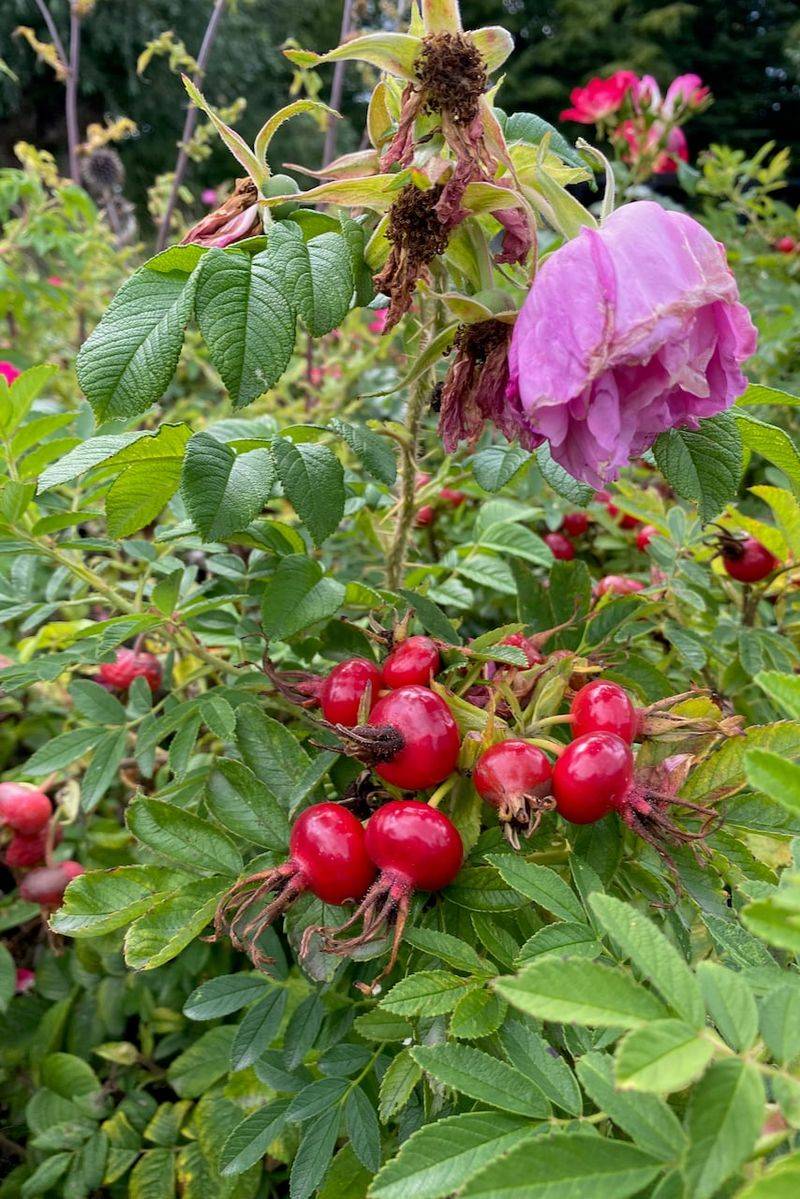
Faded blooms left on the cane do something useful as fall progresses. On cultivars that produce them, those spent flowers gradually develop into rose hips, the small fruit-like structures that form after pollination.
Allowing this process to happen signals the plant to shift away from the repeated summer cycle of pushing out new flowers.
Ohio State and university Extension resources connect the practice of stopping the removal of spent flowers with the transition into fall preparation.
Gardeners who trim spent flowers throughout summer to encourage more blooms can ease off that habit as the season winds down.
Let the plant hold onto its fading blooms as fall progresses. This allows it to redirect energy away from flower production and toward preparing for cold weather.
Not every rose produces large or showy hips, and some modern cultivars produce very little visible fruit at all. The seasonal benefit of leaving spent flowers in place applies broadly regardless of whether noticeable hips develop.
Stopping the removal of every faded bloom is a low-effort adjustment that fits naturally into the overall approach of letting roses slow down gracefully.
Combine this with consistent attention to soil moisture, and you are giving your plants a well-rounded foundation for handling whatever the coming months bring.
7. Hold The Winter Mulch Until Later
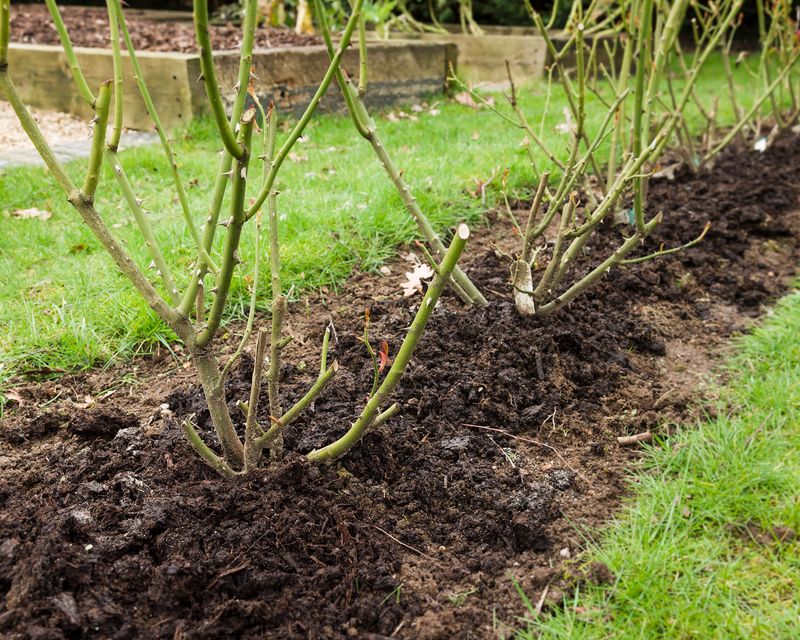
Reaching for the mulch pile at the first chill of autumn feels productive, but applying winter protection too early can actually create problems rather than prevent them. Ohio State guidance says to wait before mounding soil or adding heavy winter mulch around roses.
Apply that protection after the plants enter dormancy and colder conditions are established. Timing matters as much as the material itself.
Leaves may need to drop and soil temperatures should be approaching freezing before full winter protection is put in place. Mulching while the plant is still semi-active and the soil remains warm can trap heat and moisture.
Those conditions are not helpful while the rose is transitioning into dormancy. Patience with the timing is part of doing the job correctly.
Weather across the state varies considerably from year to year, and what works in one season may not match the next. A mild October followed by a sharp November cold snap calls for different timing than a gradual seasonal cool-down.
Watching your local forecast and checking whether your rose has actually shed its leaves and slowed visibly gives you better information than any fixed calendar date could provide.
Let the plant and the weather guide the decision rather than reacting to the first frost warning of the season.
8. Save Major Pruning For Several Freezes
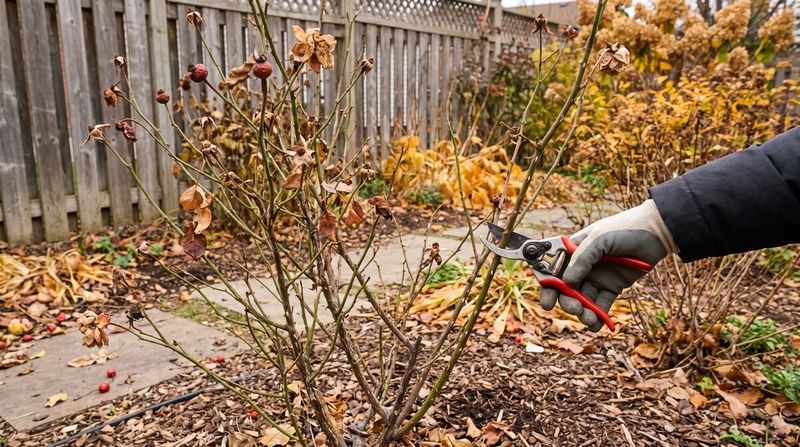
Grabbing the pruning shears as soon as the first hard frost arrives is a common impulse, but heavy cutting at that stage is not what most roses need. Ohio State guidance supports waiting until after several freezes before doing any significant late-season pruning.
A single frost does not signal that the plant has finished its transition, and cutting back heavily too soon can stimulate growth at exactly the wrong time.
Light cleanup, such as removing obviously damaged or broken canes, is a reasonable step. Major reshaping and substantial reduction, however, are better saved for later in the dormant period or for early spring before growth resumes.
Different rose types also respond differently to pruning, so a single rule does not apply equally across all cultivars and classes.
If unusually tall canes need to be shortened to reduce wind damage or movement during winter, that adjustment can be made carefully and moderately as conditions warrant. Cutting back dramatically simply because cold weather has arrived is not supported by reliable Extension guidance.
Circle back to the main priority before the season closes: make sure your roses have adequate soil moisture going into winter. That single step matters more right now than rushing into heavy pruning or applying winter mounding ahead of schedule.
Moist roots and patient timing together give your roses the steadiest possible start to the cold season ahead.