The One Thing You Must Do To Ohio Wisteria Or It Takes Over Everything

Wisteria has a split personality, charming in spring and downright ambitious by summer. One season it drapes your porch in violet clusters, the next it eyes your gutters with real intent.
American wisteria varieties, the kind that shrug off Ohio winters without much fuss, make that dual nature much easier to manage. Give them structure early on, and they reward you instead of testing your patience.
None of this calls for special equipment or years of training. Sharp pruners and two focused pruning sessions a year turn a sprawling vine into a tidy showpiece instead of a yard project that spirals out of control.
Here is everything you need to keep that balance in your favor, season after season.
Pruning Twice A Year Is The One Thing That Keeps Wisteria In Check

Sharp pruners in hand, you are already most of the way there. Ohio wisteria is a fast-growing vine that can extend several feet in a single season.
Pruning twice a year is the single most effective habit you can build. The first pruning happens in late winter before new growth emerges from dormancy.
At that point, cut back the long whippy stems to two or three buds from the main framework. This keeps the plant tidy and encourages flowering rather than leafy sprawl.
The second pruning happens in midsummer, usually around July or August. By then, new shoots have grown aggressively and need to be shortened again.
Cutting them back to five or six leaves from the base redirects the plant’s energy inward. Flowers form on short spurs, not long wandering stems, so tight pruning actually boosts blooms.
Many gardeners skip the summer session because the vine looks manageable in June. That is a mistake that costs you control by September.
A vine that gets both rounds of pruning stays compact, flowers reliably, and does not strangle nearby plants. One that gets only one round slowly creeps outward and upward.
Think of it like a haircut schedule: one trim a year leaves you shaggy by December. Two trims keeps everything clean and intentional.
Commit to both sessions on your garden calendar right now. Your future self will thank you when the vine blooms beautifully instead of eating your fence.
A Regular Pruning Habit Keeps The Vine From Sprawling

Habits beat heroics every single time in the garden. A wisteria that gets regular attention never becomes the monster that swallows a backyard shed whole.
Building a pruning habit means marking specific months on your calendar and treating those dates like appointments. Ohio wisteria does not forgive neglect the way some perennials do.
When you prune consistently, the vine develops a predictable framework of thick woody stems. New growth emerges from that framework in an orderly way each spring.
Without regular cuts, lateral shoots pile on top of each other in layers. Those layers get heavy, pull on support structures, and eventually collapse onto whatever is nearby.
A good habit also means checking the vine every few weeks during the growing season. Not to prune deeply, but to snap off any new shoots heading in the wrong direction.
Your Ohio Garden Changes Every Week. Your Plan Should Too.
Gardening in Ohio changes quickly throughout the season. Every Friday you’ll receive a simple weekly plan showing exactly what to plant, prune, fertilize, harvest, and protect so you never miss the right timing.
This quick five-minute check prevents small problems from turning into large ones. Catching a wayward stem early takes seconds; untangling a sprawling mess takes hours.
Gardeners who treat wisteria like a low-maintenance plant quickly learn otherwise. The vine responds to attention with gorgeous blooms, and to neglect with rapid, unchecked growth.
Keep your pruners clean and sharp so each cut is smooth and quick. Ragged cuts invite disease and slow the healing process on older wood.
A regular habit built around Ohio wisteria control is the foundation of everything else. Without it, no other strategy keeps this vine from sprawling where it should not go.
Skipping Even One Pruning Cycle Lets Growth Snowball

One missed pruning session feels harmless in the moment. By the following spring, you will be staring at a vine twice the size you expected.
Ohio wisteria grows with surprising speed once it gets comfortable in your soil. A single season of unchecked growth can add years of work to your pruning schedule.
The vine does not pause to wait for you to catch up. New shoots root where they touch the ground, and aerial roots grip whatever surface they find.
Missing the late-winter pruning means all those dormant buds push out long, unchecked stems in spring. Those stems race toward light, fences, gutters, and tree canopies.
Missing the summer session means those stems harden into woody growth by fall. Woody growth is much harder to remove cleanly than soft green shoots.
Each skipped cycle stacks on the previous one, creating a compounding problem. What started as a manageable vine becomes a structural challenge within two seasons.
Wisteria roots are also persistent, which means the plant has enormous energy reserves. It can push out aggressive regrowth even after hard pruning if you have fallen behind.
Getting back on track after a skip requires a more aggressive approach in the next session. You may need to cut back farther than usual to restore the shape.
Staying consistent is always easier than recovering from a snowball effect. Treat every pruning cycle as non-negotiable and the vine stays exactly where you want it.
Cutting Back New Shoots Keeps The Plant Manageable
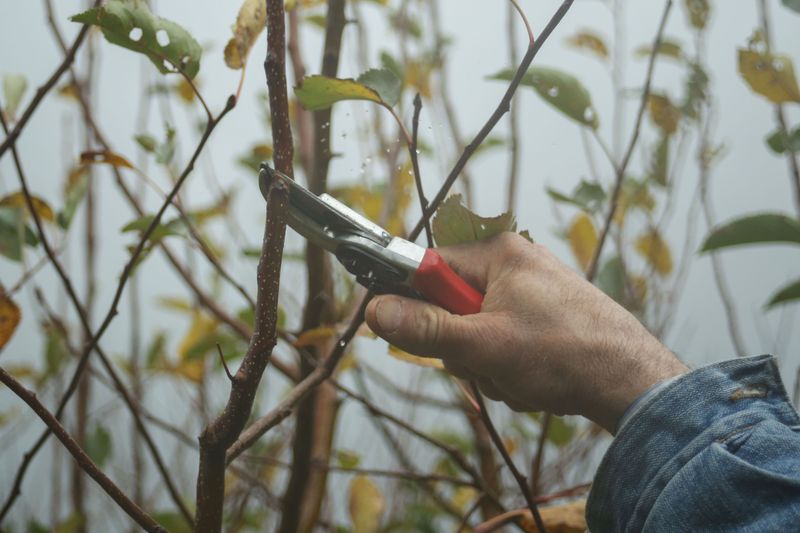
New shoots are where Ohio wisteria makes its boldest moves. Catching them early is the simplest way to stay ahead of the plant’s ambitions.
During the growing season, wisteria pushes out long tendrils called lateral shoots. These can grow several inches in a single week under the right conditions.
Cutting them back to five or six leaves keeps the plant focused on its established framework. It also signals to the vine that sprawling outward is not going to pay off.
New shoots are soft and easy to cut, which makes this task quick and satisfying. You do not need heavy-duty loppers for this job, just a clean pair of hand pruners.
The best time to trim new growth is during the morning when the plant is well-hydrated. Cuts heal faster when the tissue is firm and the day is not yet hot.
Focus especially on shoots heading toward structures you want to protect. Gutters, window frames, and tree trunks are all prime targets for an ambitious vine.
A shoot that reaches a gutter in July becomes a root system inside it by October. Snipping it in June takes two seconds and saves you a plumbing headache later.
Pay attention to the direction each shoot is pointing, not just its length. A short shoot aimed at your roof needs more attention than a long one hanging in open air.
Consistent shoot management is what transforms Ohio wisteria from a threat into a feature. Stay on top of the new growth and the plant stays on your terms.
Consistency Matters More Than The Size Of Each Cut
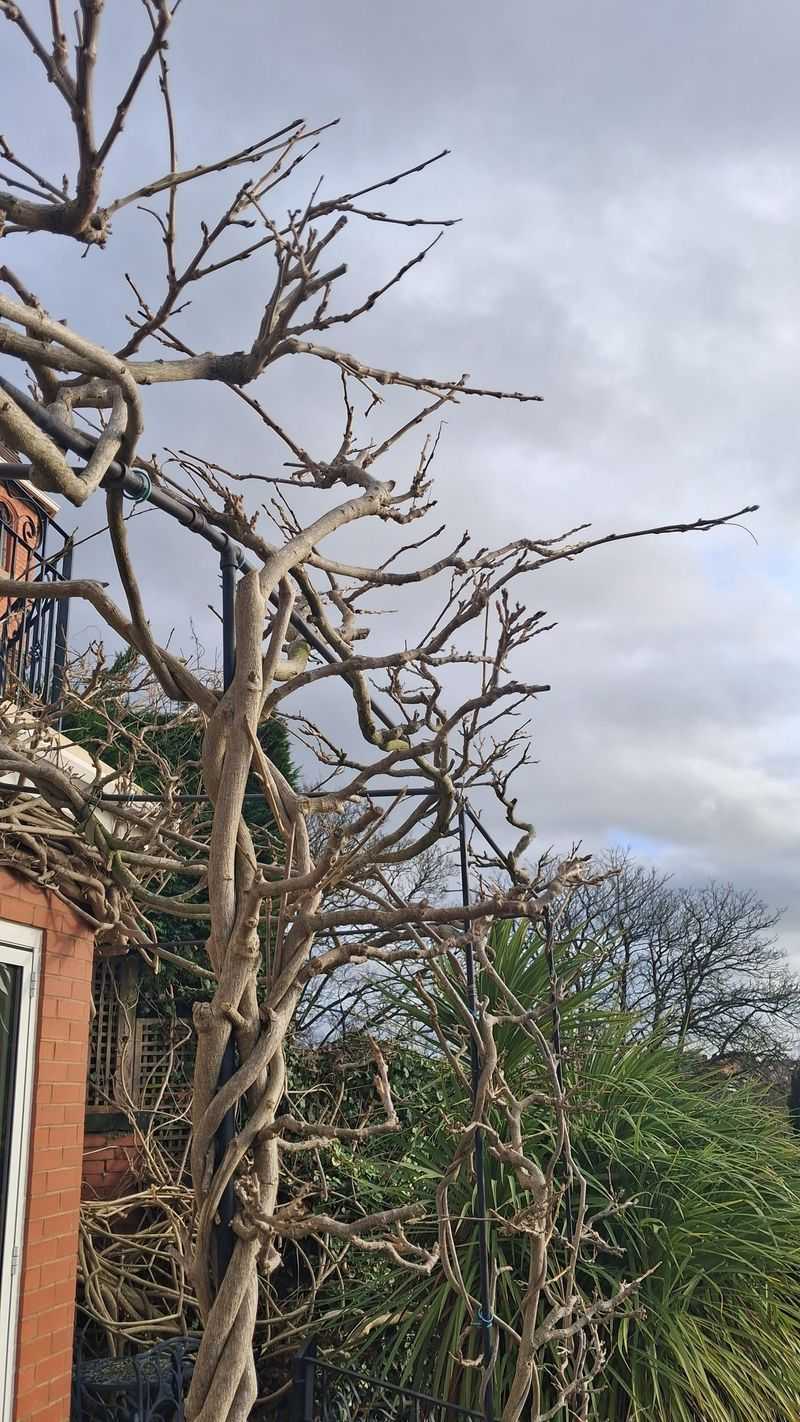
You do not need to hack the plant to the ground to keep it under control. Small, frequent cuts done consistently do far more than one dramatic pruning session.
Many gardeners make the mistake of going hard once and then ignoring the vine for months. Wisteria recovers from aggressive cuts quickly and grows back with even more vigor.
A lighter touch applied regularly keeps the plant in a more manageable state over time. Think of it as steering rather than stopping, guiding the vine rather than fighting it.
Each small cut removes energy from a shoot that would otherwise fuel more expansion. Multiply that across dozens of shoots and you significantly reduce the vine’s overall growth rate.
Consistency also helps you notice problems before they escalate. A gardener who checks the vine every few weeks spots a stem creeping toward a window long before it becomes an issue.
The size of each individual cut matters far less than the frequency of your visits. A two-minute check with small snips usually beats a two-hour emergency session.
Setting a reminder on your phone for every three weeks during the growing season helps. It turns wisteria care into a quick routine rather than a dreaded chore.
Wisteria respects the gardener who shows up regularly more than the one who shows up dramatically. Small efforts stacked over time create a vine that stays beautiful and contained.
Consistency is the real secret behind a well-managed Ohio wisteria. Keep showing up with your pruners and the plant never gets the upper hand.
A Good Structure Makes Your Pruning Routine Even More Effective

Give wisteria a job and it stops looking for trouble. A strong, dedicated structure channels the vine’s energy upward and inward instead of outward in every direction.
Pergolas, arbors, and heavy-duty trellises are the best options for supporting a mature wisteria. Lightweight structures will not survive the weight of a well-established vine.
Ohio wisteria can weigh hundreds of pounds once it matures on a support structure. Use pressure-treated lumber or metal posts rated for heavy loads when building or choosing a support.
Train the main stems along the structure deliberately from the beginning. Tie new growth loosely with soft garden twine and guide it in the direction you want it to go.
Wisteria will happily follow a framework if you introduce it early in the vine’s life. Waiting until the plant is large makes training much harder and less effective.
A well-trained vine on a solid structure becomes a garden centerpiece rather than a nuisance. Flowers cascade in dramatic clusters from the trained branches each spring, drawing every eye in the yard.
Without a dedicated structure, the vine searches for support anywhere it can find it. Trees, fences, and house siding all become hosts for a wisteria that has no better option.
Removing wisteria from a mature tree is a project that can take an entire weekend. Preventing that situation costs nothing more than a sturdy pergola and a few rolls of twine.
A sturdy structure simply makes that one habit easier to maintain. Consistent pruning is still what keeps Ohio wisteria from taking over everything.