The Pennsylvania Tree With Seeds That Look Like Chestnuts But Are Toxic
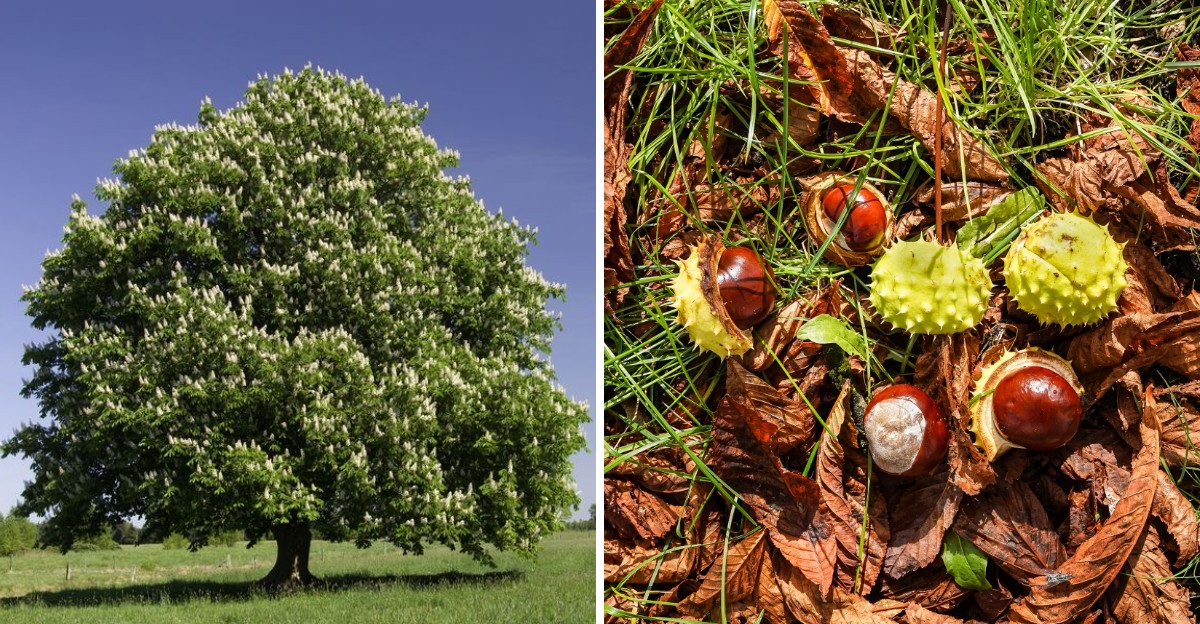
They’re smooth, glossy, and a rich mahogany brown, the kind of seed that practically begs to be picked up and tucked into a pocket.
Kids collect them by the handful. Adults often wonder if they’re good for roasting. They’re not.
Every fall, these shiny seeds drop from a large, leafy tree found in Pennsylvania parks, neighborhoods, and old estates.
At first glance, they look almost identical to the chestnuts sold at holiday markets. But eating them can cause nausea, vomiting, stomach pain, and other unpleasant symptoms. Dogs that chew on them can get sick, too.
The confusion is understandable. Both trees produce seeds wrapped inside prickly outer husks, and both seeds share that same polished brown look.
Once you know what to check, though, telling them apart becomes much easier. A few simple clues can help keep a fall snack from turning into a trip to the doctor.
A Common Lookalike Tree
Long before it shaded Pennsylvania lawns, the horse chestnut grew wild in the mountains of southeastern Europe. Settlers and gardeners loved its looks. They carried it across the ocean and planted it in towns everywhere.
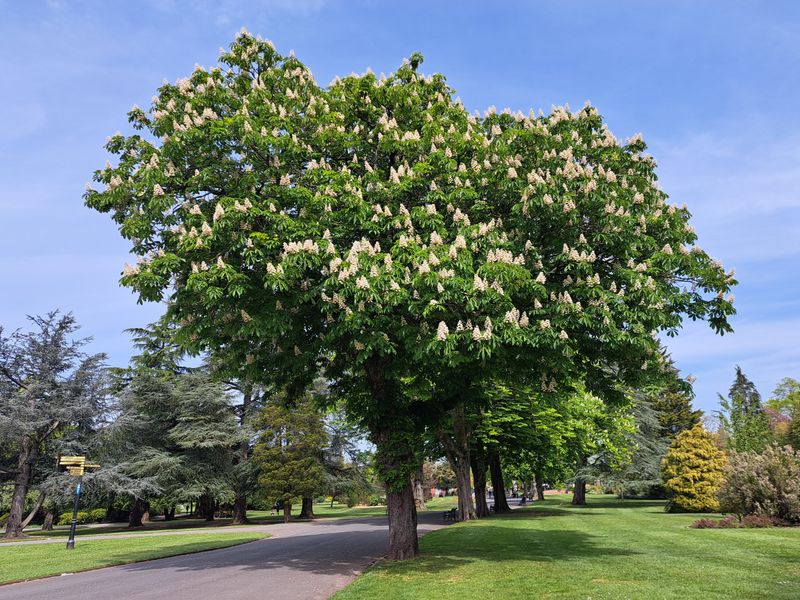
Today you can find it on old city streets, college campuses, and farm properties. Philadelphia and Pittsburgh both have plenty of them. Many were planted more than a hundred years ago, so some are true giants.
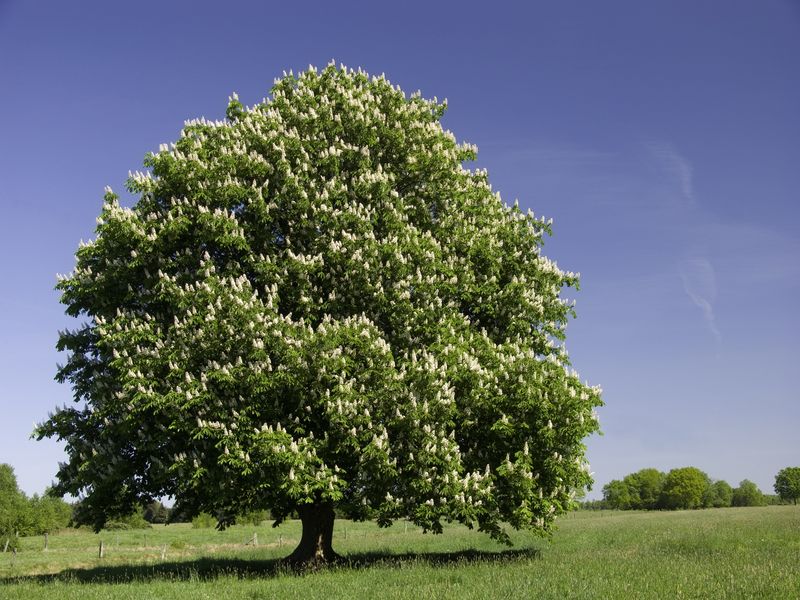
A healthy horse chestnut can grow 50 feet tall or even more. Its branches spread out wide and form a round, full crown.
On a hot July day, standing under one feels like stepping into a cool green tent. That big shade is a major reason people still plant them.
Here is a fun bit of history. Nobody knows for sure how the tree got its name. One story says people in Turkey once fed the seeds to horses with coughs.
Another says the leaf scars on the twigs look like tiny horseshoes, complete with little nail marks. Check a twig in winter and see if you agree.
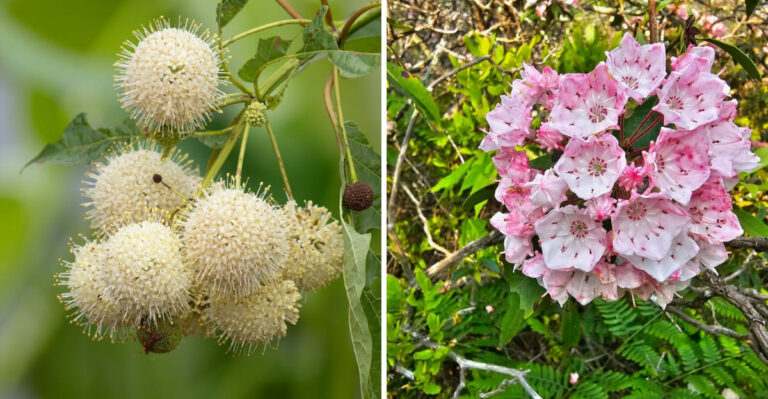
The tree has cousins in Pennsylvania too. The Ohio buckeye and yellow buckeye belong to the same family. They also grow seeds that look like chestnuts, and they carry similar risks.
So why should you care about one pretty tree? Because it is common, it is everywhere, and its seeds trick people every single year. Knowing that it exists is the first step to staying safe.
Next time you walk through a park, look up. There is a good chance a horse chestnut is towering above you, quietly dropping its look-alike nuts.
How To Recognize It
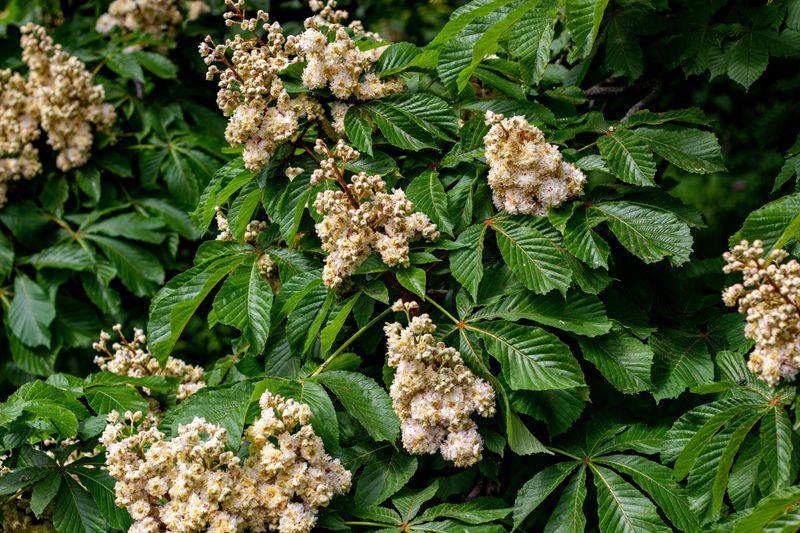
Spotting a horse chestnut is a lot like spotting a friend in a crowd. Once you learn a few key features, you will never mix it up again. Start with the leaves.
Each leaf is big, often wider than your hand. It is made of five to seven smaller leaflets. They all spread out from one central point, just like fingers on an open palm. The middle leaflet is usually the longest.
Your Pennsylvania Garden Changes Every Week. Your Plan Should Too.
Gardening in Pennsylvania changes quickly throughout the season. Every Friday you’ll receive a simple weekly plan showing exactly what to plant, prune, fertilize, harvest, and protect so you never miss the right timing.
Hold one up next to your own hand. Kids love doing this, and it makes the shape easy to remember. Most other trees in your yard will not have leaves arranged quite like that.
Springtime is when the tree really shows off. In May, it pushes out tall, upright clusters of flowers. People call them candles because they stand straight up on the branches like candles on a cake.
Look closely at a single blossom. It is white with little spots of yellow or pink near the center. Bees know a secret about those spots. They start yellow and turn pink after the flower has been visited, telling bees to move along.
The bark gives clues as well. Young trees have smooth gray bark. Older trees get scaly and flaky, almost like plates peeling apart.
In winter, check the buds. Horse chestnut buds are large, dark brown, and very sticky to the touch. That sticky coating protects the bud from cold and bugs.
Here is a handy tip. Snap a few photos of the leaves and flowers with your phone. Free plant ID apps can confirm what you found in seconds.
Seeds That Fool Many People
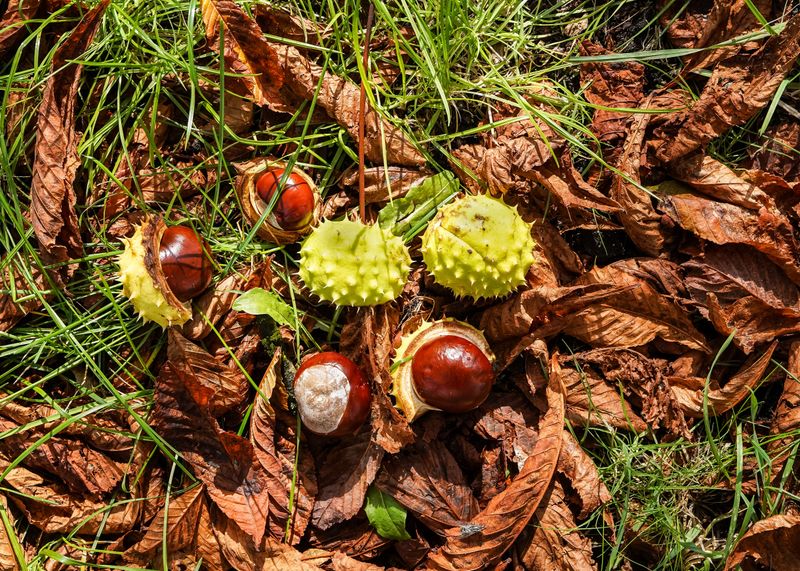
Ask anyone who has kicked through autumn leaves, and they will tell you those shiny brown nuts are hard to resist. They practically beg to be picked up. That is exactly the problem.
In early fall, the horse chestnut drops round green husks. Each husk is covered in short spikes. When it hits the ground, it often cracks open by itself.
Inside are one or two seeds. They are smooth, glossy, and a rich reddish brown, almost like polished wood.
On one side you will see a pale, light tan patch. That patch is called a scar, and it is where the seed was attached inside the husk.
Honestly, they look a lot like the chestnuts sold at holiday markets. Same color. Same shine. Same cozy fall feeling. Many grown-ups have been fooled, not just kids.
In England, children have played a game with them for centuries. They drill a hole in a seed, thread it on a string, and try to smash a friend’s seed.
The game is called conkers, and the seeds are often called conkers too. Playing with them is fine. Eating them is not.
Buckeye seeds share the same look. In fact, the name buckeye comes from the pale scar, which looks like the eye of a deer. Ohio State fans even wear buckeye necklaces for luck.
A smart rule for your family is simple. Never eat any nut you find on the ground unless an adult who truly knows trees says it is safe. When in doubt, leave it out of your mouth.
Why They’re Dangerous
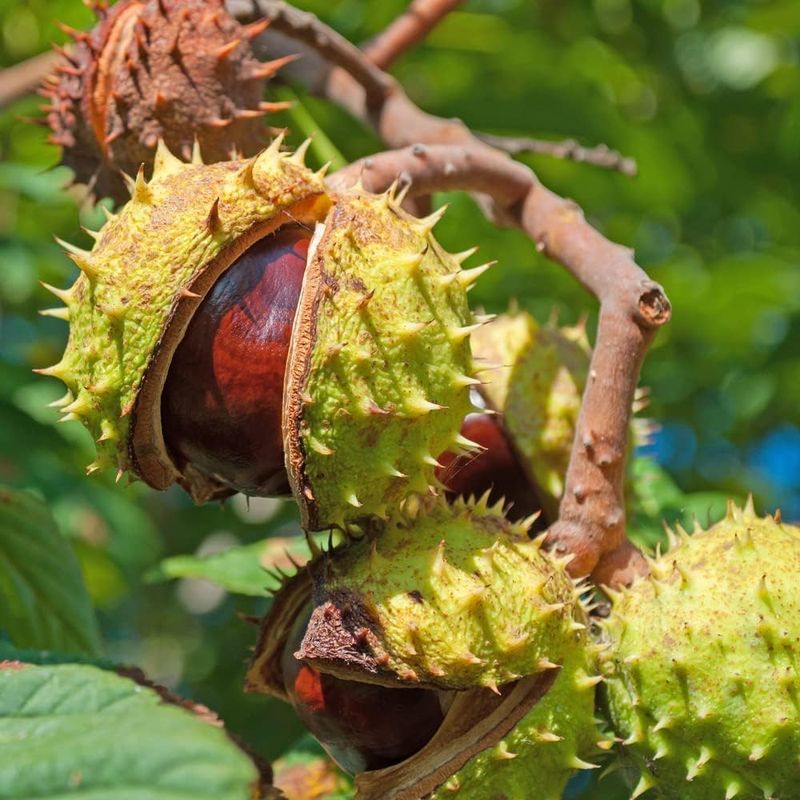
Pretty does not mean safe. Horse chestnut seeds hold natural chemicals that protect the tree from hungry animals. The main one is called aesculin, and there are others called saponins.
When a person eats the seed, those chemicals go to work on the stomach. Common signs include vomiting, diarrhea, and painful cramps. Some people feel weak or dizzy too.
Eating larger amounts can cause more serious trouble. Muscle twitching, confusion, and trouble with balance have been reported. Children face higher risk because their bodies are smaller.
Ohio buckeye and yellow buckeye seeds contain similar compounds. Native Americans once crushed buckeyes and tossed them into ponds. The chemicals stunned fish so they floated up and were easy to catch. That shows how strong these seeds really are.
Animals are at risk as well. Dogs love to chew on round things, and a seed can look like a fun toy. Besides the toxins, a whole seed can get stuck in a dog’s throat or belly.
Horses and cattle that graze near these trees can also get sick from the seeds, leaves, or young shoots.
You might see horse chestnut in some herbal products at the store. Those are specially processed to remove harmful parts. That is very different from eating a raw seed from the yard.
Here is the practical takeaway. Teach kids early that these nuts are for looking, not eating. Keep an eye on pets during fall walks. A little awareness goes a long way toward keeping everyone comfortable and healthy.
How To Tell Them Apart From Edible Chestnuts
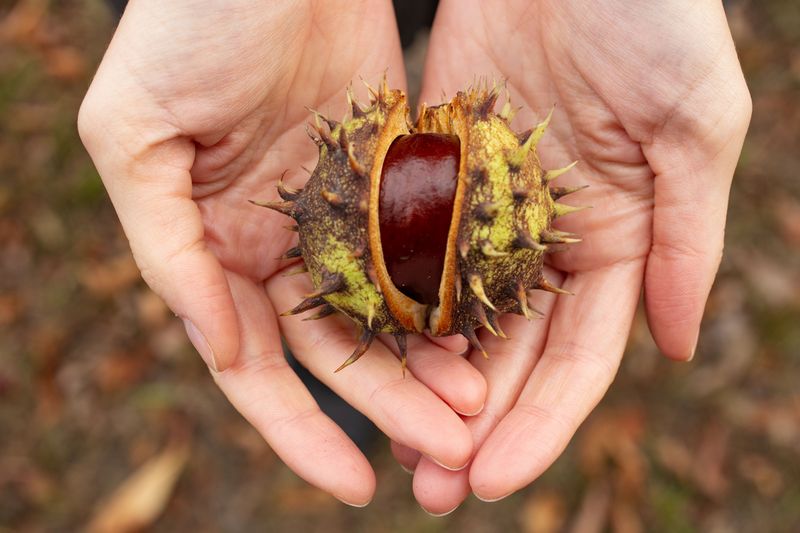
Think of it as a fun detective game. Edible chestnuts and horse chestnuts leave plenty of clues if you know where to look. Start with the husk.
Real chestnuts grow inside husks covered in thick, sharp, needle-like spines. They look like angry little hedgehogs. You need gloves just to pick one up, because those spines really poke.
Horse chestnut husks are different. Their spikes are short, thick, and scattered with bare space between them. Some husks barely have spikes at all. You can usually hold one without much fuss.
Next, check the nut itself. An edible chestnut has a flat side, especially when two or three nuts share a husk. It also ends in a pointed tip. At that tip you will find a tiny, fuzzy tassel, almost like a little paintbrush.
Horse chestnuts are rounder and smoother all over. They have no pointed tip and no tassel. The big pale scar stands out clearly on one side.
Leaves are another giveaway. Edible chestnut leaves are long and single, with sawtooth edges. Horse chestnut leaves are shaped like a hand with fingers.
Fun fact for history buffs. Pennsylvania forests were once full of American chestnut trees. A disease swept through in the early 1900s and wiped out most of them. Scientists at Penn State and other groups are working hard to bring them back.
Make a simple checklist and keep it on your phone. Spines, point, tassel, and leaf shape. If a nut fails even one test, skip it and buy your roasting chestnuts from the store.
What To Do If You Have One In Your Yard
Good news first. You do not need to cut down your horse chestnut. With a few easy habits, you can enjoy its shade and flowers safely.
The biggest job comes in September and October. That is when the seeds fall. Walk the yard every day or two and pick them up. A pair of garden gloves and a bucket make the chore quick.
Turn it into a family activity. Kids can count the seeds or race to fill the bucket. Just make sure they know the seeds go in the bucket, never in their mouths.
Throw collected seeds in the trash or a yard waste bag. Avoid tossing them in an open compost pile where pets or wildlife could dig them up. A leaf rake or a rolling nut gatherer tool can save your back on big lawns.
Watch your dog closely during fall. Keep it on a leash near the tree, or fence off the area if needed. Offer plenty of safe chew toys so seeds seem less tempting.
Accidents can still happen, so be prepared. If someone may have eaten a seed, call Poison Control right away at 1-800-222-1222. The line is free and open all day and night. Do not wait for symptoms to show up.
For pets, call your veterinarian or the ASPCA Animal Poison Control Center. Have the seed or a photo handy to help them understand what happened.
Save those numbers in your phone today. Post them on the fridge too. Being ready gives you real peace of mind.