The Perennials Oregon Deer And Rabbits Usually Pass Over
Deer treat your Oregon garden like an open buffet, arriving quietly after dark to strip whatever looks tender. Rabbits trail close behind them, finishing off anything left standing by morning light.
Overnight visits can undo months of careful planting in a matter of hours. Frustration builds fast when your favorite blooms vanish before you’ve even had your coffee.
Not every plant surrenders without a fight, though. Some leaves carry bitter toxins strong enough to stop grazing animals cold, while others rely on rough, unpleasant textures and pungent scents that send browsers elsewhere fast.
Choosing the right survivors changes everything about how your garden holds up season after season. Confidence replaces dread once you understand which plants can defend themselves, and your yard stops being an easy target.
This specific lineup of tough, beautiful perennials is about to change how you garden for good.
1. Foxglove Hides Toxic Bitter Compounds
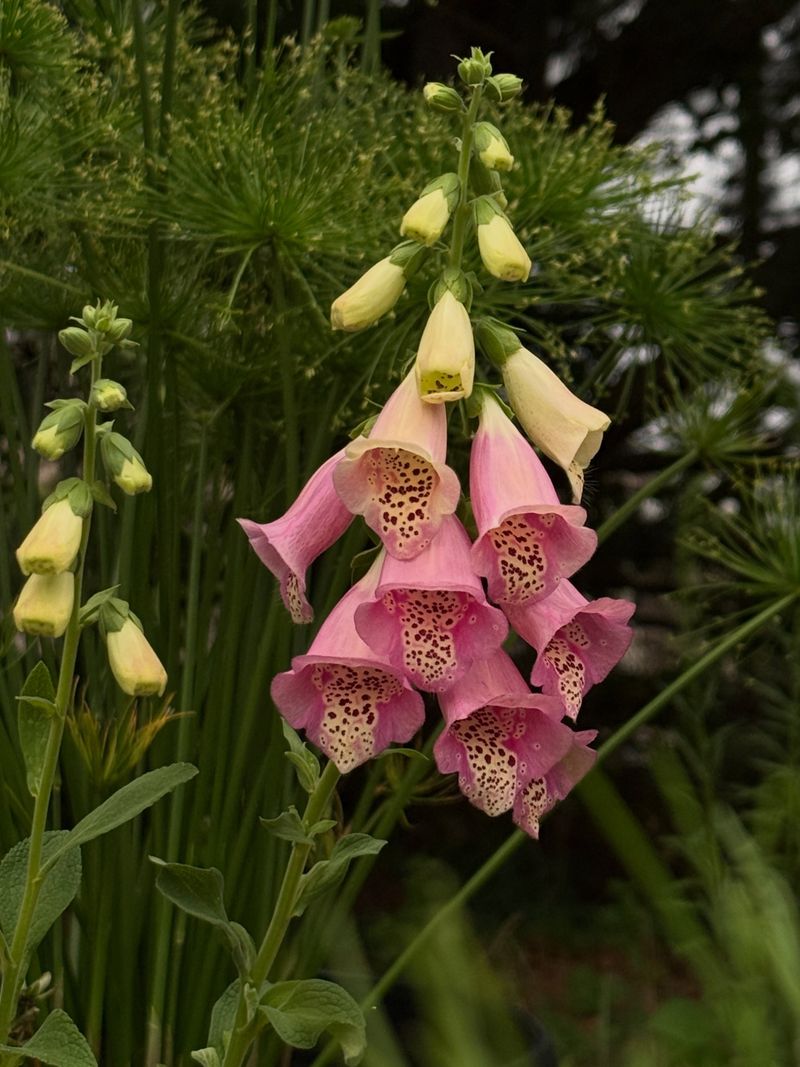
Foxglove is one of those plants that looks almost too pretty to be left alone. Yet deer and rabbits in the Pacific Northwest consistently ignore it, and the reason is fascinating.
Every part of foxglove contains cardiac glycosides, which are bitter, toxic compounds. Animals have a natural instinct to avoid plants that taste wrong, and foxglove tastes very wrong to them.
Gardeners across Oregon have planted foxglove along fence lines and woodland edges for decades. The tall spires of tubular flowers, ranging from deep purple to soft pink and white, create a stunning vertical element in any border.
Foxglove thrives in the cool, moist conditions that define much of Oregon’s climate. It prefers partial shade and well-drained soil, making it ideal for spots under deciduous trees or along the north side of a fence.
Because foxglove is biennial, it produces foliage the first year and flowers the second. Letting it self-seed means you get a continuous display without replanting every season.
Place it behind shorter perennials to create layered depth in your garden design. The spikes reach three to five feet tall, so they naturally draw the eye upward.
One smart tip is to mass-plant foxglove near more vulnerable plants. The bitter scent and appearance of a large clump can discourage browsing animals from even approaching the surrounding area.
Wildlife pressure rarely wins against a plant built on bitter chemistry like this. Oregon gardeners keep coming back to foxglove for exactly that reason.
2. Bleeding Heart Rarely Tempts Hungry Grazers
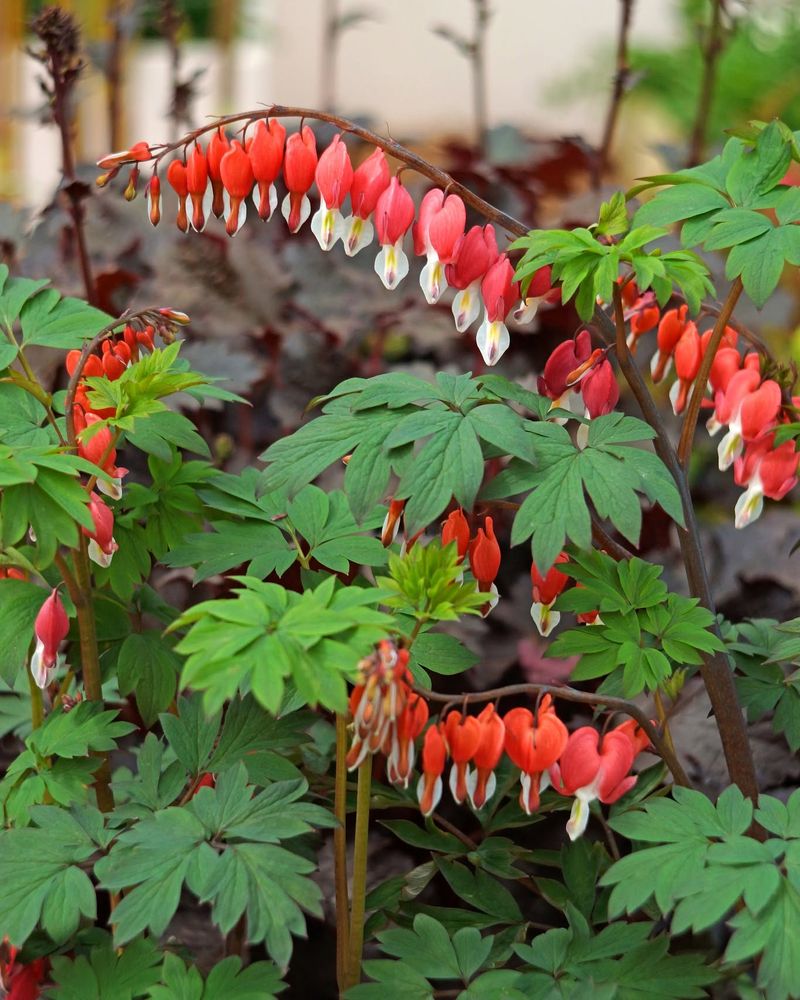
There is something almost magical about bleeding heart in bloom. The arching stems dangle rows of perfectly heart-shaped flowers in pink, red, or white, swaying gently in a spring breeze.
What makes it even better for Oregon gardeners is that deer and rabbits almost never touch it. The plant contains isoquinoline alkaloids, which are compounds that taste bitter and cause digestive discomfort in animals.
Browsing wildlife quickly learn to avoid plants that make them feel unwell. Bleeding heart quickly earns a spot on their skip list after just one bad experience.
This perennial loves the shaded, moist conditions found throughout much of western Oregon. Plant it beneath tall conifers or along a shaded north-facing slope for the best results.
Bleeding heart pairs beautifully with ferns, hostas, and astilbe. Together, these shade-lovers create a lush, layered woodland garden that stays largely untouched by local wildlife.
The foliage of some varieties turns a lovely blue-green color as the season progresses. Even after the flowers fade, the plant continues to add textural interest to shaded corners.
Fringed bleeding heart, a close cousin of the classic variety, blooms all summer long rather than going dormant in summer heat. That extended bloom time makes it especially valuable in mixed perennial borders.
For anyone planting in spots where deer pressure is high, bleeding heart delivers consistent beauty without the frustration of constant replanting. It is genuinely one of the most rewarding choices for a wildlife-resistant shade garden.
3. Pacific Coast Iris Repels With Bitter Rhizomes
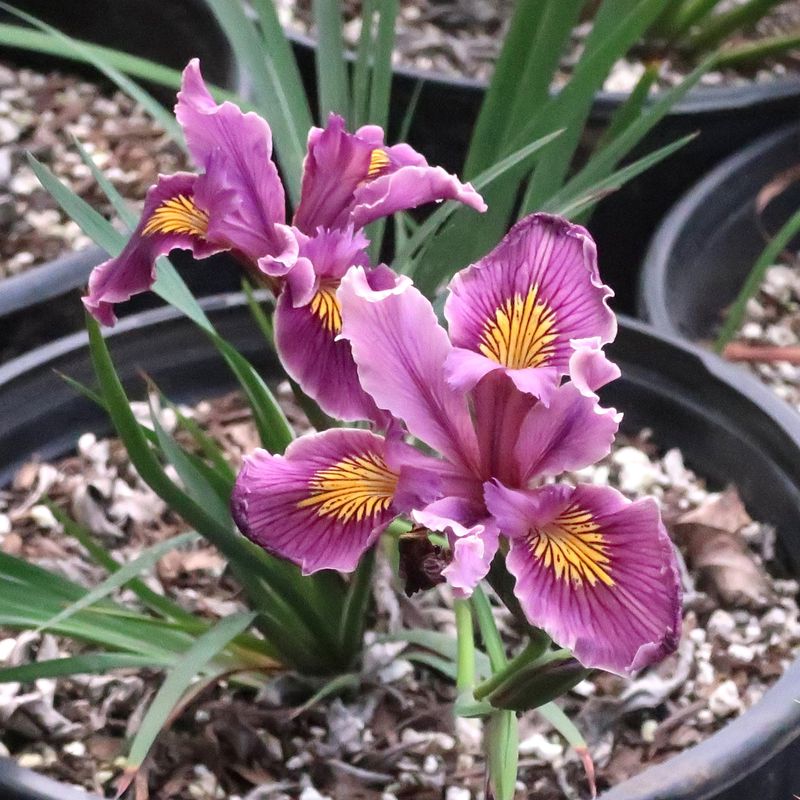
Native to the Pacific Northwest, Pacific Coast iris is a scrappy, beautiful plant that thrives where others struggle. It grows naturally along hillsides, in open woodlands, and beside rocky outcroppings throughout Oregon.
Deer and rabbits avoid it consistently, and the reason lies underground. The rhizomes of Pacific Coast iris contain irisin, a bitter, mildly toxic compound that makes the plant extremely unappetizing to browsing animals.
Even hungry deer during a hard winter mostly bypass these plants. That kind of reliable resistance is exactly what Oregon gardeners need when wildlife pressure peaks in late fall and early spring.
Pacific Coast iris blooms in a stunning range of colors, from deep violet and lavender to cream, gold, and copper. The flowers appear in spring and often have intricate veining patterns that look almost hand-painted.
Because it is native, this iris is perfectly adapted to Oregon’s wet winters and dry summers. Once established, it requires little to no supplemental watering, making it a smart choice for water-wise gardeners.
Plant it on slopes or in areas with excellent drainage to mimic its natural habitat. It spreads slowly by rhizome, gradually forming attractive, weed-suppressing clumps over time.
Pacific Coast iris also supports native pollinators, especially native bees that emerge in early spring. Choosing native plants that wildlife avoids is a win for your garden and local ecosystems.
Few plants offer this combination of beauty, resilience, and ecological value. For Oregon gardens, Pacific Coast iris is a perennial worth seeking out.
4. Hellebores Bloom Untouched Through Winter
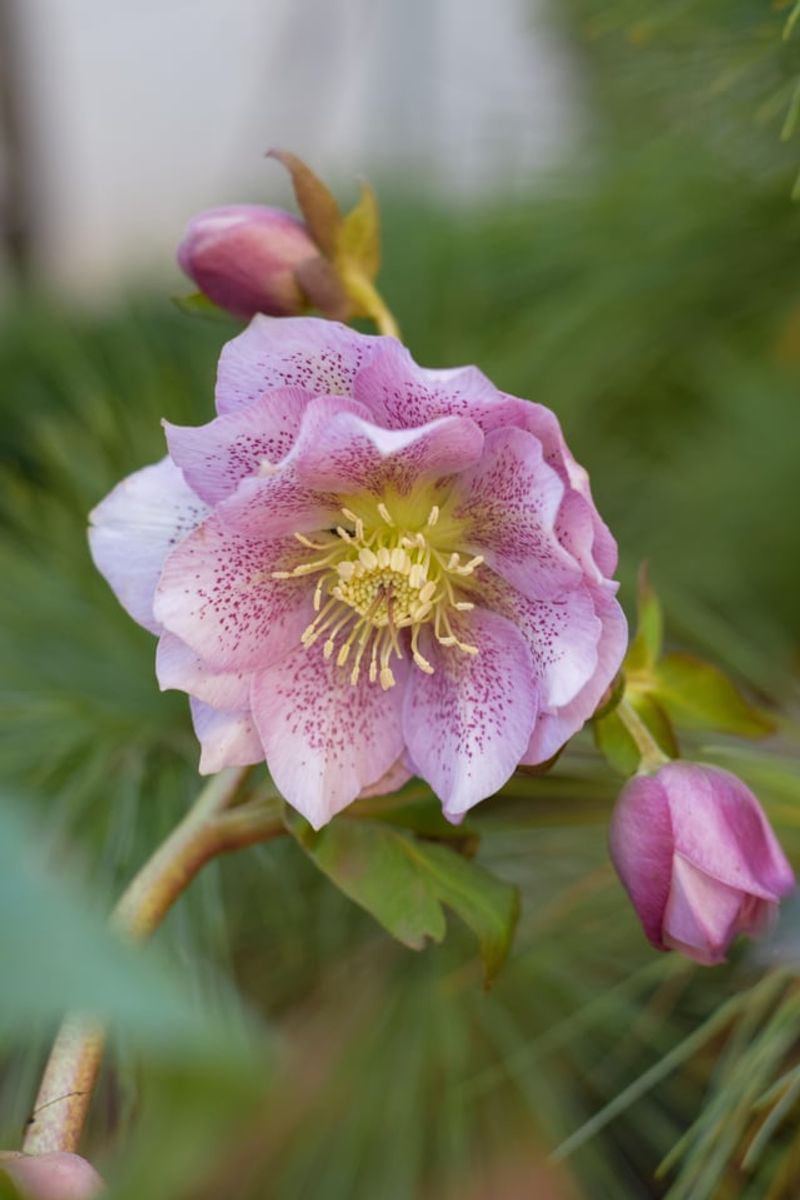
Hellebores bloom when almost nothing else does, pushing out nodding flowers in the middle of winter. That alone makes them remarkable, but their resistance to deer and rabbits is what makes them legendary among Oregon gardeners.
The leaves and roots of hellebores contain toxic alkaloids and glycosides. These compounds make every part of the plant bitter and potentially harmful, so browsing animals learn quickly to leave them alone.
Walk through any Oregon garden in January and you might spot hellebore flowers peeking through frost. Deer can be standing just feet away and rarely give these plants a second glance.
Hellebores prefer partial to full shade and humus-rich, well-drained soil. They thrive under deciduous trees, where they get winter sun when the canopy is bare and summer shade when they need it most.
The flowers come in an extraordinary range of colors, including deep burgundy, soft blush, slate gray, and near-black. Many modern hybrids also have double flowers or striking spotted interiors that face outward, making them easier to appreciate.
Once planted, hellebores are remarkably self-sufficient. They self-seed freely and can live for decades in the right spot without much fuss from the gardener.
Pair them with early spring bulbs like snowdrops and winter aconite for a stunning cold-weather display. The combination creates a garden that looks alive and vibrant even in the bleakest months.
Hellebores prove that a deer-resistant garden does not have to sacrifice beauty or seasonal interest. These plants deliver both, reliably, year after year.
5. Red Hot Poker Spikes Discourage Browsing
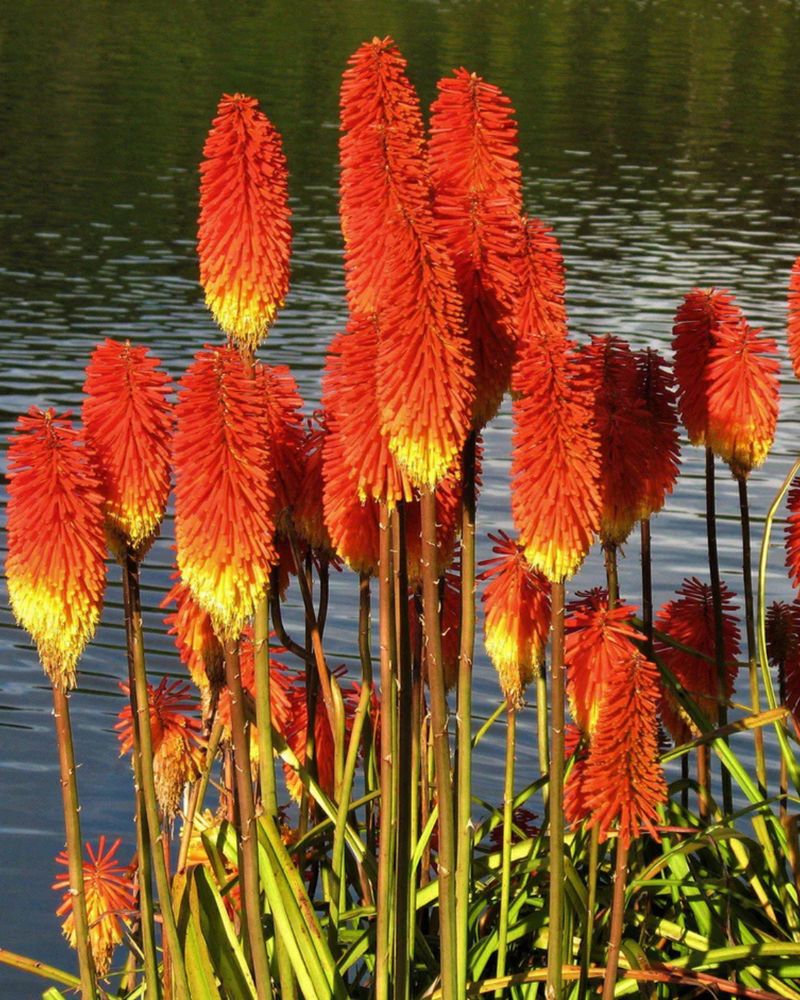
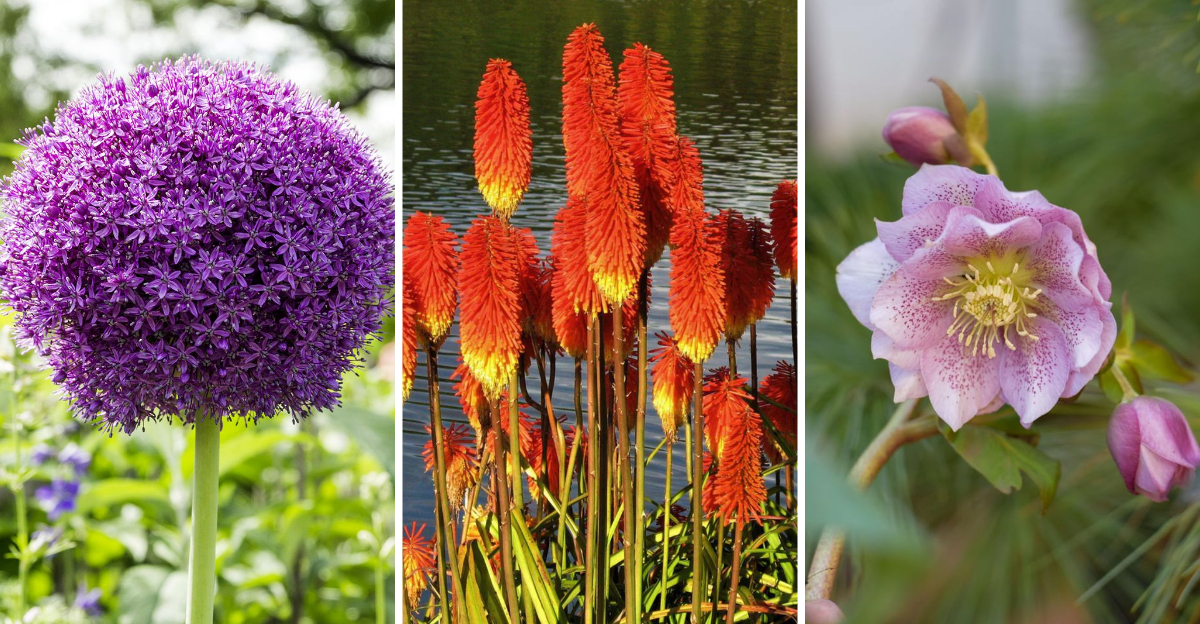
Bold, fiery, and unapologetically dramatic, red hot poker is a plant that commands attention in any garden. The tall flower spikes blaze in shades of orange, red, and yellow, resembling lit torches rising above strappy foliage.
Deer and rabbits tend to skip right past red hot poker, and the reasons are both physical and chemical. The tough, grass-like leaves have rough, fibrous edges that make chewing genuinely unpleasant for grazing animals.
Oregon gardeners who grow red hot poker in sunny borders often report that even in high-deer-pressure areas, the plants come through the season unscathed. That kind of track record builds real gardening confidence.
Red hot poker, also called kniphofia, thrives in full sun and well-drained soil. It handles Oregon’s wet winters surprisingly well as long as it is not sitting in waterlogged ground.
The flowers appear from late spring through fall, depending on the variety. Planting a mix of early, mid, and late-blooming types keeps the color show going for months.
Hummingbirds absolutely love red hot poker. The tubular flowers are perfectly shaped for hovering birds to access nectar, making this plant a dual-purpose wildlife attractor that still repels grazers.
Cut the spent flower stalks back to the base to encourage repeat blooming. The foliage remains evergreen in mild Oregon winters, giving the garden structure even in the off-season.
Browsers learn fast to skip this border, and the color show never suffers for it. Red hot poker holds its ground season after season.
6. Allium’s Pungent Scent Sends Them Away
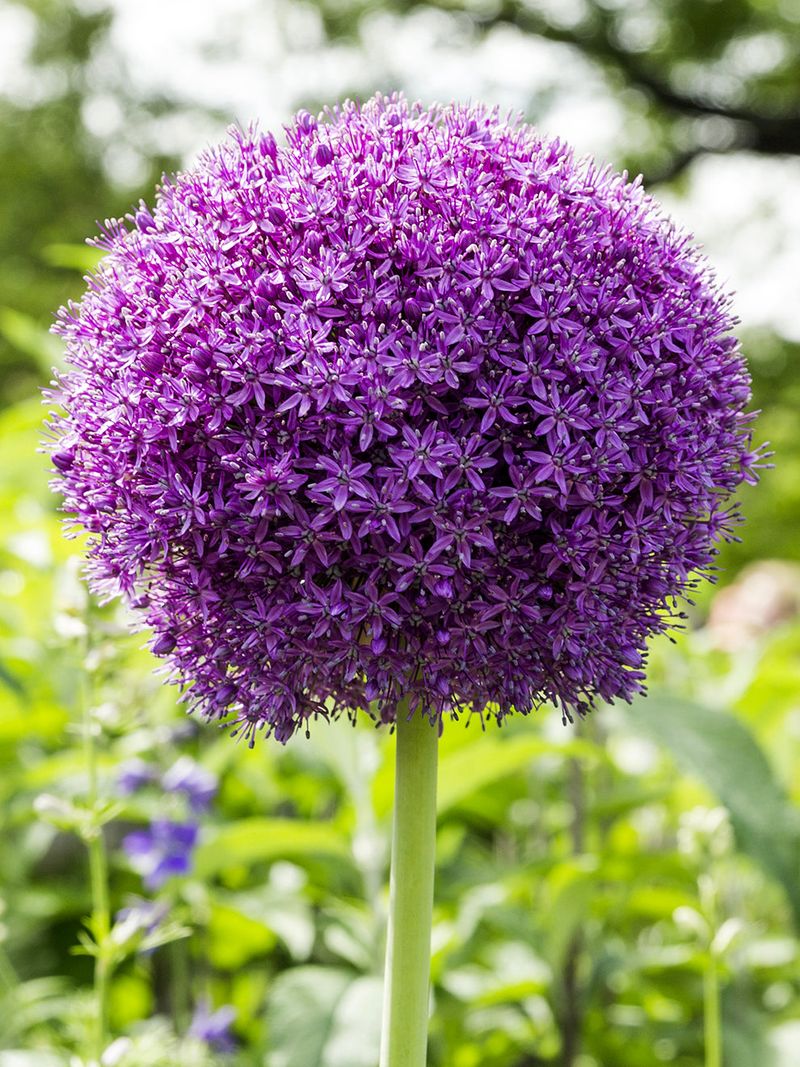
Few plants stop deer and rabbits as reliably as ornamental alliums. These flowering members of the onion family produce a pungent sulfur-based scent that browsing animals find deeply offensive.
The smell is not subtle, especially when the foliage is brushed or damaged. A single grazing attempt is usually enough to send deer or rabbits retreating in the opposite direction.
Ornamental alliums produce stunning globe-shaped flower heads in shades of purple, lavender, white, and pink. Some varieties, like Allium giganteum, send up flower heads as large as a softball on stems reaching four feet tall.
Plant allium bulbs in fall for a spectacular spring display. They prefer full sun and excellent drainage, conditions that are easy to create in raised beds or sloped areas of an Oregon garden.
One clever strategy is to interplant alliums with tulips and other vulnerable spring bulbs. The onion scent acts as a natural deterrent, helping protect neighboring plants that would otherwise be targeted.
After the flowers fade, the dried seed heads remain attractive for weeks. They add interesting texture to the summer garden and can even be used in dried floral arrangements.
Alliums also attract a wide range of pollinators, from bumblebees to butterflies. The flowers are rich in nectar and easy for insects to access, making them a valuable addition to any pollinator-friendly planting.
Serious wildlife protection rarely looks this good in spring. Alliums prove that showstopping color and smart defense can grow side by side.
7. Russian Sage Deters With Aromatic Foliage
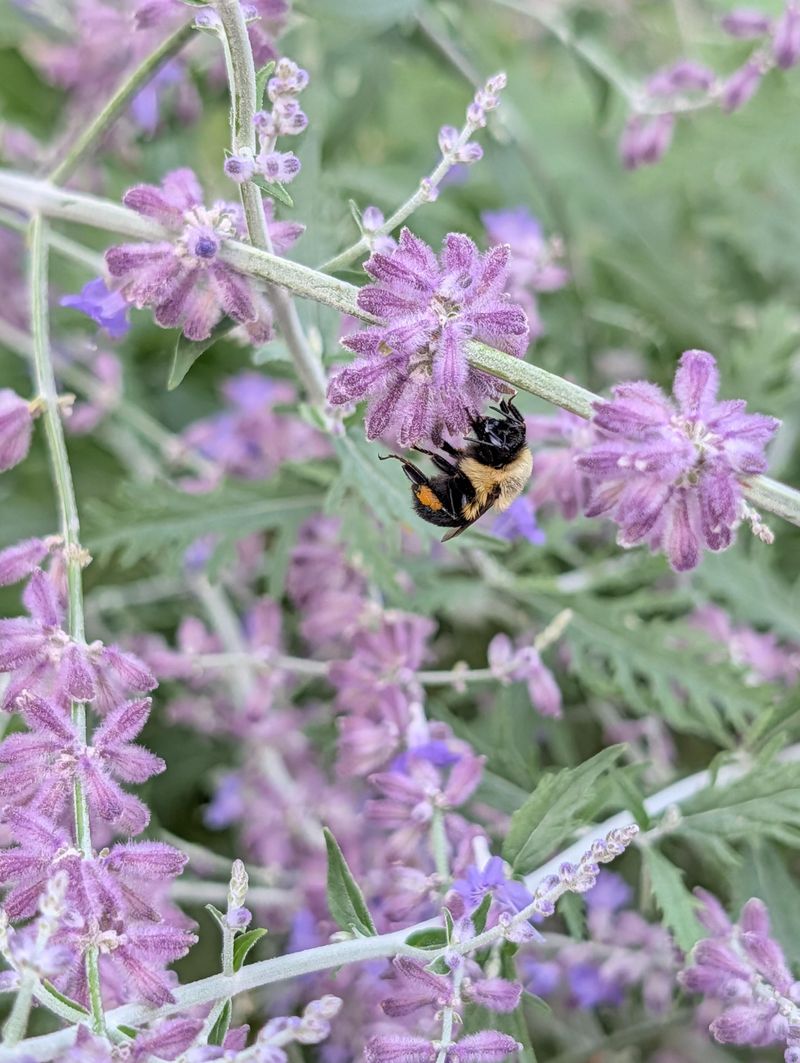
Russian sage is the kind of plant that earns its place in a garden through sheer toughness and beauty. The silvery stems and lavender-blue flower spikes create a hazy, dreamy effect that looks stunning from midsummer through fall.
Deer and rabbits rarely touch it, and the reason is straightforward. The entire plant is intensely aromatic, releasing a sharp, sage-like scent that browsing animals find repellent.
The fragrance is not unpleasant to humans, many gardeners actually enjoy the herbal aroma when brushing past the plants on a warm afternoon. But for animals with sensitive noses, it is simply too overwhelming to ignore.
Russian sage thrives in full sun and lean, well-drained soil. It handles Oregon’s dry summers exceptionally well once established, making it an excellent low-water choice for sunny borders and hillside plantings.
The plants reach three to five feet tall and wide, creating substantial, airy clumps that soften the edges of paths and driveways. Pair them with ornamental grasses and echinacea for a naturalistic, prairie-inspired look.
Cut Russian sage back hard in early spring, just as new growth begins to emerge from the base. This keeps the plants compact and encourages the most vigorous blooming.
Bees and butterflies flock to the flowers throughout the long bloom season. The combination of pollinator appeal and wildlife resistance makes Russian sage a genuinely smart choice for the modern Oregon garden.
Plants that work this hard while looking this good deserve a permanent spot in any deer-challenged landscape.
8. Catmint Keeps Grazers At A Distance
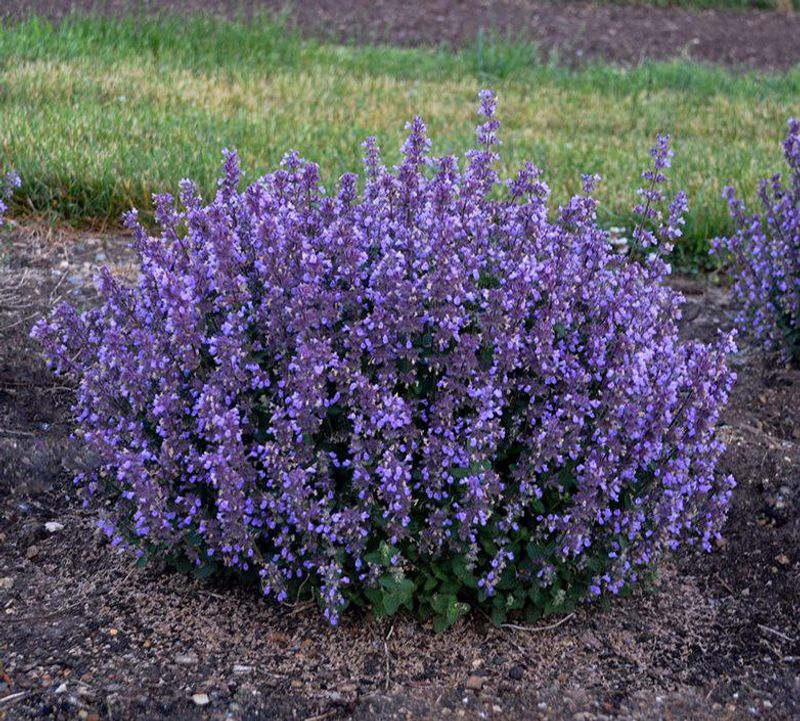
Catmint is one of those plants that seems almost too easy to grow. It tumbles over path edges in soft mounds of silver-green foliage, covered in waves of lavender-blue flowers from late spring straight into fall.
Despite its delicate appearance, catmint is a serious workhorse in the deer-resistant perennial garden. The aromatic oils in its leaves create a strong, minty scent that deer and rabbits consistently avoid.
Gardeners dealing with persistent browsing pressure in Oregon often call catmint their secret weapon. Once established, it forms a spreading, fragrant barrier that seems to discourage grazers from venturing further into the border.
Full sun and well-drained soil are all catmint really needs to perform at its best. It tolerates Oregon’s wet winters with ease and bounces back quickly in spring, often leafing out earlier than neighboring perennials.
After the first flush of bloom, shear the plants back by about half. Within a few weeks, a fresh wave of flowers emerges, extending the season well into autumn.
Catmint pairs beautifully with roses, salvias, and ornamental grasses. The soft blue tones complement almost any color palette, making it one of the most versatile plants in the perennial toolkit.
Pollinators are wild about catmint, with bumblebees and honeybees visiting throughout the bloom season. Wildlife resistance paired with pollinator appeal is exactly what makes this perennial stand out.
Plant catmint generously and let it weave through your borders for a garden that looks effortless and stays protected all season long.