The Real Reasons Your Ficus Is Dropping Leaves This Winter In Texas

Imagine you wake up, grab your coffee, and notice a small pile of ficus leaves on the floor. Again.
If you live in Texas, winter can send your ficus into full drama mode, even when you think you are doing everything right. Sudden temperature swings, dry indoor heat, and shorter days can all confuse this tropical beauty.
The good news is your plant is not being difficult on purpose. It is reacting to changes in its environment, and most of the causes are easy to fix once you know what to look for.
Before you give up on your once lush, glossy companion, let’s uncover what is really going on behind the leaf drop.
From sneaky watering mistakes to hidden light issues, these are the real reasons your ficus struggles during a Texas winter.
1. Temperature Fluctuations Shock The System
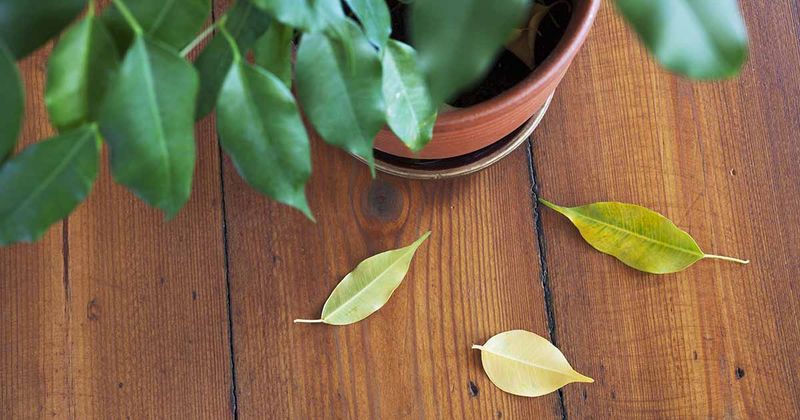
Ficus trees absolutely hate sudden temperature changes. These tropical plants evolved in stable, warm environments where temperatures stay consistent year-round. When you bring that expectation into a Texas home during winter, problems start quickly.
Your heating system cycles on and off throughout the day and night. Each time it kicks on, warm air blasts through vents.
When it shuts off, temperatures drop several degrees. Your ficus feels every single one of these swings. The tree’s internal processes get confused by the constant ups and downs.
Cold drafts from windows and doors create another layer of stress. Even if your thermostat reads 72 degrees, the area right next to that window might drop to 55 degrees at night.
Your ficus sits there experiencing what feels like two different climate zones in the same room.
Texas winters make this worse because outdoor temperatures can vary wildly. One week might bring 70-degree sunshine while the next drops to freezing.
Your home’s temperature follows these outdoor patterns to some extent. The ficus responds by dropping leaves as a protective measure.
Moving your plant away from windows, exterior doors, and heating vents helps tremendously. Find a spot with stable temperatures between 65 and 75 degrees.
Avoid placing your ficus where cold air might settle or where heat blasts directly onto leaves. Give your tree a few weeks in its new location and watch for improvement.
Consistency matters more than the exact temperature when helping your ficus adjust to Texas winter conditions.
2. Low Humidity Levels Stress The Leaves
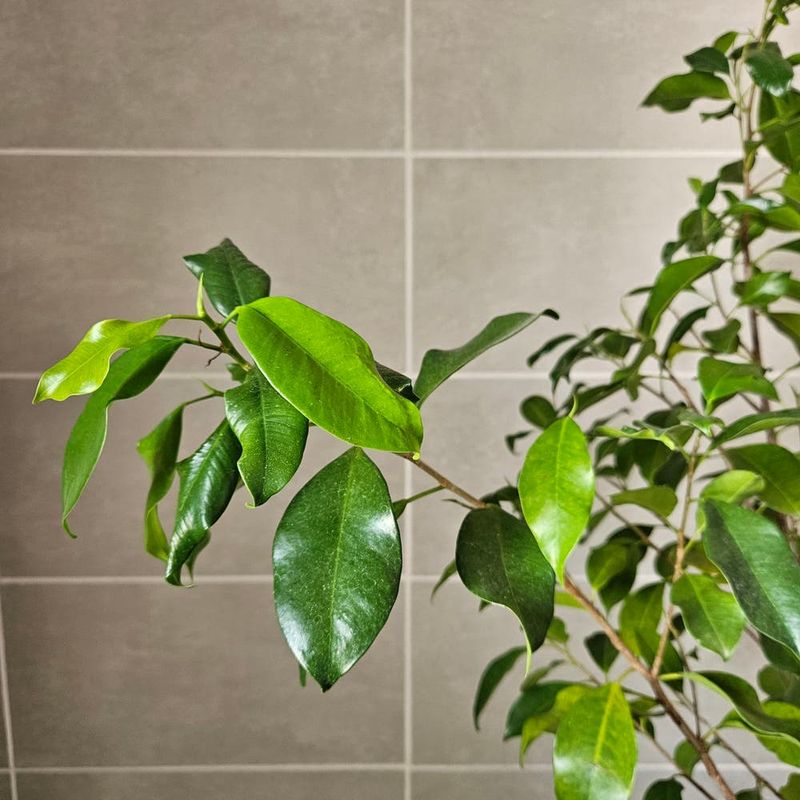
Winter air in Texas homes becomes surprisingly dry. Heating systems remove moisture from indoor spaces faster than you might realize.
Your ficus comes from humid tropical forests where moisture hangs thick in the air all day long.
When humidity drops below 40 percent, ficus leaves start suffering immediately. The leaf edges turn brown first, then crisp up and eventually fall off.
Your tree tries to conserve moisture by shedding leaves it cannot support anymore. This survival strategy makes sense in nature but looks alarming in your living room.
Central heating is the main culprit behind dry indoor air. Every time your furnace runs, it pulls moisture out of the environment.
Texas homes often lack the natural humidity found in other regions. Our climate already tends toward dryness, especially during winter cold fronts.
You can measure humidity with an inexpensive hygrometer from any hardware store. Most ficus trees prefer humidity between 50 and 60 percent.
Anything below 40 percent causes visible stress within days. Brown leaf tips and edges appear first, followed by yellowing and dropping.
Increasing humidity around your ficus requires consistent effort. Place a humidifier near your tree and run it daily.
Group several plants together since they create their own micro-climate through transpiration. Set your ficus pot on a tray filled with pebbles and water, making sure the pot sits above the waterline.
Mist the leaves every few days, preferably in the morning so foliage dries before evening. These simple steps make your Texas home feel more like a tropical paradise for your ficus.
3. Overwatering Creates Root Problems
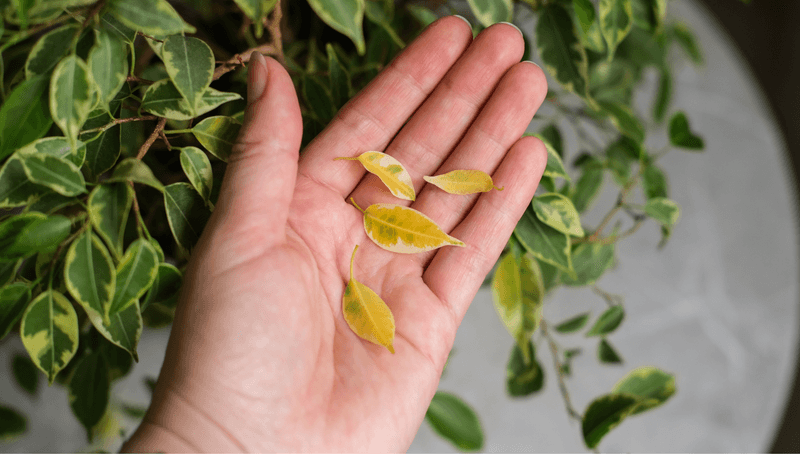
Many plant owners increase watering when they see leaves dropping. This instinct actually makes the problem worse for ficus trees during winter. Your tree needs far less water when temperatures cool and daylight hours shorten.
Ficus roots require oxygen just as much as they need water. Soggy soil fills all the air pockets between soil particles.
Roots sitting in waterlogged conditions cannot breathe properly. They start to deteriorate, turning brown and mushy.
Damaged roots cannot absorb nutrients or water efficiently, so the tree drops leaves in response.
Winter in Texas means your ficus grows much slower than during summer. Slower growth equals reduced water needs.
The soil takes longer to dry out because lower light levels and cooler temperatures mean less evaporation.
What worked as a watering schedule in July becomes too much in January. Check your soil before adding water. Stick your finger two inches deep into the potting mix.
Only water when the soil feels dry at that depth. The top inch might look dry while deeper soil remains quite moist. This simple test prevents overwatering mistakes.
Your pot needs drainage holes at the bottom. Water should flow through the soil and exit freely.
Empty any saucer under the pot within an hour of watering. Standing water gets reabsorbed into the soil, keeping roots too wet.
Most ficus trees in Texas homes need watering only once every ten to fourteen days during winter. Watch your specific plant and adjust based on how quickly the soil dries. Yellow leaves that feel soft often signal too much water rather than too little.
4. Insufficient Light Reduces Photosynthesis
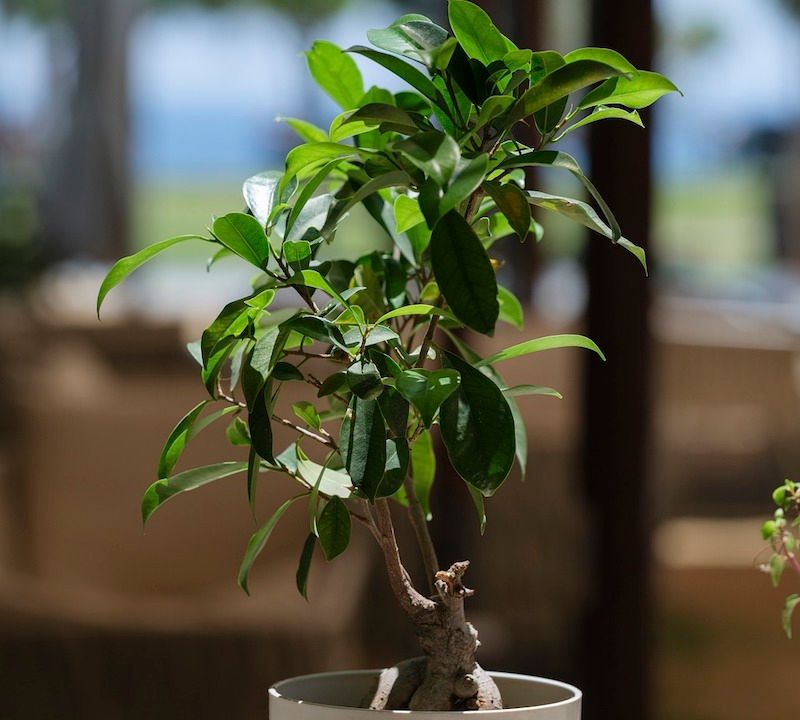
Shorter winter days mean less natural light reaches your ficus. Texas still gets decent sunshine during winter, but the sun sits lower in the sky and daylight hours decrease significantly. Your tree notices this change right away.
Ficus trees are tropical plants that evolved under bright, consistent light. They need strong indirect light for at least six hours daily to maintain healthy foliage.
When light levels drop, the tree cannot produce enough energy through photosynthesis. Leaves become expensive to maintain, so the plant sheds them to conserve resources.
Moving your ficus away from windows during winter to avoid cold drafts often creates a lighting problem. That cozy corner might protect your tree from temperature swings but leaves it sitting in dim conditions.
The ficus must choose between cold stress and light deprivation, and neither option is ideal.
South-facing windows provide the best winter light in Texas. Eastern exposure works well too, giving your tree bright morning sun without harsh afternoon heat.
Western windows can work if you filter intense afternoon rays with a sheer curtain. Northern windows rarely provide enough light for ficus trees year-round.
Supplemental lighting makes a huge difference during Texas winters. LED grow lights are affordable and energy-efficient.
Position a grow light about two feet above your ficus and run it for ten to twelve hours daily. This artificial light compensates for shorter days and weaker winter sun.
Your tree will maintain more leaves and might even produce new growth. Clean your windows regularly too, since dirty glass blocks surprising amounts of light.
Every bit of brightness helps your ficus stay healthy through the darker winter months in Texas.
5. Recent Location Changes Cause Adjustment Stress
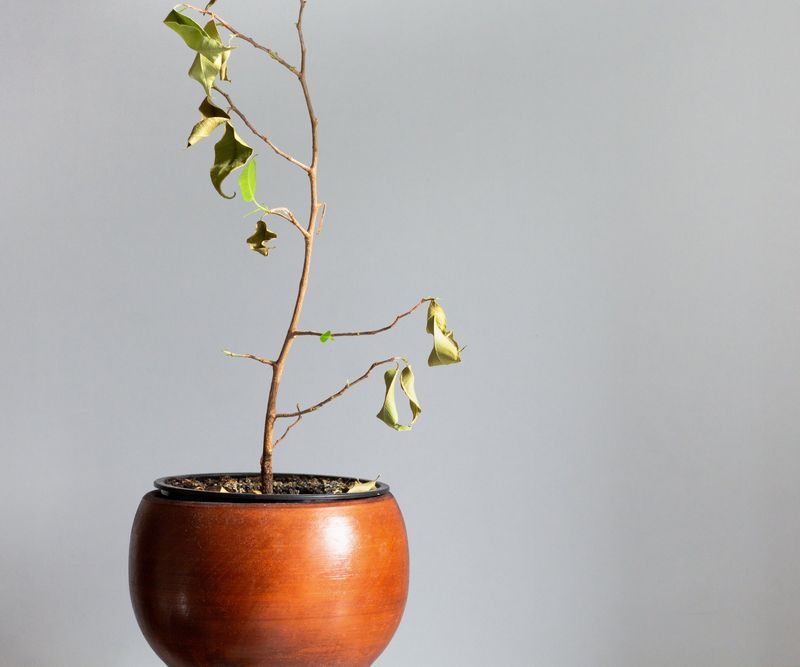
Did you recently move your ficus to a different spot? Perhaps you rearranged furniture or brought the tree inside from a patio. Even small moves can trigger major leaf drop in these sensitive plants.
Ficus trees are notoriously dramatic about location changes. They adapt to their specific environment, from light direction to air circulation patterns.
When you move the tree, everything changes at once. The plant experiences this as major stress and responds by dropping leaves.
Texas homeowners often move ficus trees indoors when winter temperatures threaten to dip below 50 degrees. This protective move is necessary but causes adjustment problems.
Outdoor conditions differ drastically from indoor environments. Light intensity, humidity, temperature stability, and air movement all change simultaneously. Your ficus essentially needs to relearn how to function in this new setting.
The adjustment period typically lasts four to six weeks. During this time, expect continued leaf drop even if you provide perfect care.
Your tree is not sick or struggling. It simply sheds leaves grown for outdoor conditions and prepares to produce new foliage adapted to indoor life.
Minimize stress during the transition by making the new location as similar as possible to the old one. If your ficus lived in bright outdoor light, place it near your brightest window.
Match temperature and humidity conditions as closely as you can. Avoid moving the tree again once you find a good spot.
Every relocation restarts the adjustment clock. Be patient with your ficus through this transition period.
New growth will eventually appear, and your tree will settle into its winter home. Most Texas ficus trees adapt successfully if you give them time and consistent care.
6. Pest Infestations Weaken The Plant
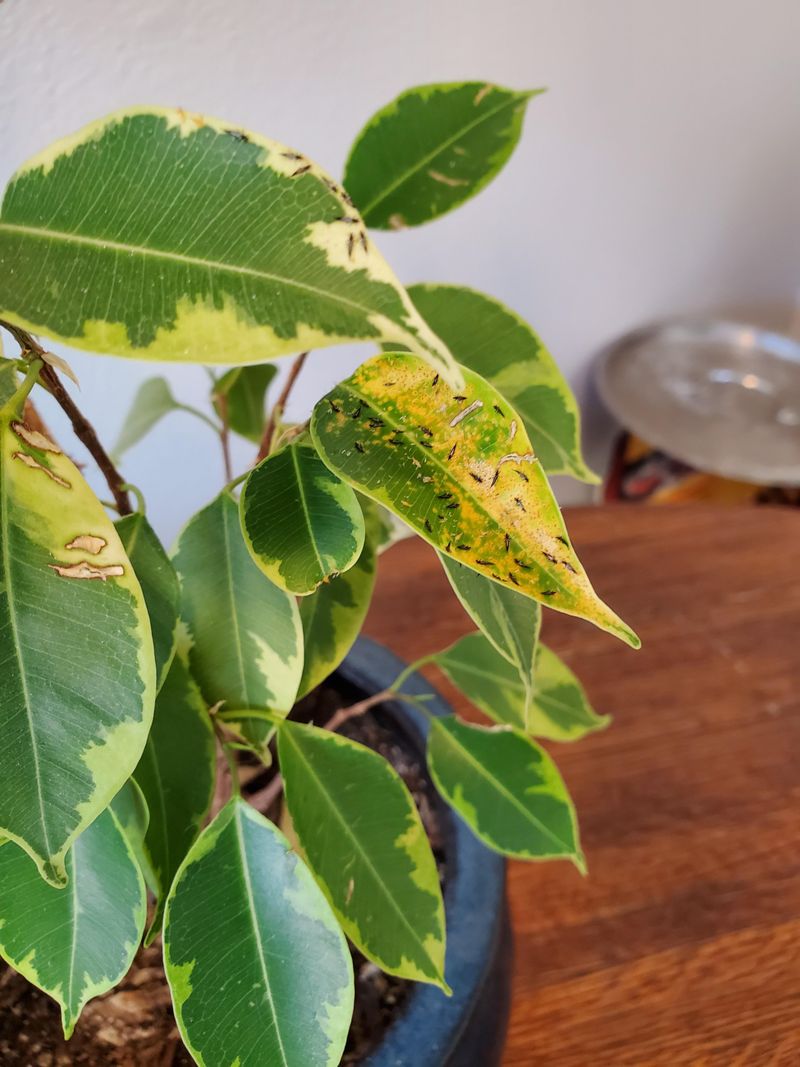
Pests love the warm, dry conditions inside Texas homes during winter. Spider mites thrive when humidity drops and air circulation decreases.
Scale insects and mealybugs also become more active on stressed indoor plants. Your ficus might be dropping leaves because tiny invaders are sucking nutrients from the foliage.
Spider mites are nearly invisible to the naked eye. Look for fine webbing on leaf undersides and between stems.
The leaves develop tiny yellow or brown spots where mites have been feeding. Heavy infestations cause leaves to turn completely yellow and drop off rapidly.
Scale insects look like small brown or tan bumps stuck to stems and leaf undersides. They do not move once attached, so people often mistake them for part of the plant.
These pests drain sap from your ficus, weakening the entire tree. Leaves turn yellow and fall as the infestation spreads.
Check your ficus carefully every week during winter. Examine both sides of leaves, paying special attention to new growth.
Look along stems and in the crotches where branches meet. Early detection makes treatment much easier and more effective.
Treat pest problems immediately before they cause serious damage. Spray your entire tree with insecticidal soap or neem oil, coating all leaf surfaces thoroughly.
Repeat applications every five to seven days for three weeks to catch newly hatched pests. Increase humidity around your ficus since spider mites hate moisture.
Wipe leaves with a damp cloth to remove pests physically. Isolate infected plants from other houseplants to prevent spreading.
Most pest problems in Texas homes resolve with consistent treatment, and your ficus will stop dropping leaves once the infestation is controlled.
7. Natural Seasonal Adjustment Process
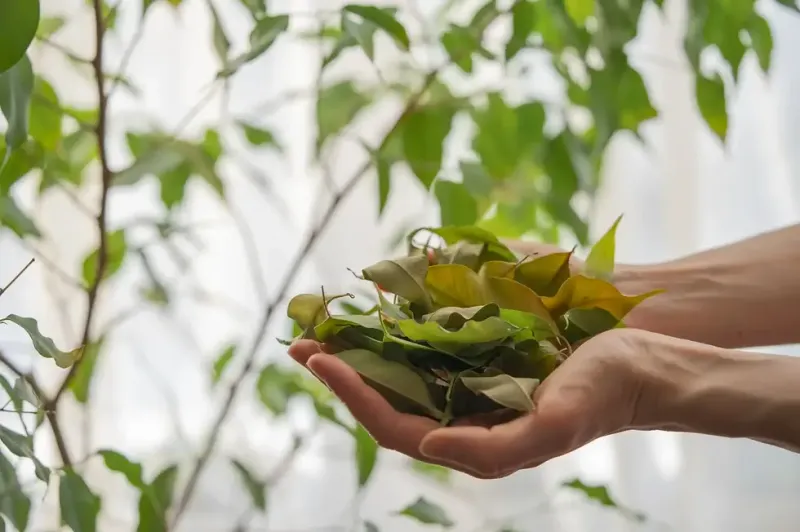
Sometimes your ficus drops leaves simply because it is adjusting to seasonal changes. This natural process happens even when you provide excellent care.
Understanding this helps you avoid unnecessary worry or overreacting with excessive interventions.
Ficus trees come from regions near the equator where seasons barely exist. However, these plants still have internal rhythms that respond to environmental cues.
Shorter days and cooler temperatures signal the tree to slow down. Some leaf drop is part of this natural slowdown process.
Older leaves near the interior of the tree typically fall first during seasonal adjustments. These leaves have been working hard for months and naturally reach the end of their lifespan.
Your ficus sheds them to make room for fresh growth later. This differs from stress-related leaf drop, which affects leaves randomly throughout the tree.
Texas winters are mild compared to northern states, but our ficus trees still sense the seasonal shift. The change might seem subtle to us, but plants are incredibly sensitive to day length and light quality.
Your tree knows winter has arrived even if temperatures only drop ten degrees. Monitor the pattern of leaf drop carefully. If you see five to ten leaves falling per week but the tree otherwise looks healthy, this is probably normal seasonal adjustment.
New growth at branch tips indicates your ficus is fine. Consistent care through winter helps your tree maintain as much foliage as possible.
Avoid fertilizing during this slow-growth period since your ficus cannot use extra nutrients efficiently. Resume feeding in spring when new growth appears.
Accept that some leaf loss is natural and focus on keeping your tree comfortable until Texas weather warms up again.