The String Trimmer Habit That Can Damage Young Arizona Trees
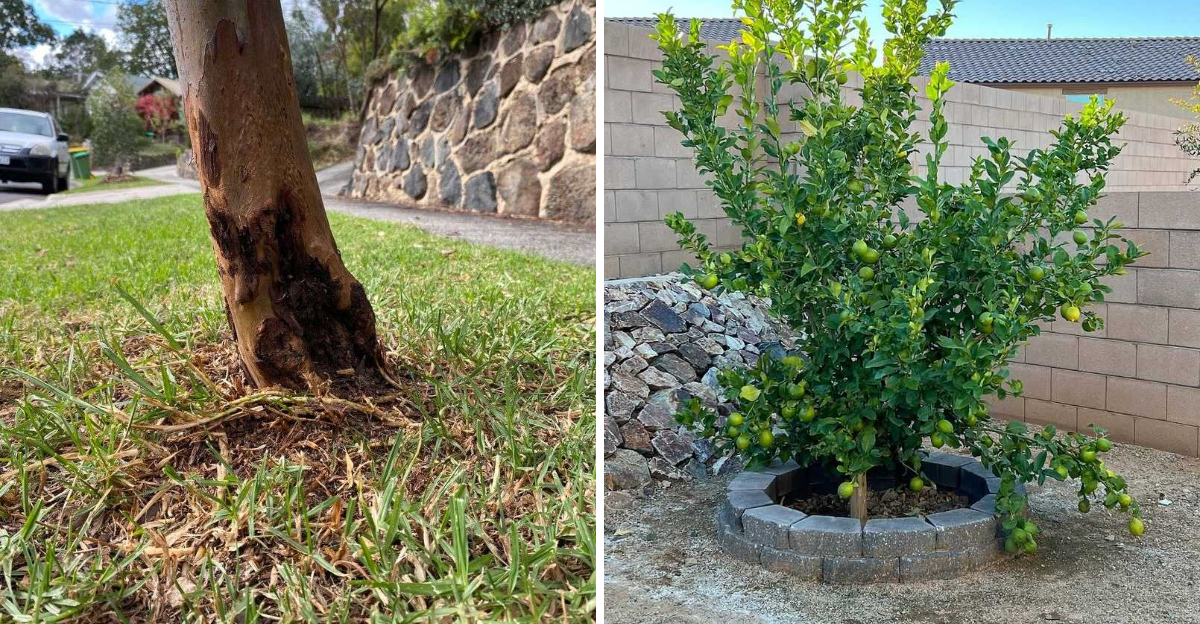
It only takes a split second for a string trimmer to leave a wound that a young tree may struggle with for years. Most people never notice the damage until bark starts peeling or growth begins slowing down.
By then, the injury has already exposed the trunk to problems that could have been avoided with a simple change in routine.
Protecting young trees should be part of every mowing job, especially in Arizona, where extreme summer heat adds extra stress to newly planted landscapes.
The trunk needs every bit of healthy bark to move water and nutrients through the tree.
Before you start trimming around the base, make sure you are not creating a problem while trying to tidy the yard. One small habit can make the difference between a tree that struggles and one that thrives.
1. Repeated Contact Leaves Lasting Wounds
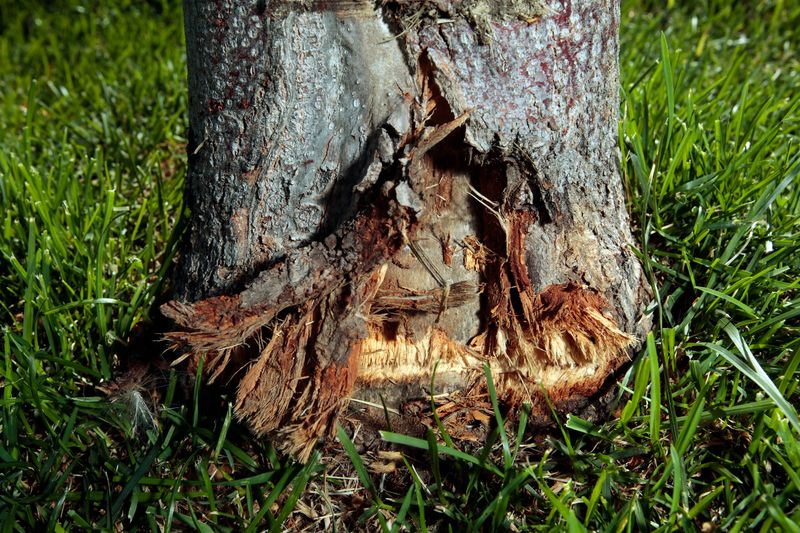
Bark damage adds up faster than most people expect. One small nick from a trimmer line might look harmless.
Two or three nicks in the same spot, season after season, can strip away the protective layer a young tree depends on.
Under the outer bark sits a thin tissue called the cambium. It carries water and nutrients between the roots and leaves.
Scraping through it even partially can slow that flow and weaken the tree over time.
Young trees in hot, dry climates are especially vulnerable. Their bark is still thin and tight.
It has not had years to toughen up like mature trees have. Each trimmer pass that grazes the trunk adds stress the tree has to recover from.
Repeated wounds in the same area can prevent full healing. Scar tissue may form, but it does not always restore full function to the damaged tissue underneath.
Over multiple growing seasons, the damage compounds.
Trimmer wounds also create entry points for insects and fungal pathogens. In warm climates, these threats are active for much of the year.
A small wound left unprotected can attract problems that healthy bark would normally block.
2. A Wide Mulch Ring Creates A Safer Buffer
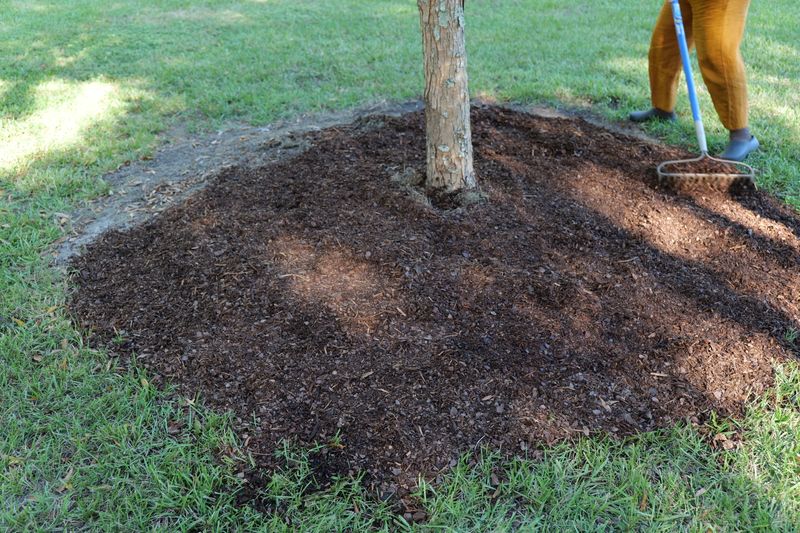
Mulch is one of the most underused tools in a home landscape. A wide ring around a young tree does more than look tidy.
It physically keeps the trimmer away from the trunk.
When grass or weeds grow right up to the base of a tree, trimming them means getting close. The closer you get, the higher the chance of clipping the bark.
A mulch ring removes that problem by eliminating the need to trim near the trunk at all.
Aim for a ring at least two to three feet wide around the base. In warm, dry regions, wider is often better.
Bare soil around a trunk dries out fast, and mulch helps hold some moisture near the roots during hot months.
Wood chip mulch works well in most yards. Keep it a few inches away from the actual trunk.
Piling mulch directly against bark can trap moisture and encourage rot or pest activity near the base.
Your Arizona Garden Changes Every Week. Your Plan Should Too.
Gardening in Arizona changes quickly throughout the season. Every Friday you’ll receive a simple weekly plan showing exactly what to plant, prune, fertilize, harvest, and protect so you never miss the right timing.
Refreshing the mulch once or twice a year keeps the ring effective. It breaks down over time and thins out.
Adding a fresh layer keeps weeds from pushing back through and maintains the buffer zone you need.
Setting up a mulch ring when a tree is first planted is smart planning.
3. Avoid Cutting Right Against The Bark
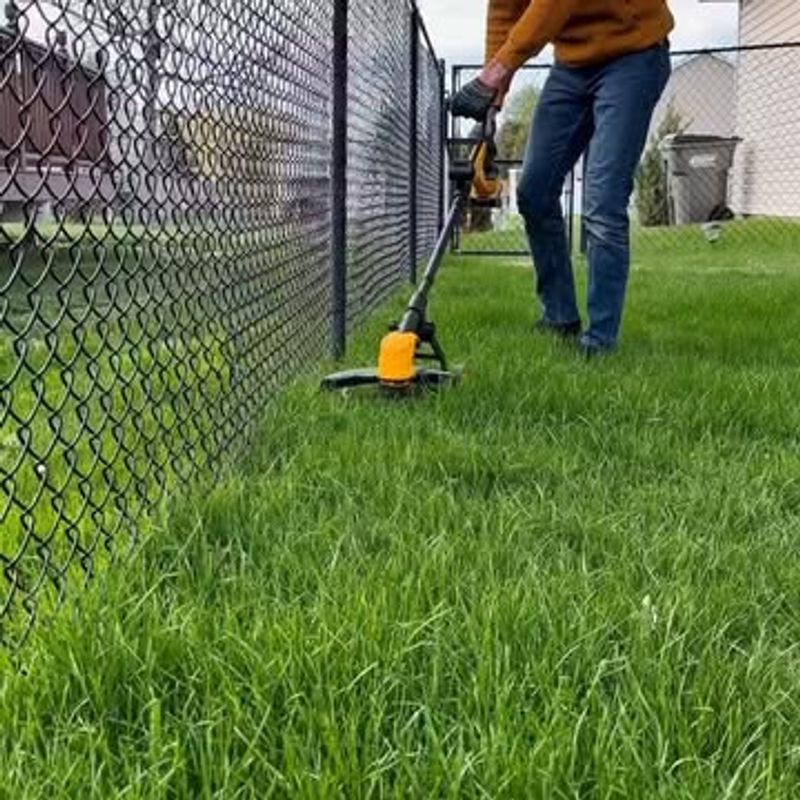
Getting too close is the core of the problem. String trimmer lines spin fast, and at close range, they hit bark with real force.
Even a brief contact at full speed can remove bark in a single pass.
Most people do not realize how wide the trimmer line swings. It looks controlled, but the outer edge of the cutting path reaches further than expected.
That extra inch or two is often what catches the trunk.
Keeping the trimmer head angled away from the tree helps. Trimming in a direction that pulls the line away from the bark, rather than sweeping toward it, reduces the risk of accidental contact.
It takes a little practice but becomes natural quickly.
Reducing speed near trees is also worth trying. Some trimmers have variable throttle settings.
Running at lower power near trunks gives more control and reduces the force of any accidental contact.
Grass and weeds close to the trunk can be dealt with in other ways. Hand pruning, small scissors, or a handheld weed tool can reach tight spots without putting the trimmer line near the bark.
It takes a bit more time but protects the tree.
Developing the habit of stopping a few inches short of the trunk on every pass is a small change with real benefits.
4. Remove Weeds By Hand Near Young Trees
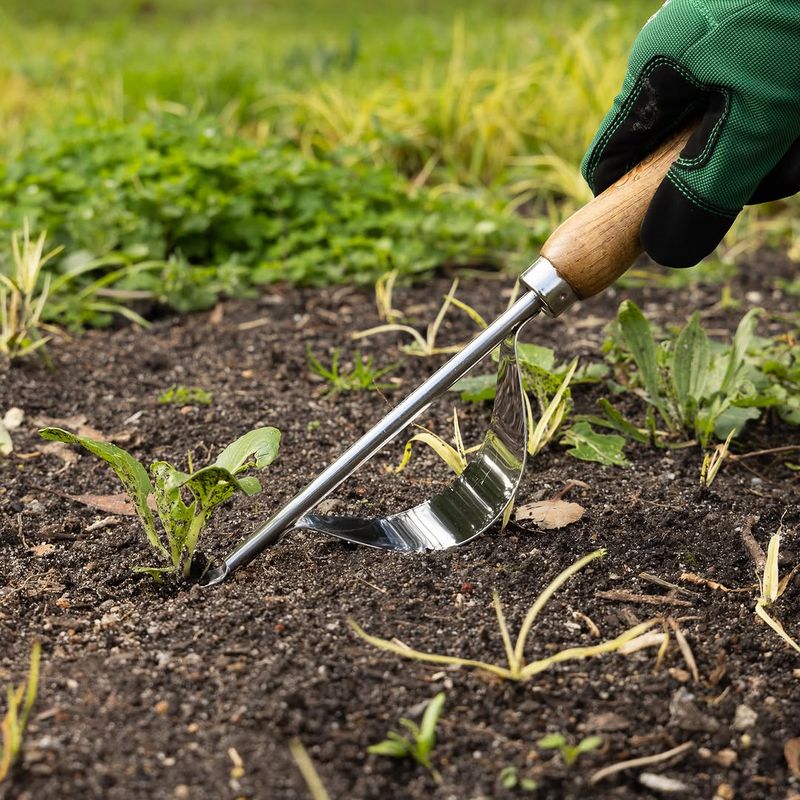
Hand weeding near young trees is not glamorous work, but it is one of the safest choices you can make. No spinning line, no vibration, no risk of bark contact.
Just careful pulling and a little patience.
Weeds growing right at the base of a tree are the ones most likely to cause trouble during trimming. Reaching in with a string trimmer to get them means the line is inches from the trunk.
That is a risky spot to be working at full speed.
Pulling weeds by hand when the soil is slightly moist makes the job easier. Roots come out more cleanly, and you are less likely to disturb the tree roots nearby.
Dry, compacted soil can make hand weeding harder and more disruptive.
A simple hand tool like a narrow weeder or hori-hori knife works well in tight spaces. It lets you get under the weed root without digging broadly around the trunk.
Precision matters more than speed near a young tree.
Doing a quick hand weed pass once every week or two keeps the population manageable. Letting weeds build up makes the job harder and tempts people to reach in with a trimmer instead.
In Arizona, warm soil temperatures mean weeds can grow year-round in some areas.
5. Tree Guards Shield Thin Bark From Injury
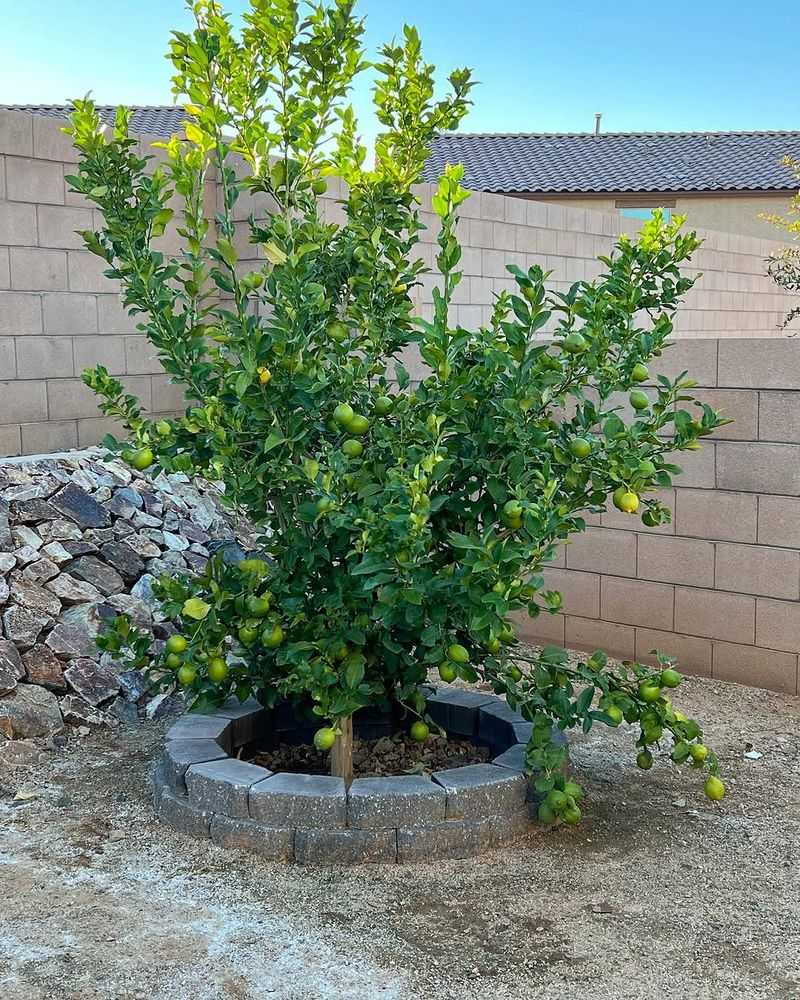
Tree guards are a practical solution that many homeowners overlook. Wrapping the lower trunk of a young tree with a protective guard creates a physical barrier between the bark and any equipment that gets too close.
Plastic spiral guards and mesh sleeves are both widely available at garden centers. They fit snugly around the trunk and take only a minute or two to install.
When a trimmer line makes contact, it hits the guard instead of the bark.
Young trees in Arizona often have especially thin, smooth bark. The intense sun and dry air mean bark stress is already a factor.
Adding a guard reduces one more source of damage during a time when the tree is still building its defenses.
Guards need to be checked regularly. As a tree grows, the guard can become too tight and restrict the trunk if left in place too long.
Checking fit every few months prevents the guard itself from becoming a problem.
Removing the guard during periods when trimming is not happening can also let the bark breathe and harden naturally. Some gardeners use guards seasonally, putting them on before the active mowing season and removing them afterward.
6. Check For Fresh Scrapes After Every Mowing
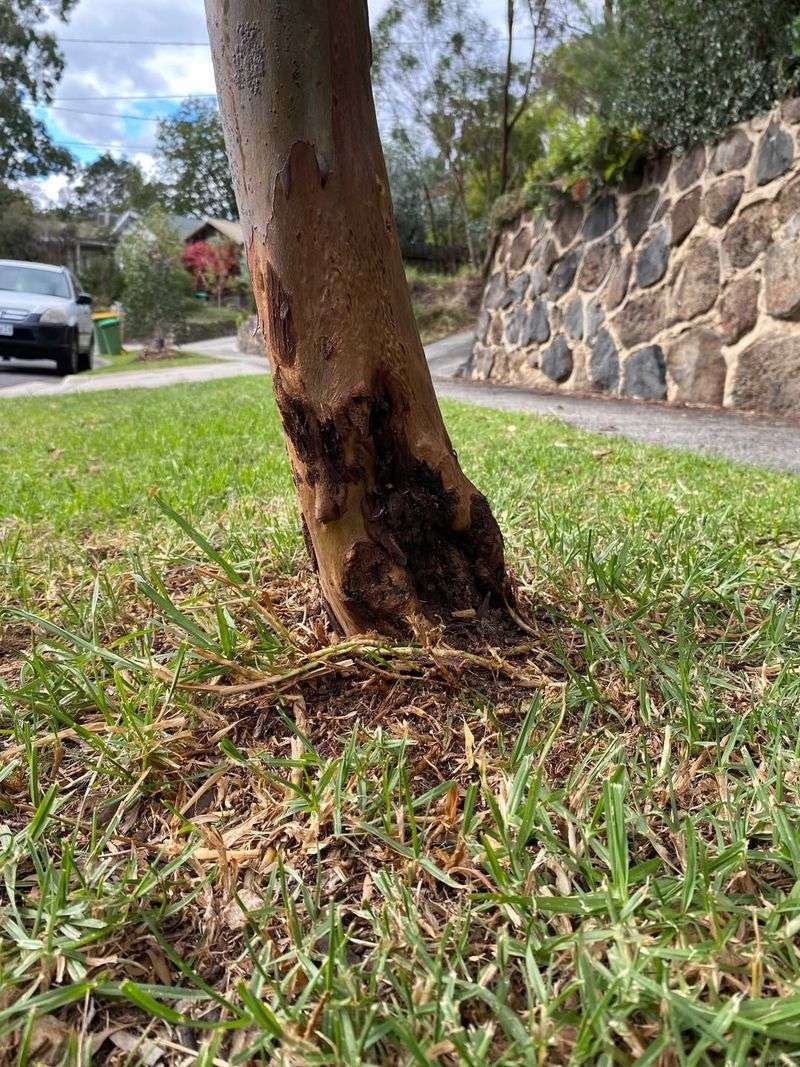
Catching damage early matters. A fresh scrape is much easier to manage than one that has dried out, cracked, or attracted insects.
Making a quick visual check part of the post-mowing routine costs almost no time.
Walk around each young tree after trimming or mowing is done. Look at the lower six to ten inches of the trunk.
Fresh trimmer contact usually shows up as a pale or greenish exposed patch where the outer bark has been removed.
Small scrapes often heal on their own if caught early and kept clean. Larger wounds that expose the inner wood may need more attention.
Keeping the damaged area dry and preventing additional trimmer strikes gives the tree the best chance to recover naturally.
Photographing the trunk once a month can be surprisingly useful. Comparing photos over time shows whether a wound is shrinking as the tree heals or growing larger from repeated contact.
It takes seconds and gives you a clear record.
Scrapes found consistently in the same spot are a sign that trimming habits need to change. If the damage keeps appearing at the same height and location, the trimmer line is hitting that spot repeatedly.
Adjusting technique or adding a guard there directly addresses the pattern.
7. Young Trees Need Extra Care Around Power Equipment
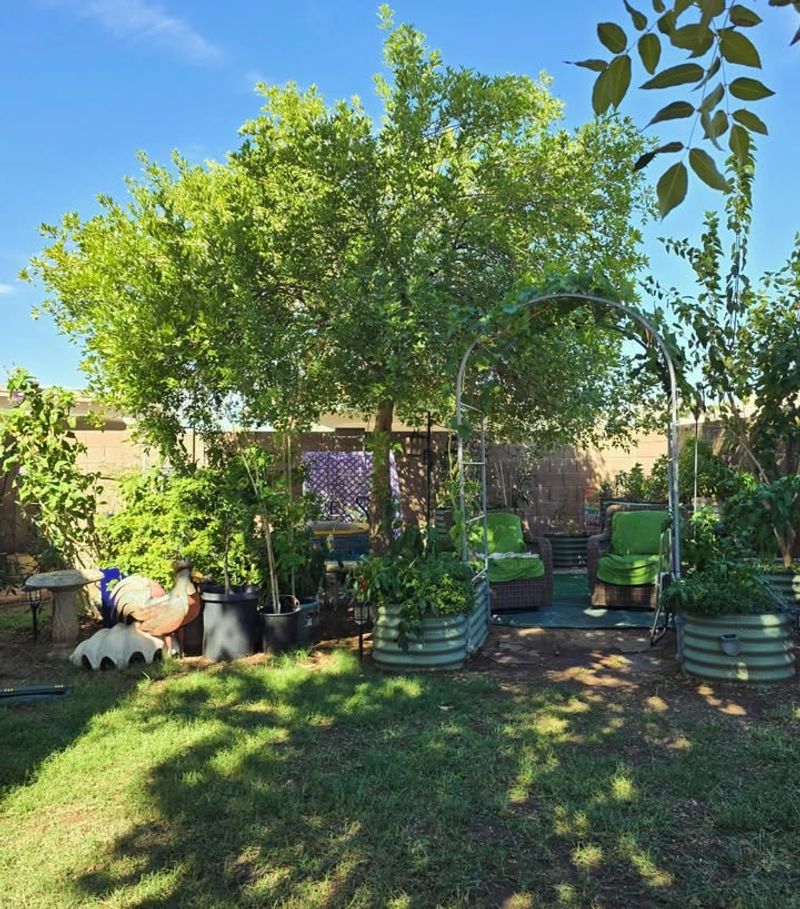
Power equipment moves fast and covers a lot of ground. That efficiency is great for large open areas, but near young trees, speed and reach become liabilities.
Slowing down changes the outcome.
A young tree is not just a small version of a mature one. Its root system is still shallow and expanding.
Its bark is thin. Its vascular tissue is close to the surface.
It handles stress differently than an established tree does.
Mowing patterns matter too. Repeatedly circling a young tree in the same direction means the trimmer consistently approaches from the same angle.
Changing direction occasionally reduces the chance of building up damage on one side of the trunk.
Keeping equipment well-maintained also helps. A worn trimmer head can wobble and swing unpredictably.
A fresh line and a properly balanced head give you better control, which means more accurate trimming near sensitive areas.
Training anyone who helps with yard work matters just as much as your own habits. A family member or hired helper who does not know about trimmer damage can undo careful habits in a single session.
Pointing out the young trees before handing over the equipment is a simple step.
Across Arizona, homeowners are planting more trees to add shade and reduce heat around their properties.