The Summer Leaf Changes Arizona Citrus Tree Owners Shouldn’t Ignore
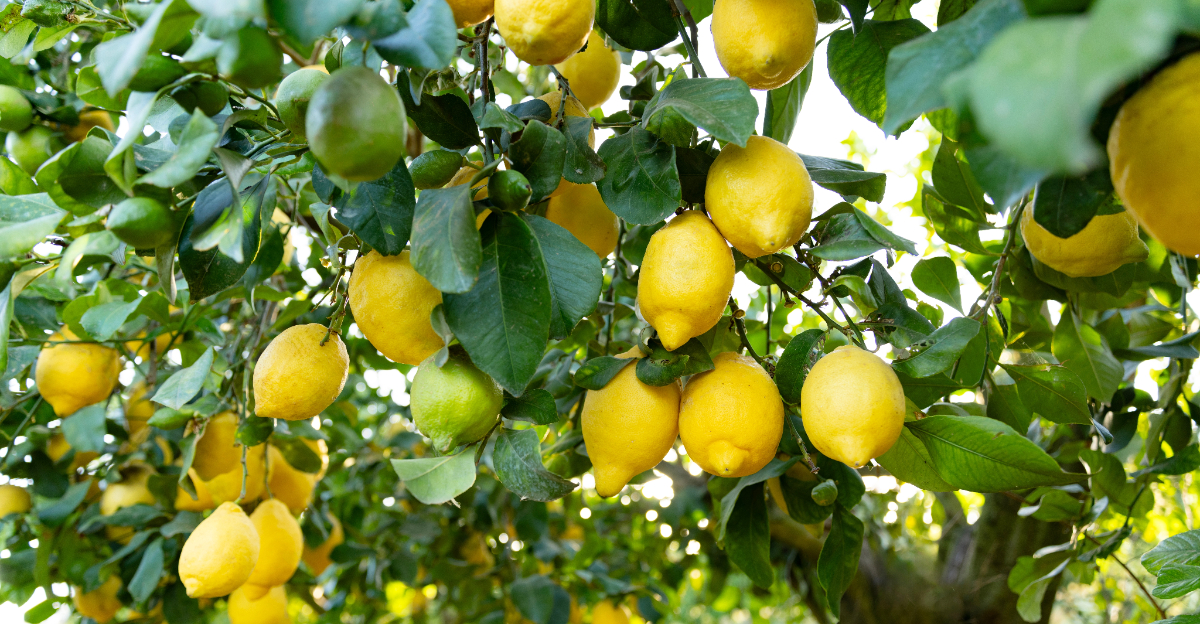
Healthy citrus trees rarely stay exactly the same throughout the year. Leaves change appearance as the seasons change, and summer often brings the most noticeable differences.
A tree that looked perfect in spring may suddenly develop yellow patches, curled leaves, or unusual discoloration once temperatures start climbing.
Seeing those changes can be unsettling because leaves are usually the first thing people notice. They are also one of the easiest ways a tree communicates that something is happening.
The difficult part is figuring out whether the change is expected or whether it points to a problem that should not be ignored.
Citrus trees face plenty of stress during an Arizona summer. Heat, sunlight, water conditions, and nutrient availability can all affect the appearance of the foliage.
Some leaf changes are harmless and temporary, while others can provide an early warning that the tree needs attention before more serious issues develop.
1. Yellow Leaves Can Point To Nutrient Deficiencies
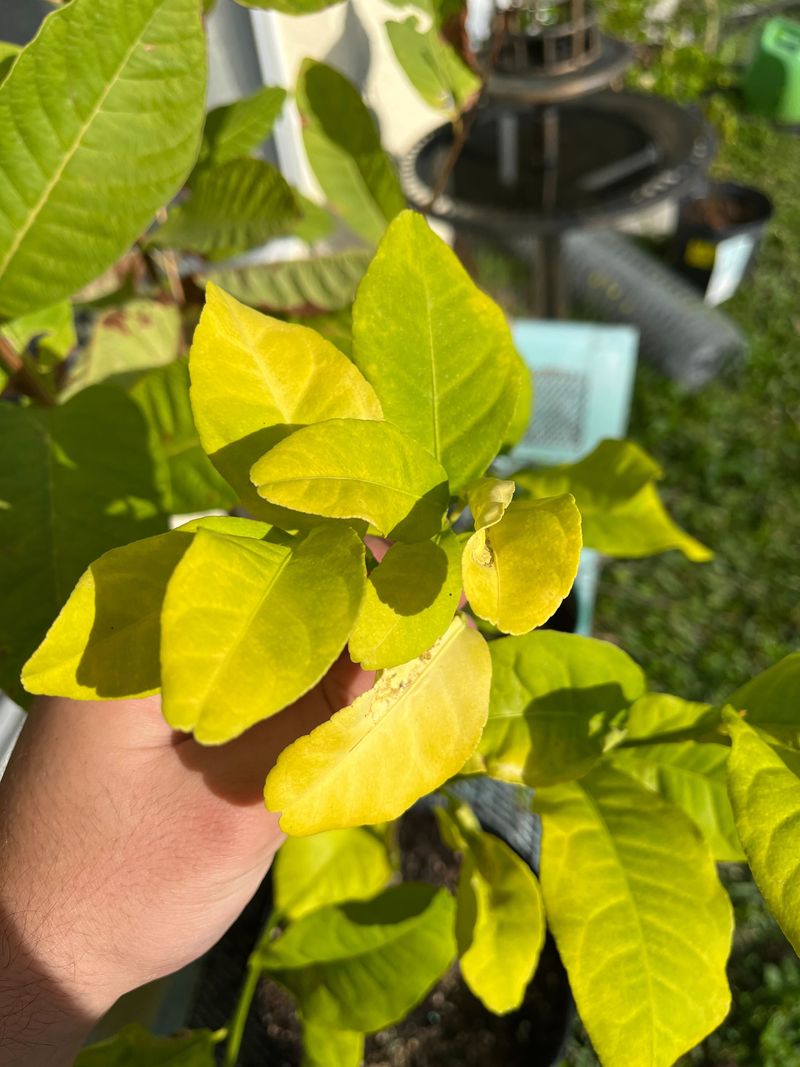
Yellow leaves on a citrus tree are not always a sign of trouble, but when large sections of the canopy turn yellow at once, something is off.
Nitrogen is the most common culprit in desert soils. Without enough of it, older leaves near the base of branches turn a dull yellow while newer growth stays green.
A slow-release citrus fertilizer applied in late spring can help correct this before summer heat makes things worse.
Magnesium deficiency shows up differently. Leaves develop a yellowing pattern between the veins while the veins themselves stay dark green.
This is called interveinal chlorosis, and it responds well to Epsom salt dissolved in water applied around the root zone.
Potassium shortages are less obvious but still show up in summer. Leaf edges may yellow slightly before curling.
Citrus trees in sandy desert soils lose potassium faster because it leaches out with irrigation.
Before adding any fertilizer, do a quick soil test. Throwing nutrients at a tree without knowing what it needs can create new imbalances.
Your local cooperative extension office can help you interpret results and build a feeding plan that actually fits your soil type and climate conditions.
2. Brown Leaf Tips Often Signal Watering Problems
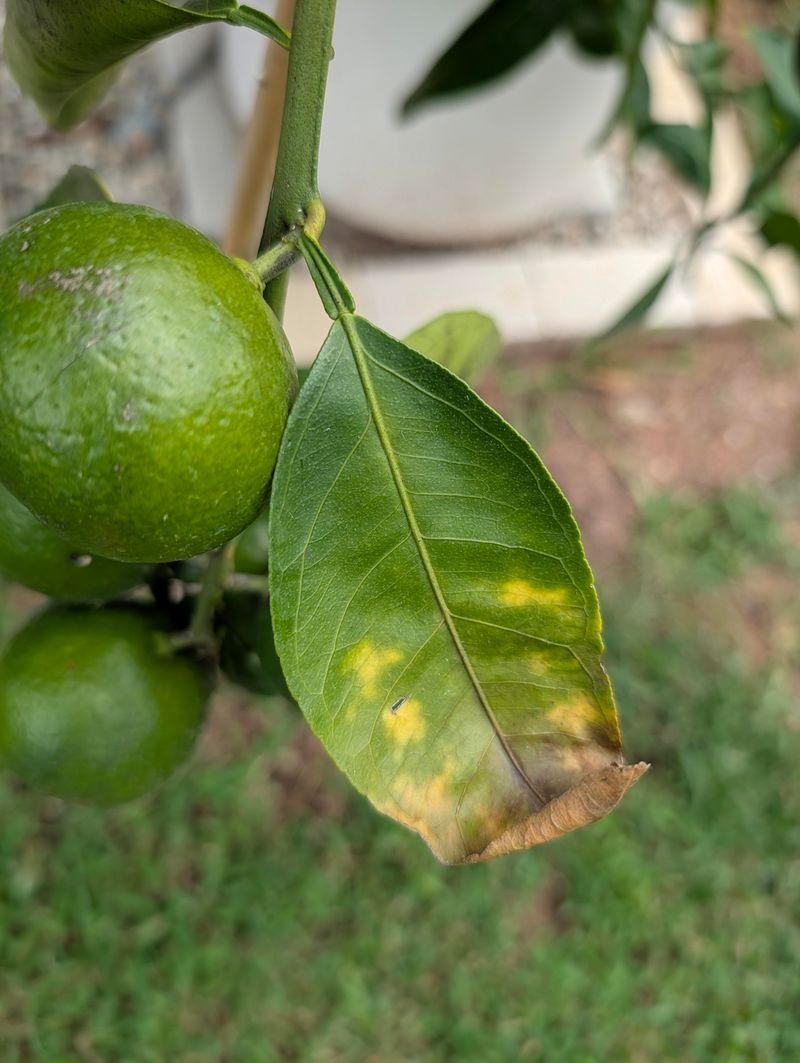
Crispy brown tips on citrus leaves are one of the most common complaints from desert growers, and watering is almost always at the root of it.
Underwatering is the obvious guess, but overwatering causes the exact same symptom. When roots sit in soggy soil too long, they lose the ability to absorb water properly.
The tree ends up water-stressed even when the ground feels wet.
During peak summer heat, a mature citrus tree may need deep watering every five to seven days. Shallow, frequent watering encourages surface roots that dry out fast and stress the tree more.
Push water deep into the soil so roots stay hydrated well below the surface.
Check your emitters and drip lines regularly. Clogged emitters are surprisingly common and easy to miss.
A tree that looks like it is getting water may actually be receiving very little from a blocked line.
Your Arizona Garden Changes Every Week. Your Plan Should Too.
Gardening in Arizona changes quickly throughout the season. Every Friday you’ll receive a simple weekly plan showing exactly what to plant, prune, fertilize, harvest, and protect so you never miss the right timing.
Soil type matters too. Clay soils hold moisture longer but can become waterlogged.
Sandy soils drain fast and may require more frequent watering cycles. Knowing your soil helps you dial in a schedule that actually works rather than one based on guesswork.
If brown tips appear on new growth specifically, that can point to a separate issue like fluoride sensitivity, which some citrus varieties show when municipal water is used heavily during summer months.
3. Leaf Curling Can Be A Response To Heat Stress
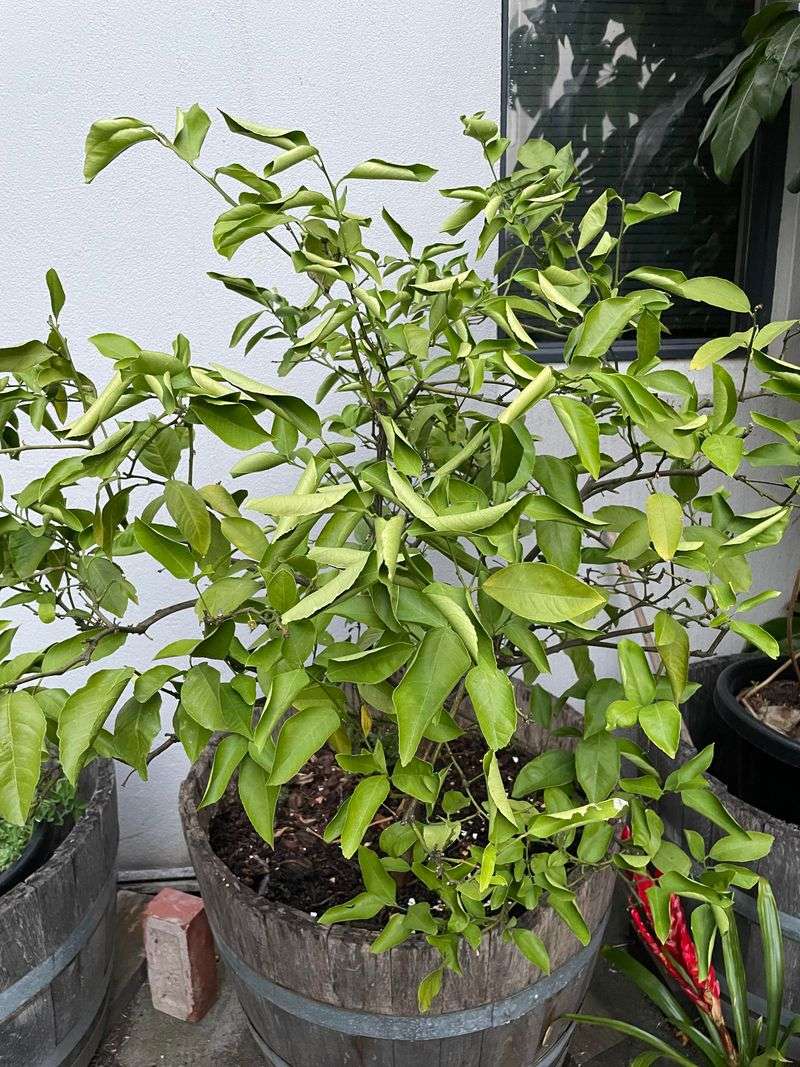
Leaf curling on a citrus tree during summer is not always a bad sign. Sometimes it is a smart survival move.
When temperatures spike, citrus leaves curl inward to reduce the surface area exposed to direct sun. Less surface area means less moisture lost through the leaves.
On a 112-degree afternoon, that curling can actually protect the tree from serious damage.
Curling that happens only during peak afternoon heat and then relaxes by evening is usually nothing to worry about. Watch the leaves in the morning before temperatures rise.
If they uncurl overnight and look normal by sunrise, the tree is coping fine.
Persistent curling that does not recover overnight is a different story. That pattern suggests the tree is not getting enough water to recover between heat cycles.
Adjust your irrigation schedule and check whether your emitters are delivering water close enough to the drip line of the canopy, not just at the trunk.
Pests can also cause curling. Citrus leafminer larvae tunnel inside young leaves and cause them to roll and twist.
Look closely at curled leaves for tiny winding trails or a papery texture on the inside surface. That is a clear sign of leafminer activity rather than heat stress.
Treating both issues at once without identifying the real cause can waste time and money. Always diagnose before treating.
4. Pale New Growth May Indicate Iron Chlorosis
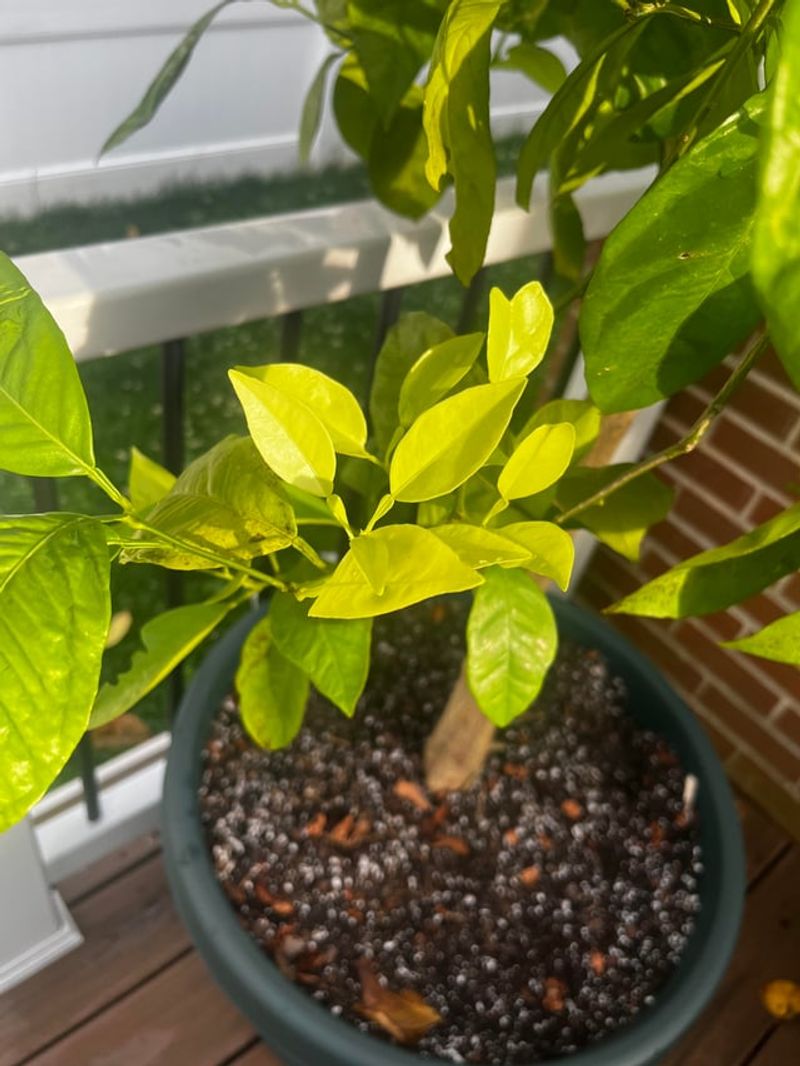
Pale, washed-out new leaves on a citrus tree are one of the clearest signs of iron chlorosis, and it is extremely common in the desert Southwest.
Iron chlorosis does not always mean the soil lacks iron. Most desert soils actually contain plenty of it.
The real problem is soil pH. Alkaline soils, which are standard across much of the region, lock iron into a form that plant roots cannot absorb.
The iron is right there, but the tree cannot use it.
New growth turns a light yellow-green while the veins stay noticeably darker. Older leaves often look fine, which helps separate iron chlorosis from nitrogen deficiency, where older leaves yellow first.
Chelated iron products work faster than standard iron sulfate in high-pH soils. Look for products labeled with EDDHA chelation, which stays available in alkaline conditions better than other forms.
Soil drenches tend to work better than foliar sprays for long-term correction.
Lowering soil pH gradually with elemental sulfur can help over time, but it takes months to show results. Adding sulfur at the start of the growing season gives it time to work before the next summer cycle hits.
Consistent summer irrigation also plays a role. Uneven watering causes pH fluctuations near the root zone, which makes iron uptake even more unpredictable.
A steady, consistent watering schedule supports better nutrient availability overall.
5. Sudden Leaf Drop Should Not Be Ignored
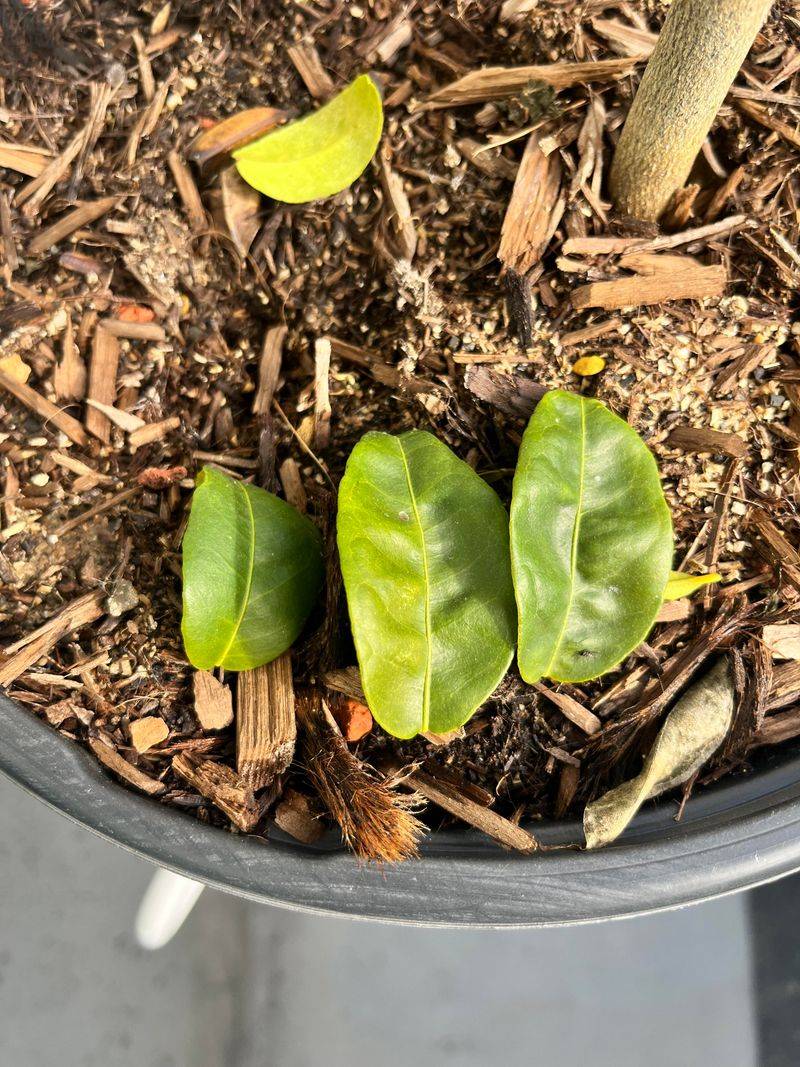
A citrus tree dropping leaves without warning during summer is a signal worth taking seriously, even if the tree still looks mostly full from a distance.
Some leaf drop during extreme heat is normal. Trees shed older leaves to reduce water demand when stressed.
A light, scattered drop of mature leaves during a heat wave is not unusual and often resolves on its own once temperatures ease slightly.
Heavy or sudden leaf drop across the whole canopy is different. That kind of response usually points to a root problem.
Root rot from overwatering, physical root damage from digging, or a sudden shift in irrigation can all trigger rapid defoliation.
Check the soil moisture about six inches down. If it feels consistently wet and the tree is dropping leaves, ease back on watering and improve drainage if possible.
Roots need oxygen as much as they need moisture.
Sudden temperature swings can also trigger leaf drop. A late heat spike after a cooler stretch can catch trees off guard.
Citrus in containers are especially vulnerable because their root zones heat up faster than in-ground trees.
After a significant leaf drop, resist the urge to fertilize immediately. Adding nutrients to a stressed tree can cause more harm than good.
Focus on stable, consistent watering first and give the tree time to stabilize before making any other changes to its care routine.
6. Blotchy Discoloration Can Signal Pest Activity
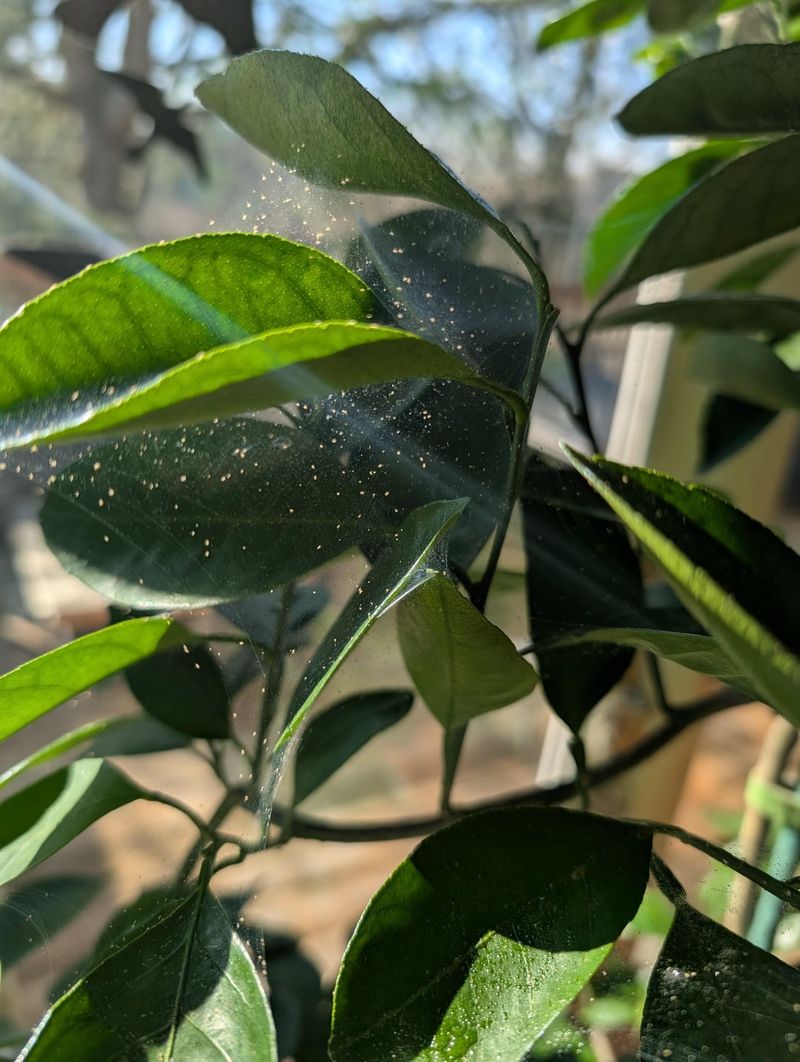
Blotchy, uneven discoloration on citrus leaves during summer is rarely random. More often than not, something is feeding on the tree.
Spider mites are the most common summer pest on desert citrus. They thrive in hot, dry conditions and reproduce fast.
Infested leaves develop a stippled or bronzed look, almost like tiny dots were punched across the surface. Hold a white sheet of paper under a branch and tap it.
If tiny moving specks appear, mites are present.
Citrus thrips leave a different kind of mark. They feed on young leaves and fruit, causing silvery-gray streaking or scarring.
Damage from thrips tends to appear on new flush growth rather than older leaves.
Scale insects create irregular yellow patches that do not follow a vein pattern. They attach to stems and undersides of leaves and are easy to miss at first glance.
Look for small bumps along stems or a sticky residue called honeydew on leaves, which can also attract sooty mold.
Treatment options vary by pest. Horticultural oil sprays work well for mites and scale but should be applied in early morning to avoid leaf burn in summer heat.
Avoid spraying during peak afternoon temperatures.
Consistent monitoring throughout the warm season catches infestations early. Catching a pest problem at the first sign makes treatment far simpler and more effective than waiting until damage spreads across the entire tree.
7. Burned Leaf Edges May Result From Excess Salt Buildup
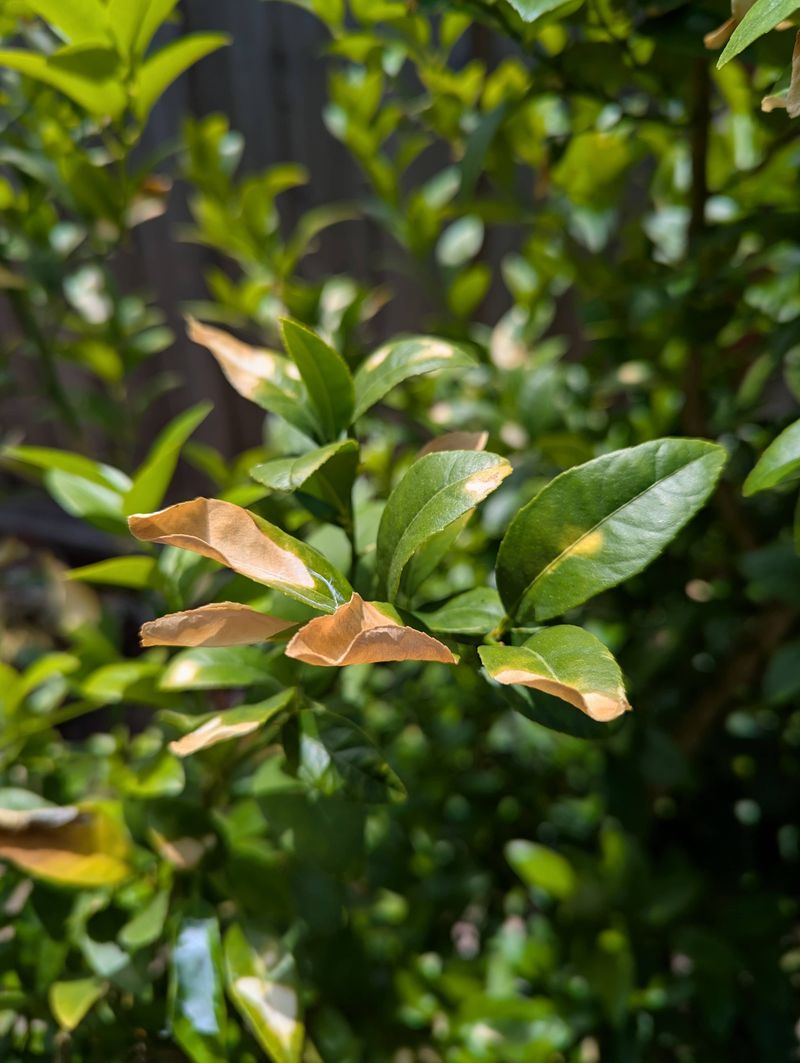
Salt burn on citrus leaves looks a lot like heat damage, but the fix is completely different. Knowing which one you are dealing with saves a lot of frustration.
Desert water supplies tend to carry higher mineral content than water in other regions. When you irrigate regularly, salts accumulate in the root zone over time.
Citrus roots absorb water but leave salts behind, and those salts build up season after season.
Leaf edges turn brown and crispy, sometimes with a slight yellowing band between the brown edge and the green interior. Damage usually appears on the outermost leaves first, especially those getting full sun exposure.
Younger leaves may look fine while older ones show the most visible symptoms.
Deep watering helps flush salts below the root zone. Occasional heavy irrigation, sometimes called a leaching cycle, pushes accumulated salts down past where roots are actively feeding.
This is especially useful heading into summer when salt levels peak from months of regular watering.
Mulching around the base of the tree slows evaporation and reduces surface salt concentration. Keep mulch pulled back a few inches from the trunk to avoid moisture buildup directly against the bark.
Switching to a low-sodium fertilizer also helps reduce the salt load over time. Some fertilizers contribute significantly to salt buildup, so reading the label before buying matters more than most growers realize.