The Top 10 Native Perennials That Thrive In Full Sun In Central Florida
Trying to keep a garden alive under Central Florida’s blazing sun can feel impossible. Most plants wilt, fade, or demand constant care, leaving your yard looking tired.
Native perennials make it easier. They’re built for the heat, soak up the sun without complaint, and return year after year with minimal effort. Planting them means more color, texture, and life in your garden without the stress of constantly babysitting blooms.
From bold flowers to lush foliage, these perennials handle full sun like pros, attract local pollinators, and give your landscape a vibrant, natural feel.
For anyone looking to create a thriving, low-maintenance garden that actually loves Florida’s climate, native perennials are the perfect solution.
1. Blanket Flower Brings Long Lasting Color
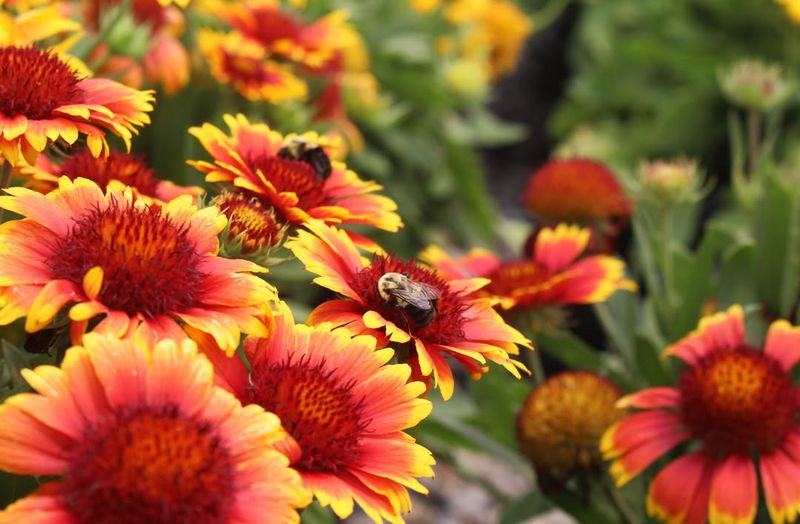
Gaillardia pulchella, a short-lived native wildflower often grown as a perennial, creates waves of fiery blooms that seem to glow in the summer heat. The daisy-like flowers combine red, orange, and yellow in patterns that remind many gardeners of Native American blanket designs, which explains the common name.
Individual flowers last several days, but new buds keep opening continuously from spring through fall, providing nearly continuous color.
This native thrives in the toughest conditions Central Florida can offer. Sandy, well-drained soil suits it perfectly, and once established, it handles drought remarkably well.
Full sun encourages the most abundant flowering, though it can tolerate brief periods of light shade. The plants typically reach 12 to 18 inches tall and spread into loose clumps that fill in nicely without becoming aggressive.
Pollinators adore blanket flower, with butterflies and native bees visiting throughout the day. Deadheading spent blooms encourages fresh flowers, though allowing some seed heads to mature provides food for goldfinches and other songbirds.
The plants may slow down during the hottest weeks but bounce back quickly when afternoon rains return. Light trimming in late winter keeps them looking tidy and promotes vigorous spring growth.
2. Butterfly Weed Feeds Monarchs
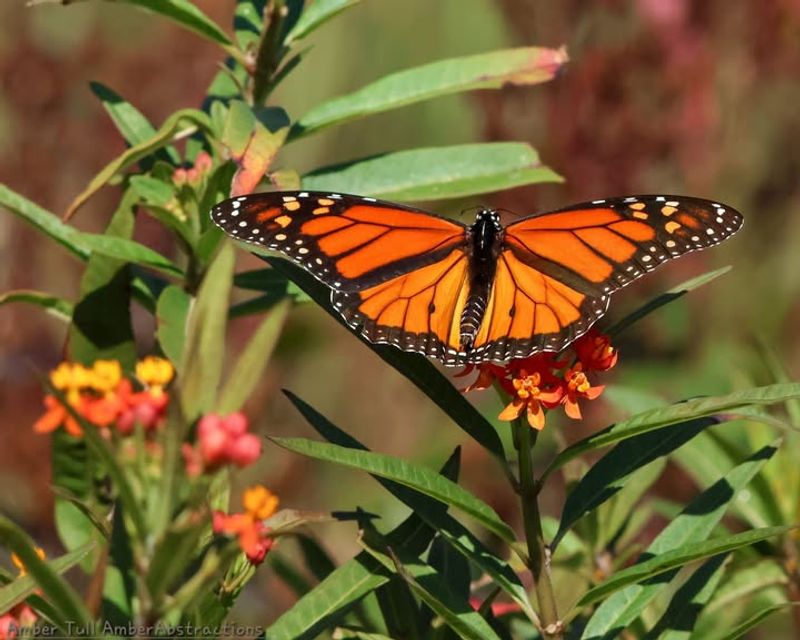
Asclepias tuberosa is an important nectar source for monarchs, though other native milkweeds such as swamp milkweed and aquatic milkweed are primary host plants in much of Florida. The brilliant orange flower clusters appear in spring and summer, creating eye-catching focal points in sunny beds.
Unlike many milkweeds, this species stays compact and well-behaved, typically reaching two to three feet tall with a bushy, upright form that fits easily into perennial borders.
Central Florida’s sandy soils and intense sunshine create ideal conditions for butterfly weed. The deep taproot allows established plants to access moisture during dry spells, making them surprisingly drought-tolerant once settled in.
This same taproot means transplanting mature specimens can be tricky, so choose planting locations carefully. Full sun produces the strongest stems and most abundant flowering.
Beyond supporting monarchs, butterfly weed attracts numerous other pollinators including swallowtails, skippers, and native bees. The nectar-rich flowers provide food, and the foliage serves as a host plant for monarch caterpillars.
Plants may experience some leaf damage from hungry caterpillars, but this is actually a sign your garden is fulfilling its ecological role. After flowering, interesting seed pods develop that split open to release silky-tufted seeds.
Light pruning after the first bloom cycle sometimes encourages a second flush of flowers.
3. Tickseed Brightens Sunny Florida Beds
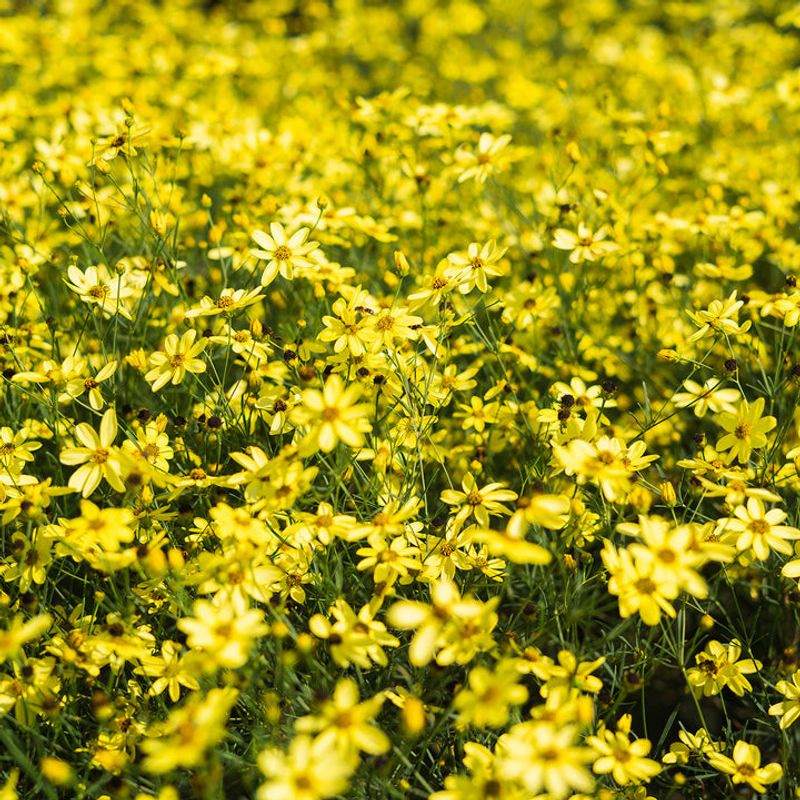
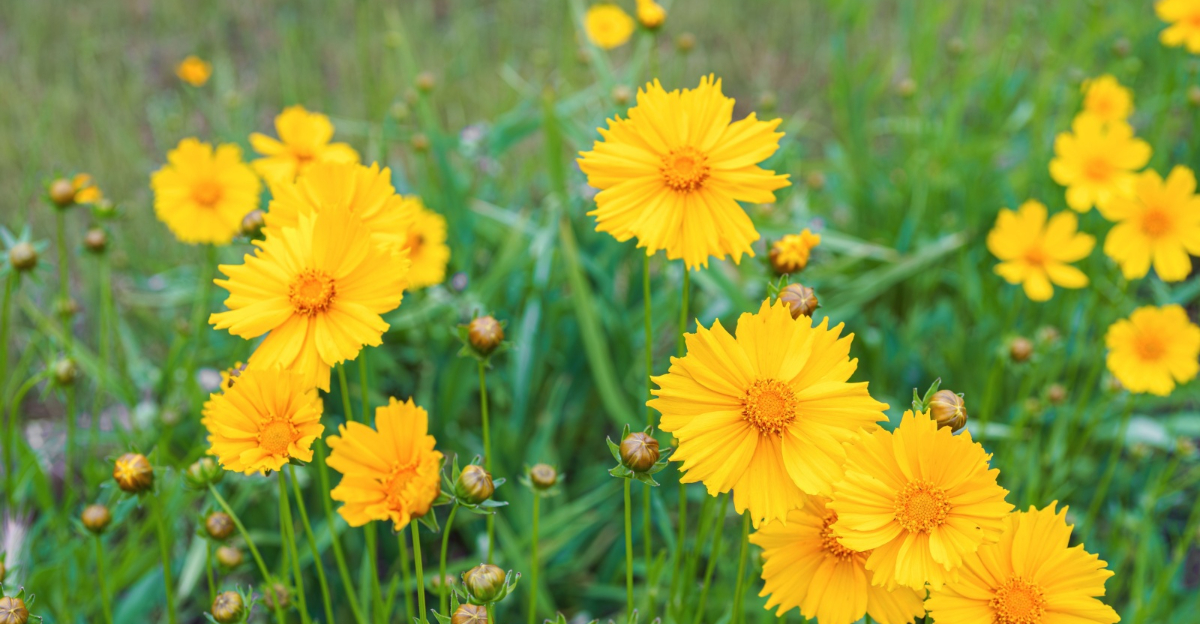
Coreopsis leavenworthii carpets roadsides and meadows across Central Florida with cheerful yellow blooms each spring. The bright flowers rise on thin stems above fine-textured foliage, creating an airy, natural look that works beautifully in informal garden settings.
Mass plantings deliver the most dramatic impact, though even small groups add sunny spots to mixed borders.
Tickseed handles Florida’s challenging growing conditions with remarkable ease. The plants tolerate poor, sandy soils without amendment and actually prefer lean conditions over rich, heavily fertilized beds.
Excessive nutrients can cause floppy growth and reduced flowering. Full sun brings out the best performance, encouraging compact plants and abundant blooms.
Established clumps need minimal watering, relying on seasonal rainfall to meet their needs.
Butterflies, bees, and small native pollinators visit tickseed flowers constantly during peak bloom periods. The plants typically flower most heavily in spring, with sporadic blooming continuing into summer if conditions remain favorable.
Allowing some seed heads to mature provides food for songbirds while also enabling self-seeding in appropriate areas. Tickseed is often a short-lived perennial or reseeding wildflower that can persist for years through self-seeding.
4. Beach Sunflower Spreads Cheerful Ground Color
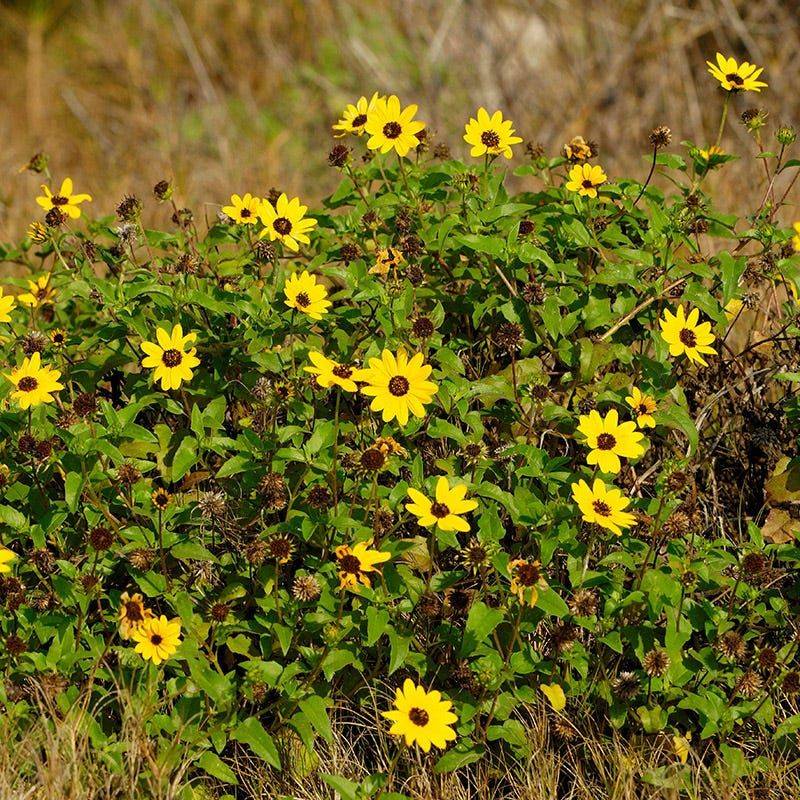
Helianthus debilis grows naturally along Florida’s coastal areas but adapts readily to inland gardens throughout Central Florida. The sprawling stems create a living groundcover that spreads several feet, producing cheerful yellow sunflowers continuously from spring through fall.
Individual blooms measure two to three inches across, appearing in such abundance that they nearly cover the foliage during peak flowering periods.
Beach sunflower thrives in the harshest full sun conditions and actually struggles in shade. Sandy, well-drained soil suits it perfectly, though it adapts to various soil types as long as drainage remains good.
The spreading growth habit makes it excellent for erosion control on slopes or as a flowering groundcover in areas where lawn grass struggles. Once established, the plants tolerate salt spray and drought, making them incredibly low-maintenance.
Pollinators visit beach sunflower constantly, with butterflies particularly attracted to the bright blooms. The spreading nature means plants can cover significant ground, so provide adequate space or be prepared to trim edges occasionally.
In ideal conditions, beach sunflower may self-seed, though rarely to the point of becoming problematic. The plants naturally slow down during the coolest winter months and often remain evergreen in mild winters, though growth may slow during cooler periods.
5. Scarlet Sage Draws Pollinators All Season
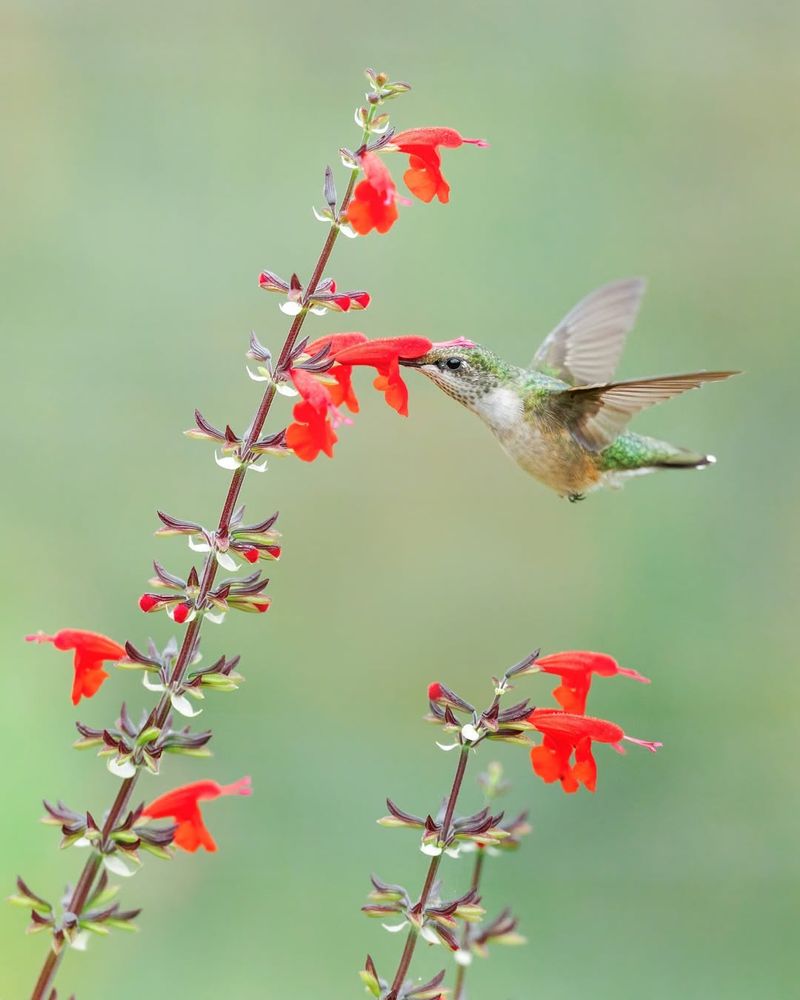
Salvia coccinea produces tubular red flowers that hummingbirds find irresistible. The blooms appear on upright spikes that rise above aromatic foliage, creating vertical accents in sunny beds and borders.
Flowering begins in spring and continues through fall, with peak performance during the warm months when hummingbirds are most active. Individual plants typically reach two to three feet tall with a bushy, branching form.
Central Florida’s warm climate and abundant sunshine create ideal conditions for scarlet sage. The plants tolerate sandy soils and moderate drought once established, though occasional deep watering during extended dry periods keeps them flowering strongly.
Full sun produces the most compact growth and heaviest blooming, though plants can handle a few hours of afternoon shade without significant problems. The aromatic foliage rarely experiences pest issues.
Beyond hummingbirds, butterflies and long-tongued bees also visit scarlet sage flowers regularly. The plants often self-seed in appropriate locations, though seedlings are easy to transplant or remove as needed.
Deadheading spent flower spikes encourages fresh blooms, though allowing some seed production late in the season provides food for birds. Scarlet sage may slow down during the coolest weeks but typically survives mild Central Florida winters, resuming growth quickly when temperatures warm in spring.
6. Blue Porterweed Keeps Butterflies Visiting
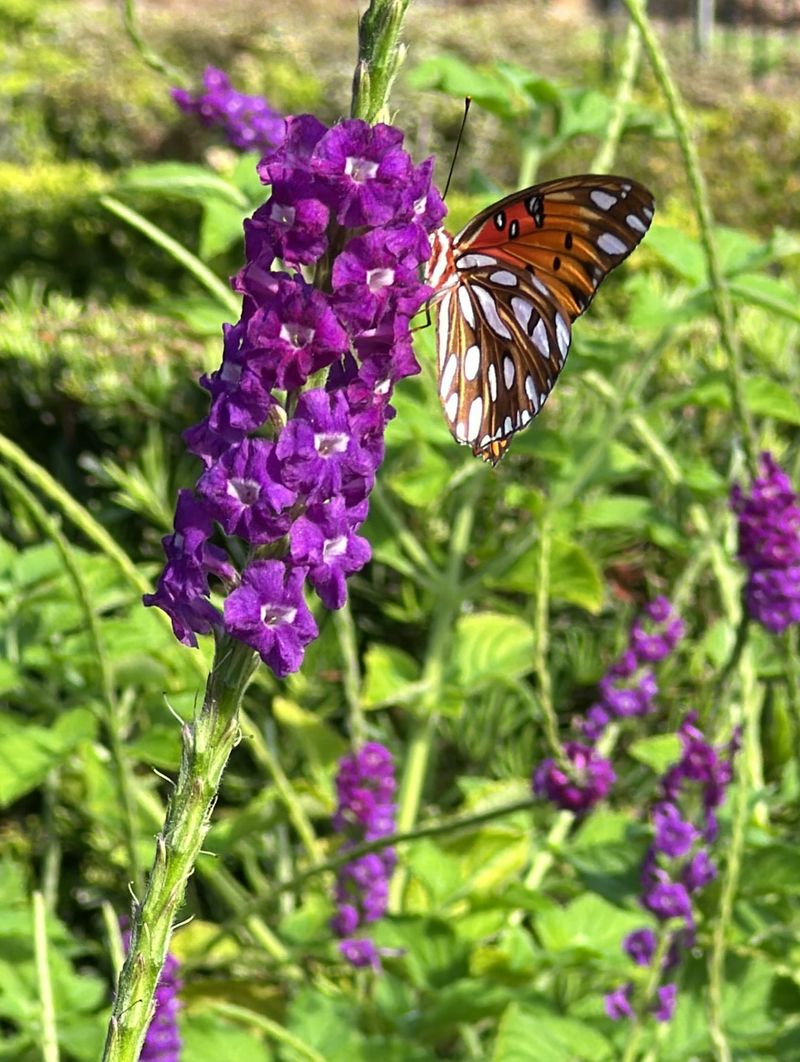
The native porterweed (Stachytarpheta jamaicensis) is an excellent butterfly plant for Central Florida gardens. The slender purple-blue flower spikes bloom nearly year-round in our climate, with tiny tubular flowers opening progressively along each spike.
Butterflies of many species visit constantly, often with multiple individuals feeding on a single plant. The upright, branching stems create a loose, informal appearance that works well in naturalistic garden designs.
Blue porterweed tolerates a wide range of soil conditions, from sandy to heavier clay-based soils, as long as drainage remains adequate. Full sun encourages the most vigorous growth and abundant flowering, though plants can handle partial shade if necessary.
Once established, porterweed handles dry periods well, though consistent moisture during the growing season promotes continuous blooming. The plants typically reach three to four feet tall, forming bushy clumps that fill space nicely.
The extended blooming period makes porterweed valuable for supporting butterfly populations throughout the year. Occasional light trimming keeps plants shaped and encourages fresh growth, though heavy pruning is rarely necessary.
Blue porterweed may self-seed in garden beds, and while it can spread, it’s generally easy to manage and doesn’t become truly invasive. Plants are often evergreen in mild winters but may go dormant after cold snaps, then regrow when temperatures warm.
7. Twinflower Forms A Blooming Groundcover
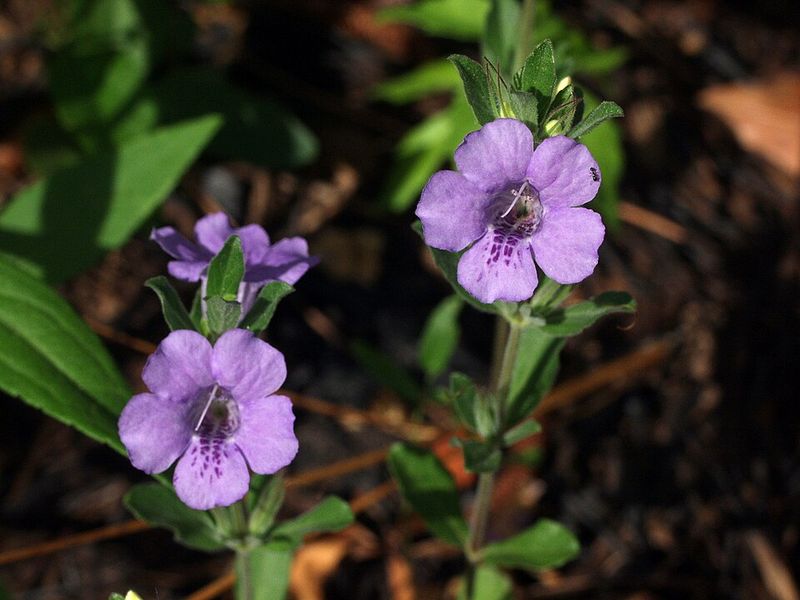
Dyschoriste oblongifolia creates a low-growing carpet of foliage studded with small purple flowers throughout the warmer months. The common name comes from the tendency of flowers to appear in pairs along the stems.
Individual blooms are delicate and short-lived, but new ones open continuously, providing steady color. The plants spread by underground stems, gradually forming dense mats that work beautifully as a flowering groundcover.
Twinflower tolerates full sun but often performs best with light afternoon shade in Central Florida heat. The spreading nature makes it excellent for filling in around taller perennials or covering ground beneath small shrubs.
Sandy soils with added organic matter suit it well, and consistent moisture during establishment helps plants fill in faster. Once mature, twinflower handles brief dry periods without problems.
Small native bees and other pollinators visit the flowers regularly despite their modest size. The low-growing habit means twinflower rarely needs trimming, though light shearing after heavy bloom periods can tidy plants and encourage fresh growth.
The spreading nature is generally manageable, and plants rarely become aggressive. Twinflower typically remains evergreen through Central Florida winters, maintaining its groundcover function year-round.
The fine texture contrasts nicely with bolder-leaved perennials, adding visual interest even when not in bloom.
8. Chapman’s Blazing Star Adds Vertical Beauty
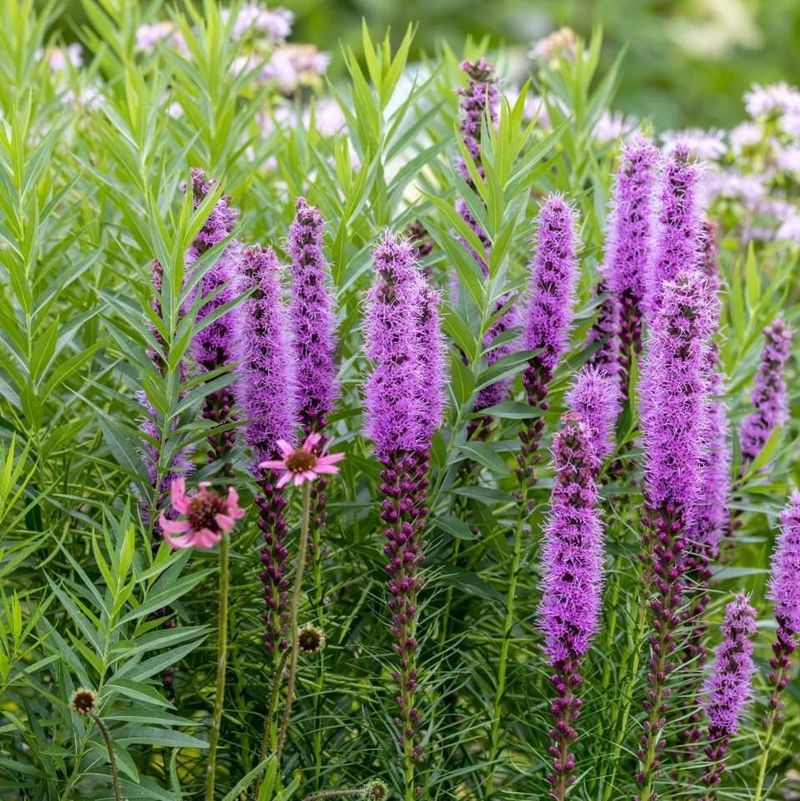
Liatris chapmanii sends up dramatic flower spikes that typically reach about two to three feet tall, occasionally taller in ideal conditions. The fluffy purple blooms open from the top down, creating an unusual display that catches attention in any sunny border.
Blooming typically occurs in late summer and fall, providing color when many other perennials have finished their main show. The grass-like foliage remains low and unobtrusive until flower stalks emerge.
Chapman’s blazing star grows naturally in scrubby flatwoods and sandhills, habitats characterized by sandy, well-drained soils and full sun exposure. These same conditions suit it perfectly in garden settings.
The plants develop from small corms that store moisture and nutrients, allowing established specimens to handle dry periods effectively. Full sun produces the strongest, most upright flower stalks, while shaded plants may require staking.
Butterflies and native bees visit blazing star flowers enthusiastically, and the late bloom time provides crucial nectar when other food sources may be scarce. The tall flower spikes create excellent vertical accents in perennial borders, and the airy appearance prevents them from blocking views of plants behind.
After flowering, the seed heads attract goldfinches and other small birds. Chapman’s blazing star goes dormant in winter, with foliage disappearing completely until new growth emerges in spring.
9. Pinebarren Goldenrod Supports Late Pollinators
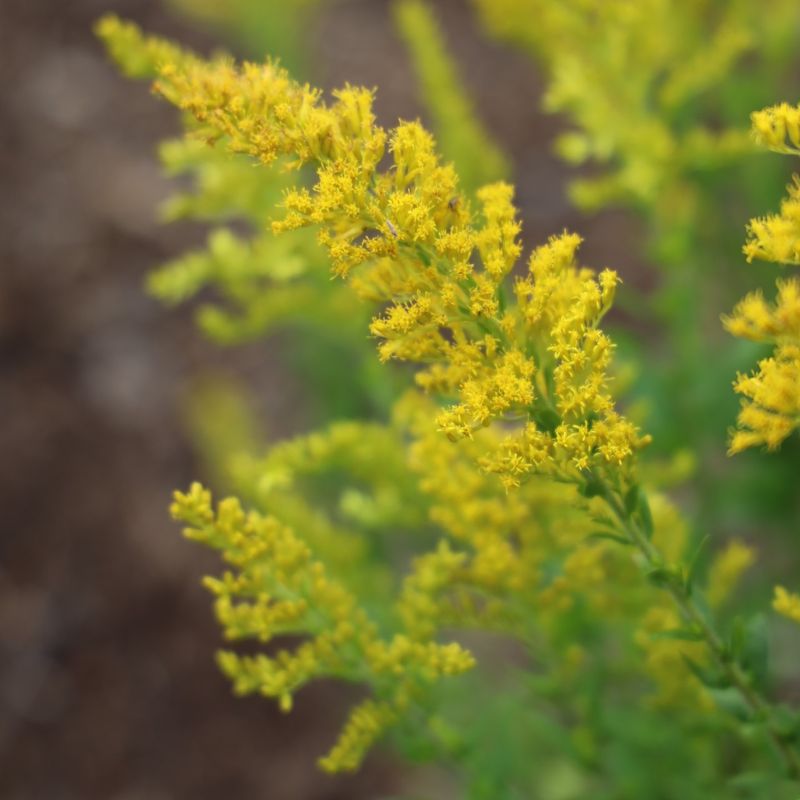
Solidago fistulosa produces showy golden flower plumes in late summer and fall when many native perennials have finished blooming. The bright yellow clusters appear at the tops of upright stems, creating eye-catching displays that light up sunny borders.
Unlike some goldenrods that spread aggressively, pinebarren goldenrod forms well-behaved clumps that expand slowly and remain manageable in garden settings.
This species thrives in the sandy, acidic soils common throughout Central Florida. Full sun exposure encourages compact growth and abundant flowering, while shaded plants may become leggy and flop over.
Established plants tolerate moderate drought but perform best with periodic moisture, though consistent moisture during the growing season promotes larger, more impressive flower displays. The upright stems typically reach three to five feet tall, providing substantial presence in perennial borders.
The late bloom time makes pinebarren goldenrod critically important for pollinators preparing for winter. Butterflies, native bees, and beneficial insects visit the flowers constantly during peak bloom periods.
Despite outdated myths, goldenrod does not cause allergies since its pollen is too heavy to become airborne. The bright fall color combines beautifully with purple asters and other late-blooming natives.
After flowering, the seed heads provide food for birds through winter. Plants go dormant in late fall, with new growth emerging in spring.
10. Simpson’s Rain Lily Blooms After Rain
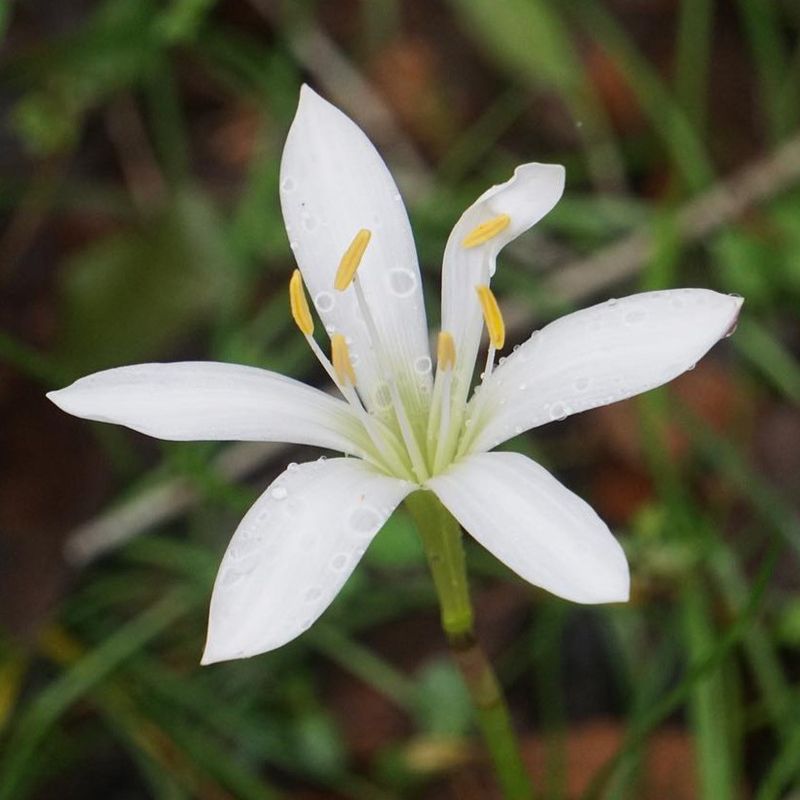
Zephyranthes simpsonii creates magical moments in the garden by producing delicate white flowers within days of summer rainstorms. The star-shaped blooms appear on short stems above grass-like foliage, often opening so quickly that they seem to materialize overnight.
Each flower lasts only a few days, but heavy rains can trigger mass blooming events where dozens of flowers appear simultaneously, creating a memorable display.
Simpson’s rain lily grows naturally in wet prairies and moist pine flatwoods across Central Florida. While it tolerates full sun, it actually prefers locations that receive regular moisture, either from natural rainfall or supplemental irrigation.
The small bulbs multiply gradually over time, forming expanding clumps that can be divided to spread throughout the garden. The grass-like foliage remains low and unobtrusive, blending easily with lawn areas or perennial beds.
The ephemeral nature of rain lily blooms adds an element of surprise and delight to the garden. Small native bees and other small pollinators occasionally visit the flowers during their brief appearance.
The low-growing habit means rain lilies work well as edging plants or naturalized in lawn areas where their foliage can blend in. The plants may go dormant during extended dry periods or cooler winter weather, with foliage disappearing until favorable conditions return.
This adaptation allows them to survive in locations that may be quite dry between rainy seasons.