The Tree Turning Deep Red In So Many Maryland Yards Right Now Tends To Split In Winter Storms
Many of the glowing maroon trees lining suburban streets right now were planted because a nursery promised they would not make fruit. Cross-pollination between pear varieties has been proving that promise wrong for decades.
Every fall, I admire that late burst of wine-red leaves when most maples have already gone bare. I’ll admit it, I once wanted one of these trees for my own front yard. Then I watched one down the street split right down the middle after a wet snow.
Here in Maryland, our winters love to mix sleet, ice, and heavy snow in the same week. That weight finds weak spots fast, and this tree has a famous one hidden in plain sight.
Let’s see what makes such a handsome tree crack so easily and what you should plant instead. The answer starts where its branches meet the trunk, and once you see it, you will notice it everywhere.
That Wine-Red Pear Tree Has A Weakness Built Right Into Its Branches
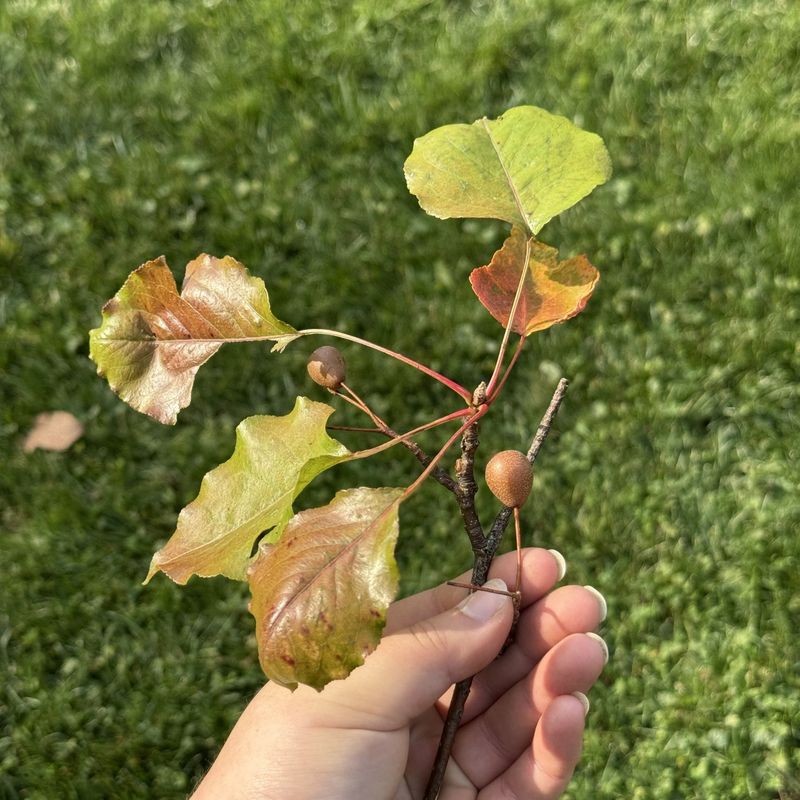
Late in fall, when the oaks look tired and the maples are mostly bare, one tree suddenly glows like a glass of cranberry juice. That showoff is usually a Bradford pear, a popular type of Callery pear brought here from China.
You probably know it in spring too. It’s the tree covered in white blossoms in March, the one with a smell many people compare to rotting fish. Nurseries sold millions of them starting in the 1960s because they grew fast, stayed neat and oval, and handled city life.
The trouble shows up later. Most Bradford pears look great for about 15 to 20 years. After that, many start shedding big limbs or splitting in half, often during a storm.
Arborists in Maryland see this pattern every winter. A tree that seemed sturdy on Monday can be lying across a driveway by Wednesday. The red leaves you’re admiring right now don’t signal weakness, but they do help you find these trees fast.
So take a quick walk around your yard and your block. If you see that deep burgundy color hanging on into November, you’ve likely found a Callery pear worth a closer look.
Tight V-Shaped Branch Forks Are Where The Splitting Starts
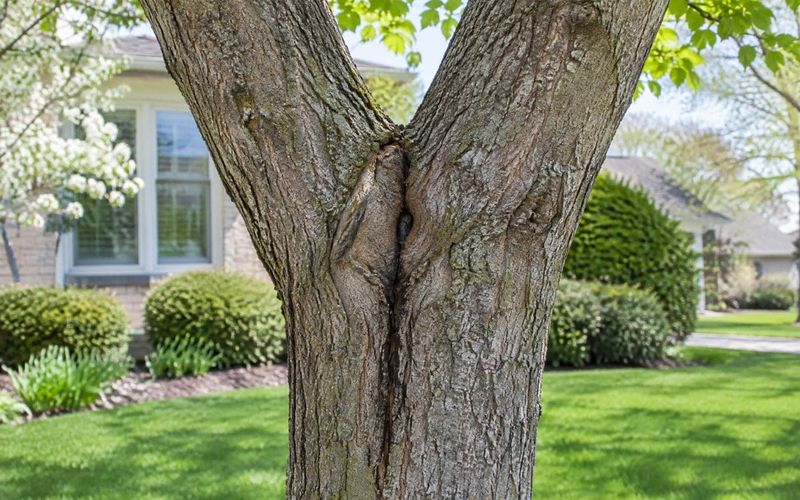
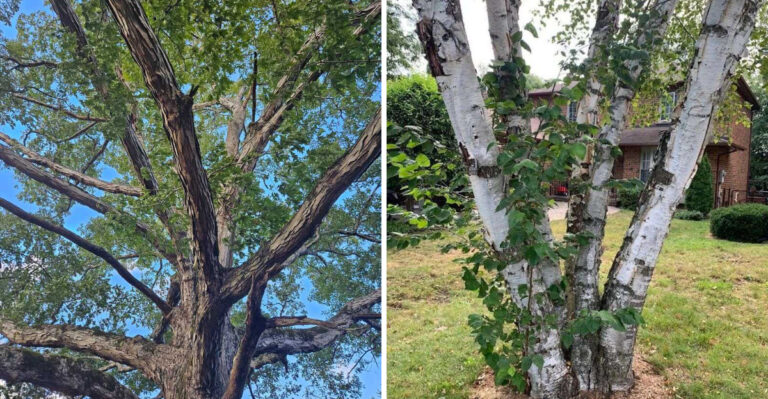
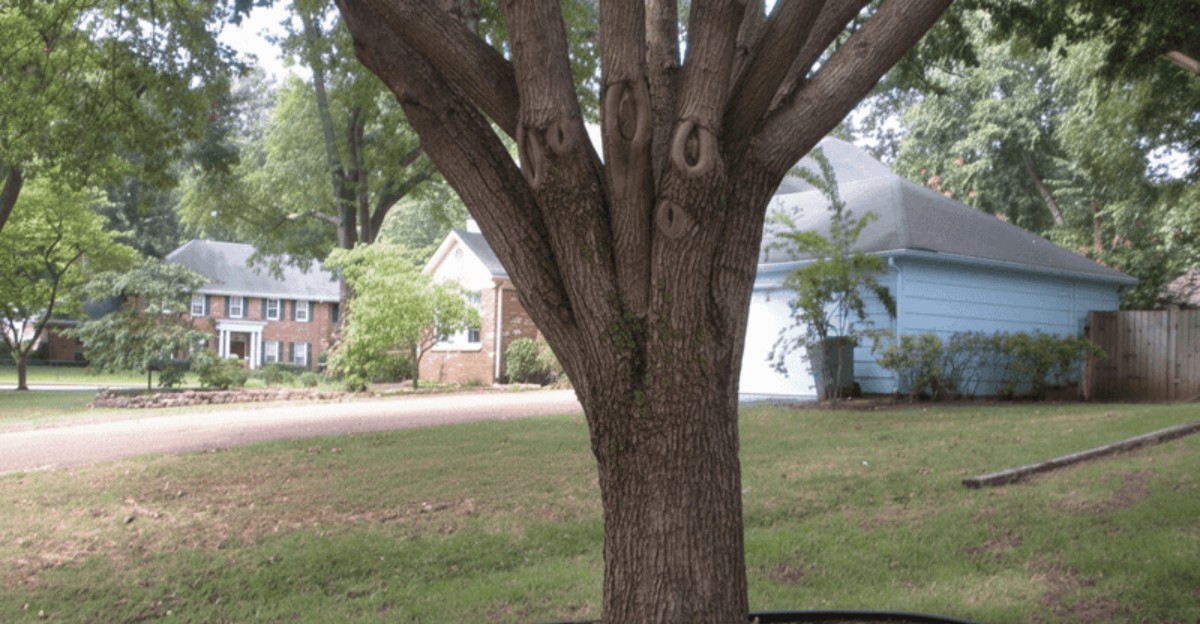
Look up into the center of a Bradford pear and you’ll see something odd. Several thick branches rise from nearly the same spot on the trunk, all squeezed together in tight V shapes. That crowded fork is the heart of the problem.
Strong trees usually grow branches at wider angles, closer to a U shape. In those joints, the wood of the branch and trunk weaves together like fingers locking. A tight V joint doesn’t get that chance.
As the stems get thicker, bark gets trapped between them. Arborists call this included bark. It works like a wedge, keeping the wood from bonding and pushing the limbs apart a little more each year.
Meanwhile, the tree keeps growing fast and adding weight up top. The joint holding it all together stays weak, so every year the load gets heavier while the connection stays flimsy.
Fun fact: the Bradford cultivar was chosen partly for its tidy shape. Breeders didn’t realize that tidy shape came with those tight, stacked branch angles. Later cultivars like Aristocrat and Chanticleer were promoted as stronger, yet they carry the same invasive seed issue and can still break.
Once you learn to spot a V fork, you will see them in plenty of other trees too.
Heavy Ice And Wet Snow Push Those Pear Limbs Past Their Limit
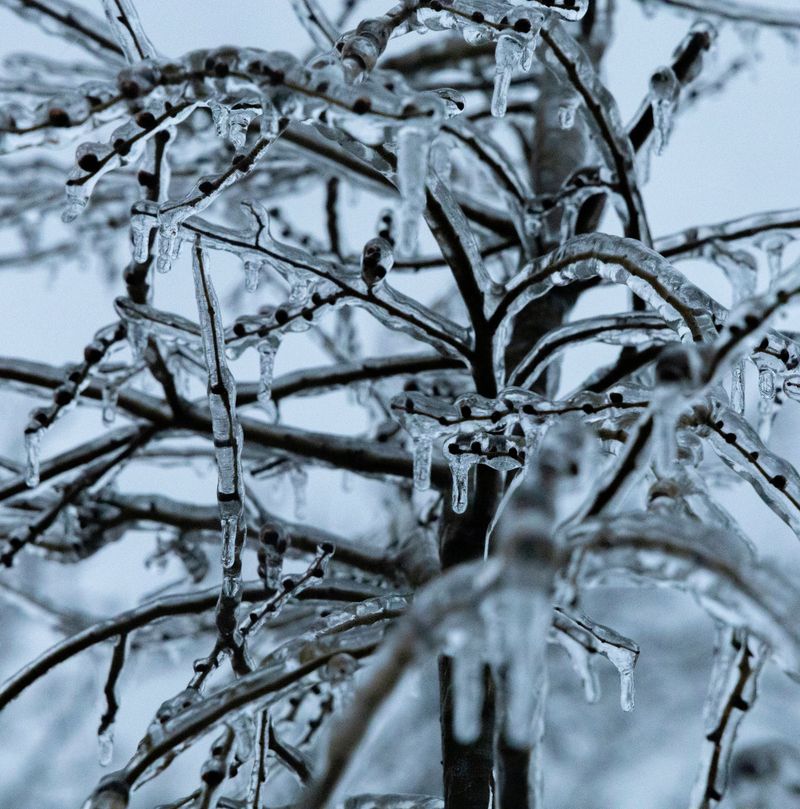
Anyone who has lived through a Maryland winter knows the snow here is rarely light and fluffy. We tend to get wet, heavy snow, sleet, and freezing rain, sometimes all in one storm.
Ice is the real bully. A thick coating can multiply a branch’s weight several times over, and a large tree can end up carrying a huge extra load. A sturdy oak can flex under that. A Bradford pear with weak forks often can’t.
The dense, rounded crown makes it worse. Lots of small twigs packed together catch more ice and snow than an open crown would. Then the wind kicks in, and those heavy limbs start swaying in different directions.
Freeze and thaw cycles add slow stress too. Water can seep into small cracks at the forks, freeze, and widen them a little. Over several winters, a hairline gap can grow into a real split.
Regional differences matter. Western counties like Garrett see more snow, while the Eastern Shore and southern areas get more ice and nor’easter wind. Central areas around Baltimore often get a messy mix. Wherever you live, the pear’s weak structure is the same.
Check Your Pear Tree For These Cracks Before The Next Storm
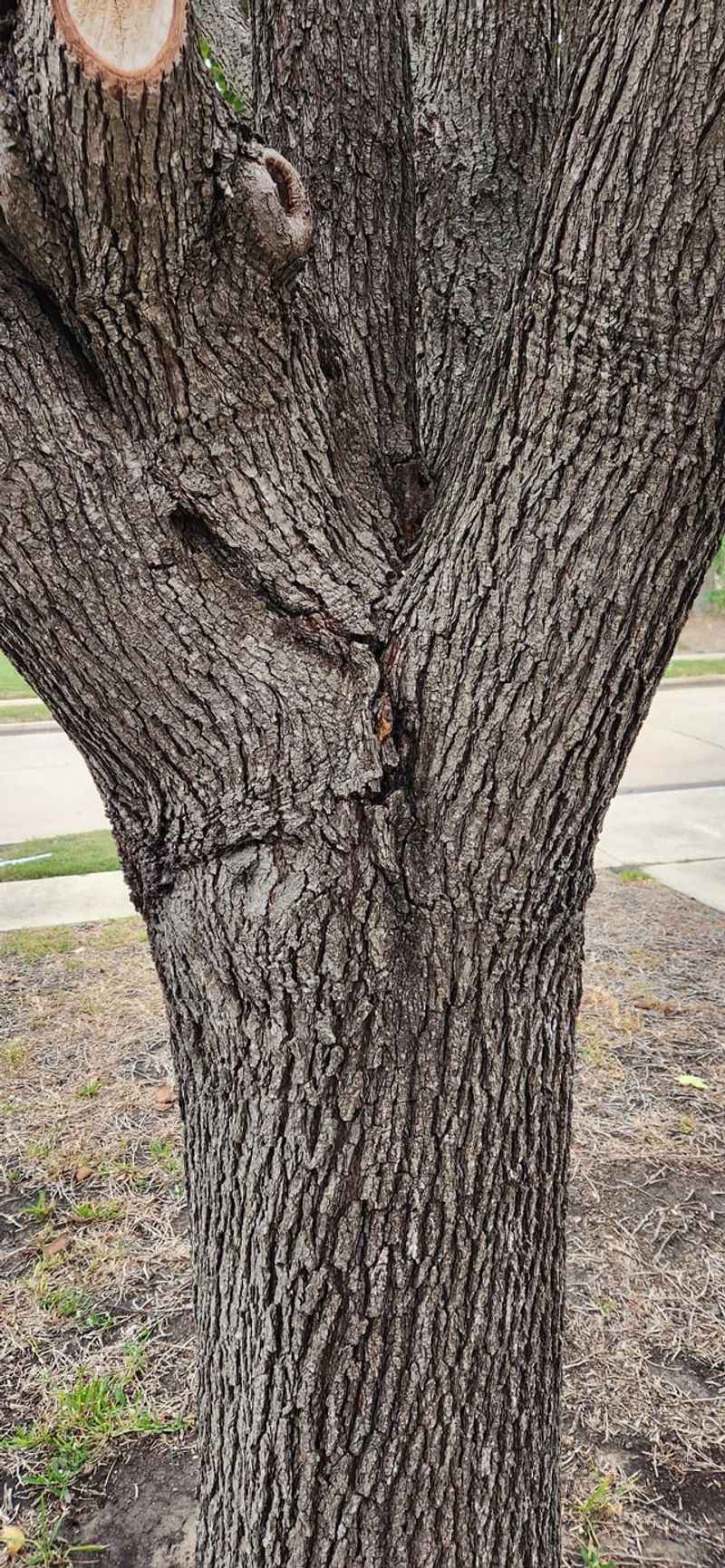
I’m not proud of this, but I ignored a small crack in a pear tree for two whole years. Then a February ice storm finished the job and dropped half the tree on my fence.
Take a slow walk around your tree on a clear day. Start at the main forks and look for a seam or crack running down from where the big limbs meet. Even a thin line is worth noting.
Dark, wet staining or oozing below a fork can mean water is getting into a split. Mushrooms or soft, crumbly wood near the base or joints point to decay. Missing bark patches deserve a second look too.
Watch the tree on a windy day. If two big limbs move in different directions, like they’re barely attached, that’s a red flag. A sudden lean, or one side of the crown sagging lower than it used to, is another.
Check what sits underneath as well. A big pear hanging over your house, car, deck, or a power line raises the stakes a lot.
If you spot any of these signs, call an ISA Certified Arborist for an inspection. Keep kids and cars out from under the tree until it’s checked.
Pruning Can Buy Time, But A Big Bradford Pear Rarely Gets Safer
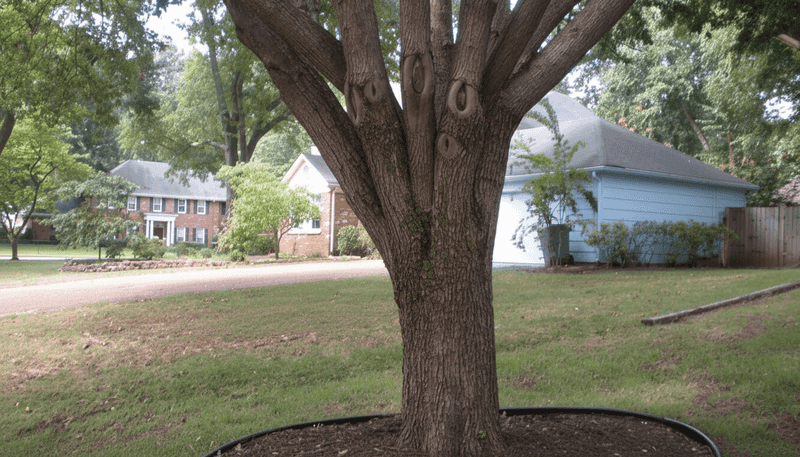
Call me stubborn, but I really wanted pruning to fix my pear. Sadly, there’s only so much a saw can do for a tree built this way.
On young Bradford pears, roughly under 10 years old, an arborist can thin out crowded leaders and pick one strong central stem. Removing competing upright branches early can improve the structure and buy the tree more years. Late winter, while the tree is dormant, is a common time for this work.
Older trees are a different story. Once those big V forks have formed with included bark, cutting off large limbs leaves huge wounds that invite decay. Cabling and bracing can support a split-prone fork for a while, but they need regular inspection and add cost.
Please skip topping. Chopping the top off a pear causes a burst of weak, crowded sprouts that break even more easily later.
For a large pear near a house or play area, many arborists will gently suggest removal. That can sting if the tree has shaded your yard for years. I get it.
Ask for a written assessment and a quote that includes cleanup. Comparing two or three tree companies helps you understand your real options.
Those Little Pear Fruits Are Seeding Thorny Thickets Across The State
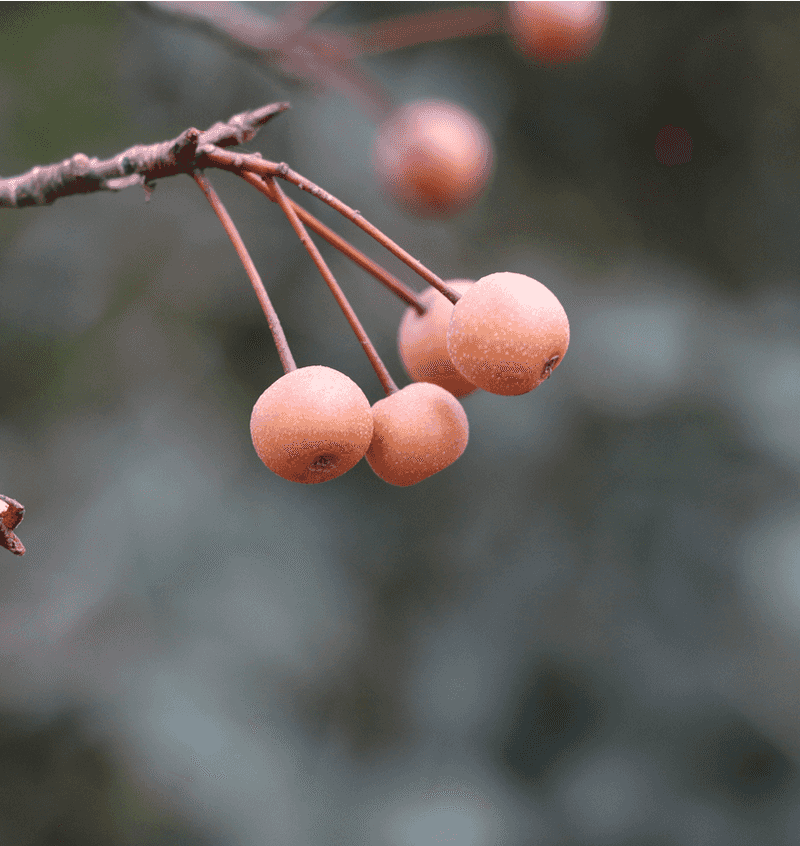
Remember that fruitless promise? The Bradford pear itself doesn’t pollinate well with its own kind. When other Callery pear varieties got planted nearby, the trees started cross-pollinating and making small, hard fruits about the size of a marble.
Birds like starlings and robins eat those fruits in winter and drop the seeds far away. The seedlings that sprout are often thorny, wild Callery pears, not the tidy tree you bought.
Drive along a highway edge or an old farm field in spring and you may see a sea of white blossoms. Those are often Callery pear thickets crowding out native shrubs and young trees that wildlife depends on.
Maryland’s Department of Agriculture lists Callery pear as a Tier 2 invasive plant. Stores that sell it must post signs warning buyers that it’s invasive. Some nearby states have gone further, with Pennsylvania and Ohio restricting sales.
Bounty programs in other states have let people swap a cut-down Bradford pear for a free native tree, and some local groups run similar events. Check with your county extension office or local tree programs before you remove yours.
Every fruit that birds carry off is a small seed of trouble for nearby woods.
Native Trees Like Blackgum And Red Maple Bring The Same Fall Fire
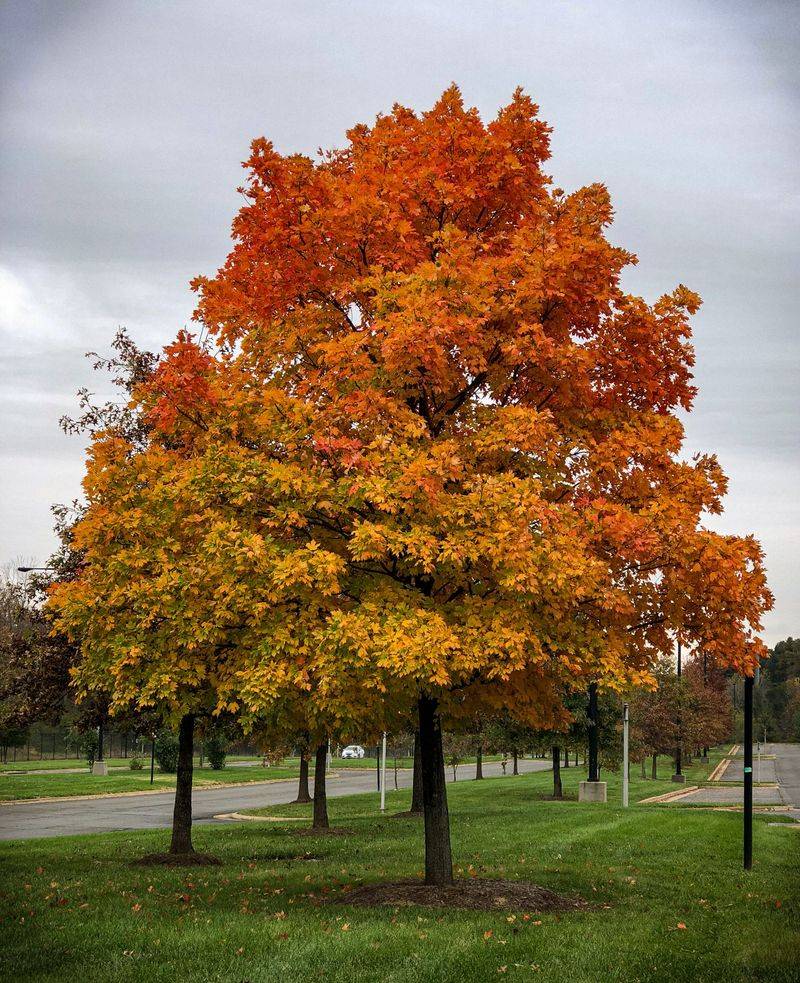
Trust me, giving up a pear doesn’t mean giving up fall drama. Several native trees put on a show that’s just as fiery, with far stronger bones.
Blackgum, also called black tupelo, is my favorite swap. Its glossy leaves turn scarlet and orange, and birds love its small blue fruits. It grows slower, but that slow growth builds sturdy wood.
Red maple is native across the state and turns bright red or orange in fall. Pick a named variety known for good color, and give it room, since it grows large. Scarlet oak and northern red oak offer red to russet leaves and huge value for caterpillars and the birds that eat them.
Want spring flowers too? Serviceberry blooms white in early spring, makes berries birds adore, and turns orange-red in fall. Flowering dogwood gives you blossoms, red berries, and reddish-purple leaves on a smaller frame.
Sourwood is another gem for well-drained, acidic soil, with dangling white summer flowers and crimson fall leaves.
Match the tree to your space. Check its mature height and width, keep big trees at least 15 to 20 feet from the house, and look up for power lines before you dig. The University of Maryland Extension has handy native tree lists to help.
Plan Your Pear Tree Removal And Replacement Before The Ice Arrives
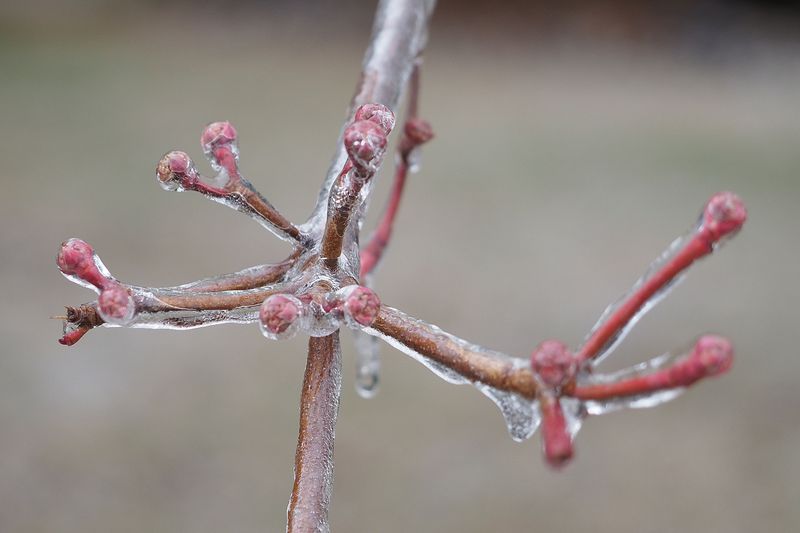
Every fall, I make a short list of yard jobs for the cold months. If a big Bradford pear is on your property, put it near the top.
Removal often works well in late fall and winter. The leaves are gone, arborists can see the structure clearly, and frozen ground can mean less damage to your lawn. Just don’t wait until the forecast shows an ice storm, when tree crews get booked fast.
Ask your crew to handle the stump. Callery pears love to send up sprouts from roots and stumps, so grinding it or treating the fresh cut with a labeled herbicide helps stop a thicket from forming.
Planting the replacement can happen in fall while the soil is still workable, or in early spring. Fall planting lets roots settle in before summer heat, which many young trees appreciate.
Water new trees deeply about once a week during dry spells for the first two years. Add a 2 to 3 inch ring of mulch, keeping it a few inches away from the trunk.
Prune young trees early to keep one strong leader and wide branch angles. Those small cuts now help your new tree ride out storms for decades instead of splitting the way that pear did.