The Underused Pennsylvania Shade Plant Hummingbirds Keep Visiting Through Fall
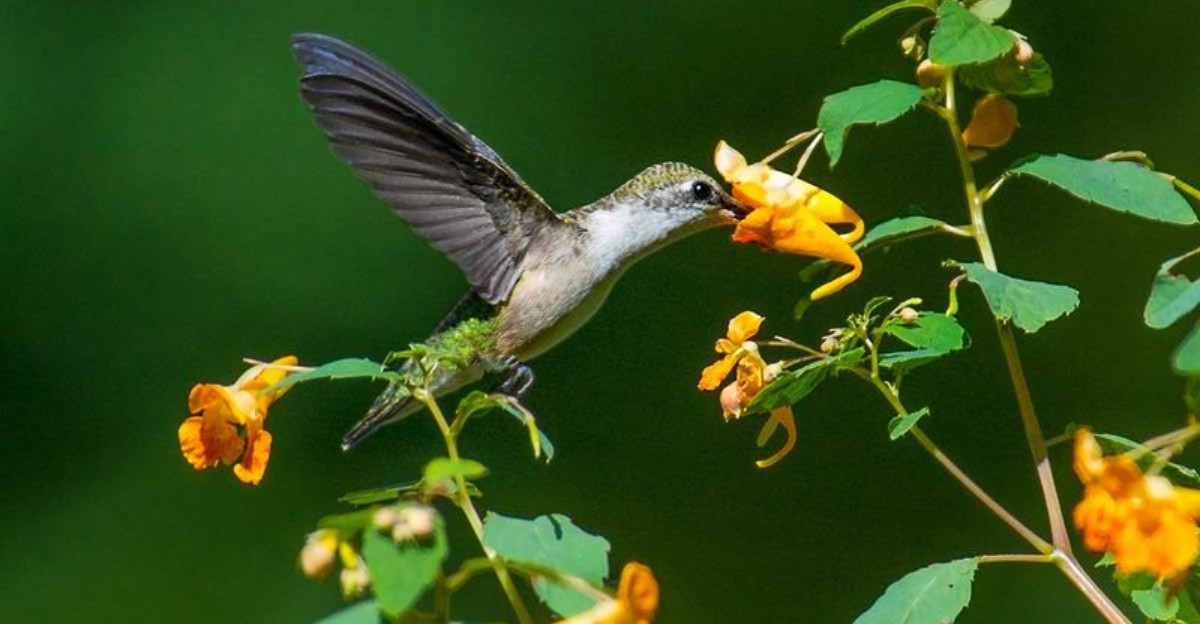
Early September in Pennsylvania has a sound, and it is not the neighbor’s leaf blower warming up. It is a thin, buzzy whir coming from the shady, damp edge of the back yard.
Feeders hang half empty by now, and most flower beds look tired, crispy, and ready for a nap. Yet the hummingbirds keep drifting back to one soggy, shaded corner nobody bothered to plan.
Gardeners tend to yank whatever grows in damp spots like that, assuming easy green things cannot matter. The birds disagree loudly, and they have been settling this argument since long before lawns existed.
Something down in that shade is fueling a bird that will soon cross the Gulf of Mexico. The hummingbirds already found the best restaurant in the yard, and they left no review.
The Orange Bloom Ruby-Throats Cannot Resist
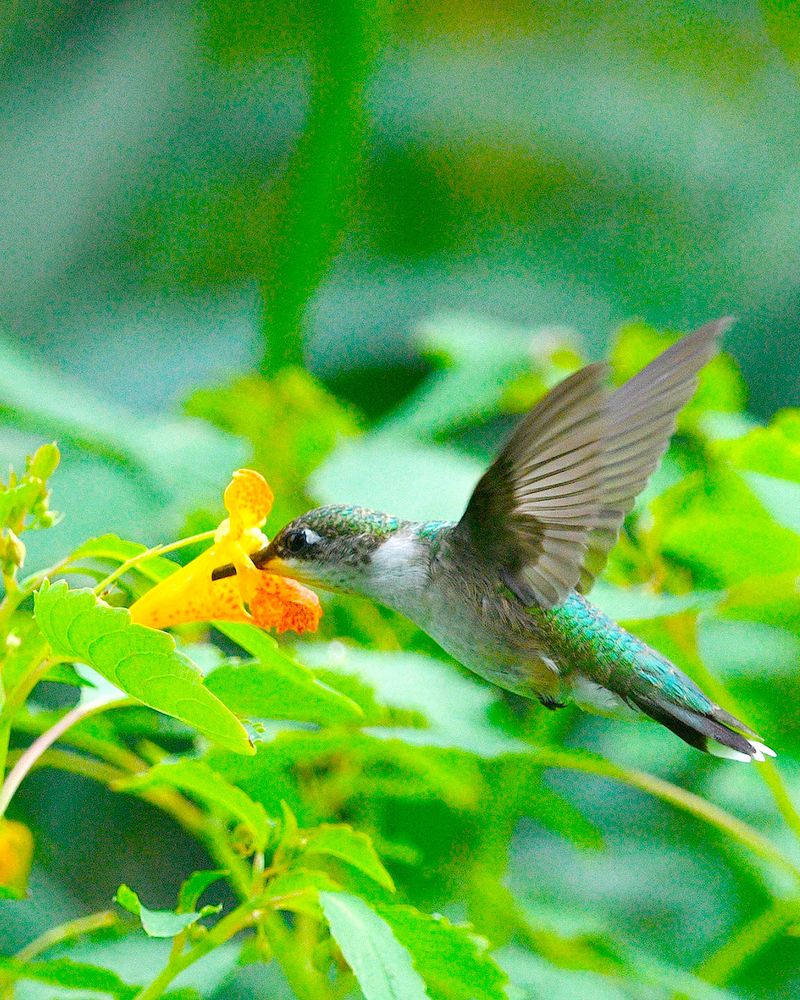
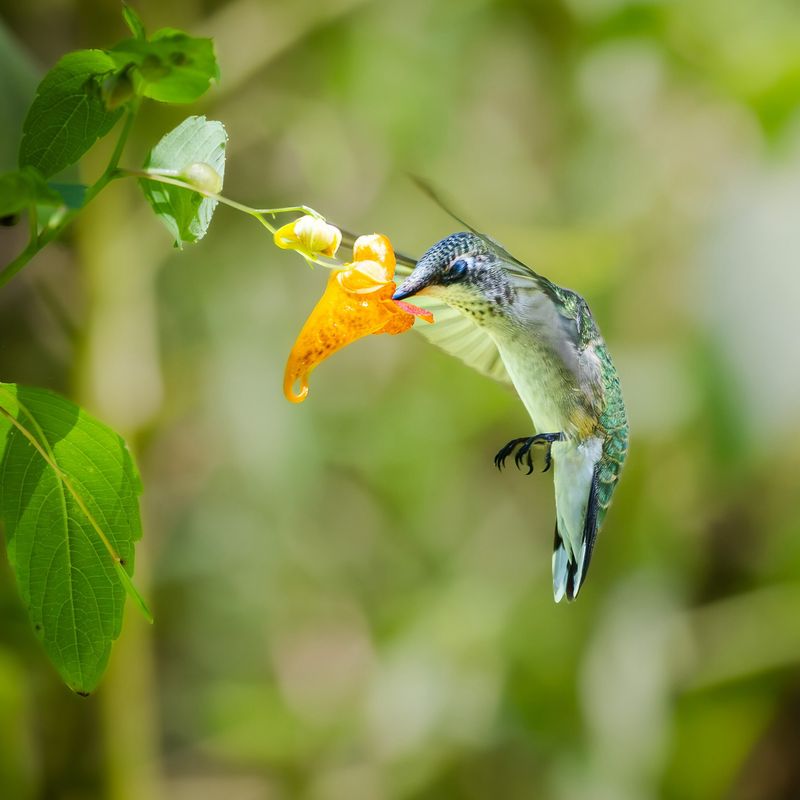
Orange, freckled, and dangling like tiny paper lanterns, jewelweed flowers look custom-built for a hummingbird bill. They basically are, and ruby-throats treat a healthy patch like their favorite roadside diner.
Botanists call it Impatiens capensis, though most Pennsylvania folks say orange jewelweed or spotted touch-me-not. It grows wild along creek banks, ditches, and moist shade behind old barns.
Each bloom hangs on a slender stalk, with a curved spur holding sugary nectar inside. Bees can reach the nectar too, but hummingbirds still visit these blooms constantly.
A single plant can stretch three to five feet tall by late summer in good soil. Stems stay juicy and translucent, which makes the plant easy to recognize.
Despite the tropical look, jewelweed is a true native annual across most of the state. Nurseries rarely sell it, so gardeners assume it belongs in wet woods instead of yards.
Folk tradition also credits crushed jewelweed stems with calming the itch from poison ivy contact. Handy, since the two plants often grow within a few steps of each other.
Once you know the flower, you start spotting orange sparks in every shady, damp corner. Hummingbirds noticed those sparks long before garden catalogs bothered to print the name.
Deer nibble it, seeds feed songbirds, and pollinators crowd the plant from July onward. It’s one of the more useful native plants for the effort it requires.
Think of jewelweed as a gas station built for birds with wings beating fifty times per second. The pumps stay open when most garden flowers have already closed for the year.
Bloom Timing And The September Migration Rush
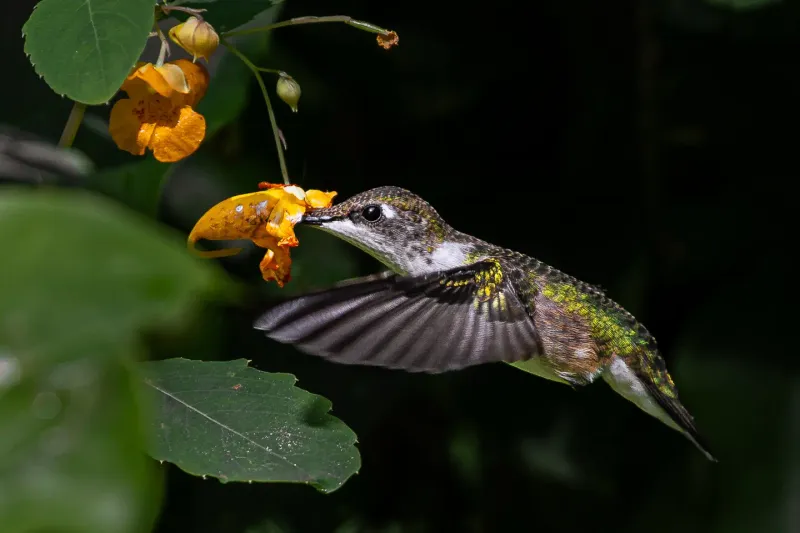
Late August through early October is when jewelweed hits full stride in Pennsylvania shade. That timing lines up perfectly with ruby-throats heading south along ridges and river valleys.
Adult males usually leave first, sometimes by mid-August, while females and young birds linger. Those late travelers need calories, and jewelweed keeps serving them well into October.
Many garden favorites like bee balm and coral honeysuckle finish blooming weeks earlier. A shady jewelweed stand fills that gap, which is exactly when the birds need help.
Flowers open in waves rather than one big show, so nectar stays available daily. Each bloom lasts only a couple of days, but replacements keep arriving until frost arrives.
Your Pennsylvania Garden Changes Every Week. Your Plan Should Too.
Gardening in Pennsylvania changes quickly throughout the season. Every Friday you’ll receive a simple weekly plan showing exactly what to plant, prune, fertilize, harvest, and protect so you never miss the right timing.
Ruby-throated hummingbirds build up significant fat reserves before crossing the Gulf of Mexico, and a reliable late-season nectar source like jewelweed helps fuel that process.
Around Labor Day, watch a patch at dawn or just before dusk for the best show. Birds feed hardest in those cooler hours, hovering from bloom to bloom with that familiar low hum.
Cold nights slow the plants, and the first hard frost finishes the annual stems. By then most hummingbirds have moved on, their tanks filled by a plant nobody planted.
September visitors can include birds hatched hundreds of miles north of your property line. Your damp back corner might be the last decent meal before a very long flight.
Keep a notebook of first and last sightings, since patterns repeat year after year. Neighbors will think you are strange, and the birds will keep your schedule anyway.
Damp Soil, Dappled Light, And Heavy Flower Production
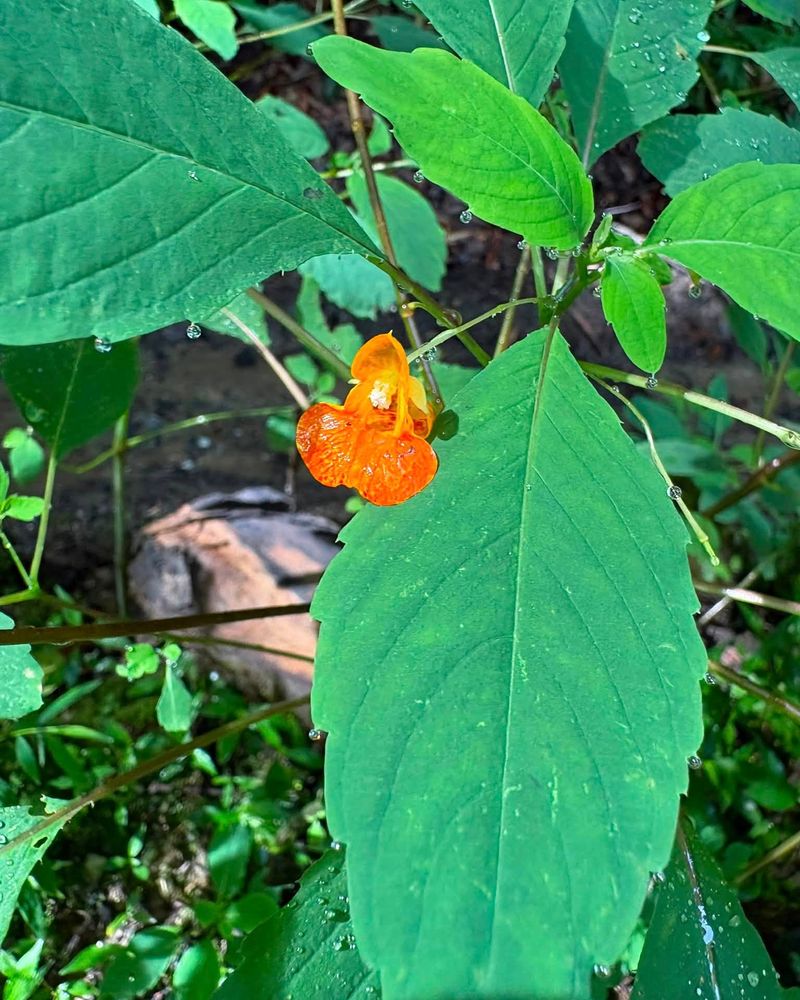
Soil moisture drives everything with jewelweed, and the plant makes no secret about it. Give it steady dampness, and stems climb fast; let it dry, and blooms shrink.
Hollow, water-filled stems explain that thirst, because the plant stores very little reserve. A week of drought in August can cut flower numbers right when birds arrive.
Light matters too, though not the way most flowering plants prefer. Two to four hours of filtered morning sun, plus afternoon shade, produces the heaviest bloom.
Deep, dark shade under maples yields tall, floppy plants with fewer flowers than expected. Full sun scorches leaves by noon unless roots sit in constantly moist ground.
Rich woodland soil with leaf litter suits it, and compost only helps the show. Skip fertilizer pellets, since lush growth without support means stems leaning across your path.
Downspout edges, rain garden borders, and low spots near a shed are ideal homes in Pennsylvania yards. Those awkward wet areas where grass sulks are exactly where jewelweed performs best.
Clay holds water nicely, so many Pennsylvania yards already have the right conditions. A soaker hose during dry spells keeps the nectar flowing through September heat waves.
Mulch with shredded leaves rather than bark chips, which can block self-sown seedlings. Nature handles the rest, usually better than any planting plan you sketch on paper.
Watch the leaves for a clue, because they shed water in silvery beads. That shimmer gave the plant its jewel name, and it signals a happy root zone.
The Weed-Pulling Mistake That Empties A Shady Border
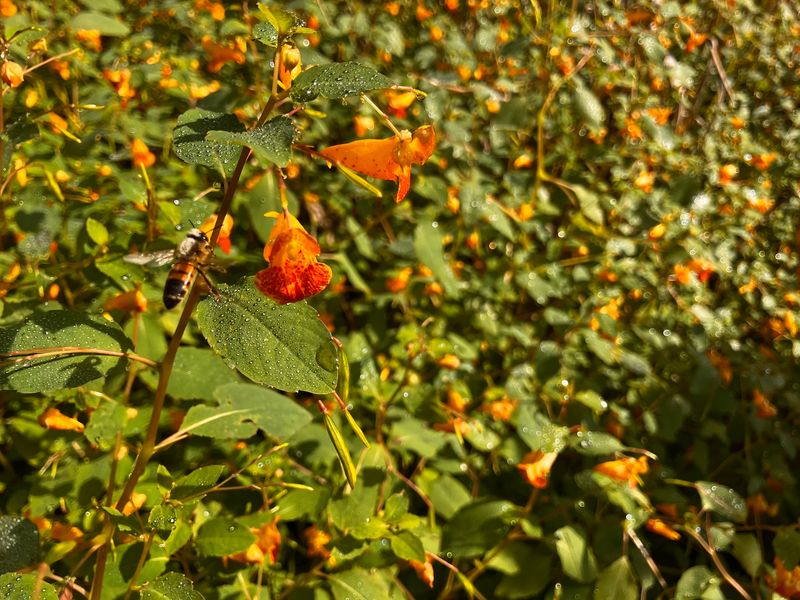
Here is the sad part, jewelweed gets yanked out every summer by tidy gardeners. It looks weedy in June, sprawls quickly, and rarely arrives with a nursery tag.
Pulling in July removes the buds that would have opened during migration season. One tidy afternoon can erase a nectar source dozens of birds were counting on.
Seedlings appear in dense carpets each spring, which convinces people something invasive took over. Most of those seedlings thin themselves out naturally as the strongest stems grab light.
Confusion with Himalayan balsam causes trouble, since that relative is a genuine invader. Check the flowers, because our native blooms orange or pale yellow, not bright pink.
Another misstep involves string trimmers along damp fence lines in the middle of August. Cutting then removes the whole season’s flowers, and the plant cannot regrow in time.
Herbicide drift in wet ditches also wipes out patches that took years to establish. Spot-treat carefully, or better yet, let the ditch stay a little shaggy.
Heavy mulch over bare soil buries the seed bank and stops spring germination cold. Light leaf cover works far better, mimicking the woodland floor the plant evolved with.
Gardeners often feel guilty once they learn what they removed, and that reaction makes sense. The good news is that seeds persist in soil, so patches bounce back quickly.
Leaving one shaggy corner unmanaged is a legitimate gardening decision, not laziness. Tell visitors it is habitat, and the hummingbirds will back up your story.
Placement Tips For A Reliable Autumn Nectar Patch
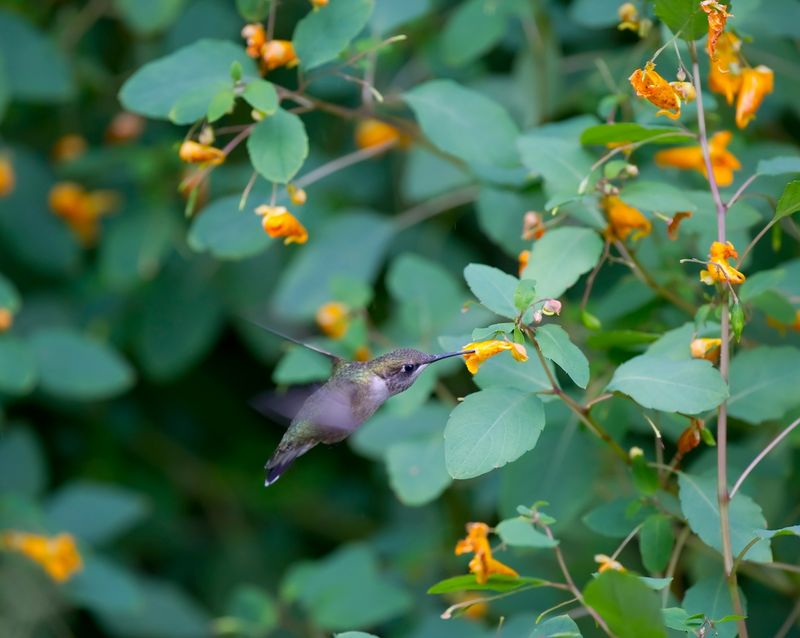
Picture the north side of a Pennsylvania garage, where gutters drip and grass refuses to grow. That neglected strip is prime real estate for a hummingbird feeding station of flowers.
Scatter ripe seeds in late September or October, pressing them lightly into moist soil. Seeds need winter cold to sprout, so spring planting from packets rarely works well.
Transplanting works in spring while seedlings stay small, under four inches tall. Move them with a scoop of soil, water immediately, and expect some sulking.
Give each plant a foot of space, then let them crowd naturally after that. Crowded stands actually bloom heavily because tall stems compete for the same light gaps.
Plant near a window, patio, or kitchen sink view for the best seat available. Birds visit constantly, and you will hear their squeaky chatter through a screen door.
Pair it with cardinal flower, blue lobelia, and white turtlehead for a longer season. Those natives share the same damp shade preferences and stagger their bloom times nicely.
Add a shallow water source nearby, since hummingbirds bathe in dripping leaves and puddles. A simple mister on a hose timer turns the corner into a bird spa.
Stake nothing and prune nothing, because the sprawl itself creates sheltered perching spots. Small twigs among the stems give birds somewhere to rest between feeding sessions.
Within two seasons, a patch generally maintains itself with very little upkeep. Hardest part is convincing yourself that doing less counts as real gardening work.
Seed Management And A Colony That Returns Each Year
Touch a ripe jewelweed pod and it pops, flinging seeds several feet through the air. Kids love it, and that spring-loaded trick earned the nickname touch-me-not centuries ago.
Because jewelweed is an annual, next year’s patch depends entirely on this year’s seeds. Protect the pods, and the colony renews itself without any nursery order in spring.
Hold off on fall cleanup until stems collapse and pods have released their cargo. Raking a border in early September throws away the whole next generation.
Seeds stay viable in soil for a couple of years, which cushions bad seasons. A drought summer might thin the stand, yet the patch usually rebounds the following spring.
Collecting seed is easy, cup a hand under a pod and squeeze the tip gently. Store them damp in a refrigerator, because dried seed loses its ability to sprout.
Mice, chipmunks, and ground-feeding birds eat plenty, so scatter more than feels necessary. Generosity pays off, since a wider colony survives mowing accidents and rough winters.
Expect the patch to wander, showing up ten feet downhill after heavy rain runoff. Let it travel, and you gain a shifting ribbon of flowers along the wet edge.
Mark the area with a stake or garden sign so helpers do not clear it. Landscaping crews mean well, but they cannot read your intentions from the driveway.
Do this once, and September visits become an annual tradition in your own backyard. It’s a low-cost, low-maintenance way to support hummingbirds through the fall.