What Pennsylvania Gardeners Should Know About Jumping Worms Before They Find Them In Their Soil
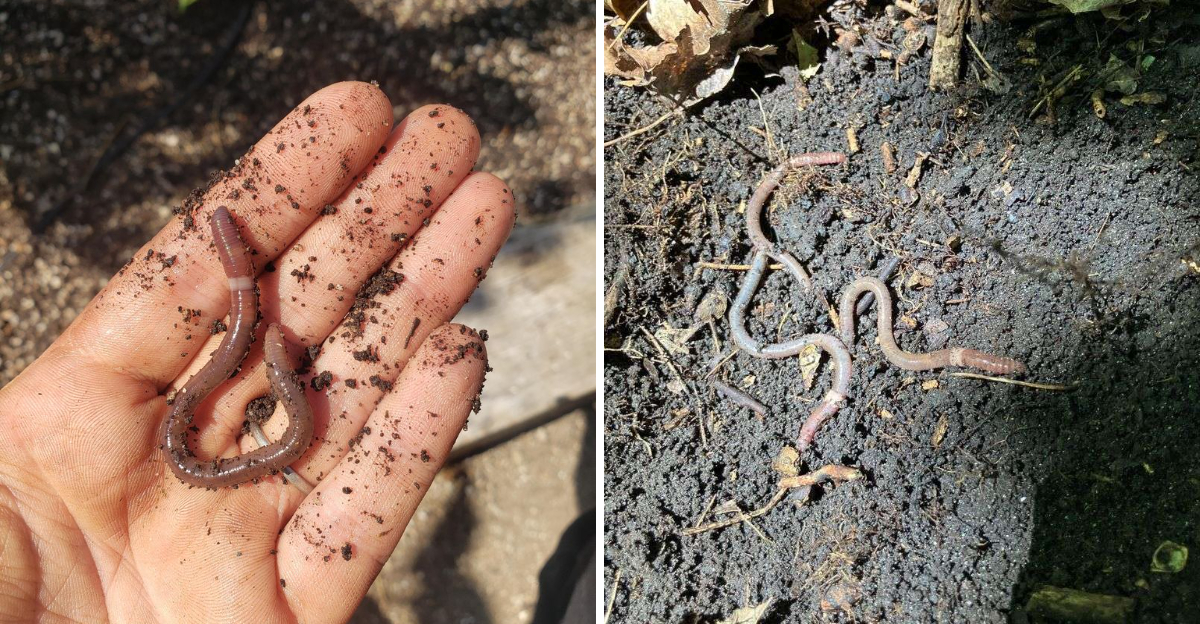
A Pennsylvania garden can look perfectly healthy while a major change is already happening just beneath the mulch.
The first sign may not be a struggling tomato, a collapsing perennial, or anything dramatic enough to stop a gardener mid-step. Instead, the bed can simply feel different.
Soil shifts strangely under a trowel. Organic matter seems to disappear faster than expected. Something moves through the upper layer with enough speed to make a routine weeding session suddenly much more interesting.
That is when close observation matters.
The problem does not arrive with a neat label, and one unusual patch of soil is never enough to settle the diagnosis. Several clues need to line up before the picture becomes convincing.
So what should Pennsylvania gardeners notice before an ordinary planting bed starts behaving unlike itself?
The answer involves texture, movement, seasonal timing, and the surprisingly easy ways a hidden problem can travel from one property to another. Catching those patterns early will not solve everything, but it can change what happens next.
1. Learn The Coffee Ground Soil Clue
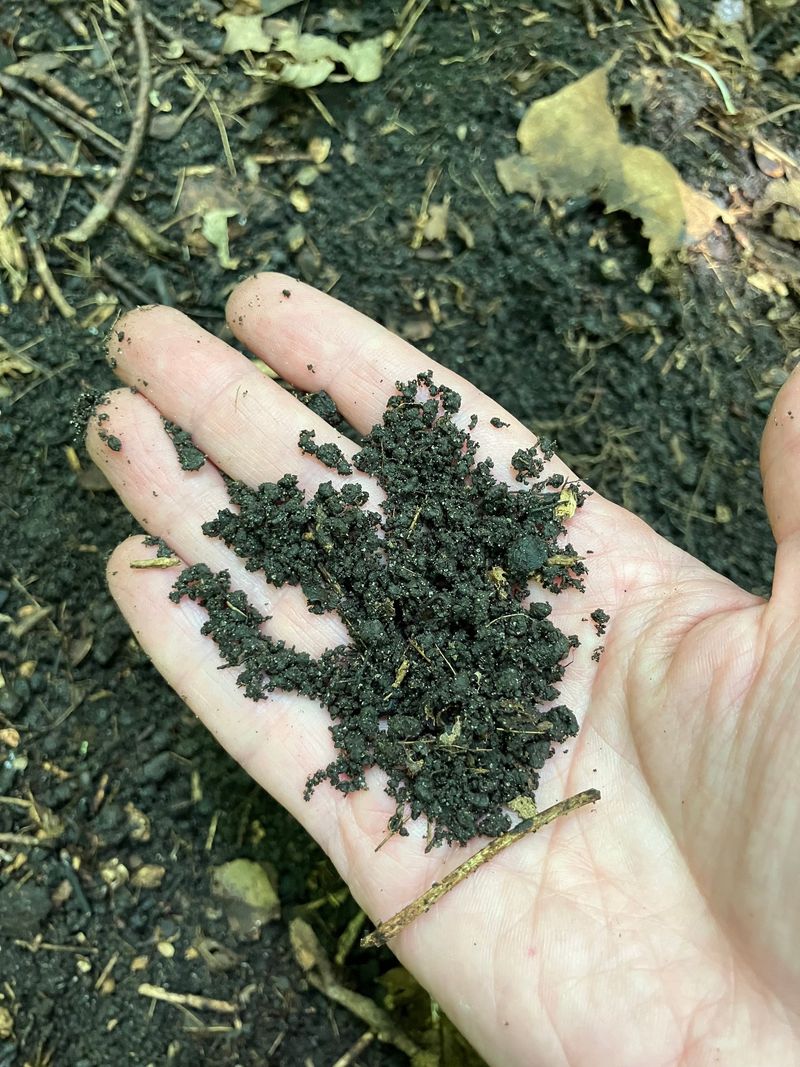
One of the strangest signs appears in the soil itself.
Jumping worms feed heavily in the upper organic layer and leave behind loose, granular castings that are often compared with coarse coffee grounds.
A bed that once held a springy layer of leaf litter can begin looking pebbly, crumbly, and unusually uniform near the surface.
That texture matters because these worms spend most of their time close to the surface rather than deep underground.
As organic material disappears, the upper soil layer can lose structure and become more vulnerable to drying and erosion.
Plant roots near the surface may also lose some of the protective organic material that normally buffers moisture and temperature changes.
Still, coffee-ground soil is a clue, not a conviction.
Drought, disturbed mulch, coarse compost, and naturally granular soil can create similar appearances. Look for the texture across more than one small patch, then pair it with worm behavior and adult body features before deciding what is present.
Check after rain or irrigation when the upper soil is moist and easier to examine.
Rake aside a thin layer of mulch and study the top few inches rather than digging a deep hole. Jumping worms are surface specialists, so the evidence tends to stay close to where gardeners plant, weed, and spread compost.
The soil may look like breakfast grounds, but this is one cup nobody ordered.
2. Watch For Fast Snake-Like Thrashing
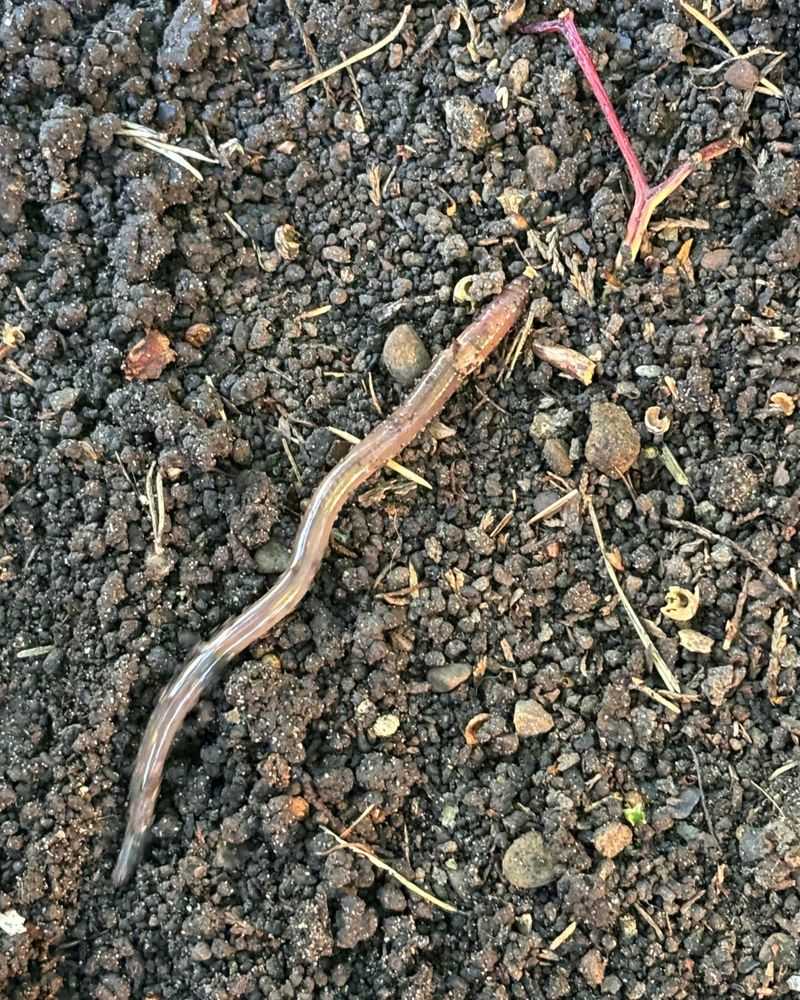
Most familiar garden earthworms move with a slow stretch-and-contract rhythm.
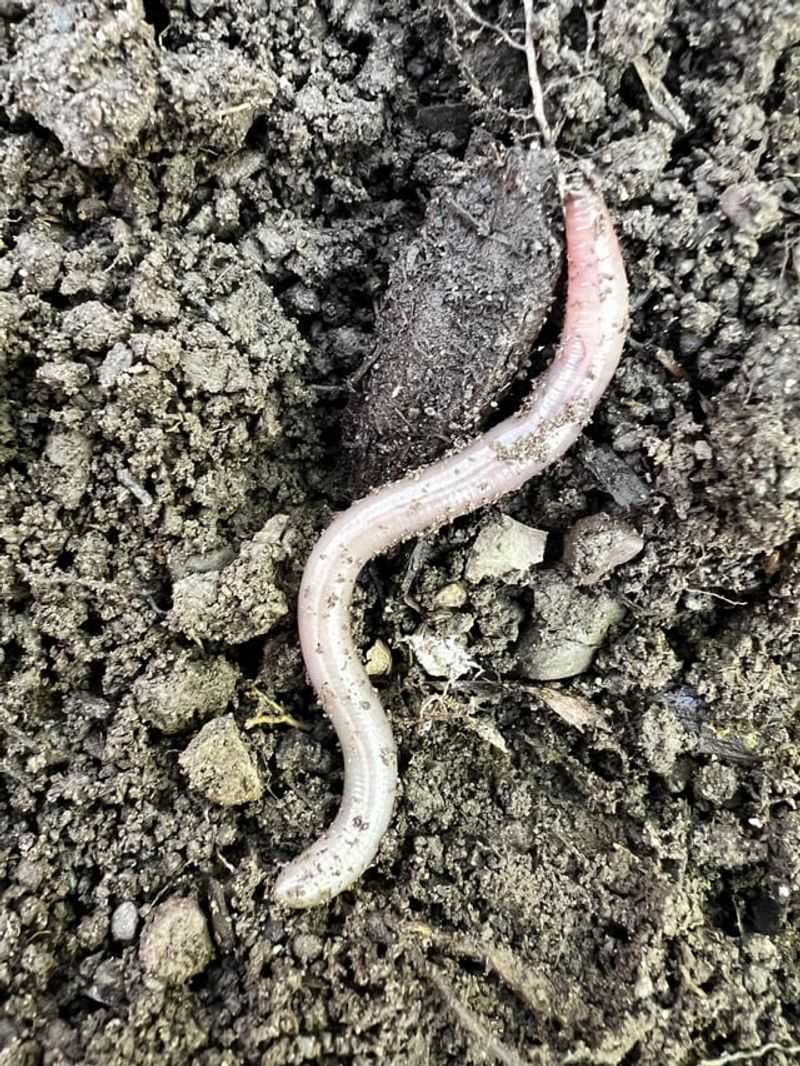
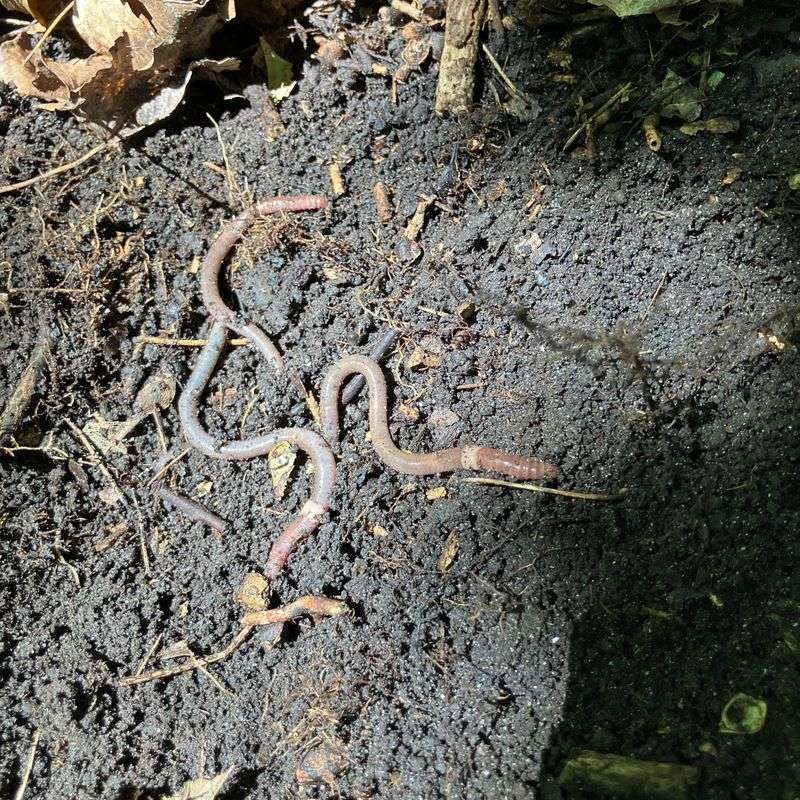
Jumping worms look very different once disturbed. They thrash rapidly from side to side, often with a flat, snake-like motion that can make them seem almost electric.
That unusually vigorous movement is one of the easiest behavioral clues to notice without special equipment.
Their preferred location adds another clue.
These invasive worms live mainly in organic matter and the uppermost soil layer, so gardeners may uncover them while moving mulch, dividing perennials, or loosening the top few inches of a bed.
Your Pennsylvania Garden Changes Every Week. Your Plan Should Too.
Gardening in Pennsylvania changes quickly throughout the season. Every Friday you’ll receive a simple weekly plan showing exactly what to plant, prune, fertilize, harvest, and protect so you never miss the right timing.
After moisture brings activity close to the surface, several can appear in a surprisingly small area.
Do not rely on movement alone.
A startled worm can move quickly for several reasons, and juveniles can be difficult to identify. Capture one in a sealed container or bag long enough to inspect it carefully, then compare the body with the adult band described in the next section.
Avoid carrying the worm or attached soil to another bed.
Once a suspicious animal appears, keep tools and loose soil in that immediate area until the identification becomes clearer. Prevention becomes much easier when potentially contaminated material stays put.
The dramatic thrashing gets attention, but the useful part comes afterward.
Treat that motion as a reason to investigate, not as a standalone verdict. A worm that moves like it has somewhere urgent to be still needs the rest of the identification clues to match.
3. Check The Smooth Pale Band On Adults
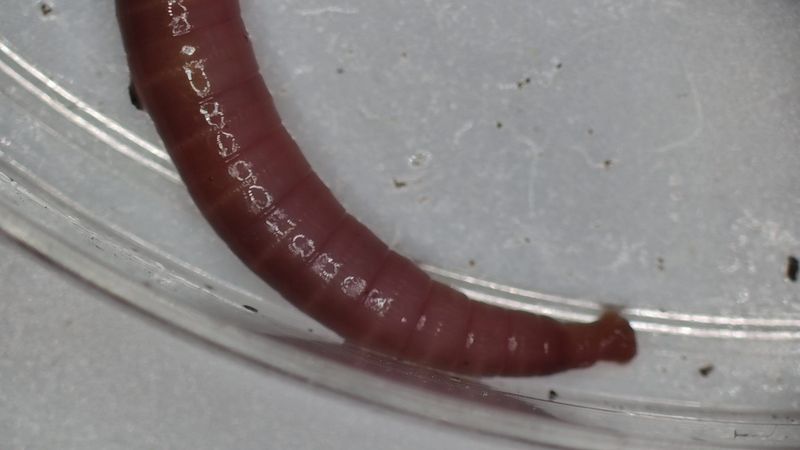
Adult jumping worms carry one of their best identification marks around the body.
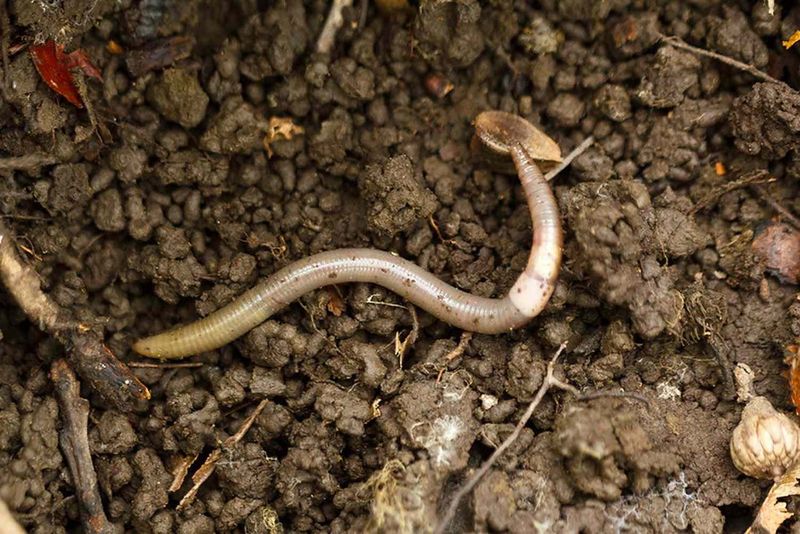
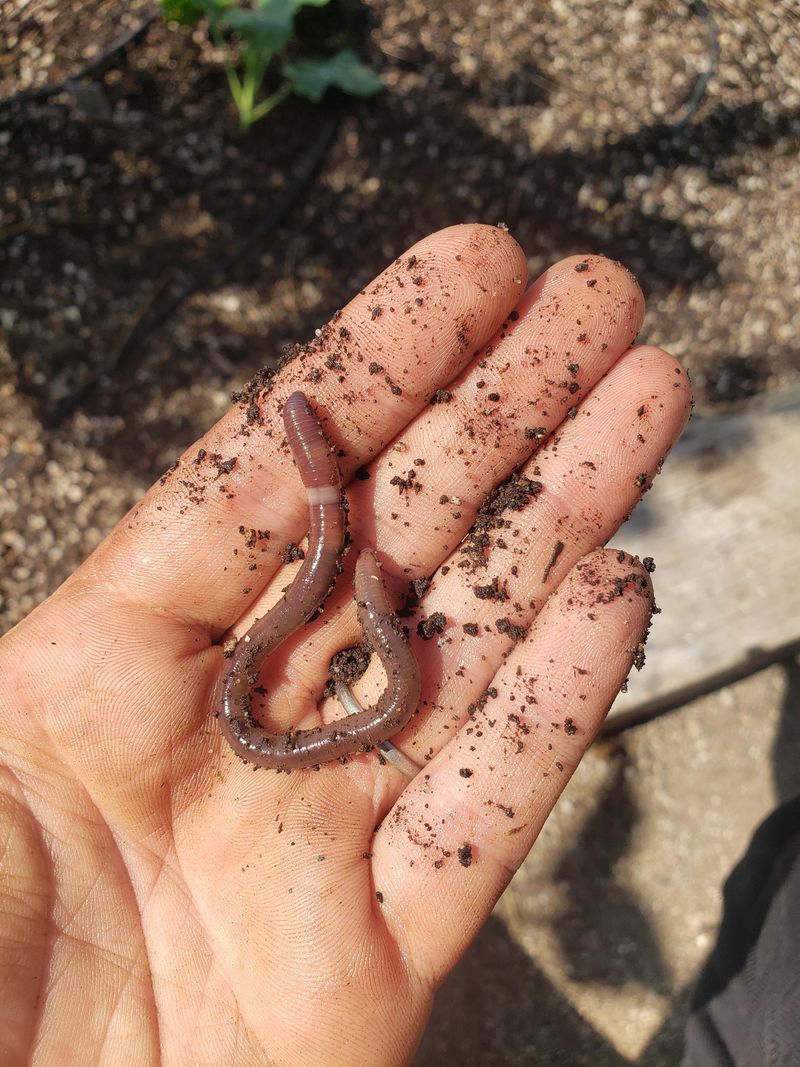
The clitellum, the reproductive band visible on mature earthworms, is pale milky white to light gray, lies flush with the body, and forms a complete ring.
Familiar European nightcrawlers usually have a raised, reddish-brown band that does not wrap completely around the body.
That difference is much more useful than overall worm color.
Body shades can vary, soil can stain the surface, and lighting changes what gardeners see. A smooth, pale ring circling the entire adult worm provides a stronger clue when combined with the rapid thrashing behavior and coffee-ground castings.
Young worms create the tricky part.
Juveniles have not developed the mature clitellum yet, so early-season specimens may lack the feature entirely. That makes spring identification harder and increases the value of watching the site again later as the population matures.
Use a hand lens where details blur together.
Place the worm on a light-colored surface inside a container and look rather than repeatedly handling it. A clear photograph from above can also help document the ring, body shape, and size.
Several matching clues beat one uncertain glance.
Granular castings, shallow habitat, frantic movement, and the smooth full-circle band create a much stronger case together than any single trait.
Jumping worms do not arrive wearing name tags. The clitellum comes surprisingly close once the adults show up.
4. Remember Tiny Cocoons Travel Unseen
The worm you notice is only part of the spread problem.
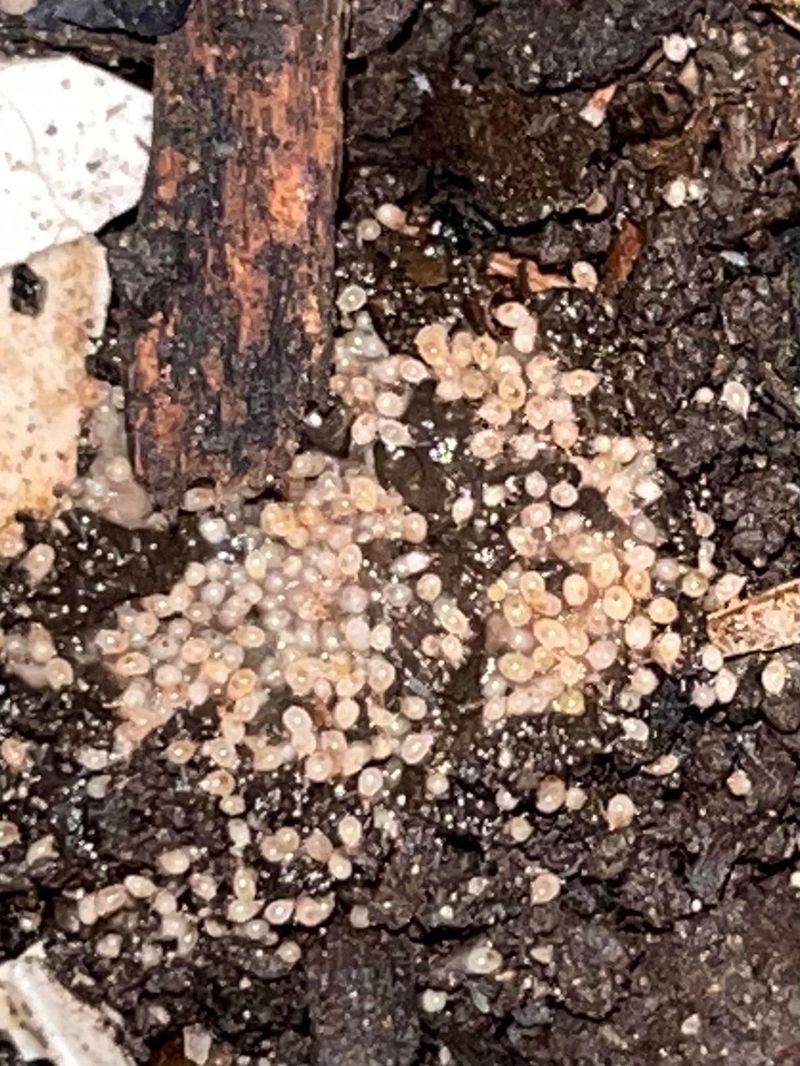
Adult jumping worms are annual and disappear after freezing weather, but their cocoons survive winter and hatch once spring soil temperatures become favorable.
The cocoons are about the size of a mustard seed and blend easily into soil, mulch, and compost.
That tiny size makes accidental transport easy.
A shovel of compost, a potted perennial, bark mulch, soil stuck to a root ball, or material moved between properties can carry cocoons without anyone seeing them.
Jumping worms can also reproduce without mating, which helps a new population establish from a small introduction.
This is why winter does not reset an infested garden.
The adults may be gone, yet the next generation remains hidden in the soil until conditions warm. Gardeners can mistake the seasonal disappearance for success, then see young worms return later.
Focus less on hunting individual cocoons and more on controlling movement.
They are too small and well camouflaged for reliable hand sorting. Keeping suspect soil, mulch, compost, and root balls on the original property is far more practical.
Spring deserves special attention.
Young worms can be harder to identify because they lack the adult clitellum, but unusual castings and rapid movement still provide reasons to keep watching.
The adults make the spectacle. The cocoons handle logistics.
That quiet winter stage is exactly why clean material and careful plant movement matter so much in Pennsylvania gardens.
5. Inspect Plants Before Moving Soil Home
A perennial division can carry more than a new flower color.
Jumping worm cocoons can travel in soil around roots, so plants from garden swaps, friends, sales, and other properties deserve a quick inspection before they enter a clean bed.
Look for unusually granular, coffee-ground-like soil and any fast-moving worms near the root ball.
Source history matters too.
Ask where the plant was grown and about any jumping worm history in the surrounding garden. That conversation may feel awkward briefly. Digging an invasive population out of a favorite bed is considerably more awkward.
Suspect soil should not be casually redistributed.
Guidance for potentially contaminated plants includes removing the soil and thoroughly rinsing the roots before bringing the plant into the garden. Bare-root material also reduces the amount of unknown soil traveling with a transplant.
Choose plants sturdy enough to tolerate that treatment.
Some delicate species resent major root disturbance, so passing on a questionable specimen may be smarter than forcing a risky cleanup.
Keep removed soil at its original site or dispose of it according to local recommendations.
Do not shake it into a compost pile, dump it along a fence, or use it to fill another bed.
Plant sharing is one of gardening’s best traditions. It works even better when the only thing being shared is the plant.
A few minutes spent examining the root ball can protect years of soil building elsewhere in the yard.
6. Use Clean Mulch And Compost Sources
Mulch remains useful in Pennsylvania gardens, but unknown material deserves more questions now.
Jumping worm cocoons can move in compost, bark, leaf mulch, and other organic products. A load spread across several beds can distribute a problem far more efficiently than one wandering adult ever could.
Heat treatment offers an important safeguard.
Current guidance recommends bulk mulch or compost from reputable producers that heat material to at least 130 degrees Fahrenheit for three days, a treatment intended to destroy cocoons.
Bagged mulch is another lower-risk option compared with loose material from an uncertain source.
Home compost piles are less predictable.
A pile may become hot in the center while edges stay cool, leaving pockets that never reach the needed temperature.
That makes visual appearance or one thermometer reading a poor guarantee that every cocoon has been exposed to lethal heat.
Free wood chips can still be useful.
Ask where the material originated and avoid loads mixed heavily with soil or leaf litter from a site known to have jumping worms.
Clean woody material carries a different level of concern than debris scraped together with contaminated topsoil.
Keep new bulk material contained before broad use.
A designated staging area makes inspection easier and limits the number of beds involved when something suspicious appears.
Mulch is supposed to solve garden problems, not arrive with bonus livestock.
The best bargain is the load whose source and handling history are boringly clear.
7. Stop Sharing Soil From Suspect Beds
Once jumping worms are confirmed in one area, containment becomes more useful than pretending the bed is a source of clean material.
Do not move soil, compost, mulch, or rooted divisions from that area into another garden. Cocoons can travel unnoticed with every scoop, and their tiny size makes visual screening unreliable.
Tools deserve attention too.
Shovels, forks, trowels, wheelbarrow tires, and boot treads can carry clumps of soil between beds. Brush off attached material before leaving the infested area, then clean equipment before using it somewhere that remains clear.
Plant swaps need a new rule.
A hosta division is not worth exporting suspect soil to a neighbor. Keep divisions on the property, or move only material prepared with a method that removes the original soil and avoids transferring contaminated media.
The same caution applies to compost made on-site.
Organic material handled in an infested area should stay within that property unless a validated heat treatment has been completed. Moving unfinished compost simply gives cocoons another vehicle.
Containment can feel unsatisfying because nothing dramatic happens.
No pile disappears. No worm population vanishes overnight. The success is a new bed that stays clean and a neighbor who never receives the problem.
That is still meaningful control.
Jumping worms spread exceptionally well through garden habits. Changing those habits takes away an easy transportation system.
Generosity can continue. Share seeds, cuttings without soil, produce, and advice. Let the dirt keep its own address.
8. Keep Checking After The First Discovery
Finding one jumping worm should change the scouting routine, not trigger a declaration that the entire garden is ruined.
Populations look different through the season. Cocoons survive winter, hatch as soil warms, and produce juveniles that lack the obvious adult clitellum. Mature worms become easier to identify later, so repeated checks can reveal more than one early visit.
A mustard pour can help bring hidden worms to the surface.
Mix one-third cup of dry mustard powder into one gallon of water and drench a small test area. The solution irritates earthworms and drives them upward, making collection and inspection easier.
The method is useful for detection and hand removal in a limited space, not proof that the surrounding garden is clear.
Repeat observations across several locations.
Beds with heavy mulch, compost-rich edges, and places that received imported material deserve extra attention. Record where suspect worms and granular castings appear so future checks focus there.
Remove captured adults in light infestations.
Sealed bags placed in the trash prevent collected worms from returning to the landscape. Keep potentially contaminated soil at the site while distribution becomes clearer.
Scouting will not erase cocoons already present.
It does show where pressure is highest and helps prevent accidental spread to other beds.
One discovery is information.
The useful question is not how quickly the gardener can panic. It is how carefully the property can be mapped, contained, and watched through the season.
9. Understand Why Management Stays Realistic
Jumping worms do not currently come with a simple home-garden eradication recipe.
Research continues, but established populations are difficult to remove completely. Prevention, containment, hand removal in small areas, and heat-based approaches for cocoons remain more realistic than expecting one treatment to reset an infested bed.
Some experimental approaches have attracted attention.
Biochar, diatomaceous earth, and other abrasive materials have been explored against adult worms, while solarization can raise moist soil beneath clear plastic to temperatures capable of destroying cocoons.
These methods have limits and should not be treated as universal cures for large landscapes.
Solarization is particularly site-specific.
Guidance calls for clear plastic over moist soil during warm weather until soil exceeds 104 degrees Fahrenheit for at least three days.
That may be practical for a small empty bed and far less practical beneath established perennials, shrubs, or tree roots.
Protect the soil that remains.
Reduce unnecessary movement, keep plant cover where possible, and watch vulnerable seedlings in areas where the organic layer has been heavily altered.
Jumping worm activity can degrade surface structure and expose shallow roots, so maintaining vegetation becomes part of adapting to the site.
The goal is progress rather than a miracle product.
Contain the population, stop exporting soil, remove worms where practical, and keep following research as recommendations improve.
Sometimes good pest management sounds less like victory music and more like a clipboard. That is still a useful soundtrack.