The Watering Mistake That Makes Your ZZ Plant Turn Yellow
Underneath that famously tough houseplant sits a cluster of swollen, potato-like stems packed with stored water.
Those hidden tanks let it shrug off weeks of neglect in a dim office corner. They also make it surprisingly easy to drown.
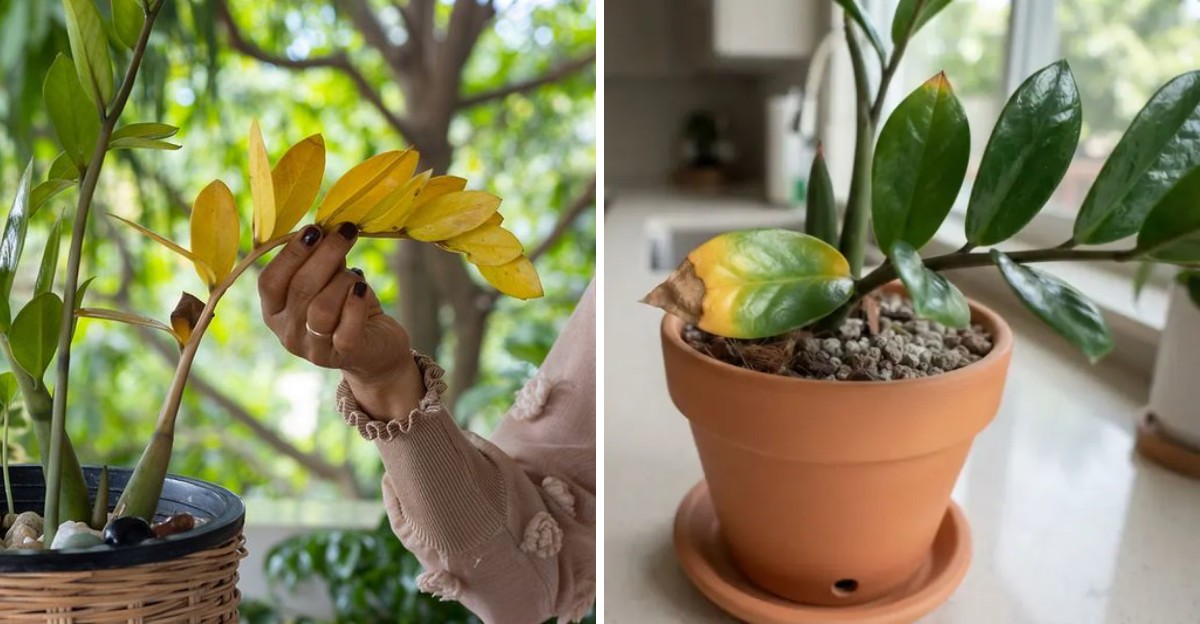
I learned the hard way that kindness can backfire. I gave mine a little drink every Sunday, feeling like a model plant parent. Within a month, the lower leaves turned the color of a banana peel.
Truth is, yellow leaves on this plant rarely mean it needs more attention. University extension experts point to soggy soil as the usual cause, and the damage starts long before you see it.
So what is going on down in that pot, and how can you tell a thirsty plant from a waterlogged one?
Those Potato-Like ZZ Rhizomes Are Hiding a Clue
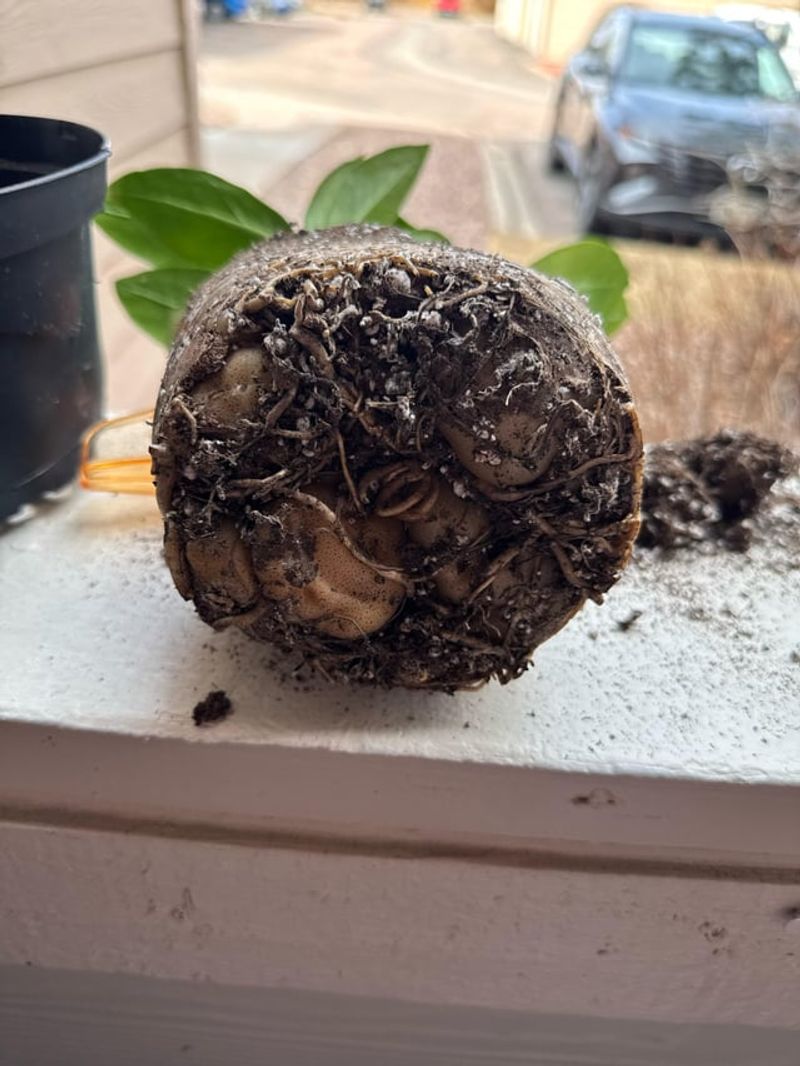
Pull a healthy ZZ plant out of its pot and you might gasp a little. Fat, pale lumps sit under the soil like a handful of baby potatoes.
Those lumps are rhizomes, which are thick underground stems. The plant uses them to store water and food, and its stems and leaves hold moisture too. ZZ plants come from eastern Africa, where long dry spells are normal. Over time, they built their own backup water supply.
Here is why that matters for you. A plant carrying its own water tank simply does not need frequent drinks. When you add more water while the tank is still full, the extra has nowhere useful to go.
Roots and rhizomes also need air. Healthy soil has tiny pockets between the particles where oxygen hangs out. Soggy soil fills those pockets with water, and the roots start to struggle.
Fun fact: a single ZZ leaflet that falls onto soil can grow its own tiny rhizome and start a new plant. That shows just how much energy and moisture this species packs into each part.
Once you picture those hidden potatoes, the whole watering puzzle starts to make sense.
Watering Your ZZ Plant on a Schedule Is the Real Culprit
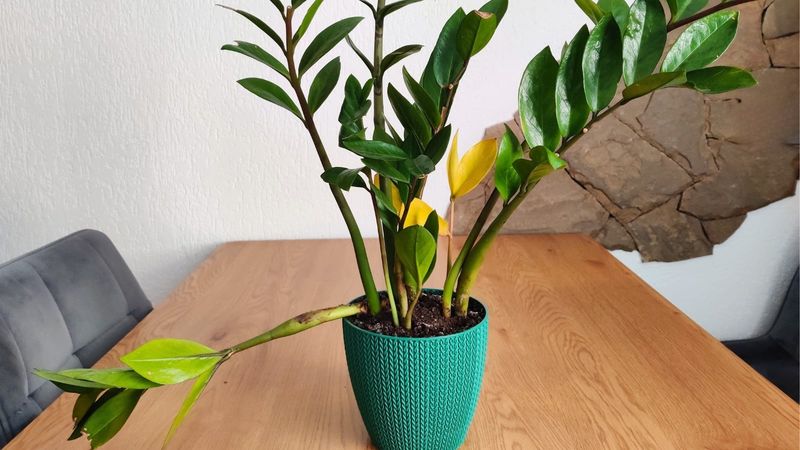
Guilty as charged, I used to water every plant in my house on Sunday mornings. It felt organized and responsible. My ZZ plant did not agree.
The mistake behind most yellow ZZ leaves is watering too often, usually on a fixed calendar instead of checking the soil. Extension sources like the University of Florida and Clemson note that ZZ plants prefer soil that dries out between waterings. A weekly splash can keep the pot damp most of the time.
Constant moisture cuts off oxygen to the roots. Without air, roots and rhizomes weaken, and fungi that cause root rot move in. Damaged roots cannot carry water and nutrients up to the leaves, so the leaves turn yellow.
Here is the twist. A plant with rotting roots can look thirsty, because water is not reaching the top. Many people respond by watering again, which makes things worse.
Small, frequent sips are part of the trouble too. They keep the top layer wet while never flushing the pot.
So the fix is less about how much water you pour. It is about how long you wait before pouring again.
Let the ZZ Soil Dry Out Before the Watering Can Comes Out
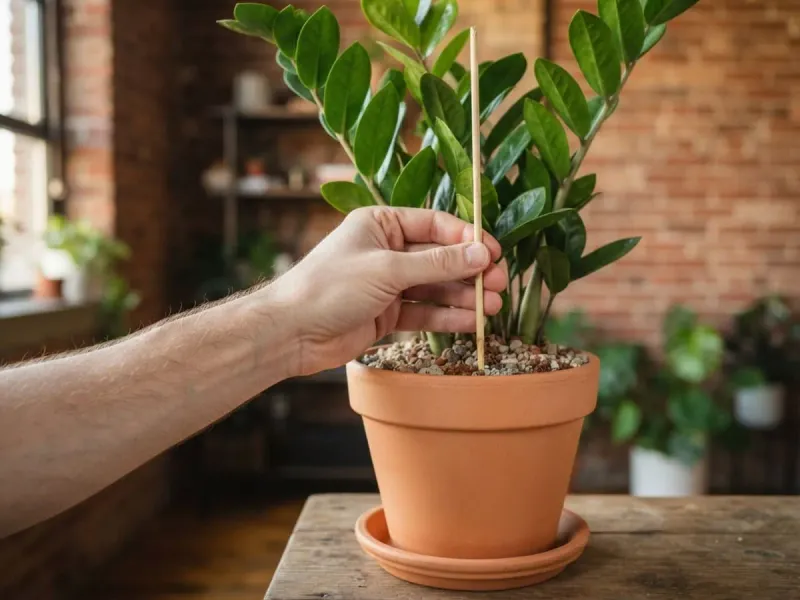
Trust me on this one, a wooden chopstick is the best ZZ tool you already own. Push it deep into the pot, wait a few seconds, and pull it out.
If it comes out dark or with damp soil stuck to it, wait. If it comes out clean and dry, your plant is ready for a drink. Most growers let the soil dry all or nearly all the way down.
When it is time, water deeply. Pour slowly until water runs out the drainage holes. Then empty the saucer after about 15 minutes so the pot is not sitting in a puddle.
How often will that be? In spring and summer, many homes land somewhere around every two to three weeks. In fall and winter, when growth slows and light drops, once a month or even less is common.
Lifting the pot helps too. A freshly watered pot feels heavy, while a dry one feels light. After a few rounds, your hands will learn the difference.
Let the plant set the schedule. Your calendar can take a break.
Mushy ZZ Stems and a Sour Smell Mean Trouble Underground
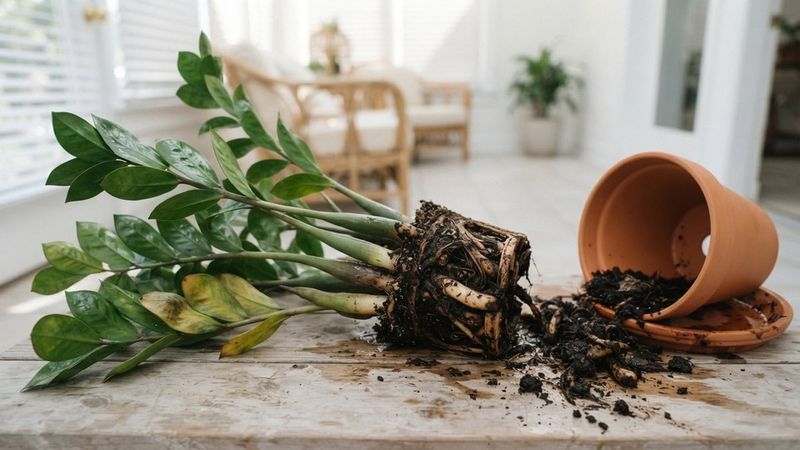
Not going to lie, the first time I squeezed a soft ZZ stem, my stomach dropped. Healthy stems feel firm, almost like a fresh green bean.
Yellow leaves are only one signal of overwatering. Look closely at the base of each stem where it meets the soil. Stems that feel squishy, look dark, or seem see-through near the bottom often point to rot.
Yellowing usually starts on the lower leaves and creeps upward. Leaves may also feel soft or limp instead of waxy and stiff. Sometimes a whole stem flops over.
Give the soil a sniff too. Fresh potting mix smells earthy. A sour, swampy, or rotten smell suggests fungi or bacteria are breaking down roots below.
Other clues include soil that stays wet for more than a week, fungus gnats buzzing around the pot, or a white fuzzy film on the surface. Each of these hints at too much moisture.
Catching these signs early gives you the best shot at saving the plant. A single soft stem is much easier to handle than a pot full of mush.
A Thirsty ZZ Plant Wrinkles Instead of Going Soft
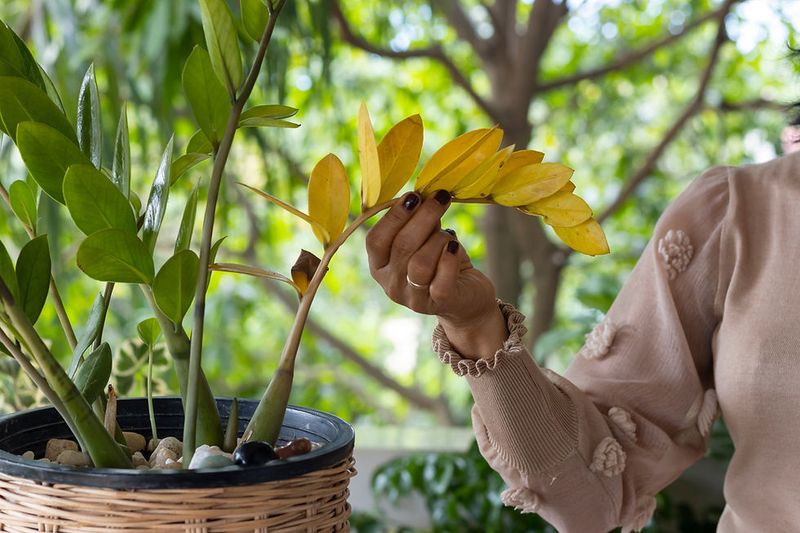
I get it, yellow leaves make everyone reach for the watering can. Yet underwatering can cause yellowing too, and the two problems look different up close.
A thirsty ZZ plant usually shows wrinkled, curled, or shriveled leaflets. The leaf tips may turn crispy and brown. Stems might lean or droop, but they stay firm rather than mushy.
Check the soil as well. In a dry pot, the mix often shrinks and pulls away from the sides, leaving a gap. The whole pot feels surprisingly light when you lift it.
An overwatered plant tells a different story. Its soil feels damp, the pot feels heavy, and the stem bases turn soft. Leaves go yellow and limp instead of crinkly.
Here is a quick way to sort it out:
Wrinkled leaves, dry soil, a light pot, and firm stems mean thirst. Soft yellow leaves, wet soil, a heavy pot, and squishy stems mean too much water.
Honestly, true underwatering is less common with ZZ plants, since they can go a long time between drinks. Still, it happens after a long trip or a forgotten corner, so it pays to know both looks.
Rescue an Overwatered ZZ by Trimming Soft Rhizomes
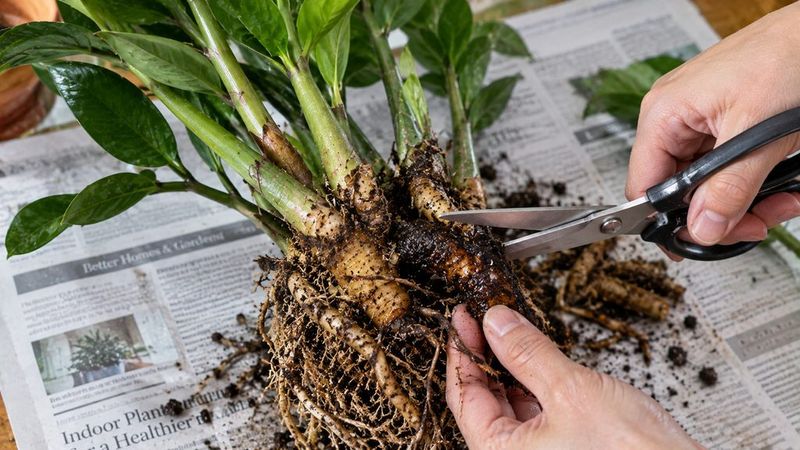
Rolling up your sleeves for a ZZ rescue feels a bit like plant surgery. It sounds scary, but the steps are simple.
First, slide the plant out of its pot and gently shake off the wet soil. Rinse the roots if needed so you can see clearly.
Healthy rhizomes feel firm and look pale tan or white. Rotting ones feel soft, look brown or black, and may smell bad. Using clean, sharp scissors or pruners, cut away every soft section until only firm tissue remains.
Remove any mushy or fully yellow stems as well. Wipe your tools with rubbing alcohol between cuts to avoid spreading rot.
Let the trimmed rhizomes air dry for several hours to a day. This helps the cuts seal over. Then replant in fresh, dry, fast-draining mix and a clean pot with holes.
Wait about a week before watering so the roots can settle. Afterward, return to a deep soak followed by a long dry spell.
Yellow leaves will not turn green again, so trim those off. New shoots may take a few months to appear, so patience is part of the cure.
Gritty Cactus Mix and Drainage Holes Keep ZZ Roots Breathing
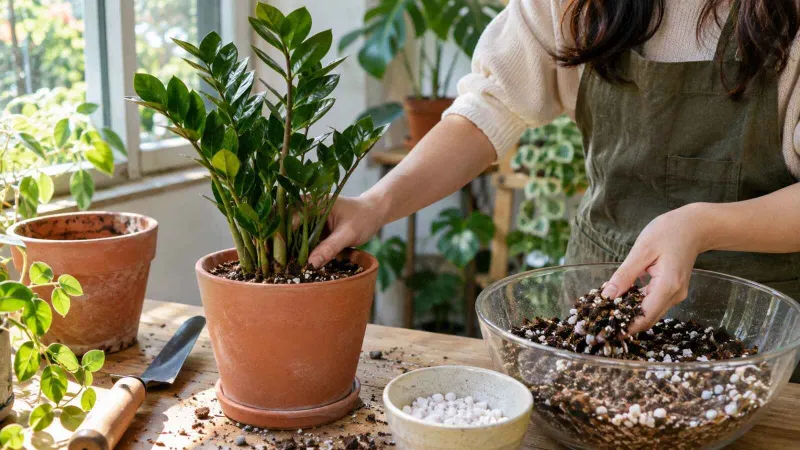
Fair warning, that pretty pot without a hole is a trap. Even careful watering can turn into a swamp when water has no exit.
Drainage holes let extra water escape so it does not pool around the rhizomes. If you love a decorative pot without holes, place a plastic nursery pot inside it. Just tip out any water that collects at the bottom.
Soil matters just as much. Regular potting mix can hold too much moisture for ZZ roots. A cactus or succulent mix drains faster and holds more air.
You can also make your own blend. Try about two parts regular potting mix with one part perlite or pumice. A handful of orchid bark adds chunky air pockets too.
Pot size plays a role. A container far bigger than the root ball holds lots of soil that stays wet for days. Choose a pot just an inch or two wider than the old one.
Terracotta is a handy choice because the clay lets moisture escape through its walls. Plastic holds water longer, so it works best for folks who tend to forget watering day.
One Old Yellow ZZ Leaf at the Base Is Often No Big Deal
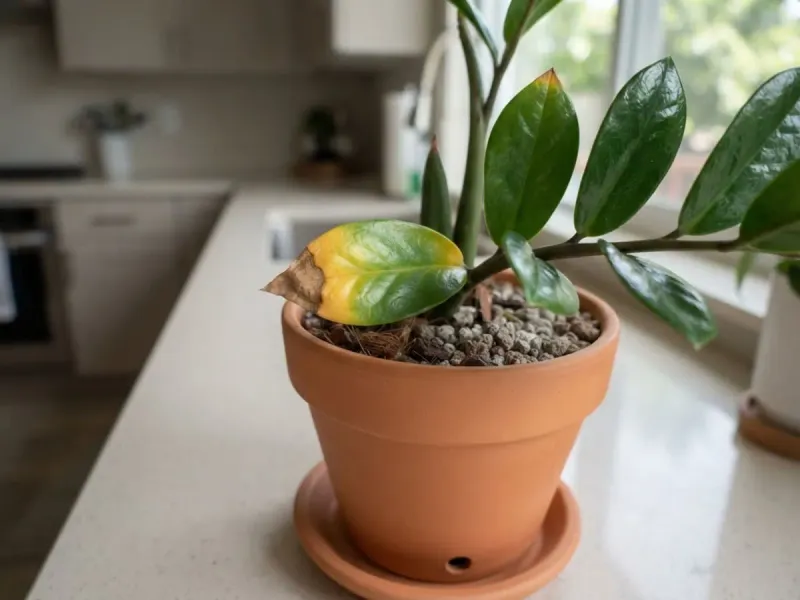
Don’t laugh, but I once panicked over a single yellow leaflet. The rest of the plant was glossy and perfect.
Older leaves near the bottom of a stem naturally yellow and drop as the plant ages. If it is just one or two and the stems stay firm, you can relax and snip them off.
Watering is still the first thing to check when many leaves turn yellow at once. After that, look at a few other causes.
Harsh direct sun, like a hot south-facing window, can scorch the leaves and leave yellow or bleached patches. ZZ plants do best in bright, indirect light, though they put up with dimmer rooms.
Old, worn-out soil or a lack of nutrients can cause pale leaves over time. A balanced houseplant fertilizer, diluted to half strength a few times during spring and summer, is plenty. Too much fertilizer can burn roots.
Cold drafts below about 45 degrees Fahrenheit can stress the plant too.
My best takeaway is simple. Check the soil before you water, every single time. That one habit keeps a ZZ plant green and steady for years.