The Watering Mistake That’s Slowly Weakening Your Roses This Summer
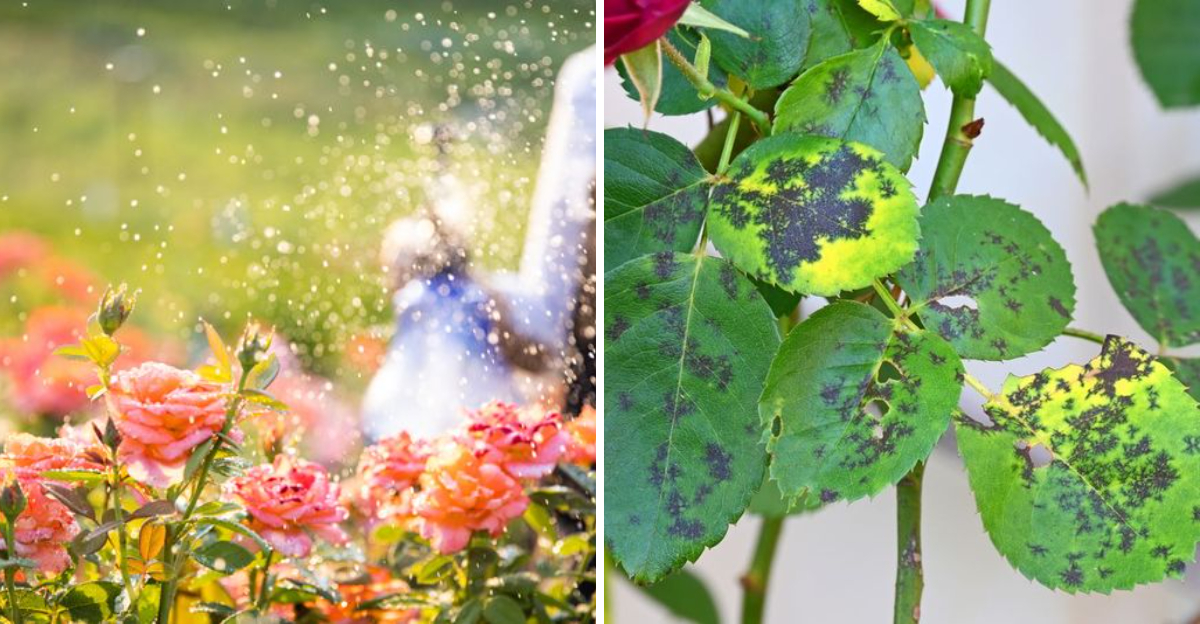
Water can quietly surprise you long before you notice anything wrong. Every evening hose session feels harmless, even generous. Darkness settles in slowly, and the soil stays soaked for hours. Dense soil holds moisture longer than you expect.
Roots struggle quietly while leaves slowly show yellow edges. Nobody suspects their own quiet devotion, which is exactly the pattern. Oxygen fades from waterlogged roots within days. Blooms shrink first, then stems sag, then color fades.
Fungus spreads fast in soil that stays too wet. Confidence in that daily habit clouds your judgment. Heat across summer makes overwatering feel like ordinary common sense. Timing matters more than volume, yet you rarely check it.
Patience feels like kindness, but here it slows growth. Chlorophyll weakens under waterlogged stress, turning leaves brittle. Your instinct feels right, which is exactly the hidden issue. You cannot walk away now, not when the truth sits this close.
Shallow Sprinkles Are Training Roots To Stay Near The Surface
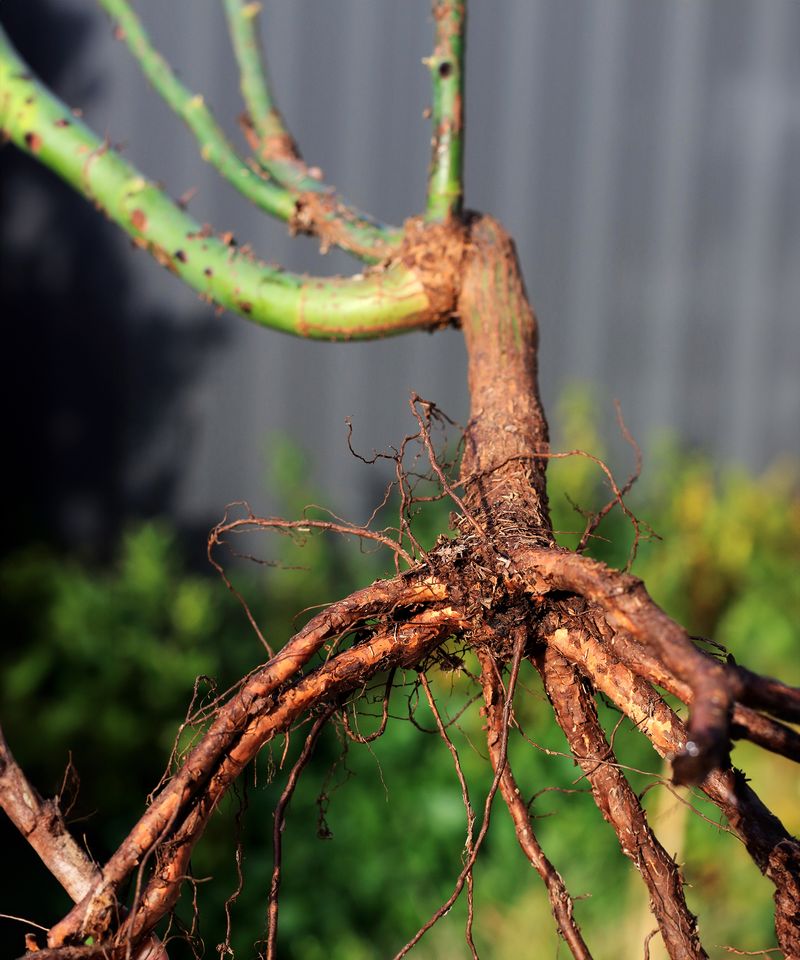
Picture a rose root as a stubborn traveler. It goes wherever the water is, and no farther. When you give the bed a quick two-minute rinse each evening, only the top inch or so of soil gets damp.
Roots read that message clearly and cluster near the surface where the moisture keeps showing up. Trouble arrives on the first very hot afternoon. That thin damp layer bakes off by noon, and the shallow roots sitting in it have nowhere to retreat.
The bush responds by dropping lower leaves, shrinking new buds, and pushing out blooms that fade in a day or two. Many gardeners see this and water even more often, which locks the pattern in tighter.
A better approach is fewer, longer sessions. Aim to soak the soil deeply, roughly six to eight inches down, the exact amount of water will vary by soil type and shrub size.
Check your progress with a screwdriver. Push it into the bed after watering, and if it slides in easily to the length of the shaft, moisture has traveled far enough.
Deep roots reach cooler, steadier ground where summer heat has less influence. Bushes watered this way hold their leaves longer, produce sturdier canes, and shrug off a missed day without drama.
Give it a few weeks. Depending on your climate and rose variety, changes in leaf color and bud size often become noticeable.
Overhead Spraying Increases Fungal Risk On Leaves
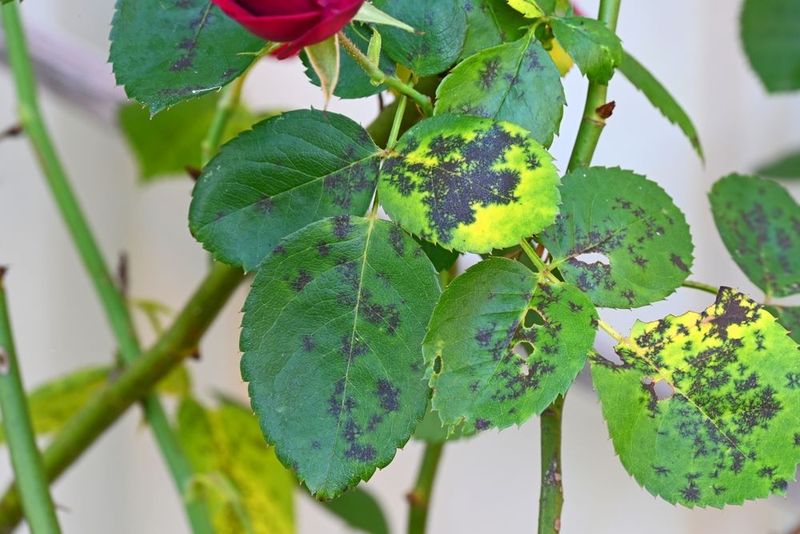
Roses have opinions about where water lands, and they are surprisingly picky. Spraying the whole bush from above looks satisfying, especially when droplets bead up on the foliage.
Those droplets also create favorable conditions for black spot, powdery mildew, and rust spores present in summer air.
Fungal spores need a film of moisture on a leaf for several hours to take hold. Evening overhead watering hands them exactly that, since nothing dries once the sun is gone.
Aim the water at the soil instead, right around the base and out toward the drip line. A wand with a shut-off valve makes this easy, and soaker hoses do it without you standing there.
If you enjoy rinsing dust and mites off the foliage, do it early. Water in the early morning so leaves have time to dry before the heat sets in.
Splashing matters too. A hard blast at the soil surface flings infected dirt particles up onto lower leaves, which is how black spot usually starts its climb.
Lower the pressure, water slowly, and lay down two or three inches of mulch to act as a splash guard.
Switching from sprinklers to ground-level watering can help reduce fungal spotting on foliage over time. Fewer spotted leaves means more energy going into blooms rather than replacement growth.
Your roses will look tidier, and you will spend far less time picking yellowed leaves off the ground every weekend.
Midday Watering Wastes More Than You Think
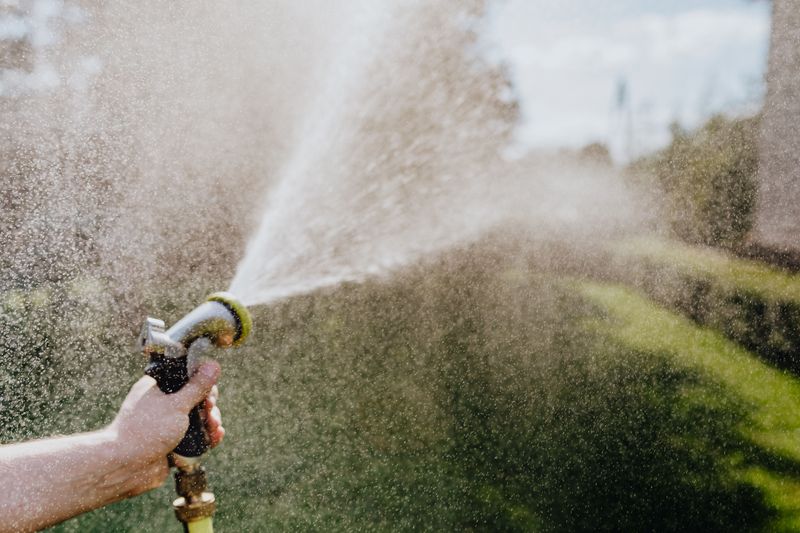
Noon feels like the right time to help a wilting rose. The leaves droop, the soil looks parched, and rescue instincts kick in.
Here is the catch. On a hot, breezy afternoon a large share of what leaves the hose evaporates before it ever reaches root level, so the bush gets a fraction of what you paid for.
Midday wilt is also misleading. Roses often curl their leaves during peak heat to slow moisture loss, then perk back up around dusk with no help at all.
Test before you act. Dig two inches down with your fingers, and if the soil there feels cool and damp, the plant is coping fine and needs nothing.
The best general window for watering is early morning, before the heat of the day. Soil is cool, wind is calm, and the moisture soaks down instead of drifting off as vapor.
Morning watering also gives the shrub a full reservoir before the day’s heat arrives, which is when it needs the reserve most.
If mornings are impossible, late afternoon works as a backup. Finish by five so foliage has time to dry.
One more trick: water on a still day when you can. A gusty afternoon can carry a surprising amount of your spray straight into the driveway. Shift the schedule and you will use less water while your roses actually receive more of it.
Bare Soil Increases Water Evaporation Before Roots Can Absorb It
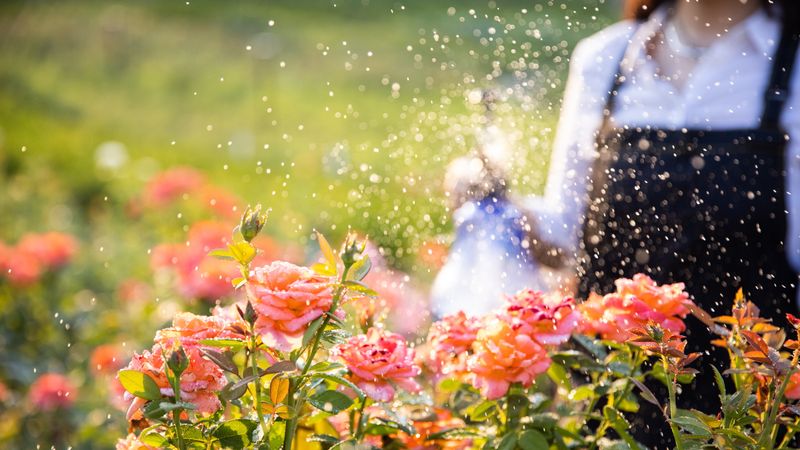
Mulch is not decoration, whatever the garden center displays suggest. Uncovered soil around a rose bush can heat well past a comfortable range on a July afternoon.
Water applied to that surface disappears fast, and the fine feeder roots sitting just below it get stressed.
Two to three inches of shredded bark, pine straw, or well-rotted compost changes the whole picture. Surface temperatures drop, moisture lingers days longer, and you can stretch the time between waterings.
Leave a gap of two or three inches around the main canes. Piling mulch against the stem traps damp air and invites rot at exactly the spot you cannot afford to lose.
Organic mulch pulls double duty by breaking down slowly and feeding soil life. Earthworms and microbes create channels that let water sink deeper rather than running sideways off the bed.
Weeds get discouraged too, which matters more than most people realize. Every weed in that bed is quietly drinking from the same supply your rose depends on.
Refresh the layer once midsummer since it settles and thins out. A quick top-up in July keeps the barrier working through the hottest stretch.
Mulched roses generally retain soil moisture longer than roses in bare beds, which can extend time between waterings.
Historically, some gardeners used materials like spent hops or straw as early forms of mulch, though the exact origins vary by region.
Same Amount Every Time Ignores What The Weather Is Doing
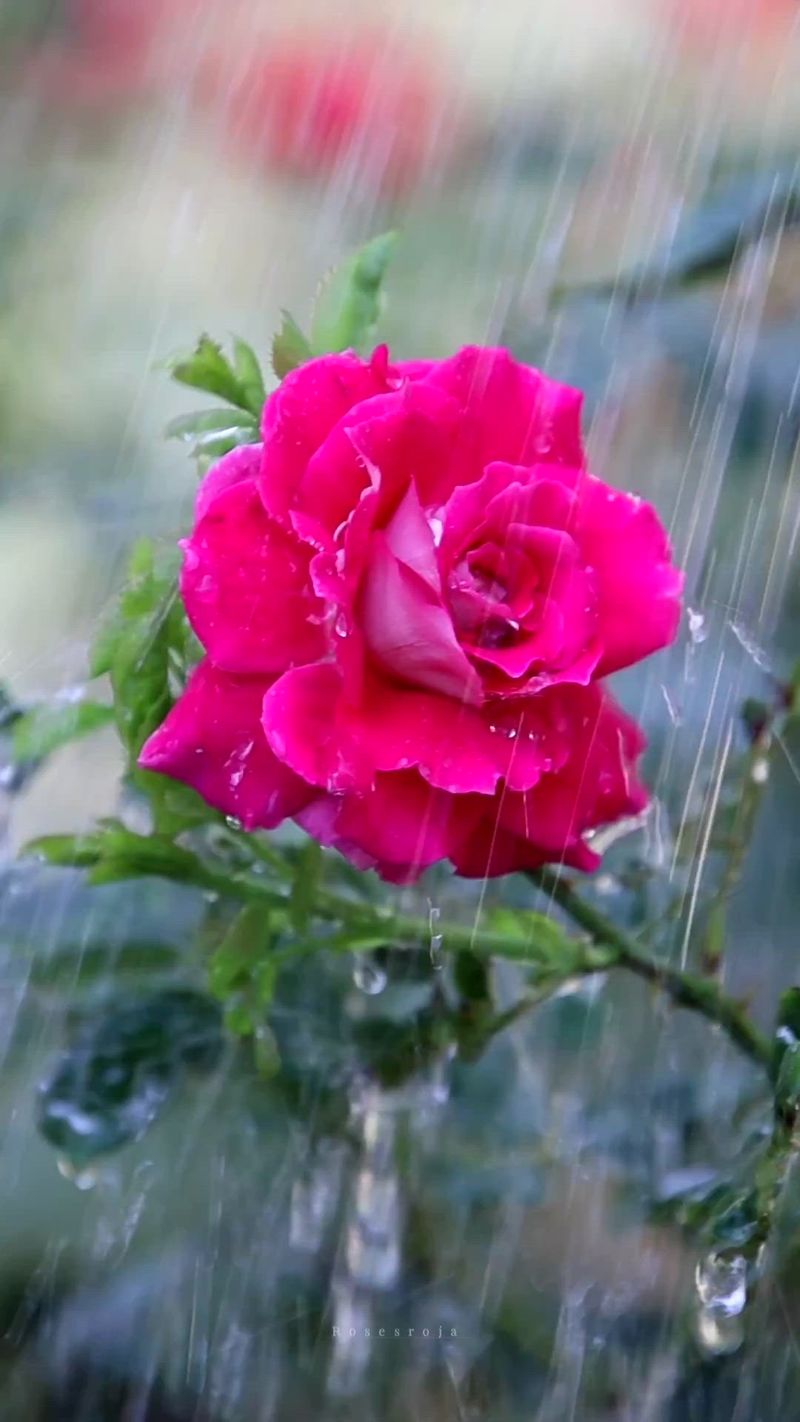
Routines are comforting. Roses, unfortunately, do not read calendars. Watering the exact same volume every third day works beautifully until a week of clouds rolls in, or a heat wave pushes temperatures past ninety.
One scenario leaves roots sitting in soggy ground, the other leaves them short. Soggy soil is the sneakier problem.
Roots need air pockets as much as moisture, and waterlogged ground deprives roots of oxygen, producing yellow leaves that look almost identical to drought stress.
That confusion sends plenty of gardeners reaching for more water when the plant needs less. Checking before you pour breaks the cycle.
Use the knuckle test. Push a finger two inches into the soil near the drip line, and water only if it comes out dry and crumbly.
Clay soil holds moisture much longer than sandy soil, so the same schedule cannot serve both. Sandy beds may need attention twice as often.
Container roses play by their own rules entirely. Pots dry out fast in summer wind and may need daily watering, sometimes twice on very hot days.
Keep a cheap rain gauge in the bed. As a general guideline, roughly an inch of rainfall can meet several days of water needs for established shrubs, depending on soil and temperature.
Adjusting as conditions change takes maybe thirty extra seconds. Those seconds are what separate a rose that limps through August from one still throwing out fresh buds in September.
A Simple Deep-Soak Routine That Works
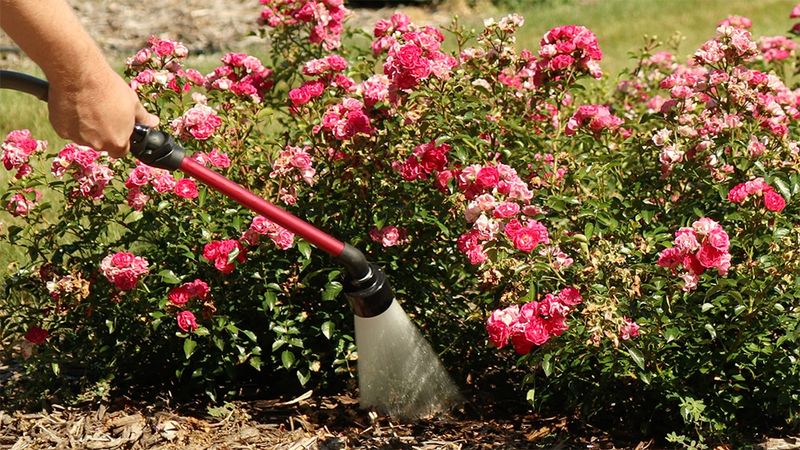
Good news: correcting all of this takes one adjustment, not a whole new gardening philosophy.
Start by building a shallow basin of soil around each bush, a low ring roughly eighteen inches out from the canes. Water poured inside stays put and sinks straight down instead of wandering across the bed.
Fill that basin slowly and let it drain, then fill it once more. Two slow rounds deliver moisture far deeper than ten minutes of hose waving ever will.
Soaker hoses handle this beautifully if you would rather not stand around. Snake one through the bed and run it long enough for water to soak deeply, typically thirty to forty-five minutes, depending on flow rate.
Frequency depends on your conditions, but established roses in decent soil often thrive on one or two deep soaks weekly. Heat waves may call for a third.
Pair the soak with mulch and morning timing, and you have covered nearly every issue in this article at once.
Watch for the payoff signals. Thicker canes, darker green leaves, and blooms that hold their shape for several days rather than collapsing overnight.
Keep a small note on your phone with dates and amounts for the first month. Patterns show up quickly, and you will stop guessing.
Roses can be more resilient than commonly assumed. Give them depth instead of frequency, and they tend to respond well to the change by late summer.