The Winter Mushroom New York Foragers Hunt in Cold Weather, and the Dangerous Look-Alike to Know
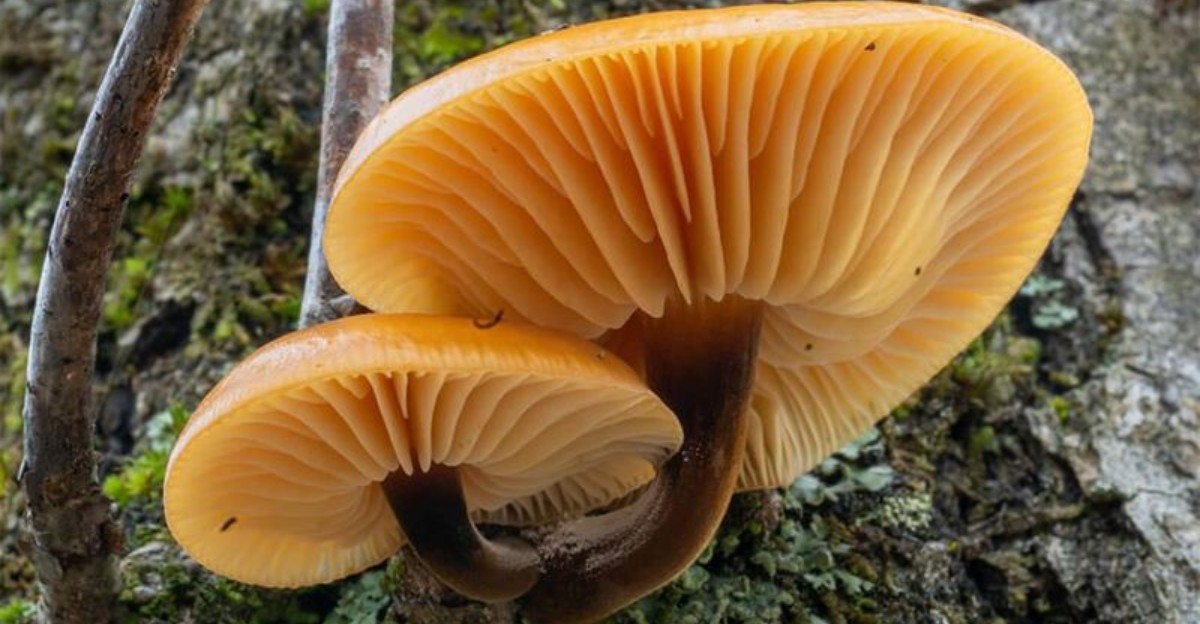
Some mushrooms can freeze solid on a tree trunk, thaw out, and keep growing like nothing happened. I learned that one on a January walk, and I still can’t stop grinning about it.
Most of us pack away the mushroom basket after the first hard frost. Yet a tough little fungus in New York saves its best show for the coldest weeks of the year. It glows orange against gray bark and patches of snow.
For what it’s worth, I nearly walked right past my first cluster. The caps looked shiny and wet, almost like someone had brushed them with syrup.
Between you and me, the thrill comes with a catch. A small brown mushroom with a nasty reputation can grow on the very same kind of wood. So how do you tell a winter treat from a winter trap?
That Glossy Orange Cluster on a Winter Elm Log Has a Secret
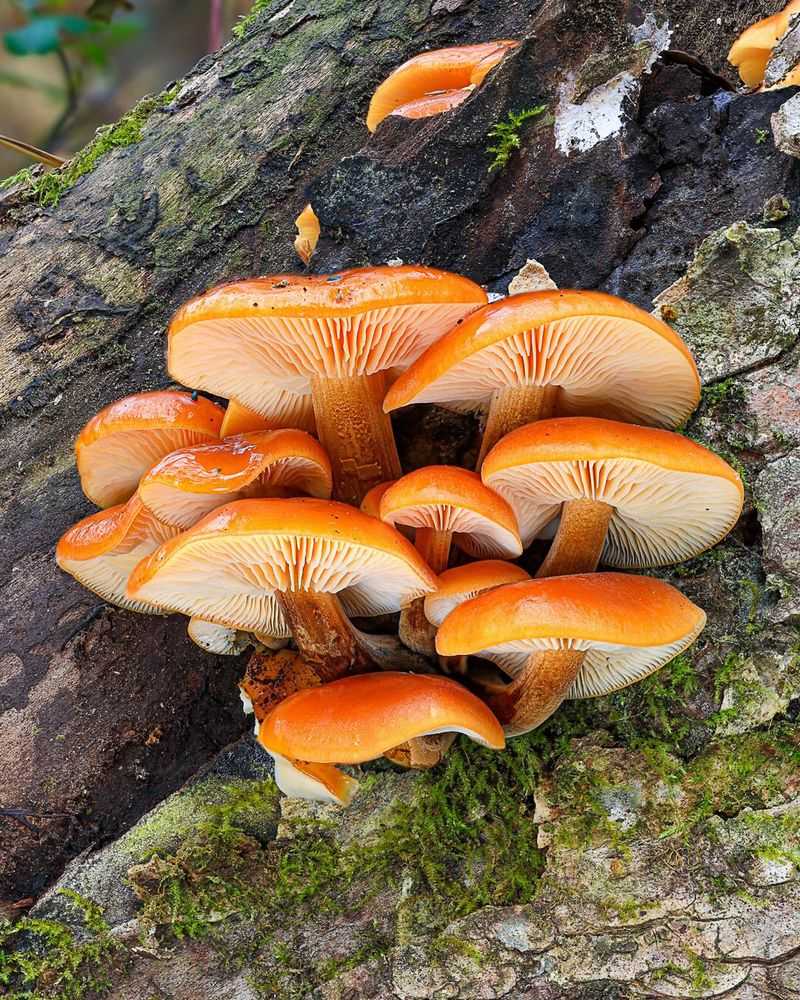
Snow on the ground, bare branches overhead, and a bright orange cluster shining on a fallen log. That scene stopped me in my tracks the first time I saw it.
The mushroom is Flammulina velutipes, known as velvet foot, velvet shank, or wild enoki. Yes, it is the wild cousin of the skinny white enoki you see in grocery stores.
Store enoki is grown in the dark with extra carbon dioxide, which is why it looks pale and stretched out.
Out in the woods, velvet foot looks very different. It has round, shiny caps in shades of orange and honey-brown, often growing in tight bunches.
You will usually find it on hardwoods like elm, willow, aspen, poplar, and maple.
Its secret is a love of cold. Velvet foot fruits from late fall through winter and into early spring, often after a thaw.
Researchers have found it can survive being frozen and then pick up growing again once temperatures rise above freezing.
That makes it one of the few gilled mushrooms you can spot in New York during the quiet heart of winter. Fewer other mushrooms are around, which helps a bit.
Still, fewer choices do not mean zero risk, as you will see in a moment.
Velvety Dark Stems and Sticky Caps Give Velvet Foot Away
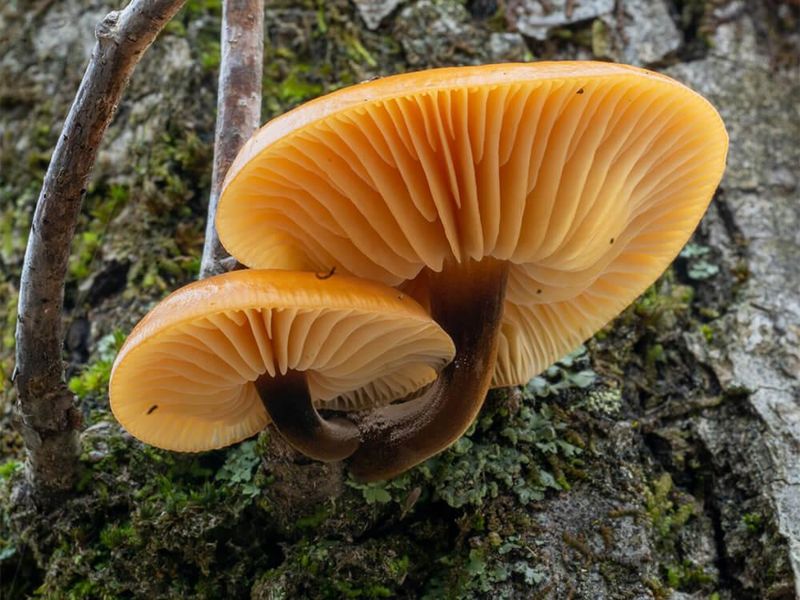
Run a finger along the stem, and you will understand the name right away. Velvet foot has a stem covered in fine brown fuzz, almost like suede.
The stem is tough and thin, pale near the cap and darker toward the base, sometimes nearly black. That dark velvety base is one of the most helpful clues you can check in the field.
Next, look at the cap. It is usually 1 to 4 inches wide, smooth, and sticky or slimy when wet.
The color is orange-brown, often darker in the center and lighter near the edge.
Flip it over, and you will see gills that are white to pale cream or yellowish. They attach to the stem and are not crowded too tightly together.
One more key detail matters a lot. Velvet foot has no ring on its stem.
If you see a skirt, a band, or even a faint ring zone, slow down and treat it as a warning sign.
Finally, these mushrooms grow on wood, not from open soil. Sometimes the wood is buried, so dig gently around the base to see what they are attached to.
Write down every feature you notice. A little notebook in your coat pocket can save you from second-guessing later at the kitchen counter.
Funeral Bell Mushrooms Can Hide on the Very Same Logs
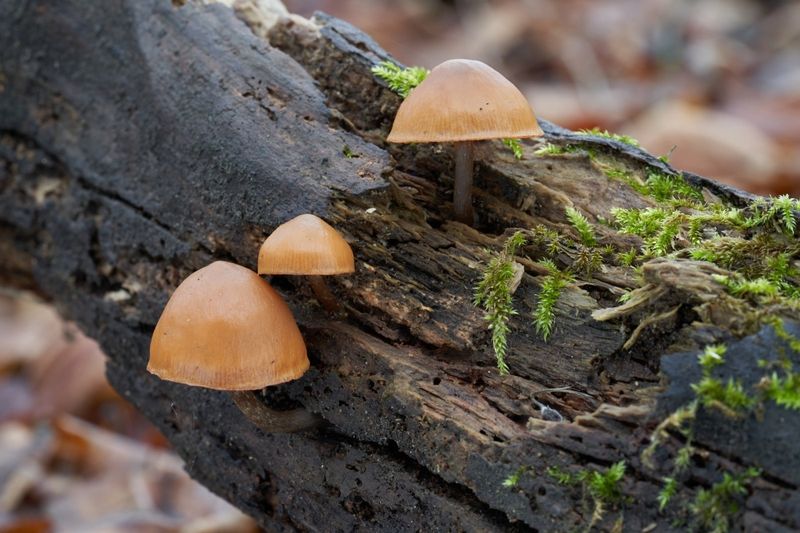
Let’s just say this part deserves your full attention. The most serious look-alike for velvet foot is Galerina marginata, often called the funeral bell.
Galerina is a small brown mushroom that grows on rotting wood, both conifer and hardwood. It shows up mostly in fall, but it can also appear in late autumn, mild winter spells, and spring.
That timing overlaps with velvet foot more than many beginners expect.
The danger comes from amatoxins. These are the same toxins found in the Amanita phalloides mushroom.
They damage the liver and kidneys, and symptoms often take 6 to 24 hours to show up.
That delay is what makes it so scary. By the time someone feels sick, the toxins are already at work.
Early symptoms can fade for a while, giving a false sense of recovery, even as the liver keeps suffering.
Poisonings from galerina are rare, but they do happen, sometimes when people mistake it for velvet foot or honey mushrooms. If anyone in your house ever eats a wild mushroom and feels unwell, call Poison Control at 1-800-222-1222 right away.
Bring the leftover mushroom with you to the hospital. Doctors and experts can use it to figure out what was eaten.
A Spore Print on Paper Settles the Velvet Foot Versus Galerina Question
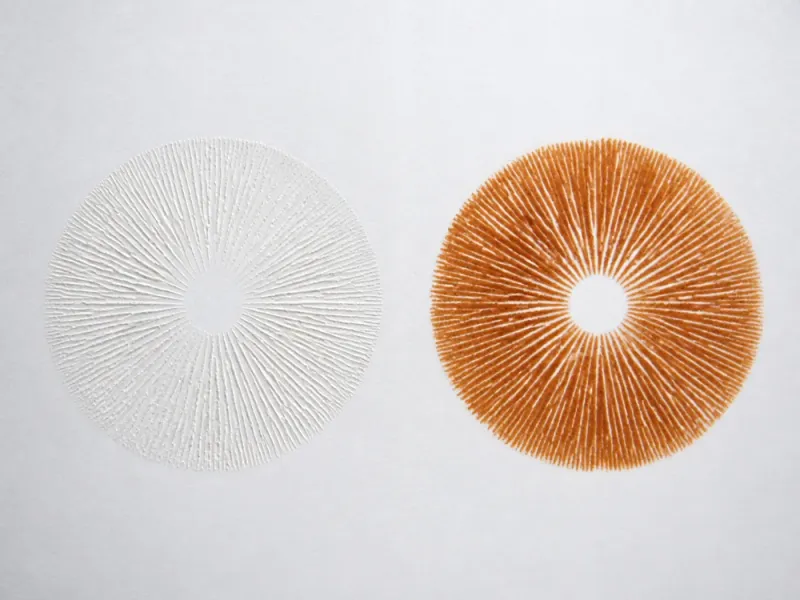
My favorite safety check costs nothing and takes one night. All you need is a mushroom cap, a sheet of paper, and a bowl.
Cut off the stem and set the cap gills down on paper. I like using paper that is half white and half black, so any color shows clearly.
Cover it with a bowl or cup to keep air still, then wait 6 to 12 hours.
Velvet foot leaves a white spore print. Poisonous galerina leaves a rusty brown print.
That single difference is one of the clearest ways to tell them apart.
Do this for every cap in your harvest, not just one. Clusters can mix together on the same log, and a single galerina tucked inside your bag is enough to cause trouble.
Compare the stems too. Galerina has a thin ring or ring zone, and its stem is not dark and velvety.
It is often paler and lightly fibrous instead.
Here is a tip from my own kitchen table. Pale gills on velvet foot can turn a bit tan in old specimens, which confuses people.
The print does not lie, though. If it looks brownish at all, throw the batch out and try again another day.
Sulphur Tuft and Honey Mushrooms Love the Same Stumps
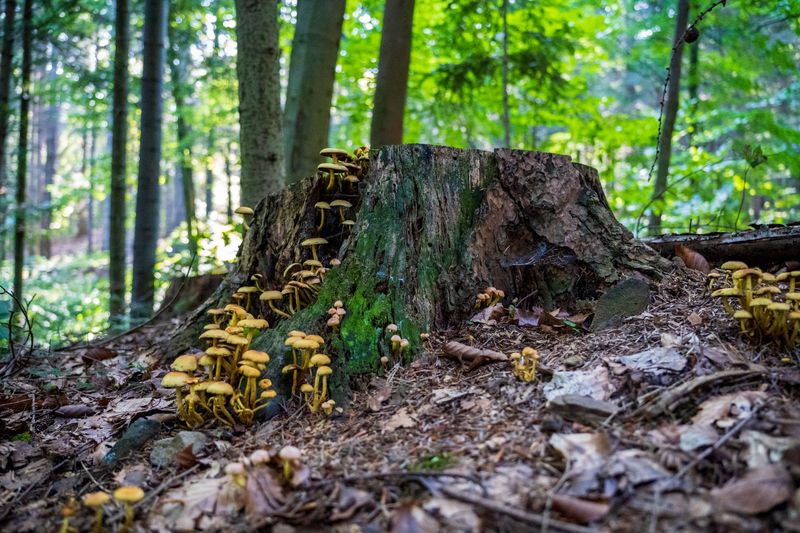
Galerina is not the only wood-lover that can trip you up. A few other mushrooms grow in clusters on stumps and logs during cool weather.
Sulphur tuft, Hypholoma fasciculare, is a common one. Its caps are bright sulfur yellow, and the gills turn greenish yellow, then purple-brown with age.
It leaves a purple-brown spore print, and it can cause serious stomach upset.
Honey mushrooms, the Armillaria group, also grow in big clumps on wood. Many have a ring on the stem, and their caps often have tiny dark hairs or scales.
They give a white spore print, so the print alone will not separate them from velvet foot.
Honey mushrooms are eaten by some people, but they upset plenty of stomachs and must be cooked well. They are also mostly a fall mushroom, so a December or January cluster leans more toward velvet foot.
Then there are Pholiota and Gymnopilus species. These wood growers can have orange or rusty colors, yet they drop brown or orange-brown spores.
Many also have scaly caps or rings.
For what it’s worth, I find it helps to learn these neighbors first. Once you know who else lives on that stump, the true velvet foot stands out much more clearly.
Cook Every Wild Enoki Cap Before It Hits Your Plate
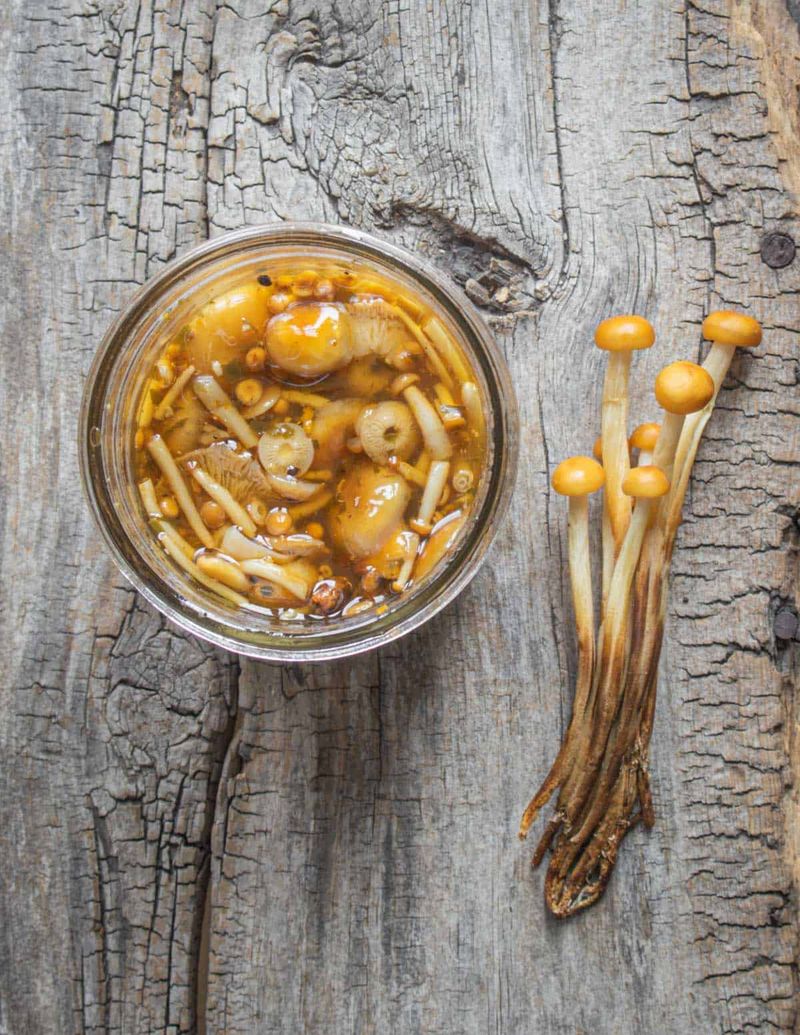
So you have a confirmed basket of velvet foot. Congratulations, and now comes the tasty part, with a few rules.
Cook them thoroughly. Like most wild mushrooms, velvet foot should not be eaten raw.
Heat makes it easier to digest and helps break down compounds that can bother your stomach.
Most foragers keep only the caps. The stems are tough and chewy, especially toward the base, so trim them off.
Rinse or wipe the caps, since the sticky surface grabs leaves and grit.
Velvet foot has a mild, slightly sweet flavor. I love it in soups, noodle bowls, and broths, where its slippery texture feels right at home.
A quick saute with garlic also works well.
Try just a small serving the first time. Some people react to mushrooms that others eat with no trouble, so give your body a chance to test it.
Save one raw cap in the fridge, apart from the rest. If anyone feels sick, that sample helps doctors and experts identify what was eaten.
Finally, do not share wild mushrooms with guests unless you are sure of every single cap. Kids and pets deserve extra care too, so keep your harvest out of their reach.
New York State Forests Welcome Mushroom Pickers, With a Few Rules
Good spots matter, and so do the rules about where you can pick. Before you head out, take a few minutes to check who manages the land.
On lands run by the New York State Department of Environmental Conservation, such as State Forests and Forest Preserve lands in the Adirondacks and Catskills, gathering mushrooms for personal use is generally allowed. Commercial collecting is a different story and needs permission.
State parks are trickier. Rules can vary from park to park, and some limit removing plants or fungi.
Call the park office or check its posted rules before you fill a bag.
New York City parks and many county or town parks restrict foraging, so do not assume a city green space is open for picking. Private land always requires the owner’s permission.
Winter brings its own safety concerns too. Days are short, trails can be icy, and cold creeps in fast once the sun drops.
Pack traction cleats, warm layers, a headlamp, and a charged phone.
Tell someone where you are going. Wear bright clothing, since some seasons overlap with hunting, and stay on stable ground near frozen streams.
A great find feels even better when you get home safe and warm.
Local Mushroom Clubs Can Double Check Your Winter Basket
Looking back, the smartest thing I did was ask for help. A second pair of trained eyes beats any guess you make alone.
The state has active mushroom clubs, including the New York Mycological Society, the Central New York Mycological Society, and the Mid-Hudson Mycological Association. Many host walks, talks, and ID sessions, and members love helping beginners learn.
Bring a whole mushroom, not just the cap. Experts want to see the base, the stem, any ring, and the wood it grew on.
A few clear photos from top, side, and underneath help too.
Use more than one good field guide, and treat phone apps as a starting point only. Apps can be wrong, and a wrong answer with mushrooms is not something you want to risk.
Here is my simple rule. Positive ID on every single cap, a white spore print, a velvety dark stem, no ring, and growth on wood.
Miss any one of those, and the mushroom goes in the compost.
Velvet foot is a lovely reason to step outside on a gray winter day. Learn it slowly, respect its toxic twin, and you will have a cold-season treasure hunt to enjoy for years.