These Are The 9 Best Flowering Shrubs For South Florida That Don’t Need Constant Cleanup
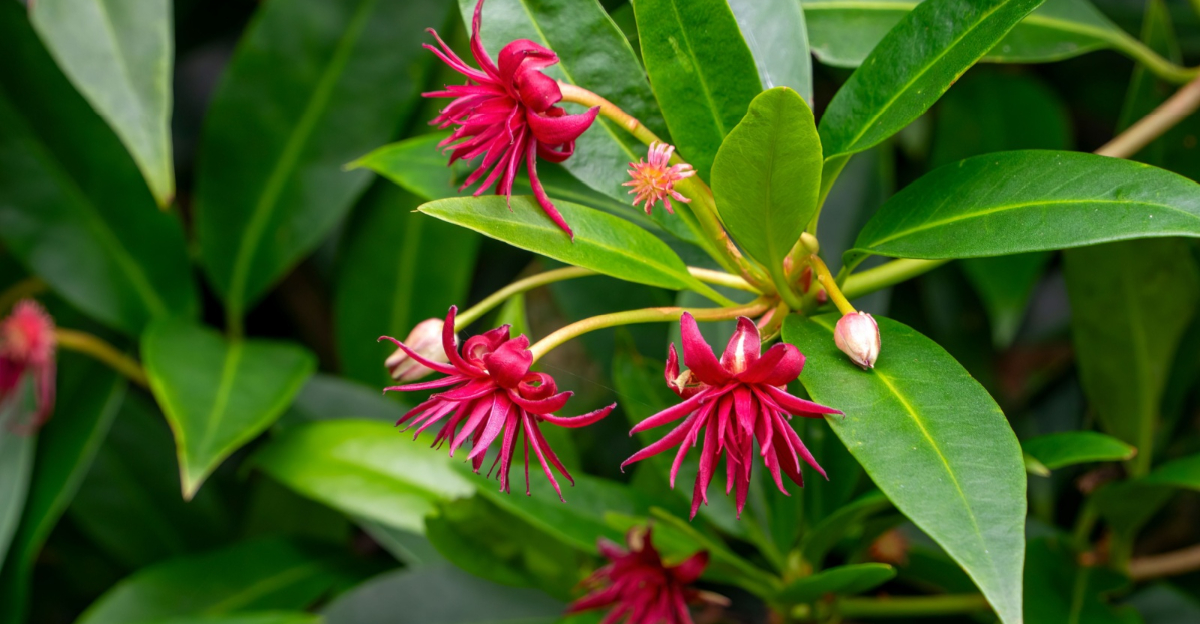
Some flowering shrubs look amazing for a week, then leave you with dropped petals, constant trimming, and a yard that starts to feel like more work than it should. In South Florida, that gets old fast.
Heat, humidity, and long growing seasons can turn high-maintenance plants into nonstop cleanup jobs, especially around walkways, patios, and entry beds where mess stands out right away. That is why the best flowering shrubs are not just beautiful.
They also hold their shape well, keep the litter to a minimum, and bring color without demanding your attention every few days. A smart choice can give your landscape that lush, blooming look without the usual hassle that comes with it.
For gardeners who want strong color and a cleaner yard, low-mess shrubs make the whole space easier to enjoy.
1. Firebush Brings Bold Color Without Turning Messy Fast
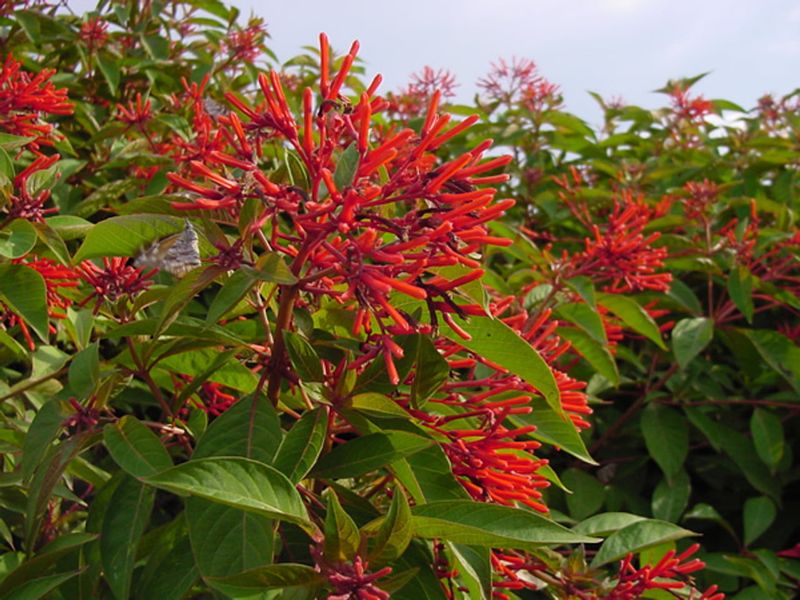
Few shrubs in South Florida pack as much visual punch as firebush (Hamelia patens), a native plant that practically thrives on neglect once it gets settled. The tubular red-orange flowers blaze from spring all the way through fall, and sometimes beyond, drawing in hummingbirds and butterflies with almost magnetic force.
For a yard that needs serious color without constant fussing, this shrub delivers.
Firebush handles full sun like a champ and shows solid drought tolerance after it establishes, which typically takes one good growing season. Unlike some flowering shrubs that drop petals in messy piles, firebush tends to keep its act together, with spent blooms fading quietly rather than carpeting the ground.
Occasional trimming can keep the shape tidy, but it is not something you need to do every other week.
Because firebush is Florida-native, it fits naturally into the local ecosystem and rarely causes the pest or disease headaches that plague non-native plants. UF/IFAS recommends it as a low-maintenance landscape choice across much of Florida.
Plant it in a sunny bed, give it decent drainage, and step back to let it do its thing.
2. Thryallis Keeps The Flower Show Going With Less Fuss
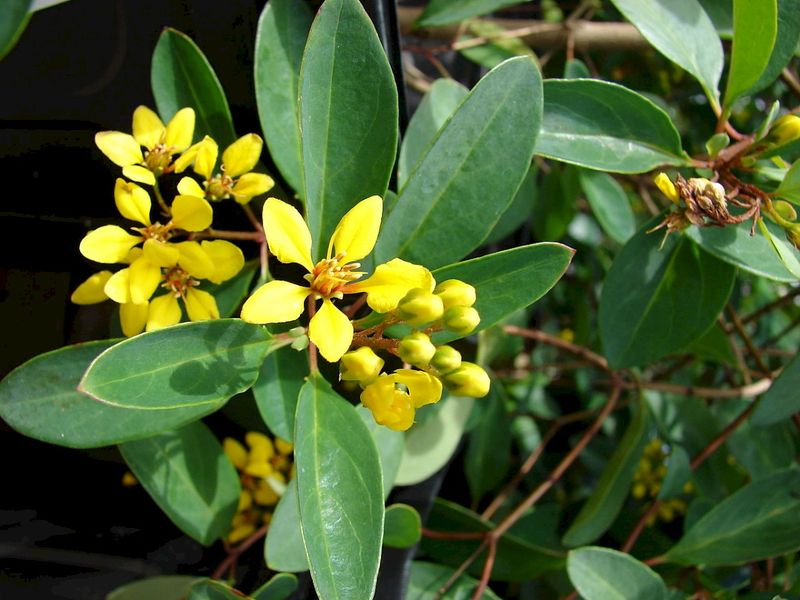
Bright yellow flowers that bloom almost year-round in South Florida sound too good to be true, but thryallis (Galphimia gracilis) makes it a reality. This cheerful shrub produces small star-shaped yellow blooms in generous clusters, and the show rarely takes a long break, especially during the warmer months that dominate South Florida’s calendar.
Gardeners who want reliable color without replanting every season find thryallis hard to beat.
Maintenance is refreshingly light with this shrub. Thryallis grows at a moderate pace, so it does not suddenly turn into an unruly monster between trimmings.
A light shaping two or three times a year is usually enough to keep it looking polished, and it responds well to pruning without throwing a fit afterward.
Full sun brings out the best flowering performance, and thryallis handles South Florida’s intense heat with ease once established. Drought tolerance improves with age, making it a solid choice for water-conscious gardeners.
The plant also tends to stay tidy between blooms, dropping spent flowers without creating major litter. For a cheerful, low-demand flowering shrub that earns its spot in the landscape, thryallis is a genuinely strong option.
3. Banana Shrub Adds Fragrance And Flowers Without A High Cleanup Bill
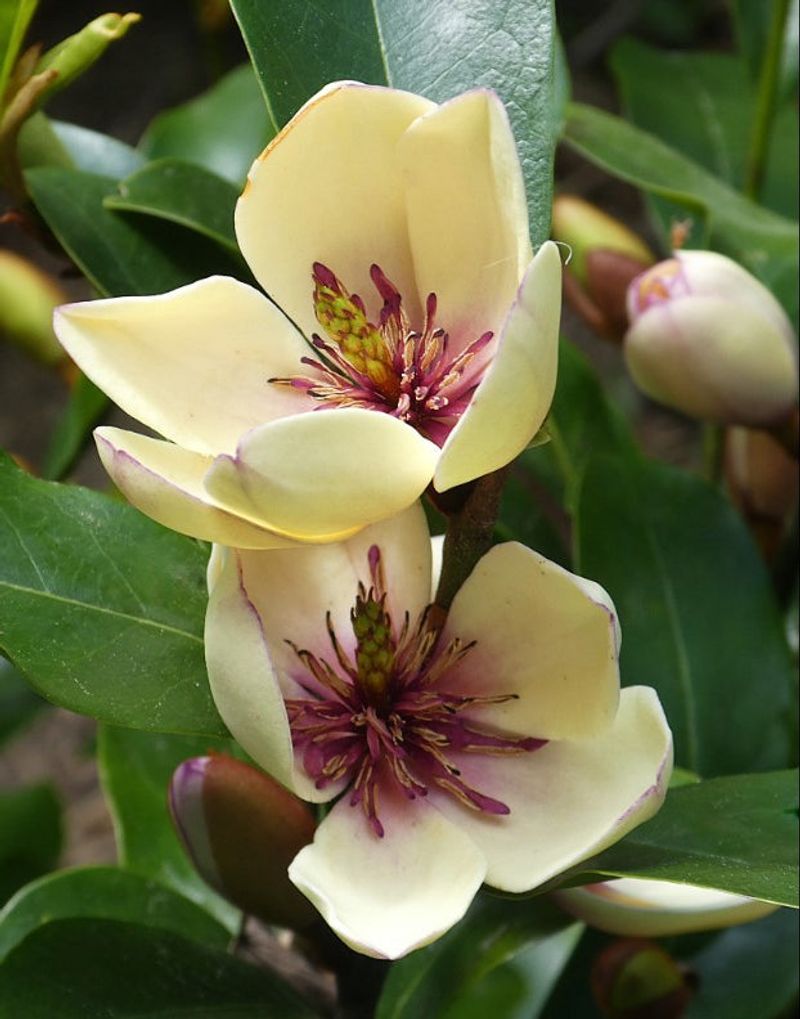
Imagine stepping outside and catching a sweet, fruity scent that stops you in your tracks. Banana shrub (Magnolia figo) earns that reaction regularly, producing small creamy blooms with a fragrance that genuinely resembles ripe bananas.
The flowers are not flashy or oversized, but their scent alone makes this shrub worth planting near a patio, entryway, or window where the fragrance can drift indoors.
Beyond the sensory appeal, banana shrub has a naturally compact and tidy growth habit that works well in South Florida gardens where space and neatness both matter. The glossy dark green foliage stays attractive year-round, and the plant does not produce heavy fruit drop or messy litter that demands constant sweeping.
Pruning needs are minimal compared to many other flowering shrubs.
Banana shrub performs best with some protection from the harshest afternoon sun, preferring partial shade or filtered light, which makes it a nice fit for spots under tree canopies or on the east side of a structure. It prefers well-drained, slightly acidic soil and benefits from regular moisture while it establishes.
Once settled in, it becomes a relatively self-sufficient plant that rewards patience with fragrant blooms and a clean, polished appearance.
4. Ixora Keeps South Florida Beds Bright And Tidy
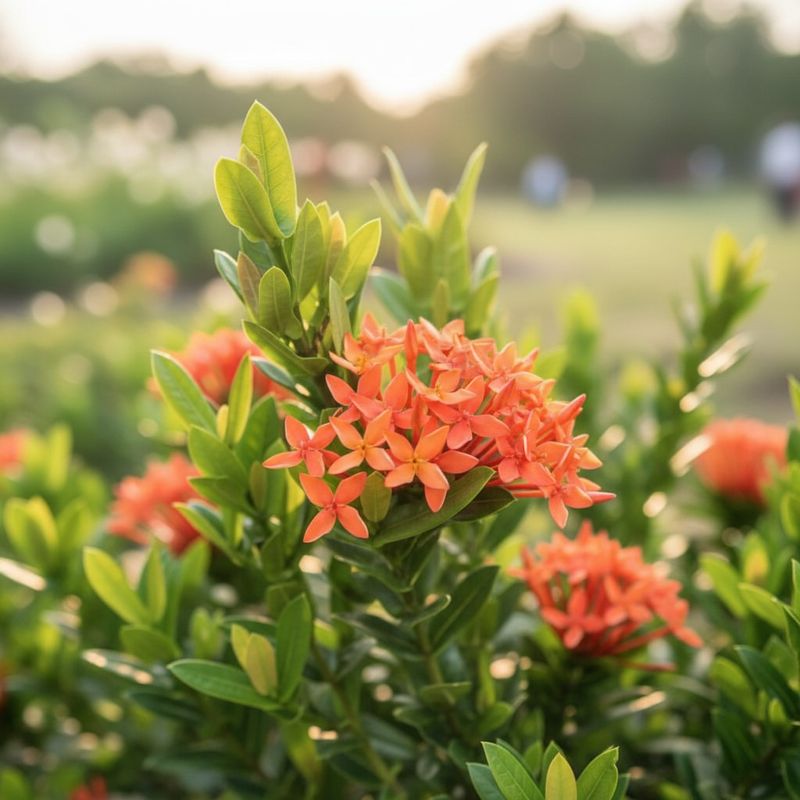
Walk through almost any well-kept South Florida neighborhood and you will likely spot ixora (Ixora coccinea) putting on a colorful show. The dense clusters of tiny tubular flowers come in shades of red, orange, pink, and yellow, and they bloom heavily during the warmer months.
Few shrubs match ixora for sheer flower density and vivid color in a South Florida setting.
The compact, rounded growth habit is part of what makes ixora such a tidy choice for landscape beds. It does not sprawl aggressively or produce heavy litter, and the evergreen foliage stays dense and attractive even between bloom cycles.
A light trimming a few times a year is generally all it needs to maintain a clean shape.
One practical point worth knowing: ixora strongly prefers acidic soil and struggles in the high-pH, alkaline soils found in many South Florida coastal areas. If your soil leans alkaline, soil amendments or container planting can help it perform better.
Using fertilizers formulated for acid-loving plants also makes a real difference. When ixora is planted in the right conditions, it rewards South Florida gardeners with reliable color and a naturally neat appearance that rarely demands emergency maintenance.
5. Florida Anise Brings Rich Color To Shadier Spots With Less Trouble
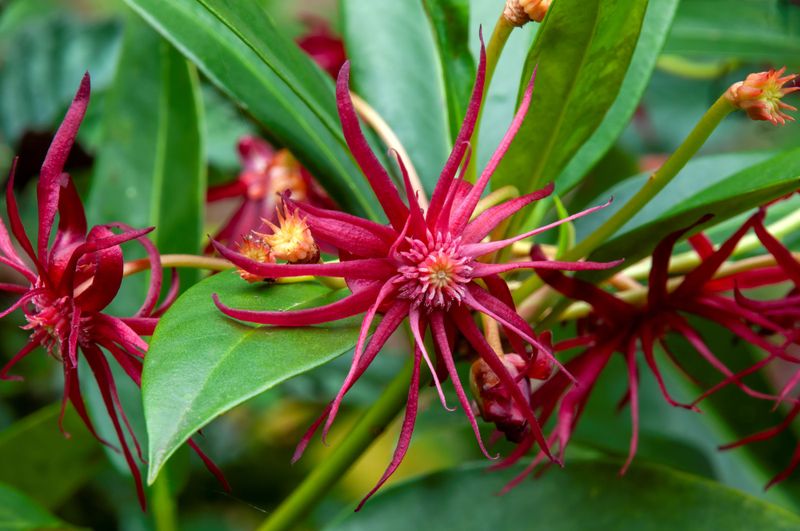
Shady spots in South Florida gardens can feel like a design challenge, but Florida anise (Illicium floridanum) turns them into genuine assets. This native shrub thrives where many flowering plants struggle, producing striking dark red, star-shaped flowers against a backdrop of glossy, aromatic foliage.
The combination of interesting blooms and attractive leaves means it earns its place even when not in peak flower.
The foliage itself has a spicy, anise-like scent when crushed, which adds a sensory layer that goes beyond just looks. Florida anise grows at a moderate rate and develops a naturally full, upright form that rarely looks scraggly or unkempt between pruning sessions.
This tidy growth habit is a real advantage for gardeners who want a presentable shrub without constant reshaping.
Moisture tolerance is another strength, as Florida anise handles the wetter conditions that sometimes develop in shaded landscape areas. It prefers moist, well-drained soil and benefits from a layer of mulch to keep roots cool and hydrated.
Pest and disease pressure tends to stay low compared to more finicky flowering shrubs. For South Florida gardeners who need reliable beauty in a shadier corner without a high-maintenance price tag, this native shrub is a practical and attractive solution.
6. Dwarf Bottlebrush Delivers Bloom Power In A Smaller Cleaner Package
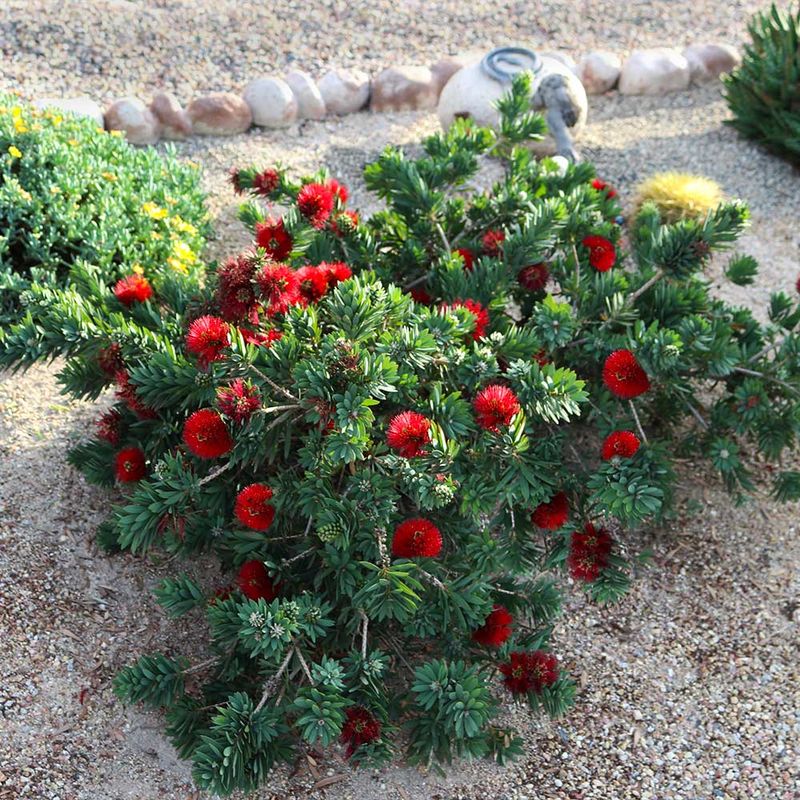
There is something undeniably fun about bottlebrush flowers, those cylindrical red spikes that look exactly like the tool they are named after. Dwarf bottlebrush (Callistemon viminalis ‘Little John’) delivers that same bold visual impact in a much more manageable size than its larger relatives.
Topping out around three feet tall and wide, it fits neatly into landscape beds, borders, and even containers without overwhelming the space.
The deep red blooms appear primarily in fall and winter in South Florida, which is a genuine bonus since many other shrubs are taking a bloom break during that period. Hummingbirds and native pollinators are drawn to the flowers, adding extra life to the garden.
The blue-green foliage stays attractive year-round, giving the shrub visual interest even outside its main bloom season.
Unlike standard-sized bottlebrush varieties that can grow quite large and require heavy pruning to stay in check, ‘Little John’ maintains a naturally compact shape with much lighter trimming needs. It handles full sun well and shows good drought tolerance once established, which suits South Florida’s hot, dry periods between rain events.
This shrub stays tidier and more manageable than many flowering options, making it a strong pick for gardeners who want bold color without big cleanup demands.
7. Jatropha Keeps Blooming Without Looking Like A Constant Chore
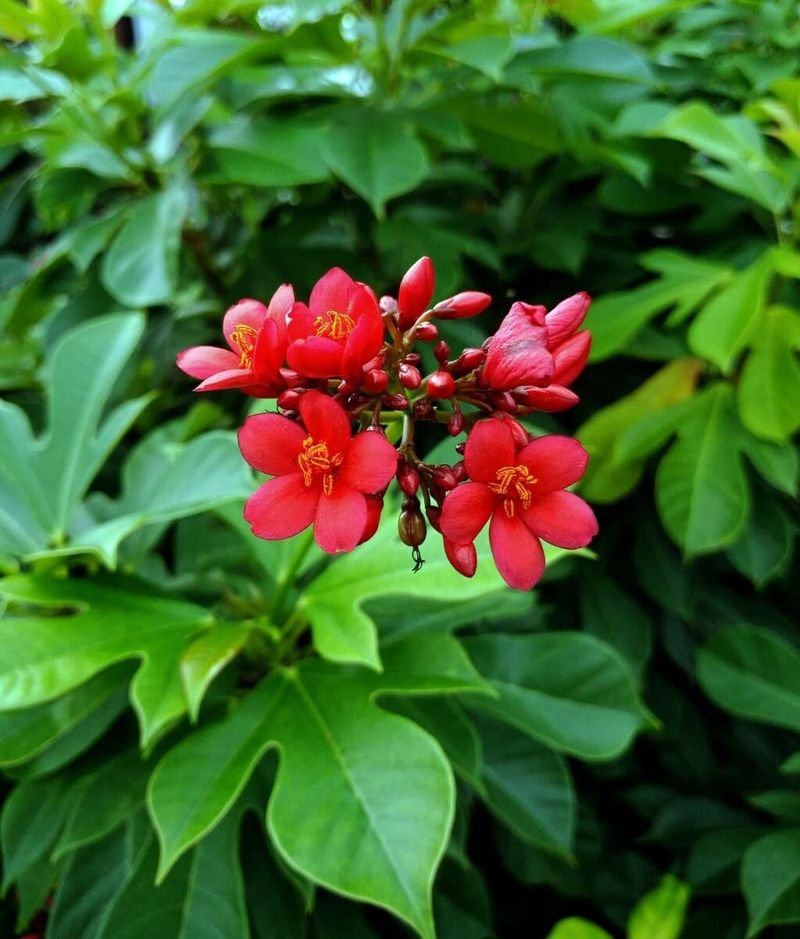
Coral-red flower clusters that bloom almost continuously through the warm months give jatropha (Jatropha integerrima) a tropical energy that is hard to replicate with other shrubs. South Florida gardeners who want that lush, Caribbean-resort feeling in their own yard often turn to jatropha because it delivers vivid color without demanding daily attention.
The blooms appear in cheerful clusters above dark green, lobed leaves, and the combination reads as both bold and polished.
Jatropha grows at a moderate pace and can reach six to ten feet if left unpruned, but it responds well to trimming and can be kept at a more compact size with occasional shaping. Spent blooms tend to fall cleanly rather than hanging on and looking ragged, which helps the plant maintain a relatively tidy appearance between cuttings.
Drought tolerance improves significantly once the shrub is established.
An important caution: all parts of jatropha are considered toxic if ingested, so households with young children or pets should place it thoughtfully in the landscape. This is a real and widely documented concern, not something to dismiss, though it does not make the plant unusable.
Simply plant it in areas where accidental ingestion is unlikely. With that in mind, jatropha remains a rewarding, long-blooming choice for South Florida gardens.
8. Indian Hawthorn Stays Neat While Still Putting On A Spring Show
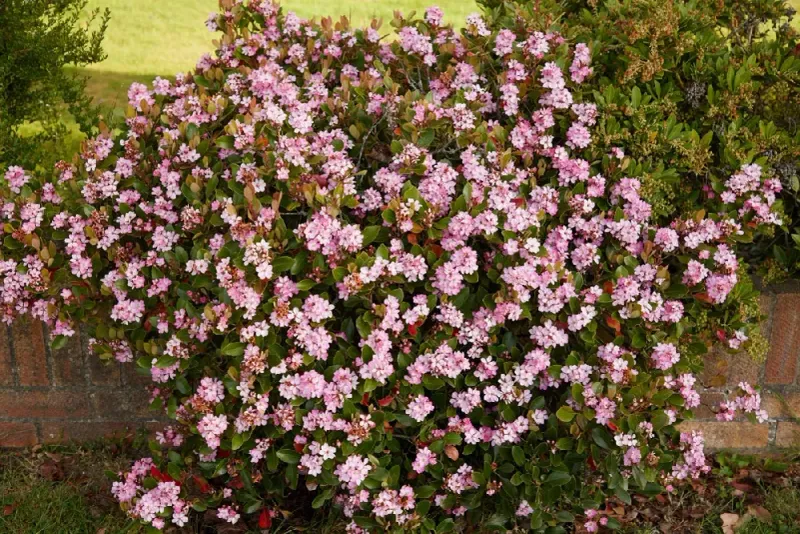
Compact, tidy, and reliably attractive, Indian hawthorn (Rhaphiolepis indica) is the kind of shrub that makes a landscape look cared for without requiring the gardener to be out there every weekend. The clusters of small pink or white flowers arrive in spring and create a soft, appealing display that brightens beds and borders.
After the bloom period, the dark glossy foliage takes over and keeps the plant looking sharp through the rest of the year.
Growth stays naturally slow and mounded, which means Indian hawthorn rarely needs aggressive pruning to maintain its shape. Light trimming after the spring bloom is usually enough to keep it looking its best.
The dense, rounded form also makes it a practical choice for low hedges, foundation plantings, or edging along walkways where a clean silhouette matters.
Indian hawthorn handles full sun to partial shade and shows solid tolerance for drought, salt spray, and South Florida’s humidity once established. It is widely used in coastal South Florida landscapes for exactly these reasons.
Disease resistance varies by cultivar, so choosing a variety with good entomosporium leaf spot resistance is a smart move when shopping. Overall, this shrub earns its reputation as one of the more dependable, low-fuss flowering options available to South Florida gardeners.
9. Crepe Jasmine Gives South Florida Gardens Flowers Without A Wild Overgrown Look
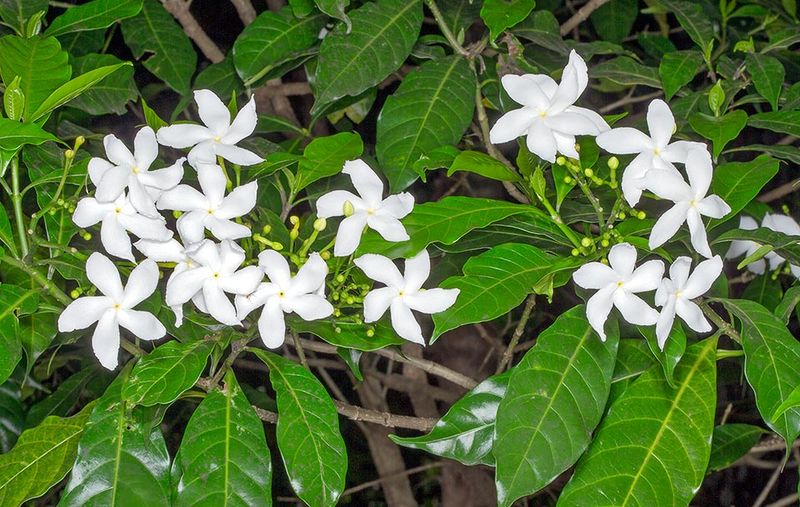
Pure white flowers that look like delicate pinwheels against a backdrop of deep, glossy green leaves give crepe jasmine (Tabernaemontana divaricata) a polished, resort-style appearance that works beautifully in South Florida landscapes. Unlike some tropical flowering shrubs that quickly develop a wild, tangled look, crepe jasmine tends to maintain a naturally full and rounded form that reads as intentional and well-kept.
The blooms appear repeatedly throughout the warm season, keeping the display going without requiring replanting.
The plant grows at a moderate pace and responds well to shaping, making it easy to keep at a size that suits your space. Regular light pruning encourages fresh growth and more blooms, and the shrub bounces back quickly after trimming.
Fragrance is mild but pleasant, adding another layer of appeal for spots near seating areas or entryways.
A legitimate caution to know: crepe jasmine contains a milky sap that can cause skin irritation in sensitive individuals, and the plant is considered toxic if ingested. Wearing gloves when pruning is a sensible precaution.
Despite this, crepe jasmine remains a widely planted and genuinely rewarding shrub across South Florida, valued for its clean appearance, consistent flowering, and ability to bring a lush, structured feel to the landscape without turning maintenance into a burden.