These Are The Best Flowering Vines For Texas Trellises And Pergolas

A trellis or pergola can completely change the feel of a Texas garden, especially once it is covered in lush greenery and colorful blooms.
What starts as a simple wooden or metal structure can quickly become a beautiful focal point when the right flowering vines begin to climb and spread.
With the long growing season and plenty of sunshine across Texas, many vines grow fast and put on an impressive display.
Flowering vines are a favorite for gardeners who want to add height, shade, and vibrant color without taking up much ground space. As they twist and climb, they soften hard lines and bring movement to the landscape.
Some varieties even attract butterflies, hummingbirds, and bees, adding even more life to the garden.
Choosing the right vines makes all the difference. The best options can handle Texas heat while rewarding you with bright blooms that turn trellises and pergolas into stunning garden features.
1. Coral Honeysuckle (Lonicera Sempervirens)

Few vines stop people in their tracks quite like Coral Honeysuckle. Those bright red, tubular flowers cluster together in a way that looks almost too beautiful to be real. And the best part? Hummingbirds and butterflies absolutely cannot resist them.
Native to Texas and much of the southeastern United States, this vine is built for the heat. It handles dry spells with ease once it gets established, making it a smart pick for gardeners across the Lone Star State. You can find it thriving from East Texas all the way to the Hill Country.
Coral Honeysuckle climbs by twining its stems around a support, so a trellis, pergola, or fence works perfectly. It can reach up to 20 feet in length, giving you plenty of coverage. Unlike some aggressive vines, it stays manageable and does not take over your entire yard.
Blooms appear from late spring through summer, and sometimes even into fall if conditions stay mild. Plant it in full sun for the best flower production, though it tolerates partial shade too.
Well-drained soil and occasional watering will keep it looking great. If you want a native vine that rewards you with color and wildlife activity all season long, Coral Honeysuckle belongs on your Texas trellis.
2. Crossvine (Bignonia Capreolata)

If speed and drama are what you want from a climbing vine, Crossvine delivers both without hesitation. This vigorous native climber can shoot upward and outward faster than most vines you have ever grown.
Within just a couple of seasons, it can blanket an entire pergola in lush green foliage and bold, trumpet-shaped blooms.
The flowers come in shades of orange and red, sometimes with a soft yellow throat, and they arrive in spring just when your garden needs a burst of color most. Hummingbirds and butterflies are drawn to them right away.
Gardeners across Texas appreciate how reliably this vine performs year after year. Crossvine is technically semi-evergreen, meaning it holds onto its leaves through most of the year in the warmer parts of Texas.
It uses tendrils with sticky pads to cling to surfaces, which means it can scale brick walls, wooden trellises, and pergola beams with very little help from you.
It grows best in full sun but handles partial shade reasonably well. Established plants are quite drought-tolerant, which is a major bonus in Texas summers.
Crossvine can reach heights of 30 to 40 feet, so it works best on larger structures. Give it room to grow and it will reward you with one of the most impressive floral displays in your outdoor space.
3. Passionflower (Passiflora Incarnata)
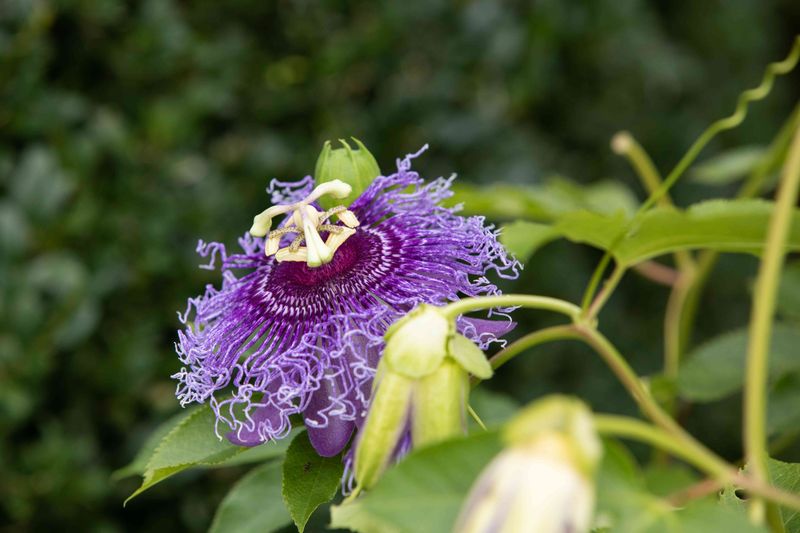
Honestly, the first time most people see a Passionflower bloom, they do a double take. The flowers look like something straight out of a science fiction movie, with their layered purple and white petals and wild, fringed centers.
There is simply nothing else quite like them in the garden world. Native to Texas and other southeastern states, Passiflora incarnata is perfectly at home in the Texas heat. It grows fast, sometimes shooting out several feet of new growth in a single season.
Gardeners in areas like Dallas, Austin, and San Antonio all have great success with this vine on trellises and arbors.
Beyond its stunning flowers, Passionflower plays an important role in the local ecosystem. Gulf fritillary butterflies use it as a host plant, meaning you might spot caterpillars munching on the leaves.
That is a sign your garden is doing something right. The vine also produces small, egg-shaped fruits that are edible and actually quite tasty.
Passionflower thrives in full sun and well-drained soil. It can grow 25 to 30 feet long under good conditions, so give it a sturdy structure to climb.
It may die back in colder Texas winters but almost always comes back strong from the roots in spring. Patience pays off big with this one.
4. Trumpet Vine (Campsis Radicans)
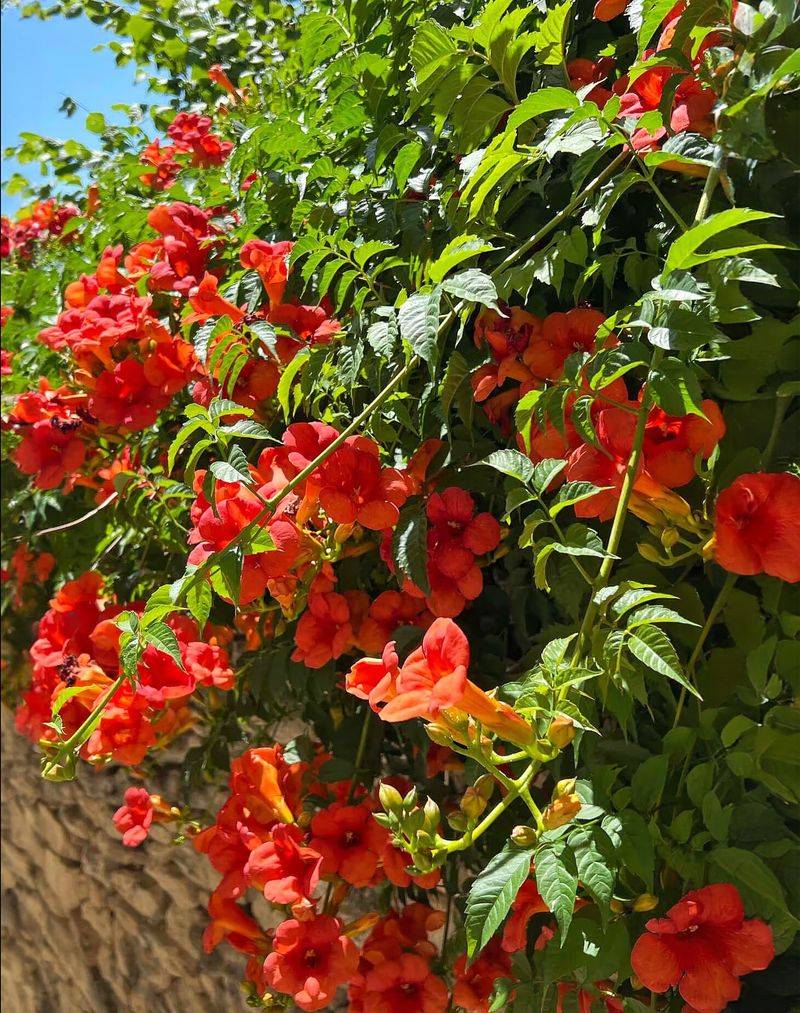
Bold, fast, and absolutely loaded with hummingbird appeal, Trumpet Vine is the kind of plant that makes a statement.
Those wide, flaring orange blooms look like tiny trumpets pointing upward toward the sky, and they bloom heavily from midsummer all the way into early fall. Once it gets going, this vine is hard to ignore.
Campsis radicans is native to North America, including Texas, so it is well adapted to the climate here. It handles scorching summer heat and periods of drought far better than many ornamental vines.
That toughness makes it a reliable choice for gardeners across the state who want low-maintenance color.
One thing to know upfront: Trumpet Vine is a serious grower. It can reach 30 feet or more and clings to surfaces using aerial rootlets.
This means it works best on large, sturdy pergolas, fences, or masonry walls. A delicate trellis may not hold up to its vigor over time.
Pruning regularly keeps it in check and actually encourages more blooms. Plant it in full sun for the best flower production.
Some Texas gardeners use it to shade a south-facing wall or cover an old fence that needs some character.
Hummingbirds will visit the flowers so frequently that your yard may start to feel like a wildlife sanctuary. That is a pretty wonderful trade-off for a little extra pruning work.
5. Carolina Jessamine (Gelsemium Sempervirens)

Every February and March, Carolina Jessamine puts on a show that signals the end of winter across much of Texas.
Those cheerful, bright yellow flowers appear in clusters all along the vine, releasing a sweet fragrance that drifts through the air on warm afternoons. It is one of the most welcome sights of the early gardening season.
This evergreen vine is native to Texas and the southeastern United States, and it handles the full range of Texas weather with impressive resilience. From the piney woods of East Texas to the limestone hills of the Hill Country, Carolina Jessamine adapts well.
It stays green year-round, giving your pergola or trellis structure and visual interest even when other plants are bare.
Carolina Jessamine grows by twining its stems around a support, reaching up to 20 feet in ideal conditions.
It performs best in full sun but tolerates partial shade, especially in the hotter parts of Texas where afternoon shade can actually be a relief. Once established, it is quite drought-tolerant.
A quick note for families with children or pets: all parts of this plant are toxic if eaten, so plant it thoughtfully.
For most Texas gardeners, though, the combination of early color, sweet scent, and year-round greenery makes Carolina Jessamine an excellent choice for trellises and pergolas throughout the state.
6. American Wisteria (Wisteria Frutescens)
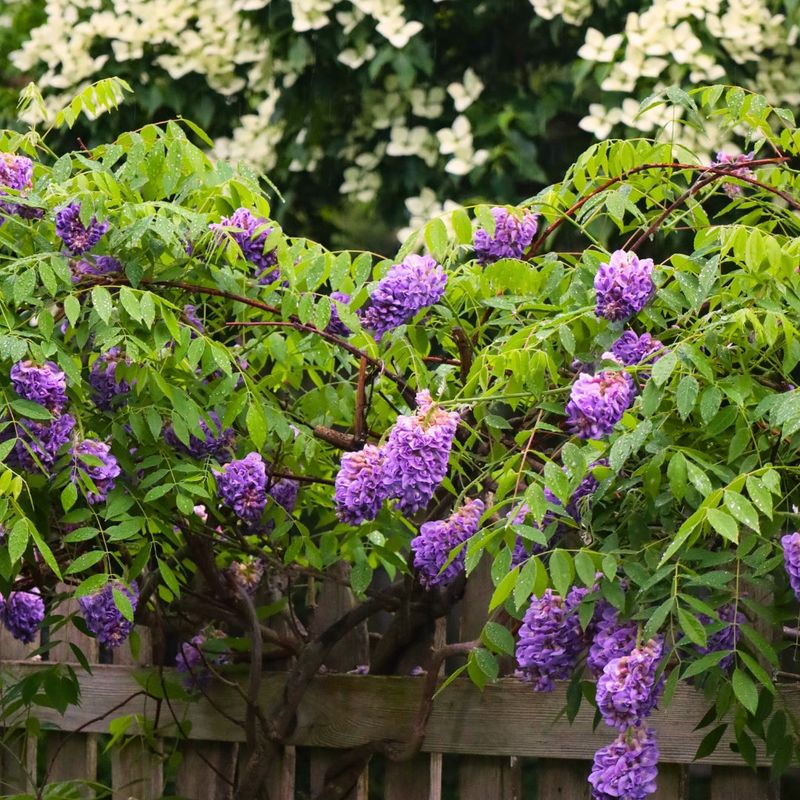
There is something almost magical about watching clusters of purple flowers hang down from a pergola like living curtains. American Wisteria delivers exactly that kind of garden moment, and it does so without the aggressive, invasive behavior of its Asian cousins.
This native species is the smarter, better-behaved choice for Texas gardeners who want that classic wisteria look.
Wisteria frutescens blooms in spring, producing fragrant clusters of lavender to purple flowers that pollinators go absolutely wild for. Bees, butterflies, and other beneficial insects swarm the blooms from the moment they open.
Planting it on a pergola in your Texas backyard can turn your outdoor space into a buzzing, beautiful hub of activity.
Unlike Asian wisterias that can rip apart structures and swallow entire trees, American Wisteria is much more manageable.
It still grows vigorously, reaching 15 to 30 feet, but regular pruning keeps it well-behaved. It performs best in full sun with moist, well-drained soil.
Across Texas, this vine does especially well in areas that receive moderate rainfall, though established plants handle dry stretches reasonably well. Varieties like Amethyst Falls and Nivea are popular choices at Texas nurseries.
If you have admired wisteria-covered pergolas in photos and wondered whether you could grow one at home, American Wisteria makes that dream very achievable right here in Texas.
7. Black-Eyed Susan Vine (Thunbergia Alata)

Not every trellis needs to be 20 feet tall and covered in a sprawling native climber. Sometimes a smaller, more cheerful vine is exactly what a patio or balcony garden needs, and that is where Black-Eyed Susan Vine shines brightest.
Those sunny yellow and orange blooms with their deep, dark centers are genuinely hard not to smile at.
Thunbergia alata is grown as an annual in Texas, meaning it completes its life cycle in one growing season. But do not let that discourage you.
It grows so quickly and blooms so freely that you get tremendous value from a single planting. By midsummer, a small trellis can be completely covered in flowers.
This vine thrives in full sun and warm temperatures, which Texas delivers in abundance from spring through fall. It prefers regular watering and well-drained soil.
Container gardening works beautifully with Black-Eyed Susan Vine, making it a popular pick for porch railings and small decorative trellises on patios across the state.
Colors range from classic yellow and orange to white, with that signature dark eye at the center of each bloom. Butterflies and bees visit the flowers regularly throughout the season.
If you are new to growing vines in Texas or working with a smaller space, this cheerful annual is a low-pressure, high-reward way to add vertical color to your outdoor setup.
8. Butterfly Vine (Mascagnia Macroptera)

Here is a vine that was practically born for Texas. Mascagnia macroptera, commonly called Butterfly Vine, is a true Texas native that thrives in full sun, dry soil, and blazing summer heat without complaint.
It is one of those plants that seems to get more energetic the hotter things get, which is exactly the kind of attitude a Texas garden needs.
The flowers are bright yellow and appear in clusters from summer into fall. They are cheerful and attractive on their own, but the real showstopper comes after the blooms fade.
The seed pods that follow are shaped almost exactly like butterfly wings, giving the vine its common name and adding visual interest long after the flowering season ends.
Butterfly Vine is a strong performer in the rocky, well-drained soils common across Central and West Texas. It handles drought conditions better than almost any other ornamental vine you can plant.
Once established, it needs very little supplemental watering, which makes it a favorite among water-conscious Texas gardeners.
It grows vigorously and can cover a trellis or fence line quickly in warm conditions. Plant it in a spot with full sun and good drainage for best results.
Butterflies and bees visit the flowers regularly, adding extra life to your garden. For Texas gardeners looking for a native vine that is tough, beautiful, and genuinely low-maintenance, Butterfly Vine checks every single box.