These Are The Best Fruit Trees For Small California Backyards
Here is something that surprises a lot of homeowners: you do not need a sprawling orchard to grow your own fruit. Not even close.
A small backyard, a sunny side yard, or even a generously sized patio can absolutely get the job done.
California’s long growing season and abundant sunshine are basically a cheat code for fruit growing, and mild winters across a big chunk of the state mean your trees get a serious head start compared to most of the country.
Lucky you, right? The real trick is choosing trees that stay manageable, play nicely with pruning, and actually suit your specific corner of California.
Get those details right and a compact backyard can produce a harvest that will genuinely impress you. Small space, big fruit energy.
1. Apple Trees Fit Small Yards With Smart Pruning
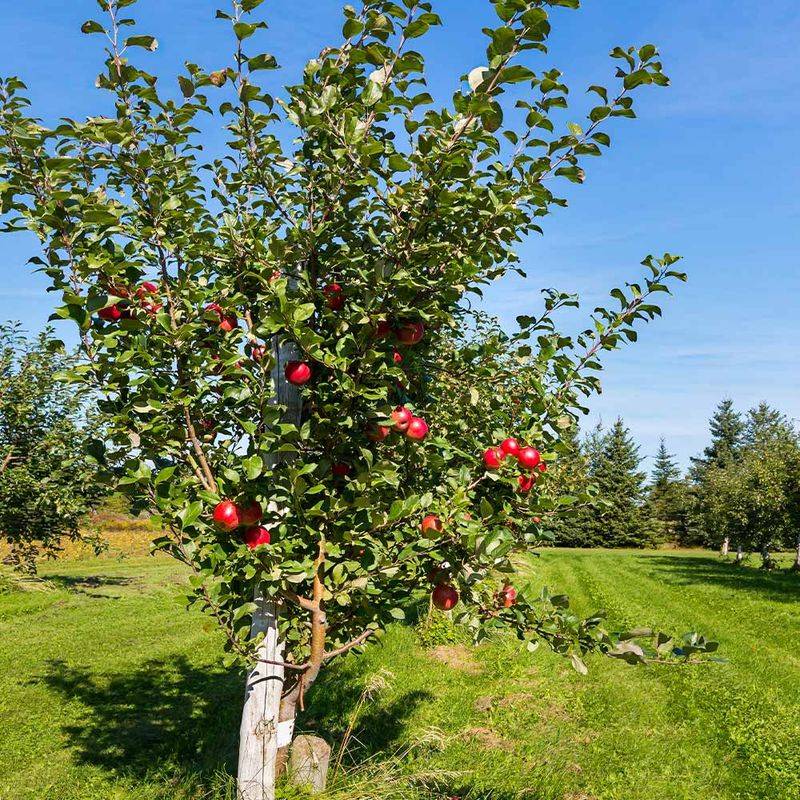
Tight backyard corners are no obstacle for apple trees when you choose the right rootstock and commit to consistent pruning.
In California, apple trees grown on semi-dwarfing or dwarfing rootstocks can be kept well under ten feet, making them a realistic choice for smaller properties.
Many gardeners train apple trees as espalier along a sunny fence or wall, which saves space while still producing a satisfying crop.
Choosing a low-chill variety matters a great deal in California, especially in warmer inland valleys or mild coastal areas where winters stay relatively short.
Varieties like Anna, Dorsett Golden, and Ein Shemer were developed with low chill hours in mind, making them far more reliable for many backyards than traditional apple varieties that need colder winters.
Apple trees are also among the more responsive fruit trees when it comes to summer pruning, which helps control size without sacrificing future fruiting wood.
Some common apple varieties are self-fruitful, though planting two compatible low-chill varieties nearby can improve yields noticeably.
With thoughtful pruning and a suitable rootstock, an apple tree can comfortably fit a modest yard for many productive seasons.
2. European Pears Grow Well In Narrow Backyard Spaces
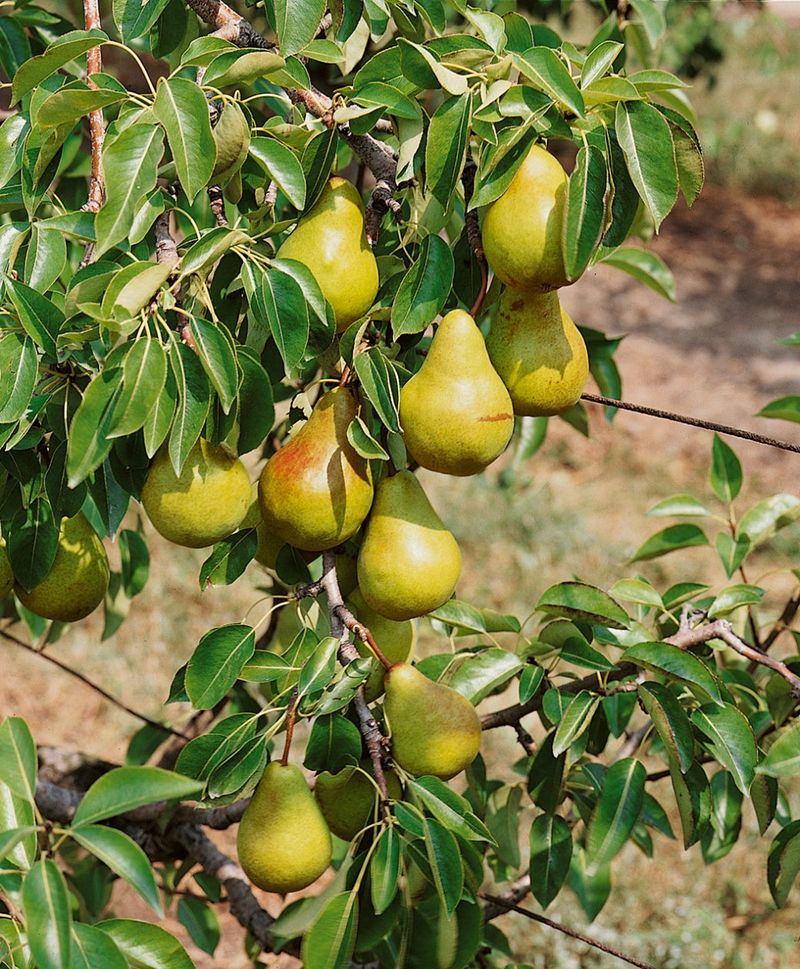
Few fruit trees suit a narrow side yard or a fence line quite like a European pear trained into an espalier form.
European pears naturally develop an upright growth habit, which already works in favor of small-space gardeners who need a tree that reaches upward rather than outward.
With some light shaping each season, a European pear can be kept slim and productive for years.
In California, European pears perform well across a range of climates, from cooler foothill regions to moderate coastal valleys.
Varieties like Bartlett and Bosc have long histories in home gardens, while newer selections offer improved performance in areas with fewer winter chill hours.
Checking chill hour requirements before selecting a variety is a smart move, since backyards can vary significantly from one neighborhood to the next.
One thing gardeners appreciate about European pears is that many varieties are either self-fruitful or need only a nearby pollinator to fruit reliably.
Pears also respond well to espalier training against a south- or west-facing fence, which maximizes sun exposure in compact yards.
Your California Garden Changes Every Week. Your Plan Should Too.
Gardening in California changes quickly throughout the season. Every Friday you’ll receive a simple weekly plan showing exactly what to plant, prune, fertilize, harvest, and protect so you never miss the right timing.
The fruit is tender, sweet, and worth the modest effort it takes to grow them well in a smaller space.
3. Asian Pears Stay Manageable And Highly Productive
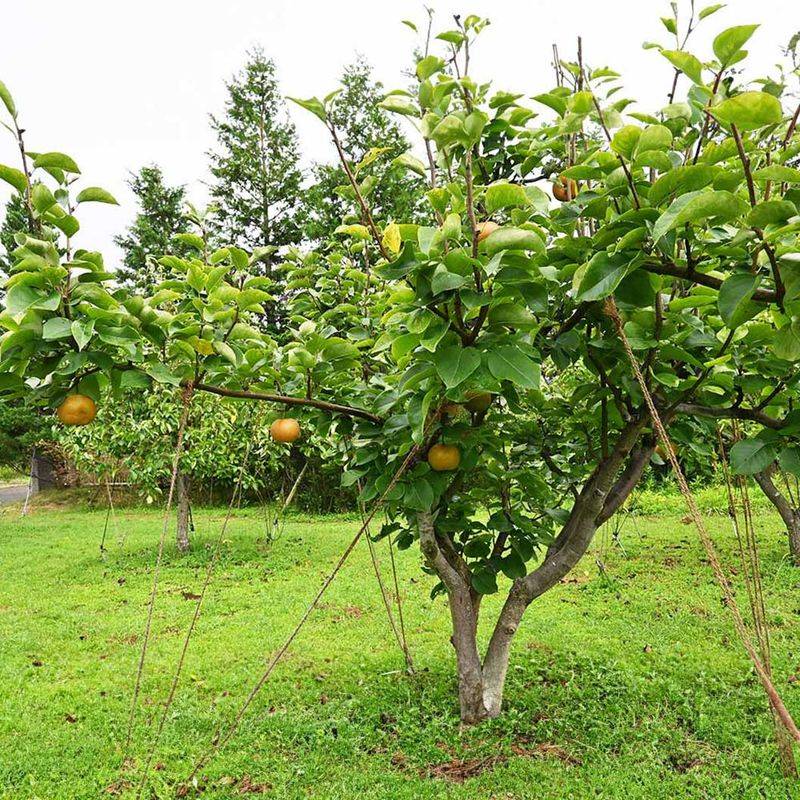
Round, crisp, and refreshingly juicy straight off the tree, Asian pears have earned a loyal following among home gardeners who want reliable fruit without a lot of fuss.
Unlike European pears, Asian pears are eaten when firm, which means there is no waiting around for them to ripen off the tree.
That straightforward harvest quality makes them especially satisfying for backyard growing.
Asian pear trees tend to stay on the smaller side compared to many other fruit trees, and they respond well to pruning that keeps them compact and easy to manage.
In California, varieties like Hosui, Shinko, and Twentieth Century have proven themselves across a range of climates, from the warmer Central Valley to cooler coastal and foothill areas.
Chill hour needs vary by variety, so matching the right selection to your California microclimate makes a meaningful difference in how well the tree performs year after year.
Most Asian pear varieties benefit from cross-pollination, so planting two compatible varieties close together tends to improve fruit set noticeably.
That said, even in a small yard, two compact Asian pear trees trained along a fence or kept pruned to a manageable size can coexist comfortably.
The fruit production per square foot of space used is genuinely impressive for a backyard tree.
4. Citrus Trees Bring Big Appeal To Small California Yards
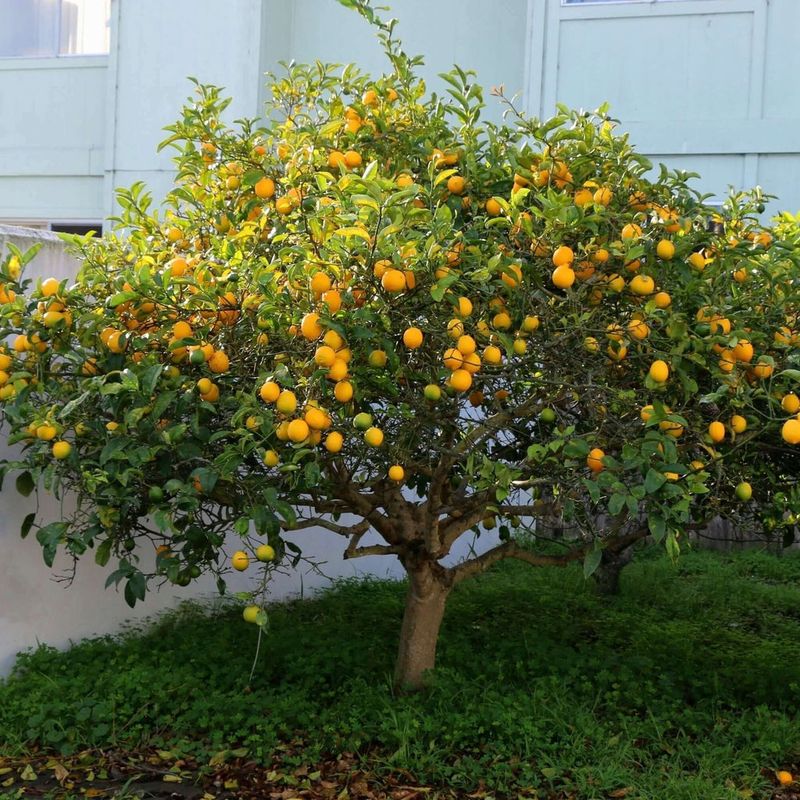
Ask almost any homeowner with a backyard what fruit tree they want most, and citrus comes up near the top of the list every time.
Meyer lemons, navel oranges, mandarins, and limes are all popular choices that fit comfortably into smaller yards, especially in Southern California and other mild-winter regions where citrus thrives without much cold protection.
Citrus trees are naturally moderate in size, and many varieties stay quite manageable with only occasional pruning to shape them and remove crossing branches.
Dwarf citrus grown in large containers work especially well on patios, courtyard gardens, and paved backyard spaces where planting in the ground is not an option.
Container growing also makes it easier to move the tree if a frost threatens, which can be helpful in inland California areas that see occasional cold snaps.
One of the most appealing things about citrus in a backyard is that most common varieties are self-fruitful, meaning a single tree will produce fruit without needing a second tree nearby.
Meyer lemons in particular have become a backyard staple because of their thin skin, sweet flavor, and nearly year-round fruiting habit in mild climates.
Few trees offer the same combination of ornamental beauty and practical harvest in such a compact package.
5. Pomegranates Add Color And Fruit Without Taking Over
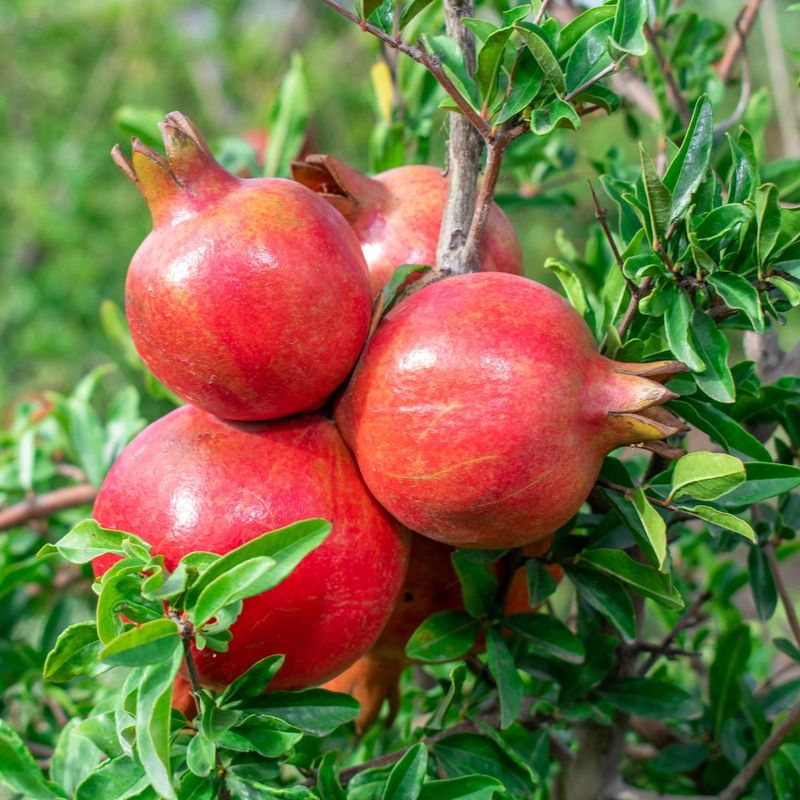
Drought tolerance, ornamental beauty, and genuinely delicious fruit make pomegranates one of the smartest choices a homeowner can plant in a small yard. The showy orange-red blossoms appear in late spring and signal that the deep red fruit is on its way by early fall.
Few backyard trees deliver that kind of seasonal show while also fitting comfortably into a compact growing space.
Pomegranates naturally grow as large shrubs or small multi-stemmed trees, and they can be shaped into a single-trunk tree form with some patient early training.
In California’s hotter inland valleys and Southern California regions, pomegranates thrive in the heat and are remarkably tolerant of dry conditions once established.
They are also well-suited to the alkaline soils found in many backyards, which is a practical advantage that not every fruit tree shares.
Wonderful is the most widely planted variety in California and remains a reliable producer for home gardens. Varieties like Parfianka and Eversweet offer slightly different flavor profiles and are worth exploring depending on personal taste.
Because pomegranates are self-fruitful, a single tree planted in a sunny corner or along a fence line can produce a generous harvest without requiring a pollination partner nearby.
6. Peach Trees Reward Small Gardens With Summer Flavor
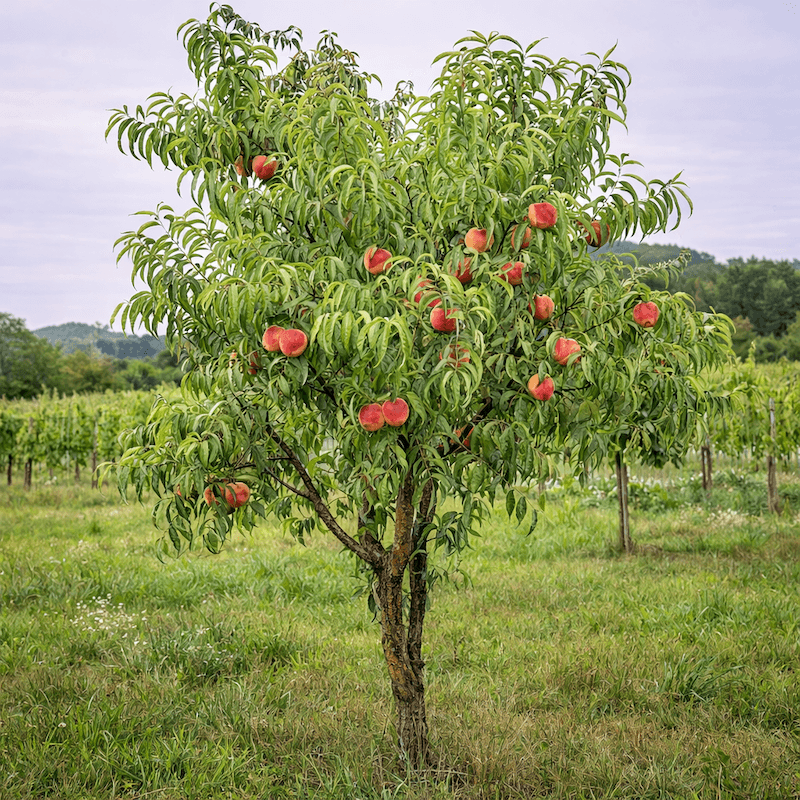
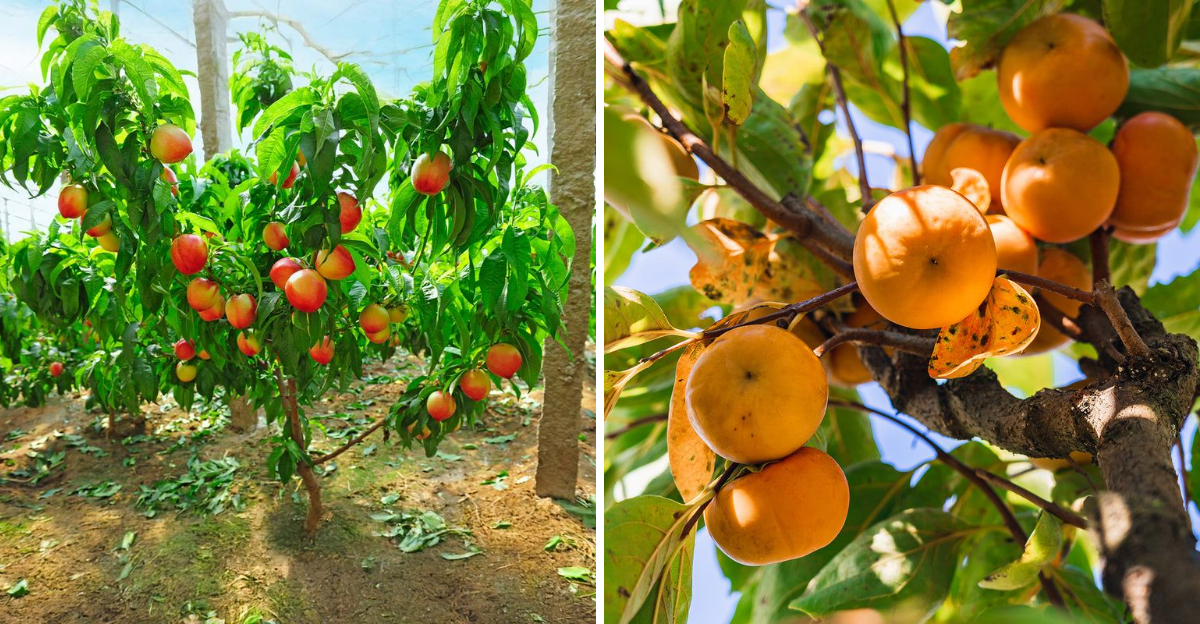
There is something genuinely exciting about picking a sun-warmed peach directly from a tree in your own backyard, and in California that experience is well within reach even for gardeners with limited space.
Peach trees are naturally vigorous, but they respond exceptionally well to hard pruning, which allows gardeners to keep them at a very manageable height of six to eight feet or even shorter with consistent effort.
The backyard orchard culture method, which involves planting trees close together and pruning them aggressively each year, has become popular among home gardeners looking to maximize small spaces.
Peach trees fit this system well because they fruit on new wood, meaning heavy pruning encourages fresh growth that will carry next season’s crop.
This approach also makes harvesting easier since the fruit stays within comfortable reach.
Low-chill peach varieties like Tropic Snow, Desert Gold, and UFO types have expanded the range of California climates where peaches can succeed.
Gardeners in warmer coastal and Southern California areas especially benefit from these selections, which need far fewer chill hours than older traditional varieties.
Peaches are also self-fruitful, so one well-placed tree along a sunny fence or open corner of the yard can produce a satisfying summer harvest on its own.
7. Nectarines Bring Backyard Fruit To Compact Spaces
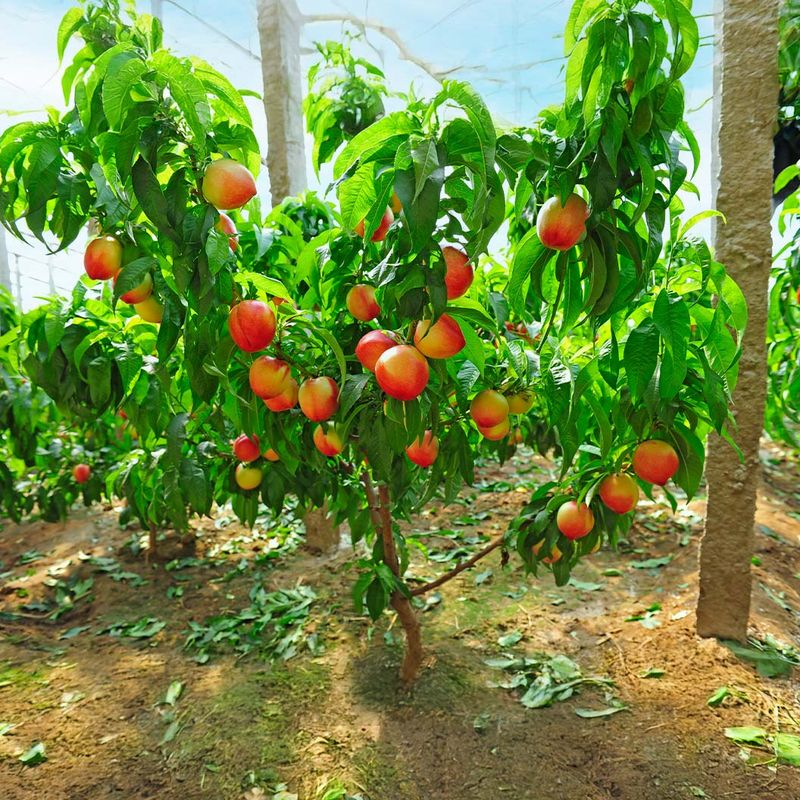
Smooth-skinned and intensely flavorful, nectarines are essentially a fuzz-free cousin of the peach, and they grow with a very similar habit that makes them equally well-suited to small backyards.
Like peaches, nectarines respond well to consistent pruning and can be maintained at a compact size that fits comfortably along a fence, in a side yard, or near a sunny patio wall.
Gardeners who have grown both peaches and nectarines often notice that nectarines can be slightly more susceptible to certain fungal issues in humid or coastal climates.
Choosing disease-resistant varieties and maintaining good air circulation through pruning is worth the extra attention.
In drier inland California climates, nectarines tend to perform especially well, producing fruit with rich color and concentrated sweetness.
Varieties like Fantasia, Flavortop, and Arctic Star are popular in California home gardens and offer a range of ripening times from early summer through midsummer.
Low-chill selections have also made nectarines more accessible to gardeners in mild-winter California regions that once struggled to get reliable fruit set.
Like peaches, nectarines are self-fruitful, so a single compact tree is all that is needed to enjoy a fresh summer harvest from a modest backyard space.
8. Apricots Can Thrive In The Right Small-Space Setting
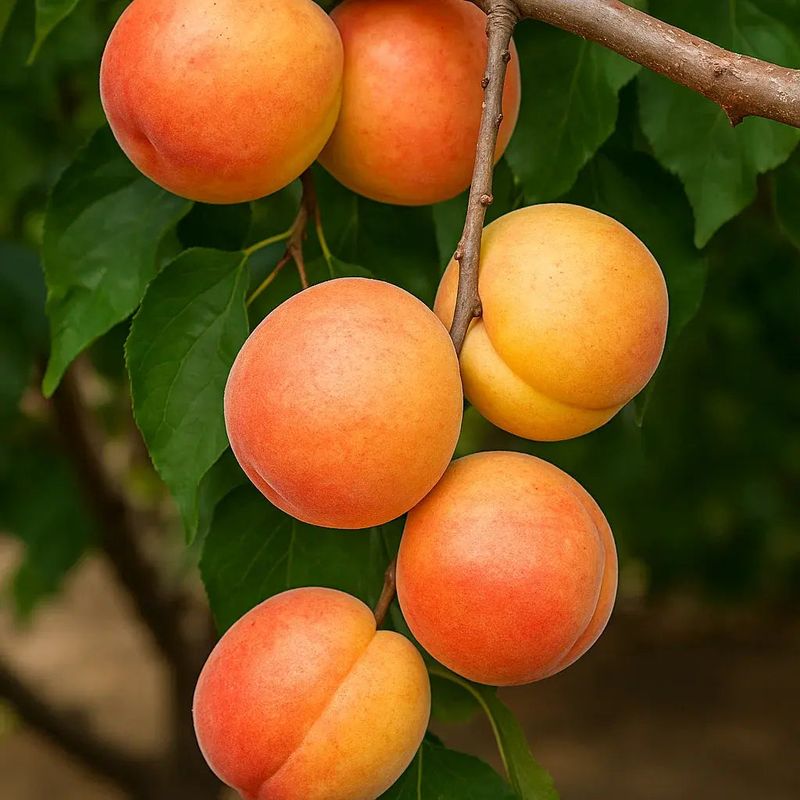
Catching an apricot at peak ripeness, golden and fragrant straight from the branch, is one of those backyard gardening moments that makes the whole effort feel worthwhile. Apricots have deep roots in California fruit-growing history, and for good reason.
The warm, dry summers found across much of California suit apricots very well, since the fruit needs dry conditions as it ripens to develop its best flavor and avoid splitting.
Apricot trees can grow quite large if left unpruned, but with regular attention they can be kept at a manageable height suitable for a small yard.
Training a young tree to an open-center form helps control size while improving light penetration and air circulation, which benefits both fruit quality and overall tree health.
Espalier is also a workable option for apricots along a sunny south-facing fence or wall.
One consideration worth knowing is that apricots bloom early in the season, which means late frosts can occasionally damage blossoms in colder foothill and inland valley locations.
Choosing a late-blooming variety or a protected planting spot can reduce that risk meaningfully.
Most apricot varieties grown in California are self-fruitful, so a single well-sited tree in a small backyard can produce a generous crop in a good season.
9. Persimmons Offer A Beautiful Tree For A Modest Yard
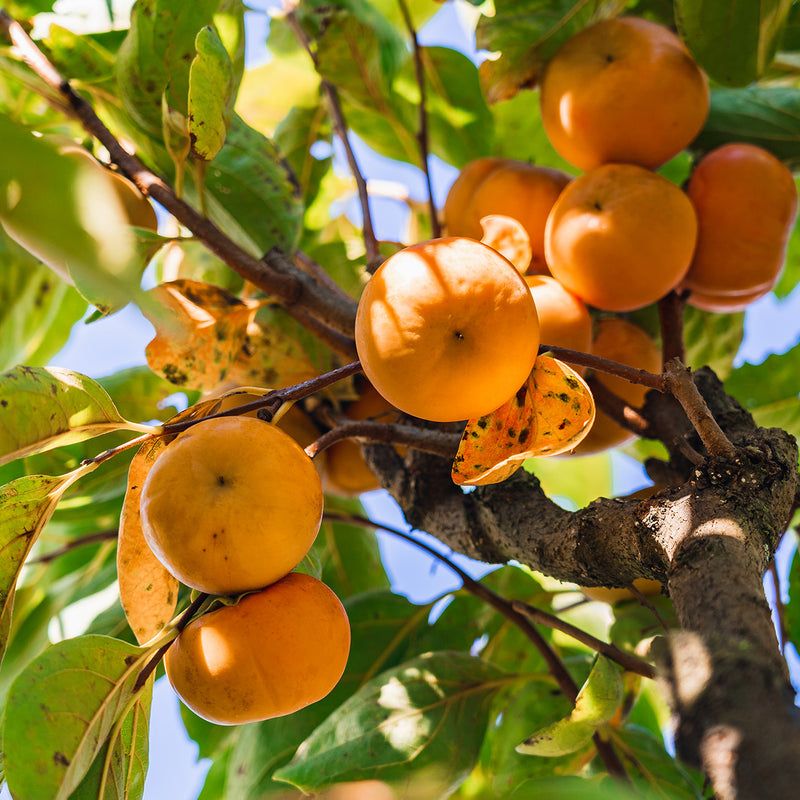
In late fall, when most fruit trees have gone quiet for the season, a persimmon tree becomes one of the most striking things in a backyard.
The deep orange fruit glows against golden and red autumn leaves, and the display often continues even after the leaves drop, leaving bright ornaments hanging on bare branches.
That visual payoff alone makes persimmons worth considering for small yards where every plant needs to earn its place.
Persimmon trees are moderate in size and generally stay manageable without the intensive annual pruning that peaches and nectarines require.
They are also notably adaptable to a wide range of California soils and tend to be fairly drought-tolerant once established, which suits many homeowners who want low-maintenance fruit production.
The trees do appreciate good drainage and a reasonably sunny location to fruit well.
The two main types grown in California are Fuyu, a non-astringent variety eaten firm like an apple, and Hachiya, an astringent type best eaten when fully soft and ripe. Fuyu tends to be the more popular backyard choice because of its easy eating quality.
Both types are self-fruitful, meaning a single tree planted in a small California yard will produce fruit reliably without needing a second tree for pollination.