These Are The Best Low-Light Houseplants That Thrive In Texas Homes
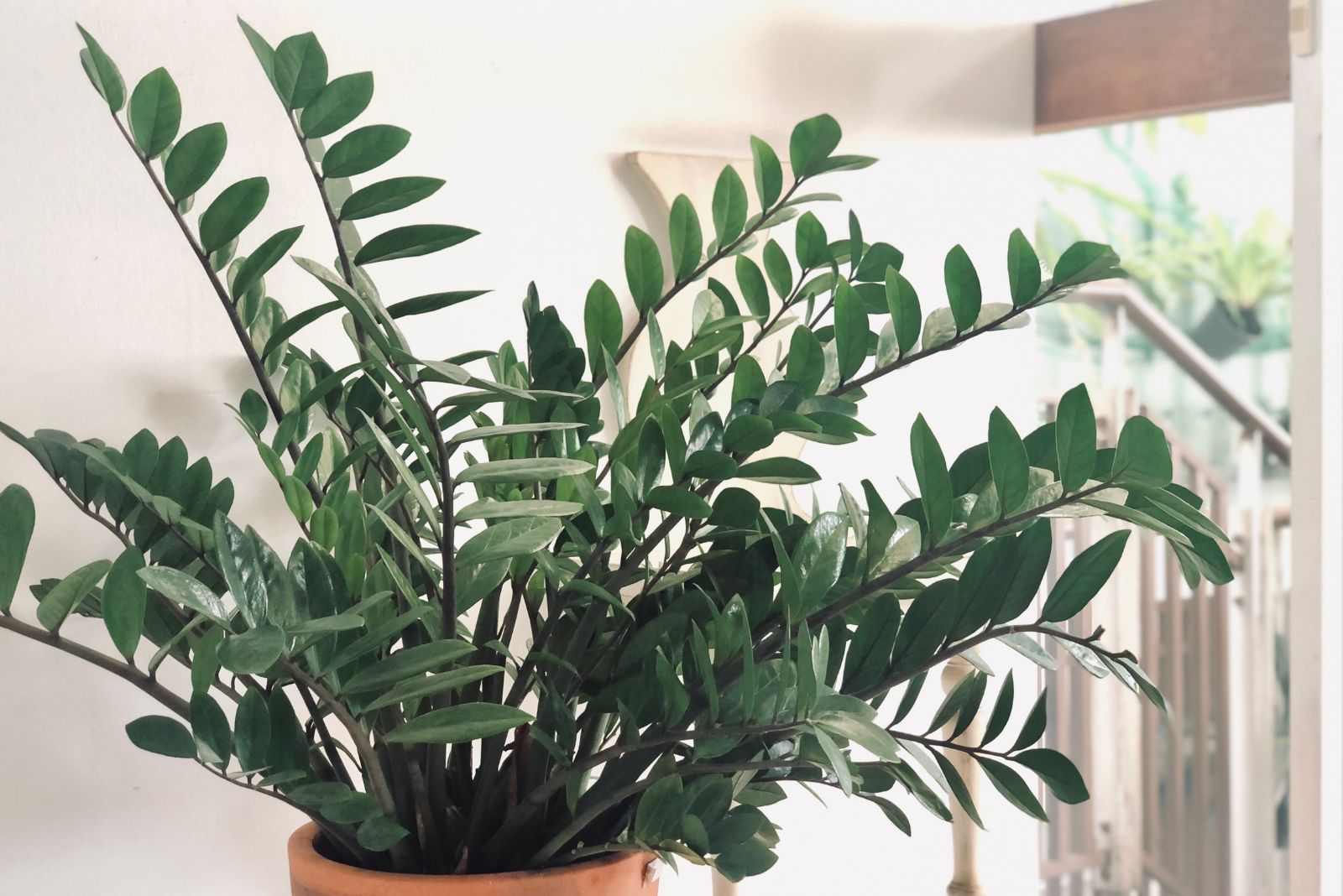
Not every home in Texas is filled with bright sunlight, and that can make choosing houseplants feel frustrating. Apartments, shaded windows, and cloudy days often leave indoor spaces with very little natural light.
But that doesn’t mean you have to give up on having beautiful greenery indoors. Many houseplants actually prefer low-light conditions and can thrive without sitting in direct sun all day.
The key is knowing which ones are tough enough to handle darker rooms and still look great. From leafy favorites to easy-care options that grow slowly and stay healthy, there are plenty of choices for every home.
If you’ve struggled to keep plants alive in low light before, don’t worry. These low-light houseplants are perfect for Texas homes and can help bring life and color into any space.
1. Snake Plant (Sansevieria)
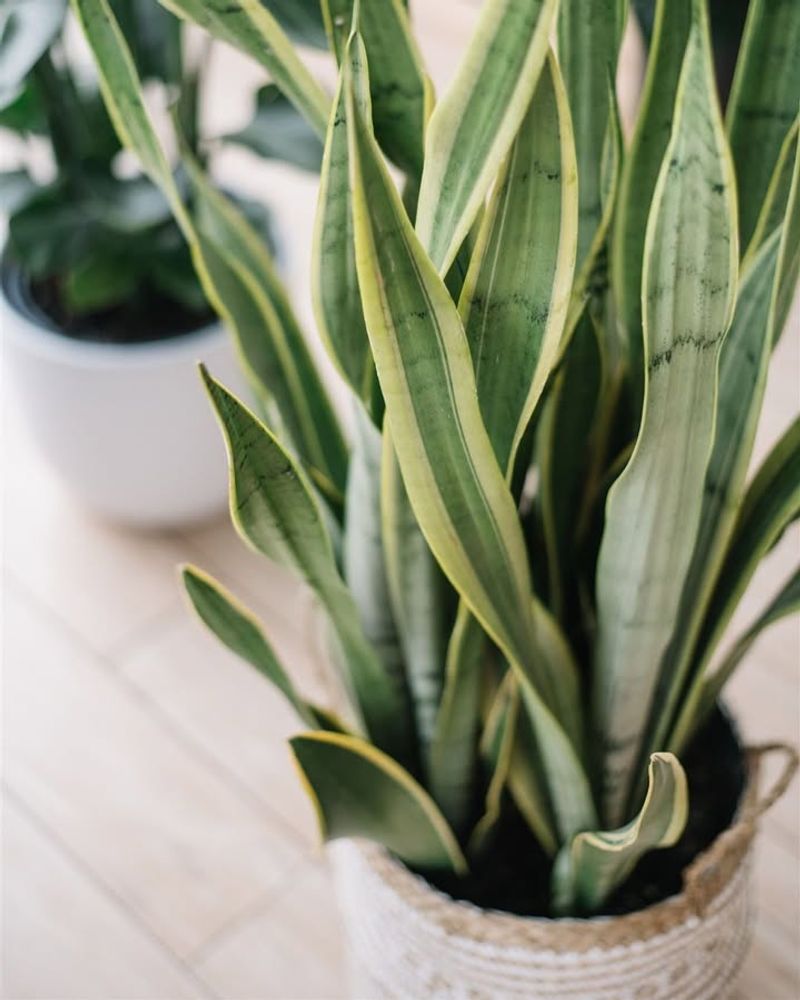
Texans love tough plants, and the snake plant delivers exactly that. This architectural beauty stands tall with sword-like leaves that shoot upward in striking patterns.
Its thick, waxy foliage stores water efficiently, making it incredibly forgiving if you forget to water for weeks.
Snake plants actually prefer neglect over attention. They handle low light better than most houseplants, thriving in corners where other plants would struggle.
Their ability to convert carbon dioxide to oxygen at night makes them perfect bedroom companions in Texas homes.
These plants come in various patterns and colors, from deep green to silvery-blue with yellow edges. Some varieties stay compact while others grow several feet tall. This versatility means you can find the perfect size for any space in your home.
Watering needs are minimal, especially during Texas winters when growth slows down. Let the soil dry completely between waterings to prevent root issues. Once every two to three weeks usually does the trick.
The snake plant tolerates temperature fluctuations common in Texas homes without complaint.
It handles air conditioning in summer and heating in winter with equal grace. Dust the leaves occasionally to keep them looking their best and absorbing light efficiently.
Propagation is simple through leaf cuttings or division, letting you create new plants for other rooms. This makes it budget-friendly for filling your Texas home with greenery.
2. Pothos (Epipremnum aureum)
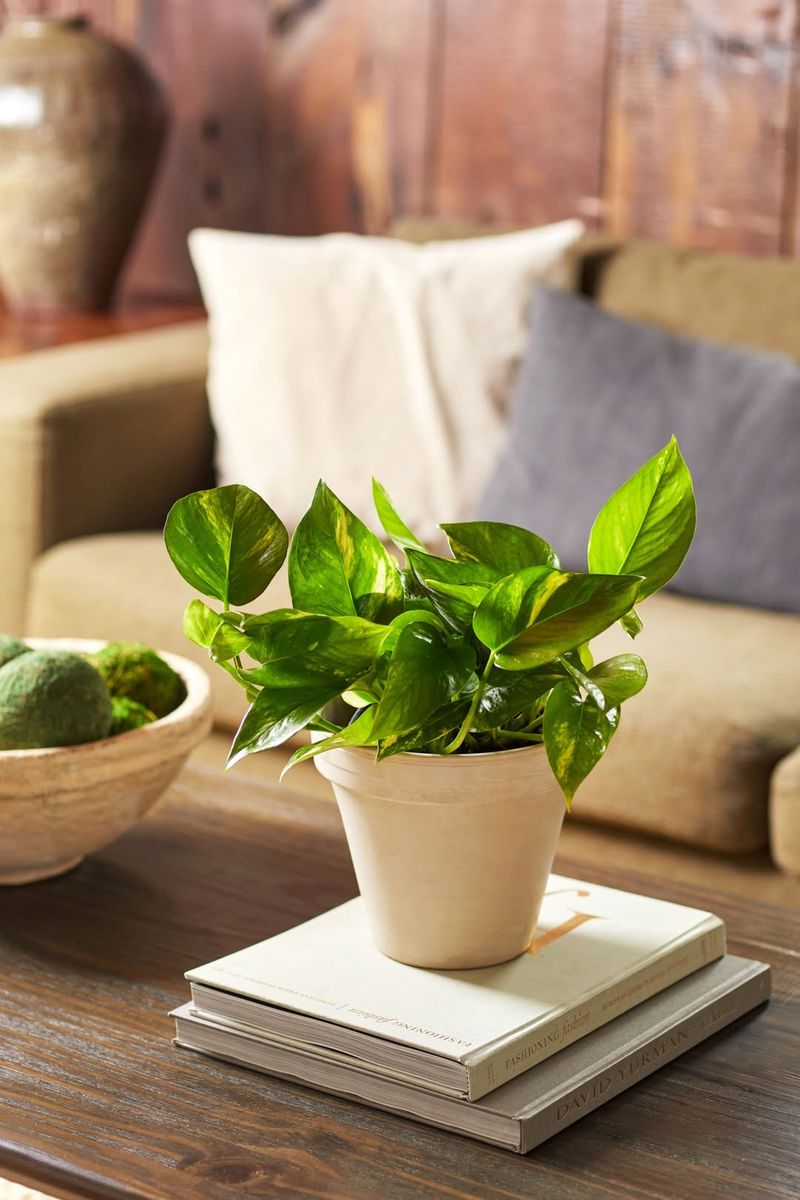
Few plants match the easygoing personality of pothos. Heart-shaped leaves cascade gracefully from shelves or hang elegantly from baskets, creating living curtains of green.
This vining wonder adapts to almost any lighting condition, making it ideal for Texas apartments and houses alike.
Pothos grows quickly, rewarding you with visible progress that keeps plant care exciting. New leaves unfurl regularly, and vines can extend several feet within months.
You can train them along walls, drape them from high shelves, or let them trail freely from hanging planters.
The plant comes in several stunning varieties. Golden pothos features yellow-splashed leaves, while marble queen displays creamy white variegation.
Neon pothos brings bright chartreuse color that practically glows even in dim Texas hallways.
Watering is straightforward and forgiving. The leaves droop slightly when thirsty, giving you a clear signal before any real stress occurs. Once watered, they perk up within hours, looking refreshed and happy.
This plant tolerates the dry air common in air-conditioned Texas homes during summer. It doesn’t demand humidity like some tropical plants, though it appreciates an occasional shower to rinse dust from its leaves. Room temperature suits it perfectly year-round.
Propagating pothos couldn’t be easier. Snip a stem below a node, place it in water, and watch roots develop within weeks.
This lets you share plants with friends or expand your collection throughout your Texas home affordably.
3. ZZ Plant (Zamioculcas zamiifolia)
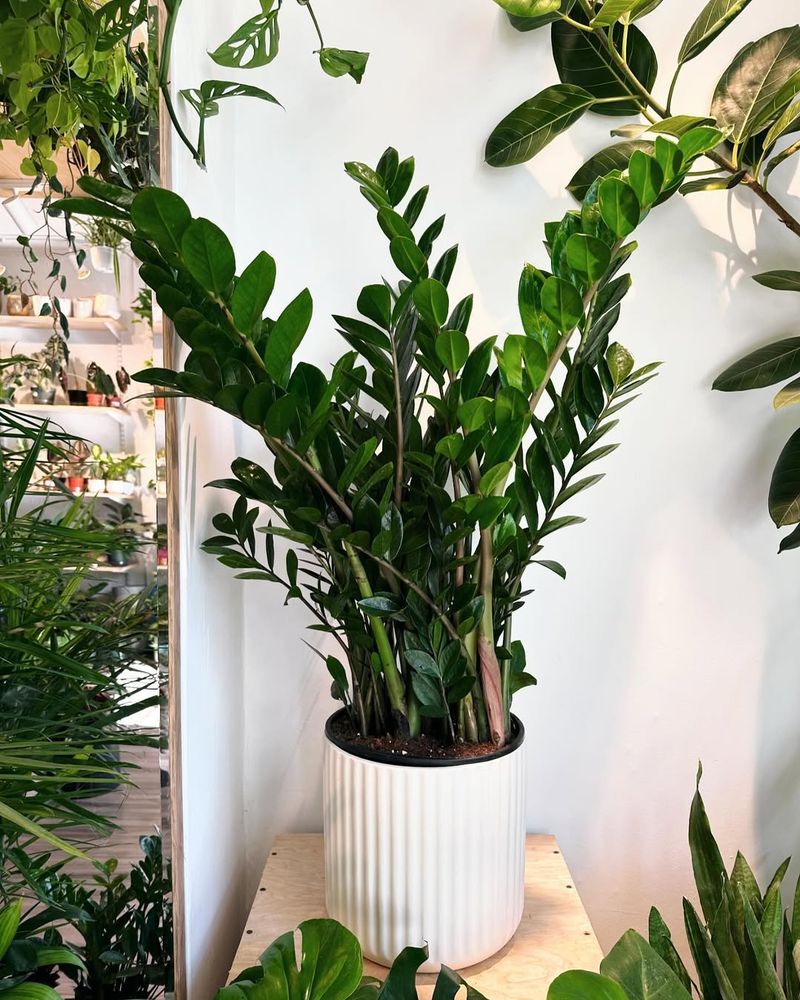
Meet the ultimate survivor for busy Texans. ZZ plants feature glossy, dark green leaves that look almost artificial because of their perfect shine.
Thick stems rise from underground rhizomes that store water, allowing this plant to endure extended dry periods without complaint.
This plant laughs at neglect. Forget to water for a month? No problem. Low light in your Texas spare bedroom?
Perfect. The ZZ plant continues growing steadily, adding new shoots that emerge from the soil like miniature green spears.
Its tolerance for various conditions makes it foolproof for beginners. Whether you place it in a dim hallway or a slightly brighter living room, it adjusts without drama. The thick, waxy coating on leaves helps it retain moisture efficiently in dry Texas indoor air.
Growth happens slowly but surely, with new stems appearing every few months during active growing seasons.
Each stem produces pairs of glossy leaflets that catch whatever light is available. The plant eventually forms an impressive clump that commands attention.
Watering requirements are minimal. During Texas summers, water every two to three weeks.
In winter, stretch that to once monthly or even less. Overwatering causes more problems than underwatering with this resilient species.
The ZZ plant rarely suffers from pests or diseases when grown indoors. Its naturally pest-resistant foliage stays clean and beautiful with minimal intervention.
Simply wipe leaves occasionally to maintain their signature glossy appearance that brightens any dim Texas room.
4. Cast Iron Plant (Aspidistra elatior)
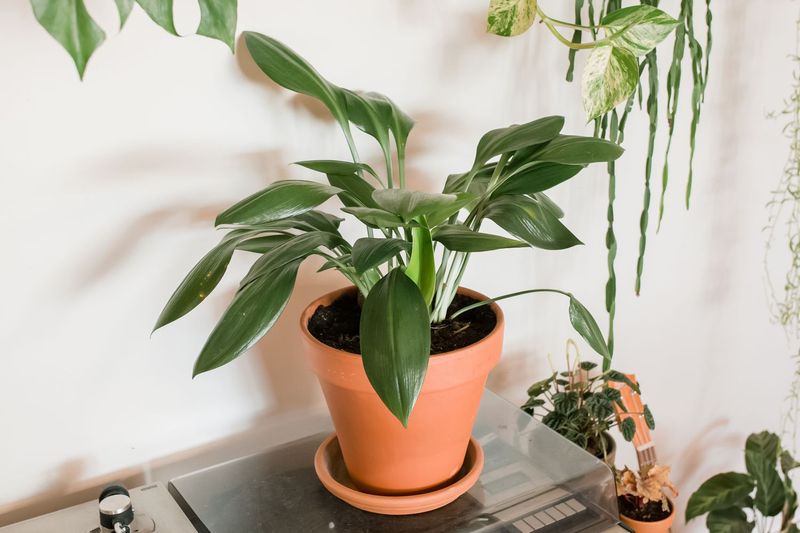
Named for its nearly indestructible nature, the cast iron plant earns its reputation in Texas homes.
Broad, lance-shaped leaves emerge directly from the soil, creating a lush, full appearance even in the dimmest corners. This Victorian-era favorite has stood the test of time for good reason.
Extreme neglect barely phases this champion. It tolerates low light, irregular watering, temperature swings, and poor soil without missing a beat.
For Texans who travel frequently or simply forget about their plants, this species offers peace of mind.
The plant grows slowly, which some consider an advantage. You won’t need to repot constantly or worry about it outgrowing its space quickly. Each new leaf that emerges adds to the plant’s dense, tropical appearance.
Cast iron plants handle the temperature variations common in Texas homes beautifully. They don’t mind cooler spots near exterior walls in winter or warmer areas in summer. This flexibility lets you place them anywhere without concern.
Watering can be sporadic without consequence. Let the soil dry out substantially between waterings, especially during cooler months.
The plant’s thick roots store moisture efficiently, sustaining it through dry spells that would stress other species.
Variegated varieties add visual interest with white or cream stripes along the leaves. These patterns remain stable even in very low light, unlike some variegated plants that lose their markings.
Dust accumulates on the broad leaves, so wipe them monthly to keep your Texas plant looking its absolute best.
5. Peace Lily (Spathiphyllum)
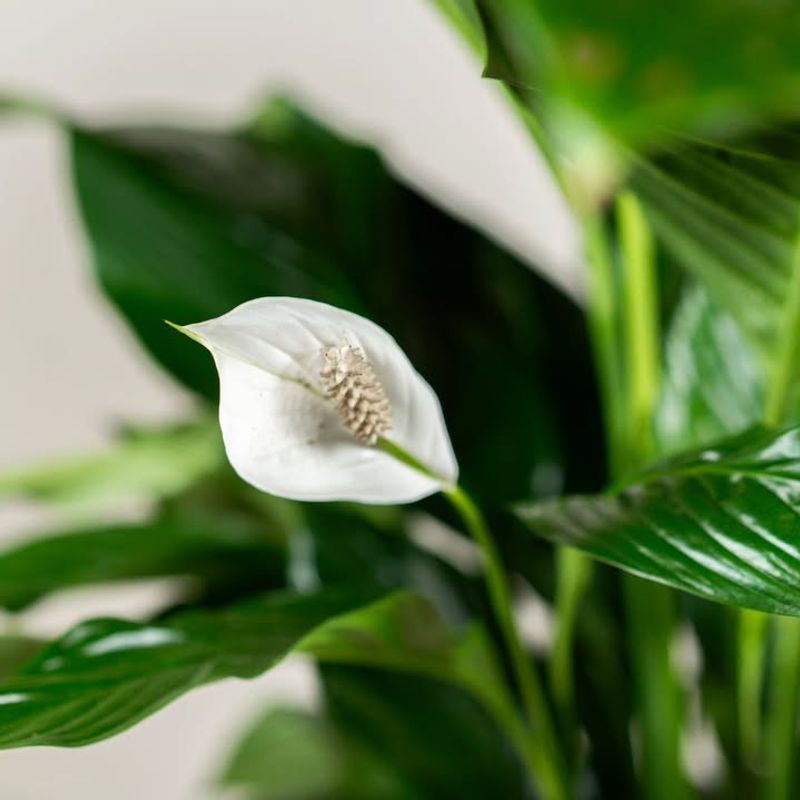
Elegant white blooms emerge from dark green foliage, making peace lilies showstoppers even in dim Texas rooms.
These plants communicate their needs clearly, with leaves drooping dramatically when thirsty but recovering quickly after watering. This makes them surprisingly easy despite their delicate appearance.
Peace lilies actually bloom in low-light conditions, unlike many flowering houseplants. The white spathes aren’t true flowers but modified leaves that surround tiny blooms.
They last for weeks, providing long-lasting beauty in bathrooms, bedrooms, or offices throughout your Texas home.
This plant appreciates the humidity Texas bathrooms naturally provide. Steam from showers mimics its native tropical environment, encouraging healthy growth and frequent blooming. However, it adapts to average home humidity levels without major complaints.
Watering becomes intuitive once you recognize the droop signal. Check your peace lily every few days, and water thoroughly when leaves start to sag slightly. The plant bounces back within hours, teaching you its rhythm quickly.
Peace lilies help purify indoor air by filtering common household toxins. This makes them functional as well as beautiful in Texas homes.
They work quietly in corners, improving air quality while adding living decoration to forgotten spaces.
Brown leaf tips occasionally appear in very dry conditions or with inconsistent watering. Simply trim these with scissors to maintain appearance.
The plant continues growing new leaves from the center, constantly refreshing itself. Fertilize monthly during spring and summer to encourage more blooms in your Texas indoor space.
6. Chinese Evergreen (Aglaonema)
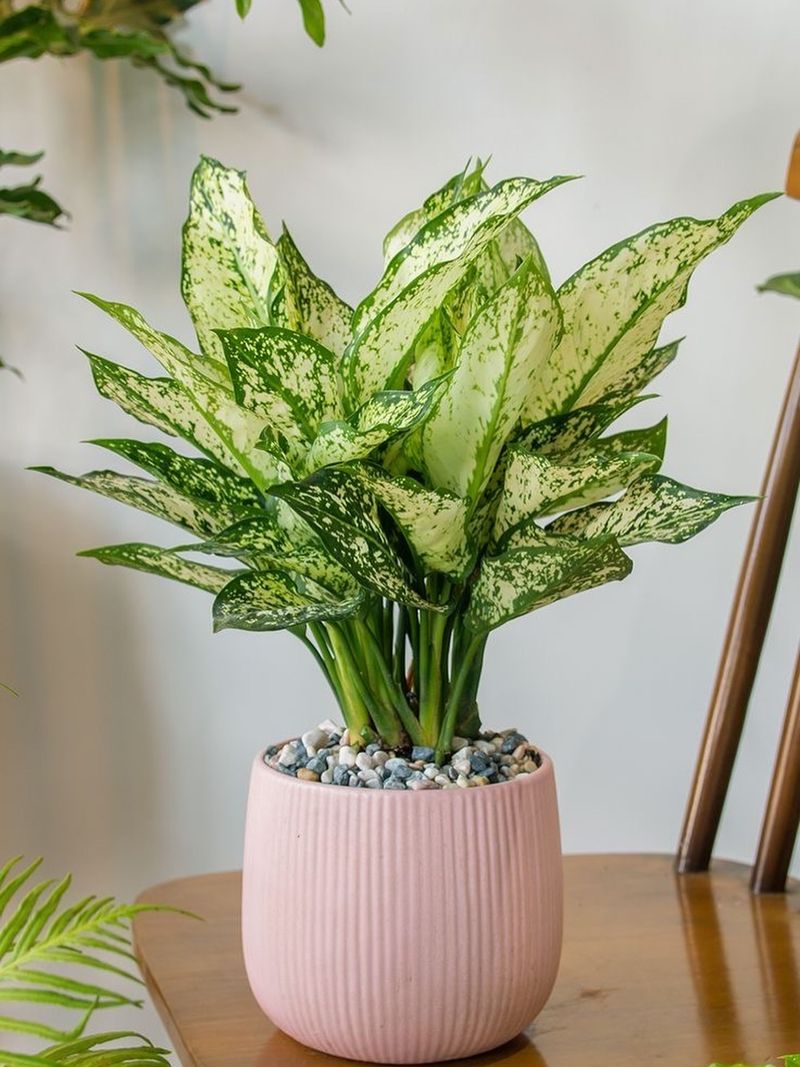
Stunning leaf patterns make Chinese evergreens artwork for your Texas walls. Variegation ranges from silvery-green to bold pink and red, depending on variety.
These colors remain vibrant even in low light, unlike many variegated plants that fade without bright sun.
Dozens of cultivars offer choices for every taste. Some feature subtle silver markings, while others display dramatic splashes of hot pink or deep red. This variety lets you match plants to your Texas home’s decor perfectly.
Chinese evergreens grow slowly and steadily, forming compact clumps of colorful foliage. They stay manageable in size, rarely outgrowing their pots quickly. This makes them ideal for desks, nightstands, or bathroom counters where space is limited.
These plants tolerate the dry air common in air-conditioned Texas homes during brutal summers. They don’t require constant misting or humidity trays like some tropical species. Normal indoor conditions suit them just fine.
Watering needs are moderate and predictable. Allow the top inch of soil to dry between waterings, then water thoroughly until it drains from the bottom. During Texas winters, reduce watering frequency as growth naturally slows.
Older leaves occasionally yellow and drop as new growth emerges from the center. This natural process keeps the plant looking fresh.
Simply remove yellowed leaves at the base to maintain a tidy appearance. Chinese evergreens rarely suffer from pest problems indoors, making them truly low-maintenance companions for Texas plant lovers seeking color in dim spaces.
7. Philodendron (Heartleaf)
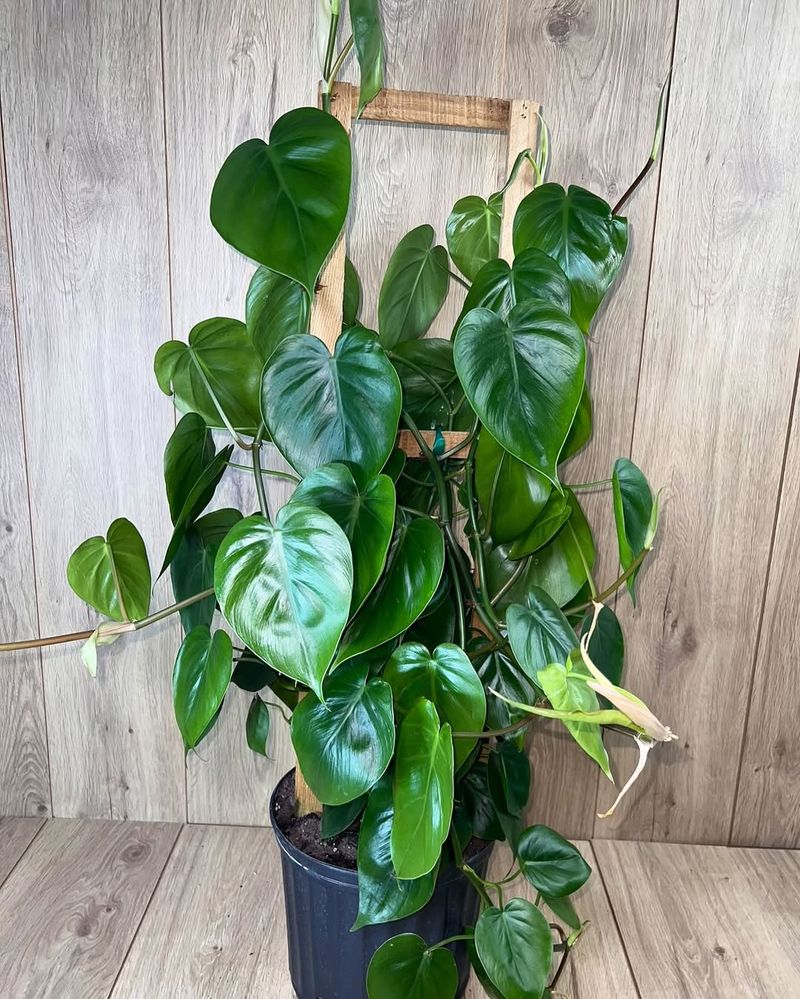
Glossy heart-shaped leaves grow on long vines that can stretch across entire walls in Texas homes.
Heartleaf philodendrons rank among the most forgiving houseplants available, bouncing back from almost any care mistake. Their quick growth provides instant gratification for impatient gardeners.
This climbing vine naturally reaches for support in its native habitat. Indoors, you can train it up a moss pole, let it trail from baskets, or guide it along shelves and window frames. The flexibility makes it perfect for creative displays throughout your Texas space.
New leaves emerge frequently, unfurling from stems in a satisfying display of growth. Each leaf starts small and expands over several days, darkening from light green to deep emerald. Watching this transformation never gets old.
Philodendrons signal watering needs through slight leaf drooping, similar to pothos. This clear communication prevents guessing games.
Water thoroughly when soil feels dry an inch below the surface, and your plant stays happy.
These plants handle the temperature swings in Texas homes without stress. They tolerate cooler winter temperatures near windows and warmer summer conditions near interior walls equally well. Average home temperatures suit them perfectly year-round.
Propagation happens easily through stem cuttings placed in water or soil. Roots develop within weeks, creating new plants to share or expand your collection.
This makes heartleaf philodendrons economical choices for filling your Texas home with greenery. Trim longer vines occasionally to encourage bushier growth and prevent legginess in very low light conditions.
8. Dracaena (Dragon Tree)
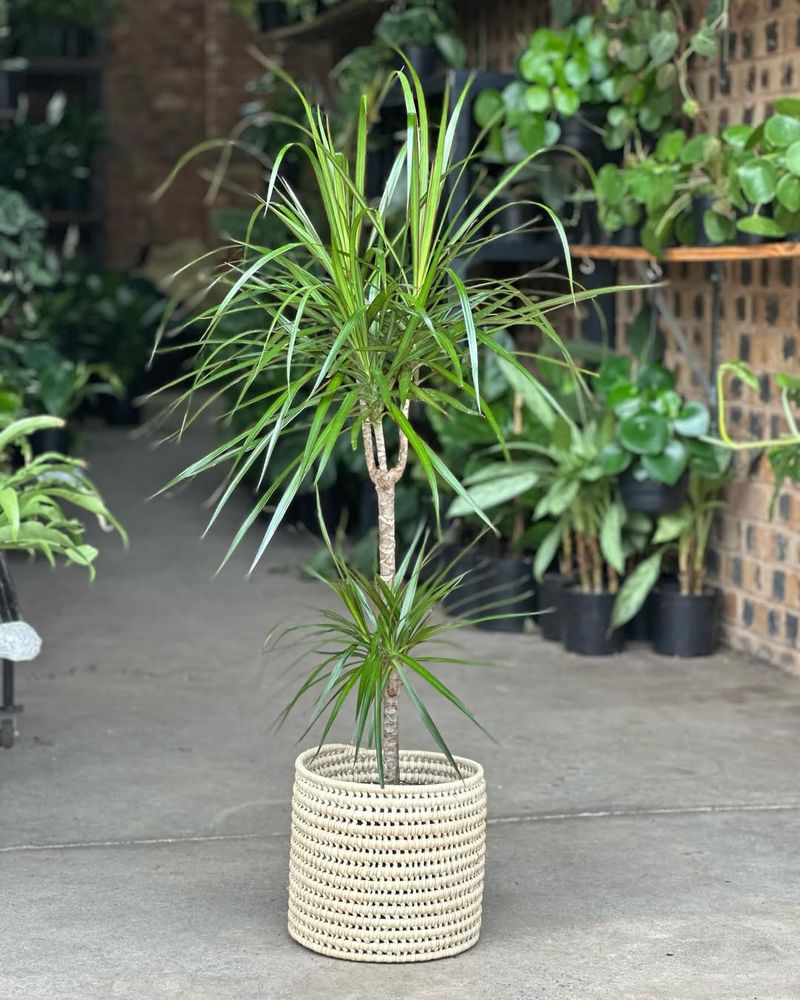
Architectural stems topped with spiky foliage create dramatic focal points in Texas living spaces. Dracaenas develop woody trunks over time, giving them tree-like character even indoors.
Their upright growth habit fits perfectly in corners or beside furniture where floor space is limited.
Multiple varieties offer different looks for your Texas home. Some feature solid green leaves, while others display red edges or yellow stripes. This diversity ensures you’ll find a dracaena that matches your style preferences.
These plants grow slowly, maintaining manageable sizes for years before needing larger pots. Their slow pace means less maintenance overall. You won’t constantly prune or repot, freeing your time for other activities.
Dracaenas prefer slightly dry conditions between waterings, making them perfect for forgetful Texans. Let soil dry out substantially before watering again.
Overwatering causes more problems than underwatering with these drought-tolerant specimens.
The plants tolerate low light remarkably well, though growth slows in very dim conditions. They continue producing new leaves from the crown, gradually adding height and fullness. Rotate your plant occasionally to ensure even growth on all sides.
Brown leaf tips sometimes develop from fluoride in tap water or low humidity. Use filtered water if this becomes problematic, or simply trim brown tips with scissors.
The plant continues thriving despite minor cosmetic issues. Dracaenas rarely suffer from serious pest problems indoors, making them reliable long-term companions for Texas homes seeking vertical interest in shaded areas without constant fussing.