These Are The Best Native Plants To Grow In Pots In California
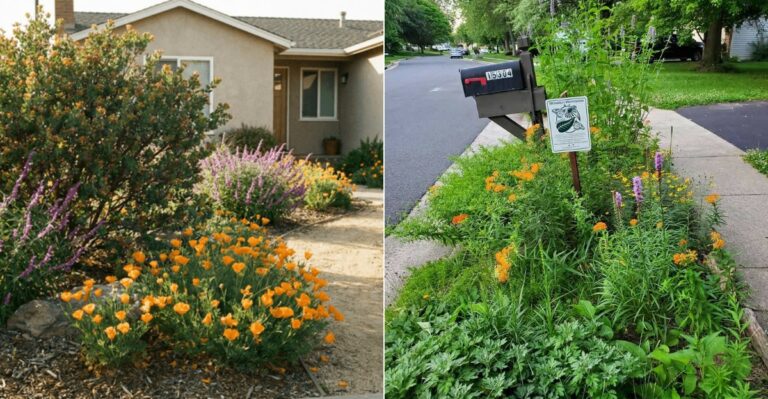
Native plants have a reputation for being strictly in-ground garden material, but that is not the full picture.
A surprising number of California natives do extremely well in containers, and in some cases the pot actually gives them conditions closer to what they prefer in the wild.
Fast drainage, limited water, and controlled soil make a big difference for plants that evolved in dry, lean landscapes.
Growing natives in pots also solves a problem a lot of gardeners run into, which is wanting the benefits of native plants without committing to a full garden redesign.
A pot on a patio, a container by the front door, or a row of planted pots along a fence can bring in pollinators, reduce water use, and add real visual interest without tearing anything up.
Some natives take to containers so well that they actually outperform their in-ground counterparts.
1. California Fuchsia / Monkeyflower
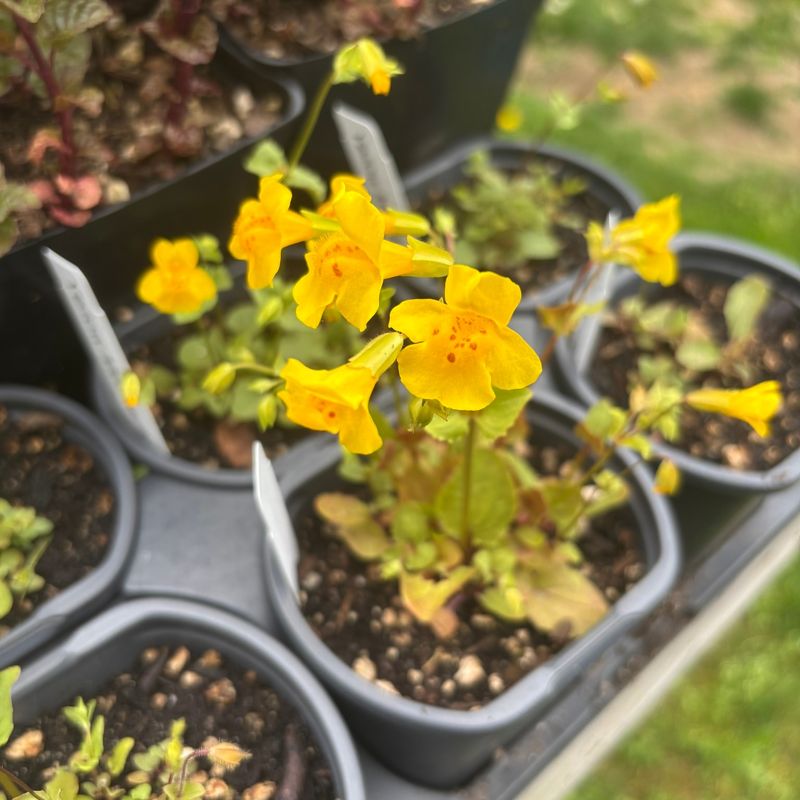
Few plants put on a show quite like California fuchsia and monkeyflower do when they’re planted in a pot and placed in full sun. Both of these natives are absolute hummingbird magnets.
If you’ve ever wanted to watch a hummingbird hover just inches from your window, planting one of these in a container near your patio is the way to do it.
California fuchsia, also known as Epilobium canum, produces brilliant scarlet-orange tubular flowers from late summer all the way into fall. That’s a huge bonus because most other flowers have already faded by then.
It loves heat, handles drought like a champ, and looks fantastic spilling over the edges of a wide, shallow pot.
Monkeyflower, on the other hand, blooms earlier in the season and comes in a cheerful range of yellows, oranges, and reds. It’s a great choice for pots placed in spots that get morning sun but some afternoon shade.
Both plants prefer well-draining soil and don’t need much fertilizer.
When growing either of these in containers, make sure your pot has drainage holes at the bottom. Let the soil dry out a bit between waterings.
Overwatering is the most common mistake gardeners make with these plants. Cut California fuchsia back hard in late winter and it will come back full and bushy.
Monkeyflower is often treated as an annual but can come back in milder coastal areas. Either way, both are absolutely worth growing in pots.
2. Coyote Mint
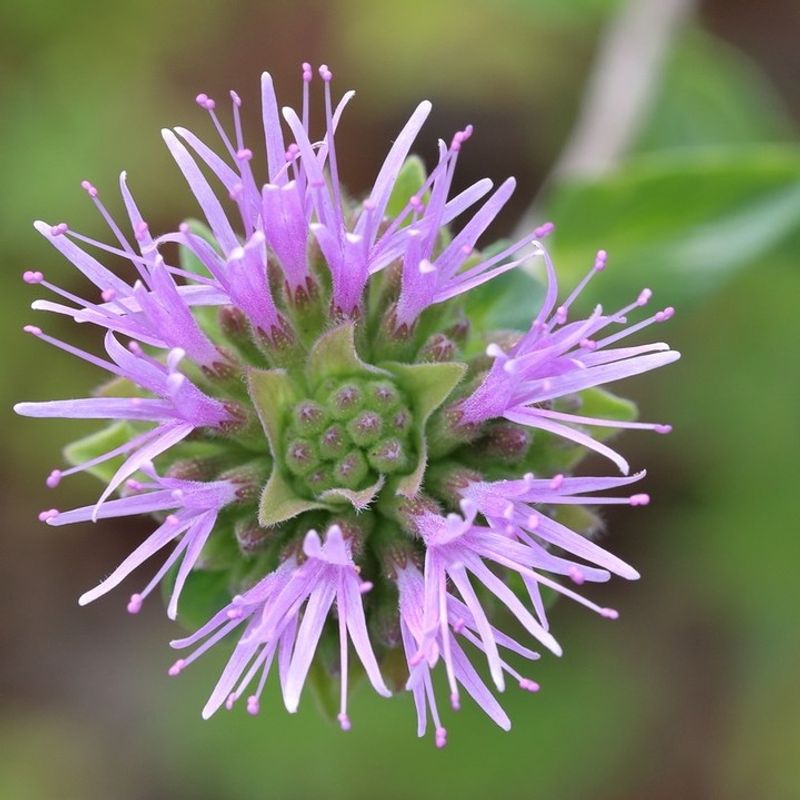
Walk past a pot of coyote mint on a warm afternoon and you’ll immediately understand why this plant has such a loyal following among gardeners. The scent is refreshing, clean, and a little wild all at once.
Bees go absolutely crazy for the tiny purple flower clusters that cover this plant from midsummer through fall.
Coyote mint, or Monardella villosa, is a low-growing, spreading plant that looks wonderful in wide, shallow containers. It stays compact enough for pots but spreads just enough to create a full, lush look.
The silvery-green foliage is attractive even when the plant isn’t in bloom, which means it earns its spot on your porch year-round.
Your California Garden Changes Every Week. Your Plan Should Too.
Gardening in California changes quickly throughout the season. Every Friday you’ll receive a simple weekly plan showing exactly what to plant, prune, fertilize, harvest, and protect so you never miss the right timing.
One of the best things about coyote mint is how little it asks of you. It thrives in full sun and poor, well-draining soil.
Actually, giving it too much rich soil or too much water can cause it to get leggy and weak. Think of it as a plant that prefers to rough it a little.
Plant coyote mint in a terracotta or unglazed ceramic pot so the soil can breathe and dry out properly between waterings. In the first few weeks after planting, water it regularly to help it settle in.
After that, back off and let it do its thing. It’s a tough, resilient plant that rewards neglect more than it rewards fussing.
Pollinators will thank you every single summer.
3. Buckwheats
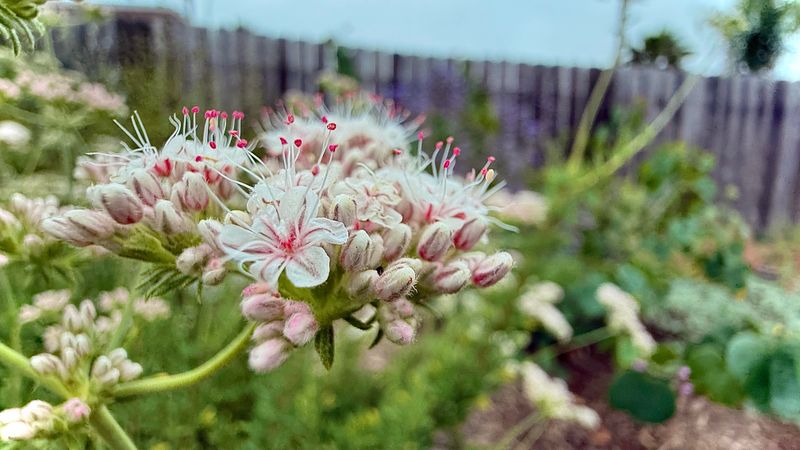
There’s a reason buckwheats show up in nearly every native plant garden across the state. They are incredibly tough, outrageously beautiful, and somehow manage to look good in every single season.
The flowers start out creamy white or soft pink, then age to a rich, rusty red that sticks around on the plant for months.
Eriogonum is the genus name, and there are dozens of species to choose from. For container growing, compact varieties like Eriogonum fasciculatum ‘Theodore Payne’ or the cushion buckwheats work especially well.
They stay tidy, don’t outgrow their pots quickly, and produce an incredible amount of blooms relative to their size.
Buckwheats are a powerhouse for pollinators. Bees, butterflies, and beneficial insects flock to the flowers all season long.
When the blooms fade, the dried flower heads still look ornamental and provide seeds for birds. You really do get multiple seasons of interest from a single plant.
For pot success, use a fast-draining mix with some coarse sand or perlite mixed in. A pot that’s slightly larger than the root ball works best.
These plants don’t love having wet feet, so drainage is critical. Place your buckwheat in full sun and water deeply but infrequently once it’s established.
Avoid misting or overhead watering because wet foliage can lead to fungal issues. Trim off the spent flower clusters in late fall to keep the plant looking fresh and to encourage strong new growth the following spring.
4. Meadow Onion
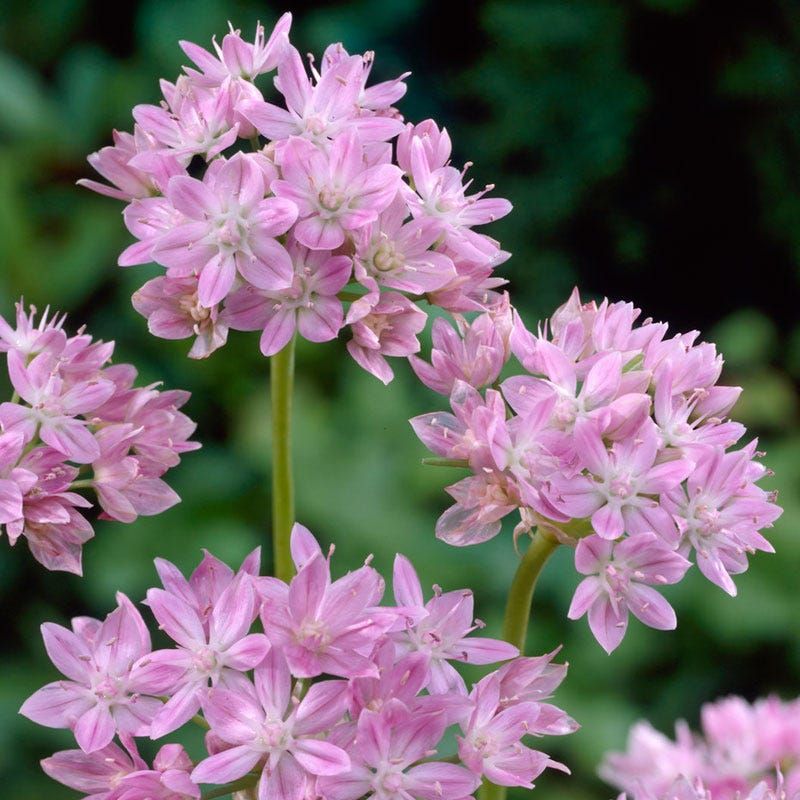
Not every great container plant has to be a shrub or a groundcover. Meadow onion proves that small, bulb-based wildflowers can be just as rewarding in a pot as anything else.
In spring, slender green leaves emerge from the soil, followed by elegant clusters of rose-pink to lavender flowers that look like tiny fireworks frozen in time.
Allium unifolium, commonly called meadow onion, is native to the coastal ranges and foothills. It naturally grows in areas that get wet winters and dry summers, which makes it perfectly suited to container life in most parts of the state.
You plant the bulbs in fall, let them rest through winter, and enjoy the blooms in spring.
The flowers are genuinely eye-catching. They sit on top of thin, upright stems and sway gently in the breeze.
Plant several bulbs together in a single pot for a full, lush display. Combine them with other spring-blooming natives for a container that looks like a miniature wildflower meadow.
After flowering, the foliage will yellow and fade as the plant goes dormant for summer. That’s completely normal and nothing to worry about.
During dormancy, ease up on watering and let the pot dry out. You can leave the bulbs in the pot year-round or store them in a cool, dry place until fall.
Either way, they’ll come back reliably each year. Meadow onion is a low-effort, high-reward plant that deserves a spot in every container garden.
5. Goldenstar
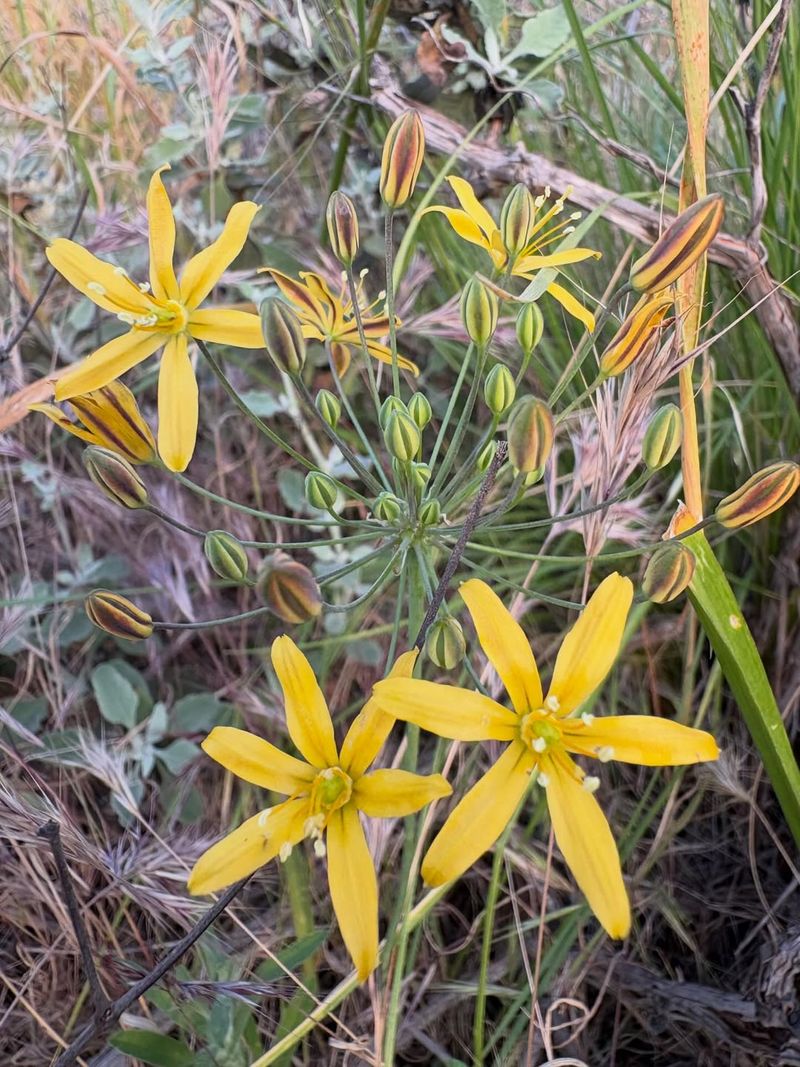
Bright, cheerful, and wildly underused in home gardens, goldenstar is a native that deserves way more attention than it gets. The flowers are small golden-yellow stars that bloom in late spring, creating a sunny display that’s hard not to smile at.
Each slender stem holds a cluster of blooms that open all at once, giving the whole plant an airy, festive look.
Bloomeria crocea grows from a corm, which is a bulb-like underground structure. You plant the corms in fall, and they sprout and bloom the following spring.
In the wild, goldenstar grows in grasslands and open slopes throughout Southern and Central California, often in clay-heavy soils that dry out completely in summer.
That summer dormancy is actually a key detail for pot growers. Once the blooms fade and the leaves yellow, the plant is telling you it needs a dry rest period.
Stop watering, move the pot to a sheltered spot, and let it bake in the heat. This mimics the natural conditions the plant evolved in and keeps the corms healthy for the next season.
For the best display, plant multiple corms close together in a wide, shallow pot. Use a mix of native soil and coarse sand to ensure good drainage.
Full sun is a must. Goldenstar pairs beautifully with other spring-blooming natives like meadow onion or blue-eyed grass.
It’s a conversation starter every spring, and once people see those golden clusters, they always want to know what it is.
6. Brodiaea
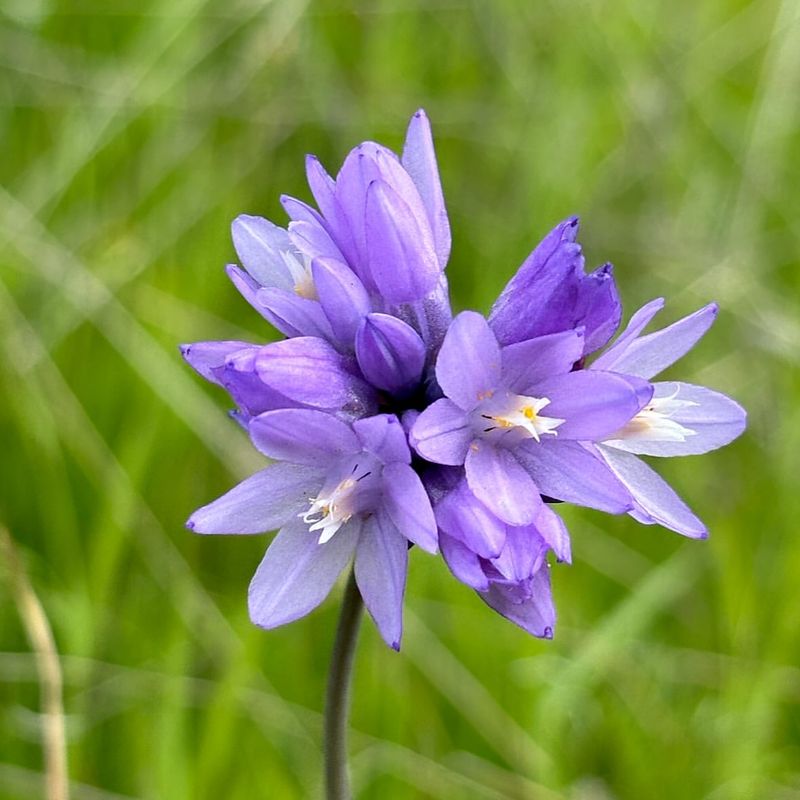
Some plants have a quiet elegance that stops you in your tracks. Brodiaea is one of them.
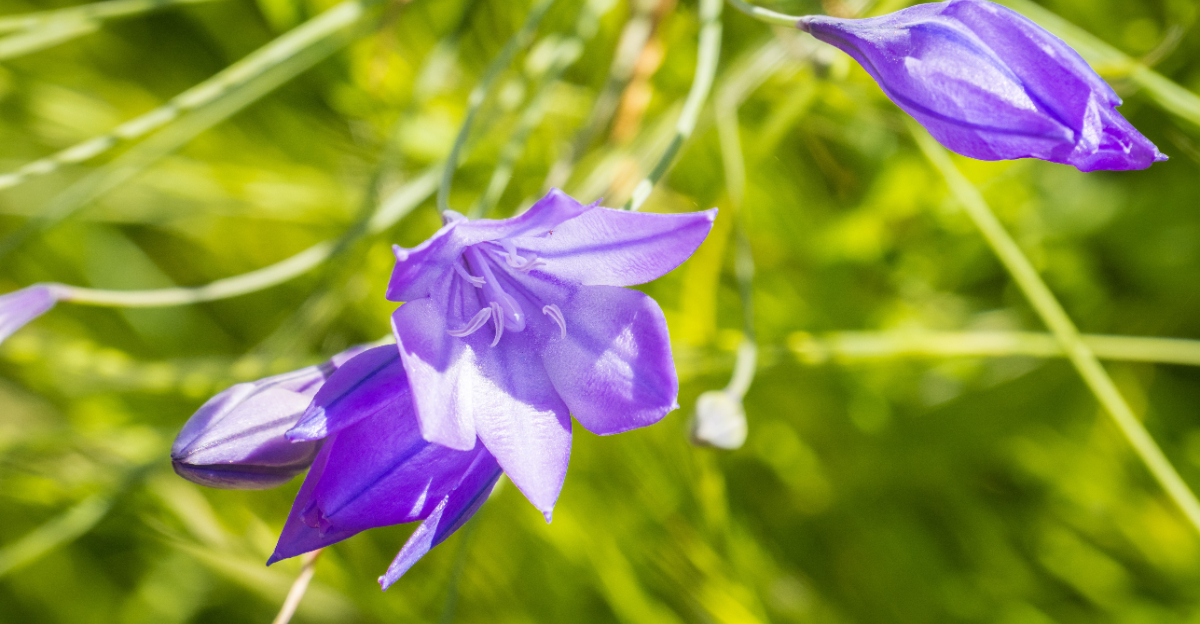
The flowers are a rich blue-violet, shaped like delicate funnels, and they sit atop long, wiry stems that sway beautifully in even the lightest breeze. Blooming in late spring to early summer, brodiaea fills a gap in the garden calendar when many other plants are just getting started.
There are several species native to California, but Brodiaea elegans is among the most popular for containers. Like goldenstar and meadow onion, it grows from a corm and follows a similar seasonal rhythm.
Plant the corms in fall, enjoy the blooms in late spring, and let the plant rest dry through summer.
Growing brodiaea in a pot gives you full control over its water schedule, which is exactly what this plant needs. In the ground, it can be tricky to keep dry enough in summer.
In a pot, you simply stop watering after it goes dormant. That kind of control makes container growing the smarter choice for this particular plant.
Choose a pot that’s at least eight inches deep to give the corms enough room to anchor themselves. Plant them about three inches deep and a few inches apart.
A gritty, well-draining mix is essential. Full sun gives the best bloom results, though light afternoon shade is fine in hotter inland areas.
Brodiaea looks stunning when grouped with other native corm plants, creating a layered spring display that feels genuinely wild and beautiful.
7. Ithuriel’s Spear
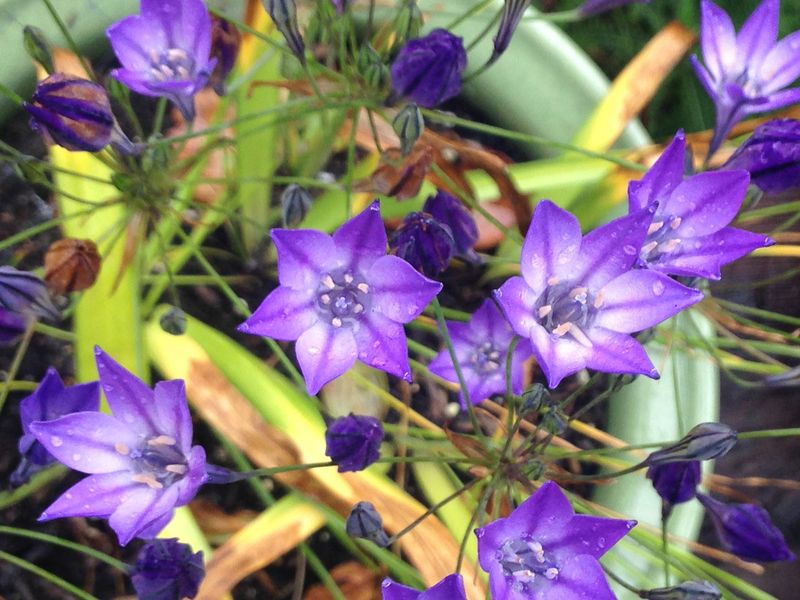
Named after an angel from John Milton’s epic poem Paradise Lost, Ithuriel’s spear has a name as dramatic as its flowers. The blooms are a gorgeous blue-purple, arranged in open, globe-like clusters at the top of tall, slender stems.
When a whole pot of them blooms at once, the effect is breathtaking. It’s the kind of plant that makes visitors stop and ask questions.
Triteleia laxa is widely distributed across California’s grasslands, woodlands, and coastal hills. It blooms in late spring and early summer, right when the wild grasses around it are starting to turn golden.
In a container, it brings that same meadow magic to your porch or balcony without needing a single square foot of ground.
The corms are easy to find at native plant nurseries and specialty bulb suppliers, especially in fall. Plant them about three inches deep in a well-draining mix with plenty of grit.
A wide pot works better than a narrow one because the corms like a little space around them. Full sun is ideal, but they can handle light shade.
After blooming, let the foliage fade naturally before stopping water. The summer dry period is essential for corm health.
If you live in a rainy climate or a region with wet summers, keeping the pot under an overhang during the dry season helps protect the corms from rot. Ithuriel’s spear is a showstopper that asks for very little in return.
Once you grow it, you’ll plant more every single fall.
8. Baby Blue Eyes
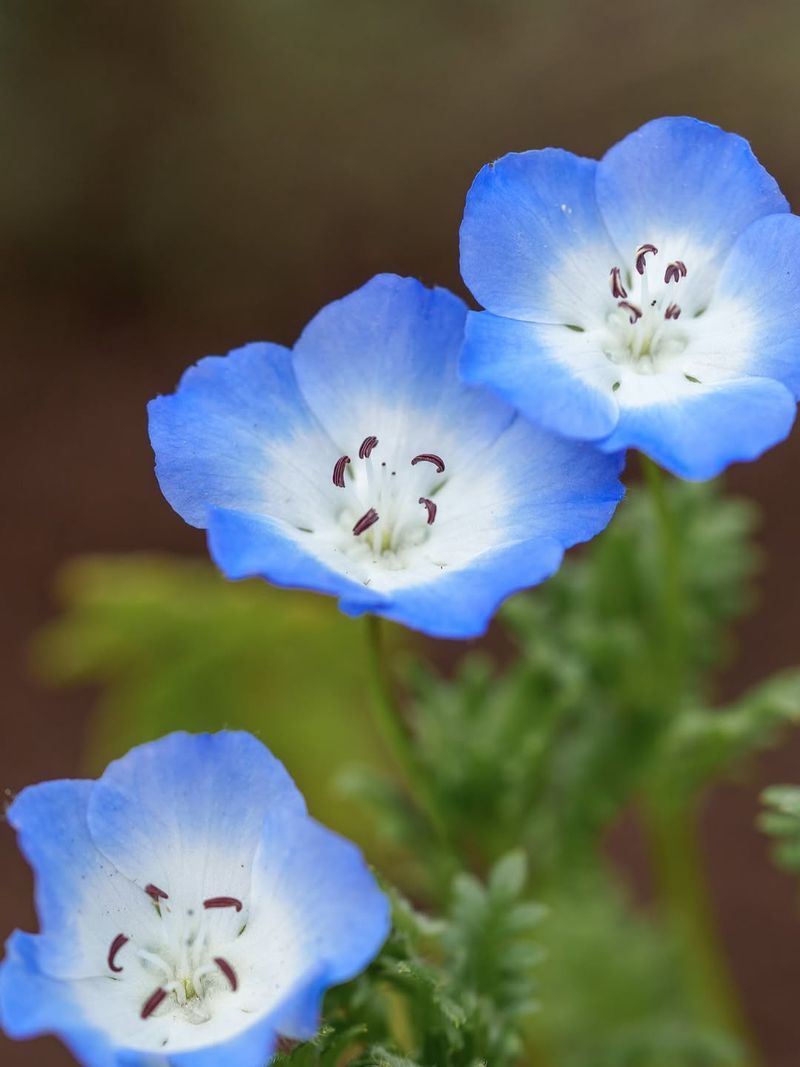
There’s something almost magical about baby blue eyes. The flowers are a soft, sky blue with a white center, and they cover the plant so completely that you can barely see the leaves underneath.
It’s the kind of plant that makes people stop walking and crouch down for a closer look. Few wildflowers are this immediately charming.
Nemophila menziesii is a cool-season annual that thrives in fall, winter, and spring. It’s one of the best plants for brightening up a pot during the months when most other flowers have packed up for the season.
Sow seeds directly into your pot in early fall, and you’ll have blooms by late winter or early spring.
Baby blue eyes prefers cooler temperatures and will fade out as summer heat arrives. That’s just its nature as a cool-season plant.
The good news is that it self-seeds enthusiastically, so if you let a few flowers go to seed in your pot, you’ll likely get a fresh crop the following fall without doing anything at all.
Use a lightweight, well-draining potting mix and keep the soil consistently moist but never waterlogged. A spot with morning sun and afternoon shade works beautifully in mild climates.
In cooler coastal areas, full sun is perfect. Baby blue eyes pairs wonderfully with California poppies and other spring natives in a mixed container.
It’s a humble, gorgeous little plant that punches way above its weight in terms of visual impact and sheer, uncomplicated joy.
9. Elegant Clarkia
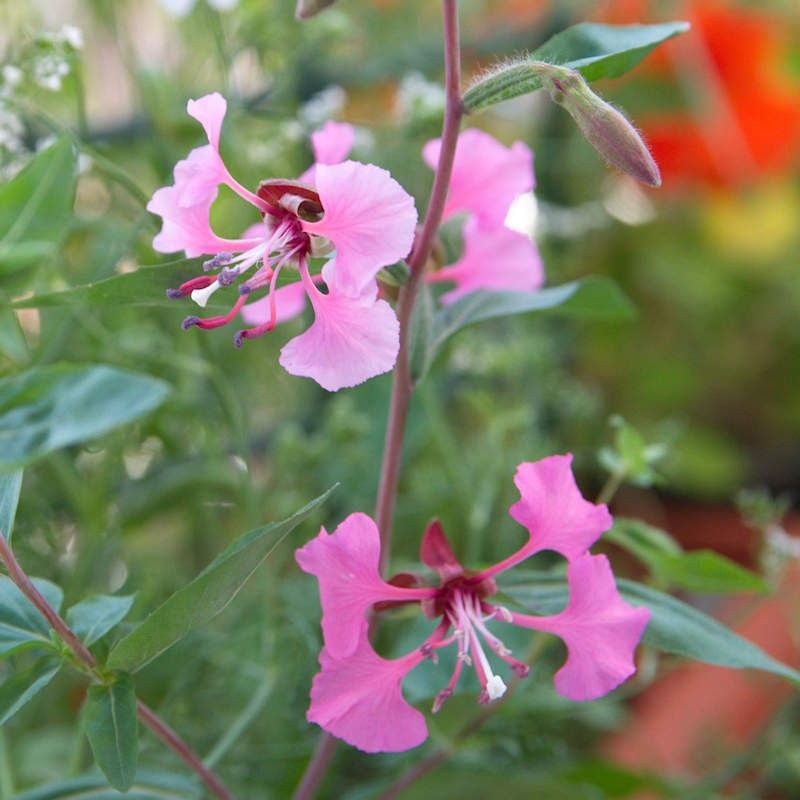
Bold, colorful, and surprisingly easy to grow from seed, elegant clarkia is a native annual that brings a burst of cottage-garden energy to any container. The flowers come in shades of pink, lavender, salmon, and deep magenta.
They have a crepe-paper texture that makes them look almost too pretty to be real. Blooming in late spring through early summer, clarkia fills pots with nonstop color for weeks.
Clarkia unguiculata grows naturally in the foothills and woodlands, often popping up in disturbed soils and roadsides. In a pot, it grows quickly from seed and doesn’t require much fussing.
Scatter seeds on top of moist potting mix in fall or early spring, press them lightly into the surface, and water gently. Germination happens fast, usually within a week or two.
Thin the seedlings so they have a few inches of space between them. Overcrowding leads to weak, floppy plants.
A wide, deep pot works best because the plants can get quite tall, sometimes reaching two feet or more. Staking the stems lightly with small bamboo sticks keeps them upright in windy spots.
Elegant clarkia is a true annual, meaning it completes its entire life cycle in one season. But it self-seeds freely, so expect volunteers in the same pot next year.
Water regularly while it’s actively growing, but ease up as the flowers start to fade. The dried seed pods are also quite decorative and can be left on the plant for a rustic, natural look well into summer.
10. Meadowfoam
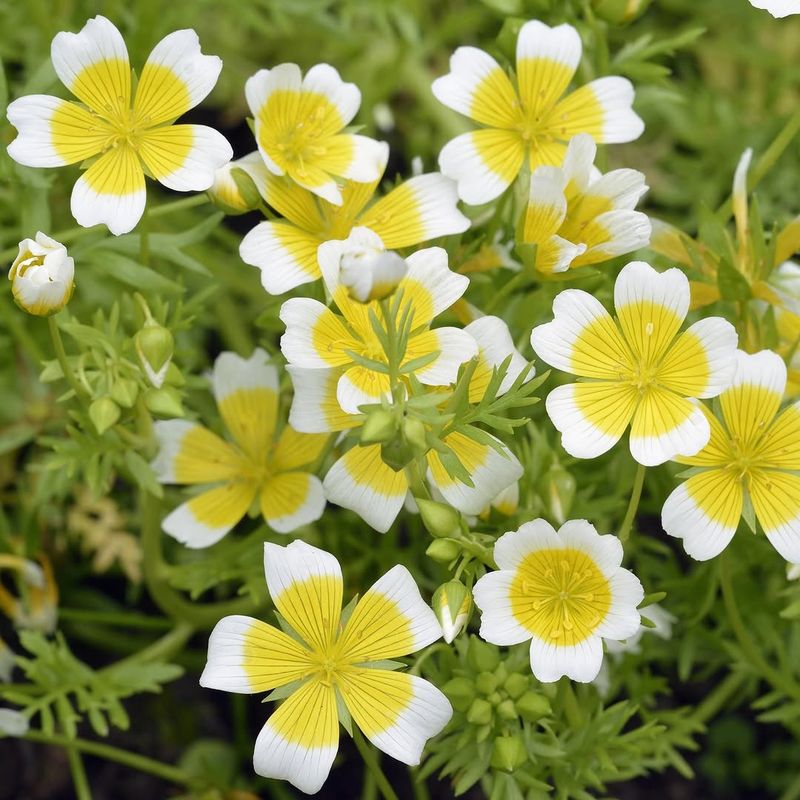
If you’ve ever driven past a meadow in early spring and seen what looked like patches of white foam floating above the grass, you’ve seen meadowfoam in action. Up close, the flowers are absolutely charming: white petals with bright yellow centers, shaped like little cups that catch the morning light.
They cover the plant so densely that the green foliage almost disappears beneath them.
Limnanthes douglasii is a low-growing, spreading annual that’s perfectly sized for wide, shallow containers. It blooms from late winter through spring and is one of the earliest native wildflowers to show color after the cool, wet season begins.
Planting it in a pot means you get front-row seats to that early spring show right on your doorstep.
Sow seeds directly into moist potting mix in fall. Meadowfoam germinates in cool, moist conditions, so fall planting is key.
It doesn’t transplant well, so direct sowing is always the better approach. Once established, it’s remarkably self-sufficient and only needs occasional watering during dry spells in winter.
Bees absolutely love meadowfoam, especially native bees that are active in early spring when other food sources are scarce. Placing a pot of meadowfoam near a sunny wall or window gives you a perfect view of all the pollinator activity.
After blooming, the plant sets seed and fades out as temperatures rise. Let the seeds fall into the pot and you’ll get a natural reseeding for the following season.
It’s one of the most effortlessly rewarding plants you can grow in a container garden.