These Are The Best Outdoor Hanging Plants For Your Texas Patio
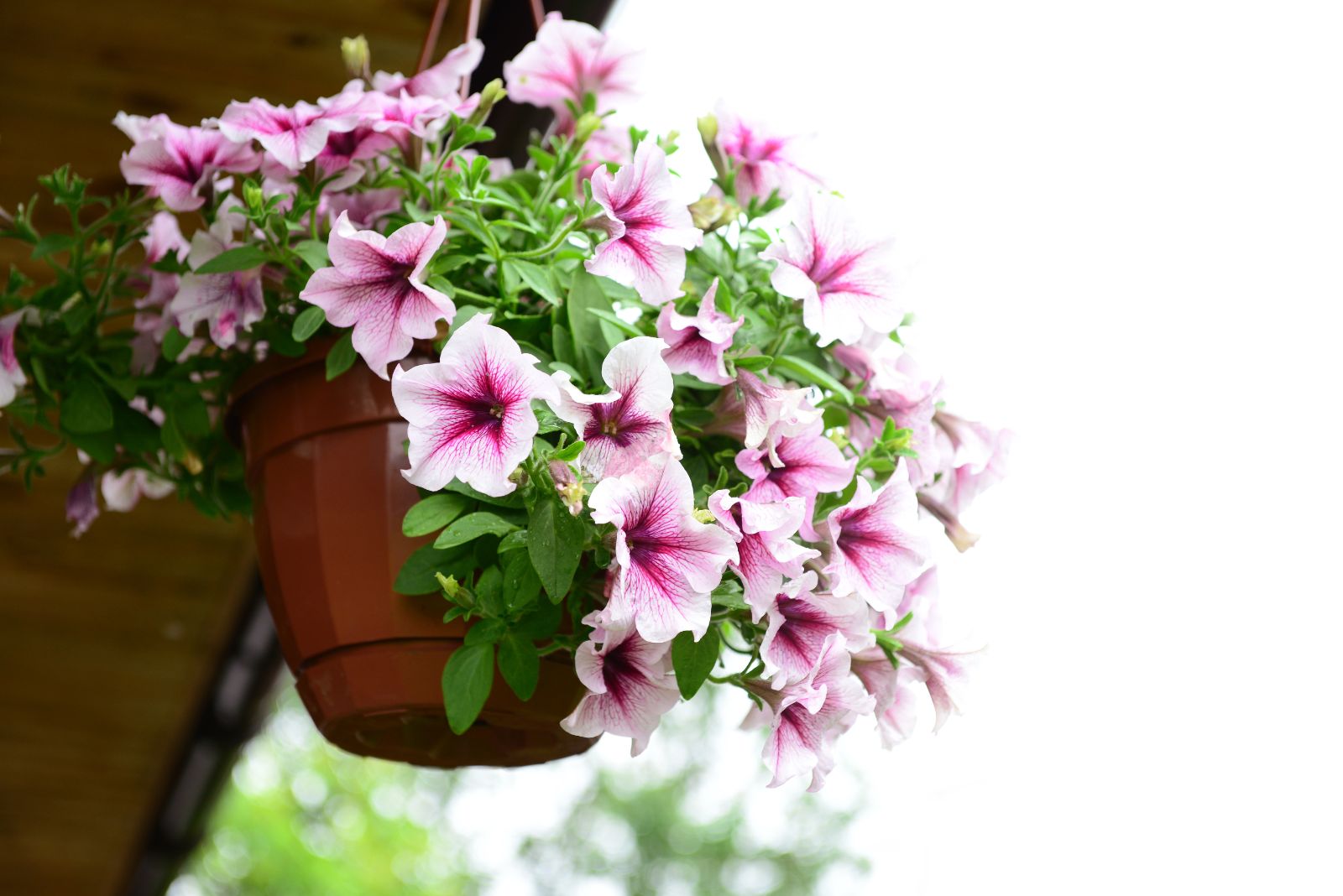
Looking to add instant color and charm to your Texas patio without taking up floor space? Outdoor hanging plants can transform any patio into a lively, refreshing retreat.
With the right choices, you can enjoy trailing greenery, bright blooms, and gentle movement that brings your space to life. Texas heat and strong sun can be tough, yet many hanging plants thrive in these conditions when placed and cared for properly.
They soften hard edges, create shade, and add a cozy garden feel even in small areas. From vibrant flowers to lush cascading leaves, these plants turn ordinary patios into inviting outdoor escapes.
Best of all, many are easy to maintain and reward you with long lasting beauty through warm months. With a few well chosen hanging baskets, your Texas patio can feel cooler, greener, and far more relaxing every day.
1. Geranium
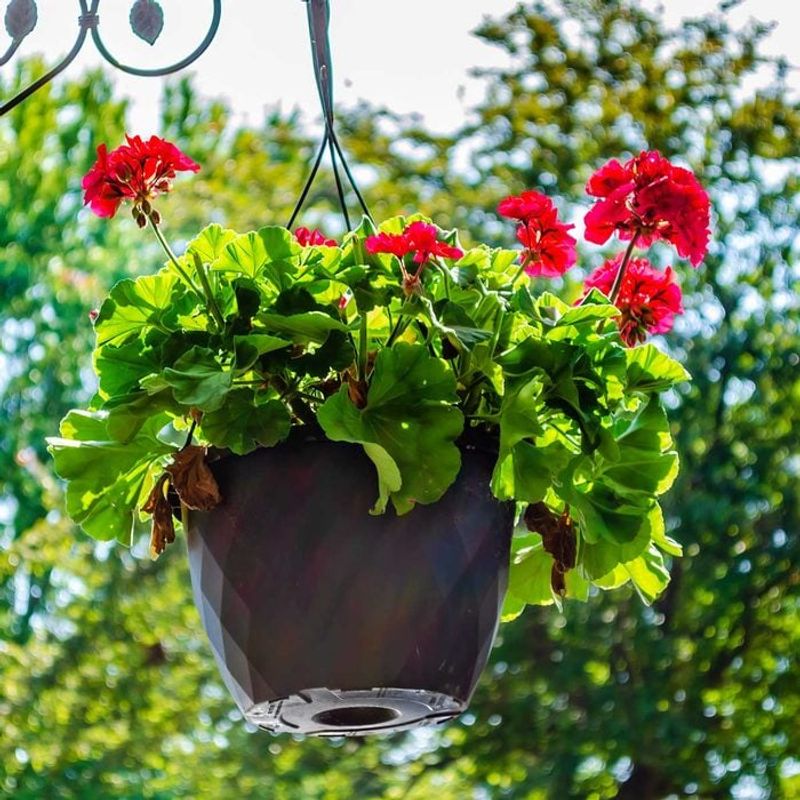
Bright blooms and sturdy leaves make geraniums a top choice for Texas patios. These plants love the sun and can handle the intense heat that comes with our long summers.
You will find geraniums in colors ranging from deep red to soft pink and white, giving you plenty of options to match your outdoor decor.
Geraniums need well-draining soil and a pot with good drainage holes. Water them when the top inch of soil feels dry to the touch.
During the hottest months in Texas, you might need to water them every other day, especially if they are hanging in full sun.
One great thing about geraniums is that they bloom continuously throughout the growing season. Deadheading spent flowers encourages more blooms and keeps your plant looking tidy. Simply pinch off the faded flowers at the base of the stem.
These plants are also fairly low maintenance when it comes to pests. Occasional aphids might show up, but a quick spray with water usually takes care of them.
Geraniums can tolerate some drought, which is helpful during those weeks when watering slips your mind.
If you want to overwinter your geraniums, bring them inside before the first frost. They can survive indoors near a sunny window and will bounce back when you move them outside in spring.
2. Begonia
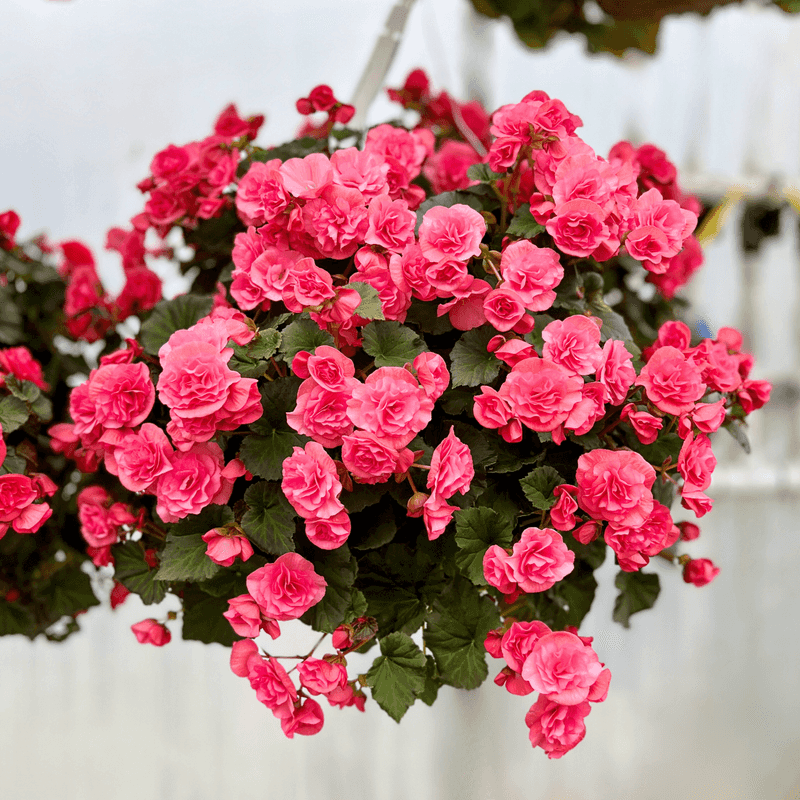
Begonias bring a softer look to your hanging baskets with their delicate flowers and attractive foliage. Many varieties have blooms in shades of pink, orange, red, and white that stand out against their glossy green or bronze leaves.
These plants prefer partial shade, making them perfect for covered patios or spots that get morning sun and afternoon shade.
Watering begonias requires a bit of attention. They like their soil to stay moist but not soggy.
Check the soil daily during hot Texas summers and water when the top layer starts to dry out. Overwatering can lead to root problems, so good drainage is essential.
Begonias appreciate humidity, which can be a challenge during dry spells. Misting the leaves lightly in the morning or placing a tray of water nearby can help. Avoid misting in the evening, as damp leaves overnight can invite fungal issues.
Fertilizing every two weeks with a balanced liquid fertilizer keeps begonias blooming strong. They respond well to regular feeding and will reward you with more flowers. Pinch back leggy stems to encourage bushier growth and more blooms.
Texas gardeners often treat begonias as annuals, but you can bring them indoors before temperatures drop below fifty degrees. Place them in a bright room and reduce watering slightly during winter.
With proper care, your begonias will continue to add beauty to your patio season after season.
3. Petunia
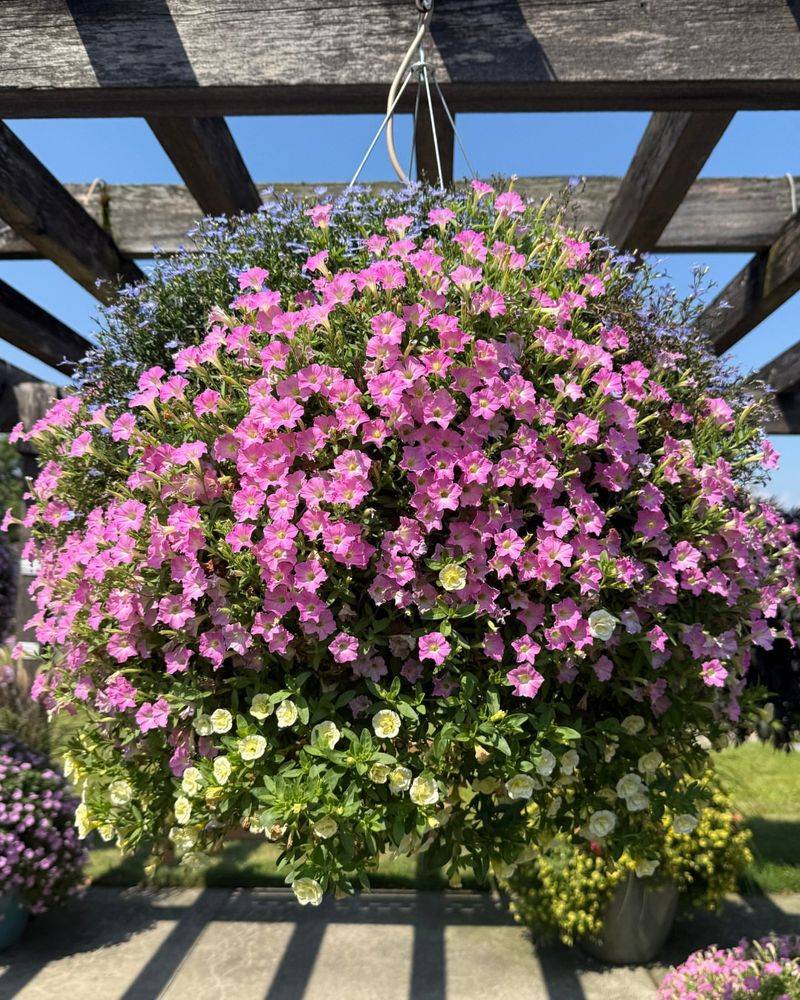
Few plants offer as much color and variety as petunias. These cheerful flowers come in almost every color you can imagine, from bold purples to soft pastels.
Petunias grow quickly and fill hanging baskets with cascading blooms that last from spring through fall in Texas.
Petunias thrive in full sun and need at least six hours of direct sunlight daily. They are tough enough to handle the intense Texas heat as long as you keep them watered.
During summer, you may need to water them once or even twice a day if temperatures soar above ninety degrees.
Fertilizing petunias regularly is key to keeping them blooming. Use a water-soluble fertilizer every week or two to provide the nutrients they need.
Petunias are heavy feeders, and skipping fertilizer can result in fewer flowers and yellowing leaves.
Deadheading is important for petunias, especially older varieties. Removing spent blooms encourages the plant to produce more flowers instead of setting seed.
Some newer varieties are self-cleaning, which means they drop old blooms on their own and require less maintenance.
Petunias can get a bit leggy by midsummer. Trimming them back by about a third will encourage fresh growth and a new flush of blooms.
Petunias bounce back quickly after a good trim, making them a reliable choice for hanging baskets that need to look great all season long.
4. String Of Pearls
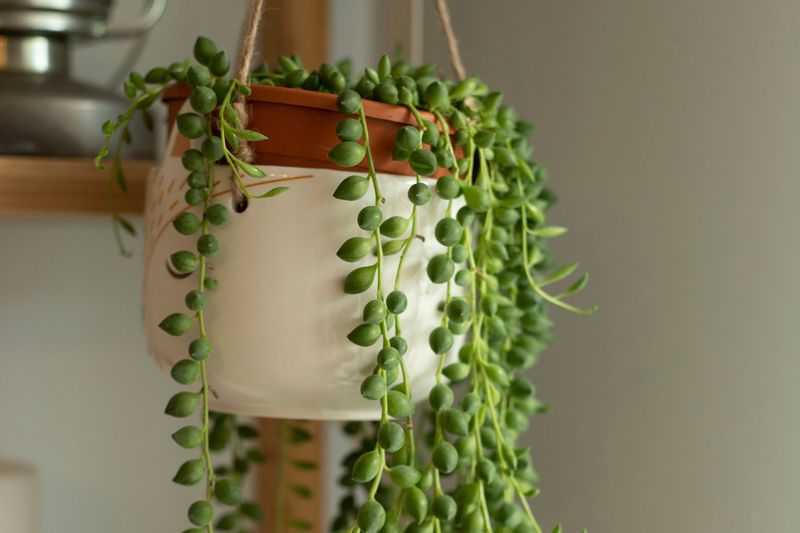
String of pearls is a unique succulent that adds a modern touch to any Texas patio. Its trailing stems are lined with small, round leaves that look like tiny green beads.
This plant is perfect for those who want something different from traditional flowering hanging plants.
Succulents like string of pearls are ideal for Texas because they handle heat and drought exceptionally well. They need very little water compared to other hanging plants.
Water deeply but infrequently, allowing the soil to dry out completely between waterings. Overwatering is the main reason these plants struggle, so less is more.
String of pearls prefers bright, indirect light. Too much direct sun can scorch the delicate beads, while too little light can cause the plant to stretch and lose its compact shape. A spot that gets morning sun and afternoon shade works perfectly.
This plant grows slowly but steadily, and its stems can eventually reach several feet long. You can trim the stems to keep the plant tidy or let them grow for a dramatic cascading effect. Cuttings root easily in soil, so you can propagate new plants from trimmings.
Fertilize string of pearls sparingly, about once a month during the growing season with a diluted succulent fertilizer. Texas gardeners appreciate how low maintenance this plant is and how it adds a sculptural element to hanging displays.
Its unusual appearance always sparks conversation and brings a touch of the desert to your outdoor space.
5. Burro’s Tail
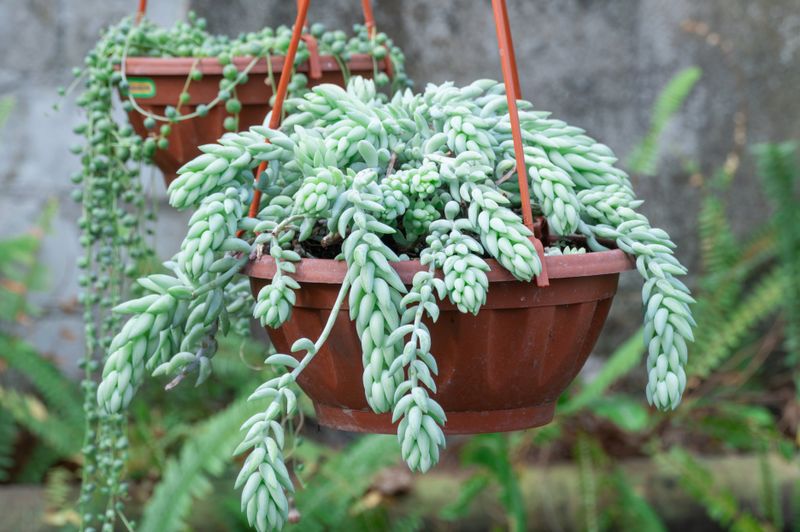
Burro’s tail is another stunning succulent that thrives in Texas heat. Its thick, fleshy leaves overlap along trailing stems that can grow up to four feet long.
The blue-green color of the leaves adds a cool contrast to the warm tones often found on Texas patios.
Like most succulents, burro’s tail needs minimal watering. Water thoroughly when the soil is completely dry, which might be every two to three weeks depending on your climate and pot size. During cooler months, you can water even less frequently.
Burro’s tail loves bright light and can handle full sun in Texas, though some afternoon shade during the hottest months can prevent leaf scorch.
The plant will become more compact and colorful with plenty of sunlight. Without enough light, the stems may stretch and lose their dense, attractive form.
Handle this plant carefully because the leaves detach easily when bumped or touched. Fallen leaves are not a problem, though.
You can place them on soil to propagate new plants. Within a few weeks, tiny roots and new growth will appear.
Burro’s tail rarely needs fertilizing, but a light feeding once or twice during the growing season can encourage fuller growth. Use a diluted succulent fertilizer and apply it to moist soil.
This dramatic-looking plant, without demanding much attention, is perfect for busy people who still want a beautiful patio display.
6. Fern
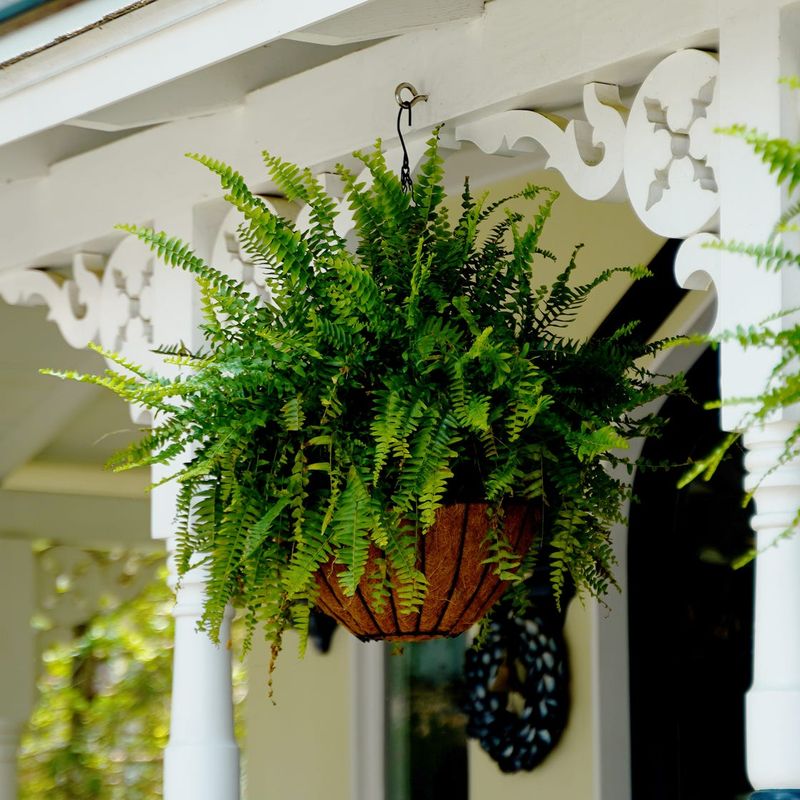
Ferns bring a lush, tropical feel to Texas patios with their feathery fronds and vibrant green color. Boston ferns are among the most popular choices for hanging baskets because they grow quickly and create a full, dramatic display.
These plants prefer shade or filtered light, making them ideal for covered porches or areas with limited direct sun.
Keeping ferns happy in Texas requires consistent moisture. They do not tolerate dry soil well and will start to brown and drop leaves if they get too dry.
Check the soil daily during hot weather and water whenever the top inch feels dry. Ferns also appreciate humidity, so misting them occasionally or placing them in naturally humid spots helps them thrive.
Fertilize ferns every two to four weeks during the growing season with a balanced liquid fertilizer. They are moderate feeders and will respond with lusher, greener growth. Avoid over-fertilizing, as this can cause leaf burn and damage the delicate fronds.
Trim off any brown or damaged fronds to keep your fern looking its best. Ferns naturally shed older leaves as they produce new growth, so regular grooming is part of their care routine.
You can also divide large ferns in spring to create new plants or refresh an overgrown basket.
Texas gardeners often bring ferns indoors during winter if temperatures drop below freezing.
Indoors, place them in a bright room away from heating vents and continue to keep the soil moist. With proper care, ferns add a touch of elegance and greenery to your patio year after year.
7. Pothos
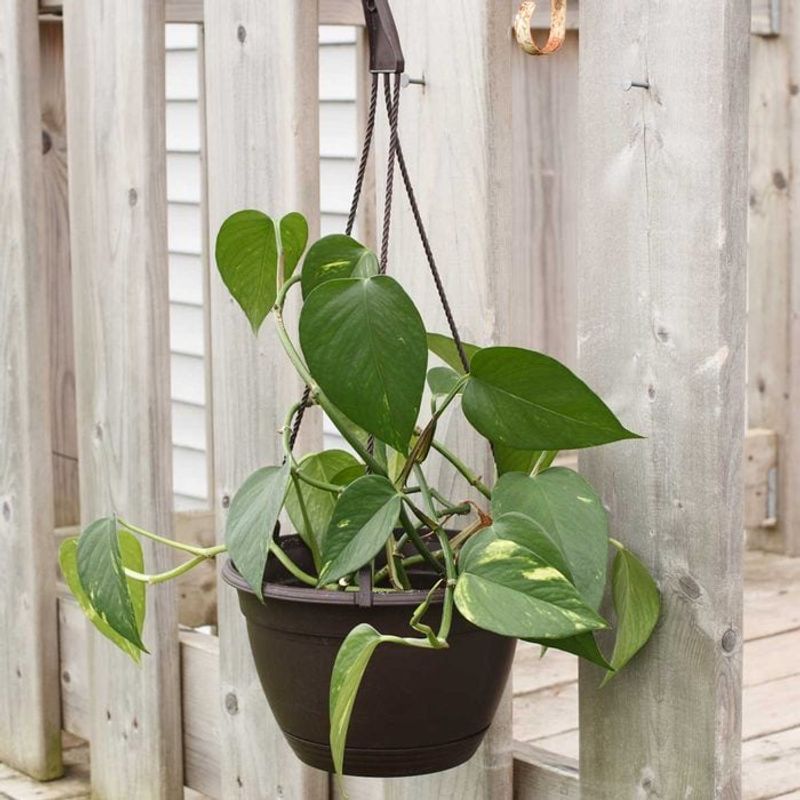
Pothos is one of the easiest plants to grow, making it a favorite for both beginners and experienced gardeners in Texas. Its heart-shaped leaves and trailing vines create a relaxed, casual look that works well on patios.
Pothos comes in several varieties, including golden pothos with yellow variegation and jade pothos with solid green leaves.
This plant tolerates a wide range of light conditions, from bright indirect light to low light. While it grows faster in brighter spots, pothos will survive in shadier areas where other plants might struggle.
It is also forgiving when it comes to watering. Let the soil dry out between waterings, and the plant will bounce back even if you forget to water for a while.
Pothos is not picky about humidity, which is helpful during dry Texas summers. It can handle indoor and outdoor conditions equally well.
If you want fuller growth, trim the vines occasionally and place the cuttings in water to root. Once roots develop, you can plant them back in the same pot or start new hanging baskets.
Fertilize pothos every month or two during the growing season with a balanced houseplant fertilizer.
It does not need heavy feeding and will continue to grow steadily with minimal nutrients. Wipe the leaves occasionally to remove dust and keep them looking shiny and healthy.
Pothos is among the favore plants because it’s easy to care for and it quickly grows to fill a hanging basket. Its trailing vines can reach several feet long, creating a beautiful green cascade that adds life to any patio space without demanding much effort.