These Are The 10 Best Palms For South Florida Landscapes
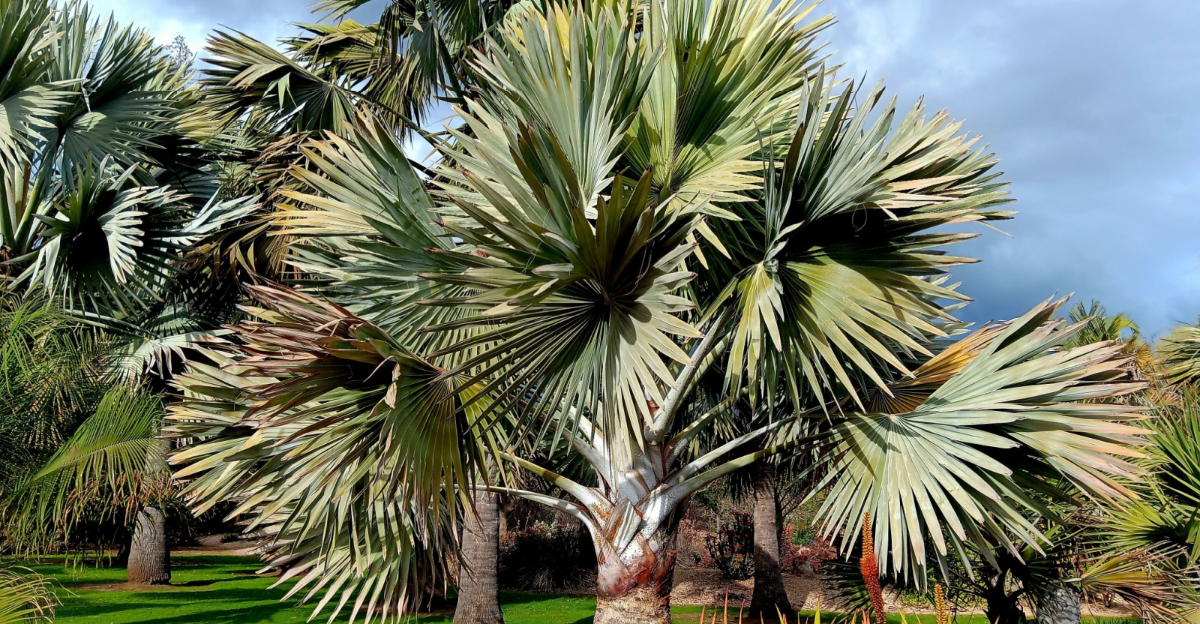
South Florida landscapes call for plants that can handle blazing sun, sudden downpours, salty breezes, and long stretches of heat without losing their tropical appeal. Palms rise to that challenge like nothing else.
They frame driveways with elegance, soften poolside spaces, and instantly give any yard that relaxed coastal look people dream about. The right palm can add height, movement, texture, and even a sense of luxury, all while thriving in conditions that leave other plants struggling.
Some stay compact and tidy for smaller spaces, while others tower overhead and create dramatic silhouettes against the sky.
Choosing wisely makes all the difference between a palm that merely survives and one that truly transforms your landscape.
South Florida offers ideal growing conditions for many stunning varieties, and knowing which ones perform best sets the stage for a yard that feels lush, resilient, and unmistakably tropical year round.
1. Sabal Palm Sets The Standard For Strength And Reliability
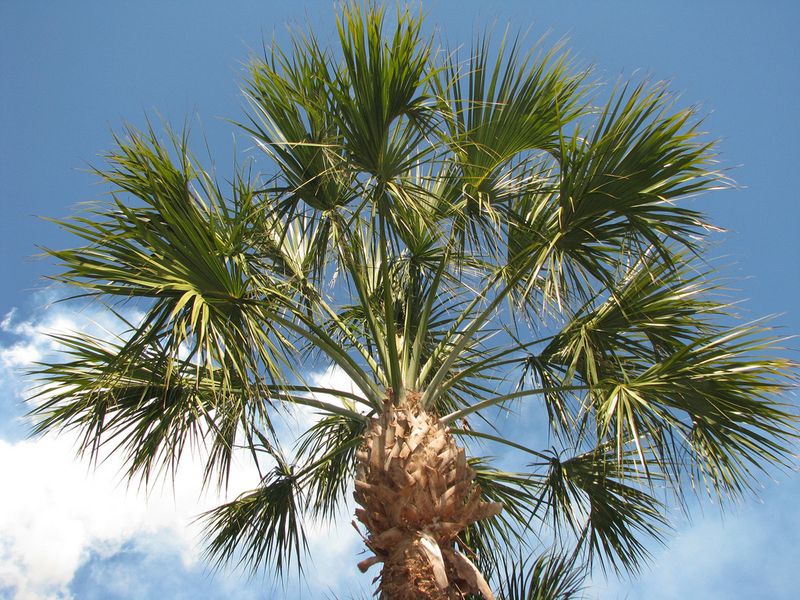
Sabal palmetto stands as Florida’s official state tree for good reason. This native palm has weathered countless hurricanes across centuries, proving its exceptional structural strength when winds reach destructive speeds.
The trunk develops remarkable flexibility that allows it to bend rather than break, while the root system anchors deeply into South Florida’s varied soils.
Drought tolerance ranks among its most valuable traits for low-maintenance landscapes.
Once established, Sabal palm survives extended dry periods without irrigation, making it ideal for water-conscious properties.
The fan-shaped fronds create a distinctive silhouette that defines traditional Florida landscapes from coastal areas to inland neighborhoods.
Salt spray barely affects this coastal native, allowing placement near beaches where other palms would show leaf burn. Growth stays moderate and predictable, reaching 40 to 50 feet over many years without demanding constant attention.
Maintenance needs remain minimal since old fronds naturally create a boot pattern on the trunk or can be removed cleanly.
Heat and humidity rarely stress this palm once established. It thrives in full sun across all South Florida zones, from the Keys northward through Palm Beach County.
For specimen planting, streetscapes, or natural landscapes, Sabal palmetto delivers unmatched reliability that newer tropical introductions cannot match. Its proven track record makes it the benchmark against which other palms are measured.
2. Florida Thatch Palm Handles Coastal Wind And Salt With Ease
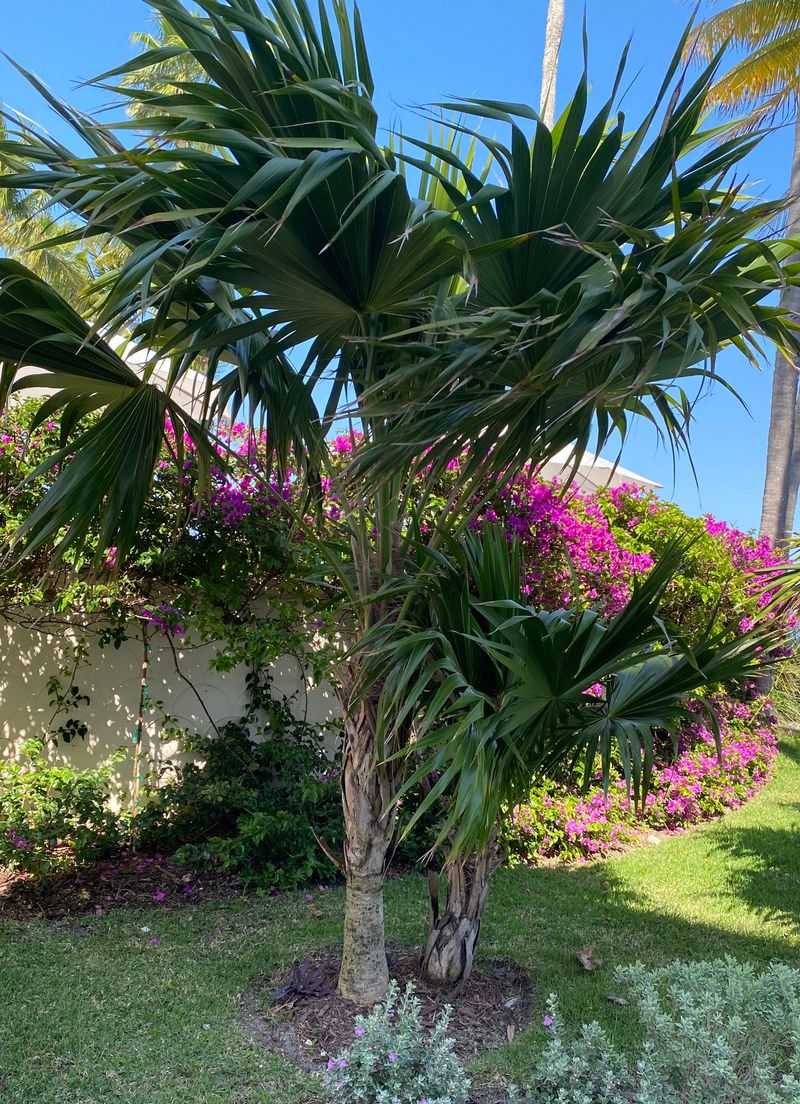
Thrinax radiata grows naturally along South Florida’s coastlines, where salt spray and hurricane winds test every plant. This native palm evolved specifically for these harsh conditions, developing exceptional tolerance that few other species can match.
The silvery-green fan fronds reflect sunlight beautifully while resisting salt damage that would burn less adapted palms within weeks of coastal planting.
Wind resilience comes from a flexible trunk and a root system designed to grip sandy, unstable soils. During tropical storms, Florida thatch palm bends and sways without the structural failures common in rigid species.
Growth stays compact, typically reaching 15 to 25 feet, making it suitable for residential landscapes where space limits taller palms.
Drought tolerance develops quickly after establishment. This palm survives on rainfall alone in most South Florida locations, requiring no supplemental irrigation once roots spread.
The natural habitat includes beach dunes and coastal hammocks where water availability fluctuates dramatically between rainy and dry seasons.
Placement options range from beachfront properties to urban courtyards. The moderate size works well as an understory palm beneath taller species or as a focal point in smaller yards.
Salt air never causes the leaf tip burn or yellowing seen in sensitive palms.
For authentic Florida coastal landscapes, this native delivers both aesthetic appeal and proven durability in conditions that challenge most ornamental species.
3. Royal Palm Defines The Iconic South Florida Skyline
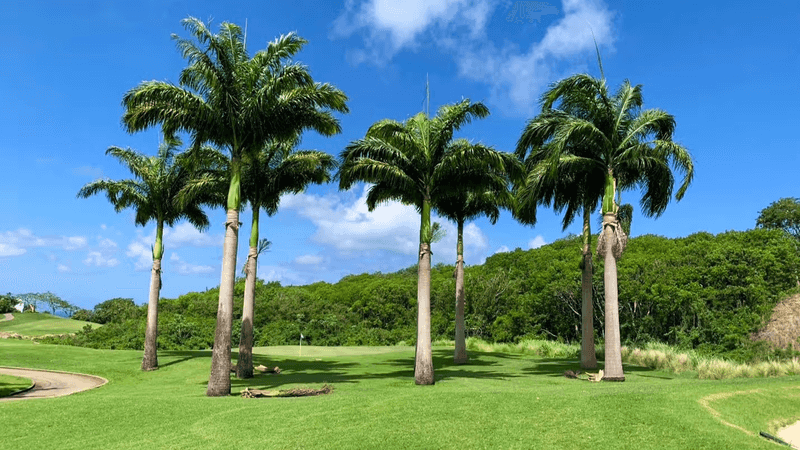
Roystonea regia creates the unmistakable tropical skyline that defines Miami, Fort Lauderdale, and Palm Beach. The smooth, cement-colored trunk rises straight and tall, topped by a bright green crownshaft and gracefully arching fronds that epitomize subtropical elegance.
No other palm captures the classic South Florida aesthetic quite like this majestic species.
Heat and humidity fuel rapid growth once this palm establishes. South Florida’s warm, moist climate matches its native Cuban habitat perfectly, allowing royal palm to reach impressive heights of 50 to 70 feet in large-scale landscapes.
The crownshaft stays vibrant green year-round, creating a striking contrast against the pale trunk that remains smooth and ringed rather than rough or textured.
Large properties benefit most from this palm’s commanding presence. Commercial landscapes, estates, and public parks provide the space needed for proper root development and visual impact.
Planting in rows along driveways or property boundaries creates formal, dramatic entries that immediately establish a sense of place and prestige.
Maintenance involves removing withered fronds that drop naturally and keeping the area around the base clear. While not as hurricane-proof as native Sabal species, established royal palms withstand typical South Florida storms reasonably well when properly sited.
The key lies in providing adequate room for growth and avoiding constrained urban spaces where root restrictions weaken stability. For iconic tropical grandeur, few palms rival this South Florida classic.
However, royal palms are less wind-resistant than many native species and perform best when given adequate rooting space and well-drained soil.
4. Montgomery Palm Delivers Clean Tropical Structure
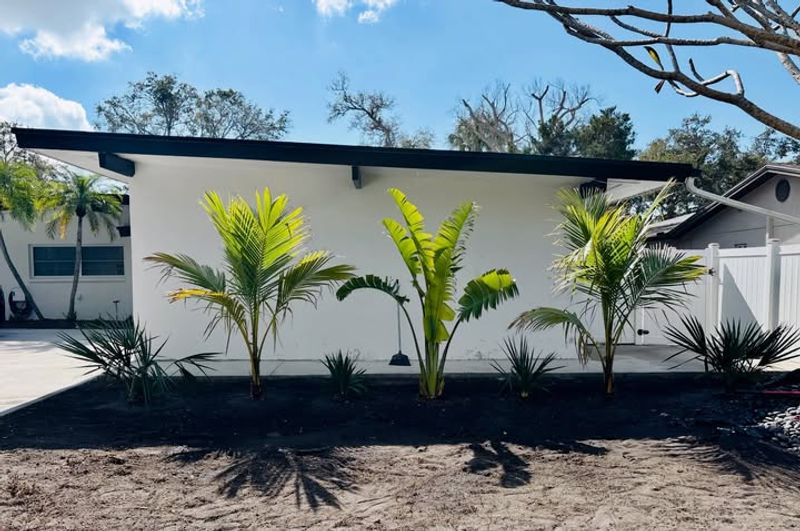
Veitchia arecina brings architectural refinement to South Florida landscapes through its smooth trunk and tidy crownshaft that stays vibrant green throughout the year. The pinnate fronds arch gracefully without the ragged appearance that develops in less refined species.
This palm maintains a consistently neat profile that appeals to homeowners seeking polished tropical aesthetics without constant grooming.
Warm, humid conditions suit Montgomery palm perfectly. South Florida’s climate allows steady, predictable growth that typically reaches 20 to 30 feet at maturity.
The crownshaft provides a clean transition between trunk and crown, eliminating the shaggy boot appearance common in other palms. This creates a contemporary look that fits well in modern landscape designs where clean lines matter.
Storm performance proves adequate in typical South Florida weather, though this palm lacks the extreme hurricane resistance of native species. Proper siting away from the most exposed coastal locations helps ensure longevity.
The moderate size works well in residential settings where space constraints limit the use of larger palms.
Landscape versatility allows Montgomery palm to function as a specimen plant, in small groupings, or along property boundaries. The consistent form and manageable height make spacing and design planning straightforward.
Maintenance stays reasonable with occasional frond removal and standard fertilization.
For homeowners wanting reliable tropical structure without overwhelming scale, this palm delivers refined beauty that complements contemporary South Florida architecture and garden styles without demanding excessive attention.
5. Foxtail Palm Blends Beauty With Storm Resilience
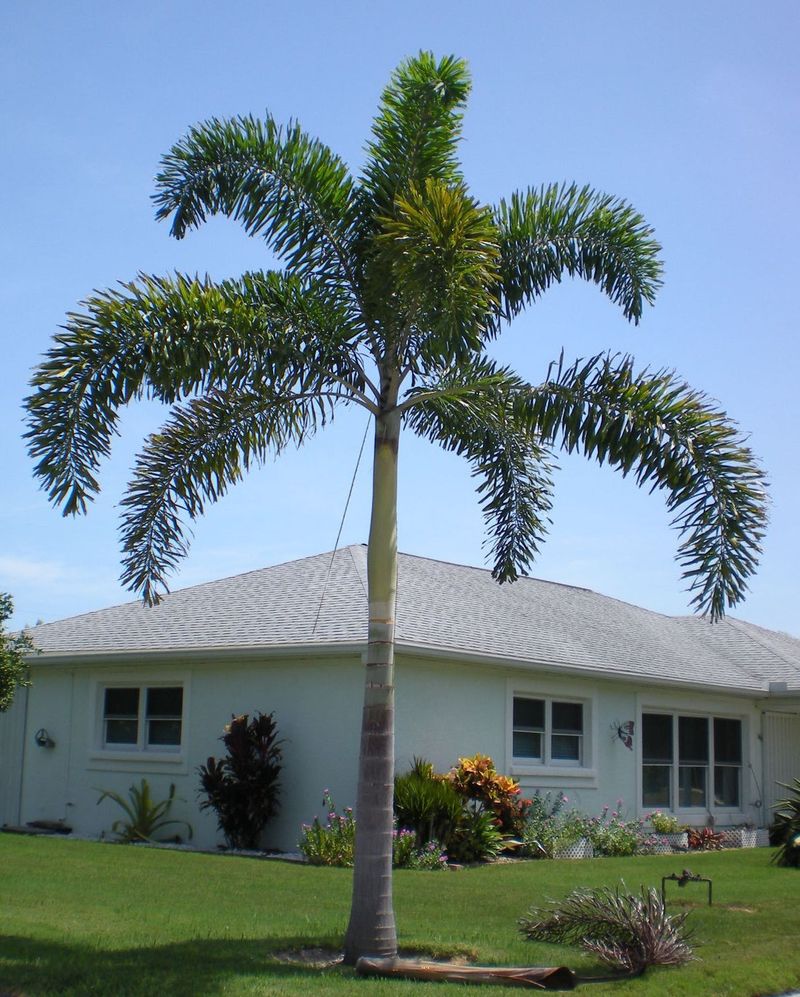
Wodyetia bifurcata has become one of South Florida’s most popular landscape palms over the past two decades, earning its place through a combination of striking appearance and surprising toughness. The fronds form dense, bushy plumes that resemble fox tails, creating a lush tropical look that immediately catches attention.
Unlike many showy palms, this Australian native backs up its beauty with legitimate structural strength.
Hurricane performance exceeds expectations for a palm with such full, heavy fronds. The flexible trunk and strong root system help foxtail palm withstand winds that topple less resilient species.
South Florida landscape professionals have watched this palm survive multiple major storms since its introduction, building confidence in its long-term reliability for residential and commercial projects.
Growth stays moderate and manageable, typically reaching 25 to 30 feet with a spread that fills space without overwhelming smaller yards. The self-cleaning habit means old fronds drop naturally, reducing maintenance compared to palms requiring regular trimming.
Full sun and well-drained soil produce the best results, though foxtail palm tolerates a range of South Florida soil types reasonably well.
Landscape applications range from single specimen plantings to groupings that create tropical screening. The dense crown provides more visual mass than palms with sparser foliage, making fewer plants necessary for impact.
Heat tolerance stays high, and established plants handle dry periods without stress.
For combining ornamental appeal with real-world durability, foxtail palm delivers consistent performance across South Florida’s varied landscape conditions.
6. Bismarck Palm Makes A Bold Architectural Statement
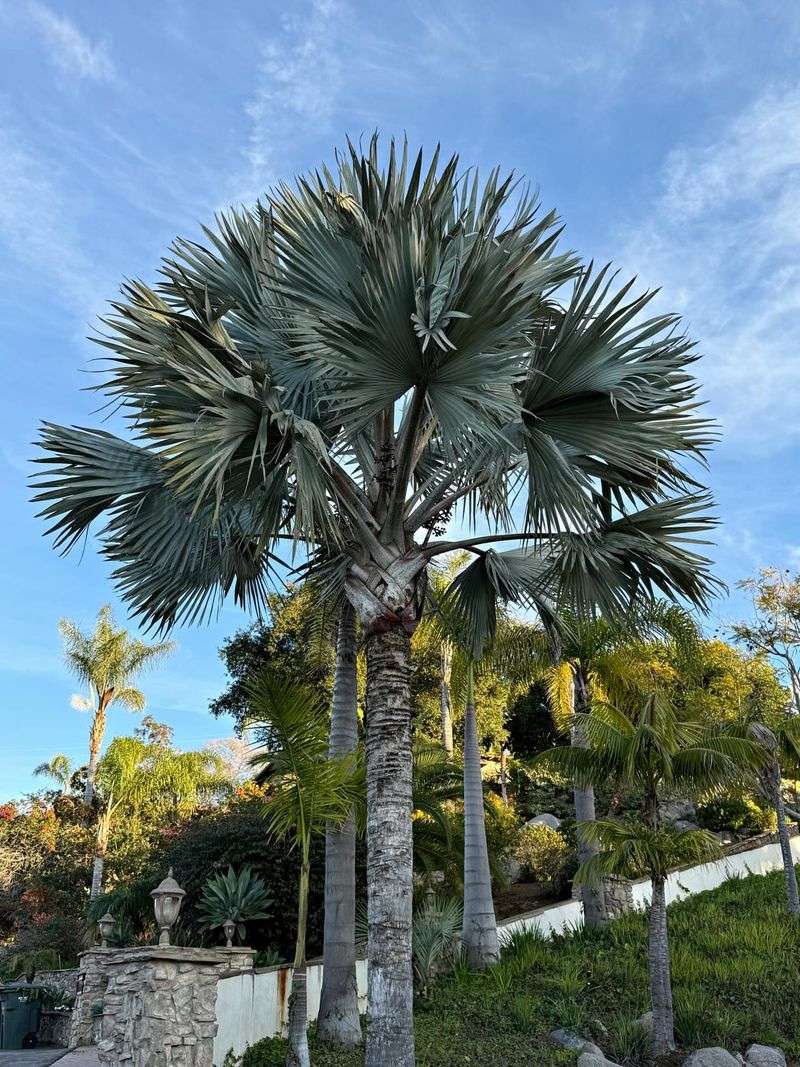
Bismarckia nobilis commands attention like few other palms can. The massive, stiff fan fronds emerge in striking silver-blue or green forms, creating a sculptural presence that transforms any landscape into a bold design statement.
This Madagascar native thrives in South Florida’s heat, developing a thick, textured trunk that adds to its powerful visual impact.
Drought tolerance ranks exceptionally high once establishment completes. Bismarck palm evolved in seasonally dry conditions, giving it the ability to survive extended periods without irrigation that would stress more water-dependent species.
The waxy coating on the fronds helps reduce moisture loss while creating the distinctive metallic sheen that makes silver forms so desirable for contemporary landscapes.
Space requirements demand careful planning since mature specimens spread 15 to 20 feet across with fronds that can reach similar dimensions. This palm needs room to display its full architectural form without crowding from buildings or other plants.
Placement as a focal specimen in large yards, at property entries, or in commercial landscapes allows Bismarck palm to dominate the view as intended.
Full sun produces the most dramatic coloration and compact growth habit. South Florida’s intense sunlight brings out the best in this palm without causing stress.
While not a coastal species, Bismarck palm tolerates the inland conditions across Miami-Dade, Broward, and Palm Beach counties exceptionally well.
For homeowners seeking maximum visual drama and a palm that makes an unforgettable impression, few species rival this stunning choice.
7. Paurotis Palm Thrives In Wet And Natural Landscapes
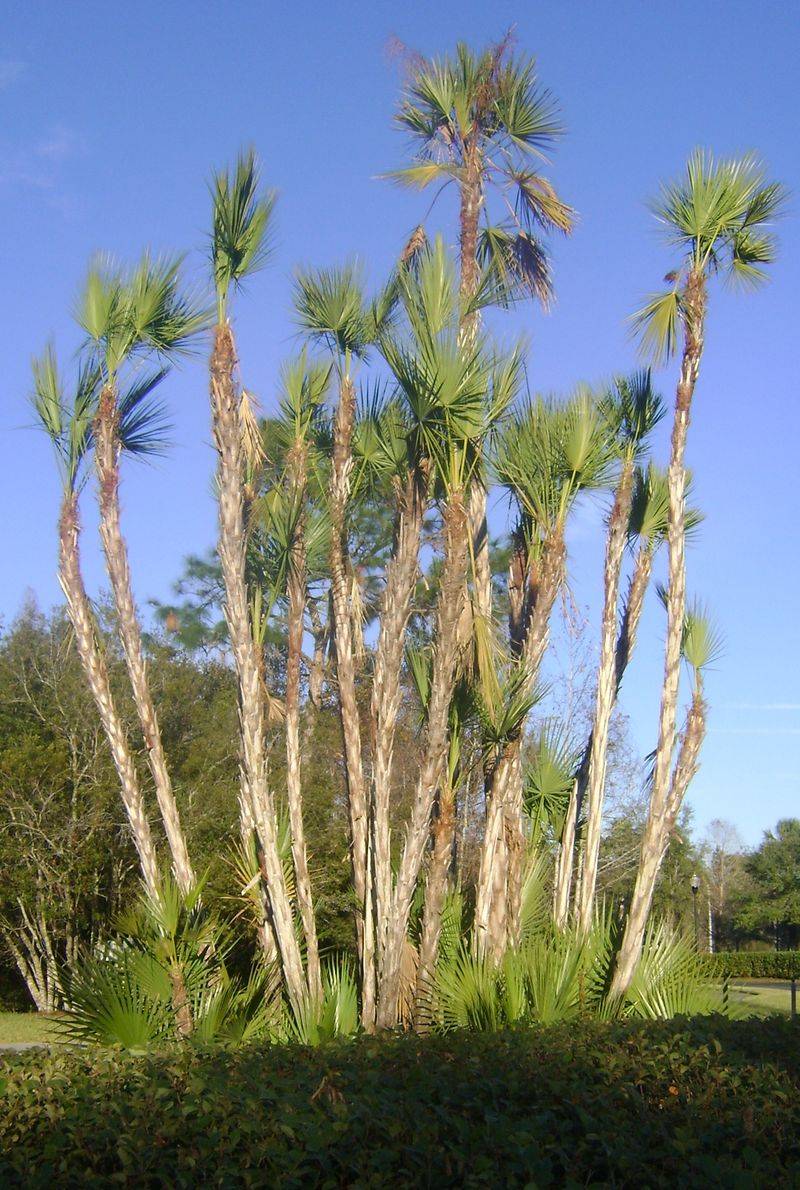
Acoelorrhaphe wrightii grows naturally throughout South Florida’s wetlands, from the Everglades to coastal hammocks. This native clustering palm forms multiple slender trunks that create a graceful, naturalistic appearance perfect for properties with wet areas or homeowners seeking authentic Florida landscapes.
The fan-shaped fronds show distinctive silver undersides that catch light beautifully when breezes move through the canopy.
Wet soil tolerance sets paurotis palm apart from species requiring well-drained conditions. It thrives in areas that stay moist or even periodically flood, making it ideal for low-lying yards, pond edges, and retention areas where other palms would struggle.
The clustering growth habit allows a single planting to fill space over time as new trunks emerge from the base.
Hurricane resistance comes naturally to this Florida native. The flexible trunks bend dramatically in high winds without breaking, and the extensive root system anchors firmly in saturated soils.
Salt tolerance allows planting in coastal areas, though paurotis palm performs equally well inland throughout South Florida’s varied microclimates.
Landscape applications favor naturalistic designs over formal settings. This palm works beautifully in native plant gardens, around water features, and in transitional areas between manicured lawns and wild spaces.
Growth reaches 15 to 25 feet depending on conditions, with the multi-trunk form creating substantial visual mass.
For homeowners embracing natural Florida landscapes or dealing with challenging wet sites, paurotis palm delivers native authenticity and proven adaptability to conditions that limit other species.
8. Silver Thatch Palm Excels In Harsh Coastal Conditions
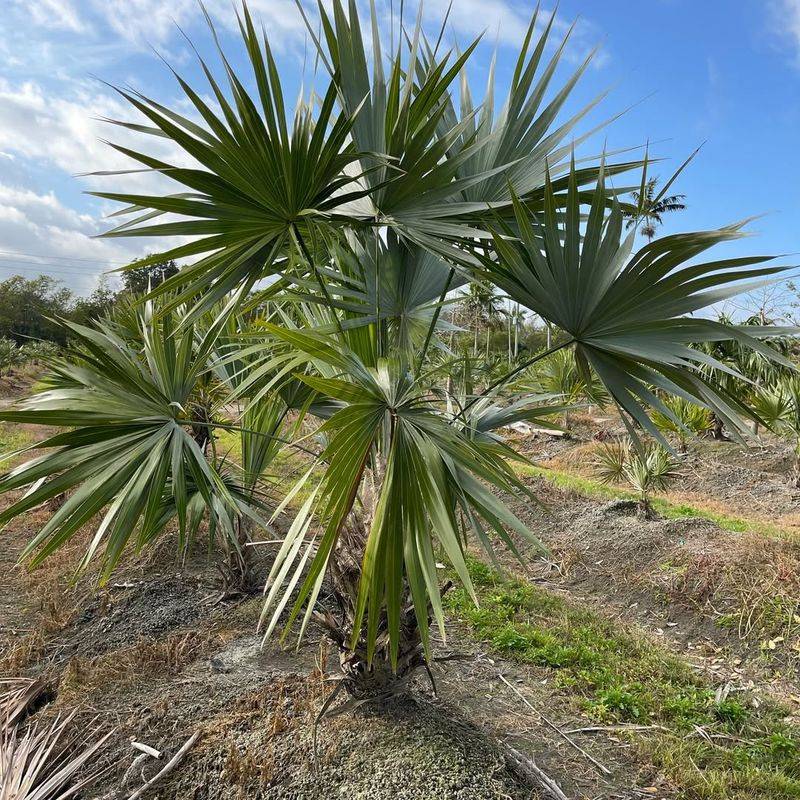
Coccothrinax argentata represents one of South Florida’s toughest native palms for extreme coastal exposure. The small, silvery fan fronds create a distinctive appearance while providing exceptional resistance to salt spray that would quickly damage less adapted species.
This palm grows naturally in the Florida Keys and coastal areas where hurricane winds, salt air, and poor sandy soils challenge every plant.
Hurricane durability exceeds nearly every other palm in its size class. The slender, flexible trunk bends dramatically during storms, and the compact crown presents minimal wind resistance.
Silver thatch palm has survived countless hurricanes throughout its range, making it one of the most reliable choices for beachfront properties where storm exposure is inevitable.
Compact size keeps this palm manageable for residential landscapes, typically reaching only 12 to 20 feet at maturity. The slow growth rate means it takes years to reach full height, but the payoff comes in exceptional longevity and minimal maintenance.
Once established, silver thatch palm requires virtually no care beyond occasional removal of withered fronds.
Drought tolerance develops naturally since this palm evolved in environments with limited freshwater availability. It survives on rainfall alone in most South Florida locations after the first year.
Landscape applications include coastal gardens, rock gardens, and small yards where space limits larger palms. For authentic Florida Keys character and proven performance in the toughest coastal conditions, silver thatch palm delivers unmatched reliability and natural beauty without demanding constant attention or replacement after every major storm.
9. Christmas Palm Fits Smaller South Florida Yards Perfectly
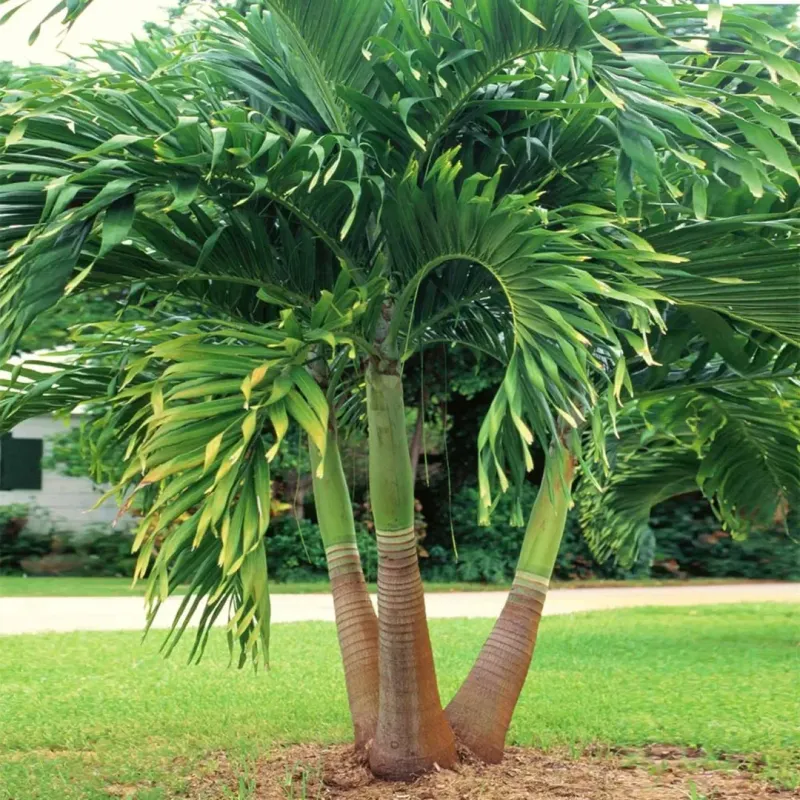
Adonidia merrillii has become a staple in South Florida residential landscapes thanks to its manageable size and neat appearance. The smooth green crownshaft and compact crown create a tidy profile that fits well in smaller yards where larger palms would overwhelm the space.
Bright red fruits appear seasonally, adding ornamental interest and giving this palm its common name from their timing around the holiday season.
Moderate height reaches only 15 to 25 feet at maturity, making Christmas palm ideal for planting near homes, pools, and patios without concerns about excessive shade or debris. The self-cleaning habit means old fronds drop naturally without creating the shaggy appearance that develops on palms requiring manual trimming.
Growth stays predictable and manageable, allowing homeowners to plan landscape designs with confidence.
South Florida’s protected residential areas suit Christmas palm better than exposed coastal locations. While not as hurricane-proof as native species, this palm performs well in typical suburban settings where buildings and other vegetation provide some wind protection.
The moderate storm tolerance proves adequate for most South Florida neighborhoods away from direct oceanfront exposure.
Landscape versatility allows use as a specimen plant, in small groupings, or flanking entries and walkways. The compact form works well in contemporary designs where clean lines and proportional scale matter.
Maintenance stays reasonable with standard fertilization and occasional cleanup.
For homeowners with limited space wanting reliable tropical character without overwhelming size, Christmas palm delivers consistent performance and refined appearance that complements South Florida’s residential architecture and lifestyle.
10. Buccaneer Palm Stands Strong In Coastal Storm Zones
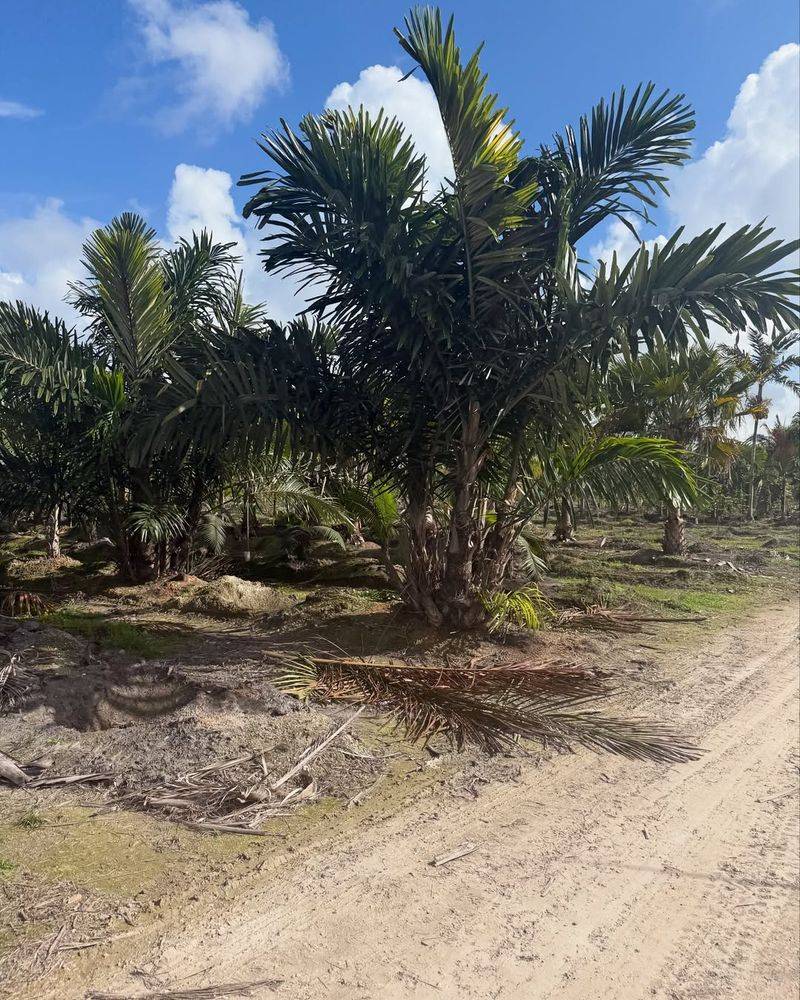
Pseudophoenix sargentii ranks among the toughest palms for South Florida’s most challenging coastal environments. This rare Florida native evolved in the Keys and Caribbean islands where hurricanes strike regularly and salt spray coats every surface.
The stout trunk and blue-green pinnate fronds create an unusual appearance that immediately distinguishes buccaneer palm from common landscape species.
Storm resistance approaches legendary status among palm enthusiasts who have watched this species survive direct hits from major hurricanes. The thick trunk flexes rather than snaps, and the compact crown reduces wind resistance while maintaining structural integrity.
Coastal properties exposed to the full force of tropical weather benefit enormously from this palm’s proven ability to withstand conditions that destroy less resilient species.
Salt tolerance exceeds nearly every other palm suitable for South Florida landscapes. Buccaneer palm thrives in beachfront locations where ocean spray reaches plants daily, showing no leaf burn or decline that affects more sensitive choices.
The slow growth rate means patience is required, but the reward comes in a palm that can outlast generations with minimal care.
Landscape applications favor naturalistic coastal gardens and properties where authentic Florida Keys character matters. Growth eventually reaches 20 to 25 feet, though decades may pass before full height develops.
The rarity and slow growth make buccaneer palm more expensive than common species, but for coastal homeowners seeking maximum durability and native authenticity, this palm represents the ultimate investment in long-term landscape success and storm resilience.