These Are The 8 Best Plants That Thrive Under Pine Trees In Florida
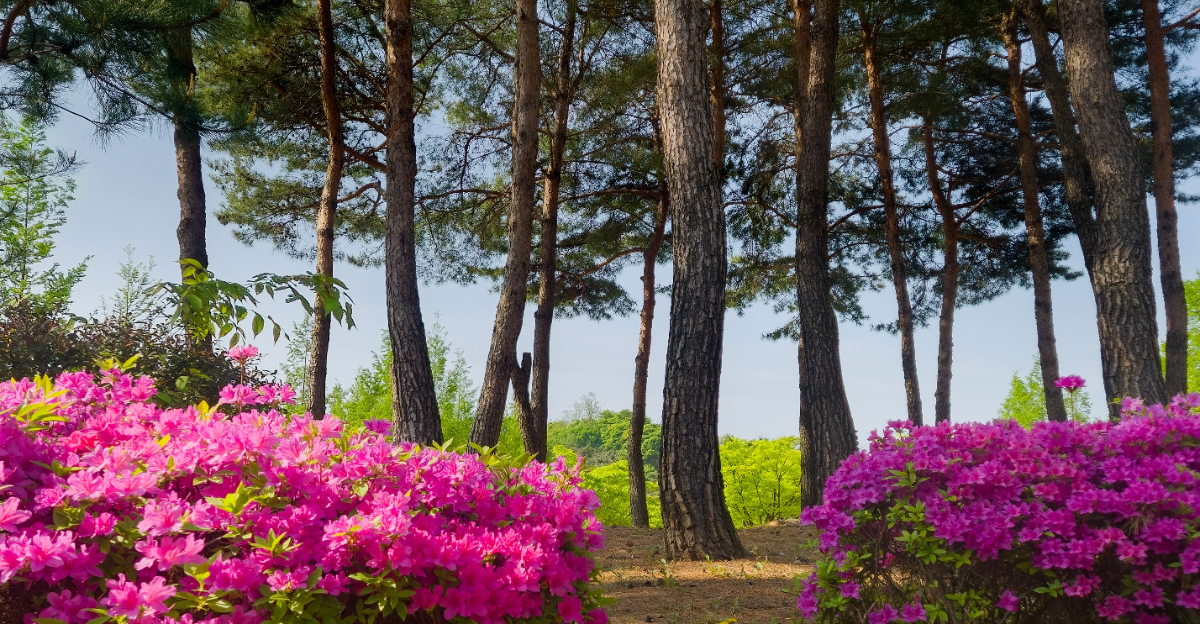
Think nothing grows well under pine trees in Florida? That idea stops a lot of yards from reaching their full potential.
Those dry, shaded, needle-covered spots can feel like a lost cause, and many gardeners give up before they even try. But that space is not as limited as it looks.
Certain plants are perfectly suited for the unique conditions under pines, from filtered light to acidic soil and constant competition for moisture. The key is choosing varieties that are already adapted to those challenges instead of fighting against them.
Once you get it right, that bare patch under your pine trees can turn into one of the most interesting parts of your yard.
Instead of struggling plants, you end up with a layered, natural look that feels like it belongs there.
1. Azaleas Thrive In Acidic Soil And Light Shade Under Pines
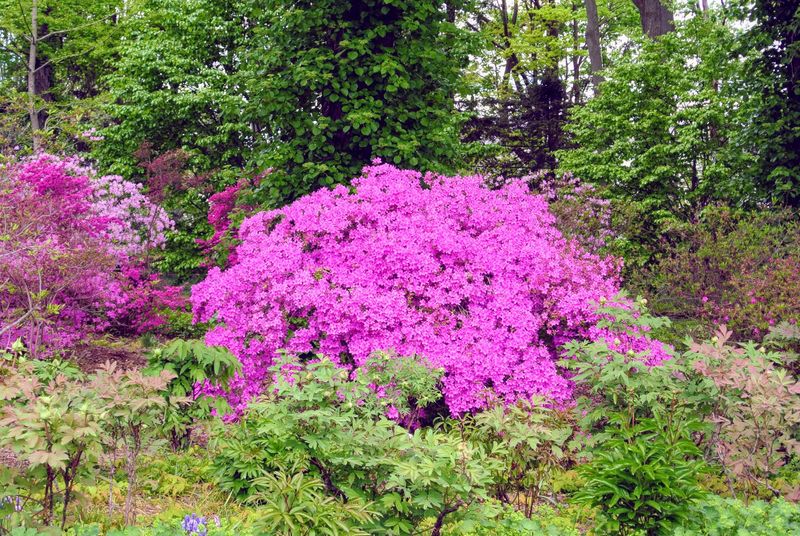
Few flowering shrubs feel as at home beneath Florida pines as azaleas, and there is a good reason for that. Known botanically as Rhododendron spp., azaleas naturally prefer the kind of acidic, well-drained soil that pine needles help create over time.
The slightly lower pH that makes other plants struggle is exactly what azaleas need to absorb nutrients properly.
They perform best under open pine canopies like those of Longleaf Pine or Slash Pine, where filtered light reaches the ground. Dense, heavy shade is not ideal since azaleas need some brightness to bloom well.
Consistent moisture matters too, so mulching around the base helps the soil hold water between rain events.
Gardeners in North and Central Florida will have the most success with azaleas under pines. South Florida’s intense heat and humidity can stress them during summer.
When planting, try to position azaleas slightly away from the driest areas directly under the trunk, where root competition is strongest. A spot near the canopy edge gives them better access to moisture and light, which encourages more reliable blooms each spring.
2. Ferns Fill In Shady Spaces With Soft Low-Maintenance Growth
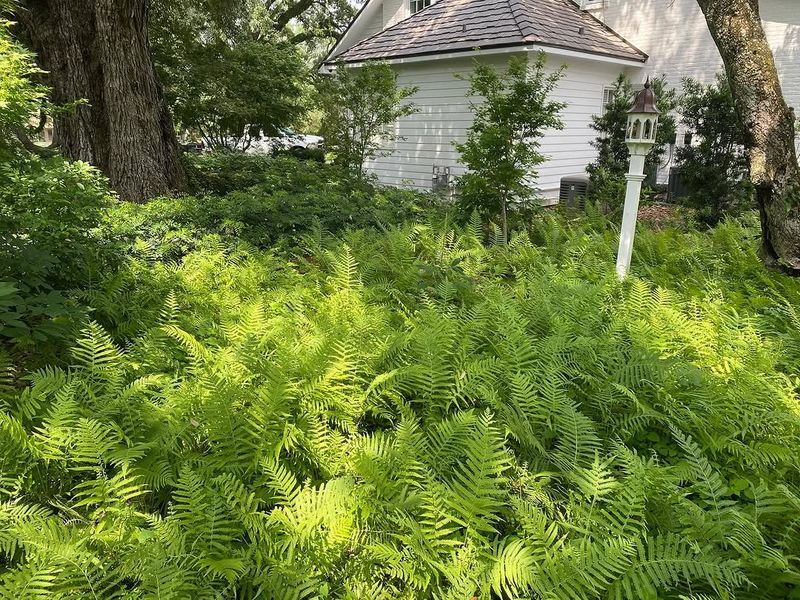
There is something quietly satisfying about a patch of ferns filling in the understory beneath a stand of Florida pines. Several fern types handle these conditions well, including the Southern Shield Fern and the Autumn Fern, both of which are well-suited to Florida’s climate and adapt nicely to the filtered shade found under Loblolly Pine or Slash Pine.
Ferns prefer filtered shade to partial shade rather than the deep, dry darkness found directly beneath a tight canopy. Moisture is probably their most important requirement, and they need slightly more of it than most other plants on this list.
That makes placement important. Spots where pine needle litter has built up, or along the protected edges of the canopy, tend to hold more organic matter and stay a bit more moist.
Mulching generously around ferns helps retain soil moisture during Florida’s dry season, which can stretch from late fall through spring. Planting near the outer drip line of the pine canopy rather than tight against the trunk gives ferns better access to both filtered light and rainfall.
With the right spot, they spread slowly into a soft, low-maintenance groundcover that looks natural year-round.
3. Coontie Handles Dry Shade And Sandy Soil With Ease
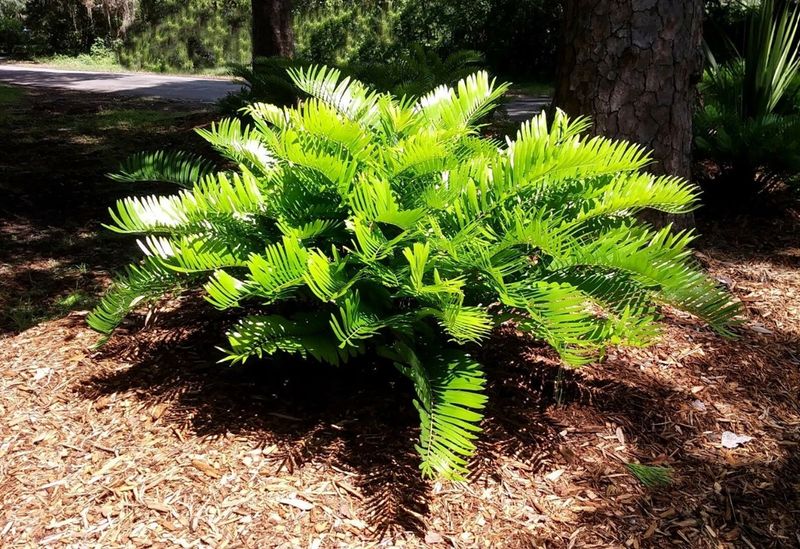
Coontie, known botanically as Zamia integrifolia, is one of Florida’s true native gems and one of the toughest plants you can put under a pine tree. Unlike many plants that struggle with root competition and dry sandy soil, Coontie barely notices those challenges.
It has evolved over thousands of years in Florida’s scrub and woodland environments, which means it is perfectly matched to the conditions that defeat other plants.
Drought tolerance is one of its standout qualities. Once established, Coontie needs very little supplemental water, making it ideal for spots under dense pine canopies where rainfall rarely penetrates evenly.
It handles both dry shade and open filtered light, giving it flexibility that most plants cannot match.
Coontie is also one of the few plants that works well across all regions of Florida, from the Panhandle to Miami-Dade. Maintenance is minimal since it rarely needs pruning or fertilizing.
For a groundcover effect, space plants about two to three feet apart to allow them to fill in gradually. As a bonus, Coontie is the only host plant for the Atala butterfly, a once-rare species that has made a comeback largely because of Coontie plantings in Florida landscapes.
4. American Beautyberry Adds Color And Wildlife Value In Partial Shade
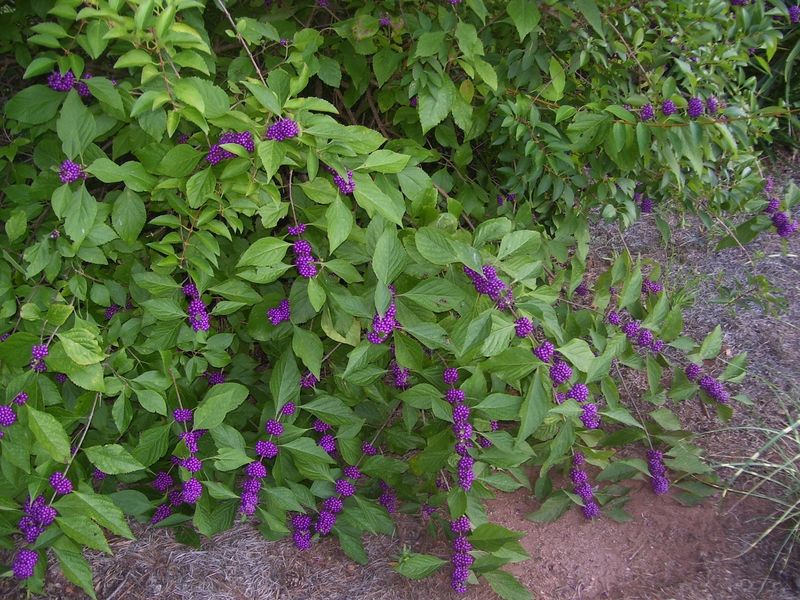
If you want a plant that pulls double duty as a visual showstopper and a wildlife magnet, American Beautyberry is worth a close look. Callicarpa americana is the botanical name, and the plant earns attention every fall when it produces tight clusters of brilliant magenta-purple berries along arching stems.
Those berries are not just pretty. They attract mockingbirds, cardinals, robins, and several other bird species that depend on native fruiting shrubs.
American Beautyberry adapts well to the partial shade found under open pine canopies. It does not perform as reliably under dense, heavy shade, so positioning it where filtered light reaches the ground consistently will give you better growth and berry production.
The plant tolerates a range of soil conditions, including the acidic, sandy soils that pines tend to create.
It grows well across most of Florida and is considered a low-maintenance native shrub once established. Pruning it back hard in late winter or early spring encourages vigorous new growth and more berry production in the fall.
Without occasional pruning, stems can become leggy over time. Cutting plants back to about a foot from the ground every year or two keeps them full, tidy, and productive throughout the growing season.
5. Muhly Grass Adapts Surprisingly Well To Open Pine Shade
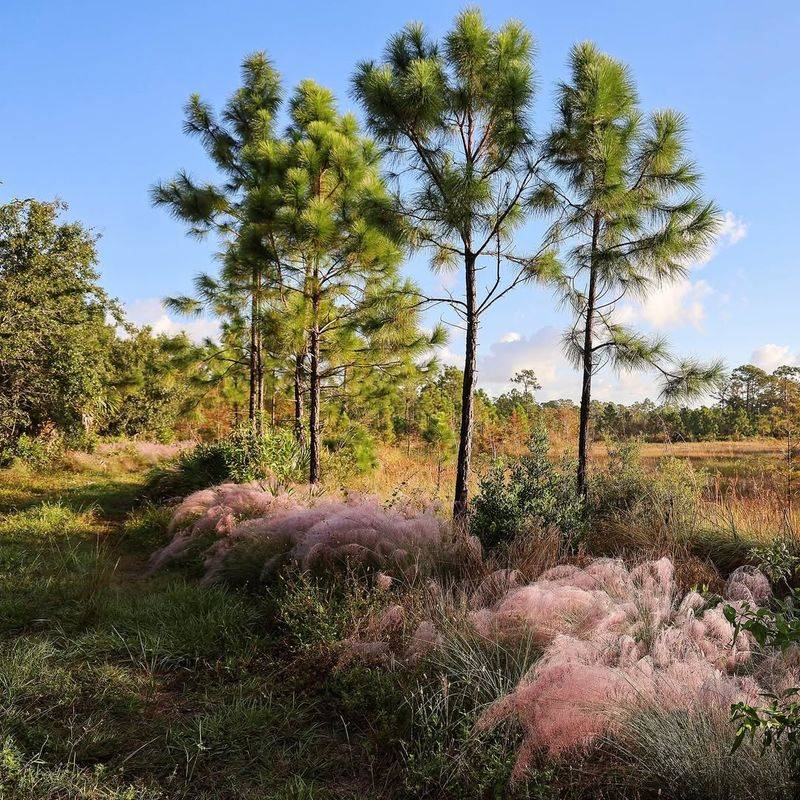
Most ornamental grasses need full sun to really perform, which is why Muhly Grass under pine trees might seem like an unlikely pairing. But Muhlenbergia capillaris has a few tricks up its sleeve.
When planted beneath widely spaced pines like Longleaf Pine, where the canopy is open and plenty of light filters through, Muhly Grass can thrive and put on its famous fall show of airy pink and rose-colored plumes.
The key word here is open. Muhly Grass will not do well in deep or dense shade, and placing it too close to the trunk of a heavily branched pine will result in weak, floppy growth with little to no flowering.
The canopy edge is the sweet spot, where it catches several hours of direct or bright indirect light each day.
Sandy, well-drained soil suits it perfectly, and once established, it is impressively drought-tolerant. Muhly Grass grows well across most of Florida and requires almost no fertilizing or supplemental watering after the first season.
For the best flowering display, plant it near the outer edge of the pine canopy rather than beneath the center. That small adjustment in placement can make a significant difference in how well it blooms each autumn.
6. Liriope Creates Tough Groundcover In Dry Shady Conditions
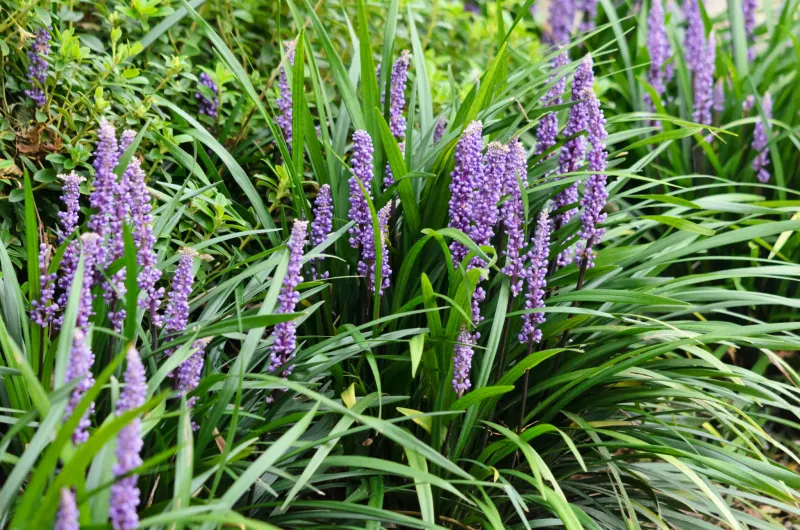
When nothing else seems to want to grow under a particularly dense stand of pines, Liriope often steps up and handles the job without complaint. Liriope muscari, sometimes called lilyturf or monkey grass, is one of the most reliable groundcover options for dry, shady spots in Florida landscapes.
It does not demand much and handles the kind of root competition and low moisture that sends most plants into decline.
Its strap-like, dark green foliage stays attractive year-round, and in summer it produces small spikes of purple or white flowers that add subtle color to otherwise bare ground. The plant spreads gradually through clumping, slowly filling in areas that would otherwise remain bare under a thick pine canopy.
Liriope performs well across most of Florida and tolerates a wide range of soil conditions, including acidic sandy soils. For groundcover purposes, spacing plants about twelve inches apart speeds up coverage and creates a more uniform look.
Variegated varieties like Liriope muscari ‘Variegata’ can brighten up darker spots with their cream-edged leaves. One practical note: if the foliage starts looking ragged or brown after winter, cutting it back to a few inches from the ground in early spring encourages fresh, clean new growth.
7. Florida Anise Grows Well In Filtered Shade With Moist Soil
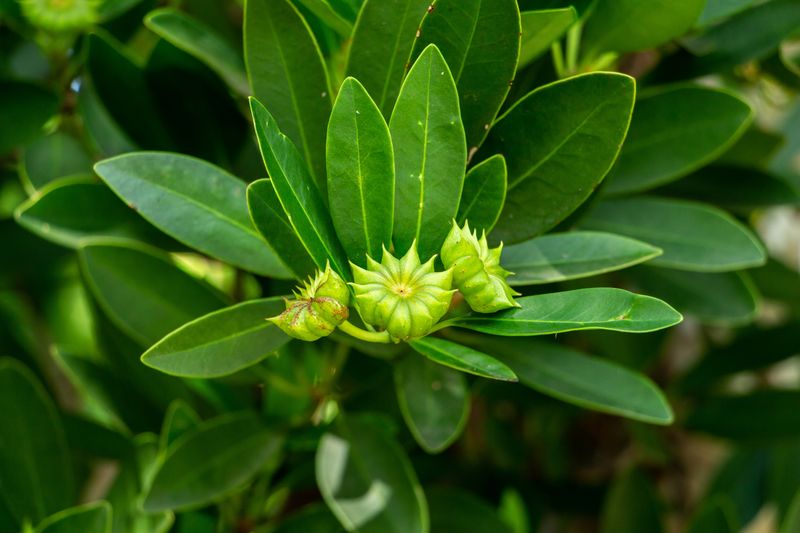
Walk past a Florida Anise shrub and brush against its leaves, and you will immediately notice the spicy, star-anise scent that gives this native plant its name. Illicium floridanum is an evergreen shrub that brings both fragrance and bold texture to shaded spots in the landscape.
It is particularly well-suited to the filtered, dappled shade found along the edges of pine stands in North and Central Florida.
Moisture is where Florida Anise has its main requirement. Unlike drought-tough plants such as Coontie or Liriope, Florida Anise prefers soil that stays consistently moist and slightly rich in organic matter.
Very dry pine areas are not a good fit unless you are willing to improve the soil and commit to regular irrigation during dry stretches. Pine edges where organic debris has accumulated and where rainfall drains slowly tend to work best.
In Central Florida it performs well with some care, but in South Florida the conditions are generally too hot and dry for it to thrive reliably. Mulching thickly around the base helps hold moisture and keeps roots cool during summer heat.
During extended dry periods, supplemental irrigation every week or two prevents stress. Florida Anise can reach six to ten feet tall, making it a solid choice for a layered woodland screen beneath taller pines.
8. Wild Coffee Thrives In Protected Shade In Warmer Parts Of Florida
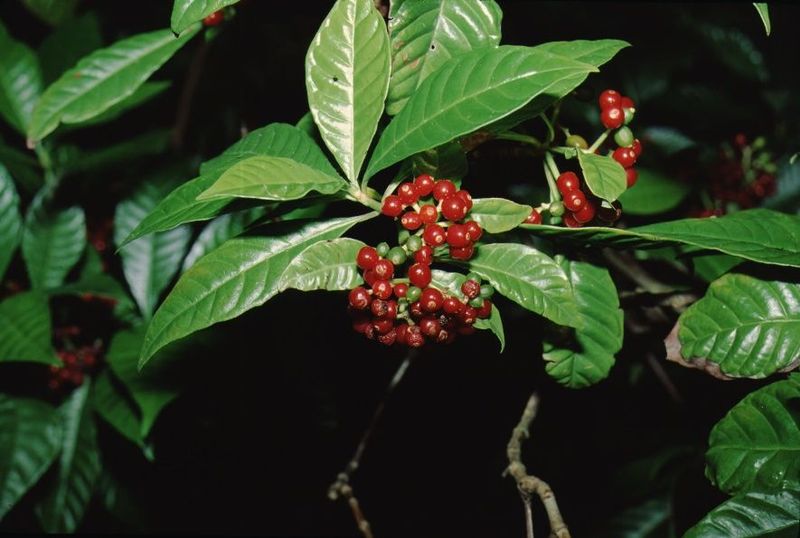
There is something quietly tropical about Wild Coffee, and that makes sense given where it performs best. Psychotria nervosa is a native Florida shrub that belongs in the warmer, more sheltered parts of the state, particularly Central and South Florida.
Under pine canopies that offer protection from cold winds and occasional frost, it grows into a handsome, glossy-leaved shrub that produces small red berries loved by mockingbirds, thrushes, and other native birds.
Shade is where Wild Coffee truly shines. It handles the low-light conditions under pine canopies better than many other shrubs and does not need direct sun to stay healthy or produce berries.
Some moisture is appreciated, but it is reasonably adaptable once established in a sheltered spot with decent organic soil or mulch.
Frost is the main limiting factor. In North Florida and areas prone to hard freezes, Wild Coffee will struggle and may suffer significant cold damage.
Planting it in a sheltered microclimate beneath the canopy, away from open frost pockets, gives it the best chance of surviving cooler winters in Central Florida. For South Florida gardeners, it is one of the most rewarding native understory shrubs available.
Spacing plants three to four feet apart allows them to form a natural, informal grouping that looks right at home beneath a stand of pines.