These Are The 9 Best Privacy Plants For Windy Coastal Florida Homes
Privacy planting feels simple until coastal Florida starts pushing back. Salt air, strong wind, sandy soil, and intense sun can tear through the wrong choice fast, leaving gaps, damage, and a yard that feels more exposed than before.
A plant that thrives inland may struggle near the coast, and a quick nursery pick can turn into a costly mistake once rough weather rolls in. That is why privacy screens for coastal homes need more than height alone.
They need structure, resilience, and the ability to hold up under conditions that wear weaker plants down. The best options do more than block a view.
They help shape outdoor space, soften harsh edges, and give a property a more settled, secluded feel without constant replacement or heavy upkeep.
For homeowners near the water, the right privacy plant can make the difference between a screen that lasts and one that fails after the first hard season.
These stand out for a reason!
1. Clusia Creates A Thick Coastal Privacy Screen
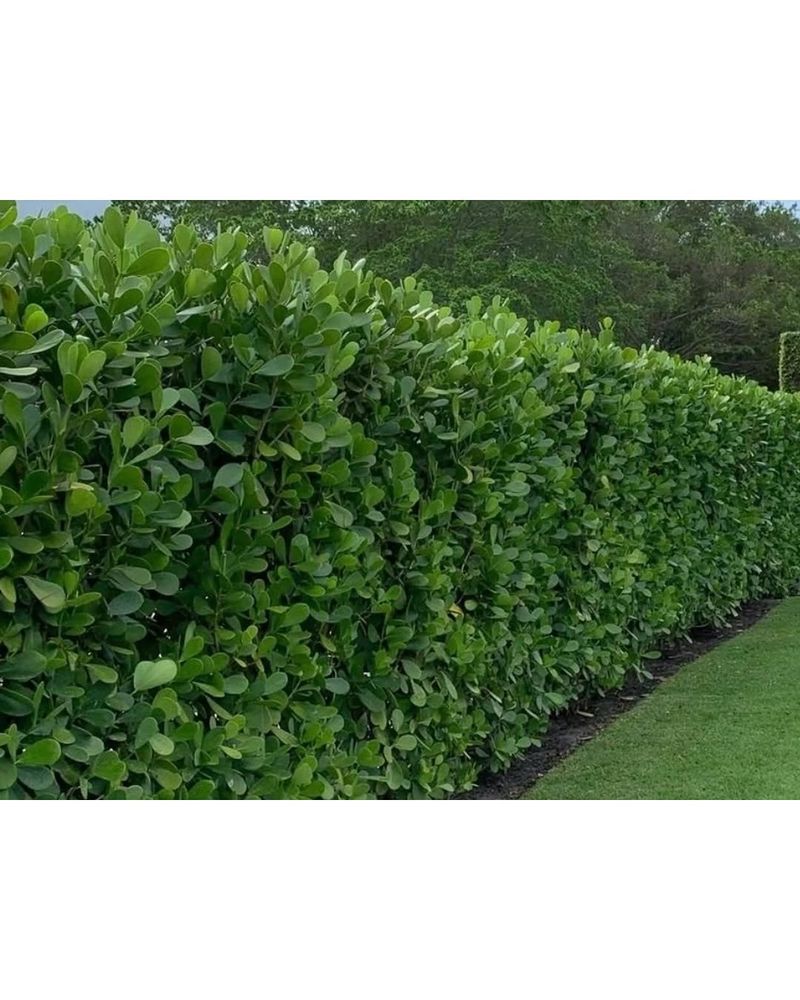
Few plants deliver the kind of solid, wall-like coverage that Clusia does in a Florida coastal yard. With its thick, leathery leaves and naturally dense growth habit, Clusia guttifera forms a hedge so full that you can barely see daylight through it.
That makes it one of the most popular privacy choices along Florida’s coastlines.
Clusia handles salt air and drought conditions well, which is a big deal for homeowners dealing with the punishing exposure that comes with coastal living. It does not need constant watering once established, and it holds its shape even in strong winds.
Many Florida landscapers consider it a go-to for property line hedges because it grows wide and dense without a lot of coaxing.
You can keep it trimmed to a tighter formal shape or let it grow a bit fuller for a more natural look. It works well as a standalone hedge or as a backdrop behind smaller flowering plants.
According to UF/IFAS, Clusia is highly adaptable to South and Central Florida landscapes, tolerating poor soils and coastal exposure better than many alternatives. If a thick, reliable screen is what you are after, Clusia rarely disappoints.
2. Podocarpus Offers A Cleaner More Polished Look
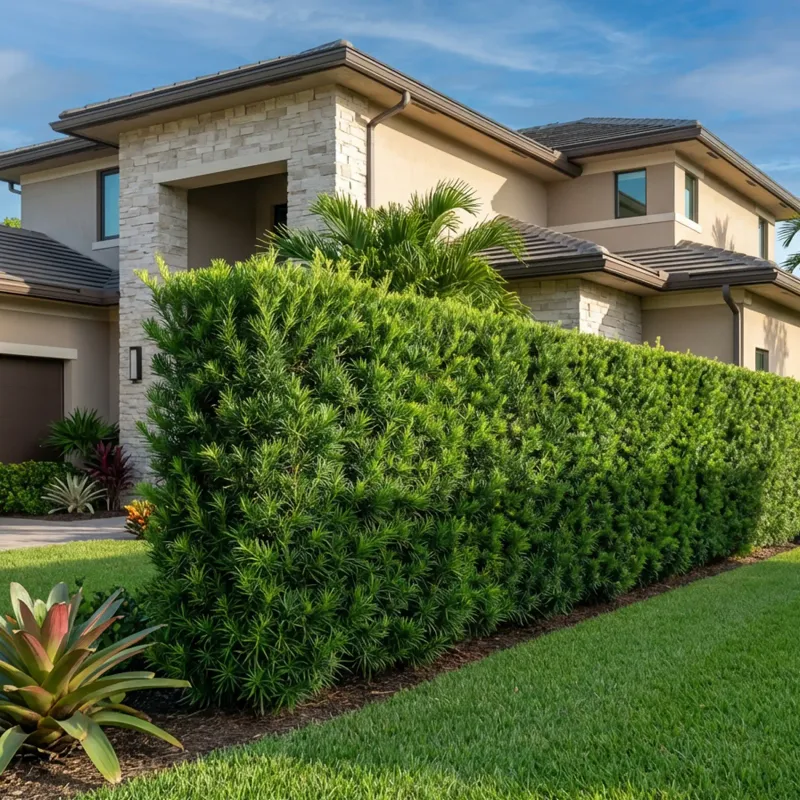
Not every homeowner wants a hedge that looks wild or tropical. Some people prefer something cleaner, more tailored, and a little more refined.
That is exactly where Podocarpus earns its place in a Florida coastal landscape.
Podocarpus macrophyllus grows in a naturally upright, columnar shape with soft, dark green needle-like leaves that give it an almost elegant look. It trims beautifully into a formal hedge and holds that shape well between pruning sessions.
For homeowners who want solid privacy without the bulk of a more tropical shrub, this plant hits the mark consistently.
It tolerates salt air reasonably well and adapts to a range of light conditions, from full sun to partial shade. Podocarpus is not quite as salt-tolerant as Clusia or Sea Grape, so it works best when it has a little buffer from direct ocean wind, such as a side yard or a screened garden area.
UF/IFAS recognizes it as a solid hedge plant for Florida landscapes, noting its neat growth and low maintenance appeal. Plant it in well-drained soil, give it regular light trimming, and it will stay dense, tidy, and attractive for years without demanding much attention.
3. Cocoplum Handles Coastal Conditions Better Than Many Shrubs
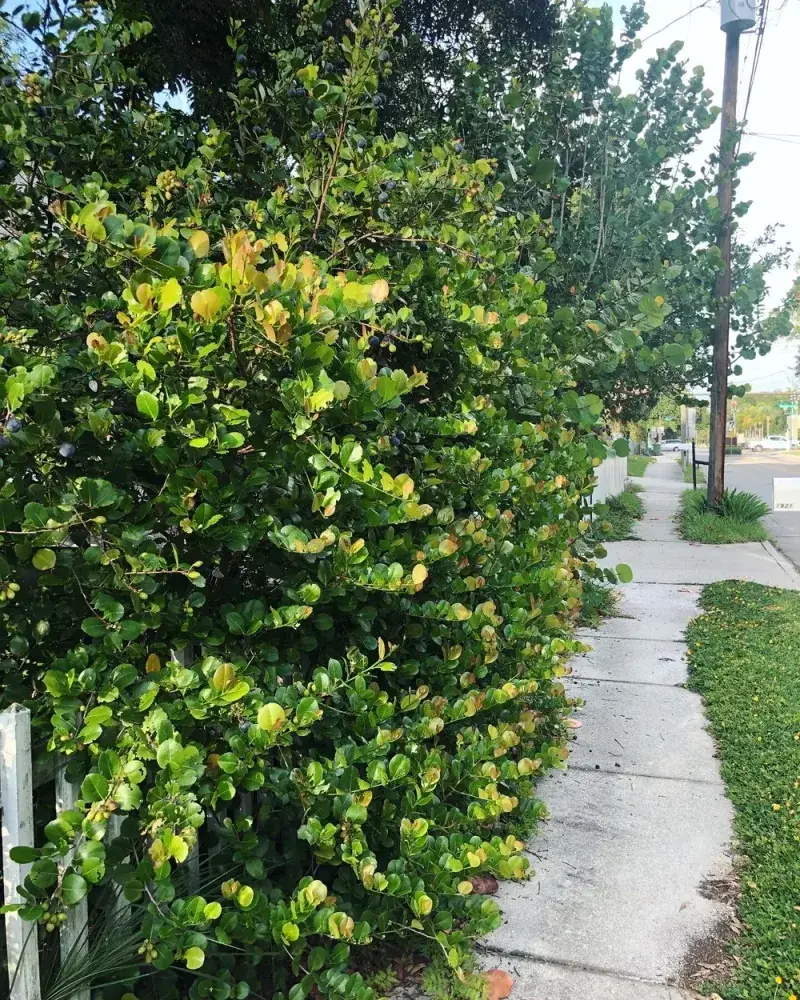
Spend time talking to Florida native plant enthusiasts and Cocoplum will come up quickly. Chrysobalanus icaco is one of those plants that seems almost built for the Florida coastline, tolerating salt spray, sandy soil, and strong winds without showing much stress.
That kind of toughness is hard to find in a privacy shrub.
Cocoplum grows as a dense, rounded shrub with attractive glossy leaves and small ornamental fruits that wildlife love. It can reach six to fifteen feet depending on the variety and how much you trim it, making it flexible enough for both shorter hedges and taller screens.
The red-tip variety is especially popular for its colorful new growth, which adds visual interest beyond just the privacy function.
Florida homeowners who want a native option that supports local birds and butterflies while also providing a solid screen will find a lot to appreciate here. UF/IFAS highlights Cocoplum as an excellent native shrub for South Florida coastal landscapes, specifically noting its salt tolerance and usefulness as a hedge.
It does prefer the warmer end of the state, generally thriving in USDA zones 10 and 11. Give it room to spread and minimal irrigation once established, and it performs reliably.
4. Areca Palm Adds Fast Privacy With Tropical Appeal
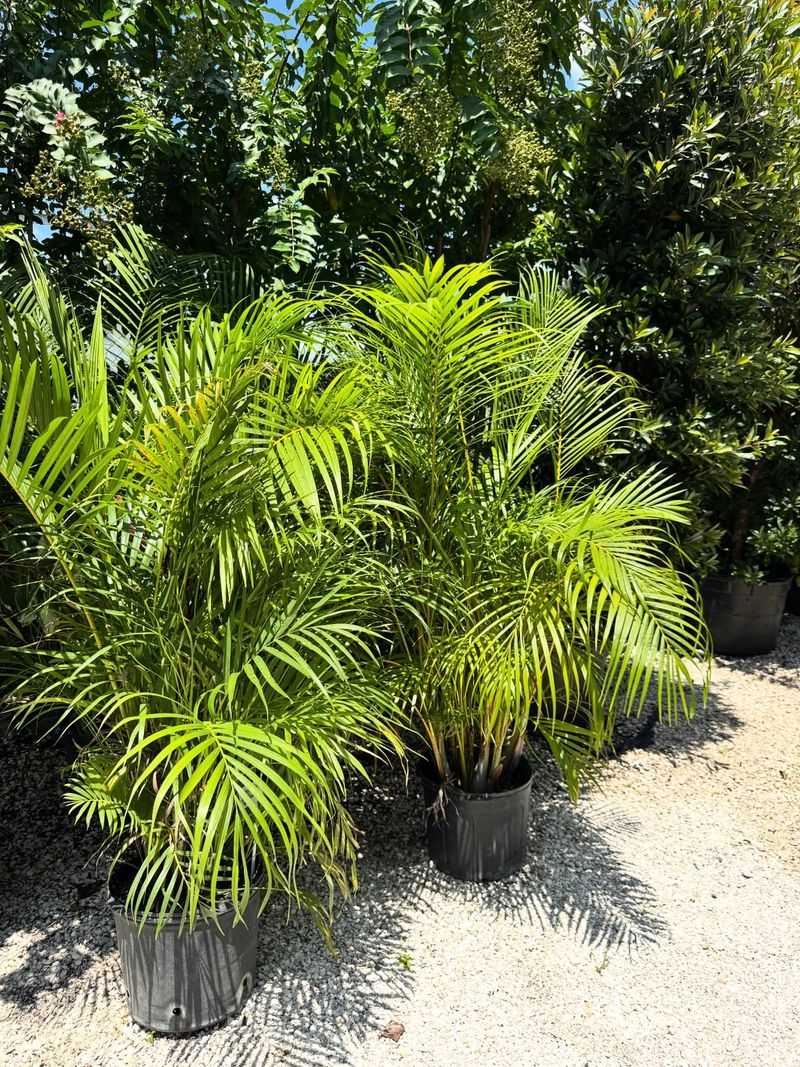
Around patios, pools, and property lines across Florida, Areca palms are practically a signature plant. Their feathery, arching fronds and clumping growth habit create a lush tropical curtain that feels both relaxed and resort-like.
For homeowners who want privacy fast and want it to look beautiful, Areca palms are hard to beat.
Dypsis lutescens grows in tight clusters that fill in quickly, often reaching fifteen to twenty feet when happy. They work especially well as a screen between neighboring properties or along a fence line where you want to soften hard edges.
The fronds move gracefully in the breeze, which adds to the tropical feel rather than looking battered by the wind.
They prefer full sun to partial shade and do well in Florida’s sandy coastal soils with regular watering during dry spells. Salt tolerance is moderate, so placing them slightly back from the immediate oceanfront works better than right on the shoreline.
UF/IFAS notes that Areca palms can be susceptible to potassium deficiency in sandy soils, so a palm-specific fertilizer goes a long way in keeping them healthy. Plant several in a row and you can have a full, tropical-looking privacy screen within a season or two.
5. Simpson’s Stopper Brings Dense Growth And Native Florida Charm
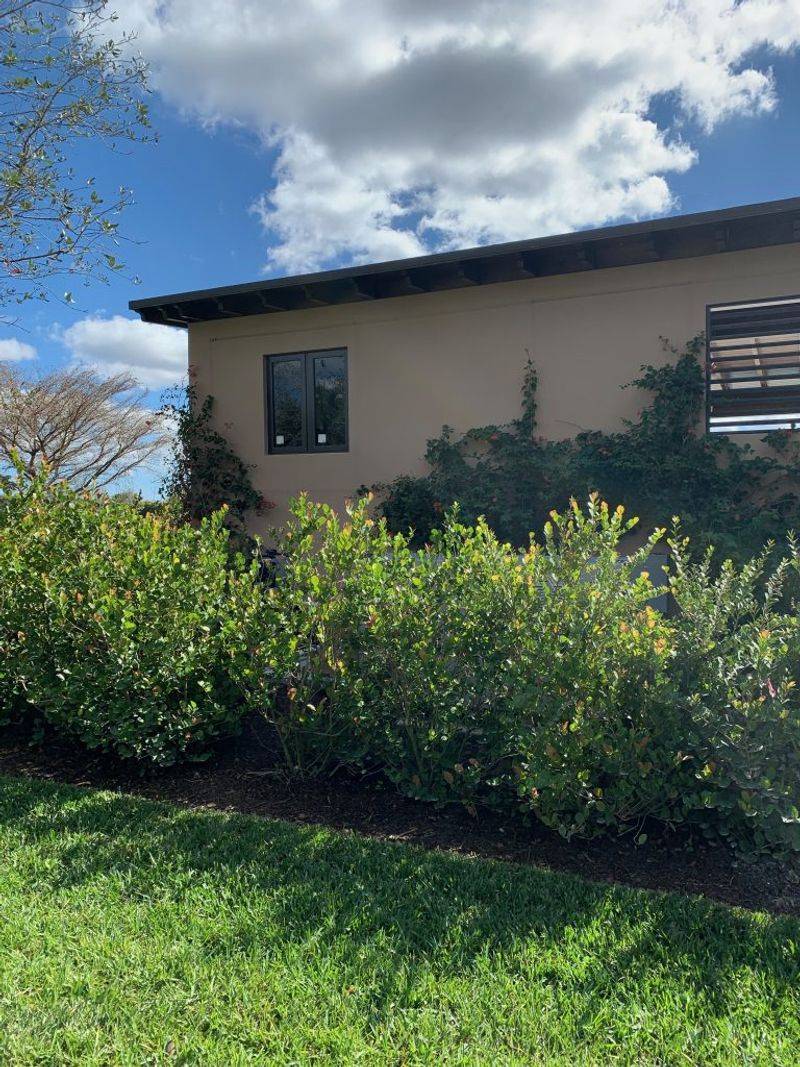
There is something genuinely charming about a plant that looks ornamental, feeds local wildlife, and still manages to form a solid privacy screen. Simpson’s Stopper, known botanically as Myrcianthes fragrans, does all three without requiring much from the homeowner.
This Florida native grows into a dense, multi-branched shrub or small tree with attractive small leaves, fragrant white flowers, and bright orange-red berries that birds find irresistible. The branching is tight enough to create real screening value, especially when plants are spaced close together in a hedge row.
It has a natural tidiness that makes it easy to work with in a structured landscape design.
Simpson’s Stopper handles Florida’s coastal conditions well, tolerating salt air, drought, and sandy soils once established. It grows at a moderate pace, so it is not the fastest option, but the payoff is a sturdy, long-lived screen with genuine ornamental value.
UF/IFAS recommends it as a native landscape plant with strong adaptability across Central and South Florida. It fits naturally into a coastal yard without looking out of place, and it pairs well with other native plants for a layered, ecologically friendly privacy planting.
For homeowners who want function and character in the same plant, this one delivers both.
6. Sea Grape Holds Up In Windy Salt Air Settings
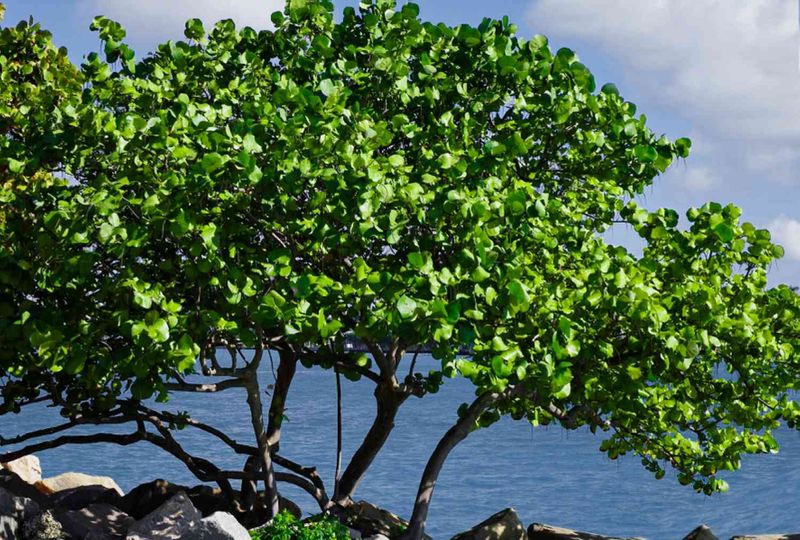
Bold, sculptural, and genuinely tough, Sea Grape is one of the most recognizable plants along Florida’s beaches for good reason. Coccoloba uvifera has evolved specifically to handle the kind of punishing conditions that coastal homeowners deal with every day, including constant salt spray, sandy soil, and relentless wind.
The leaves are large, round, and leathery with striking red veins, giving Sea Grape a distinctive look that no other privacy plant quite matches. It can be grown as a sprawling shrub or trained into a small tree, and in either form it creates a bold visual barrier.
The clusters of grape-like fruits it produces are edible and attract birds, adding ecological value alongside the privacy function.
Sea Grape thrives in full sun and is extremely drought-tolerant once established. It is one of the few plants that can be planted relatively close to the shoreline and still perform well.
UF/IFAS notes that Sea Grape is a protected species in some Florida coastal areas due to its role in stabilizing dunes, so check local regulations before planting or pruning near the beach. In the right setting, it is an outstanding choice that brings both toughness and real visual character to a coastal landscape.
7. Wax Myrtle Fills In Quickly For A Softer Natural Barrier
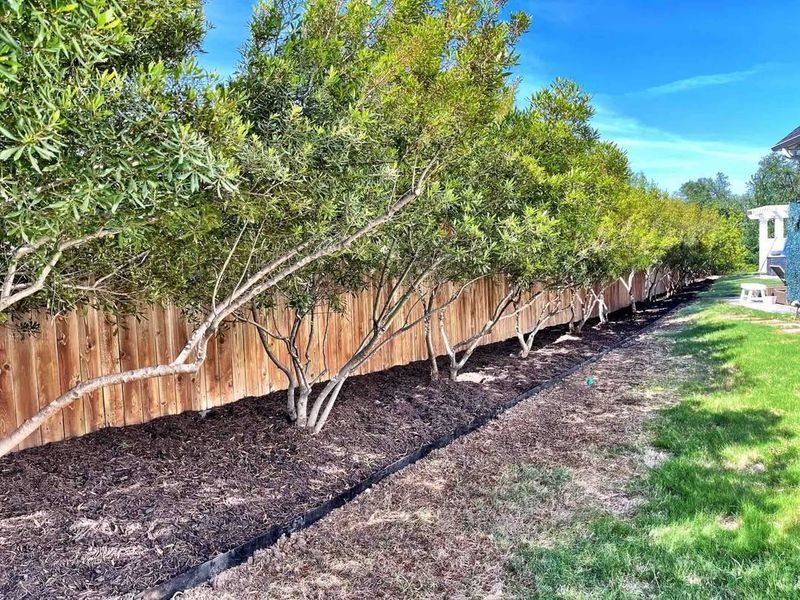
If you want a privacy screen that feels more like a natural woodland edge than a clipped formal hedge, Wax Myrtle might be exactly what your yard needs. Myrica cerifera is a fast-growing Florida native that fills in with a loose, feathery texture and a pleasant aromatic quality that sets it apart from most shrubs.
Wax Myrtle can reach ten to fifteen feet fairly quickly, making it one of the faster options for homeowners who want coverage without a long wait. It works well in both full sun and partial shade and thrives in Florida’s sandy, sometimes wet coastal soils.
The grayish-white berries it produces are a favorite food source for songbirds, so planting it brings real life to the yard.
Salt tolerance is solid, and it handles wind exposure well, which makes it a dependable performer in coastal Florida settings. The look is softer and less structured than Clusia or Podocarpus, which suits homeowners who prefer a more naturalistic landscape style.
UF/IFAS lists Wax Myrtle as one of the most versatile native shrubs for Florida yards, noting its adaptability across a wide range of soil and moisture conditions. Trim it lightly to encourage density or let it grow freely for a more relaxed, cottage-garden feel.
8. Firebush Adds Privacy With Color And Wildlife Value
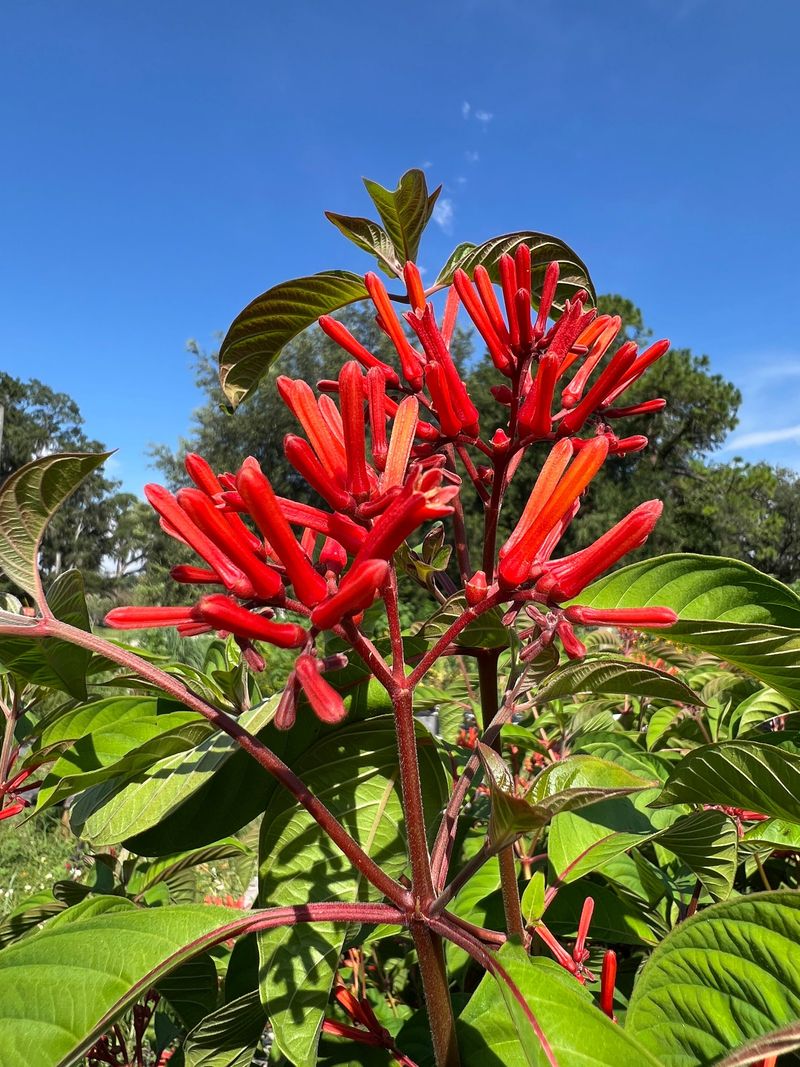
Most privacy plants earn their place by blocking views. Firebush earns its place by doing that and putting on a show at the same time.
Hamelia patens is one of the most colorful native shrubs in Florida, producing a near-constant display of bright orange-red tubular flowers that attract hummingbirds, butterflies, and bees from spring through fall.
Firebush grows quickly into a rounded, dense shrub that can reach six to ten feet in Florida’s warm climate. While it may not form as solid a wall as Clusia or Podocarpus, grouping several plants together creates meaningful screening, especially along a fence line or property border.
The lush foliage fills in thickly during the growing season.
It thrives in full sun and handles Florida’s heat and humidity like a champion. Salt tolerance is moderate, so it performs best slightly inland from direct oceanfront exposure rather than right on the shoreline.
UF/IFAS recognizes Firebush as an excellent Florida-friendly plant with strong wildlife value and low maintenance requirements once established. For homeowners who want a privacy planting that also doubles as a pollinator garden, Firebush brings a level of energy and visual excitement that purely structural hedges simply cannot match.
It is as functional as it is fun to look at.
9. Silver Buttonwood Stands Out In Tough Coastal Spots
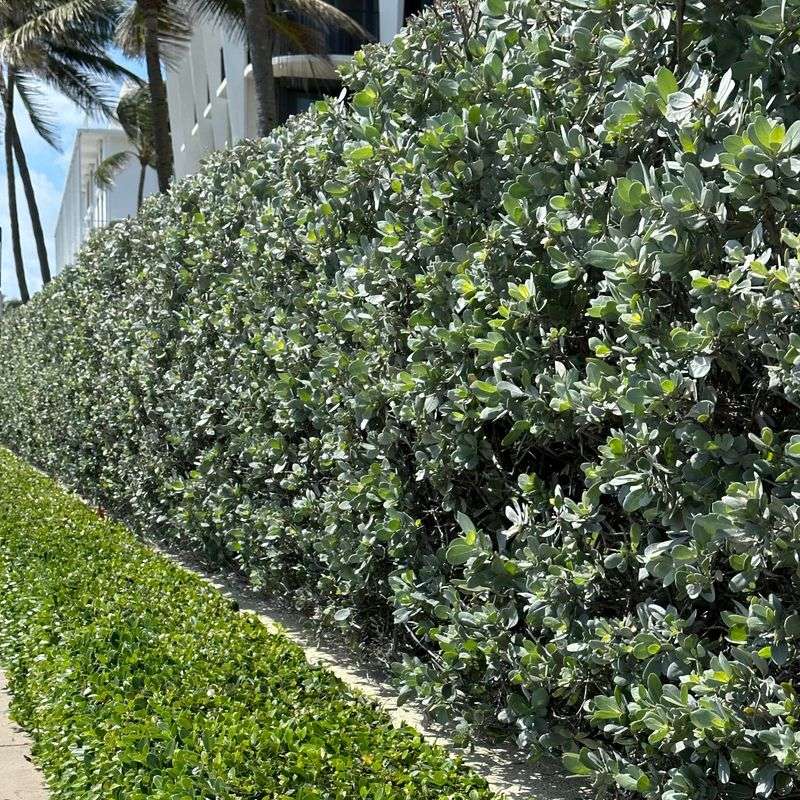
Some plants just look like they belong at the coast. Silver Buttonwood has that quality in a way that is hard to describe until you see it.
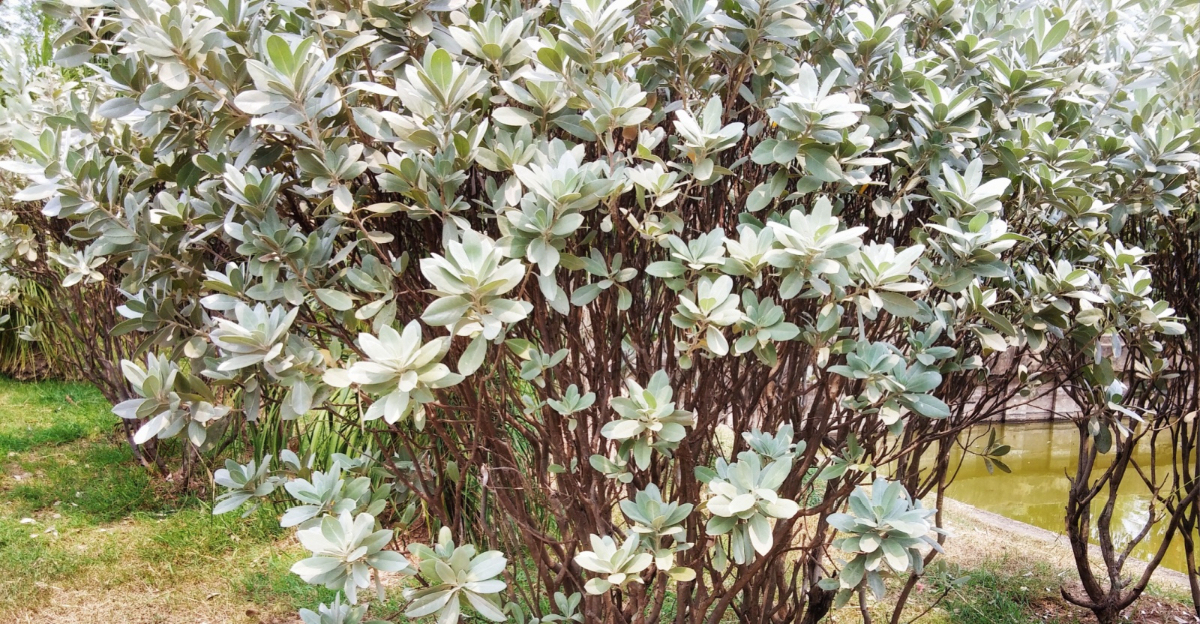
The silvery-gray foliage practically glows in bright coastal light, and the plant itself seems almost indifferent to the wind, salt, and heat that would stress lesser shrubs.
Conocarpus erectus var. sericeus is a Florida native that grows naturally in coastal hammocks and mangrove edges, which tells you a lot about its toughness. It can be maintained as a dense hedge or allowed to develop into a small, sculptural tree with character.
Either way, it creates a strong visual presence and meaningful privacy coverage in spots where other plants might struggle.
Silver Buttonwood is highly salt-tolerant, drought-tolerant, and wind-resistant, making it one of the most reliable choices for truly exposed coastal yards in Florida. UF/IFAS praises it as an outstanding native plant for harsh South Florida coastal environments, particularly for its ability to handle salt spray and poor sandy soils.
Growth is moderate, so pairing it with faster-growing plants during the early years helps build a full screen more quickly. Once established, Silver Buttonwood is a long-lived, low-maintenance anchor plant that brings real distinction to any coastal landscape.