These Are The 8 Best Vegetables For Vertical Gardening In Ohio
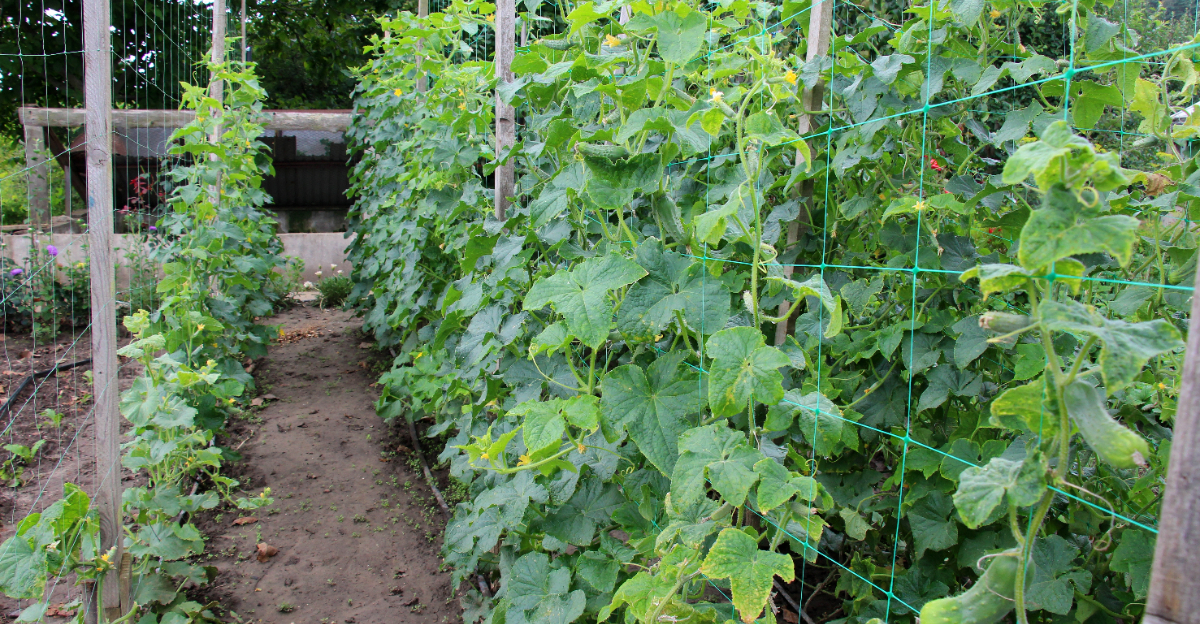
Space is the complaint Ohio vegetable gardeners voice more than almost any other. Not enough room for everything they want to grow, beds that fill up fast, and yards that seem to shrink every season as new projects compete for ground.
The solution most gardeners eventually stumble onto has been sitting right in front of them the whole time. Going up solves a surprising number of Ohio garden problems at once.
Vertical growing opens square footage that was never being used, improves air circulation around plants, makes harvesting dramatically easier, and gives a garden that intentional, organized look that’s genuinely hard to achieve when everything sprawls across the ground.
Ohio’s growing season is well-suited to vertical gardening.
The warm summers give climbing and vining crops exactly the conditions they need to run hard up a trellis, fence, or cage and produce at a level that horizontal growing in a small bed simply cannot match.
The vegetables that take to vertical growing best also happen to be some of the most rewarding crops an Ohio gardener can put in the ground.
Productive, manageable, and perfectly matched to the way Ohio summers actually behave.
1. Grow Pole Beans Up A Trellis For Bigger Harvests
Few vegetables reward Ohio gardeners as generously as pole beans do when given something sturdy to climb.
Unlike bush beans, which produce one main flush and slow down, pole bean varieties keep flowering and setting pods all season long as long as you keep picking.
That continuous production makes them one of the most space-efficient crops you can grow vertically.
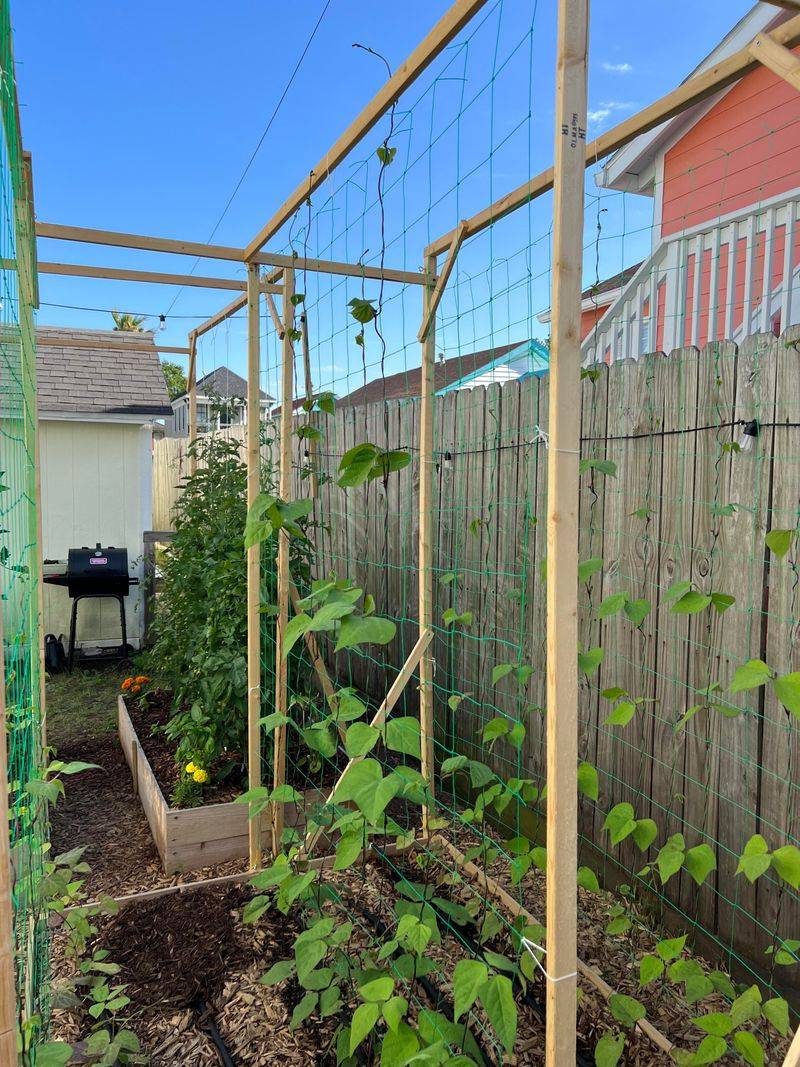
Pole beans climb naturally by twining around supports, so they work well on trellises, bamboo teepees, cattle panels, garden fencing, or simple poles pushed into the ground.
Wait until after your last frost date and until the soil has warmed to at least 60 degrees Fahrenheit before planting.
In most of Ohio, that means waiting until mid to late May, though southern Ohio gardeners may be able to plant a week or two earlier.
Give your support structure at least five to six feet of height because vigorous varieties can easily reach that and more. Plant seeds about four to six inches apart at the base of the support and let them find their way upward.
Water consistently during dry stretches in July and August, since beans drop flowers when stressed by heat and drought.
Pick pods regularly, every two to three days during peak production, because leaving mature pods on the vine signals the plant to slow down flowering.
Harvest often and you will keep the beans coming all the way until frost.
2. Train Cucumbers To Climb Instead Of Sprawl
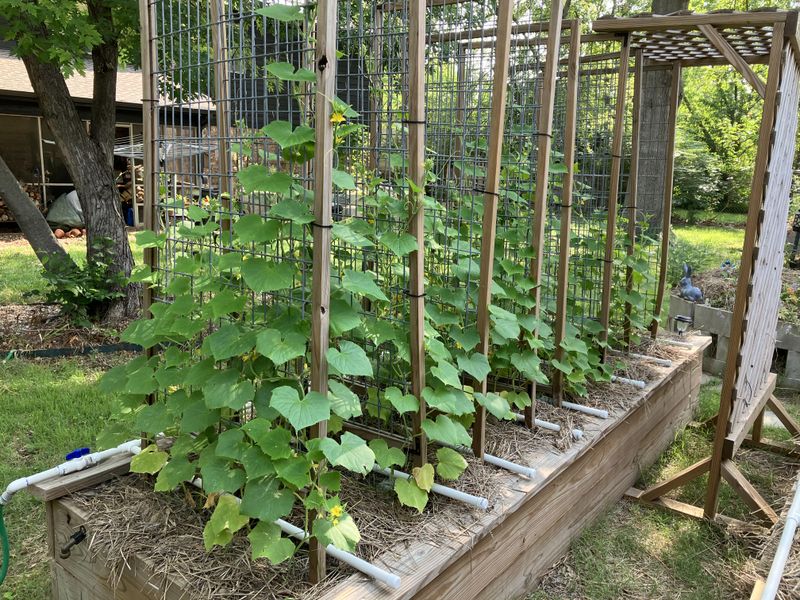
Cucumbers left to sprawl across the ground take up a shocking amount of space, and in Ohio’s wet summers, ground contact can speed up rot and make fruits harder to spot before they go yellow and bitter. Trellising changes the whole picture.
Vertical cucumbers are easier to harvest, easier to inspect for pests, and the improved airflow around the leaves can help reduce fungal problems that thrive in Ohio’s humid conditions.
Your Ohio Garden Changes Every Week. Your Plan Should Too.
Gardening in Ohio changes quickly throughout the season. Every Friday you’ll receive a simple weekly plan showing exactly what to plant, prune, fertilize, harvest, and protect so you never miss the right timing.
Choose vining cucumber varieties rather than compact bush types if vertical growing is the goal. Good netting with four to six inch openings, cattle panels, wire mesh fencing, or angled A-frame trellises all give cucumber tendrils plenty to grab onto.
Set up your support before planting so you avoid disturbing roots later. Plant cucumbers after your last frost date when soil has warmed, typically late May in central and northern Ohio and a little earlier in the southern part of the state.
Cucumbers are heavy drinkers, so consistent watering matters, especially during fruit set. Mulching around the base helps hold moisture and keeps soil temperature steady.
Train young vines toward the trellis early and they will take over from there. Check plants every couple of days once fruiting begins because cucumbers grow fast and are easy to miss behind dense foliage.
Picking fruits at the right size keeps production going strong through summer.
3. Support Indeterminate Tomatoes Before They Take Over
Walk through any Ohio garden center in May and you will see rows of tomato transplants ready to go home, but not every variety behaves the same way once it is in the ground.
Determinate tomatoes grow to a set height, set their fruit, and slow down.
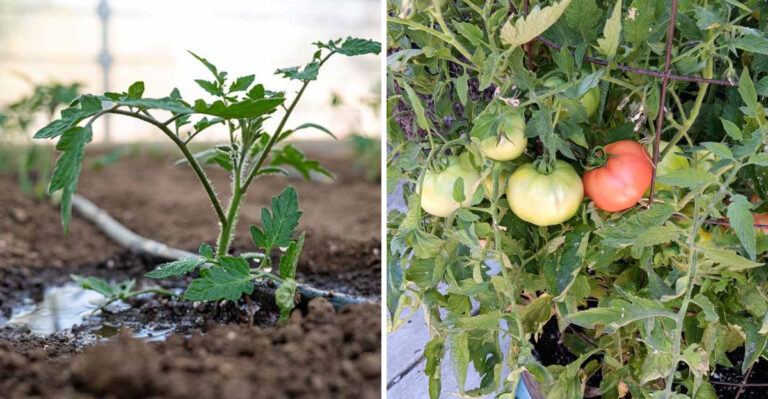
Indeterminate varieties, on the other hand, keep growing taller and producing fruit until frost stops them, which means they need serious support from the start.
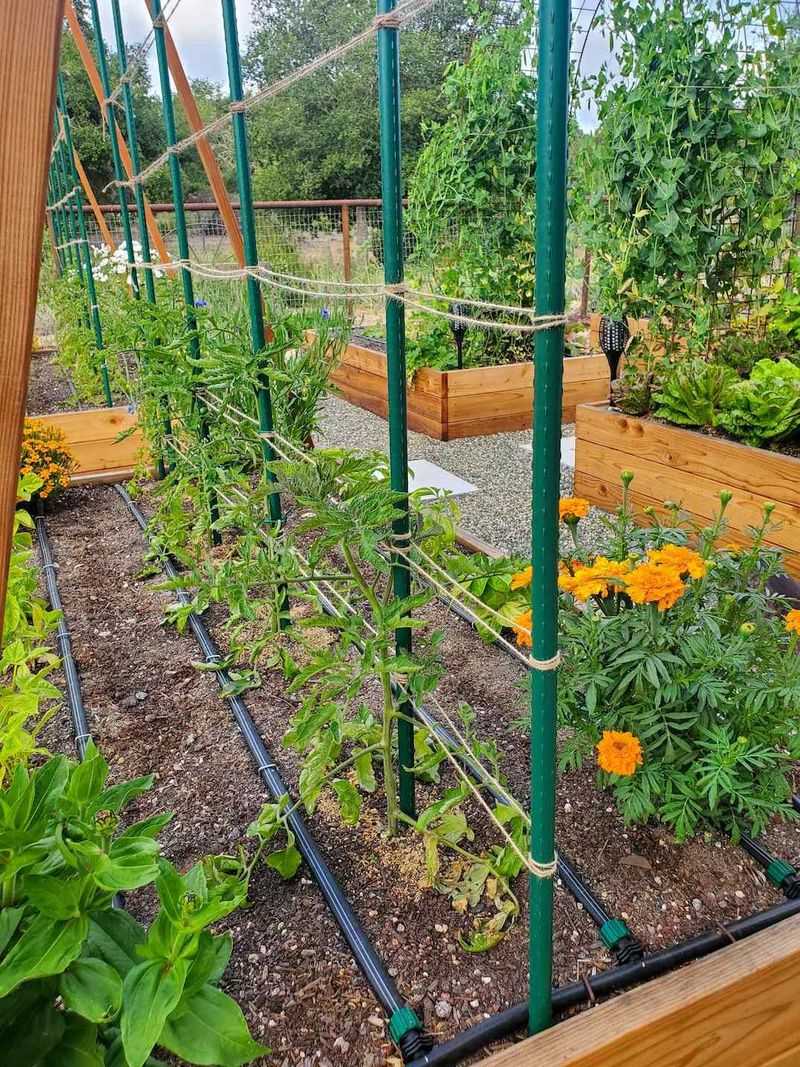
Tall sturdy cages, heavy-gauge stakes, the Florida weave method using twine and posts, or dedicated trellis panels all work well for indeterminate tomatoes. Flimsy wire cages sold at discount stores rarely hold up once a full-sized plant loads up with fruit in August.
Ohio summers bring heavy rain and wind, so whatever support you choose needs to stay anchored. Plan for plants to reach five to seven feet or more with varieties like Cherokee Purple, Brandywine, or Sun Gold.
Ohio’s humidity makes airflow around tomato plants genuinely valuable for reducing fungal diseases like early blight and septoria leaf spot.
Removing a few of the lower leaves and tying stems gently with soft twine or fabric strips as plants grow helps keep air moving through the canopy.
Avoid tying stems too tightly since stems thicken as the season goes on. Check ties every week or two and adjust as needed to keep plants upright and productive through the long Ohio growing season.
4. Let Peas Climb Early In The Cool Ohio Spring
Spring in Ohio can feel like a race against time, with cold wet weeks followed by a sudden jump into warm weather that catches cool-season crops off guard. Peas are built for exactly that window.
They thrive in the cooler temperatures of March, April, and early May, and they will tell you pretty clearly when summer has arrived because heat causes production to drop off fast.
Getting peas in the ground early is the whole game. Ohio State University Extension recommends planting peas as soon as the soil can be worked in spring, often late March or early April in central Ohio and sometimes earlier in southern counties.
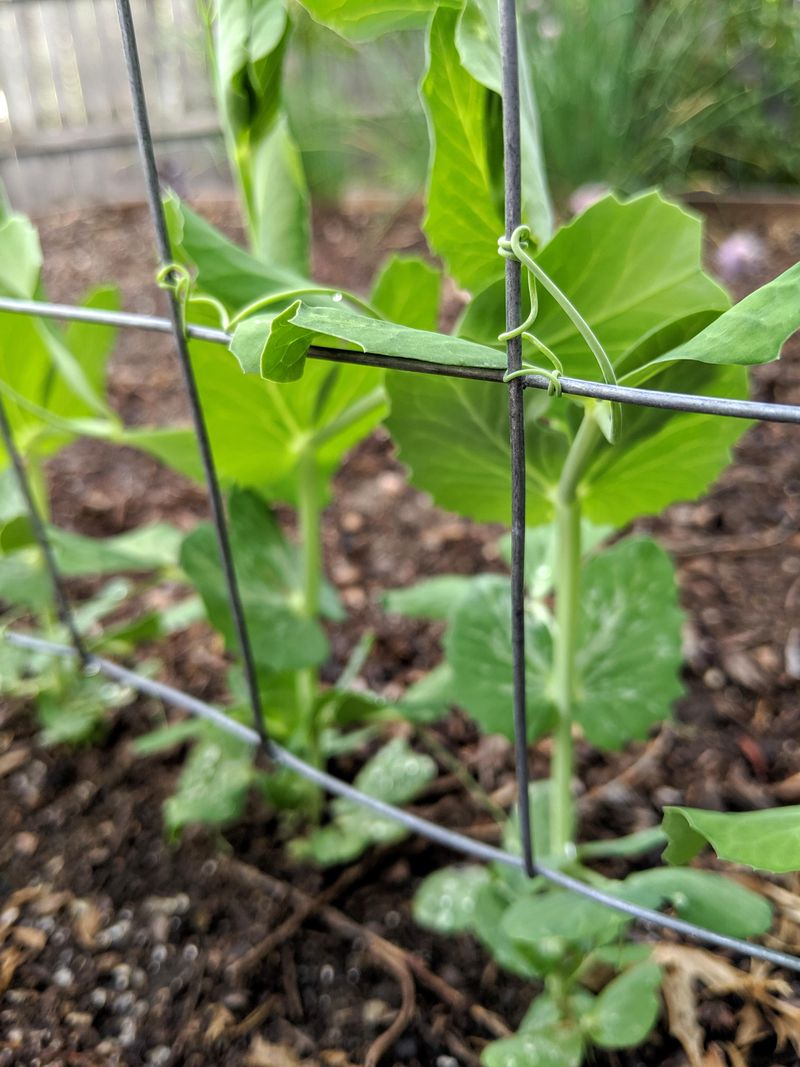
Peas need something to climb right away, so set up your support before or at planting time. Twiggy brush stuck in the soil, short wire fencing, netting stretched between posts, or even sections of old chicken wire all give pea tendrils the grip they need.
Most pea varieties reach two to four feet, though some taller types can hit six feet in good conditions. Harvest pods regularly once they fill out because leaving pods on the vine past their prime reduces overall yield.
Sugar snap peas are especially popular with Ohio home gardeners for their sweet flavor and versatile use fresh or cooked.
Once heat arrives and production slows, pull the spent vines and use that same trellis space for a warm-season crop that will carry the garden through summer.
5. Guide Malabar Spinach Upward During Summer Heat
Most leafy greens wave the white flag once Ohio’s July heat settles in, but Malabar spinach does the opposite. The hotter and more humid the weather gets, the faster this vine seems to grow.
Worth knowing upfront though: Malabar spinach is not actually related to true spinach. It belongs to a completely different plant family, and its thick, glossy leaves have a slightly mucilaginous texture that some people enjoy and others find takes getting used to.
What makes it genuinely useful for Ohio gardeners is its timing. Malabar spinach fills the summer leafy green gap when cool-season crops like lettuce and spinach have already bolted.
Start seeds indoors four to six weeks before your last frost date, or direct sow after soil and air temperatures have warmed reliably. The plant needs heat to get going, so do not expect fast growth in cool spring weather.
Full sun and consistent moisture help it establish quickly.
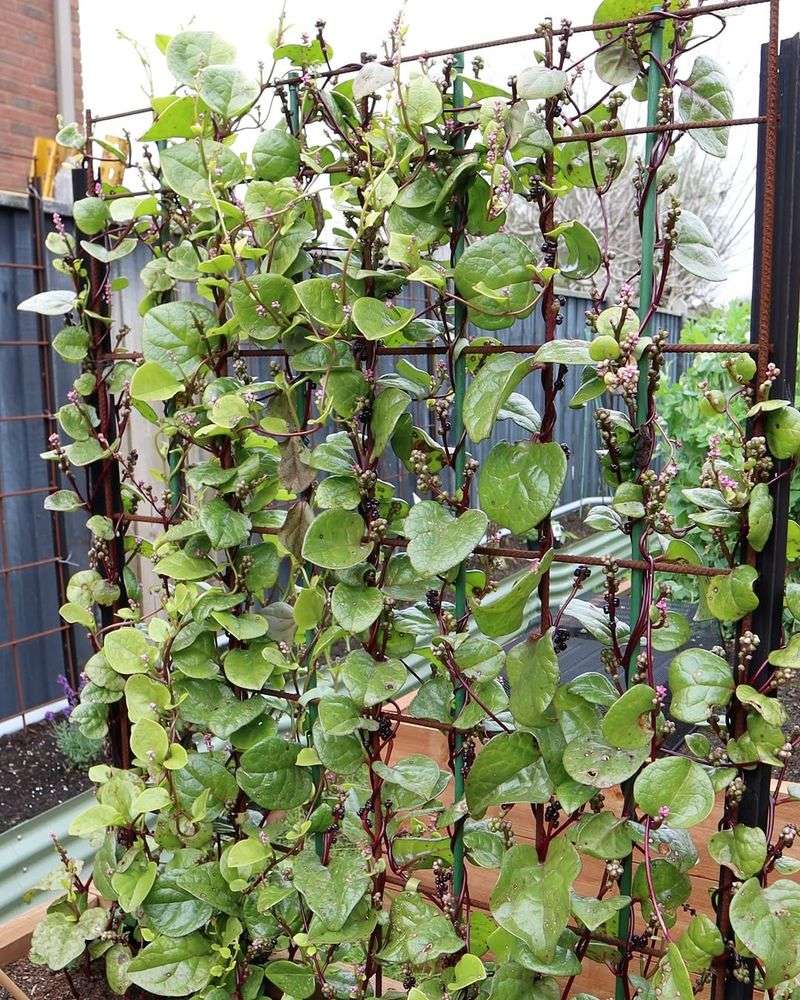
Once Malabar spinach gets moving, it can cover a trellis in a matter of weeks. Train the main vine upward and it will branch out on its own.
Harvest individual leaves or stem tips regularly to encourage bushy growth and keep the plant producing. The deep green leaves work well in stir-fries, soups, and egg dishes.
In Ohio, this vine will grow vigorously from late June through September, giving gardeners a reliable leafy harvest during the hottest months of the year.
6. Send Mini Pumpkins Up A Strong Trellis
Growing pumpkins vertically sounds a little wild until you realize how much garden real estate a standard pumpkin vine can swallow.
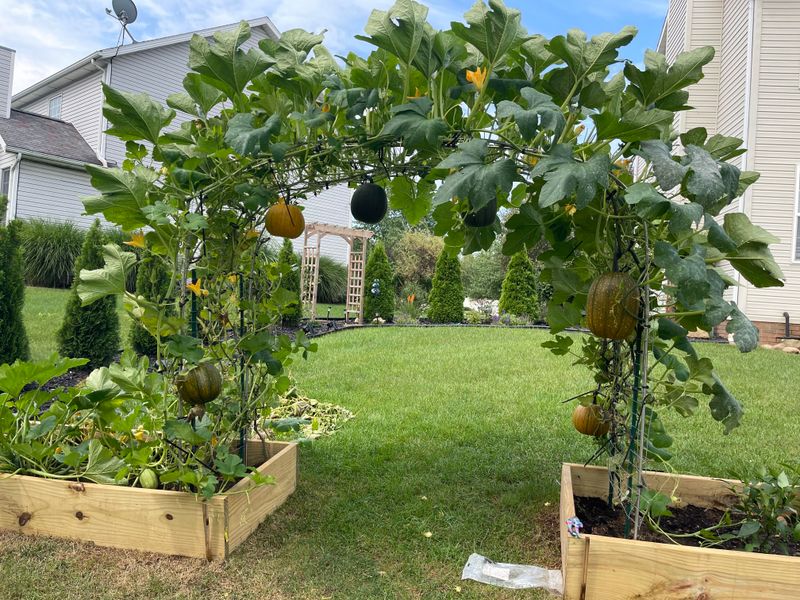
Mini pumpkin varieties like Baby Boo, Jack Be Little, and Wee-Be-Little produce small fruits on vigorous vines that can absolutely be trained upward with the right setup.
The key word in that sentence is sturdy, because pumpkin vines are heavy and the support has to match.
Cattle panels, heavy welded wire fencing, or thick wooden trellis frames work much better than lightweight netting for mini pumpkins. Set the support firmly in the ground before planting since it will be holding significant weight by late summer.
Plant after your last frost date when soil has warmed, and give each plant plenty of room at the base because the root system spreads wide. Full sun is non-negotiable since pumpkins need a long, warm growing season to produce well in Ohio.
As small fruits develop on the trellis, check whether they need extra support. Fruits that hang freely from a sturdy stem may be fine, but heavier ones can benefit from a soft sling made from fabric, mesh, or a section of old pantyhose tied to the trellis frame.
This takes some of the weight off the stem and reduces the chance of the fruit separating before it fully matures. Train vines regularly, tying them loosely to the support as they grow upward and outward through the season.
7. Trellis Small Melons With Slings For Extra Support
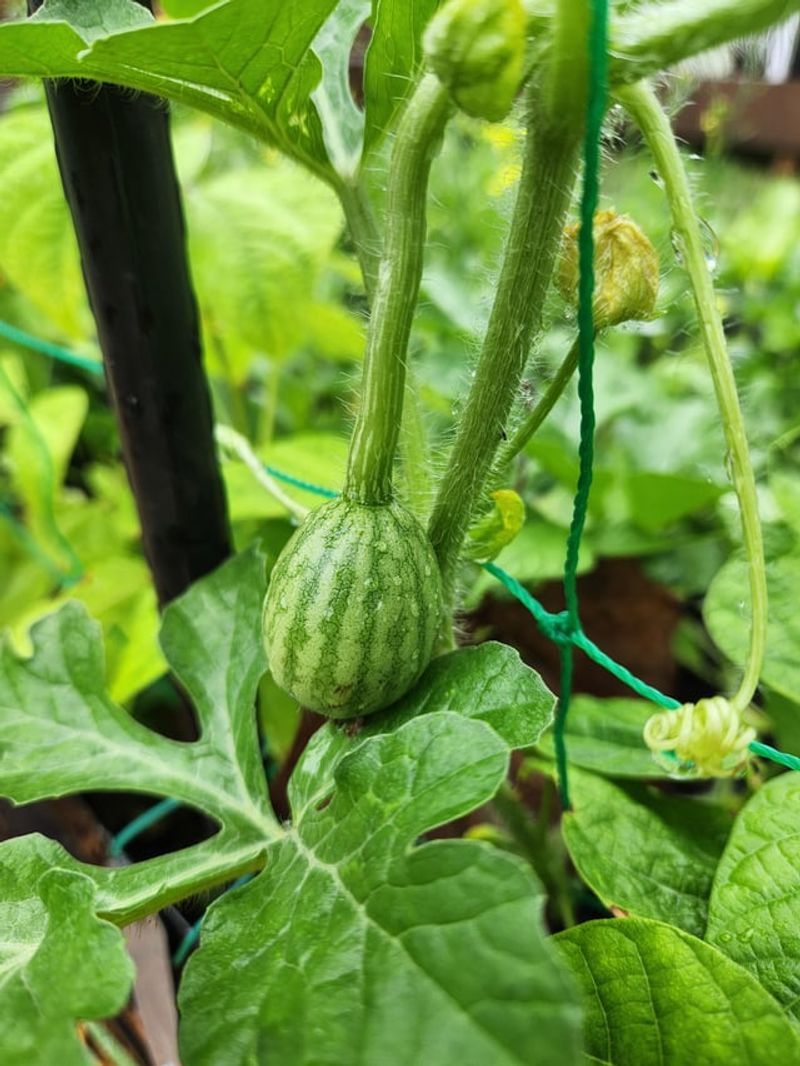
Melons have a reputation for needing a lot of space, and honestly, large varieties like full-sized watermelons are not practical candidates for most vertical setups. But compact and small-fruited melon varieties are a different story.
With the right support and a little attention, varieties like Minnesota Midget cantaloupe or small personal-sized watermelons can be trained upward in an Ohio garden with satisfying results.
Melons need full sun, consistent moisture, and warm soil to thrive, so wait until late May or early June to plant in most of Ohio.
Northern Ohio gardeners near Lake Erie may want to wait until the first week of June to be safe since lake-influenced weather can keep soils cooler longer.
Use strong trellis materials because melon vines become surprisingly heavy as the season progresses and fruit develops.
The most important extra step with vertical melons is making fruit slings as soon as small fruits start to size up. Old T-shirt fabric cut into strips, mesh produce bags, or soft nylon netting folded into a cradle all work well.
Tie the sling securely to the trellis frame so the weight of the developing fruit rests in the sling rather than pulling on the stem. Check slings every few days and adjust as the fruit grows.
Melons signal ripeness through scent, color change, and the natural separation of the stem from the fruit, so monitor closely as harvest time approaches in late summer.
8. Grow Vining Summer Squash Vertically To Save Garden Space
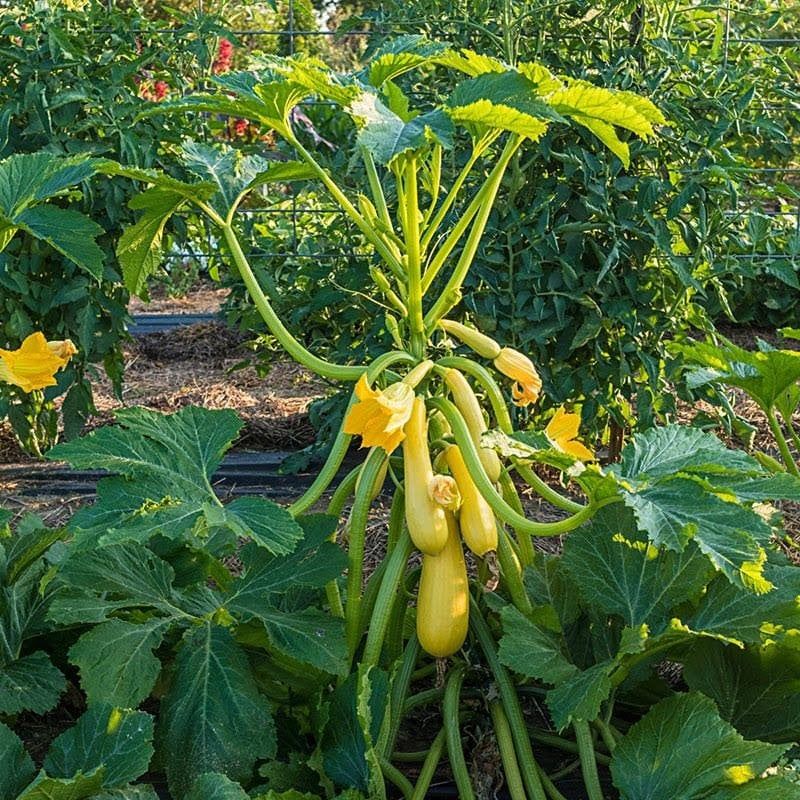
Summer squash has a reputation for taking over the garden, and if you have ever grown a standard zucchini, you know exactly what that means by mid-July. Not every squash variety is well suited to vertical growing, so variety selection matters here.
Vining types or sprawling varieties with flexible stems tend to train upward more successfully than the most compact bush types, which resist bending toward a support.
Look for varieties described as vining or climbing, or check seed catalog descriptions for plants with longer stems and a tendency to spread. Tromboncino squash, sometimes called zucchetta, is one example that climbs readily and produces well on a strong trellis.
Whatever variety you choose, the support needs to be heavy-duty since squash vines and fruit combined can get very heavy by midsummer in Ohio’s warm, humid growing conditions.
Plant after your last frost date when soil temperatures have reached at least 60 degrees Fahrenheit, typically late May across most of Ohio. Tie vines loosely to the trellis with soft fabric strips as they grow, redirecting them upward rather than letting them flop sideways.
Check plants frequently because summer squash grows fast and fruits can go from perfect size to oversized in just two or three days.
Keeping up with harvest encourages the plant to keep producing and prevents the vine from putting all its energy into one enormous squash instead of many smaller ones ready for the kitchen.