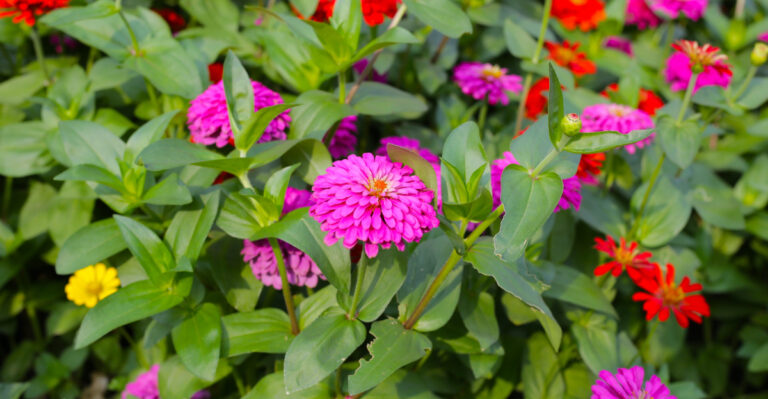
How To Feed A Peace Lily So It Keeps Flowering Again And Again In A Michigan Home

Peace lilies are one of the few houseplants that bloom reliably indoors, and in a Michigan home where natural light gets scarce for months at a stretch, that flowering cycle is something worth protecting.
Feeding plays a bigger role in keeping it going than most plant owners realize, and getting it wrong is one of the more common reasons a peace lily produces a flush of blooms and then goes quiet for far longer than it should.
Too much fertilizer pushes the plant toward foliage at the expense of flowers and can burn roots that are more sensitive than they appear. Too little and the plant runs out of what it needs to support repeat blooming through the year.
Michigan’s indoor environment adds a layer to this, since reduced winter light already puts some stress on the plant’s energy reserves, and feeding decisions made during that period affect performance well into spring.
Understanding what a peace lily actually needs nutritionally, and when to apply it across Michigan’s distinct seasonal shifts indoors, is what keeps the flowers coming back consistently.
1. Feed Lightly During Active Growth
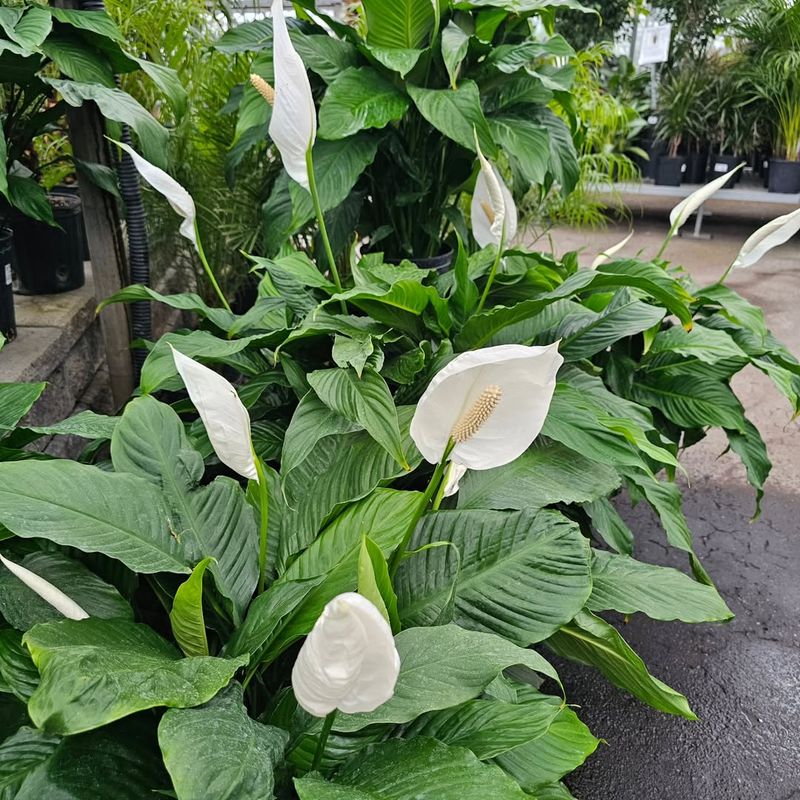
Most people think that pouring on more fertilizer means more flowers, but peace lilies actually work the opposite way. Too much fertilizer at once can cause brown, crispy leaf tips and a nasty buildup of salts in the soil.
Light, consistent feeding is the golden rule for keeping your peace lily happy and blooming inside a Michigan home.
During the active growing season, which runs roughly from early spring through late summer, your plant is pulling in nutrients and water at a much faster rate. A small dose of diluted liquid fertilizer every four to six weeks is all it really needs.
Think of it like feeding a child small, nutritious snacks rather than one enormous meal.
Spathiphyllum hybrids, the most common peace lily varieties sold in Michigan garden centers and big box stores, are naturally adapted to low-nutrient tropical forest floors. Their roots are not built to handle heavy fertilizer loads.
Keeping each feeding light and spreading them out over the growing season gives your plant steady energy without overwhelming its system, and that steady energy is exactly what triggers repeat blooming. Patience and a gentle hand are your two best tools here.
2. Use A Balanced Houseplant Fertilizer
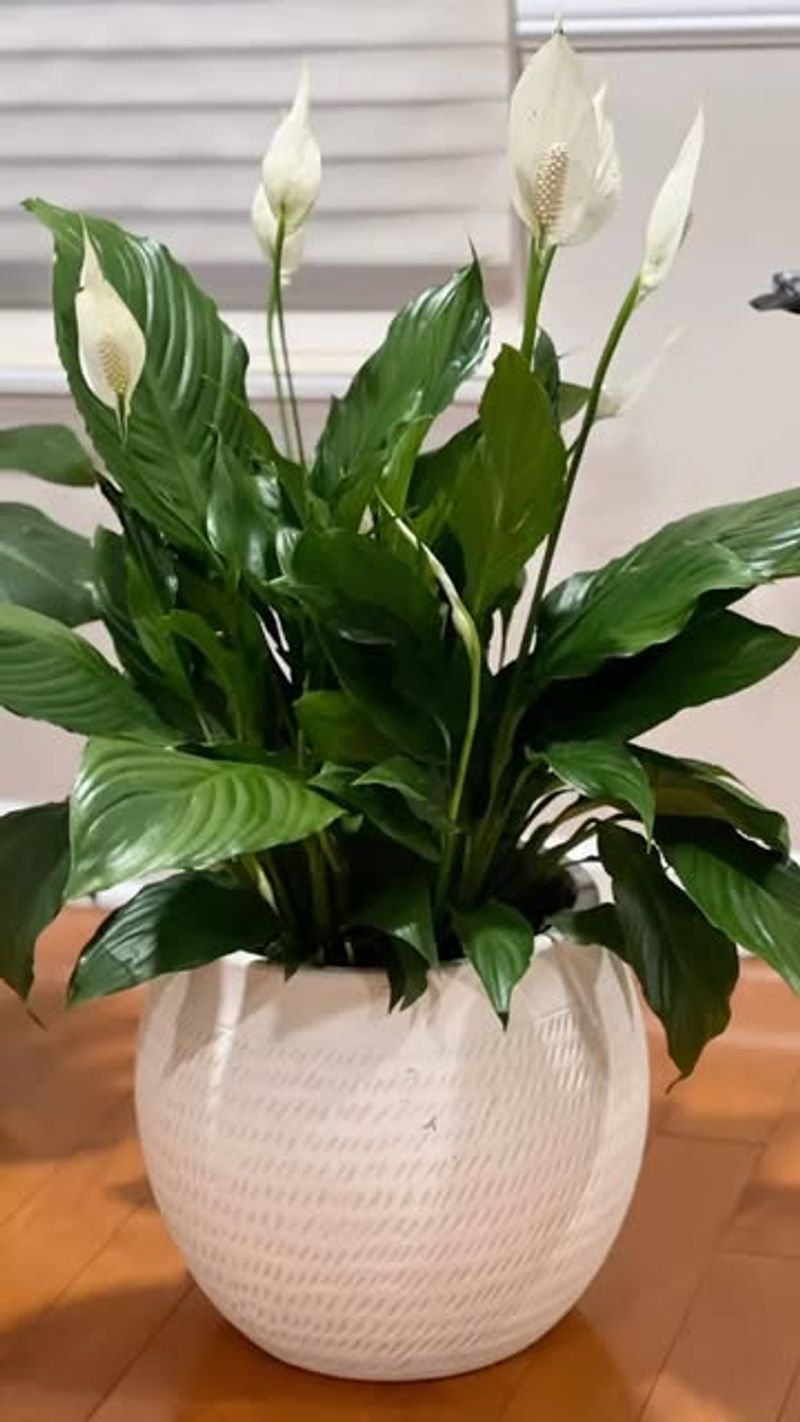
Walk into any garden center in Michigan and you will see shelves packed with fertilizers promising bigger blooms and faster growth, but for peace lilies, simpler is almost always better.
A balanced fertilizer, one with equal or near-equal amounts of nitrogen, phosphorus, and potassium, is the safest and most reliable choice for indoor peace lilies. Look for a ratio like 20-20-20 or 10-10-10 on the label.
The key trick that most growers overlook is diluting that fertilizer to about half the strength the package recommends. Mix it with water so it is weaker than the directions suggest, then apply it during a regular watering session.
Strong, concentrated bloom-booster formulas can shock the roots and actually slow flowering instead of encouraging it.
Your Michigan Garden Changes Every Week. Your Plan Should Too.
Gardening in Michigan changes quickly throughout the season. Every Friday you’ll receive a simple weekly plan showing exactly what to plant, prune, fertilize, harvest, and protect so you never miss the right timing.
Balanced fertilizers give your peace lily a well-rounded nutritional profile, which supports healthy leaves, strong roots, and steady flower production all at once.
If leaves start turning yellow or the plant looks sluggish even with regular watering, a gentle dose of balanced fertilizer can perk things right back up.
Michigan plant lovers often find that switching from heavy specialty formulas to a simple balanced feed makes an almost immediate difference in how fresh and vibrant their peace lily looks throughout the year.
3. Fertilize Mostly During Brighter Months
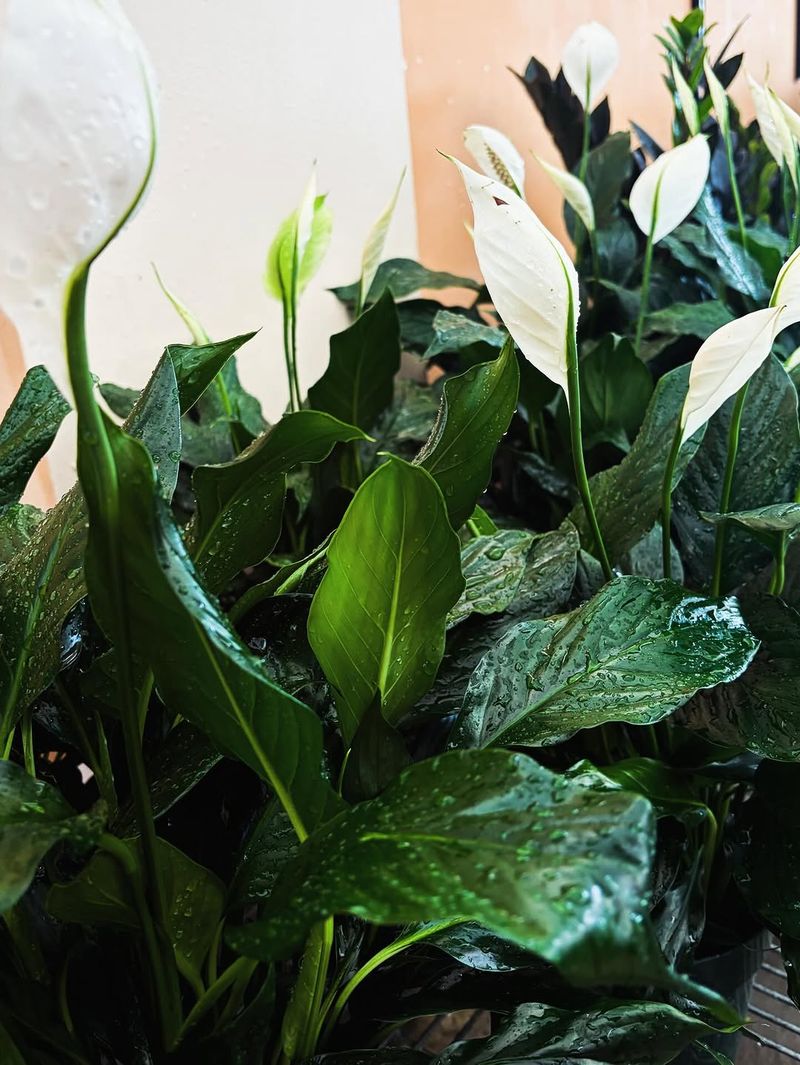
Michigan winters are notoriously dim, and that low light has a bigger impact on your peace lily than most people realize. When sunlight hours drop and cloud cover settles in from November through February, your plant essentially shifts into a slow, restful state.
Nutrient absorption slows way down, which means fertilizer you add during those dark months often just sits in the soil and causes more harm than good.
Timing your feeding schedule to match the brighter months, from around March through September, keeps things working in harmony with your plant’s natural rhythm.
As daylight increases and your Michigan home gets more natural light through windows, the peace lily wakes back up and starts actively using nutrients again. That is exactly the right moment to begin your feeding routine.
A simple way to remember this is to start fertilizing around the same time you start seeing new leaf growth pushing up from the center of the plant. New growth is a reliable signal that the plant is ready to eat.
Then, as fall approaches and Michigan days grow shorter again, gradually stop fertilizing and let the plant rest.
Giving your peace lily this natural seasonal cycle, active feeding in bright months and rest in dark ones, is one of the most effective habits for encouraging consistent, repeat blooming year after year.
4. Always Water Before You Fertilize Dry Soil
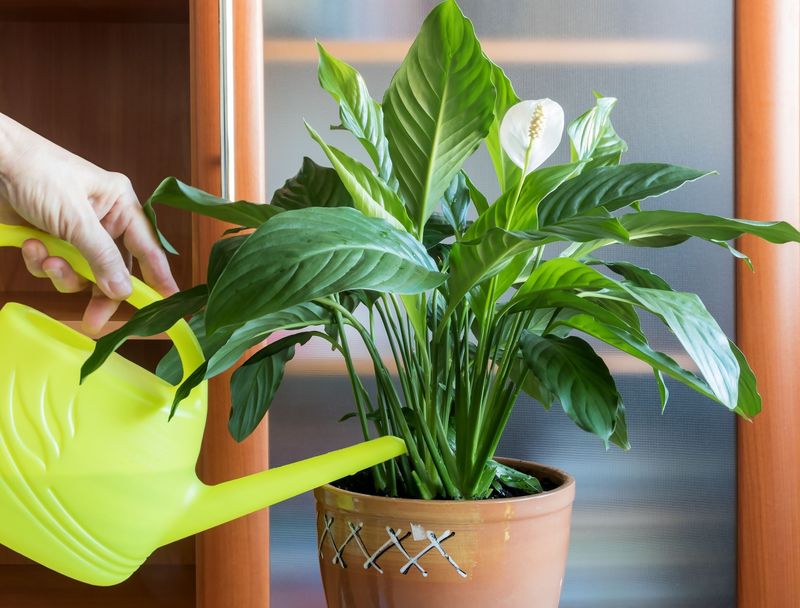
Here is something that catches a lot of plant owners off guard: applying fertilizer to bone-dry soil is one of the fastest ways to damage your peace lily’s roots.
When the soil is extremely dry, the concentrated salts in fertilizer have nowhere to dilute properly, and they end up burning the delicate root tips.
Root damage from fertilizer burn can slow your plant’s growth for weeks and make reblooming much harder to achieve.
The fix is refreshingly simple. Before you add any fertilizer, give the soil a light watering first and let it soak in for a few minutes.
Once the soil feels evenly moist but not waterlogged, then go ahead and apply your diluted fertilizer solution. The moisture creates a buffer that helps nutrients spread evenly through the root zone without concentrating in one spot.
Many Michigan plant owners find this especially important during winter months when indoor heating systems pull moisture out of potting soil faster than usual.
Heated air from furnaces and radiators common in Michigan homes can dry out pots surprisingly quickly, so always do a quick finger-check before feeding.
Press your finger about an inch into the soil, and if it feels dusty or very dry, water first and wait a bit before fertilizing. That one small habit protects your roots and keeps your peace lily on track for beautiful, repeated blooms.
5. Flush Your Pots To Remove Salt Buildup
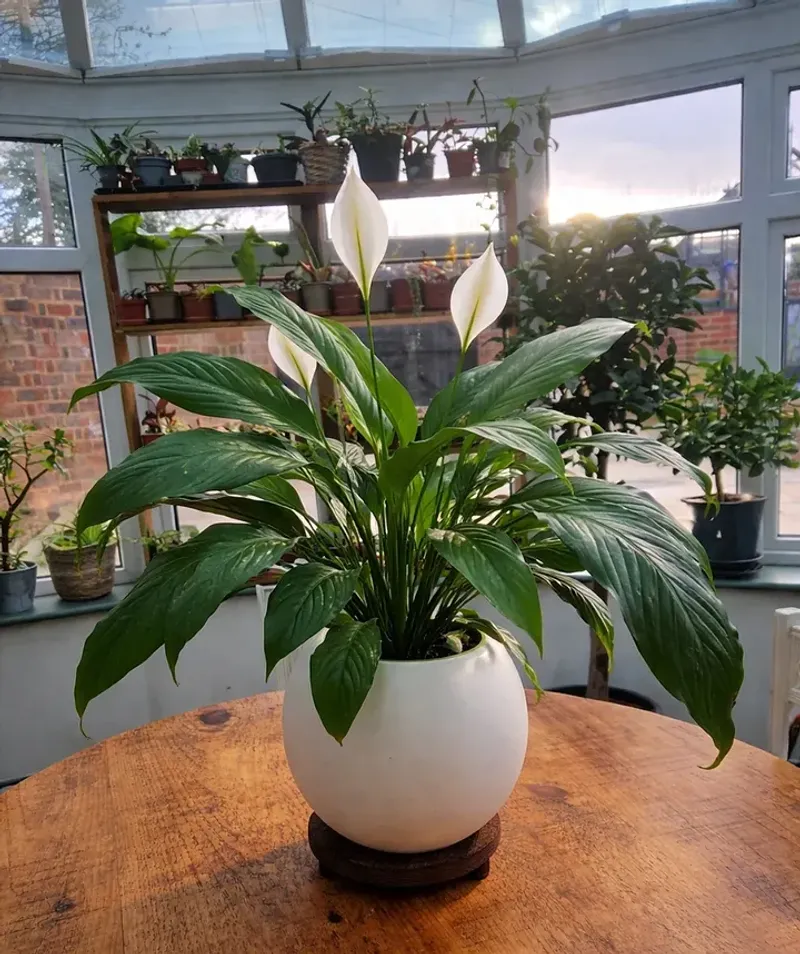
Over time, fertilizer salts and minerals quietly accumulate in the potting soil of any indoor plant, and peace lilies are no exception.
In Michigan homes, where municipal water often contains added minerals or where water softeners are commonly used, this buildup can happen faster than you might expect.
You might notice a white crusty residue forming on the rim of your pot or on the soil surface, which is a telltale sign that salts have been piling up.
Flushing your pot every two to three months is a straightforward way to clear out that excess buildup and give your peace lily a fresh start.
To flush it properly, take the pot to a sink or bathtub and slowly pour a generous amount of room-temperature water through the soil, letting it drain fully out of the bottom holes.
Repeat this two or three times in a row so the water has a chance to carry away dissolved salts.
After flushing, let the pot drain completely before placing it back on its saucer, since sitting in pooled water can cause other problems.
If your Michigan home uses a water softener, consider using filtered or distilled water for flushing, because softened water can actually add sodium to the soil over time.
Keeping the soil clean and salt-free gives your peace lily’s roots a healthy environment to thrive, which directly supports stronger and more frequent flowering throughout the year.
6. Bright Indirect Light Supercharges Your Fertilizer
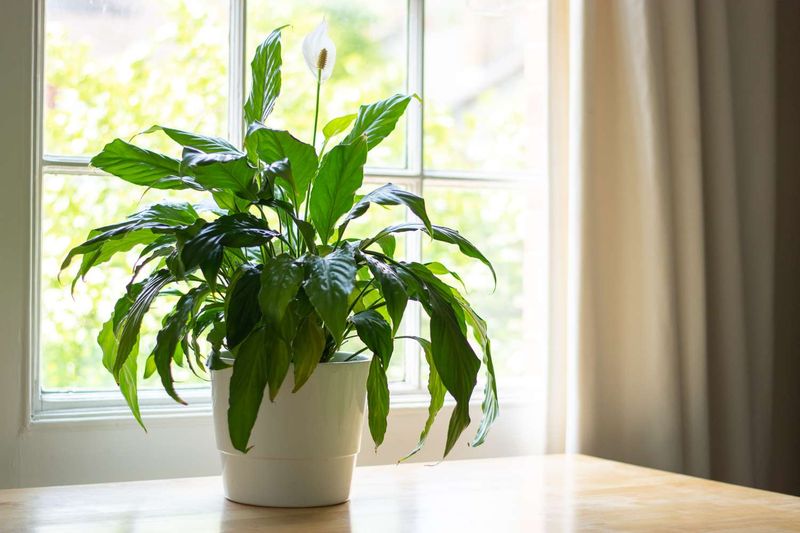
Even the best fertilizer in the world cannot make up for poor lighting, and this is something Michigan plant owners run into more than almost anywhere else.
During the long gray winters and even in some darker rooms year-round, peace lilies simply will not rebloom consistently no matter how perfectly you feed them.
Light is the engine, and fertilizer is just the fuel, so without the engine running, the fuel does nothing useful.
Peace lilies thrive in bright, indirect light, meaning a spot near a window where sunlight comes in but does not hit the leaves directly.
East-facing windows in Michigan homes are often ideal because they deliver gentle morning sun without the harsh afternoon intensity that can scorch leaves.
North-facing windows tend to be too dim for reliable reblooming, so repositioning your plant even a few feet closer to a brighter window can make a dramatic difference.
During Michigan winters, when daylight hours shrink and cloud cover is relentless, many plant lovers supplement with a grow light placed a foot or two above the plant for several hours each day.
This small investment pays off enormously when your peace lily starts pushing up new flower stalks in late winter or early spring while other plants are still dormant.
Pairing proper light with a smart fertilizer routine creates the perfect recipe for a peace lily that blooms again and again in your Michigan home.
7. Remove Spent Flowers To Trigger New Blooms
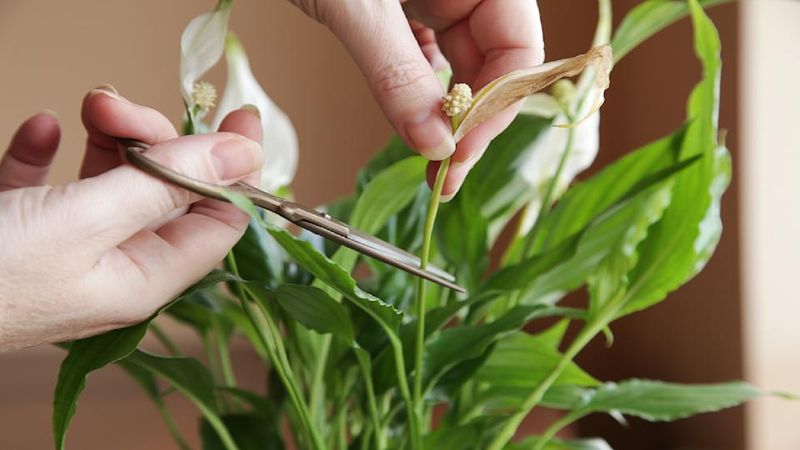
Once a peace lily flower fades and turns brown or green, it is no longer contributing anything beautiful to your plant, but it is still consuming energy.
The plant will keep pouring resources into that old flower stalk if you leave it in place, energy that could be going toward producing the next round of blooms instead.
Removing spent flower stalks promptly is one of the simplest and most satisfying things you can do to encourage your peace lily to flower again.
Use a clean pair of scissors or pruning snips to cut the old stalk as close to the base as possible without nicking the surrounding leaves.
Cutting near the base prevents a stubby stump from remaining, which can sometimes become a point of entry for fungal issues in the humid conditions of a Michigan home during winter when airflow is limited.
Wipe your cutting tool with rubbing alcohol before and after to keep things clean.
Right after removing old blooms, give your plant a light dose of its balanced fertilizer if it is during the active growing season.
The combination of removing the old flower stalk and providing a fresh nutrient boost sends a clear signal to the plant to redirect its energy toward producing new growth and flower buds.
Many Michigan plant owners are pleasantly surprised at how quickly a new flower spike appears after following this simple routine consistently throughout the growing season.