These Are The 10 Delicious Florida Vegetables You Can Grow In Water
Florida gardens can float. Picture jars of clear water on a sunny windowsill, roots suspended like white lace, leaves lush above the rim.
No soil, no weeds, no heavy bags to haul across the yard. In a state blessed with warmth and light, many favorite vegetables adapt to life in water with remarkable ease.
This method saves space, cuts mess, and keeps harvests within arm’s reach. A simple glass, a recycled bottle, or a small bucket can support crisp greens and bold flavors for months.
With the right picks, you can enjoy steady harvests straight from a countertop or patio table. From leafy staples to aromatic herbs, these Florida friendly vegetables prove that fresh food does not demand a traditional garden bed.
Water, light, and a little care set the stage for a clean, productive setup that delivers fresh flavor right at home.
1. Never Buy Scallions Again
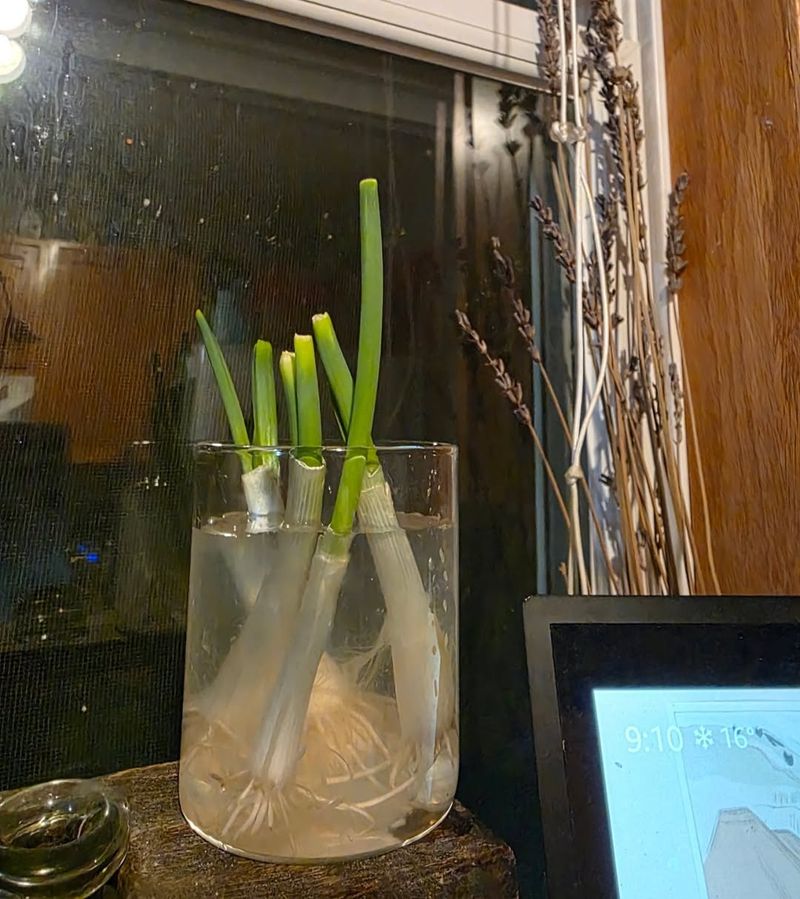
Placing the white root ends of green onions in a shallow glass of water creates an endless supply of fresh scallions. Florida’s warm indoor temperatures speed up regrowth dramatically, with new green shoots appearing in just three to five days.
Change the water every two to three days to prevent bacterial buildup, which happens faster in humid climates.
Position your glass on a windowsill that receives at least six hours of indirect sunlight daily. Direct afternoon sun can be too intense and may cause the water to heat up excessively.
The roots will continue producing new growth for several weeks, giving you multiple harvests from a single bunch.
Trim the green tops when they reach six to eight inches tall, leaving about an inch above the water line. This encourages the plant to keep producing rather than exhausting itself.
After three to four harvest cycles, the roots typically slow down production.
At that point, you can either compost the spent roots or transplant them into soil for a final harvest. Many Florida gardeners keep multiple jars going at once, ensuring a constant rotation of fresh scallions.
This method works beautifully year-round indoors, making it one of the most reliable water-growing techniques for our climate.
2. Romaine Revival In A Bowl
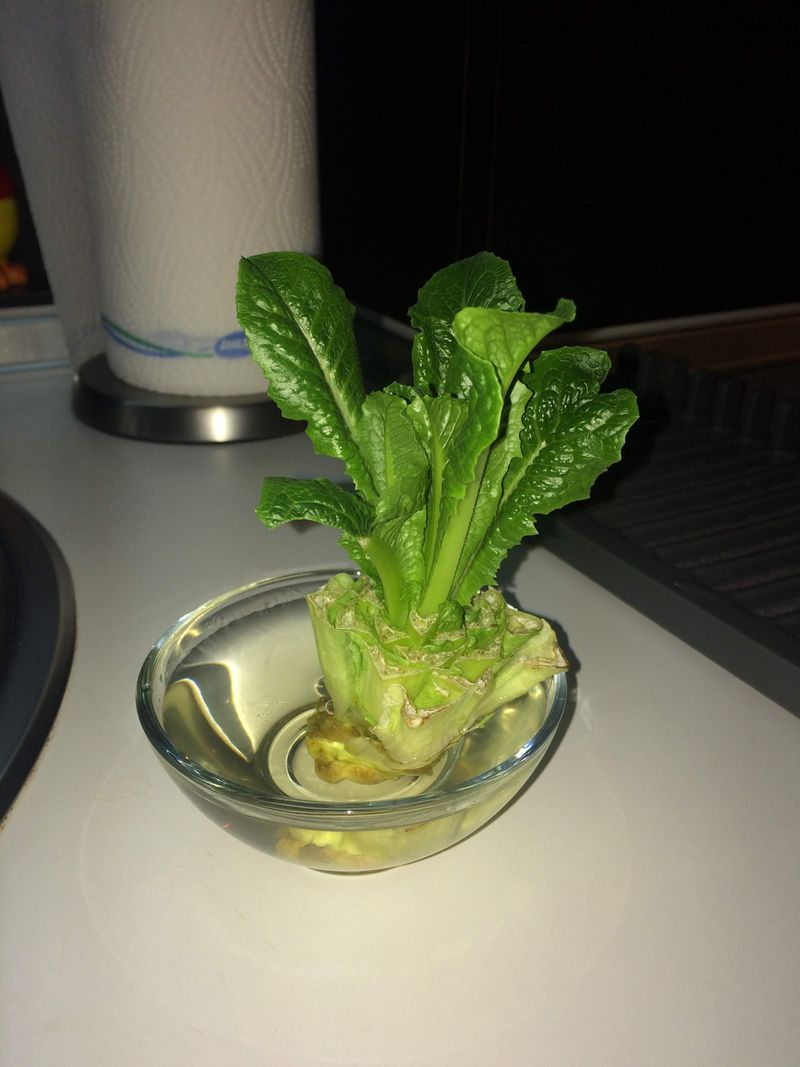
Saving the bottom two inches of a romaine heart gives you the perfect base for water regrowth. Submerge only the cut end in about half an inch of water, keeping the emerging leaves above the waterline to prevent rot.
Florida’s humidity can accelerate decomposition, so refreshing the water daily becomes especially important.
Place the bowl in a bright spot away from direct sunlight, as lettuce prefers cooler conditions than many other vegetables. A north-facing window or a spot with filtered light works well.
Within three to five days, you’ll notice tiny new leaves emerging from the center of the base.
The regrown lettuce won’t form a full head in water alone, but it provides enough tender baby greens for salads or sandwiches. For fuller growth, transplant the base into potting soil once the roots reach about an inch long.
This transition works particularly well during Florida’s cooler months from October through March.
Indoor growing helps you avoid the challenge of growing lettuce in Florida’s summer heat. Keep the water level consistent, as fluctuations stress the developing plant.
According to UF/IFAS Extension guidance, lettuce grows best in temperatures between 60 and 70 degrees, making air-conditioned indoor spaces ideal for this project.
3. Bok Choy Comeback Trick
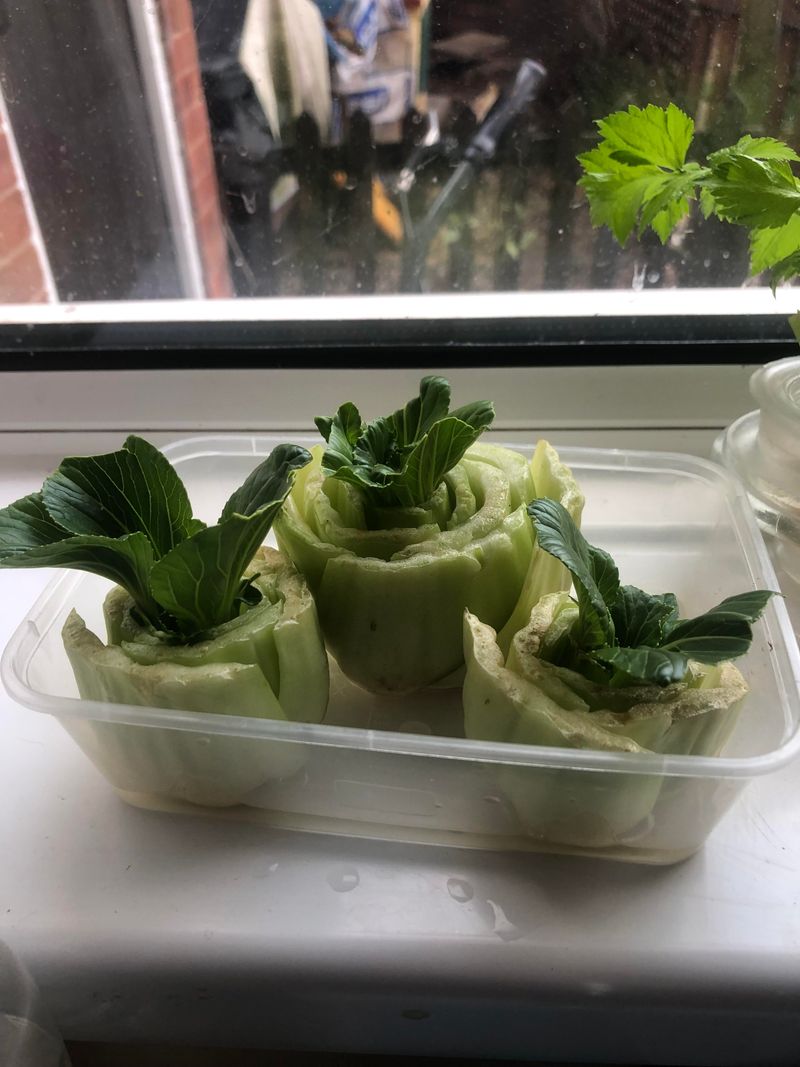
Cutting off the bottom inch of bok choy and placing it in shallow water triggers impressive regrowth in Florida’s warm environment. The key is maintaining water depth at about half an inch, just enough to cover the cut surface without submerging the entire base.
Too much water in our humid climate invites rot before roots can establish.
Position your container where it receives bright indirect light for most of the day. Bok choy tolerates warmth better than lettuce but still prefers temperatures below 80 degrees, making indoor growing the best option during summer.
Change the water every day without exception, as stagnant water combined with humidity creates the perfect environment for bacterial growth.
New leaves appear from the center within a week, while roots develop along the outer edge of the base. Once roots reach about two inches long, transplanting to soil becomes necessary for continued growth.
Florida gardeners find that bok choy transitions to soil more successfully during fall and winter months.
The regrown leaves offer a milder flavor than mature bok choy, perfect for stir-fries or fresh salads. Watch for any slimy texture or off odors, which signal the base has started decomposing.
Catching this early and starting fresh prevents wasted effort and ensures a steady supply of this nutritious vegetable.
4. Celery That Keeps On Giving
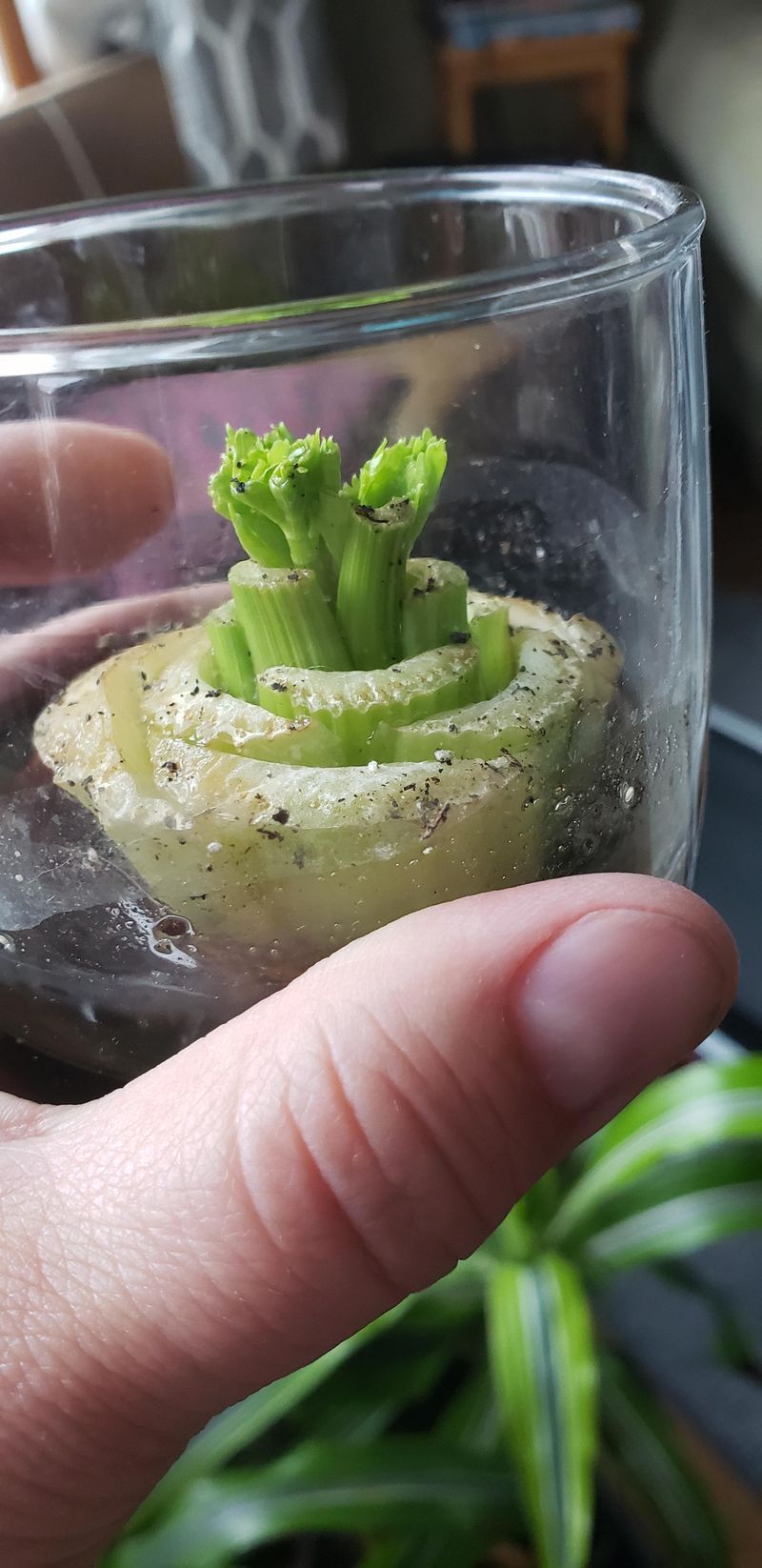
Regrowing celery from the base requires patience but delivers rewarding results in Florida’s climate. Cut off the bottom two to three inches of a celery bunch and place it in a bowl with about an inch of water.
The base should sit flat in the container, allowing water to reach the cut surface while keeping developing growth above the waterline.
Celery needs more light than most water-grown vegetables, so choose your brightest windowsill. Six to eight hours of sunlight daily produces the strongest regrowth.
In Florida’s intense summer sun, a sheer curtain helps filter light without blocking it completely.
Watch for yellow-green shoots emerging from the center of the base within five to seven days. These shoots look different from the original celery stalks, appearing more delicate and lighter in color.
Change the water every other day, and don’t worry when the outer stalks start looking brown or wilted.
The magic happens in the center where new growth forms. Once you see healthy roots about an inch long, transplanting to soil becomes the next step for fuller stalk development.
Many Florida gardeners transplant celery bases into containers during cooler months when outdoor conditions support continued growth. The regrown celery offers a milder taste than store-bought, with tender stalks perfect for snacking or adding to soups.
5. Sweet Potato Slip Starter
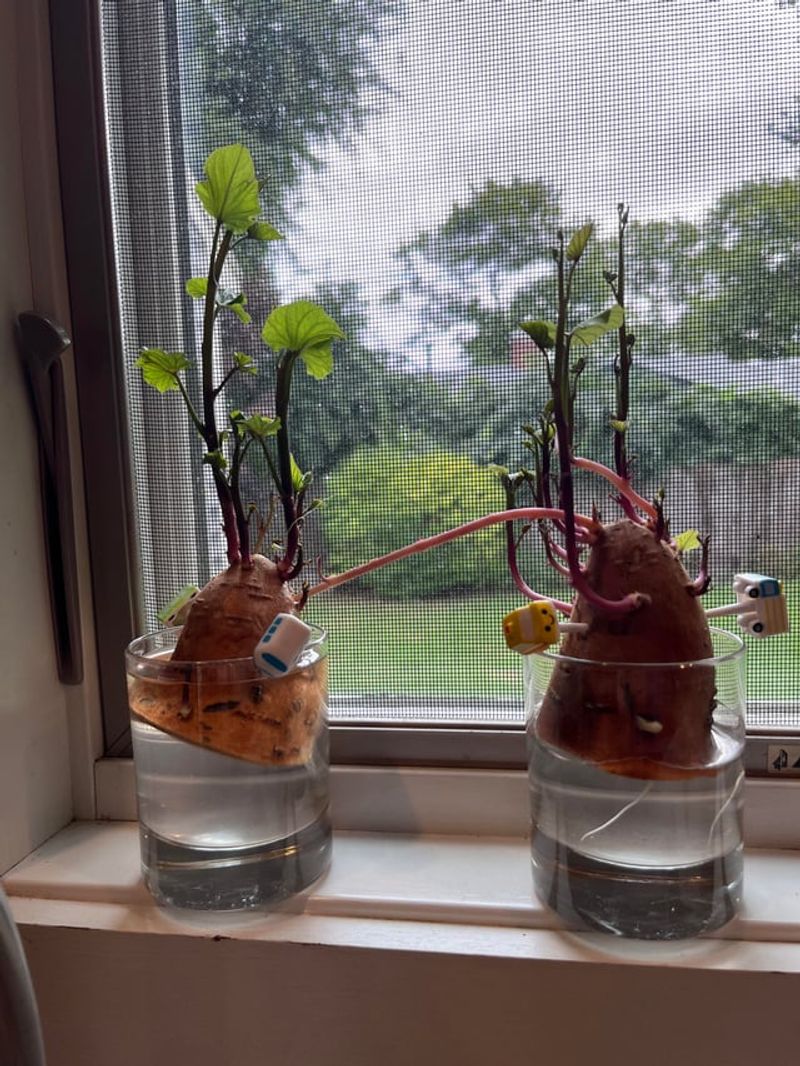
Suspending a sweet potato in water using toothpicks creates the classic science-project setup that actually produces edible results. Insert three to four toothpicks around the middle of the potato, then rest it over a jar with the bottom third submerged.
Florida’s warmth accelerates slip production, with shoots and roots appearing within one to two weeks.
Position the jar in a warm, bright location but out of direct afternoon sun. Sweet potatoes thrive in temperatures between 75 and 85 degrees, which describes most Florida homes perfectly.
Change the water weekly, and watch as purple-tinged vines begin spiraling upward while roots grow downward.
The shoots, called slips, can be twisted off once they reach six to eight inches long and have their own small root systems. Each slip becomes a separate plant when placed in soil.
According to UF/IFAS Extension, sweet potatoes grow exceptionally well in Florida, making this water-starting method particularly practical for local gardeners.
Plant slips outdoors after the last frost date, typically in late February for most of Florida. The vines spread vigorously in our sandy soil and heat, producing tubers in about four months.
Starting slips in water gives you free plants while avoiding the cost of purchasing transplants from garden centers.
6. Garlic Greens On Demand
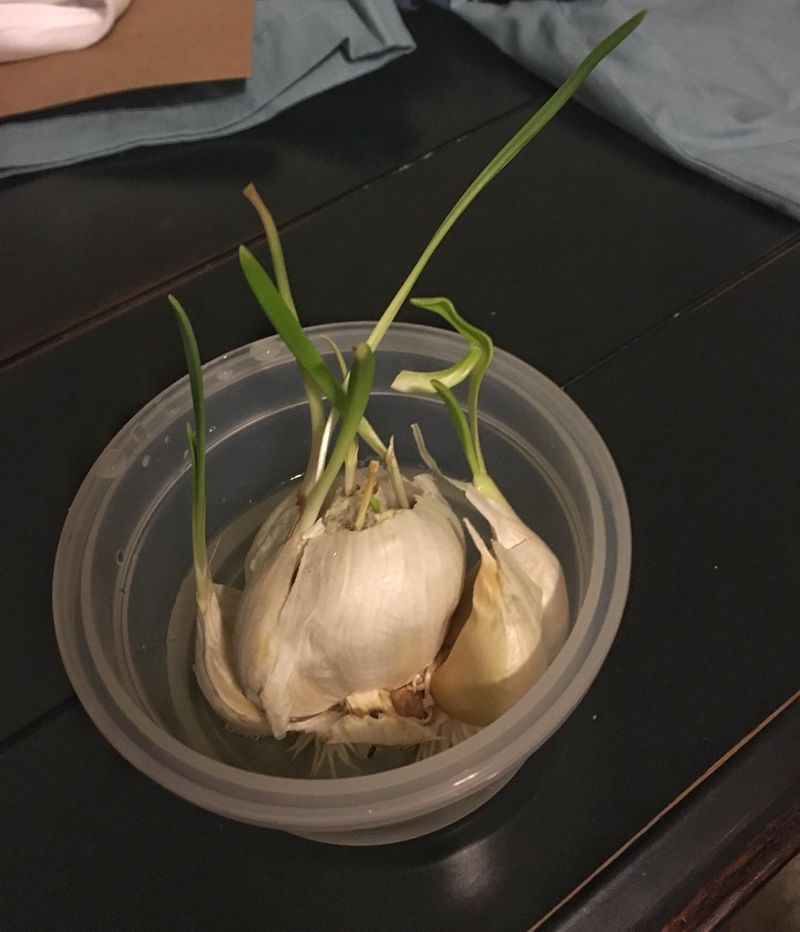
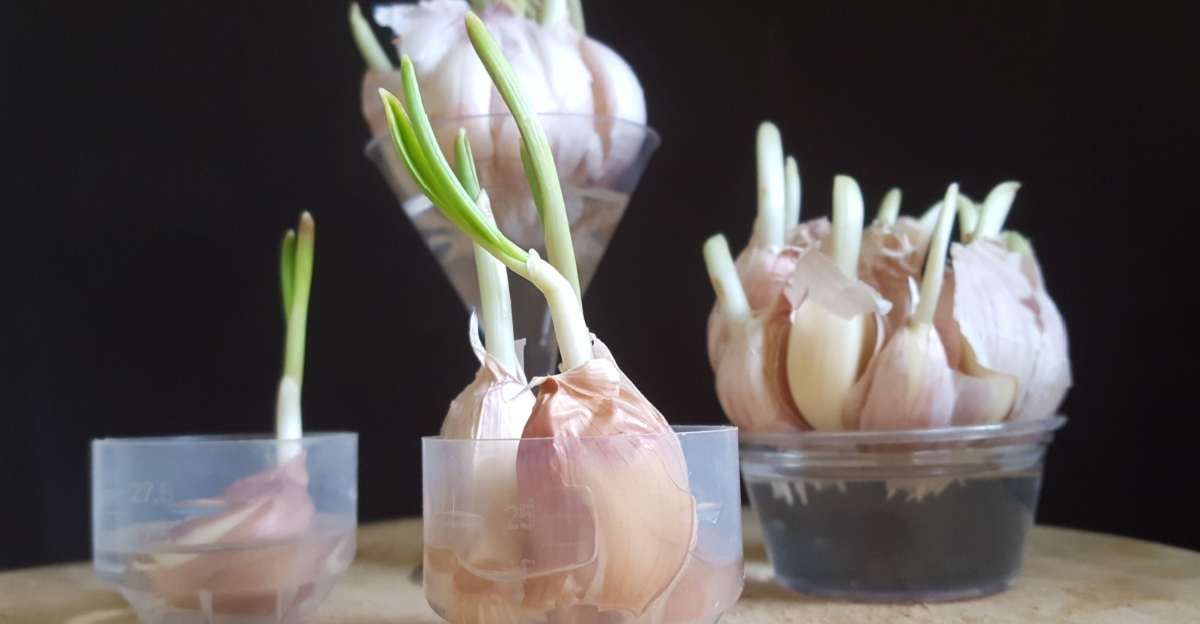
Sprouted garlic cloves that you’d normally toss can become a source of fresh garlic greens when placed in shallow water. Separate individual cloves and stand them upright in a dish with just enough water to cover the bottom quarter inch.
The pointed end should face upward where green shoots will emerge.
Florida’s indoor warmth speeds up shoot production significantly, with visible green growth appearing in just two to three days. These shoots taste like mild garlic and work beautifully as garnishes, in salads, or anywhere you’d use chives.
Change the water every two days to maintain freshness in our humid environment.
Position the dish in bright indirect light rather than full sun, as garlic greens prefer moderate conditions. Each clove produces shoots for about two weeks before exhausting its energy reserves.
Harvest shoots when they reach four to six inches tall by snipping them with clean scissors.
Leave about an inch of growth above the clove to encourage additional sprouting. This method works year-round indoors, providing a continuous supply of fresh garlic flavor without taking up garden space.
Many Florida cooks keep a rotating dish of garlic cloves going, adding new ones as older cloves finish producing. The greens offer a gentler garlic taste than the bulbs themselves, perfect for those who find raw garlic too intense.
7. Carrot Top Kitchen Magic
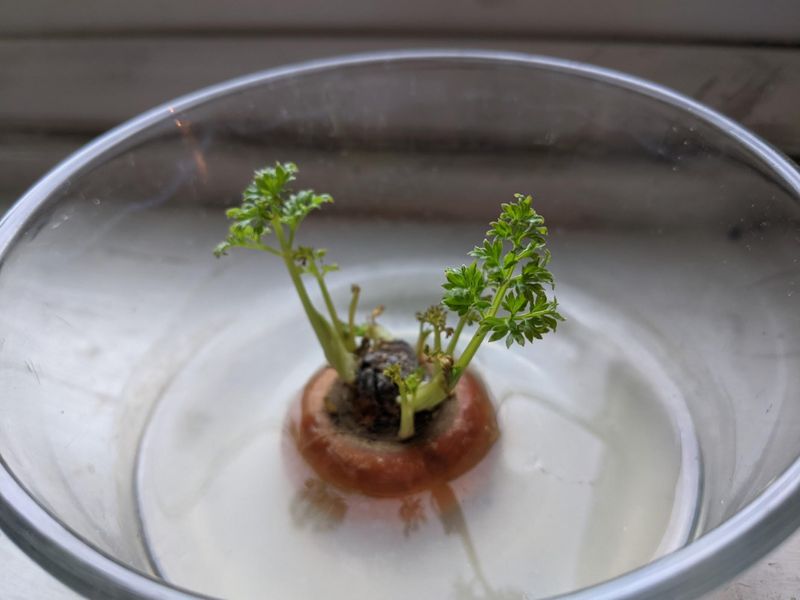
Regrowing carrot tops in water won’t produce new carrots, but it does create edible greens that many people don’t realize are perfectly safe to eat. Save about an inch of the carrot top with the greens still attached and place it cut-side down in shallow water.
The greens will continue growing while new feathery leaves emerge from the crown.
Change the water daily without fail, as carrot tops are particularly prone to developing slime in Florida’s humidity. Position the dish in a spot with bright light but not intense direct sun, which can cause the water to heat up and accelerate decomposition.
Within three to five days, you’ll see fresh green growth sprouting from the center.
The greens taste slightly bitter with a carrot-like flavor and work well chopped into salads, pestos, or used as an herb garnish. According to food science research, carrot greens contain nutrients similar to parsley and can be used interchangeably in many recipes.
Harvest the greens when they reach three to four inches tall by snipping them at the base.
The carrot top will continue producing new growth for about two weeks before declining. This makes carrot tops one of the shorter-lived water-growing projects, but also one of the quickest to show results.
Many Florida gardeners appreciate this fast turnaround when teaching kids about plant growth.
8. Cabbage Core Comeback
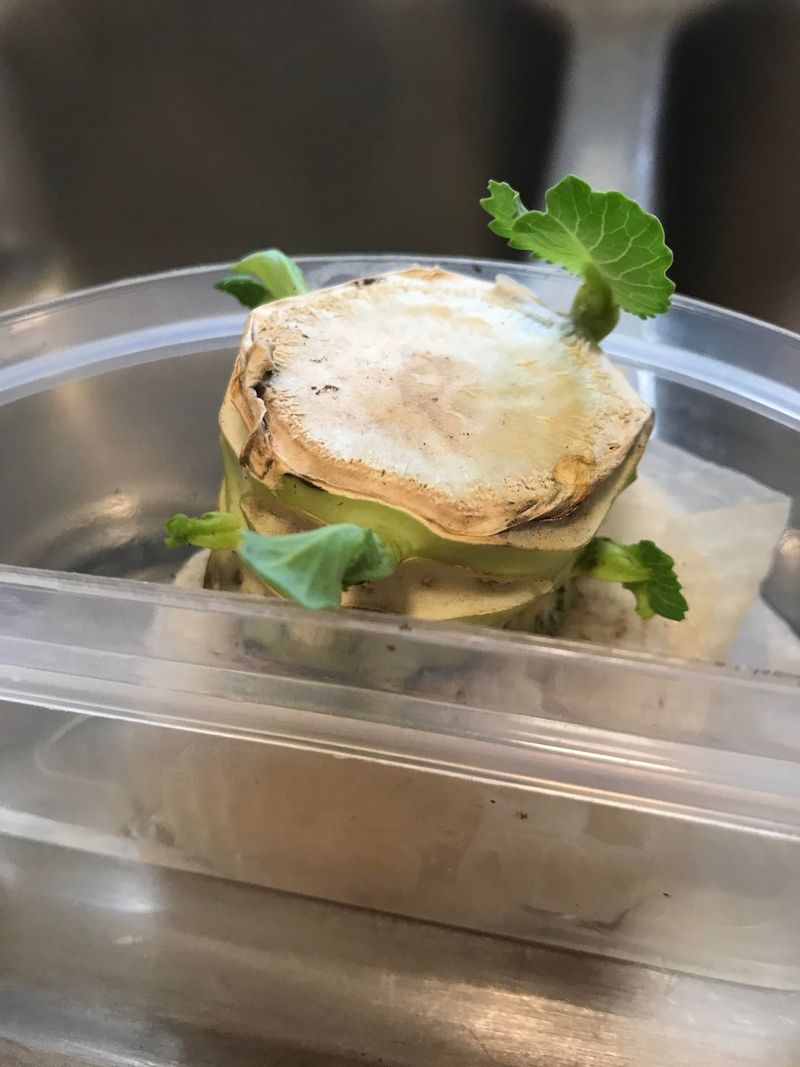
Saving the core and bottom two inches of cabbage creates another opportunity for water regrowth. Place the base cut-side up in a bowl with about half an inch of water, ensuring the developing leaves stay above the waterline.
Florida’s warmth encourages quick sprouting, with new leaves visible within a week.
Cabbage prefers cooler temperatures than many vegetables, making indoor growing during air-conditioned months the most successful approach. Position the bowl in a location with six hours of bright indirect light daily.
Direct sun can be too intense and may cause the outer leaves to wilt prematurely.
Change the water every day to prevent the base from becoming slimy, which happens rapidly in humid conditions. The new leaves grow from the center of the core, appearing lighter green and more tender than the original cabbage.
These baby cabbage leaves offer a milder, sweeter flavor perfect for fresh eating.
Once roots develop to about an inch long, transplanting to soil becomes necessary for continued growth. Florida gardeners find the best success transplanting cabbage during fall and winter months when temperatures stay between 60 and 70 degrees.
The regrown cabbage won’t form a full head in water alone, but provides enough tender leaves for several salads or coleslaw additions before requiring soil.
9. Leeks That Regrow Like Clockwork
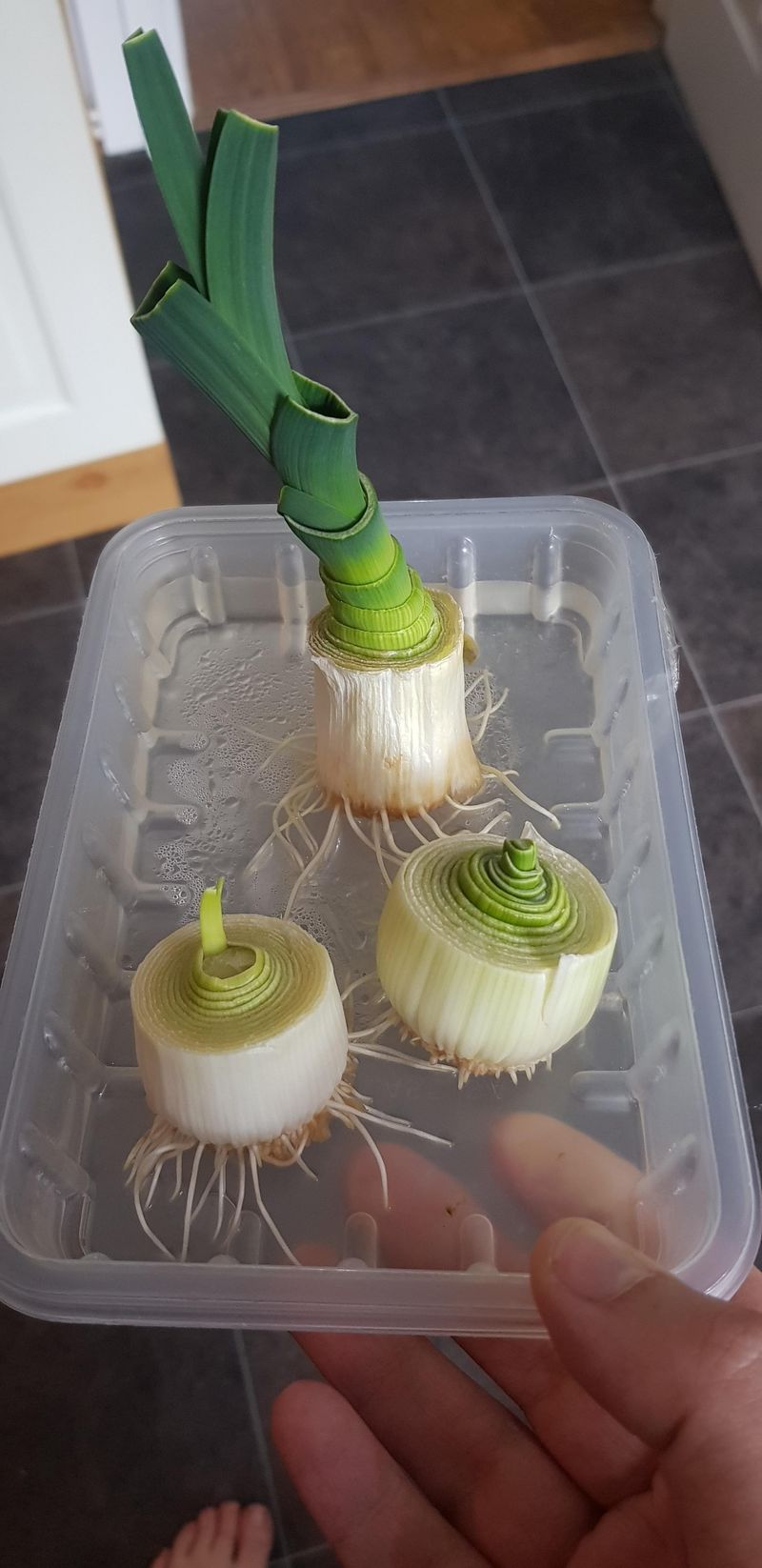
Leek root ends regrow with remarkable consistency when placed in water, making them one of the most reliable vegetables for this method. Save the bottom two to three inches including the roots and place them in a glass with about an inch of water.
Florida’s warm temperatures accelerate growth, with visible green shoots appearing in just four to six days.
Position the glass where it receives bright indirect light for most of the day. Leeks tolerate warmth well, making them suitable for year-round indoor growing in Florida.
Change the water every two to three days, watching as the white base extends upward and green tops grow taller.
The regrown leeks develop a milder flavor than the original, with tender greens that work beautifully in soups, omelets, or sautéed dishes. Harvest by cutting the green tops when they reach six to eight inches tall, leaving about an inch above the water line.
This encourages continued production from the same base.
Each leek base typically provides three to four harvest cycles before production slows. At that point, you can transplant the base into soil for a final harvest or start fresh with new leek ends.
Many Florida gardeners maintain multiple glasses of leeks at different growth stages, ensuring a constant supply of fresh greens without any garden space required.
10. Endless Basil From One Stem
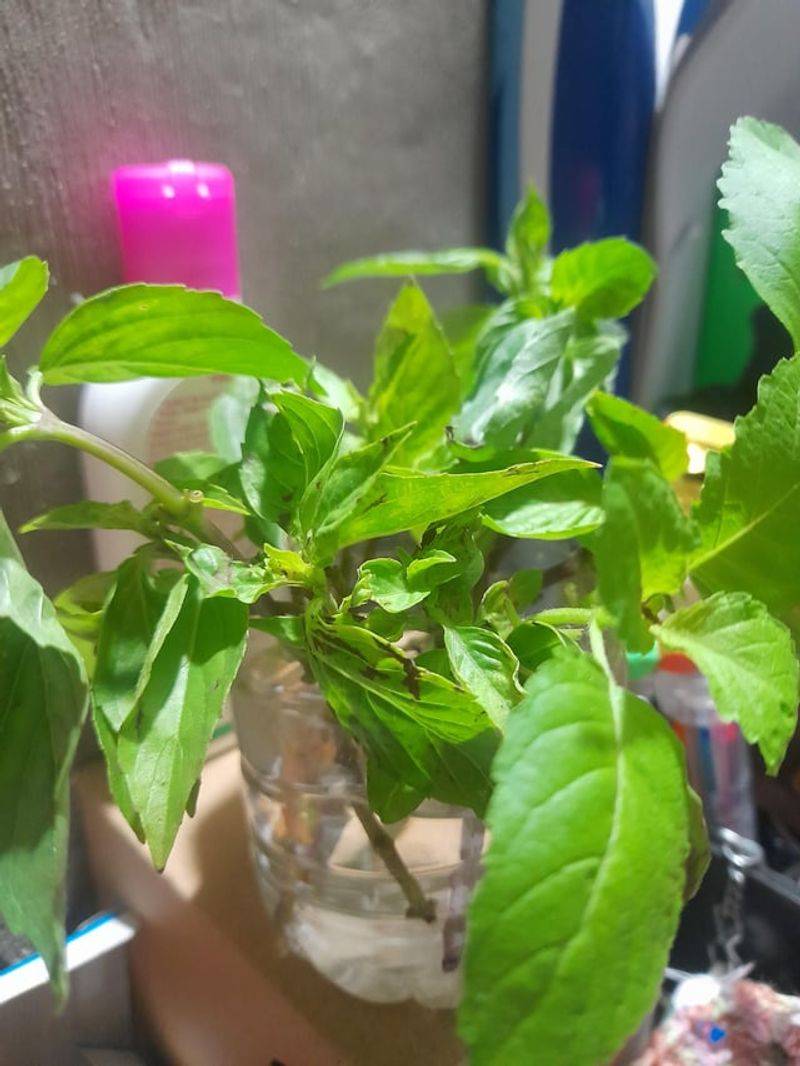
Propagating basil in water transforms a single stem into multiple plants with minimal effort. Cut a four to six inch stem just below a leaf node, remove the bottom leaves, and place it in a glass of water.
Florida’s warmth creates ideal conditions for root development, with visible roots appearing in five to seven days.
Position the glass in a bright spot with indirect sunlight, as basil loves light but can scorch in intense afternoon sun. Change the water every three to four days to keep it fresh and oxygenated.
The stem will continue growing new leaves at the top while roots develop below, creating a thriving plant entirely in water.
According to UF/IFAS Extension, basil grows exceptionally well in Florida but struggles with our summer heat when planted outdoors. Water propagation offers a way to grow basil year-round indoors where temperatures stay moderated.
Once roots reach two to three inches long, you can either transplant to soil or continue growing in water indefinitely.
Basil grown in water requires weekly fertilizing with diluted liquid fertilizer since it lacks soil nutrients. Pinch off flower buds as they appear to encourage bushier growth and prevent the plant from going to seed.
Each cutting can produce multiple harvests, and you can create new cuttings from the water-grown plant to expand your basil supply continuously.