These Are The Emerald Ash Borer Warning Signs Oregon Homeowners Should Know Before It’s Too Late
An ash tree can look healthy for a while, even when trouble is already under the bark. That is what makes emerald ash borer so easy to miss at first.
The early signs are often subtle, then the damage starts to move fast. Oregon homeowners may notice thinning leaves near the top of the tree, strange bark splits, or small D-shaped exit holes on the trunk.
Woodpecker activity can also be a clue, especially when patches of pale bark appear. Does one odd branch matter?
Sometimes it does. Catching symptoms early can make a real difference, because this invasive beetle can seriously weaken ash trees before many people realize what is happening.
A quick look at the canopy, bark, and lower trunk may help spot a problem before the tree reaches the point where recovery is no longer likely.
Thinning Leaves At The Top Of The Tree
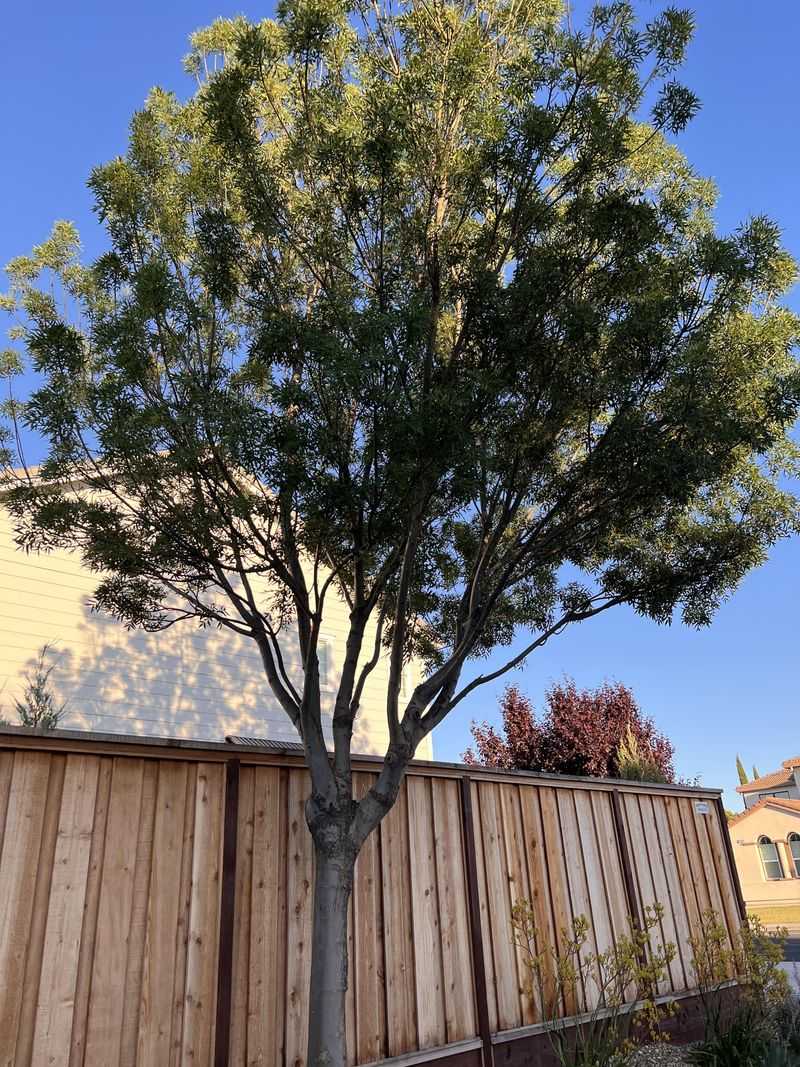
One of the first places an ash tree shows stress from emerald ash borer is right at the very top. The canopy starts to look thin and patchy.
Leaves that used to fill the upper branches begin to disappear, leaving bare or nearly bare sections behind.
This happens because the beetles attack the inner bark, which is the layer that carries food and water throughout the tree. When those pathways get disrupted, the parts of the tree that are farthest from the roots suffer first.
The top of the tree is usually the last to receive resources, so it shows signs of stress before the lower branches do.
Many homeowners assume thin leaves at the top just mean the tree needs water. That can be true, but if watering and fertilizing do not help, emerald ash borer could be the real problem.
Look closely at the upper canopy from a distance. If more than a third of the top looks bare or sparse, that is a red flag worth investigating.
Oregon residents should take this sign seriously, especially if they have noticed it getting worse year after year. Catching thinning at the top early can give you enough time to contact an arborist before the damage spreads too far down the tree.
Withered Branches Appearing In The Upper Canopy
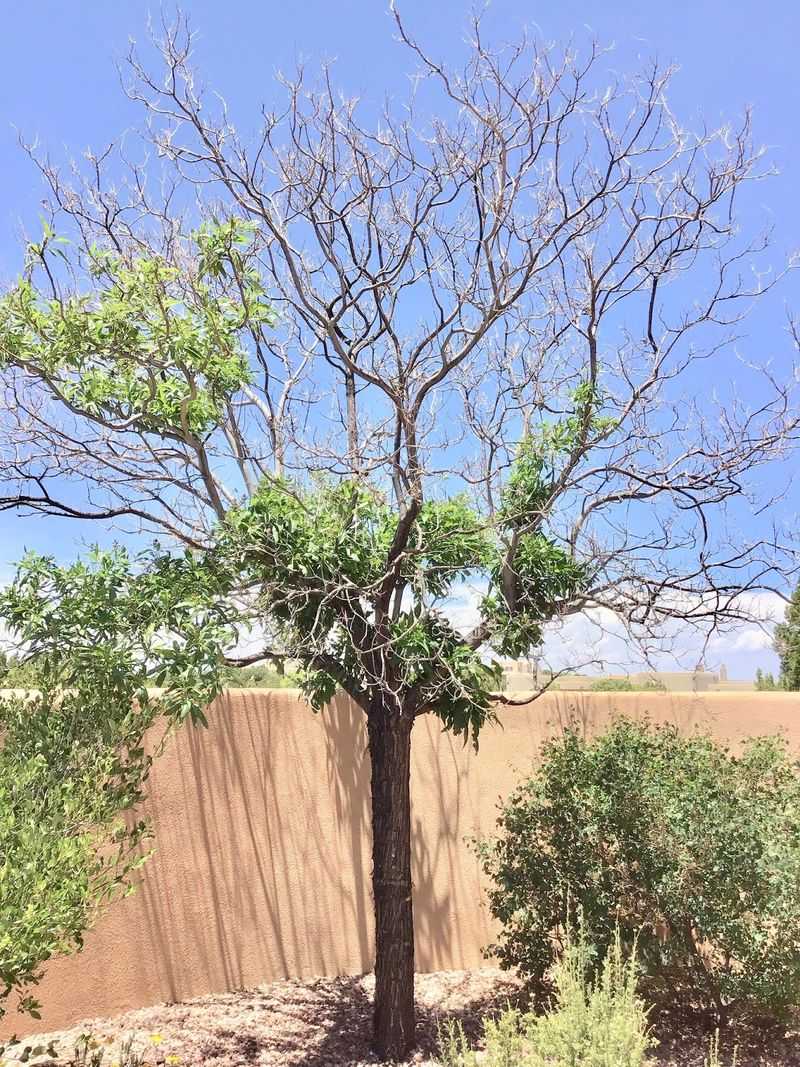
Branches that look dry, brittle, and lifeless in the upper part of an ash tree are a warning sign that something serious may be happening inside the bark. When emerald ash borer larvae feed on the inner tissue, they cut off the flow of nutrients.
Branches that no longer receive what they need start to wither and look withered.
What makes this sign tricky is that it can look like normal seasonal change or drought stress at first. But withered branches in the upper canopy that do not recover after spring, or that keep spreading to more branches each year, point to a deeper problem.
The pattern of decline typically moves from the top down.
You might notice that affected branches still have dried-out leaves clinging to them even after other trees have shed their leaves naturally. This is called flagging, and it is a classic sign arborists look for when checking for emerald ash borer activity.
Your Oregon Garden Changes Every Week. Your Plan Should Too.
Gardening in Oregon changes quickly throughout the season. Every Friday you’ll receive a simple weekly plan showing exactly what to plant, prune, fertilize, harvest, and protect so you never miss the right timing.
If you spot multiple withered branches in the upper canopy of your ash tree, do not wait. Reach out to a certified arborist who has experience with emerald ash borer.
Getting a professional assessment quickly can help you understand your options while there is still time to act.
Tiny D Shaped Exit Holes In The Bark
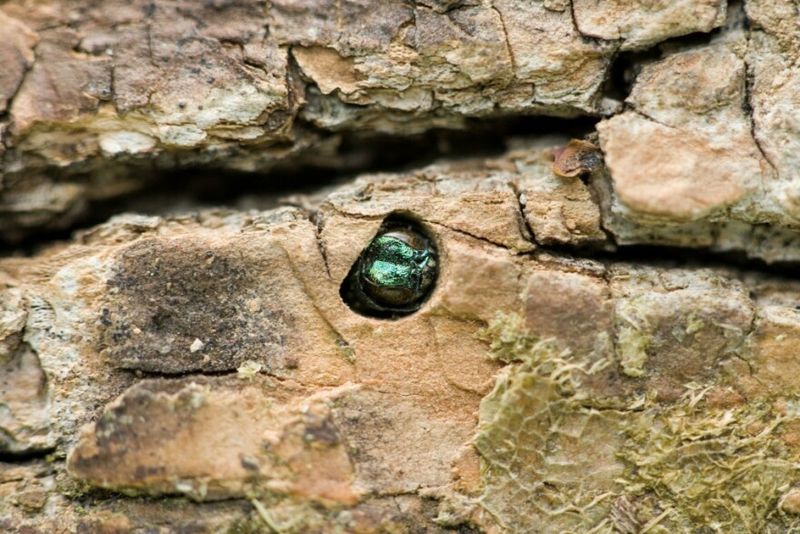
Probably the most well-known sign of emerald ash borer is the tiny D-shaped hole left in the bark when adult beetles emerge. These holes are small, roughly the size of a capital letter D on this page.
They are flat on one side and curved on the other, which is what makes them so distinctive and easy to identify once you know what you are looking for.
Adult beetles chew their way out through the bark after spending their larval stage feeding inside the tree. Each exit hole is a sign that a beetle has already completed its development and left.
This means that by the time you see these holes, the infestation has likely been going on for at least a year or two.
Run your hand across the bark of your ash tree and feel for small, slightly raised or sunken spots. Sometimes the holes are easier to feel than to see, especially on trees with rough or deeply furrowed bark.
Grab a magnifying glass if needed, because these holes are only about one-eighth of an inch wide.
Homeowners who find D-shaped exit holes on their ash trees should report the finding to the Oregon Department of Forestry right away. This information helps officials track the spread of the pest and protect other trees in the area.
Bark Splitting To Reveal Tunnels Underneath
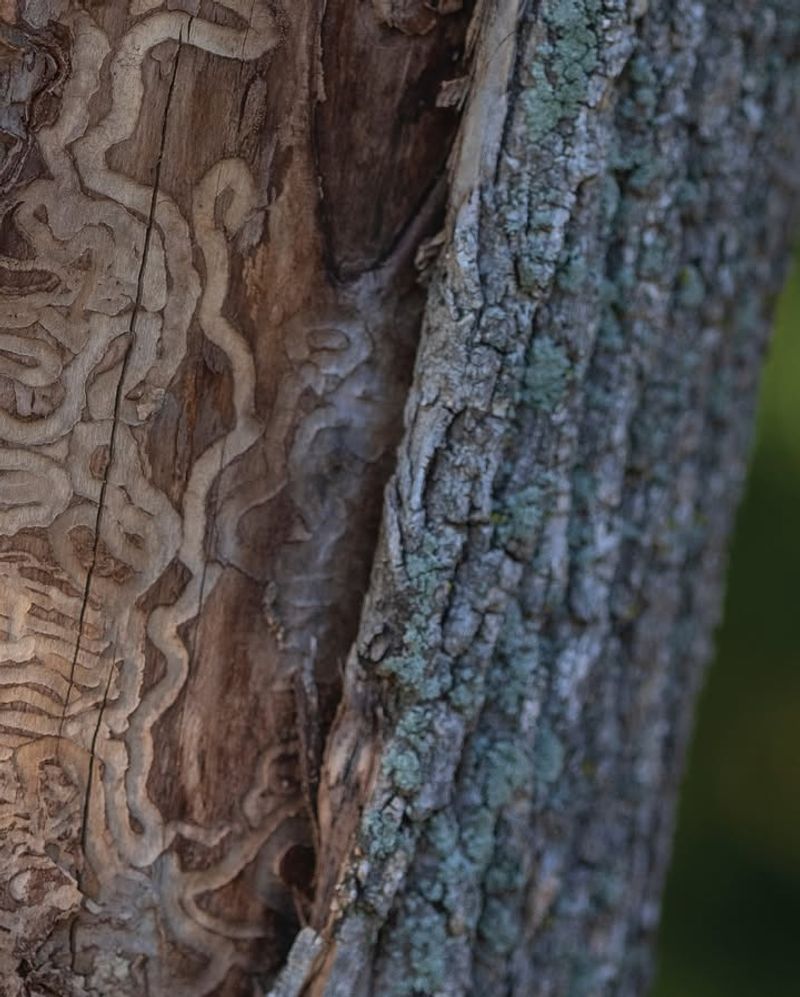
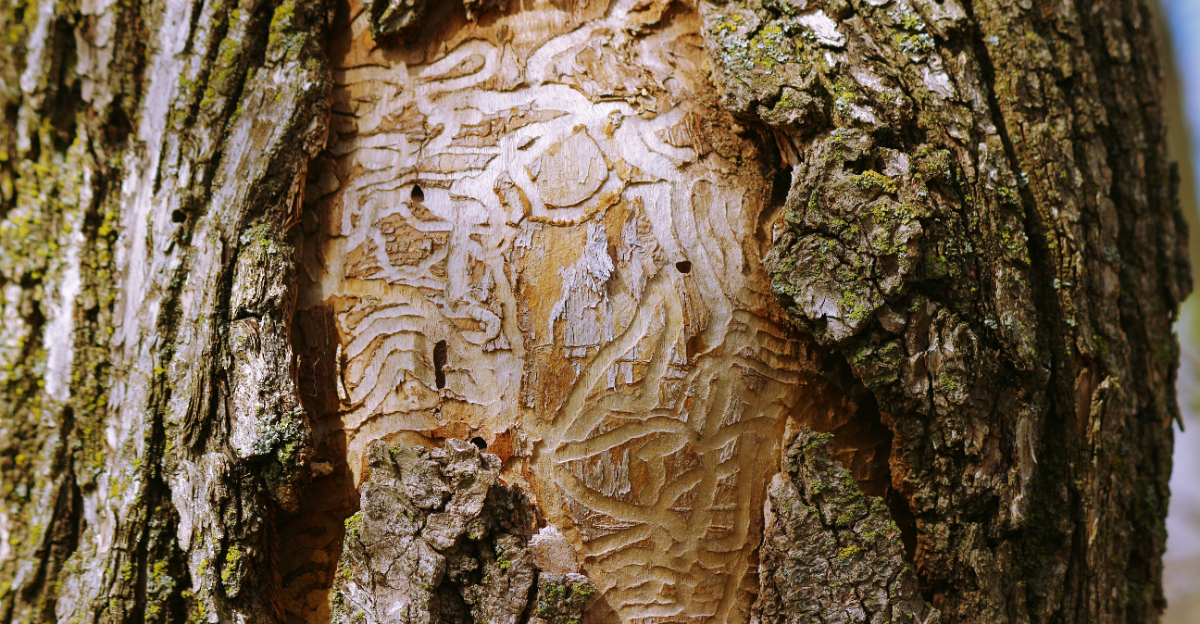
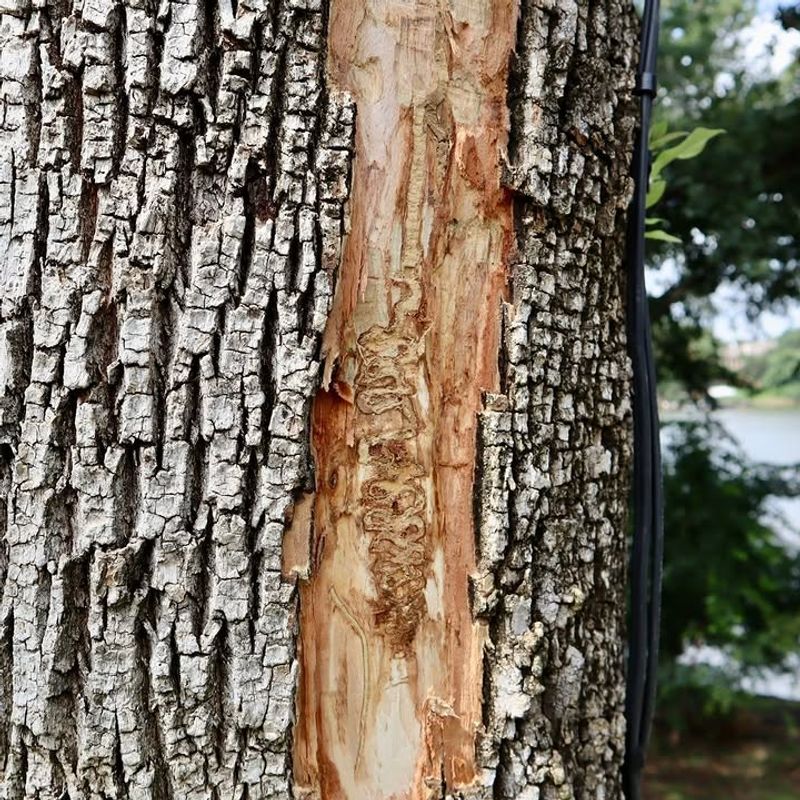
As emerald ash borer larvae tunnel through the inner layer of bark, they create so much damage that the outer bark sometimes splits and pulls away from the wood beneath. This cracking and splitting is a visible sign that something destructive has been happening just below the surface for quite some time.
When bark splits open, you may be able to see the winding tunnels left behind by the larvae. These channels are carved through the cambium layer, which is the thin but vital tissue responsible for moving sugars and nutrients throughout the tree.
Once this layer is heavily damaged, the tree struggles to survive.
Not all bark splitting is caused by emerald ash borer. Trees can split due to frost, disease, or physical injury too.
But if the splitting reveals smooth, winding channels beneath the surface rather than just bare wood, that is a strong indicator of larval feeding activity. The texture inside the tunnel will often look pale and slightly spongy.
Check your ash trees carefully after storms or cold snaps, when bark is more likely to crack and expose what is underneath. If you find tunnels beneath splitting bark, contact a local arborist immediately.
Acting quickly after spotting this sign can help you protect nearby ash trees from becoming infested as well.
Woodpeckers Suddenly Targeting The Same Tree
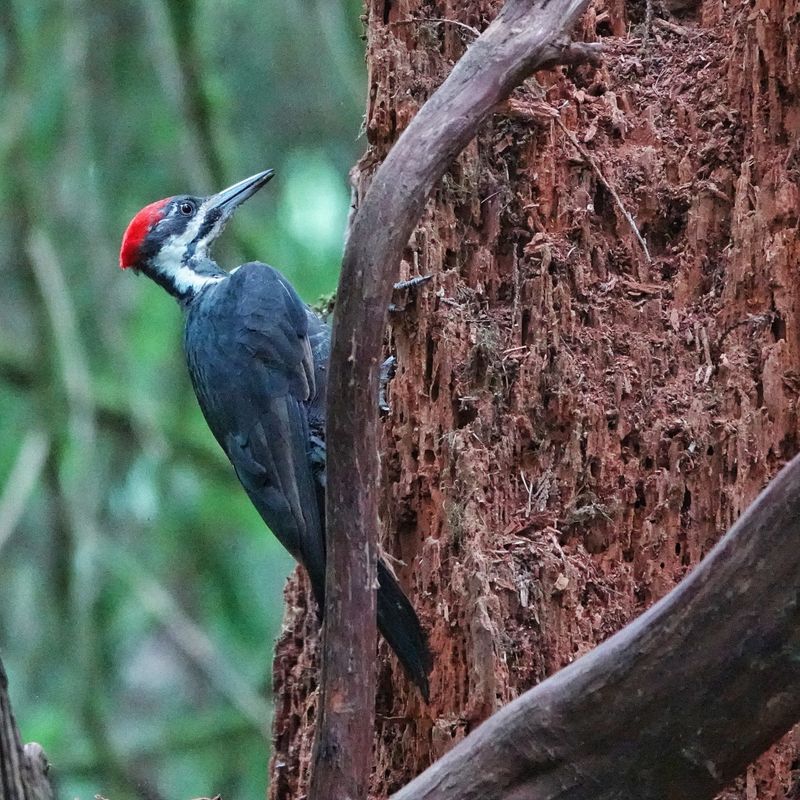
Woodpeckers are natural predators of wood-boring insects, and they are surprisingly good at detecting larvae hiding beneath tree bark. If you start noticing woodpeckers repeatedly visiting the same ash tree and aggressively pecking away at the bark, that behavior could be a clue that something is living inside that tree.
When woodpeckers target an infested tree, they often strip away large patches of bark to reach the larvae beneath. This creates a blonding effect, where the outer bark is removed to expose the lighter-colored wood underneath.
Large areas of stripped bark combined with frequent woodpecker activity are a strong signal that emerald ash borer larvae may be present.
Some people make the mistake of thinking the woodpeckers are causing the damage. In reality, the birds are responding to an infestation that is already there.
The insects are the root of the problem, and the woodpeckers are simply following their food source.
Keep an eye on which trees in your yard attract the most woodpecker attention, especially during late winter and early spring when larvae are most active near the surface. Residents who notice unusual woodpecker behavior on their ash trees should treat it as a warning sign worth investigating further.
A quick inspection by a qualified arborist can confirm whether the concern is justified.
S Shaped Galleries Hidden Beneath Loose Bark
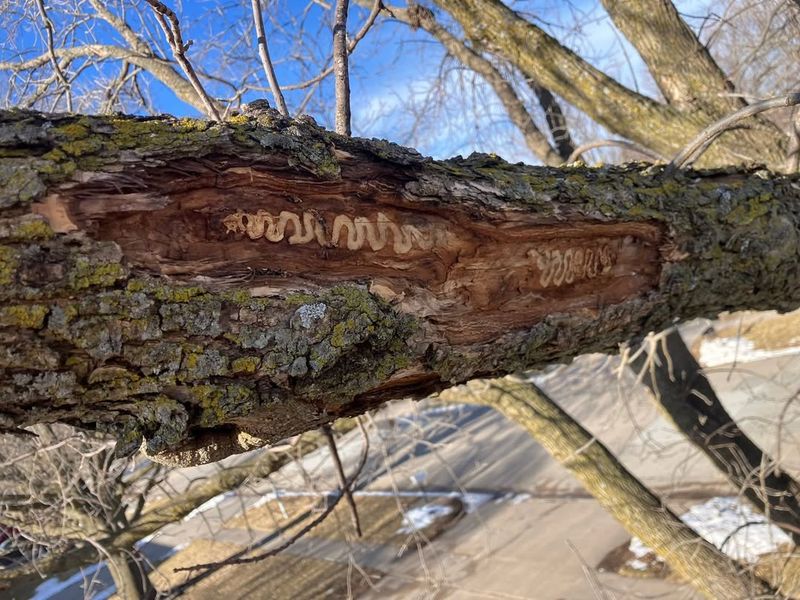
Peel back a piece of loose bark from an ash tree and you might find something that looks like a winding maze carved into the wood. These are called galleries, and they are made by emerald ash borer larvae as they feed.
The pattern is usually a winding S-shape or a series of overlapping curves that crisscross the inner surface of the bark.
These galleries are packed with a mixture of frass, which is a combination of sawdust and larval waste. The frass fills the tunnels and is another sign that larvae have been actively feeding in that area.
The galleries themselves are typically about a quarter-inch wide and can run for several inches in length.
Finding S-shaped galleries is one of the most reliable ways to confirm an emerald ash borer infestation. Other insects can create tunnels too, but the distinctive pattern and size of these galleries are unique to this pest.
If you are not sure what you are looking at, take a photo and share it with a local extension office or arborist.
Oregon’s ash tree population is at risk, and recognizing this sign early can help protect your property and your neighbors’ trees. Once you identify these galleries, professional treatment or removal decisions should be made as soon as possible to limit further spread.
New Shoots Sprouting From The Trunk Or Base
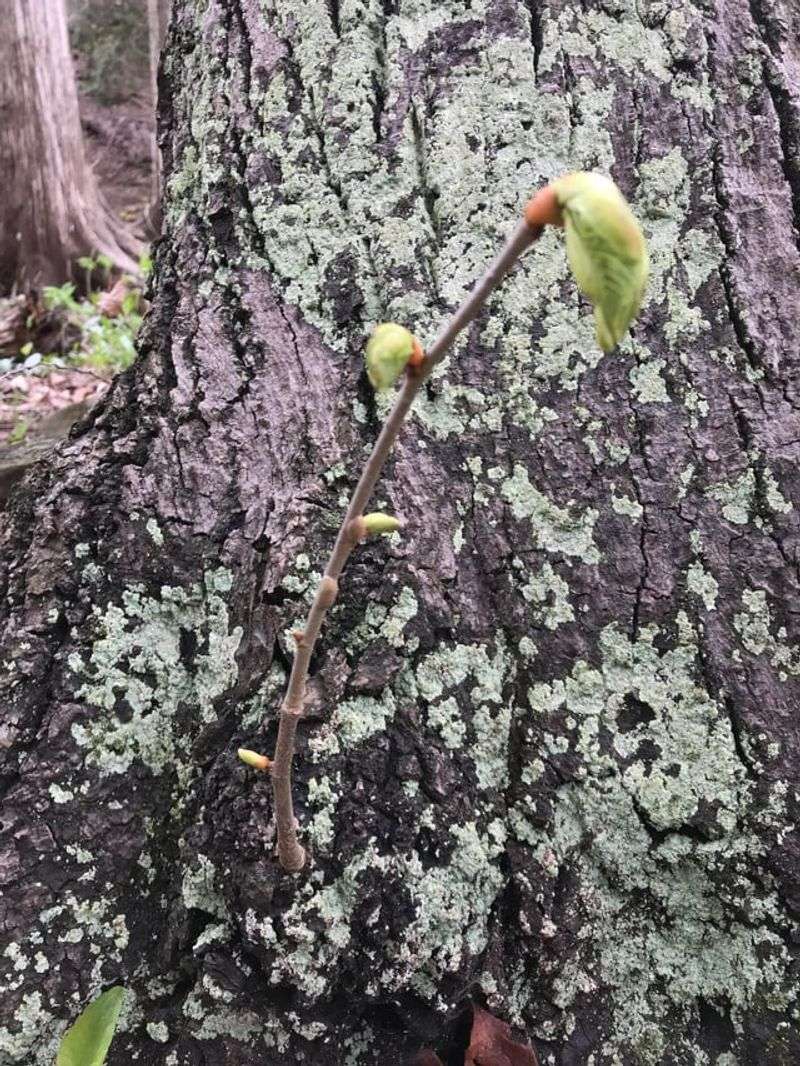
When a tree is under serious stress, it sometimes sends out new growth from unusual places as a survival response. Small shoots sprouting directly from the main trunk or from the base of the tree near the roots are called epicormic shoots or water sprouts.
Seeing a sudden flush of these on an ash tree can be a sign that the tree is fighting to stay alive.
Emerald ash borer damage disrupts the movement of nutrients through the tree. When the upper parts of the tree are no longer receiving what they need, the tree redirects its energy to areas closer to the root system.
This causes new shoots to burst out from the trunk or base in an attempt to keep producing leaves and food through photosynthesis.
These sprouts might look healthy and green at first, which can be confusing. It may seem like the tree is recovering when it is actually in serious distress.
The presence of many epicormic shoots, combined with other warning signs like thinning leaves or bark damage, paints a worrying picture overall.
If your ash tree is suddenly covered in new sprouts growing from the trunk or base, do not ignore it. Get a professional opinion quickly.
Early action can sometimes save a tree, especially if the infestation has not yet spread to every part of the tree.
A Healthy Looking Ash Tree Declining Fast
One of the most alarming things about emerald ash borer is how quickly a tree can go from looking perfectly fine to showing serious decline. Many homeowners are caught completely off guard because the damage happens inside the bark long before it becomes visible on the outside.
By the time the tree looks noticeably sick, the infestation may already be advanced.
A tree that seemed healthy last summer but now looks sparse, has large bare sections, or has bark that is cracking and peeling should be inspected right away. Rapid decline in an ash tree with no obvious cause like drought, disease, or construction damage nearby is a major warning sign.
Emerald ash borer can cause a tree to lose a significant portion of its canopy within just two to three years of initial infestation.
Do not assume a fast-declining ash tree will bounce back on its own. Unlike some tree stressors that can be reversed with watering or fertilization, emerald ash borer damage requires professional intervention.
Waiting too long reduces your options significantly.
Prompt action not only gives the tree a better chance but also helps prevent the spread of this destructive pest to neighboring trees throughout the community.