These Are The 10 Tall Plants That Create Natural Privacy In Florida
Stop wasting money on fences that trap heat, block breezes, and still leave your yard exposed.
In Florida, the smartest privacy upgrade does not come from lumber or vinyl. It comes from tall, lush plants that thrive in sun, shrug off humidity, and turn an ordinary property line into a tropical wall of green.
The right picks can soften street noise, hide close neighbors, and raise curb appeal at the same time. That mix of beauty and function makes living screens one of the most powerful outdoor upgrades for Florida homes.
Some grow fast. Some stay dense all year. Some deliver flowers, texture, and dramatic height that make a backyard feel like a private resort.
Pick the wrong plant and you get gaps, storm damage, or constant upkeep. Pick the right one and your yard feels richer, cooler, calmer, and far more secluded from day one, with very little effort.
1. Sweet Viburnum Means Business
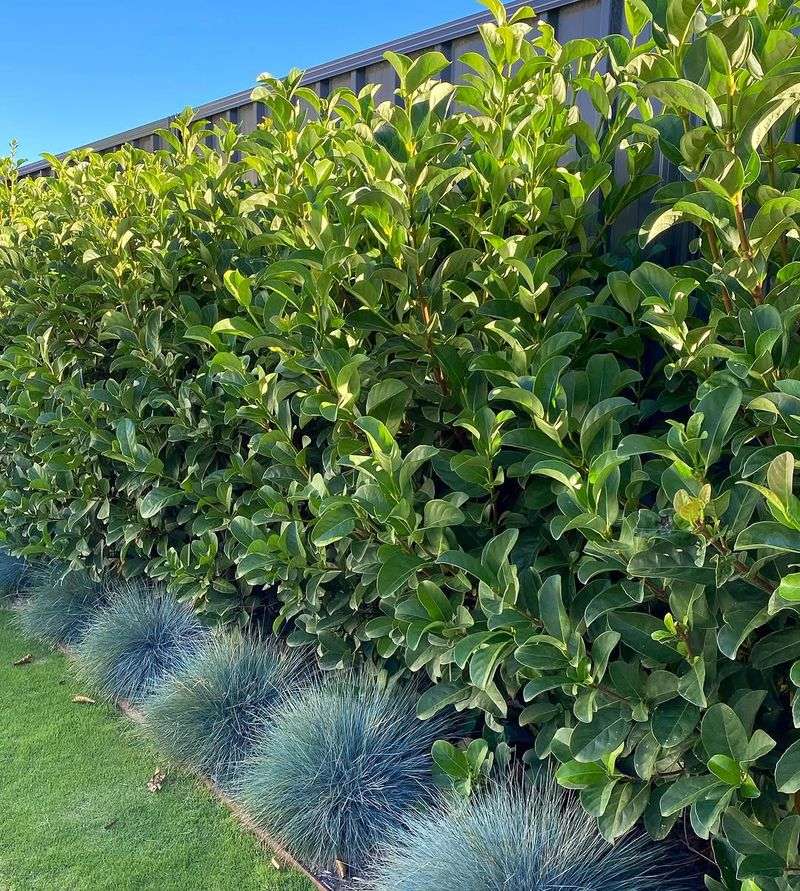
Few hedging plants command attention the way Sweet Viburnum does in a Florida yard. Known botanically as Viburnum odoratissimum, this evergreen shrub produces large, glossy leaves that overlap so densely you can barely see daylight through a mature screen.
According to UF IFAS Extension, Sweet Viburnum is widely used across Florida as a formal hedge and privacy barrier, and for good reason.
Planted in a row, these shrubs close in relatively quickly and form a solid green wall that blocks views, reduces noise, and frames a yard beautifully. Without regular pruning, Sweet Viburnum can reach 20 feet or more, so plan for maintenance if you want to keep it at a manageable height.
It handles full sun to partial shade and adapts to a range of well-drained Florida soils.
One practical tip: plant individual shrubs about four to six feet apart to allow enough room to fill in without crowding. Trim two to three times a year to keep the hedge tight and tidy.
UF IFAS notes that Sweet Viburnum is not considered invasive in Florida, making it a safe choice for residential landscapes across most of the state.
2. Walter’s Viburnum Does It All
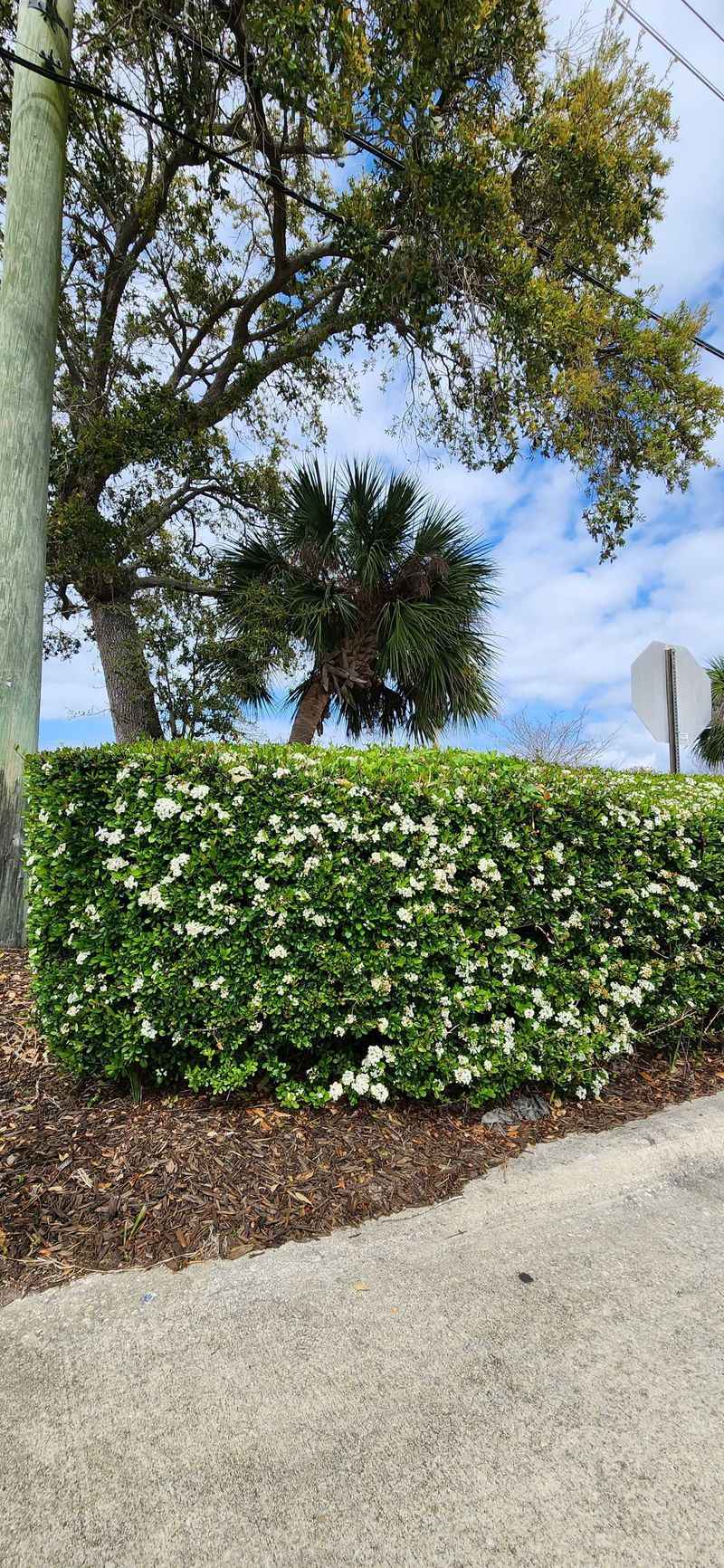
There is something quietly impressive about a plant that looks completely at home in the Florida landscape without any fuss at all. Walter’s Viburnum, Viburnum obovatum, is a Florida native that has earned a loyal following among homeowners and landscape designers who want a screen that blends naturally into the environment.
UF IFAS Extension recognizes it as a valuable native shrub suited for use as a hedge, screen, or even a small multi-stemmed tree.
Left to grow naturally, Walter’s Viburnum develops a loose, layered appearance with small dark green leaves and clusters of tiny white flowers in late winter and early spring. Birds are drawn to the dark berries that follow, adding a wildlife bonus to your privacy screen.
Mature height typically ranges from eight to fifteen feet depending on how it is managed.
The real advantage of Walter’s Viburnum is its flexibility. Prune it into a formal hedge for a cleaner look, or let it grow with minimal shaping for a softer, woodland-style screen that feels more natural than architectural.
It performs well across much of Florida and tolerates a range of soil conditions, including occasionally moist areas, which sets it apart from many other privacy shrubs.
3. Wax Myrtle Grows Like Crazy
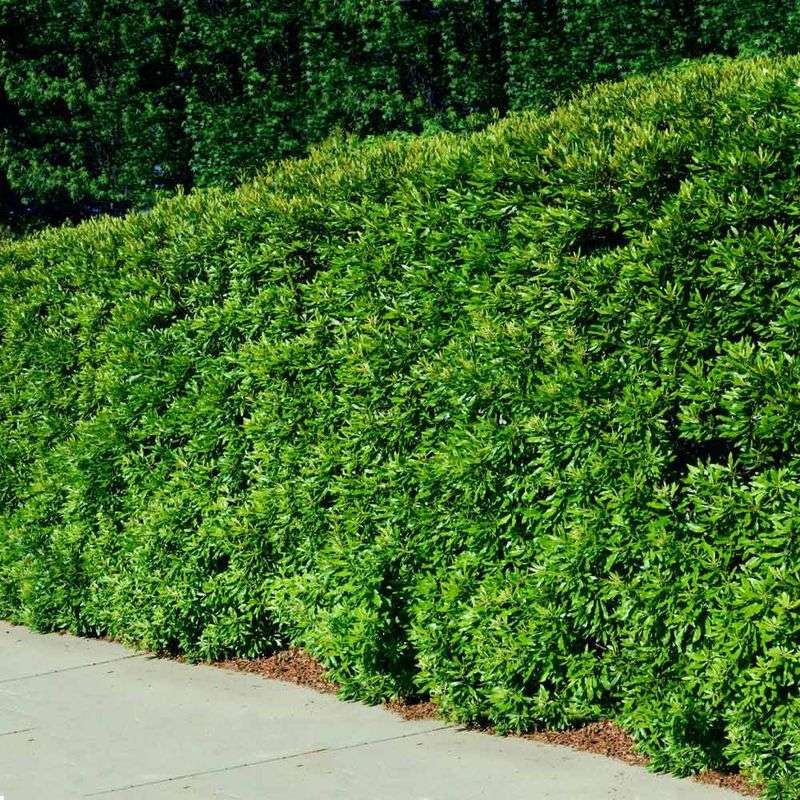
Speed matters when you want privacy now, not five years from now. Wax Myrtle, Morella cerifera, is one of Florida’s most reliably fast-growing native plants, and it is a go-to choice for homeowners who need a screen to fill in quickly.
UF IFAS Extension lists it as an adaptable Florida native that can reach twelve to fifteen feet tall, sometimes taller, and it covers ground in a hurry.
The foliage has a pleasant, slightly spicy fragrance when brushed or trimmed, which is a nice bonus. Wax Myrtle works well in a wide range of Florida soil types, handles both wet and dry conditions better than most plants its size, and performs across nearly the entire state.
Coastal homeowners will appreciate that it has good salt tolerance according to UF IFAS.
There is one honest tradeoff worth knowing. Wax Myrtle spreads by sending up suckers from its roots, which means it can slowly expand beyond where you planted it if you are not paying attention.
Regular trimming keeps it tidy and in bounds. For informal, naturalistic Florida yards where fast coverage is the priority, few plants deliver as reliably as Wax Myrtle does season after season.
4. Florida Anise Owns The Shade
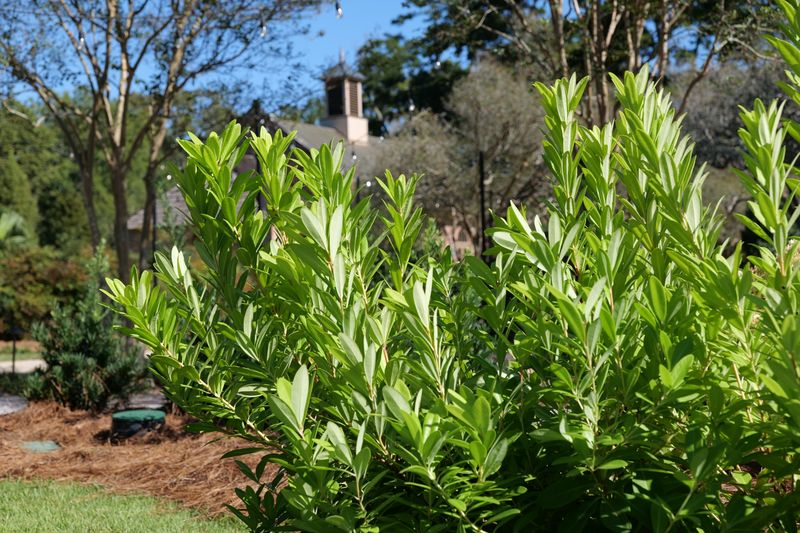
Most privacy plants beg for full sun, which leaves shaded Florida yards with very few good options. Florida Anise, Illicium floridanum, fills that gap beautifully.
UF IFAS Extension describes it as a native shrub that thrives in partial to full shade, making it one of the rare privacy plants that actually prefers to be out of the direct Florida sun rather than in it.
The foliage is large, glossy, and deep green, creating a lush, layered screen that looks tropical and full. Crushed leaves release a distinctive anise-like scent, which adds a sensory element most hedges cannot offer.
Mature plants typically reach six to ten feet tall and spread into a dense mass that blocks views effectively without needing a lot of intervention.
Florida Anise prefers moist, organically rich, well-drained soil and performs best in north and central Florida. It is less reliable in the intense heat of south Florida, so homeowners in Miami-Dade or Collier County should consider other options for shaded areas.
For those gardening under large live oaks or in dappled light along a fence line in Gainesville, Tallahassee, or Orlando, Florida Anise is a standout choice that most neighbors will not even recognize by name.
5. Yaupon Holly Brings The Screen
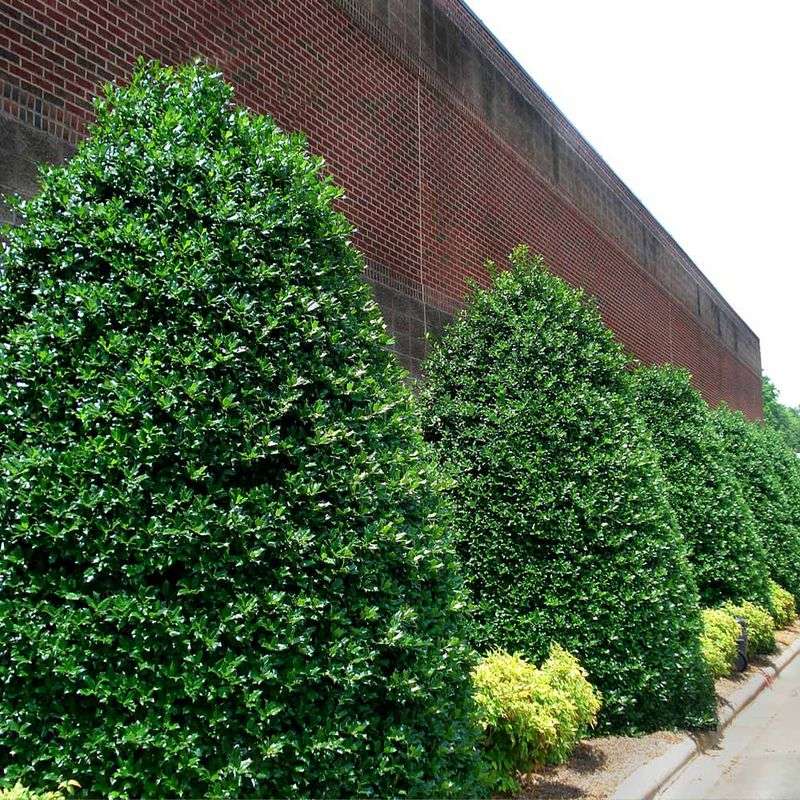
Yaupon Holly has a reputation for toughness that few other Florida shrubs can match. Ilex vomitoria, despite its off-putting botanical name, is a beloved Florida native evergreen that UF IFAS Extension recommends for hedges, screens, and wildlife gardens across the state.
Its naturally dense branching makes it one of the most effective screening plants available, whether you prune it formally or let it grow with a looser shape.
Small, dark green leaves cover the branches year-round, and female plants produce bright red berries in fall and winter that birds absolutely love. The berry display adds color to what might otherwise be a plain green wall, giving Yaupon Holly a decorative quality that many privacy plants lack.
Mature size ranges from eight to fifteen feet tall depending on the variety and pruning frequency.
Yaupon Holly adapts to full sun or partial shade and tolerates a wide range of soil types, including sandy Florida soils that challenge many other plants. It handles both drought and occasional flooding better than most, which is a real advantage in Florida’s unpredictable weather.
For homeowners who want a no-drama, year-round evergreen screen that also supports local birds, Yaupon Holly earns its spot on every list.
6. Simpson’s Stopper Steals The Show
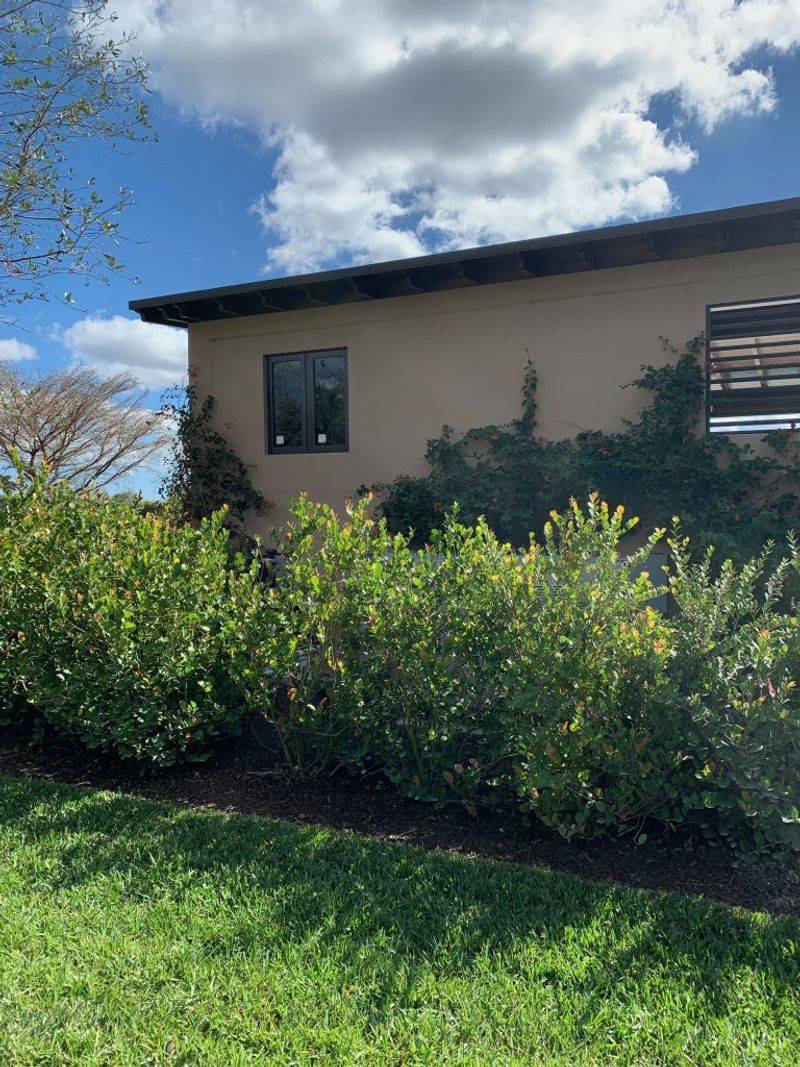
Walk past a mature Simpson’s Stopper in a Florida yard and you will stop to look twice. Myrcianthes fragrans is a Florida native shrub that pulls off something rare: it functions as a serious privacy screen while also being genuinely beautiful up close.
The peeling cinnamon-colored bark, clusters of fragrant white flowers, and bright orange-red berries make it one of the most ornamentally interesting screening plants in the state.
UF IFAS Extension confirms it as a native Florida species that works well as a large shrub or small tree, reaching anywhere from twelve to twenty-five feet in height at maturity. The foliage stays dense and evergreen, providing solid screening year-round.
Berries attract mockingbirds, waxwings, and other Florida wildlife, which adds life and movement to your privacy planting.
Simpson’s Stopper performs best in central and south Florida, where winters stay mild. In north Florida, cold snaps can damage or set back plants significantly, so it is a better fit from Orlando southward.
It prefers full sun to partial shade and does well in well-drained soils. For homeowners in Tampa, Naples, or Fort Lauderdale who want a privacy plant with real personality, Simpson’s Stopper is hard to beat on any level.
7. Cocoplum Feels Like A Resort
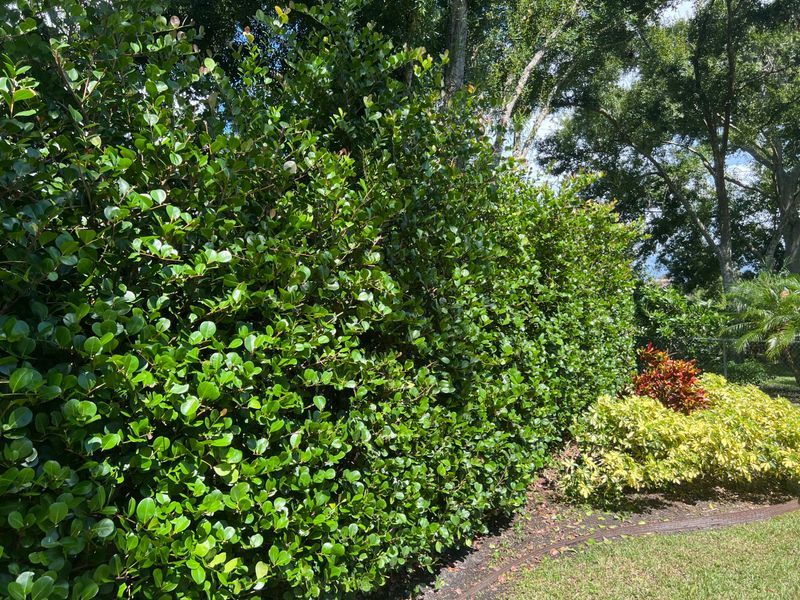
Pull up to almost any upscale south Florida property and you are likely to see Cocoplum lining the borders. Chrysobalanus icaco is a native Florida shrub that brings a lush, resort-quality look to residential landscapes, with rounded, glossy leaves that catch the light and dense growth that creates a solid visual barrier.
UF IFAS Extension lists it as a Florida native well suited for use as a large shrub, hedge, or screen.
Cocoplum grows ten to twenty feet tall and spreads into a thick mass that blocks views effectively without looking rigid or harsh. The tropical feel it creates fits naturally into coastal and waterfront properties, and it handles salt spray and sandy soils better than many other screening plants.
Small plum-like fruits appear seasonally and are edible, which is an unexpected bonus for adventurous gardeners.
The important limitation to know is that Cocoplum is best suited for central and south Florida. North Florida winters are too cold for reliable performance, so homeowners in Jacksonville or Tallahassee should look elsewhere.
From the Orlando area southward, and especially along both coasts, Cocoplum thrives with minimal care. Plant it in full sun for the densest growth, and give it room to spread into its naturally full, lush form.
8. Pineapple Guava Looks High End
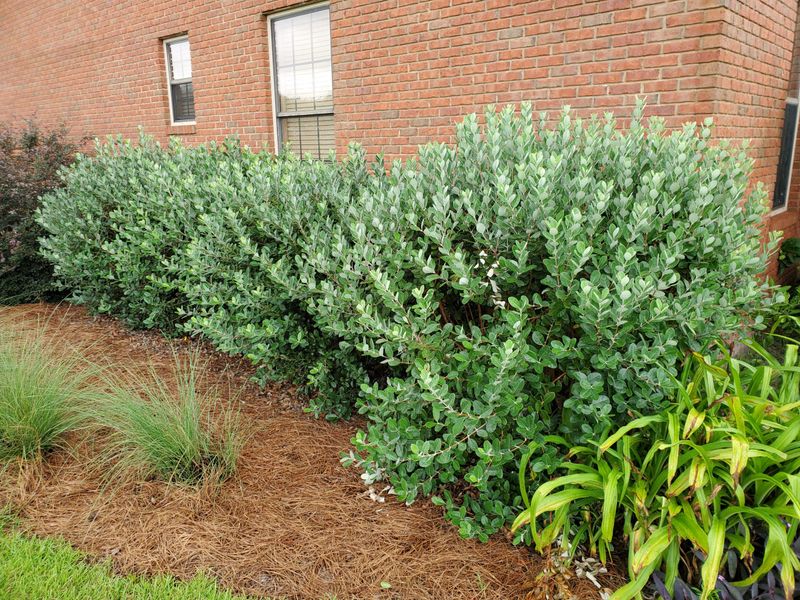
Silvery-green foliage that catches every breeze, showy red and white flowers in spring, and an overall look that feels polished without being stiff: Pineapple Guava, Acca sellowiana, brings something genuinely different to Florida privacy landscaping. UF IFAS Extension recognizes it as a suitable ornamental shrub for Florida that can function as a large hedge or informal screen, reaching eight to fifteen feet tall depending on conditions.
The leaves have a distinctive two-toned quality, green on top and silver underneath, which gives the plant a shimmering appearance when the wind moves through it. The flowers are edible and sweet, and the fruit that follows is also edible, with a flavor often described as a mix of pineapple, guava, and mint.
That combination of privacy function and food production makes it appealing for homeowners who want their landscape to do more than just look good.
Pineapple Guava performs best in north and central Florida, where summers are hot but winters dip enough to satisfy its mild chill requirement. In south Florida’s consistently warm climate, fruiting may be limited.
It prefers well-drained soil and full sun for the best growth and density. For a privacy hedge that looks like it belongs in an upscale garden magazine, Pineapple Guava delivers that feel reliably.
9. Podocarpus Keeps It Sleek
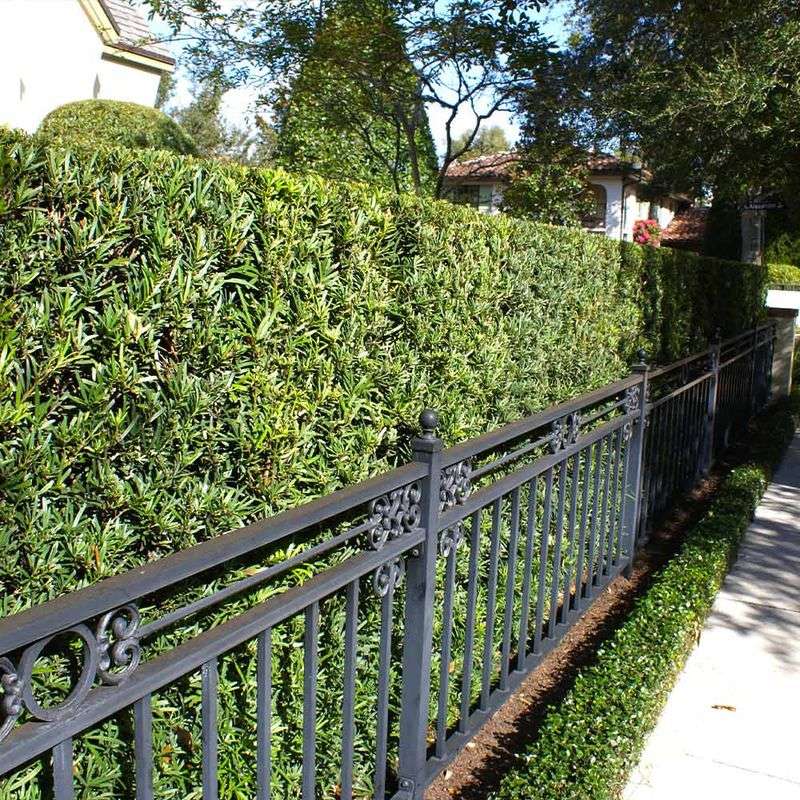
Some homeowners want a privacy screen that looks like it was designed, not just planted. Podocarpus macrophyllus, commonly called Japanese yew or Buddhist pine, is the plant that delivers that clean, architectural look better than almost anything else available in Florida.
UF IFAS Extension recommends it as an evergreen shrub or small tree suitable for Florida landscapes, and it has become a favorite for formal hedges and sleek screening applications.
The foliage consists of narrow, dark green leaves arranged densely along upright branches, giving it a refined, almost sculpted appearance even without heavy pruning. Left unpruned, it can reach twenty to forty feet tall, but most homeowners keep it trimmed to eight to fifteen feet for a tidy, column-like hedge that fits neatly along fences and property lines.
It responds extremely well to shaping and holds its form between cuts.
Podocarpus grows in full sun to partial shade and adapts to a variety of well-drained Florida soils. It performs reliably across most of the state, including north, central, and south Florida.
Growth is steady rather than explosive, so patience pays off in the early years. For a privacy hedge that looks polished every single day of the year, Podocarpus is the plant most landscape designers reach for first.
10. Southern Magnolia Goes Big
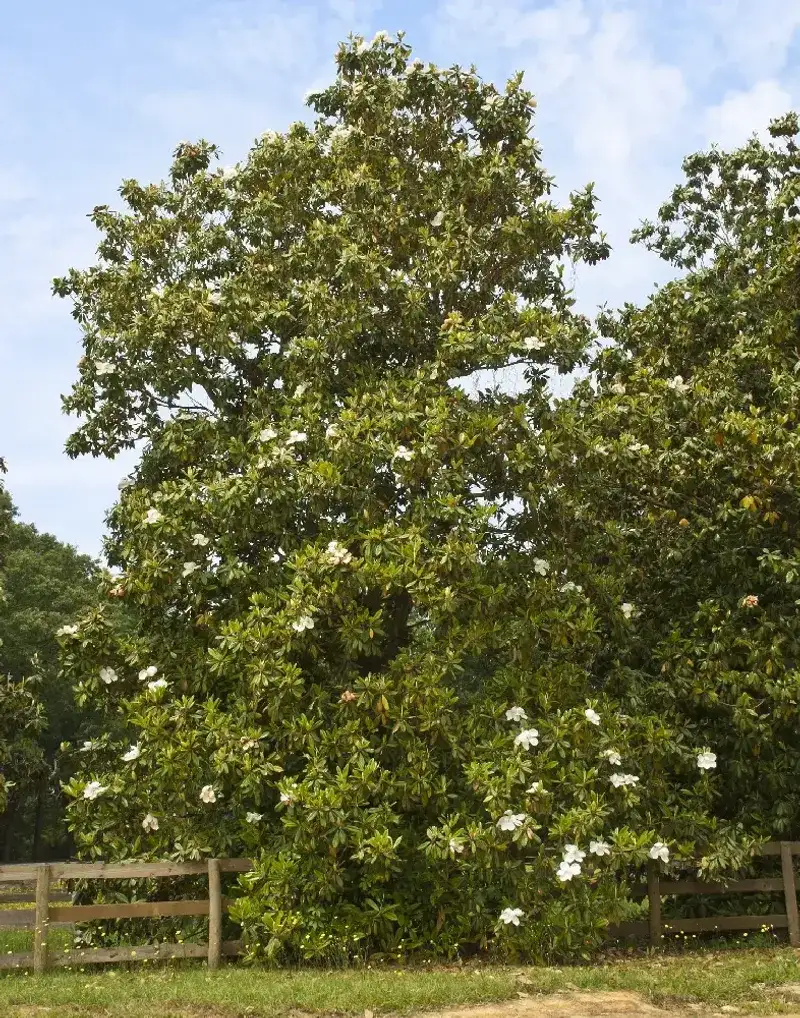
Not every Florida yard needs a hedge. Some properties call for something grander, and Southern Magnolia, Magnolia grandiflora, answers that call with authority.
UF IFAS Extension describes it as a large native Florida tree that can reach sixty to eighty feet tall with a canopy spread of thirty to forty feet, making it one of the most powerful natural privacy options available for larger properties.
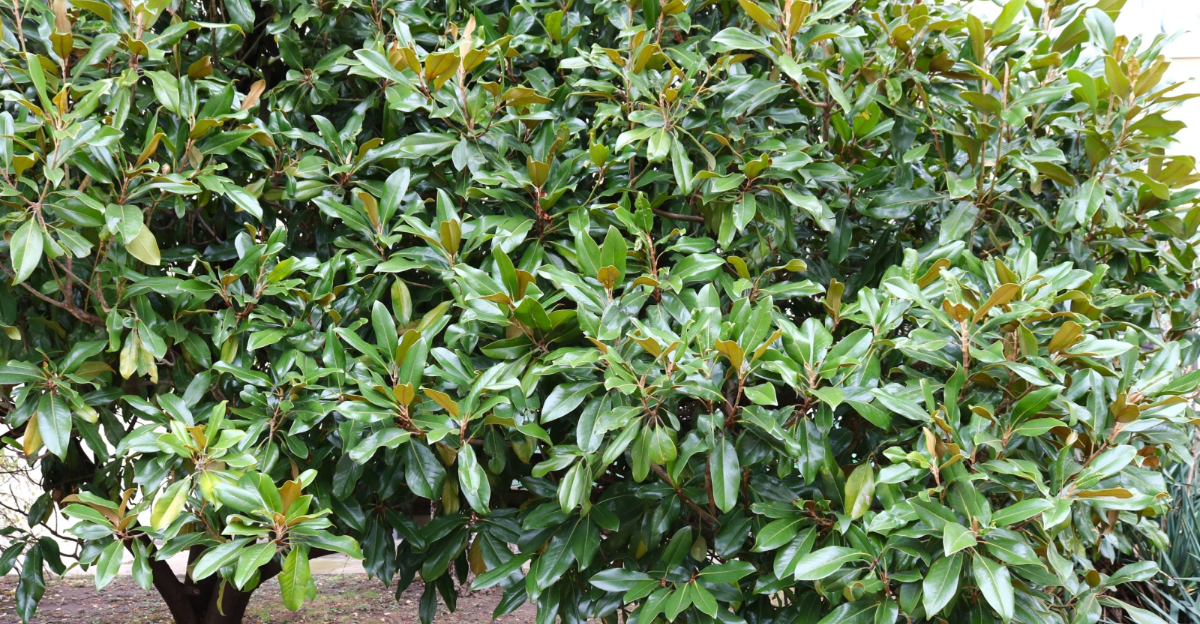
The large, glossy evergreen leaves create a dense canopy that blocks views, reduces wind, and casts deep shade below. Creamy white flowers appear in late spring and summer, filling the air with a fragrance that is unmistakably Southern and unmistakably Florida.
Even in winter, the tree holds its foliage and maintains its screening presence, which is the key advantage over deciduous alternatives.
Southern Magnolia is not a plant for small or medium-sized yards. It needs significant space, both vertically and horizontally, and its surface roots and leaf litter require acceptance from the homeowner.
Plant trees at least fifteen to twenty feet from structures and other plantings. When space allows, a row of Southern Magnolias creates a stately, permanent privacy barrier that improves with every passing decade and adds genuine long-term value to any Florida property.