These Arizona Shrubs Survive Heat With Almost No Water Or Care
Arizona yards can look full and structured even when water stays low and effort stays minimal. Some shrubs handle intense sun without constant attention, holding their shape and color while everything around them struggles to keep up.
Dry soil, reflected heat, and long stretches without rain do not phase the right choices. Growth stays steady, leaves stay strong, and the overall look stays clean without needing constant trimming or extra watering.
Picking the right shrubs early can make a huge difference in how a yard feels through the hottest months.
Strong performers create privacy, soften hard edges, and keep everything looking put together even when conditions turn rough.
Small details decide whether plants coast through heat or start to fade. Once those details line up, everything starts working with less effort and far fewer problems.
1. Texas Sage Handles Heat With Very Little Water
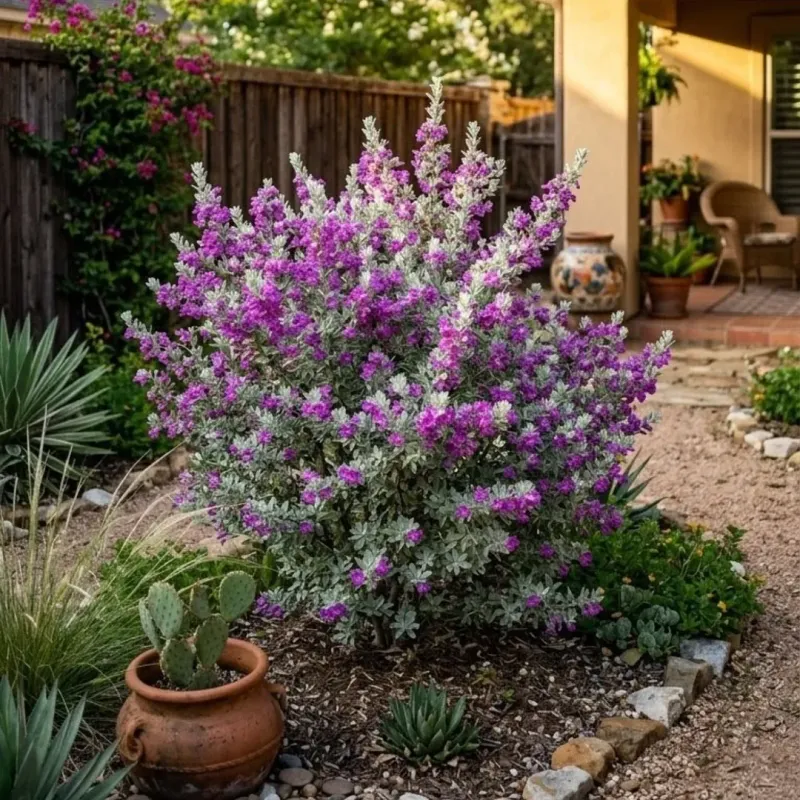
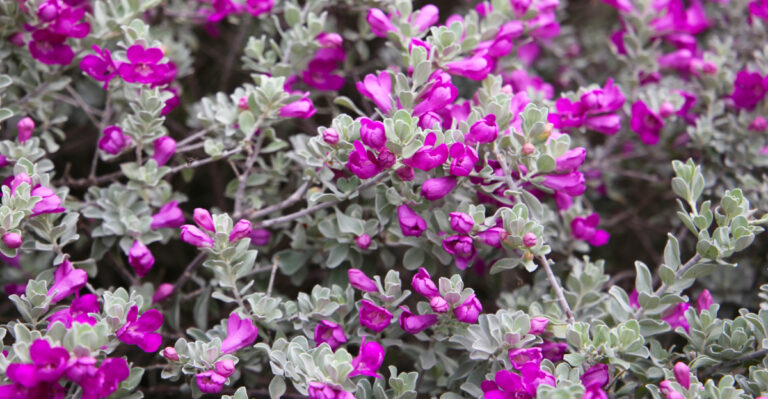
Purple blooms appearing out of nowhere after a monsoon rain is one of the most satisfying sights in an Arizona yard. Texas Sage, also called Cenizo or Leucophyllum frutescens, does exactly that.
It reads the humidity in the air and responds with a flush of lavender-purple flowers, sometimes within hours of a storm rolling through.
In Arizona, it grows anywhere from 4 to 8 feet tall depending on how much water it gets and how much room it has to spread. Full sun is non-negotiable.
Partial shade causes it to get leggy and bloom much less. Plant it in a spot that bakes all day and it will reward you.
The silvery-gray leaves are not just pretty. They reflect heat and reduce water loss, which is exactly why this shrub holds up through Phoenix and Tucson summers without flinching.
Established plants can go several weeks between waterings in summer and longer during cooler months.
Sandy or rocky soil actually works better than rich amended soil for Texas Sage. Too much nitrogen pushes leafy growth at the expense of flowers.
Skip the fertilizer, keep the drainage sharp, and let the monsoon rains do most of the work. It is genuinely one of the easiest shrubs you can grow in Arizona.
Pruning lightly after a bloom cycle helps keep the shape compact without reducing the next flush of flowers.
Avoid overwatering, as consistently wet soil can quickly lead to root issues and fewer blooms.
Cold snaps can damage new growth, but established plants typically recover quickly once temperatures rise.
2. Jojoba Grows Strong Even In Dry Conditions
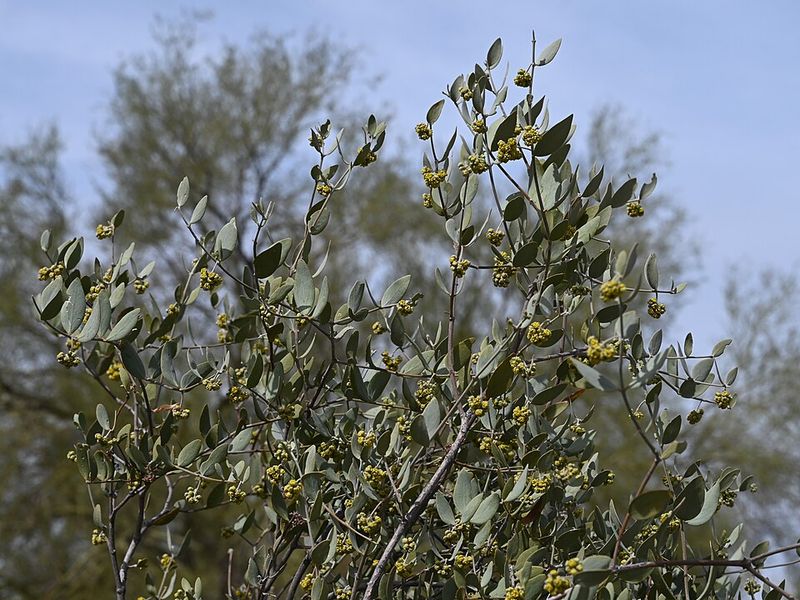
Jojoba has been growing wild across the Sonoran Desert for thousands of years, and that kind of track record means something. Simmondsia chinensis is not a flashy plant, but it is one of the most rugged shrubs you can put in an Arizona landscape.
It does not need much from you, and honestly, it does better with less.
Left alone, it can reach 6 to 10 feet tall and nearly as wide. The thick, waxy leaves are built to hold onto moisture even when the air is bone dry.
Your Arizona Garden Changes Every Week. Your Plan Should Too.
Gardening in Arizona changes quickly throughout the season. Every Friday you’ll receive a simple weekly plan showing exactly what to plant, prune, fertilize, harvest, and protect so you never miss the right timing.
In extreme summer heat, those leaves tilt slightly to reduce direct sun exposure, which is a real adaptation and not something most plants can pull off.
Jojoba is dioecious, meaning you need both a male and a female plant to get seeds. The seeds produce a liquid wax that has been used commercially for decades, but in your yard, the real value is the dense, evergreen structure it provides year-round.
Plant it in well-drained soil with full sun and water it occasionally through the first summer to help it get established. After that, supplemental irrigation is rarely needed except during prolonged dry spells.
It handles Arizona’s rocky slopes, caliche soil, and scorching afternoons better than nearly anything else you can plant in the ground here.
Deep but infrequent watering during establishment encourages a strong taproot that improves long-term drought tolerance.
Minimal pruning is best, as heavy cutting can disrupt its natural shape and slow overall growth.
It tolerates poor, nutrient-depleted soils without showing signs of stress or decline.
Wildlife, including birds and small mammals, often use it for shelter in exposed desert landscapes.
3. Red Yucca Blooms While Using Minimal Water
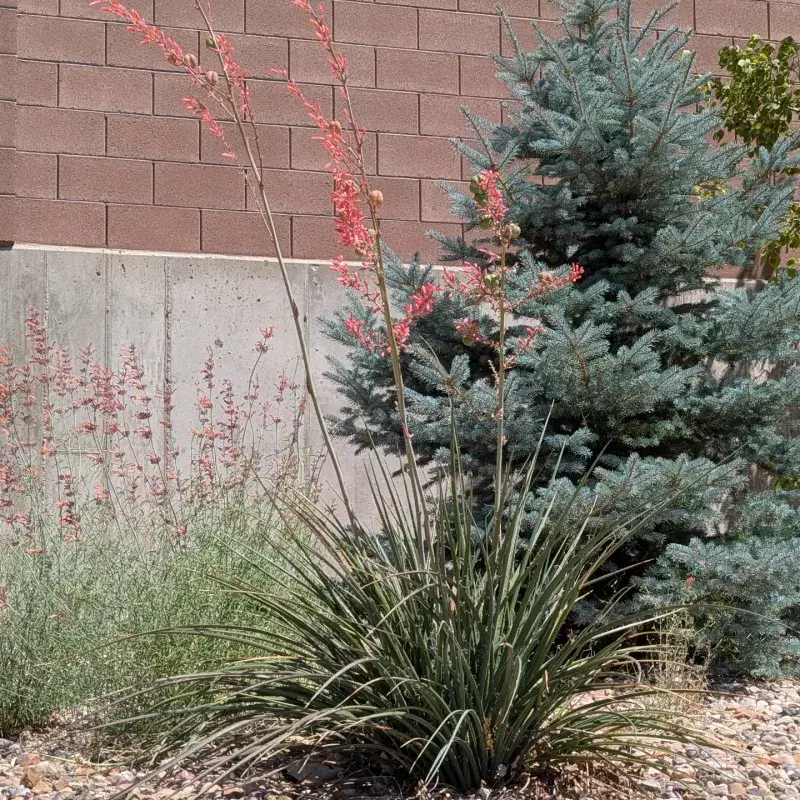
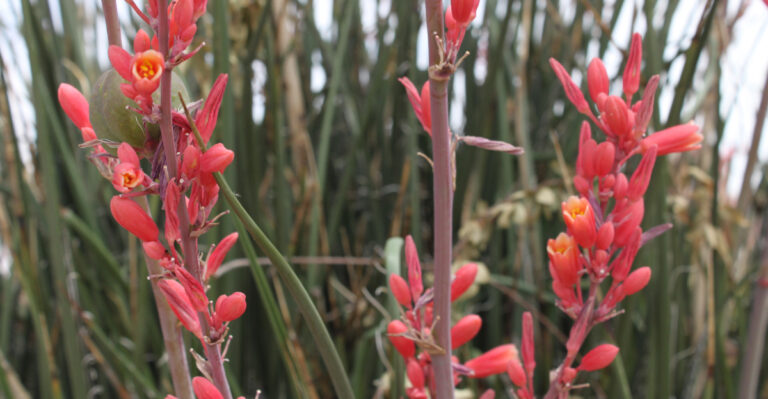
Coral-red flower spikes shooting up 4 to 5 feet above a low clump of grass-like leaves stop people in their tracks. Red Yucca, or Hesperaloe parviflora, looks like it belongs in a botanical garden, but it thrives in ordinary Arizona yards without much fuss.
Hummingbirds are drawn to the tubular blooms from spring all the way through late summer.
Despite the name, Red Yucca is not a true yucca. It lacks the stiff, spine-tipped leaves that make handling most yuccas a bit unpleasant.
The foliage is soft and arching, which makes it a better fit near walkways or areas where people pass by regularly.
Full sun and fast-draining soil are the two things it really asks for. In heavy clay or poorly drained spots, the base can rot during monsoon season, so amend the planting area or build it up slightly if your soil holds water.
Once it finds its footing, it handles Arizona heat without regular irrigation.
Deep watering every two to three weeks during summer keeps it looking its best, but established plants can push through dry stretches without much visible stress. Over time, it spreads by producing offsets around the base, giving you more plants without any extra effort.
Few plants in Arizona deliver this much visual interest for this little work.
Cutting spent flower stalks at the base can encourage quicker reblooming and keep the plant looking tidy.
It also tolerates reflected heat from gravel and hardscapes, making it a strong choice for hot, exposed areas.
4. Desert Spoon Stays Tough In Extreme Heat
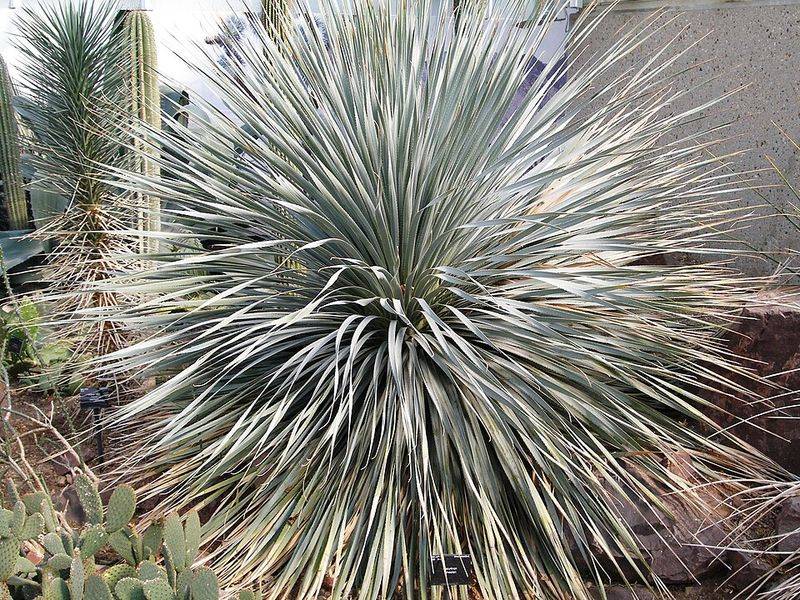
Walk through any rugged stretch of the Sonoran or Chihuahuan Desert and you will spot Desert Spoon standing its ground in the harshest conditions imaginable. Dasylirion wheeleri earns its place in Arizona landscapes not just for toughness, but for the architectural drama it brings to a yard that most other plants simply cannot match.
The silver-blue leaves radiate outward from a central trunk in a perfect sphere, eventually reaching 3 to 5 feet tall and wide. Each leaf edge is lined with small, hooked teeth, so placement matters.
Keep it away from foot traffic areas. Against a wall, at a property corner, or anchoring a dry wash planting, it looks sharp in every sense of the word.
Drainage is the one thing Desert Spoon absolutely requires. Sitting in wet soil, especially during monsoon season, causes problems fast.
Raised planting areas or native rocky soil give it the best chance. Once rooted in, it handles full Arizona sun and reflected heat from walls or pavement without any visible strain.
Supplemental watering is rarely needed after the first year or two. Older plants develop a thick, corky base that stores moisture.
The eventual flower stalk can reach 15 feet or more and attracts pollinators for weeks. It is a slow grower, but the payoff in texture and structure is well worth the wait in any Arizona yard.
Cold tolerance is another advantage, with established plants handling brief dips into the low teens without damage.
Avoid overwatering, as excess moisture is one of the fastest ways to weaken or damage an otherwise tough plant.
5. Brittlebush Thrives In Dry Soil And Full Sun
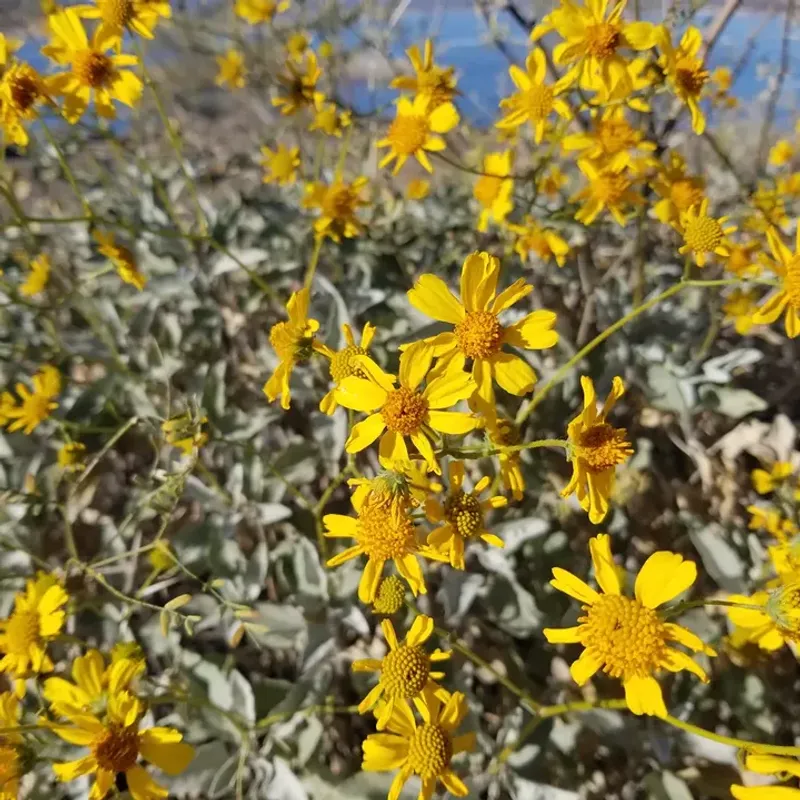
Come February in Arizona, roadsides and hillsides explode with yellow, and most of that color belongs to Brittlebush. Encelia farinosa is one of the most recognizable native shrubs in the state, and for good reason.
Few plants bloom as freely or look as cheerful in a landscape that gets almost no rain for months at a stretch.
Growing 2 to 4 feet tall and wide, it fills space quickly without overwhelming neighboring plants. The silver-gray foliage holds up through summer heat by reflecting sunlight and reducing leaf temperature.
During extreme drought, the plant drops its leaves to conserve water and goes partially dormant, then bounces back when conditions improve.
Brittlebush asks for almost nothing in terms of soil quality. Decomposed granite, caliche-heavy ground, rocky slopes, none of those conditions slow it down.
What it cannot tolerate is poor drainage or heavy clay that holds moisture around the roots. Plant it high and dry and it handles the rest.
In established Arizona desert gardens, Brittlebush often seeds itself around naturally, filling gaps and creating that layered, naturalistic look that takes years to build with other plants. Cutting it back hard in late spring after flowering encourages a tidier mound of fresh growth through summer.
It is not a long-lived shrub, typically lasting five to eight years, but it grows fast and replaces itself readily.
Overhead watering should be avoided, as wet foliage in warm conditions can lead to fungal issues.
Spacing plants properly improves airflow and helps maintain a fuller, healthier shape over time.
6. Creosote Bush Survives Where Most Plants Fail
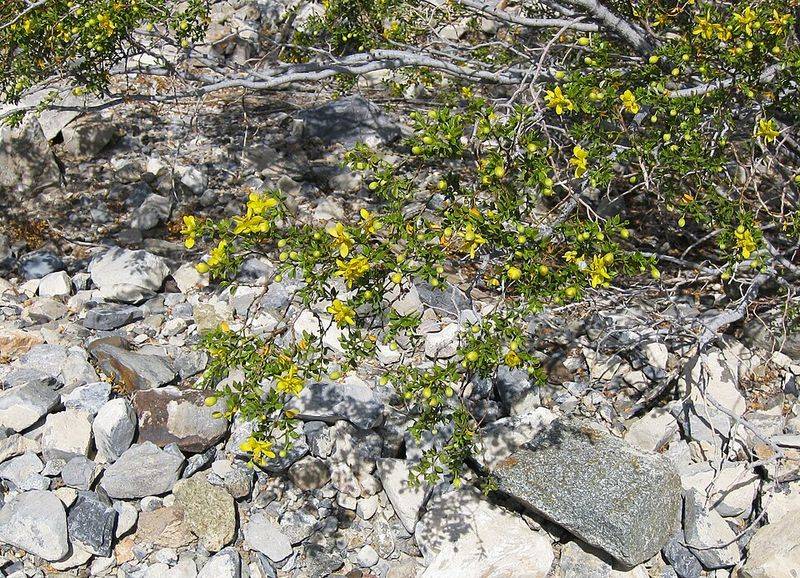
After a desert rain, that sharp, earthy smell drifting through the air is coming from Creosote Bush. Larrea tridentata is the defining plant of the low desert, and it has been holding ground in Arizona for a very long time.
Some clonal colonies in the Mojave are estimated to be over 11,000 years old, which makes it hard to argue with its survival credentials.
In a home landscape, it grows 4 to 8 feet tall with an open, airy structure and small, resinous leaves that stay green year-round. Yellow flowers appear in spring and sometimes again after summer rains, followed by fuzzy white seed capsules.
It is not showy in a traditional sense, but it has a quiet, authentic desert character that fits Arizona yards naturally.
Creosote Bush thrives in full sun, poor soil, and very low rainfall. It does not want amended soil, fertilizer, or frequent irrigation.
Planting it in rich garden soil or overwatering it actually causes more harm than drought stress does. Give it the lean conditions it evolved in and it performs without complaint.
Spacing matters with this shrub. In the wild, Creosote plants space themselves apart through chemical root inhibition, so crowding them in tight rows does not work well.
Give each plant room to breathe, water sparingly through the first summer, and then step back. Arizona’s native landscape practically builds itself around this plant.
Pruning is rarely needed, but removing occasional dry or damaged wood helps maintain its natural open form.
Once established, it can survive on natural rainfall alone, even through extended drought periods.
7. Hopbush Holds Up Well With Low Water
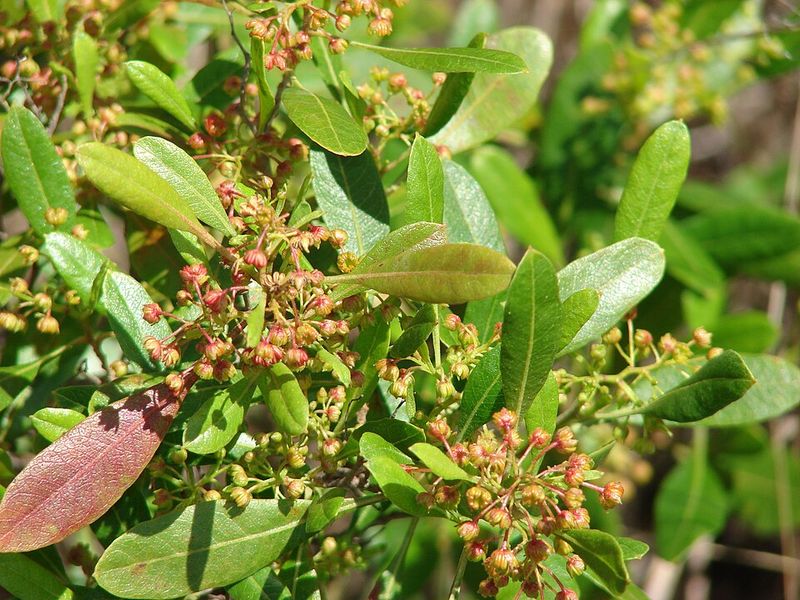
Not enough people talk about Hopbush, and that is a shame because Dodonaea viscosa earns its spot in Arizona yards with very little drama.
Evergreen, fast-growing, and genuinely unfussy about soil, it fills the role of a privacy screen or windbreak better than most shrubs you can find at a local nursery.
The green-leaf species is common, but the purple-leaf variety, sometimes labeled Purpurea, is the one that catches eyes. The foliage shifts from green to deep bronze-purple in cooler months, then lightens again in summer.
The papery, hop-like seed pods that give the plant its name add another layer of texture from late summer into fall.
In Arizona, Hopbush handles full sun and reflected heat from walls or concrete without the leaf scorch you see on less adapted plants.
It grows quickly, sometimes several feet in a single season when it has decent moisture, and slows down considerably once it matures and irrigation is reduced.
Water it regularly through the first summer to encourage a strong root system, then taper off gradually. Established plants in Phoenix and Tucson do fine on minimal supplemental irrigation during cooler months and moderate deep watering through peak summer heat.
Hard pruning is tolerated well, so shaping it into a hedge or leaving it to grow naturally as a multi-stemmed shrub both work depending on what your yard needs.
Good drainage is important, as consistently wet soil can lead to root stress despite its overall toughness.
It also shows decent tolerance to wind and urban conditions, making it reliable in exposed or built-up areas.