These 8 Container Flowers Bloom Longer With Less Water
Your porch pots shouldn’t run your daily schedule. Some container flowers thrive on neglect and still deliver color that stops neighbors mid-walk.
These blooms handle dry spells, skip the wilting drama, and keep pushing out fresh flowers with minimal attention from you. Less time hauling a watering can, more time actually enjoying your porch.
Pick a few, tuck them into your containers, and watch your porch turn heads without demanding a second glance from you every morning.
1. Lantana
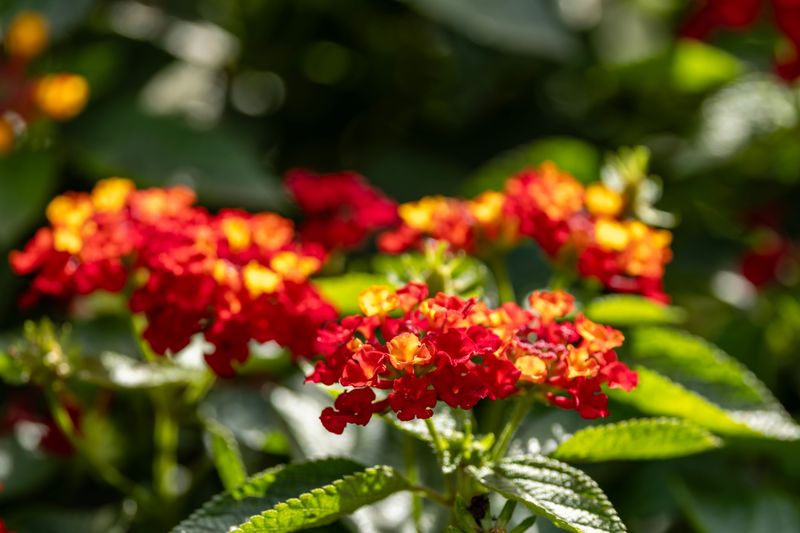
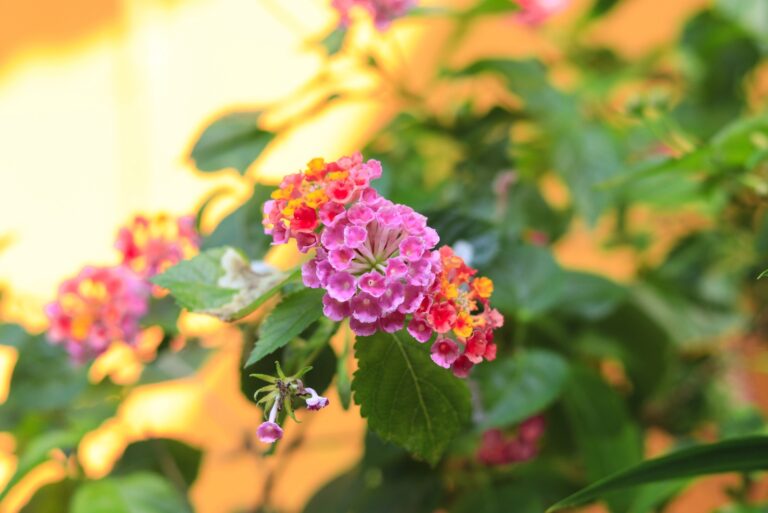
If flowers had a tough-love attitude, lantana would be the poster child. This sun-loving shrub thrives on neglect, producing cheerful clusters of tiny blooms in shades of orange, yellow, pink, and red all season.
Lantana is one of the best container flowers that bloom longer with less water. Once established, it handles heat and drought with real ease. Skipping a few watering days will barely slow it down.
The blooms attract butterflies and hummingbirds, turning your porch into a mini wildlife sanctuary. Each flower cluster actually changes color as it matures.
That means one plant can show multiple shades at once, which is a pretty cool trick. Plant lantana in well-draining potting mix and set the container in full sun.
Six to eight hours of direct sunlight daily keeps it performing at its best. Avoid overwatering, because soggy roots are its only real weakness.
Removing spent blooms encourages faster reblooming, but lantana is forgiving even without it. A light trim mid-season can spark a fresh flush of color.
Feed it with a balanced slow-release fertilizer once in spring and you are basically done. Lantana comes in trailing varieties perfect for hanging baskets and upright types ideal for large pots.
Both handle heat and drought with equal confidence. If you want maximum bloom time with minimum effort, lantana earns its spot every single summer.
2. Portulaca (Moss Rose)
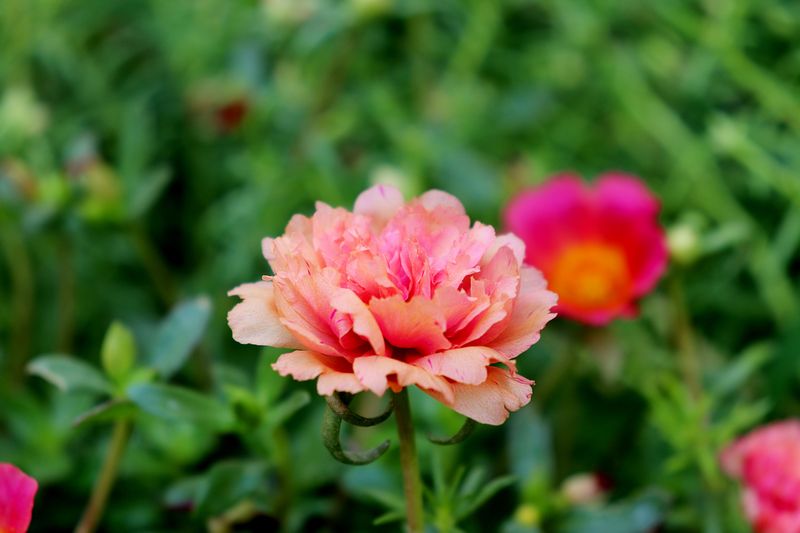
Portulaca is basically the camel of the flower world. Its thick, succulent-like leaves store water, allowing it to bloom brilliantly even when you completely forget to water it for days.
Also called moss rose, this low-growing annual is a favorite among container gardeners who want nonstop color. The silky, rose-like blooms open wide in the sunshine and come in electric shades of hot pink, magenta, orange, yellow, and white.
Few plants pack this much color into such a compact, easy-care package. Portulaca loves heat and thrives in sandy, well-draining soil.
Plant it in shallow containers where drainage is excellent and sun exposure is maximum. Poor soil actually makes it happier, which makes it one of the most forgiving plants you can grow.
One fun fact: portulaca flowers close at night and on cloudy days. Some newer varieties stay open longer, so check the tag when shopping for yours.
Either way, when the sun hits them in the morning, the show is absolutely worth it. Watering once or twice a week is plenty during the growing season.
In peak summer heat, a little extra moisture helps, but avoid letting the roots sit in standing water. Overwatering is the one thing that will set this plant back.
Moss rose spreads cheerfully and fills containers beautifully without any fuss. It self-seeds in warm climates, sometimes popping up again next season as a welcome surprise.
For effortless color from June through frost, portulaca delivers every time.
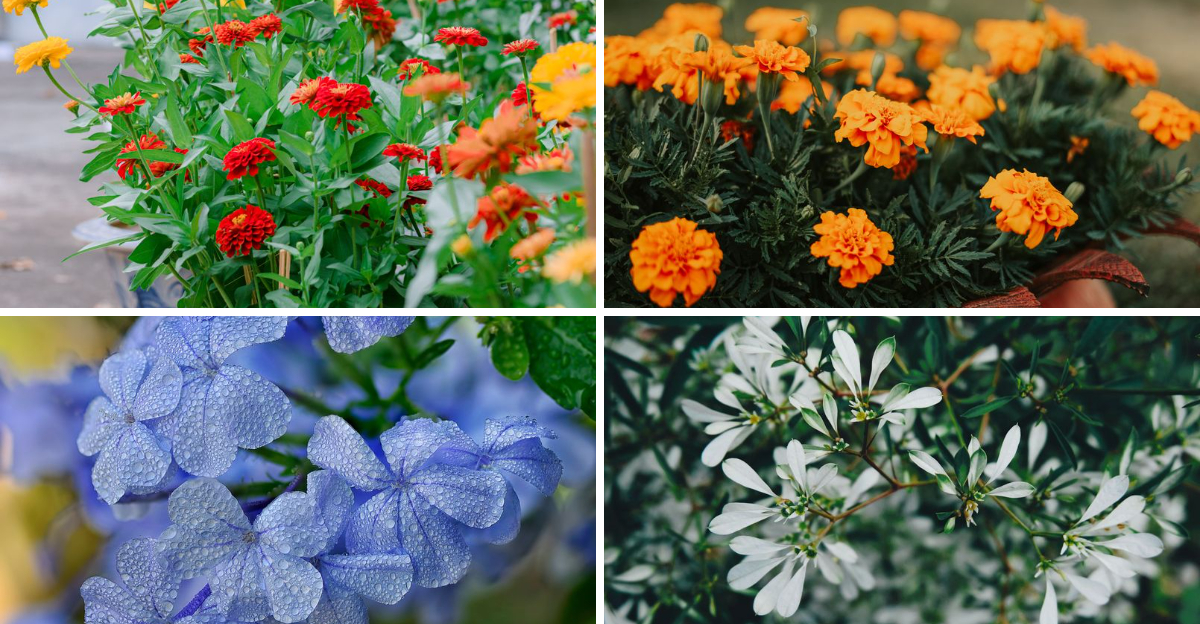
3. Zinnia
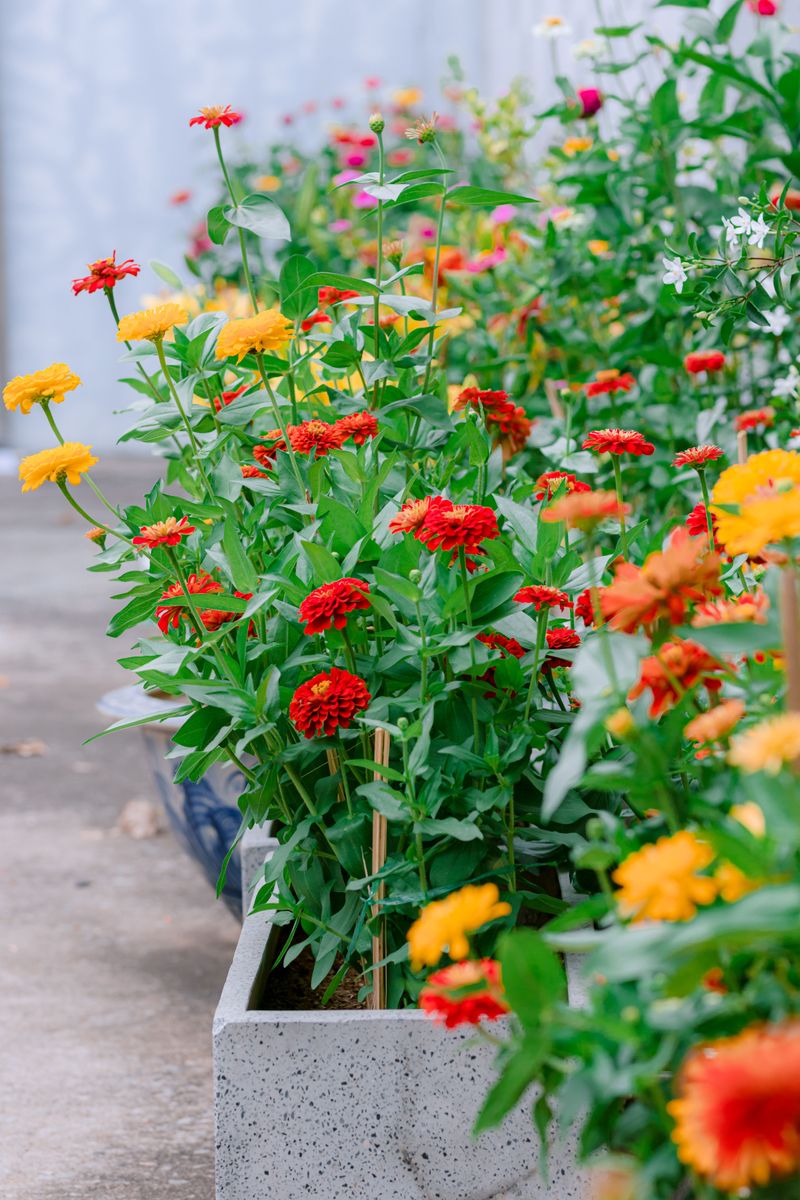
Zinnias are the overachievers of the summer garden, and they do it all without demanding much water. These bold, daisy-like blooms come in almost every color imaginable, from deep burgundy to neon coral to creamy white.
What makes zinnias especially impressive in containers is their long bloom season. Start them in late spring and they will keep going strong right up until the first frost.
Few annuals offer that kind of stamina, especially with such minimal care required. Zinnias prefer full sun and warm temperatures, making them a natural fit for south-facing patios and decks.
Once established, they handle dry spells surprisingly well for a non-succulent plant. Water deeply but infrequently, allowing the soil to dry out between waterings for best results.
Good air circulation matters with zinnias because they can develop powdery mildew in humid conditions. Space them generously in your container and avoid wetting the foliage when you water.
Keeping the leaves dry goes a long way toward a healthier, longer-blooming plant. Removing spent blooms is the secret weapon with zinnias.
Do it regularly and the plant responds by pushing out even more blooms. It takes about thirty seconds per plant and the payoff in fresh color is absolutely worth it.
Zinnias also attract butterflies by the dozen, adding movement and life to your container garden. Taller varieties work beautifully as a centerpiece in large pots.
These are container flowers that bloom longer with less water and more personality than almost anything else you can grow.
4. Marigold
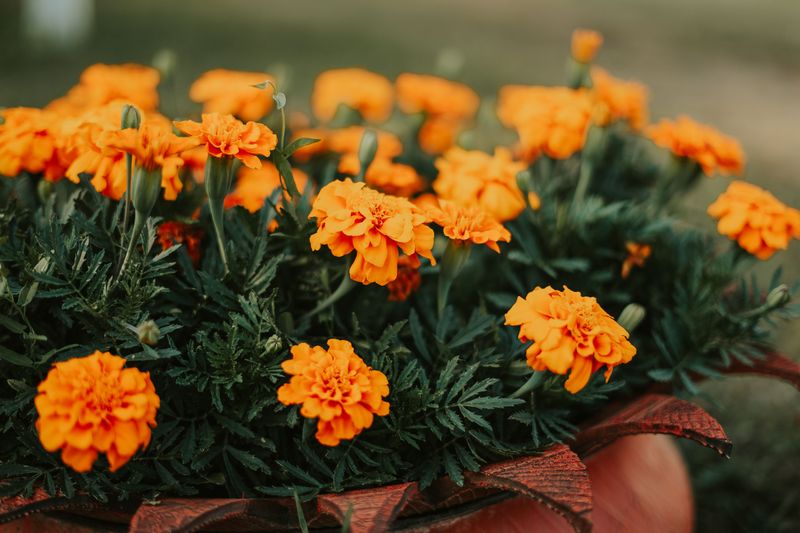
There is something deeply satisfying about a pot full of marigolds. Their golden and orange blooms practically glow in the afternoon sun, and they ask for almost nothing in return for all that cheerfulness.
Marigolds are among the most reliable container flowers that bloom longer with less water. They handle heat, drought, and neglect better than most annuals, bouncing back quickly after dry spells.
Gardeners have trusted them for generations, and for very good reason. French marigolds are the best choice for containers because they stay compact and bushy.
African varieties grow taller and work well as bold centerpieces in larger pots. Both types produce nonstop blooms from spring through fall with very little encouragement needed from you.
Plant marigolds in well-draining potting mix and place them in full sun. They need at least six hours of direct light daily to bloom their best.
Water at the base of the plant rather than overhead to keep the foliage dry and healthy. One underrated perk of marigolds is their natural pest-repelling ability.
Their strong scent keeps aphids, whiteflies, and even some beetles at bay. Tucking a pot of marigolds near your vegetable containers is a smart and chemical-free way to protect your food garden.
Remove faded blooms every week or so to encourage fresh flower production. A monthly dose of balanced fertilizer keeps the color coming strong.
For a flower that works as hard as you do without asking for much, marigolds are genuinely hard to beat.
5. Geranium
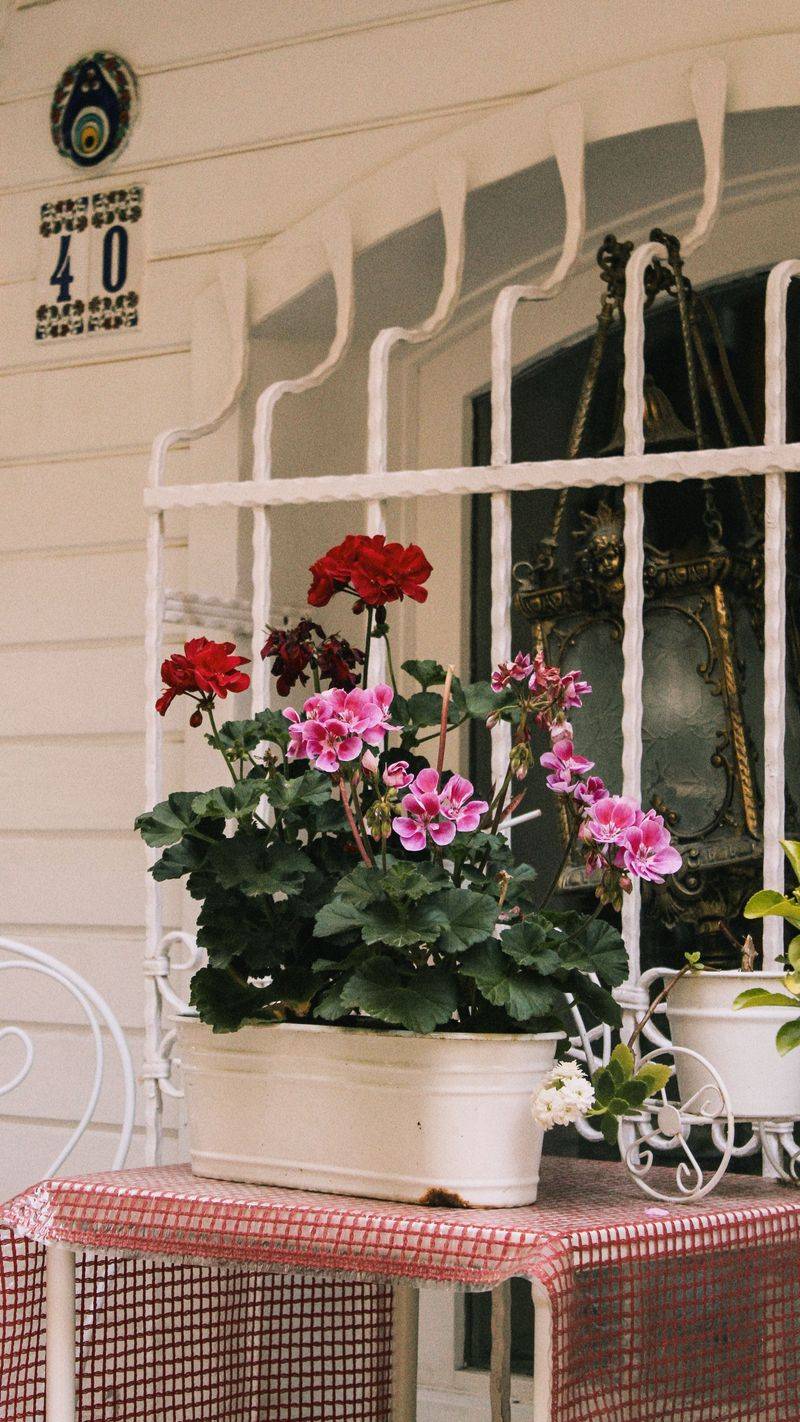
Walk past any European window box in summer and you will almost certainly spot a geranium. These classic beauties have been charming gardeners for centuries, and their drought tolerance is a big reason why they remain so beloved.
Geraniums store water in their thick stems, which means they handle dry periods better than their delicate-looking blooms might suggest. They come in shades of red, pink, salmon, white, and lavender, offering plenty of options for any color scheme.
A well-placed pot of geraniums can make even the plainest porch look polished and intentional. For best results, plant geraniums in containers with excellent drainage.
They prefer to dry out slightly between waterings rather than sitting in moist soil. Overwatering is actually the most common mistake people make with these plants, so holding back is the right move.
Full sun brings out the best bloom production, but geraniums also tolerate partial shade better than most drought-tolerant flowers. Morning sun with afternoon shade works well in hotter climates.
This flexibility makes them one of the most versatile choices for container gardening. Remove faded flower heads regularly to keep new buds forming throughout the season.
A light feeding with a bloom-boosting fertilizer every two to three weeks supports steady flowering. Geraniums are also surprisingly easy to overwinter indoors, making them a great long-term investment for your container collection.
Few flowers match the combination of elegance, toughness, and low water needs that geraniums offer. They are a timeless choice that earns its place in any container garden, season after season.
6. Cape Leadwort (Plumbago)
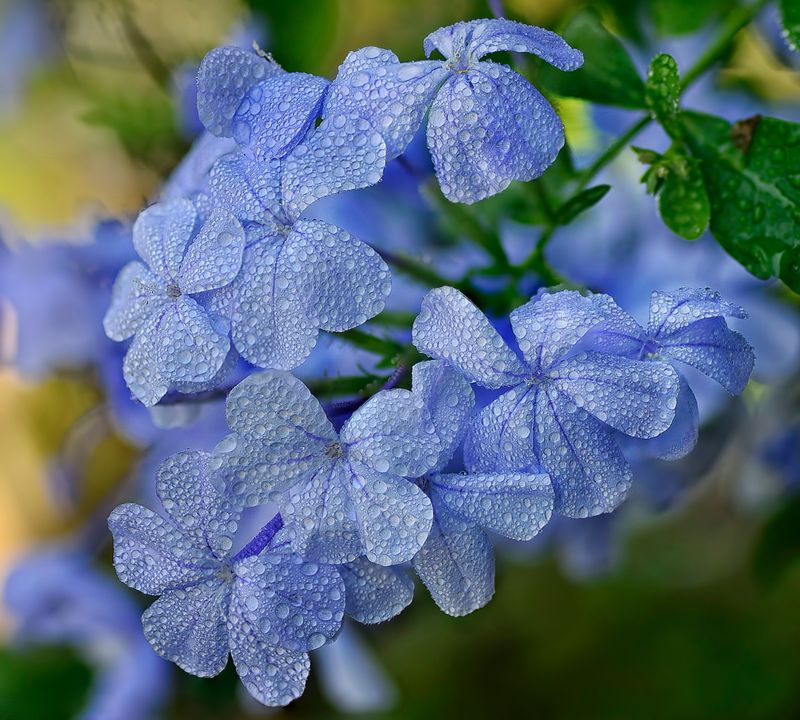
Not every gardener knows about plumbago, and that is honestly a shame. This underrated gem produces clusters of the most soothing sky-blue flowers you will ever see spilling out of a container pot.
Cape leadwort earned its reputation as a tough, drought-tolerant performer in warm-climate gardens. Once established in a container, it handles dry stretches with impressive grace.
The blooms keep coming from spring through fall, making it one of the longest-blooming choices on this list. Plumbago thrives in full sun and warm temperatures, which is why it is so popular in southern gardens.
In containers, it can grow quite full and lush, especially with occasional trimming to keep its shape tidy. The trailing stems make it a beautiful choice for large pots where you want some relaxed, flowing texture.
Water deeply once or twice a week during the growing season. Allow the top inch of soil to dry out before watering again. Plumbago is more forgiving of occasional drought than it is of soggy, waterlogged roots.
Fertilize monthly with a balanced or bloom-focused fertilizer to support continuous flowering. In cooler climates, bring containers indoors before frost arrives since plumbago is frost-sensitive.
In warm zones, it may even behave as a perennial and return reliably year after year. The soft blue color pairs beautifully with orange lantana or yellow marigolds in mixed container arrangements.
If you want something a little unexpected that still delivers big on performance, plumbago is the container flower worth discovering. Your neighbors will definitely ask what it is.
7. Blackfoot Daisy
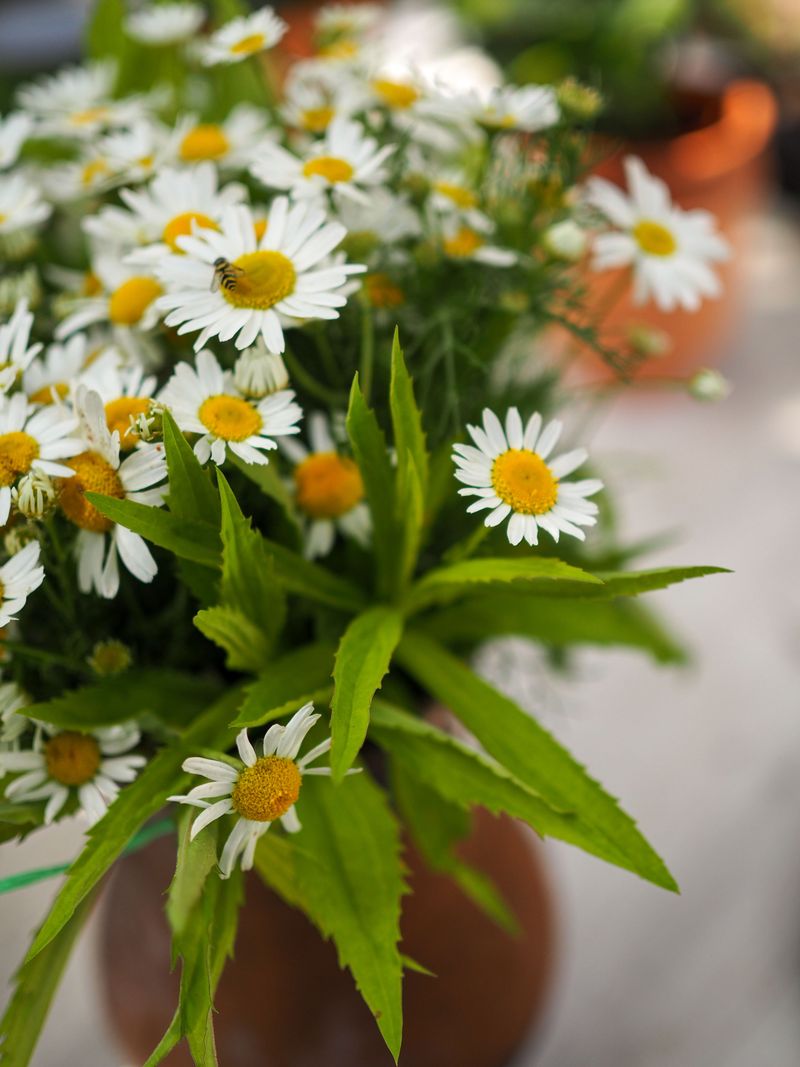
Imagine a wildflower so tough it practically grows itself, yet still manages to look charming and delicate. That is the blackfoot daisy in a nutshell, and it is one of the most underappreciated container flowers out there.
Native to the southwestern United States, blackfoot daisy evolved in rocky, dry soils with very little rainfall. That heritage makes it one of the most naturally drought-adapted flowers you can grow in a pot.
Plant it once, give it sun and good drainage, and it rewards you with cheerful white blooms almost continuously. The flowers are small, white, and daisy-like with bright yellow centers.
They have a faint honey-like fragrance that becomes especially noticeable on warm afternoons. Few container plants offer this combination of subtle beauty and sensory reward without demanding constant attention.
Blackfoot daisy needs sharp drainage above all else. Use a sandy or gritty potting mix and choose a container with large drainage holes.
Wet roots are the one condition this plant truly cannot handle, so it is best to keep the soil on the drier side. Water only when the soil is completely dry, which in most climates means once a week or less.
Avoid fertilizing heavily, as rich soil actually reduces flowering and encourages leggy growth. Lean, dry conditions bring out the best in this scrappy little plant.
Trim it back lightly after each major bloom flush to encourage fresh growth and more flowers. Blackfoot daisy is a gift for gardeners who want native beauty without the fuss.
Once you try it, you will wonder why it took you so long.
8. Diamond Frost Euphorbia
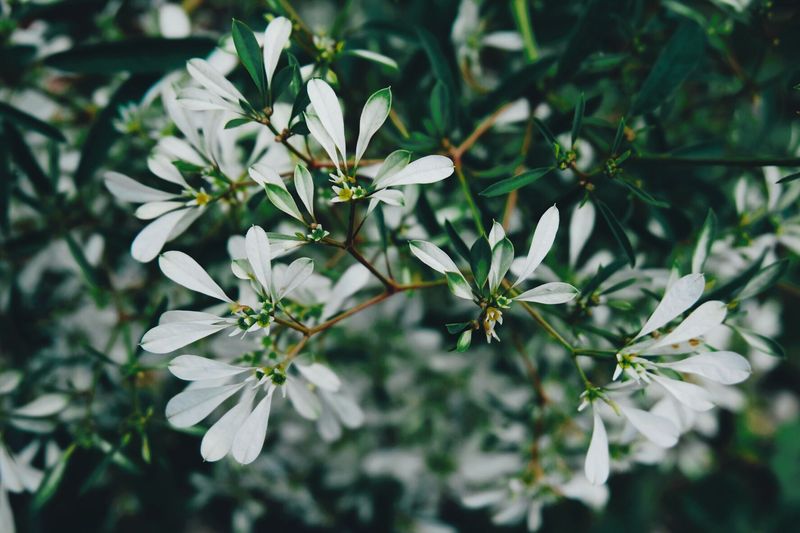
Diamond Frost euphorbia looks like someone draped a tiny cloud over your flower pot. Its airy, white blooms are impossibly delicate-looking for a plant that handles heat, drought, and neglect with such easy confidence.
This compact, mounding plant produces thousands of tiny white flowers on wispy stems from spring through frost. It rarely takes a break from blooming, which is one reason container gardeners keep coming back to it.
As one of the best container flowers that bloom longer with less water, Diamond Frost consistently outperforms expectations. Full sun brings out peak performance, but Diamond Frost also handles partial shade better than most heat-tolerant plants.
It adapts to a wide range of conditions, making it a reliable choice for gardeners in different climates. From morning sun to all-day exposure, this plant finds a way to thrive.
Water when the top inch of soil feels dry, roughly once or twice a week in summer. It tolerates dry spells without losing its bloom quality, which sets it apart from many other annuals.
Just make sure the container drains well, because standing water is its only real vulnerability. Removing spent blooms is not needed since the old blooms fall away cleanly on their own.
A light monthly fertilizer application keeps the foliage lush and the flowering consistent. This is genuinely one of the lowest-maintenance plants you can add to any container arrangement.
Diamond Frost pairs beautifully with bold, colorful plants like lantana, zinnias, or marigolds. Its soft white texture creates contrast and makes surrounding colors pop even more.
For effortless elegance in a pot, nothing quite matches what this little plant brings to the table.