These Drought-Tolerant Oregon Plants Make Any Yard Look More Expensive
A yard that looks expensive does not have to come with a “there goes the vacation fund” price tag.
In Oregon, the right drought-tolerant plants can make a landscape feel polished, intentional, and fancy enough to make the neighbors casually slow-walk past your house.
Think strong shapes, layered texture, tidy borders, soft movement, and foliage that still looks good when summer gets stingy with rain.
Once established, drought-tolerant choices can help cut down on watering while giving your yard that pulled-together, designer look homeowners love.
The trick is choosing plants that look deliberate, not like they were abandoned to fend for themselves.
With smart spacing, repeated colors or forms, fresh mulch, and a few eye-catching focal points, a low-water Oregon yard can look elevated without acting high-maintenance.
Less hose-dragging, more curb appeal. That is the kind of upgrade everyone can appreciate.
1. Pacific Wax Myrtle Creates A Sleek Screen
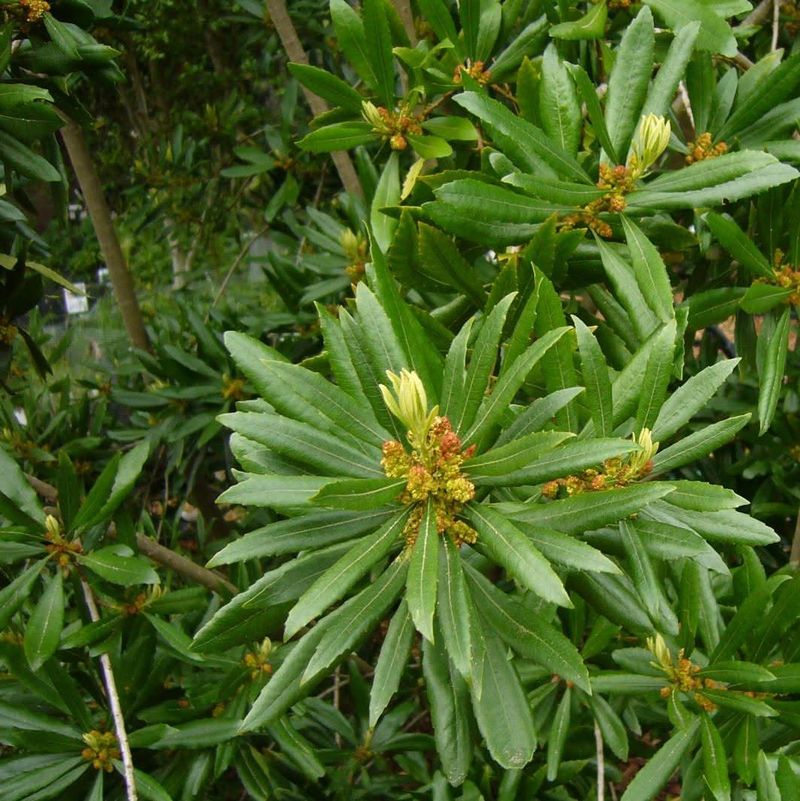
Few plants pull off the dual role of privacy screen and polished garden feature quite like Pacific Wax Myrtle. Native to the coastal areas of the western United States, it has been used for generations to create natural barriers that look intentional and refined.
It grows fast, stays evergreen, and keeps its deep green color even through dry summer months.
What makes it stand out in a yard is its clean, upright growth habit. You can leave it natural for a softer look or trim it into a formal hedge for something sharper and more structured.
Either way, it reads as expensive without requiring much effort. It handles drought well once it is established, making it a low-maintenance choice for busy homeowners.
This shrub also tolerates a range of soil types, including sandy or clay-heavy ground that other plants struggle in.
It grows well in full sun or partial shade, giving you flexibility depending on your yard’s layout.
Birds are drawn to its small waxy berries, which adds a little wildlife bonus to your landscape.
Plant it along a fence line, a driveway, or the edge of a patio to frame your outdoor space with purpose.
A row of Pacific Wax Myrtle planted evenly creates that cohesive, designer feel that makes a yard look like it was professionally landscaped from day one.
2. Oregon Sunshine Brightens Lean Soil
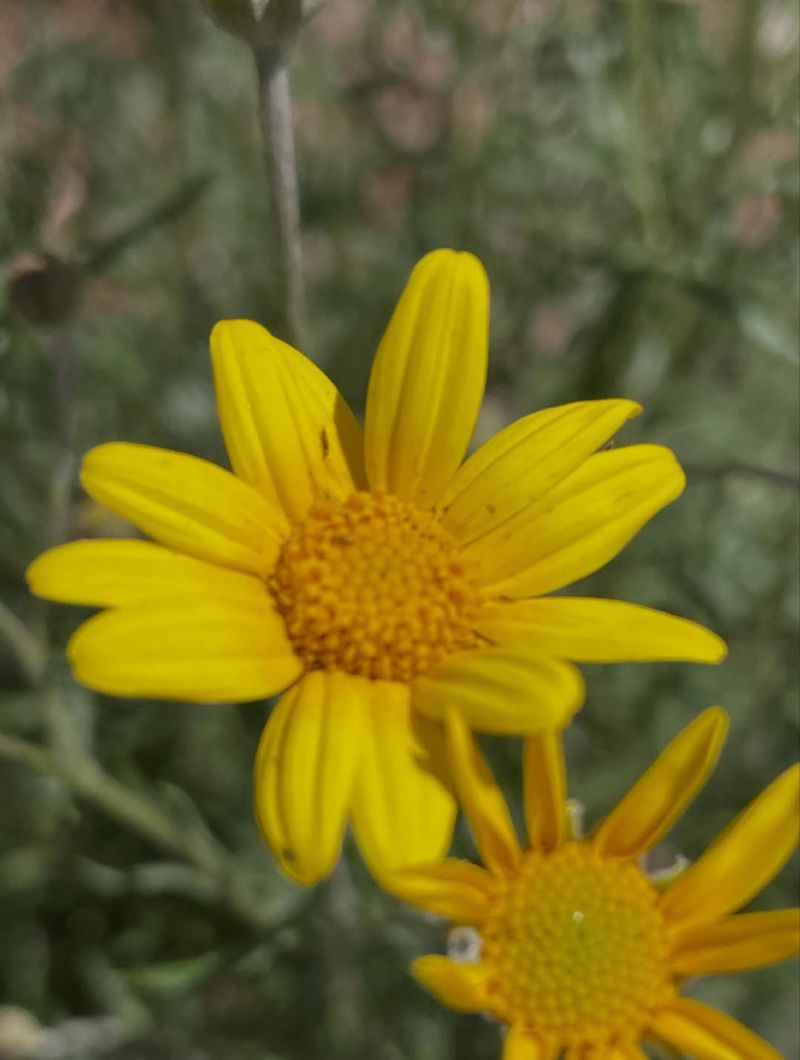
Bold yellow flowers on silvery stems in the middle of a dry summer is not something most people expect from a tough native plant.
Oregon Sunshine, also known as Eriophyllum lanatum, delivers exactly that kind of surprise.
It is one of those plants that looks like it took a lot of effort to grow, but actually thrives on neglect and lean soil conditions.
The cheerful yellow blooms show up from late spring through summer and attract pollinators like bees and butterflies. That kind of garden activity makes a yard feel alive and intentional.
The silvery-green foliage holds its color even when rainfall is scarce, giving the plant a soft, textured look that pairs well with darker shrubs or ornamental grasses. It works beautifully as a ground cover or edging plant along pathways and borders.
Your Oregon Garden Changes Every Week. Your Plan Should Too.
Gardening in Oregon changes quickly throughout the season. Every Friday you’ll receive a simple weekly plan showing exactly what to plant, prune, fertilize, harvest, and protect so you never miss the right timing.
One of the best things about this plant is how well it performs in poor soil. Rich, amended soil can actually cause it to grow too loosely and fall apart.
Lean, well-drained ground suits it perfectly. It prefers full sun and handles the dry stretches of summer without any fuss.
Planting it in drifts or clusters creates a natural, flowing look that feels designed without being stiff.
For yards that have dry, rocky, or sandy patches that are hard to fill, this native wildflower turns a problem area into a feature worth noticing.
3. Rockrose Gives Front Yards A Resort Look
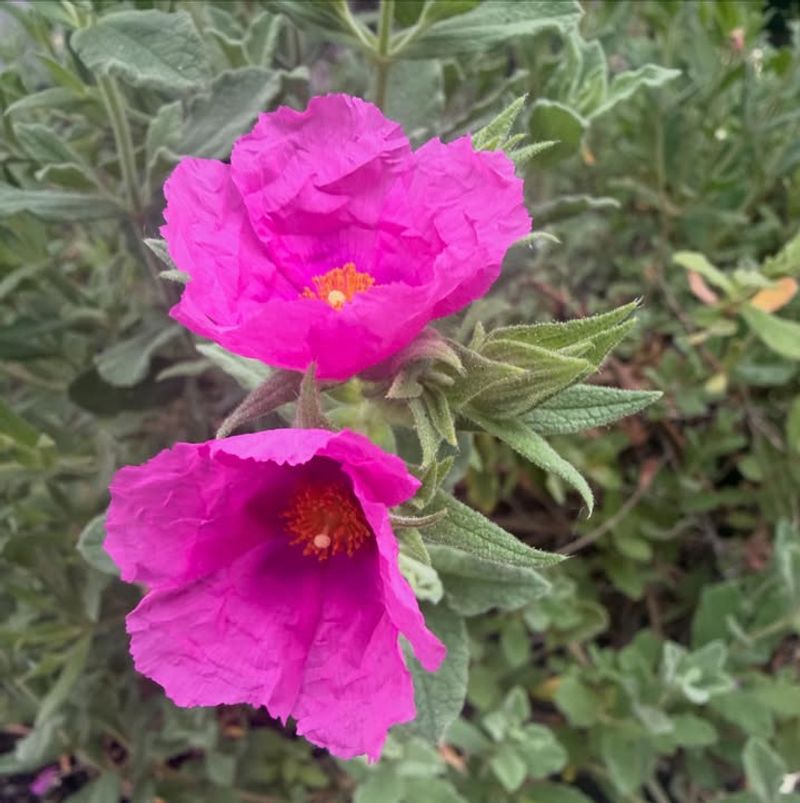
There is something almost tropical about the way Rockrose blooms. The large, papery flowers open in shades of pink, white, and lavender, and each one looks delicate enough to belong in a luxury hotel courtyard.
Despite that refined appearance, Rockrose is one of the toughest drought-tolerant shrubs you can plant. It thrives in hot, dry conditions and actually performs better when you leave it alone.
Native to the Mediterranean, it has found a happy home in the dry summers of the Pacific Northwest. Once established, it needs almost no supplemental watering.
The blooms appear in late spring and early summer, covering the shrub in color that stops people in their tracks.
Even when it is not in bloom, the aromatic gray-green foliage keeps the plant looking full and textured year-round.
Rockrose works especially well in front yards where curb appeal matters most. Plant it in a raised bed with gravel mulch and a few ornamental rocks, and the whole setup looks like it came from a high-end landscape design magazine.
It pairs well with lavender, rosemary, and other Mediterranean-style plants that share its love of sun and dry soil. It does not need rich soil or regular feeding.
Just give it good drainage and plenty of sunlight and it will reward you with seasons of stunning blooms.
For anyone wanting a front yard that looks like a resort without the resort price tag, this shrub delivers every time.
4. Lavender Makes Walkways Feel Finished
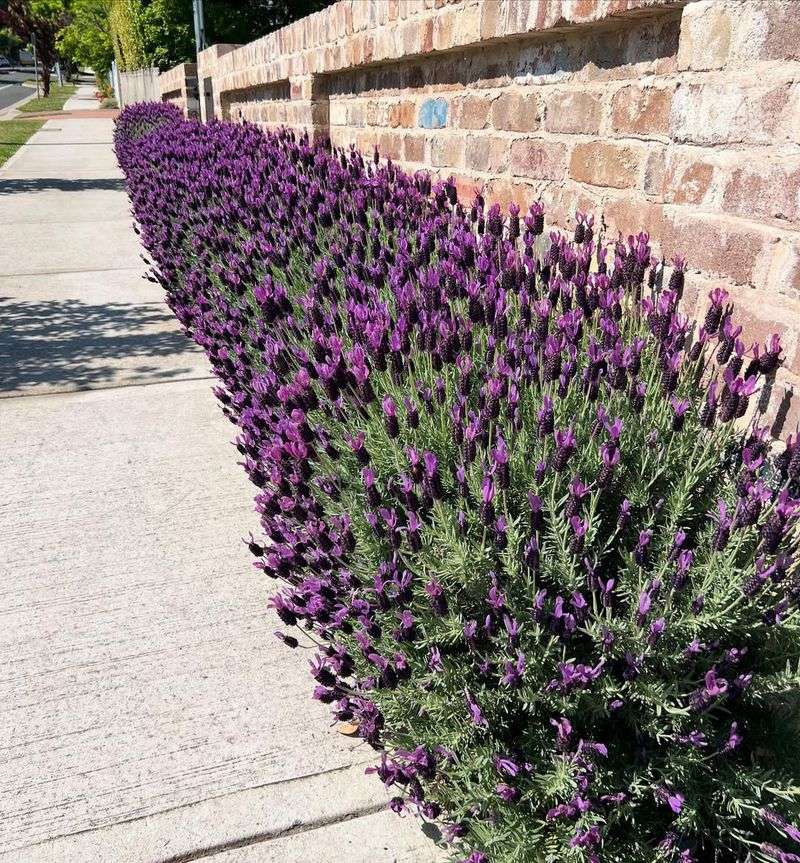
Nothing says a yard was thoughtfully designed quite like a lavender-lined walkway. The purple spikes, the silvery stems, and that unmistakable fragrance create an experience that feels intentional and luxurious every single time you walk past.
Lavender has been used in formal European gardens for centuries, and it brings that same sense of elegance to yards right here in Oregon.
It thrives in dry, sunny conditions and actually suffers when it gets too much water. That makes it a perfect fit for the hot, dry summers that much of the Pacific Northwest experiences.
Once established, it needs very little care. A light trim after blooming keeps it tidy and encourages fresh growth.
The silvery foliage stays attractive even when the plant is not in bloom, so it earns its place in the landscape all year long.
Planting lavender in a straight line along a path or driveway creates a clean, formal effect that reads as expensive and well-planned. Spacing plants evenly and mulching with gravel instead of bark adds to that polished, Mediterranean feel.
English lavender varieties tend to be the most cold-hardy and work well across different parts of the region, including northern areas where winters can be harsher.
Beyond its good looks, lavender also attracts bees and butterflies, which adds natural movement and life to any garden.
It is one of those rare plants that looks great, smells amazing, and asks for almost nothing in return.
5. Blue Oat Grass Adds Expensive-Looking Texture
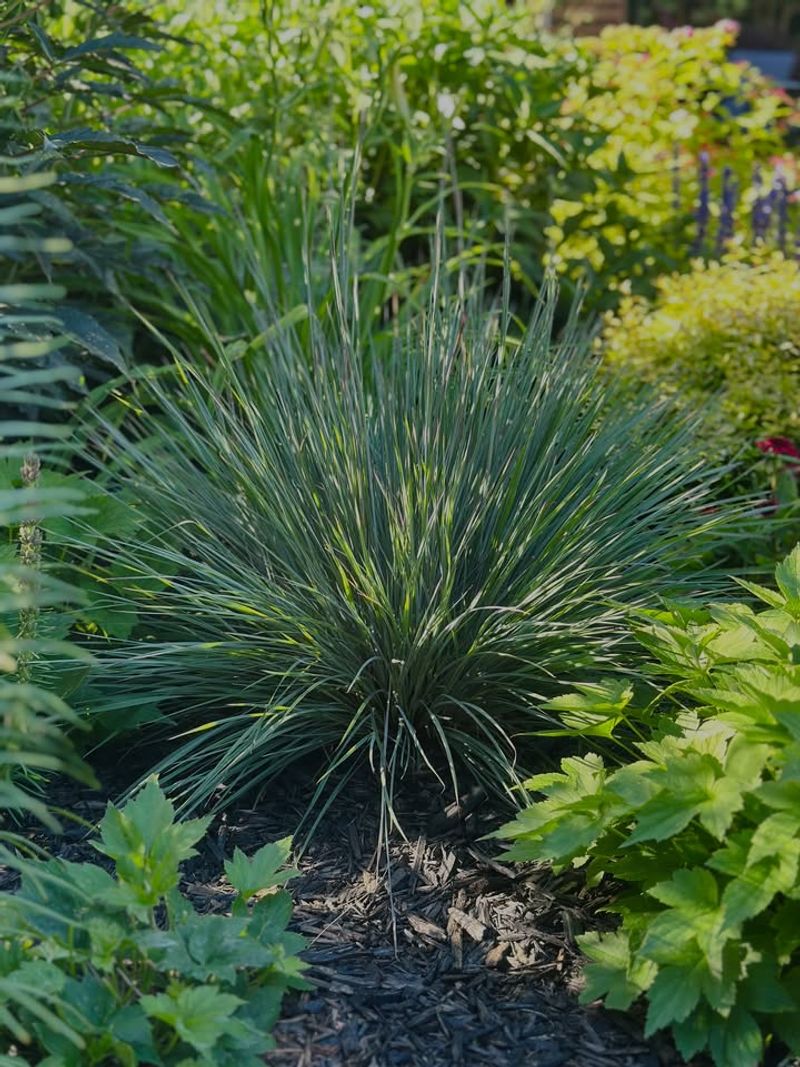
Steel-blue foliage is not something you see in every yard, and that is exactly what makes Blue Oat Grass stand out.
The color is striking and unusual, landing somewhere between silver and blue-green in a way that catches the eye without being loud.
It brings a cool, modern texture to garden beds that other plants simply cannot replicate, and it does it with almost no water once it settles in.
Designers love ornamental grasses for their ability to add movement and dimension to a landscape.
Blue Oat Grass does both while also offering that rare, metallic color that pairs beautifully with dark mulch, light gravel, or stone edging.
It grows in tidy, rounded clumps that hold their shape well, making it easy to use as a border plant or a focal point in a mixed bed. The soft seed heads that appear in summer add another layer of visual interest.
It performs best in full sun and well-drained soil, and it handles dry summers without complaint. In fact, overwatering is more of a concern than drought stress for this plant.
It is semi-evergreen in milder areas and may go dormant in colder northern regions during winter, but it comes back reliably each spring.
Pair it with yellow-flowering plants like Oregon Sunshine or dark-leaved shrubs for a color contrast that looks like it was planned by a professional. It is a small plant with a big visual impact.
6. Sulfur Buckwheat Blooms In Harsh Sun
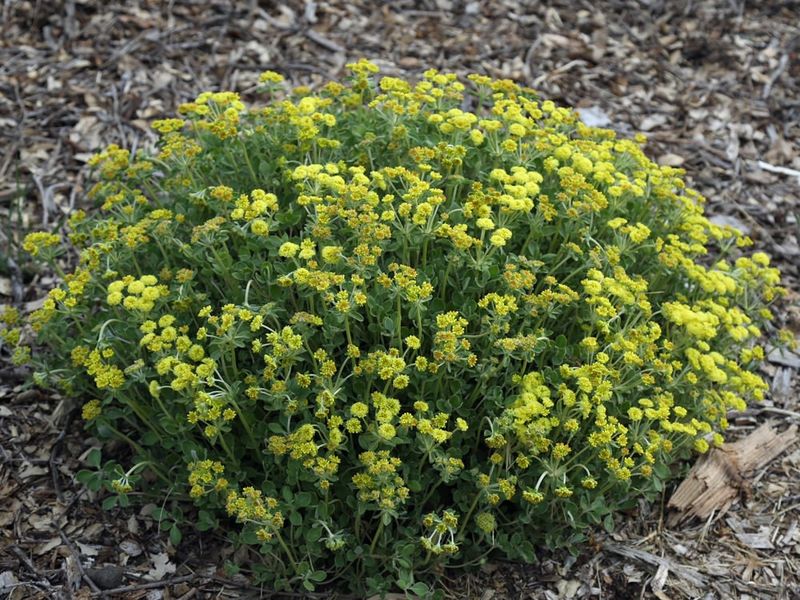
Rocky slopes, gravel paths, and sun-baked hillsides are not places where most plants want to grow. Sulfur Buckwheat, a native of the western United States, treats those harsh conditions like home.
It is a low-growing perennial that covers itself in clusters of tiny bright yellow flowers from late spring into summer, turning difficult spots into standout features of the landscape.
The blooms age gracefully, shifting from yellow to rusty orange and then to a warm copper tone as the season progresses. That color evolution means the plant stays visually interesting long after peak bloom.
The foliage is low and mat-forming, which makes it excellent for controlling erosion on slopes and filling in spaces where other plants refuse to cooperate. It requires virtually no irrigation once established and actually prefers poor, gritty soil.
What makes this plant feel elevated in a yard is how it mimics the look of carefully styled alpine or rock garden designs.
When paired with ornamental stones, gravel mulch, or other low-growing natives, it creates a landscape that looks curated and intentional.
It grows well in full sun and tolerates the kind of heat that wilts softer plants by midsummer.
Native bees are especially attracted to the blooms, making it a smart ecological choice as well as a beautiful one.
For problem areas that get too much sun and not enough rain, this plant turns a challenge into a real design opportunity worth celebrating.
7. Dwarf Strawberry Tree Looks Polished Year-Round
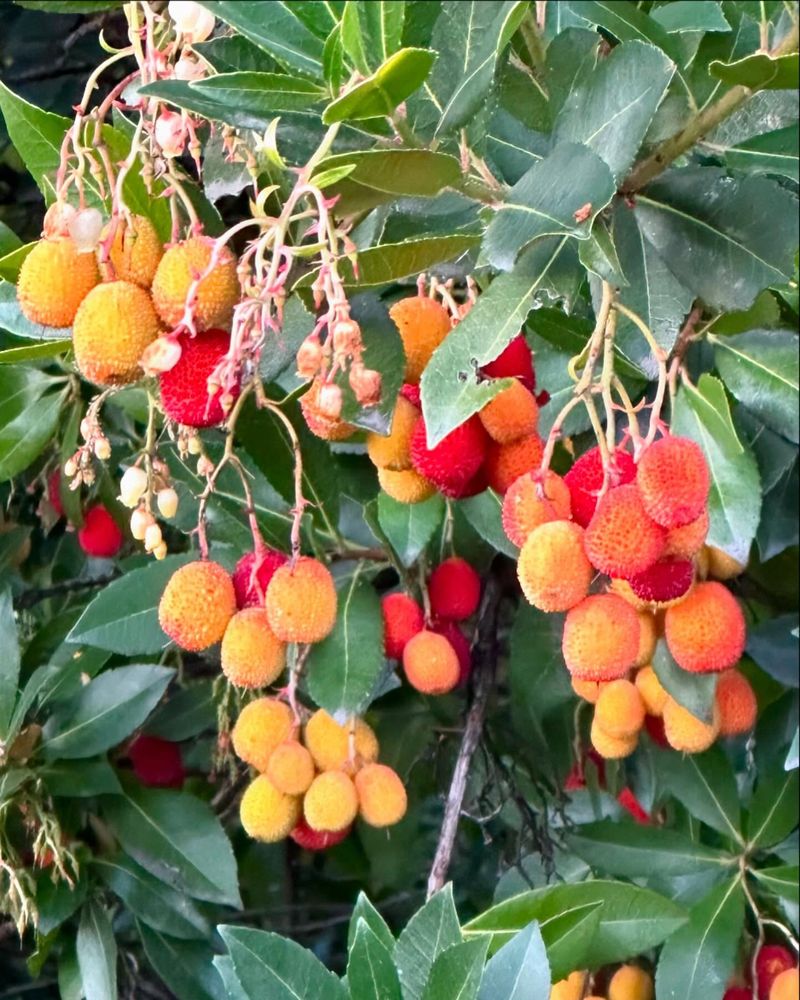
Year-round interest is the holy grail of garden design, and Dwarf Strawberry Tree delivers it with quiet confidence.
This compact evergreen shrub holds its glossy dark green leaves through every season, and in fall and winter it produces clusters of small, round red fruits that look like little ornaments hanging from the branches.
The contrast of dark foliage and bright red fruit gives it a polished, almost sculptural quality.
It is a slow grower, which means it stays tidy without constant pruning. That quality alone makes it a favorite among homeowners who want structure in their garden without spending weekends with hedge trimmers.
The white urn-shaped flowers appear in late fall and winter, which is a welcome surprise when most other plants have gone quiet.
Those blooms also attract late-season pollinators, making it a generous plant for the local ecosystem.
Drought tolerance is another strong point. Once established in well-drained soil, it handles dry summers without needing regular watering.
It prefers full sun to partial shade and performs well in the mild winters that much of Oregon experiences. In colder northern regions, a sheltered spot helps it thrive.
Use it as a standalone specimen in a front bed, pair it with ornamental grasses for texture contrast, or line a driveway with several plants for a formal, high-end effect.
Few plants offer this much visual payoff across all four seasons while asking for so little from the gardener tending them.
8. Rosemary Makes Dry Beds Smell Expensive
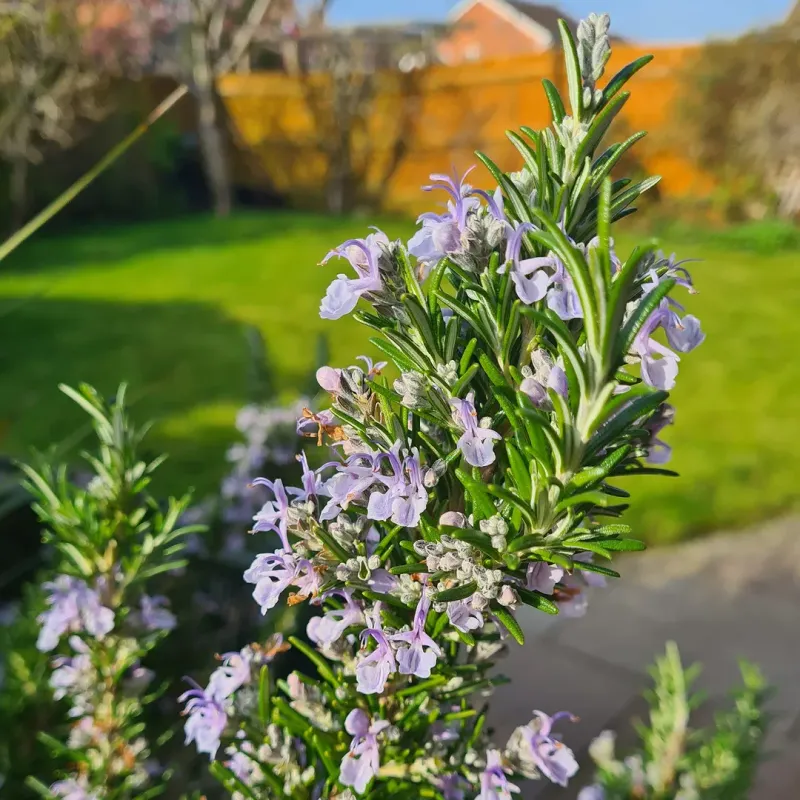
Walk past a rosemary shrub on a warm afternoon and the scent hits you immediately. It is herby, resinous, and somehow both rustic and refined at the same time.
That fragrance alone makes a garden feel more intentional, like someone put real thought into what they planted and why.
But rosemary brings far more than a good smell to the yard, it is also one of the most reliable and versatile drought-tolerant shrubs available.
It grows into a full, rounded shape that works beautifully as a foundation plant, a low hedge, or a sprawling accent in a mixed border.
The needle-like foliage is deep green and aromatic year-round, and in late winter or early spring, small blue-purple flowers appear along the stems.
Those blooms attract early pollinators at a time when not much else is offering them food, which is a meaningful contribution to the local garden ecosystem.
Rosemary thrives in full sun and well-drained soil and handles summer drought without missing a beat. It actually struggles more with too much moisture than with too little, so a dry bed suits it perfectly.
Gravel mulch helps replicate the rocky Mediterranean conditions it loves. Trailing varieties like Huntington Carpet work well spilling over retaining walls or raised beds, creating a cascading effect that looks professionally designed.
Upright varieties bring height and structure to flat beds. Either way, rosemary makes a dry, neglected-looking bed feel curated, fragrant, and genuinely expensive without any fuss.