These Fast-Growing Georgia Climbers Are Perfect For Difficult Walls
Bare walls become a lot more noticeable around Georgia yards once late spring fills everything else out.
Sun baked brick, faded fencing, rough corners near patios, and long empty stretches around the yard can make the whole landscape feel unfinished no matter how healthy the rest of the garden looks.
Fast growing climbers are usually the first thing that starts changing those difficult areas. Some spread quickly through Georgia heat and humidity, covering problem walls far faster than most shrubs or flower beds ever could.
Others completely soften hard surfaces that feel too hot and harsh through summer.
Certain vines grow so fast in Georgia that one season is enough to turn a plain wall into the part of the yard that gets the most attention.
1. Carolina Jessamine Grows Fast Along Sunny Fences
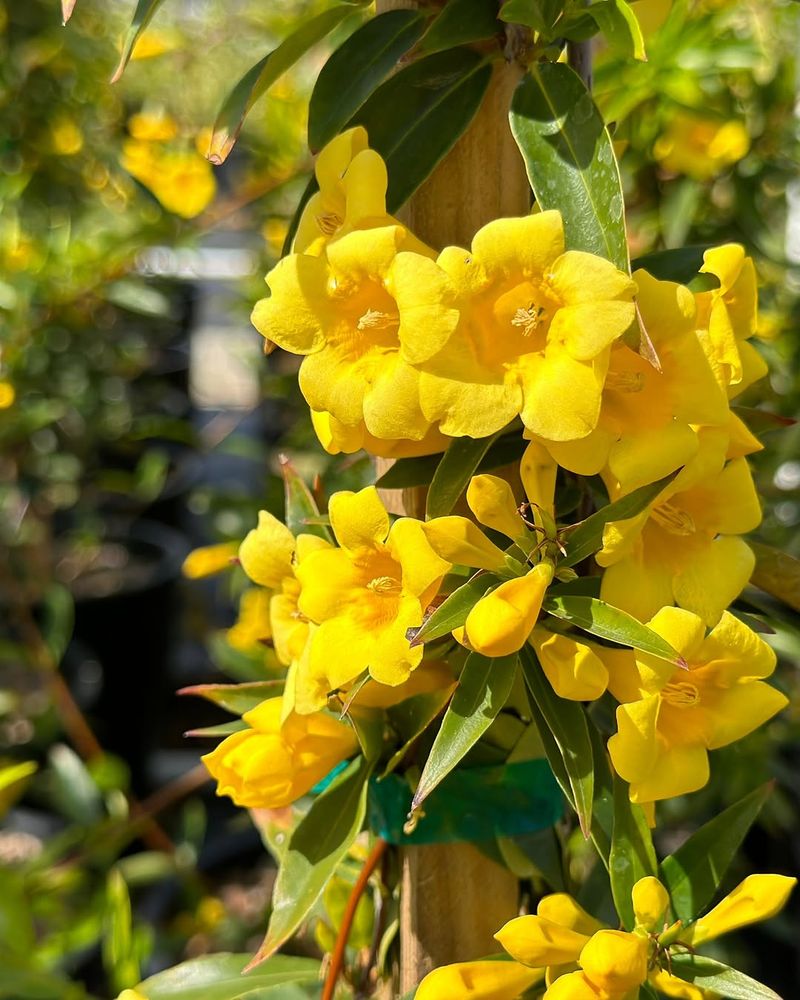
Bright yellow flowers in late winter signal that Carolina Jessamine is already ahead of schedule. Georgia gardeners love this vine because it starts pushing new growth when most plants are still dormant.
Along sunny fences, it can put on several feet of new growth in a single season without much encouragement from you.
Carolina Jessamine is Georgia’s state wildflower, which tells you something important about how well it thrives here. It handles the heavy clay soils common across the Piedmont region and does fine in sandy coastal soils too.
Give it a sturdy fence and full sun, and it will cover the structure densely within two to three growing seasons.
Watering needs are low once the plant establishes, which usually takes one full summer. After that, rainfall in most parts of Georgia is enough to keep it going.
Prune lightly right after the spring bloom to shape it and encourage thicker coverage along the base. Avoid letting it run unchecked onto trees, since it can become aggressive in open landscapes.
For fence coverage in Georgia, though, it’s genuinely hard to beat. The glossy evergreen leaves stay attractive even when the plant isn’t blooming, giving you year-round interest on walls and fences that would otherwise look bare.
2. Crossvine Covers Bare Walls With Thick Growth
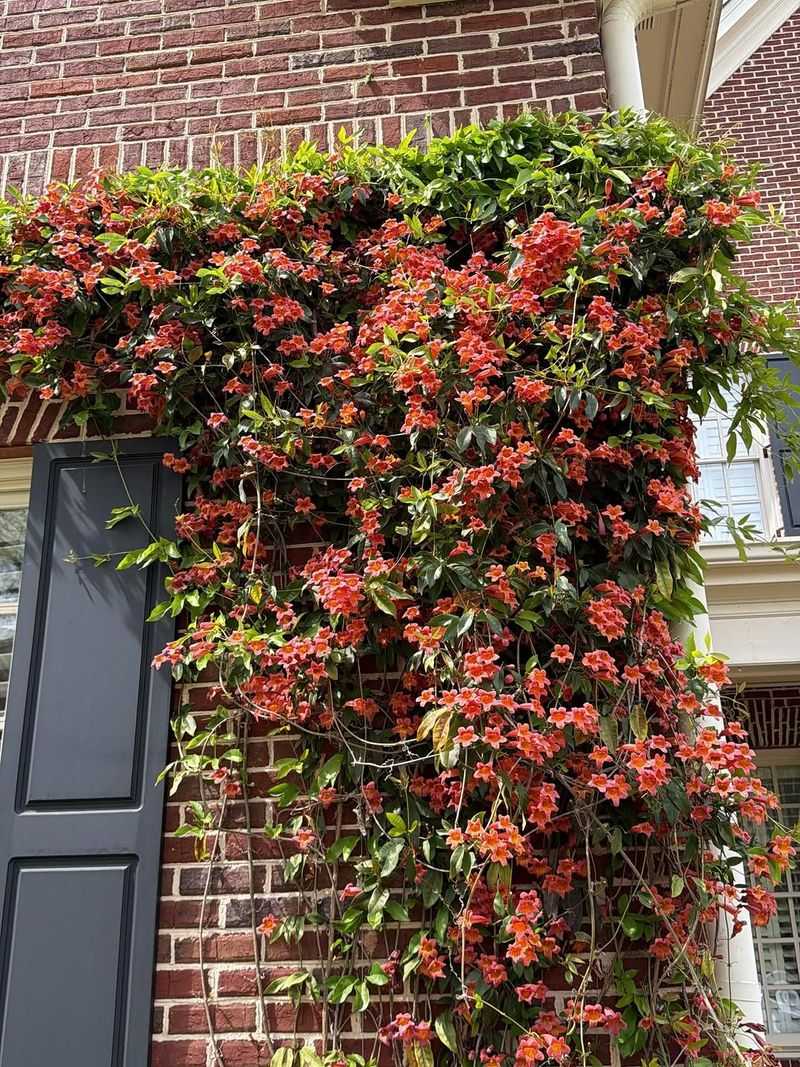
Crossvine earns its reputation fast. Named for the cross-shaped pattern you see when you cut the stem, this native vine attaches directly to rough surfaces using adhesive discs, meaning no trellis required for brick or stone walls.
That makes it genuinely useful for the kind of difficult wall that stumps most gardeners.
Across Georgia, crossvine blooms heavily in spring with orange and red trumpet flowers that attract hummingbirds. Growth is aggressive in a good way.
A single plant can cover a large wall section within three years if planted in well-drained soil with decent sunlight. It handles partial shade too, though flowering is reduced without at least four hours of direct sun daily.
One thing Georgia gardeners appreciate is that crossvine holds its leaves through mild winters, acting as a semi-evergreen in most parts of the state. During cold snaps in north Georgia, it may drop some foliage but bounces back quickly in spring.
Your Georgia Garden Changes Every Week. Your Plan Should Too.
Gardening in Georgia changes quickly throughout the season. Every Friday you’ll receive a simple weekly plan showing exactly what to plant, prune, fertilize, harvest, and protect so you never miss the right timing.
Unlike some fast growers, it doesn’t become unmanageable with basic annual pruning. Trim it back in late winter before new growth starts to keep it tidy and promote fresh shoots.
Crossvine is especially effective on stone retaining walls, old chimneys, and rough concrete surfaces that other plants simply can’t grip. It’s a practical, native solution for bare vertical spaces throughout the region.
3. Coral Honeysuckle Climbs Easily On Trellises And Posts
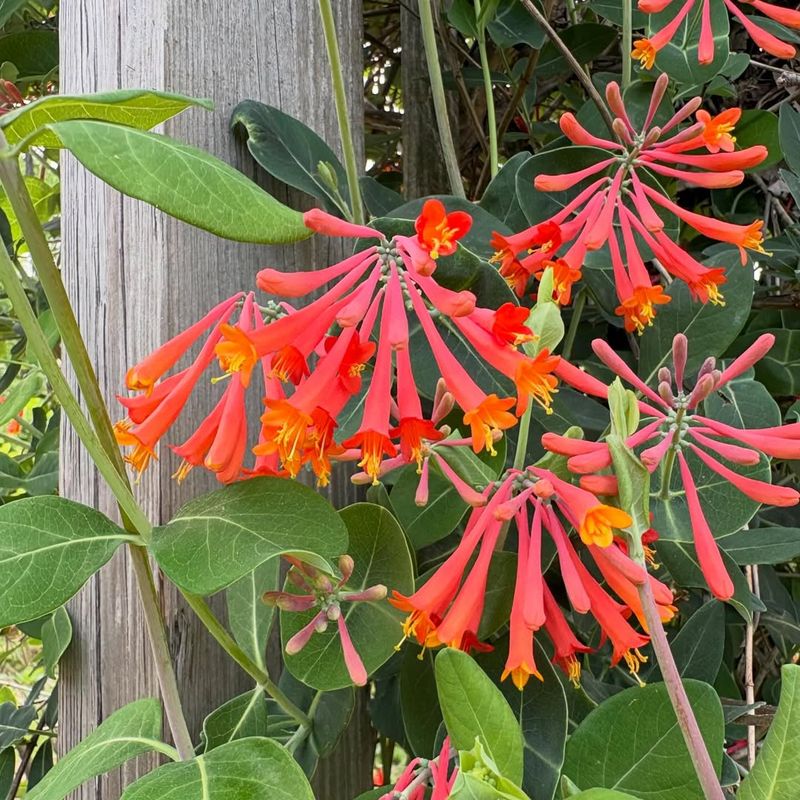
Ruby-red tubes of coral honeysuckle poking through trellis slats is one of the most satisfying sights in a Georgia garden. Unlike Japanese honeysuckle, the coral variety is native, better behaved, and won’t take over your entire yard.
It twines naturally around posts and trellis structures without needing any clips or ties to get started.
Coral honeysuckle blooms from spring through fall in warmer parts of Georgia, offering months of color rather than a single burst. Hummingbirds visit the flowers constantly during migration and throughout summer.
Growth rate is solid, typically reaching ten to fifteen feet within two to three seasons under good conditions. Soil quality matters less than drainage, so avoid spots where water pools after heavy rain.
Posts, mailbox structures, pergola columns, and garden arbors are all fair game for this vine. It’s lightweight enough that it won’t stress wooden structures the way heavier vines sometimes do.
In coastal Georgia, it handles heat and humidity well. In the north Georgia mountains, it slows down a bit in cold winters but recovers reliably each spring.
Keep one tip in mind: the base of the plant can look sparse if left alone. Planting low-growing perennials around the base covers that bare zone while the vine focuses its energy on climbing upward.
Regular watering in the first summer sets the plant up for strong independent growth afterward.
4. Confederate Jasmine Spreads Quickly In Warm Conditions
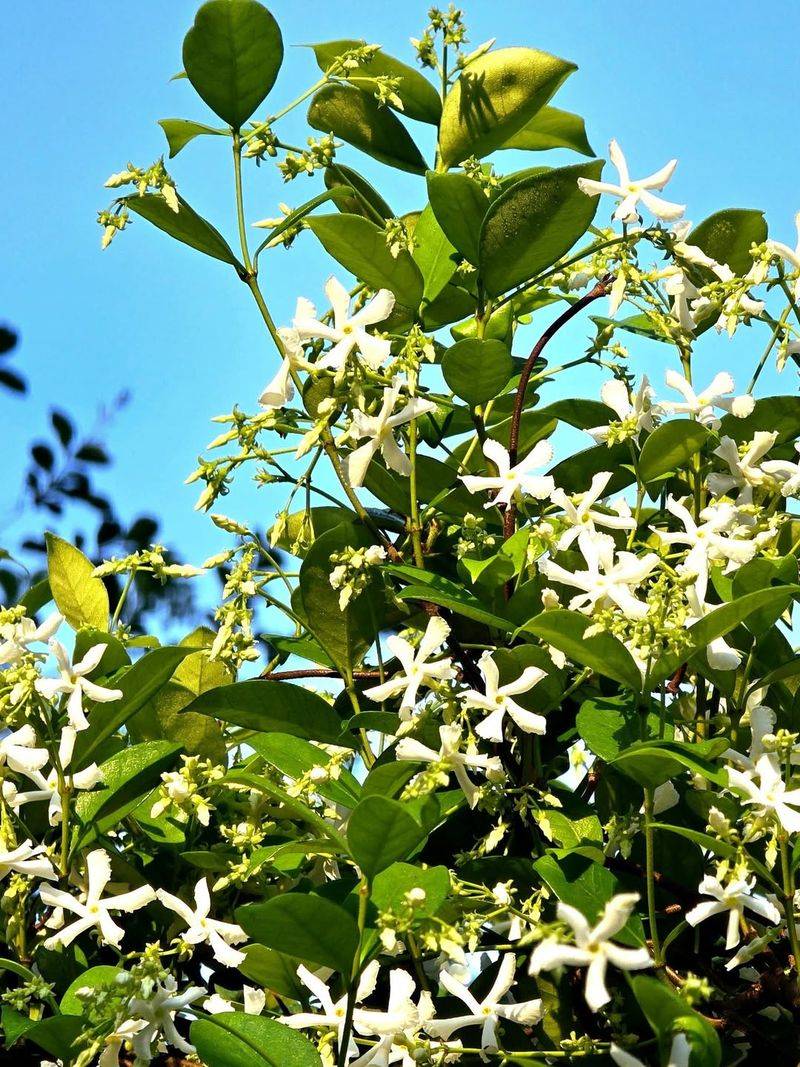
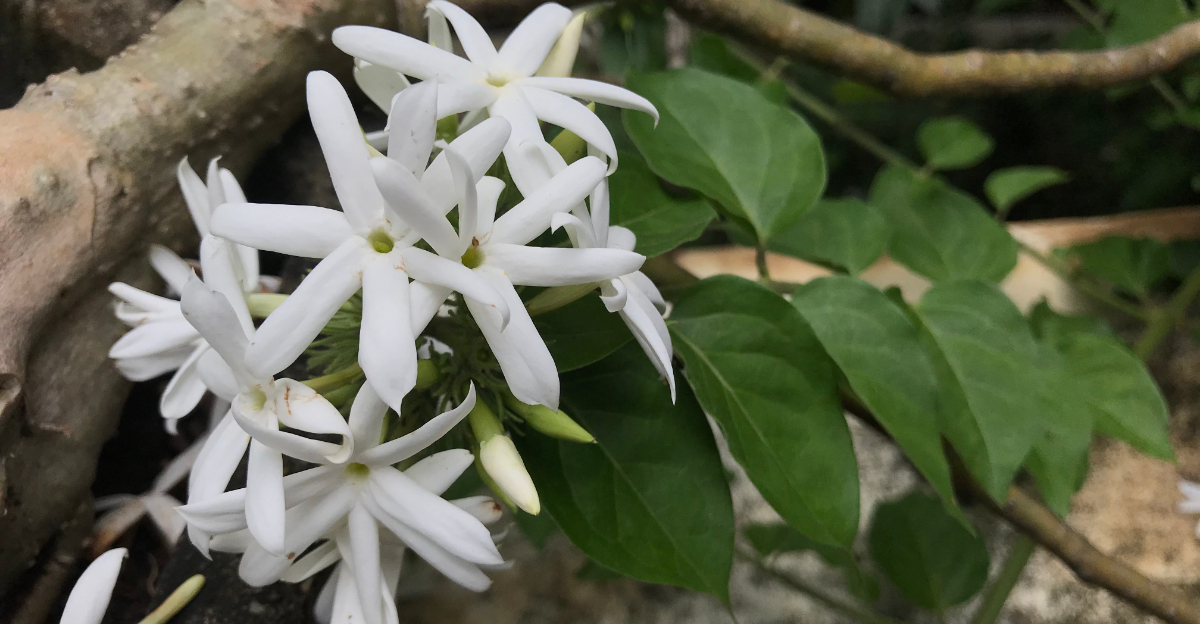
Few vines smell as good as Confederate jasmine in full bloom. Gardeners across south and central Georgia count on this one to cover fences, walls, and mailbox structures with glossy dark green leaves and clouds of small white flowers that fill the air with fragrance in late spring.
Growth rate in warm Georgia summers can be surprisingly fast once the plant finds its footing.
Confederate jasmine isn’t a true jasmine but performs like a star in USDA zones 8 and 9, which covers most of the lower half of Georgia. In Atlanta and north of there, it’s worth protecting young plants during hard freezes.
Established plants in central Georgia typically handle brief cold snaps without serious setbacks. Full sun to partial shade works fine, though flowering is heaviest with more direct light.
Walls with a wood or wire framework attached give this vine easy anchor points. Without support, it will sprawl along the ground, so a simple wire grid or trellis makes a real difference in directing it upward.
Fertilize lightly in early spring with a balanced slow-release product and water consistently through the first growing season. After that, Confederate jasmine is fairly self-sufficient in Georgia’s climate.
Pruning after the spring bloom keeps growth compact and encourages bushier coverage rather than long, bare stems reaching for sunlight. It’s a reliable performer that rewards minimal effort with maximum visual and aromatic impact.
5. Climbing Hydrangea Attaches Well To Rough Surfaces
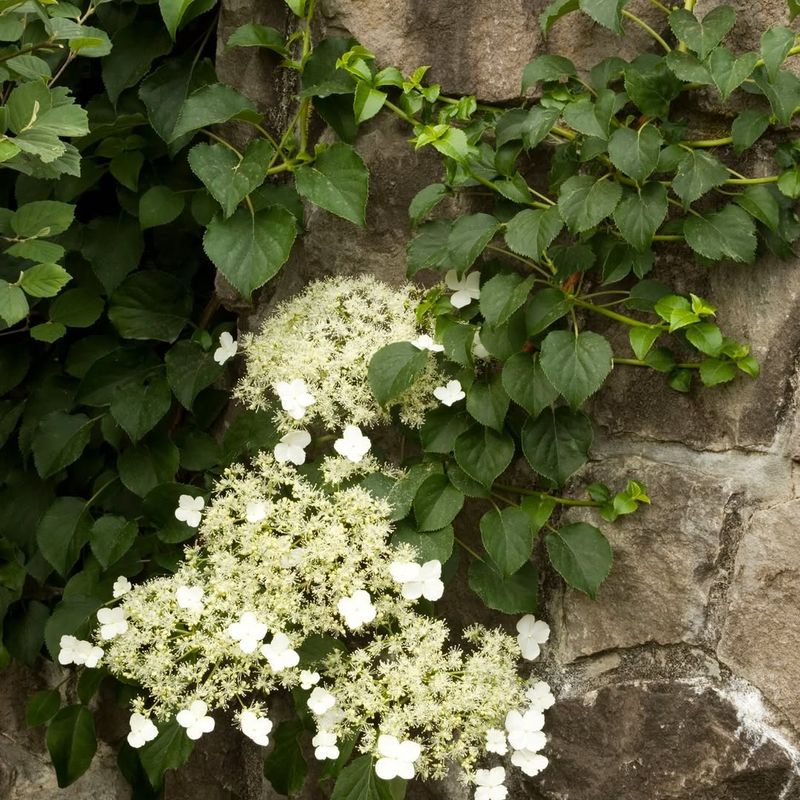
Climbing hydrangea solves a problem most vines can’t touch: covering a shaded, rough wall with something genuinely beautiful.
North-facing walls, shaded chimneys, and damp stone surfaces that leave other plants struggling are exactly where this vine tends to thrive.
It attaches using aerial rootlets that grip rough textures without damaging them the way some vines do.
Growth is slow in the first two years, and Georgia gardeners need patience with this one early on. By year three, though, the pace picks up noticeably, and an established plant can add several feet of new growth annually.
Large white lacecap flower clusters appear in early summer and last several weeks. The foliage alone is attractive enough to justify planting it even without the blooms.
Soil moisture matters more with climbing hydrangea than with most vines on this list. Rich, consistently moist soil produces the best results.
Amending Georgia’s clay soil with compost before planting helps significantly. Avoid hot, dry, south-facing walls unless you’re prepared to water regularly during summer heat.
Shaded walls on the north or east side of structures in Georgia are genuinely ideal placements. Once established, very little maintenance is required beyond occasional pruning to remove wayward stems.
It doesn’t become invasive, and it rarely needs intervention after the first few years. For difficult shaded walls where nothing else seems to work, climbing hydrangea is worth every bit of the wait during those slower early seasons.
6. Passionflower Vines Grow Rapidly During Warm Months
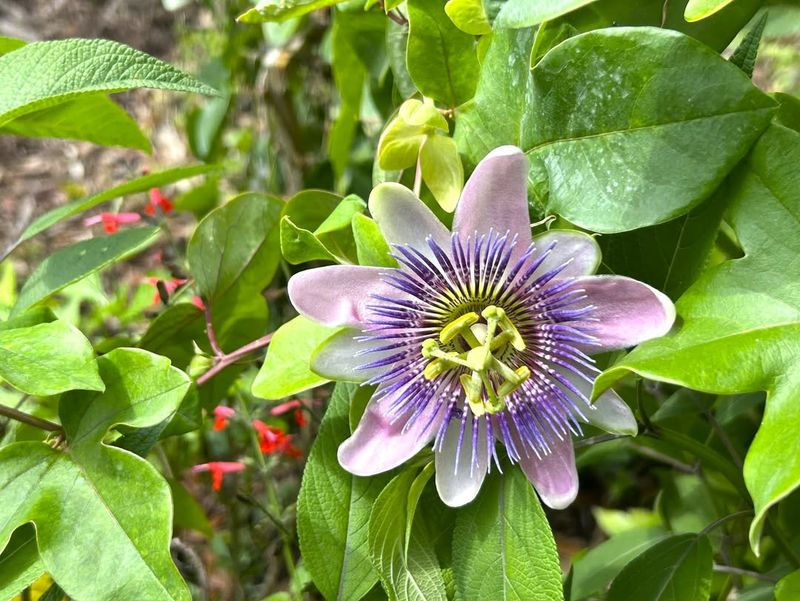
Nothing in a Georgia garden stops people in their tracks quite like a passionflower in full bloom. The flowers look like something from a tropical rainforest, with intricate purple, white, and blue structures that seem almost too exotic to be growing on a backyard fence.
Passionflower is native to the southeastern United States, though, and it grows with real enthusiasm in Georgia’s warm summers.
From late spring through early fall, passionflower vine pushes new growth at a fast pace. Under good conditions, a single plant can spread ten feet or more in one growing season.
It uses tendrils to grab onto wire fences, wooden posts, and chain-link structures easily. Full sun produces the heaviest flowering, but partial shade is tolerated without a major reduction in growth rate.
Georgia caterpillars of the Gulf Fritillary butterfly depend on passionflower as a host plant, so expect some leaf damage from caterpillars during summer.
Most gardeners consider this a fair trade since the butterflies are beautiful and the vine grows fast enough to absorb the feeding without serious setback.
Roots are hardy across most of Georgia, meaning the plant returns reliably each spring even after cold winters knock back the top growth. Planting in well-drained soil and giving it a sturdy support structure is really all the setup it needs.
Water regularly the first summer, then step back and let Georgia’s heat do the rest of the work for you.
7. Clematis Fills Vertical Spaces With Dense Foliage
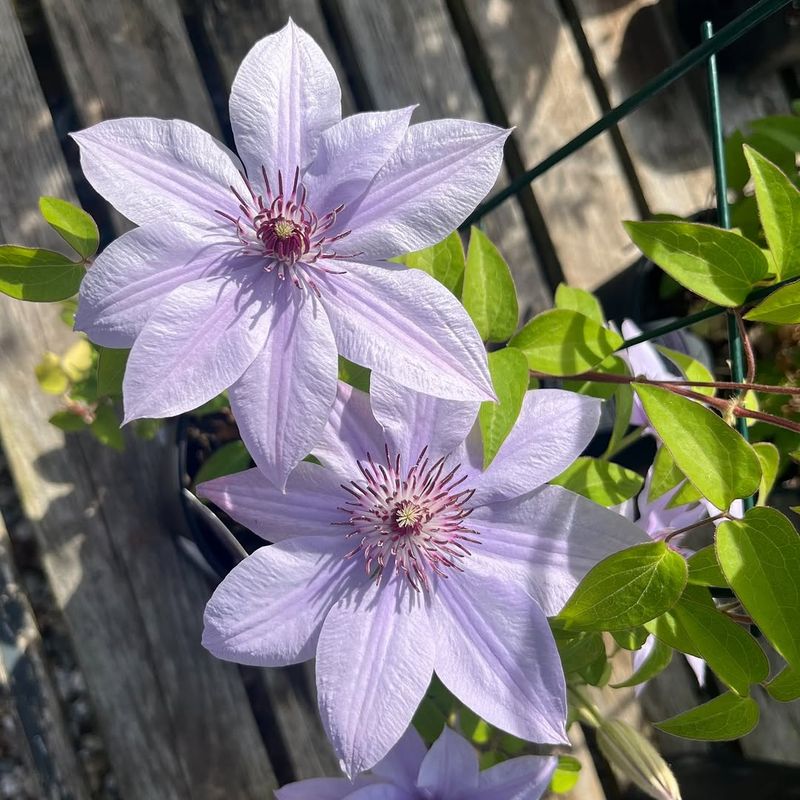
Clematis has a reputation for being fussy, but that reputation is only partly deserved. Choose the right variety for Georgia’s climate and give it one key thing, which is cool roots with warm tops, and it performs reliably on vertical structures.
Large-flowered varieties like Jackmanii and Nelly Moser are proven performers across central and north Georgia.
Vertical coverage builds quickly once a clematis establishes itself.
Twining leaf stalks grab onto thin supports like wire, trellis slats, and chain-link fencing more effectively than thick posts, so pairing clematis with a fine-mesh support structure produces better results than putting it against a smooth wooden post.
Growth can reach six to ten feet in a single season for vigorous varieties.
Mulching the root zone heavily keeps soil temperatures stable during Georgia’s summer heat, which is the single most effective thing you can do to improve clematis performance in this region.
Use three to four inches of organic mulch and keep it a few inches away from the stem itself.
Afternoon shade in south Georgia reduces stress during peak heat. Pruning depends on the variety group, so check the tag before cutting.
Group 3 types get cut back hard in late winter and respond with strong new growth each spring.
Clematis fills wall space and trellis panels with layered, dense foliage and repeated flushes of color that make vertical garden spaces look intentional and full rather than bare and neglected.
8. Dutchman’s Pipe Creates Heavy Coverage On Large Structures
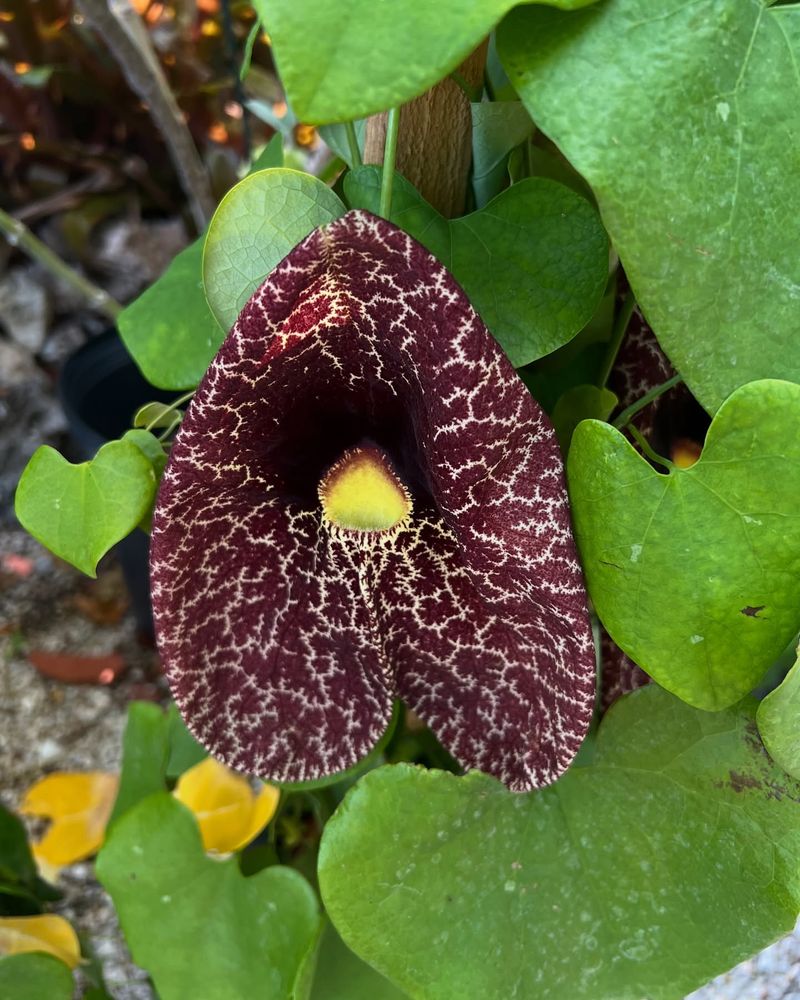
If you have a large pergola, a big arbor, or a massive bare wall that smaller vines can’t fill, Dutchman’s Pipe is built for the job. Leaves can reach a foot across, creating a bold, almost tropical look that covers large structures with genuine speed.
Georgia’s warm summers push this vine into high gear, and it’s not unusual to see ten to fifteen feet of new growth in a single season.
Dutchman’s Pipe is also the host plant for Pipevine Swallowtail butterflies, which are stunning native butterflies found throughout Georgia.
Planting it near a garden seating area means you’re likely to have butterfly activity visible from your porch or patio through much of the warm season.
Flowers are unusual and curved, resembling a small curved pipe, which is where the common name comes from.
Establish this vine in average garden soil with consistent moisture and a structure strong enough to handle significant weight as it matures. Wooden pergolas and heavy-gauge wire fencing work well.
Thin trellises may struggle under the volume of growth this plant produces over several years. Full sun to partial shade is acceptable, but full sun produces faster growth and denser coverage.
Pruning keeps it manageable and prevents it from swallowing nearby plants. Cut back long runners in late winter before new growth starts.
Across Georgia, Dutchman’s Pipe is one of the most reliable choices for covering large, difficult structures that smaller vines simply outgrow too slowly to be practical.