These Florida Plants May Look Beautiful But Can Turn Into A Cleanup Problem By Summer
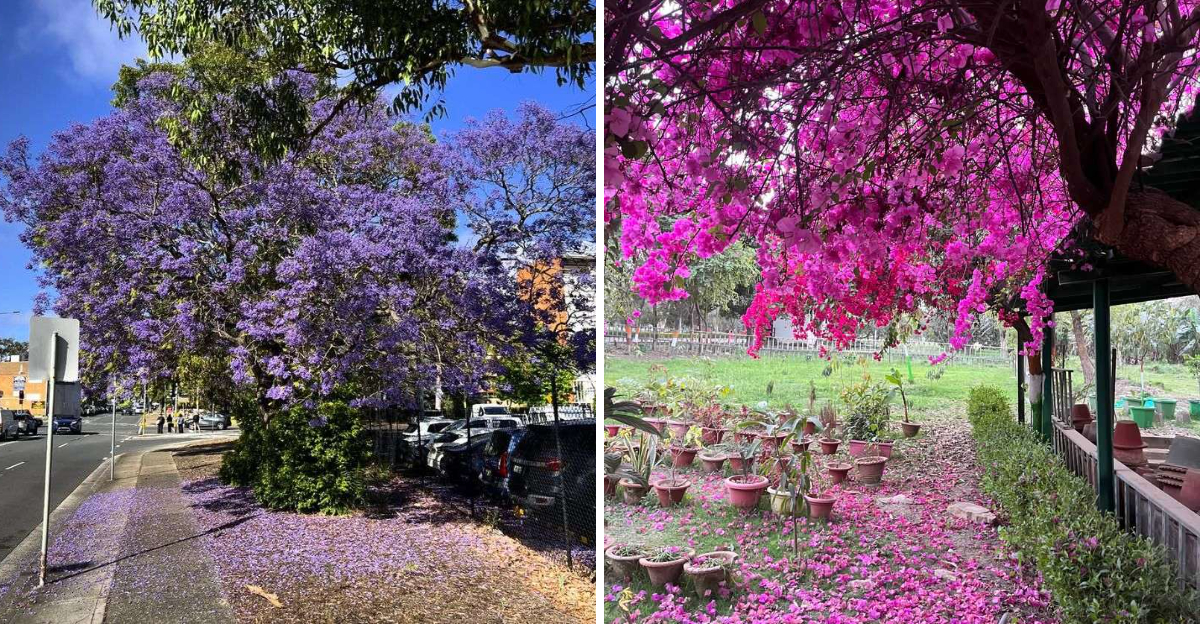
Some plants win people over fast in spring. They bloom hard, fill out a bed, and make a Florida yard look lush with very little effort at first.
That early beauty can be deceiving. By summer, certain favorites start dropping petals, shedding leaves, collapsing under heat, spreading debris, or creating constant mess around walkways, mulch, patios, and pools.
What looked like a smart upgrade in the cooler months can turn into a steady cleanup job once rain, humidity, and fast growth take over. That does not mean these plants have no place in a Florida landscape.
It means looks alone should not make the decision. A plant can be stunning and still create far more maintenance than expected when summer arrives.
For homeowners who want a yard that stays attractive without constant sweeping, pruning, and cleanup, it helps to know which plants tend to cause the most trouble before they take over the season.
1. Jacaranda Drops Beauty All Over The Yard
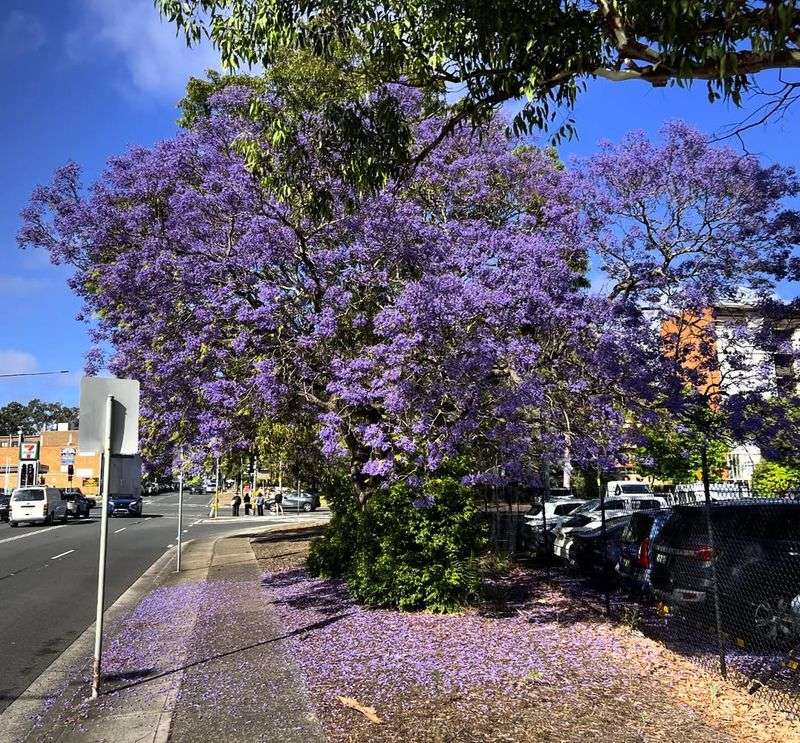
Few sights in Florida are as breathtaking as a Jacaranda tree in full bloom. Those vivid purple-blue flower clusters look almost unreal against a bright spring sky, and for a few weeks, the tree is genuinely one of the most stunning things growing in the neighborhood.
The problem starts when all those flowers begin to fall.
Jacaranda trees drop their blooms in large quantities over a relatively short period, and the fallen flowers pile up fast on driveways, patios, pool decks, and lawns. When wet, the petals turn slippery and stick to surfaces, making them harder to sweep away cleanly.
In Florida’s heat and humidity, they also break down quickly, leaving behind a purple-tinged stain on concrete if not removed promptly.
Beyond the petals, Jacaranda also drops seed pods that can scatter across the yard and germinate in garden beds or lawn areas where they are not wanted. According to UF/IFAS, Jacaranda is not considered invasive in Florida, but it does require consistent cleanup during its bloom and drop cycle.
Placing a Jacaranda over a lawn rather than hardscape can reduce the staining issue, though it will not eliminate the debris entirely.
2. Crape Myrtle Leaves Behind More Summer Mess Than Many Expect
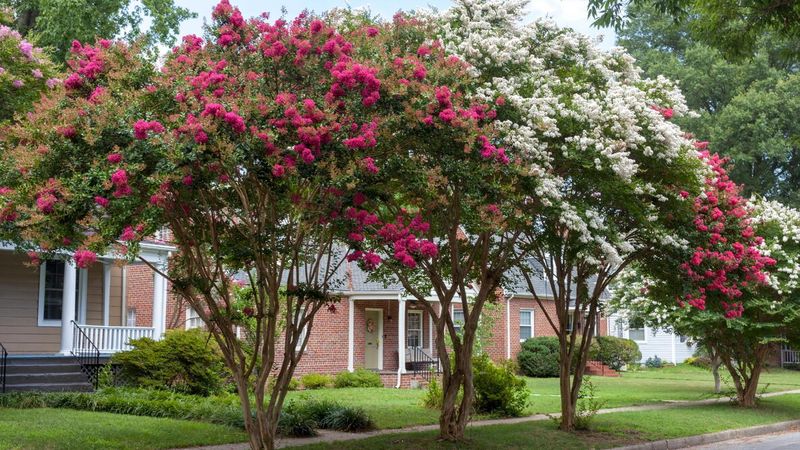
Crape Myrtles are practically a staple of Florida landscaping, and it is easy to understand why. They produce showy flower clusters in shades of pink, red, white, and lavender, they tolerate heat well, and they give yards a polished, finished look.
But by midsummer, many homeowners realize the cleanup commitment is bigger than they anticipated.
The blooms drop steadily throughout the flowering season, covering sidewalks, driveways, and mulch beds with a layer of spent petals that need regular attention. After the flowers fade, Crape Myrtles produce small round seed heads that cling to branches before eventually falling and scattering.
These seeds can sprout readily in garden beds and lawn edges, creating unwanted seedlings that take time to pull.
Crape Myrtles also shed bark naturally as part of their growth cycle, which adds another layer of debris around the base of the tree. UF/IFAS notes that Crape Myrtles are well-suited to Florida’s climate and are generally low-maintenance trees, but their litter output during peak summer should be factored into any landscaping plan.
Planting them away from pool areas and entry points can help keep cleanup more manageable throughout the season.
3. Gardenia Looks Gorgeous But The Cleanup Starts Fast
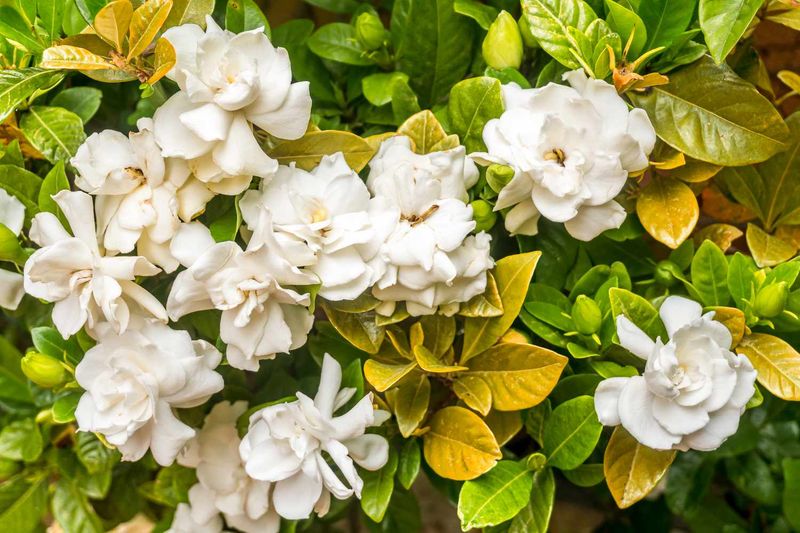
The scent of a Gardenia in bloom is one of those things that Florida gardeners genuinely look forward to every year. Those creamy white flowers are beautiful, fragrant, and elegant-looking against the deep green foliage.
The catch is that Gardenias do not hold their blooms for long, and the fallen flowers pile up quickly in Florida’s warm, humid conditions.
Once a Gardenia bloom reaches its peak, it starts browning and dropping within days. In summer heat, this process speeds up noticeably, and the browning petals can collect around the base of the shrub faster than most homeowners expect.
Left in place, the decomposing flowers can attract pests and create an untidy appearance that undercuts the plant’s visual appeal.
Regular deadheading and raking beneath the shrub can help, but it does require consistent effort during the blooming period. Gardenias also tend to drop yellow leaves periodically, especially when stressed by Florida’s summer rains or drought swings, adding to the debris.
UF/IFAS recommends planting Gardenias in well-drained soil with good air circulation to reduce stress and extend bloom life. Keeping up with cleanup not only keeps the area tidy but also helps prevent fungal issues that thrive in Florida’s humidity.
4. Magnolia Brings Southern Charm And A Steady Stream Of Debris
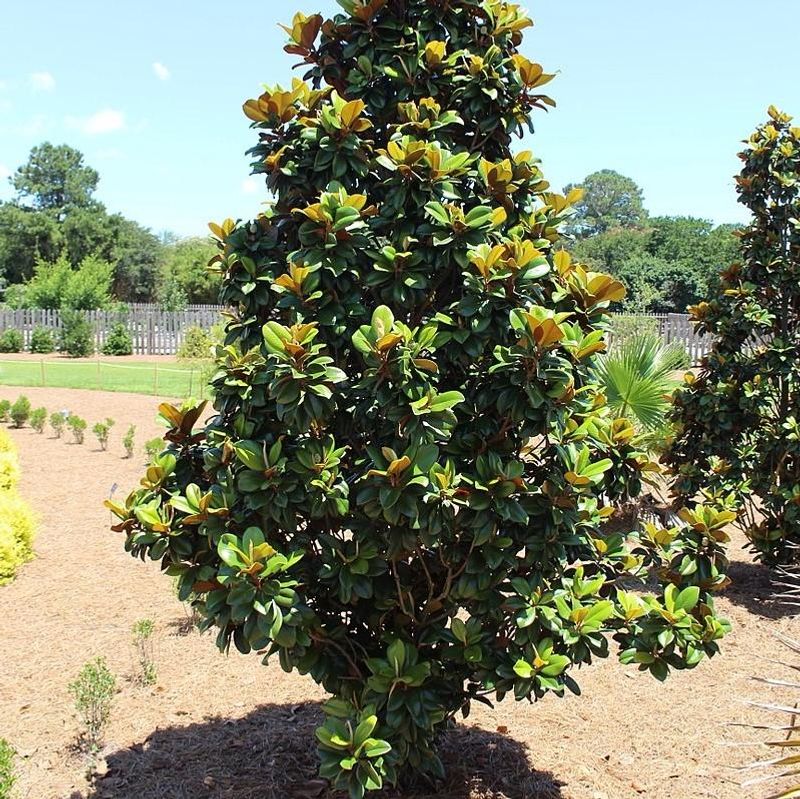
A Magnolia tree in a Florida yard carries a certain classic appeal that never really goes out of style. The large white blooms are dramatic and fragrant, and the tree itself has a commanding presence that anchors a landscape beautifully.
But anyone who has lived with a Magnolia knows it is one of the messier trees you can choose for a residential yard.
Southern Magnolias are evergreen, which means they shed leaves year-round rather than all at once in fall. In summer, the shedding tends to pick up, and those large, leathery leaves do not break down quickly.
They collect on lawns, in garden beds, and on hardscape surfaces, and they can be surprisingly difficult to rake because of their size and weight when wet.
Beyond the leaves, Magnolias produce large seed cones that drop and scatter reddish seeds across the yard. Spent blooms fall as large, browning masses that need to be cleared from lawns before they smother grass.
UF/IFAS recommends using Magnolia debris as mulch around the tree itself, which can reduce some of the cleanup burden. Still, homeowners should expect a regular maintenance routine if a Magnolia is growing near a patio, pool, or driveway in a Florida landscape.
5. Plumbago Keeps Blooming And Keeps Shedding
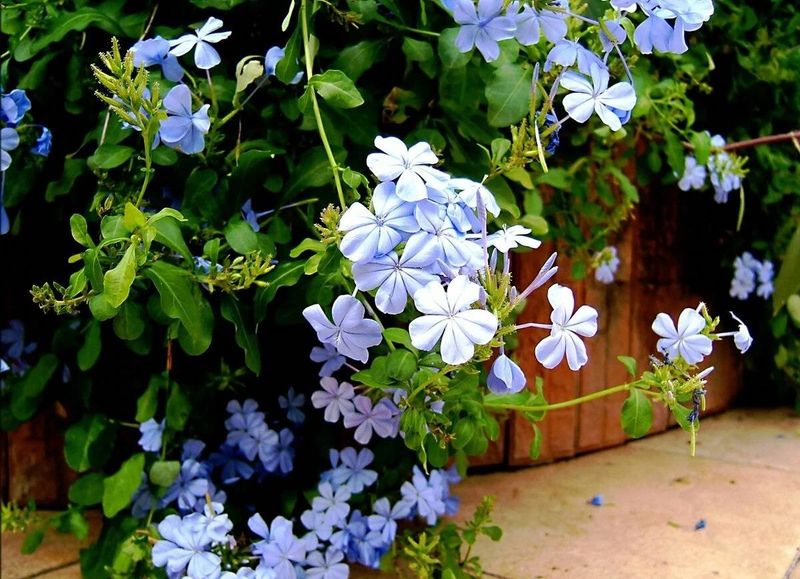
Plumbago is one of the hardest-working plants in Florida landscaping. It blooms for months at a stretch, handles heat and sun with ease, and produces those cheerful sky-blue flower clusters that look great along fences, borders, and driveways.
The trade-off is that a plant blooming that prolifically is also shedding that prolifically.
Spent Plumbago flowers drop steadily throughout the growing season, and the fine debris can collect along walkways, edging, and mulch beds in a way that starts to look untidy fairly quickly. The plant also tends to spread and sprawl if not trimmed regularly, sending out long stems that flop over neighboring plants or onto hardscape surfaces.
In Florida’s long, warm growing season, that means more frequent trimming is needed compared to cooler climates.
The sticky seed capsules that follow the blooms can cling to clothing, pet fur, and shoes, which is an added nuisance near entry paths and outdoor seating areas. Regular pruning after bloom cycles helps keep Plumbago looking neat and actually encourages fresh flowering.
UF/IFAS describes Plumbago as a durable, low-water landscape plant well-suited to Florida conditions, but notes that it benefits from periodic hard pruning to prevent woody, overgrown stems that add to the debris load around garden beds.
6. Bougainvillea Turns Bright Color Into A Thorny Cleanup Job
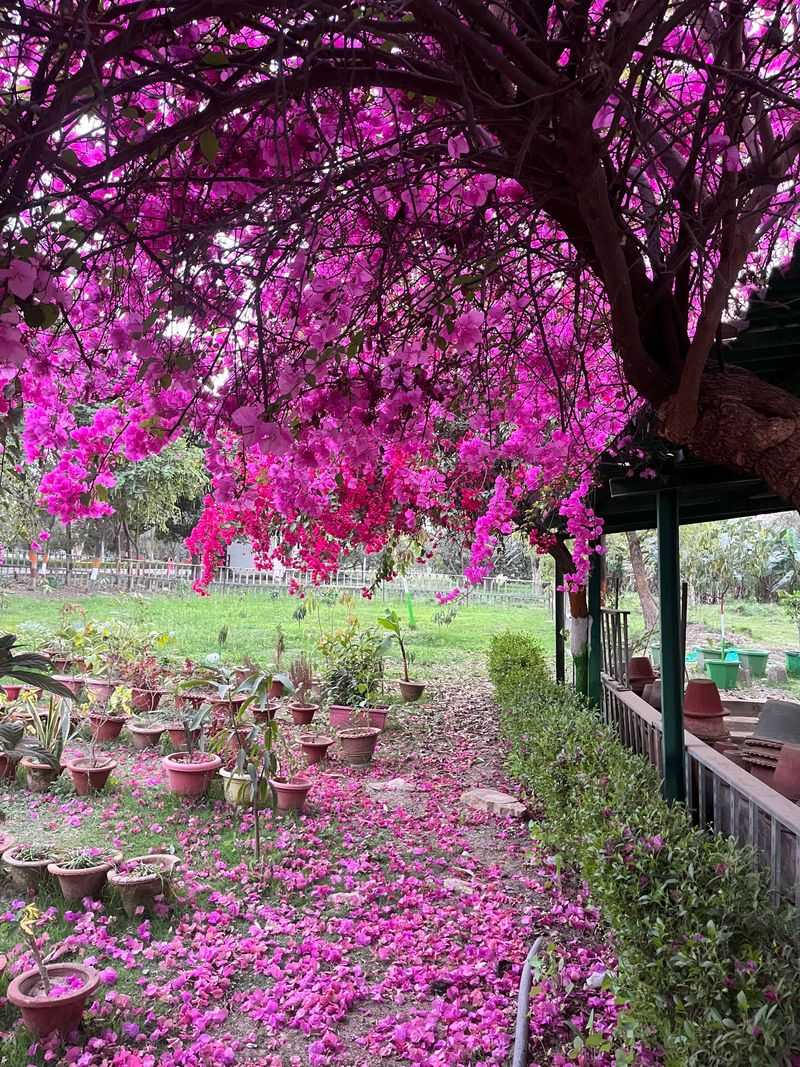
Nothing adds tropical drama to a Florida yard quite like Bougainvillea. The cascading masses of hot pink, orange, or purple color are genuinely showstopping, and the plant thrives in Florida’s heat and sunshine without much fuss.
The cleanup side of the story, though, is something that catches a lot of homeowners off guard.
Bougainvillea drops its papery bracts constantly, especially after rain or wind. Those thin, colorful bracts collect on patios, pool decks, and walkways in thick layers that need sweeping every few days during peak bloom.
The plant also has sharp thorns along its stems, which makes pruning and cleanup genuinely uncomfortable without heavy gloves and long sleeves.
Bougainvillea grows aggressively in Florida’s climate and can quickly overtake fences, trellises, and nearby plants if not cut back regularly. Trimmed stems and thorny cuttings are difficult to handle and dispose of, and they cannot simply be tossed into a regular yard waste bag without some care.
UF/IFAS notes that Bougainvillea performs best in Florida when given space and structural support, but also acknowledges that the plant requires consistent management to prevent it from becoming unruly. For all its beauty, placing it near high-traffic outdoor areas means committing to a regular and somewhat demanding cleanup routine.
7. Bottlebrush Can Leave Patios And Walkways Looking Littered
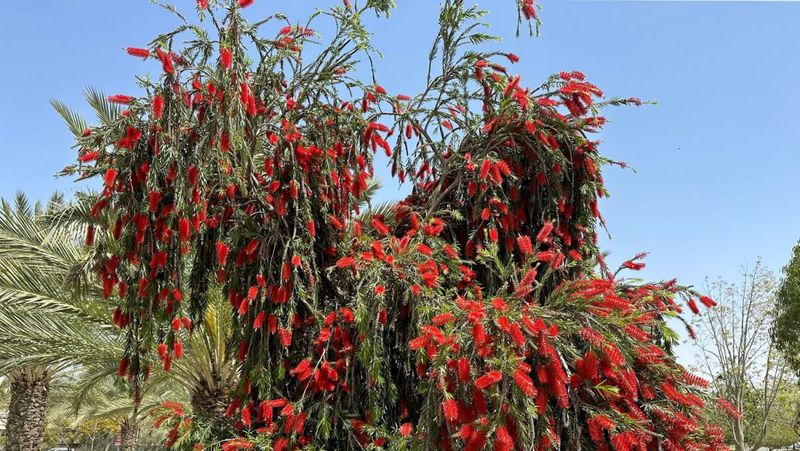
Bottlebrush trees and shrubs are a popular choice in Florida for good reason. The bright red, brush-shaped flower spikes are unique-looking and attract hummingbirds and butterflies reliably, making them a favorite for wildlife-friendly yards.
But those distinctive blooms leave behind a surprising amount of debris when they finish their cycle.
As the flowers age, the individual stamens drop in large numbers, creating a fine reddish litter across whatever surface sits beneath the plant. On patios, pool decks, and walkways, this debris can accumulate quickly and give the area a neglected appearance even after just a day or two without sweeping.
The small particles also tend to track indoors on shoes and get into pool filters more easily than larger debris.
Bottlebrush plants produce woody seed capsules along their stems after flowering, and these can persist for extended periods before eventually dropping. The capsules are small but numerous, and they add to the overall debris load around the plant’s base.
Pruning after each bloom cycle reduces the seed capsule buildup and encourages fresh flowering. UF/IFAS recommends Bottlebrush as a durable, drought-tolerant option for Florida landscapes, but placement near pool areas or main entry walkways should be considered carefully given how steadily the plant sheds during active bloom periods.
8. Queen Palm Creates The Kind Of Mess Florida Homeowners Learn To Respect
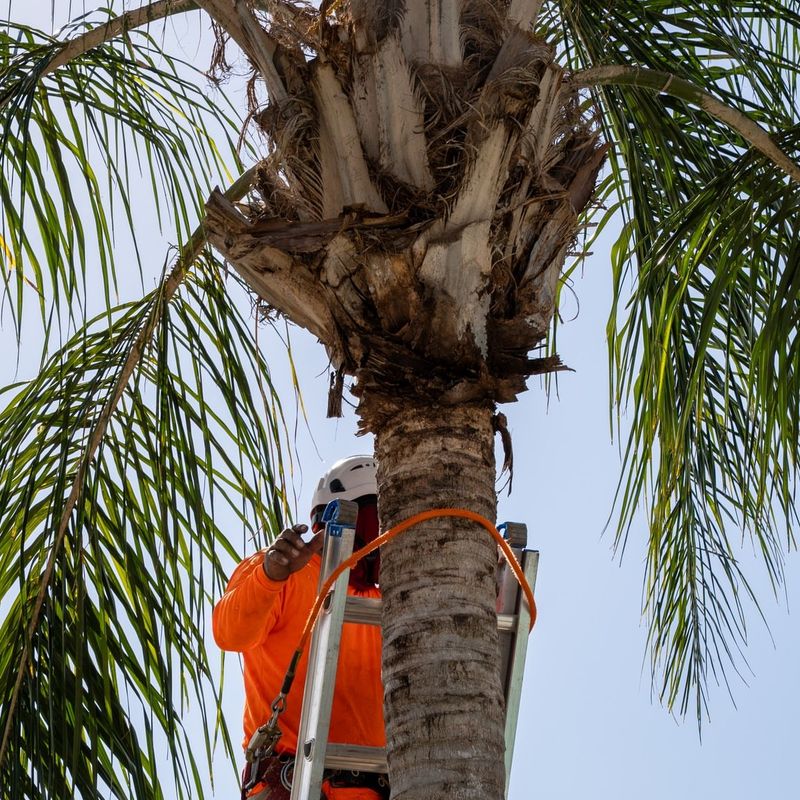
Queen Palms look exactly like what most people picture when they imagine a Florida yard. Tall, graceful, and topped with feathery green fronds, they bring an unmistakable tropical feel to any landscape.
But spend a season or two maintaining one, and a very different picture starts to emerge.
Queen Palms shed old fronds continuously, and those fronds are large and heavy. Letting them fall naturally means dealing with bulky debris that is awkward to drag, chop, and haul away.
Many homeowners in Florida end up hiring professional palm trimmers just to keep up with the frond drop, particularly during summer when growth is most active. The fronds also create a hazard if they fall near vehicles, walkways, or outdoor furniture.
Beyond fronds, Queen Palms produce large clusters of orange fruit that ripen and drop in substantial quantities. The fruit is messy, attracts wildlife, and can create a slippery surface on decks or pool areas when it falls and breaks down.
The fibrous seed stalks that carry the fruit also drop and need to be cleared. UF/IFAS notes that Queen Palm requires regular maintenance to stay attractive and safe in Florida landscapes.
Proactive trimming of fruit stalks before the fruit fully ripens is one of the most effective ways to reduce the seasonal cleanup burden considerably.