These Late Summer Flowers Still Bloom In Pennsylvania In August
Most Pennsylvania gardens hit their visual peak in June and July and then begin a slow retreat toward fall. By August, a lot of beds are running low on color, the reliable summer bloomers are fading, and gardeners start mentally shifting toward the cooler season ahead.
But writing August off as a lost month for garden color is a mistake, and the right flowers prove it every single year.
There are flowers that bloom in August not despite Pennsylvania’s late summer conditions but because of them.
Some are native plants that evolved to fill exactly this seasonal window, providing color and pollinator support at the precise moment when both are most needed.
Others are reliable performers that simply don’t know when to stop, pushing out blooms long after most garden plants have wound down.
August in Pennsylvania does not have to mean a tired, faded garden. It can mean a second wave of color that carries you beautifully into September and beyond.
1. Bee Balm (Monarda)
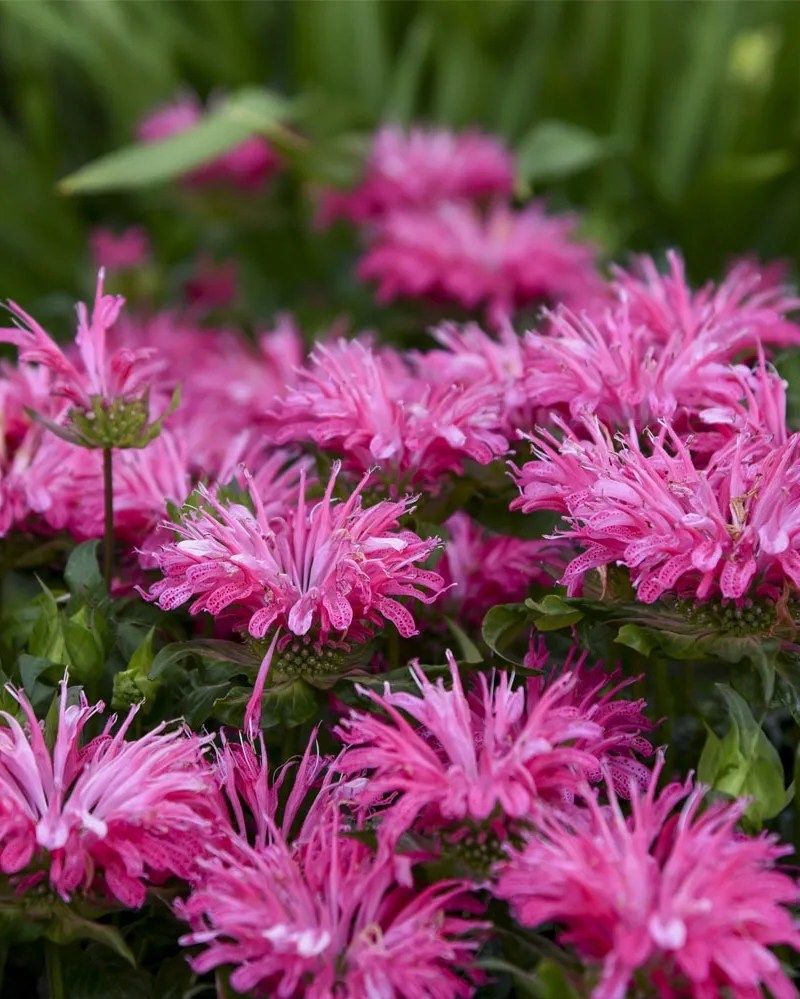
Few plants earn their name quite like Bee Balm does. Step outside on a warm August morning in Pennsylvania, and you will likely spot bees, butterflies, and hummingbirds all competing for a turn at its tubular blooms.
The flowers come in shades of red, pink, purple, and white, making it one of the most colorful plants still going strong in late summer.
Red varieties are especially popular because their long, narrow flower tubes are perfectly shaped for hummingbirds to feed from. If attracting wildlife to your yard is something you enjoy, planting Bee Balm is one of the easiest ways to make that happen.
It blooms from July through August, which is exactly when many other flowers are already done for the season.
Bee Balm is a native North American plant, which means it has evolved to handle Pennsylvania’s summer heat and humidity without much fuss. It grows best in full sun to partial shade and prefers moist, well-drained soil.
Giving it enough space between plants helps keep powdery mildew away, which is a common issue with this plant in humid climates.
Gardeners love it because it spreads naturally over time, filling in gaps and creating full, lush patches of color without a lot of extra effort. Cutting the stems back after the first bloom can actually encourage a second round of flowers before fall arrives.
It also works beautifully in cut flower arrangements, bringing that wild, natural look indoors. Whether planted in a border, a pollinator garden, or a naturalized meadow area, Bee Balm delivers color and life right through the end of summer.
2. Black-Eyed Susan
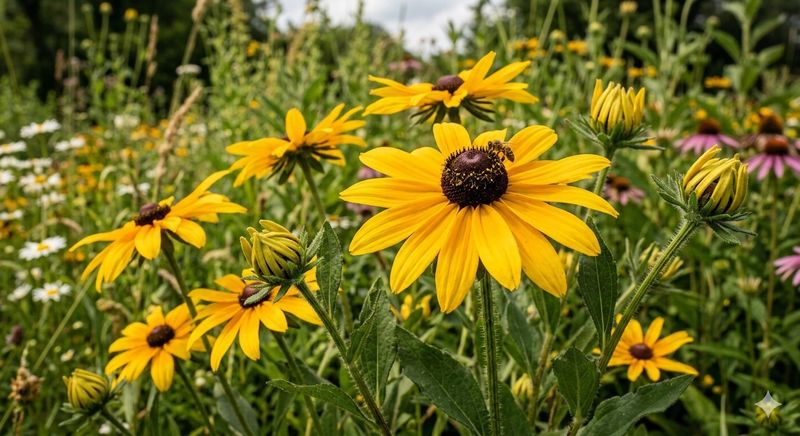
There is something cheerful and dependable about Black-Eyed Susans. When spring flowers have packed up and moved on, these bold yellow blooms with their dark, almost chocolate-colored centers keep the color coming from late June all the way through September.
Pennsylvania summers can be brutally hot and humid, and Black-Eyed Susans handle it all without skipping a beat.
One of the reasons they hold up so well in dry spells is their deep root system. While shallow-rooted plants struggle when rain is scarce, Black-Eyed Susans reach down into the soil for moisture that other plants simply cannot access.
Your Pennsylvania Garden Changes Every Week. Your Plan Should Too.
Gardening in Pennsylvania changes quickly throughout the season. Every Friday you’ll receive a simple weekly plan showing exactly what to plant, prune, fertilize, harvest, and protect so you never miss the right timing.
That resilience makes them a smart choice for gardeners who do not want to babysit their plants through every heat wave.
Another big selling point is that they come back year after year as a perennial. Plant them once and they reward you with blooms every summer without needing to be replanted.
They also self-seed freely, which means new plants will often pop up around the original ones and gradually spread to fill a larger area.
Black-Eyed Susans work well in almost any garden style, from formal borders to relaxed wildflower meadows. They pair beautifully with purple coneflowers and ornamental grasses, creating that classic late summer color palette Pennsylvania gardeners love.
Butterflies, especially fritillaries and skippers, are drawn to the nectar-rich blooms throughout the season.
Deadheading spent flowers can extend the bloom period, but leaving some seed heads in place at the end of the season gives birds a food source heading into fall. They are truly a low-effort, high-reward plant for any Pennsylvania yard.
3. Purple Coneflower (Echinacea)
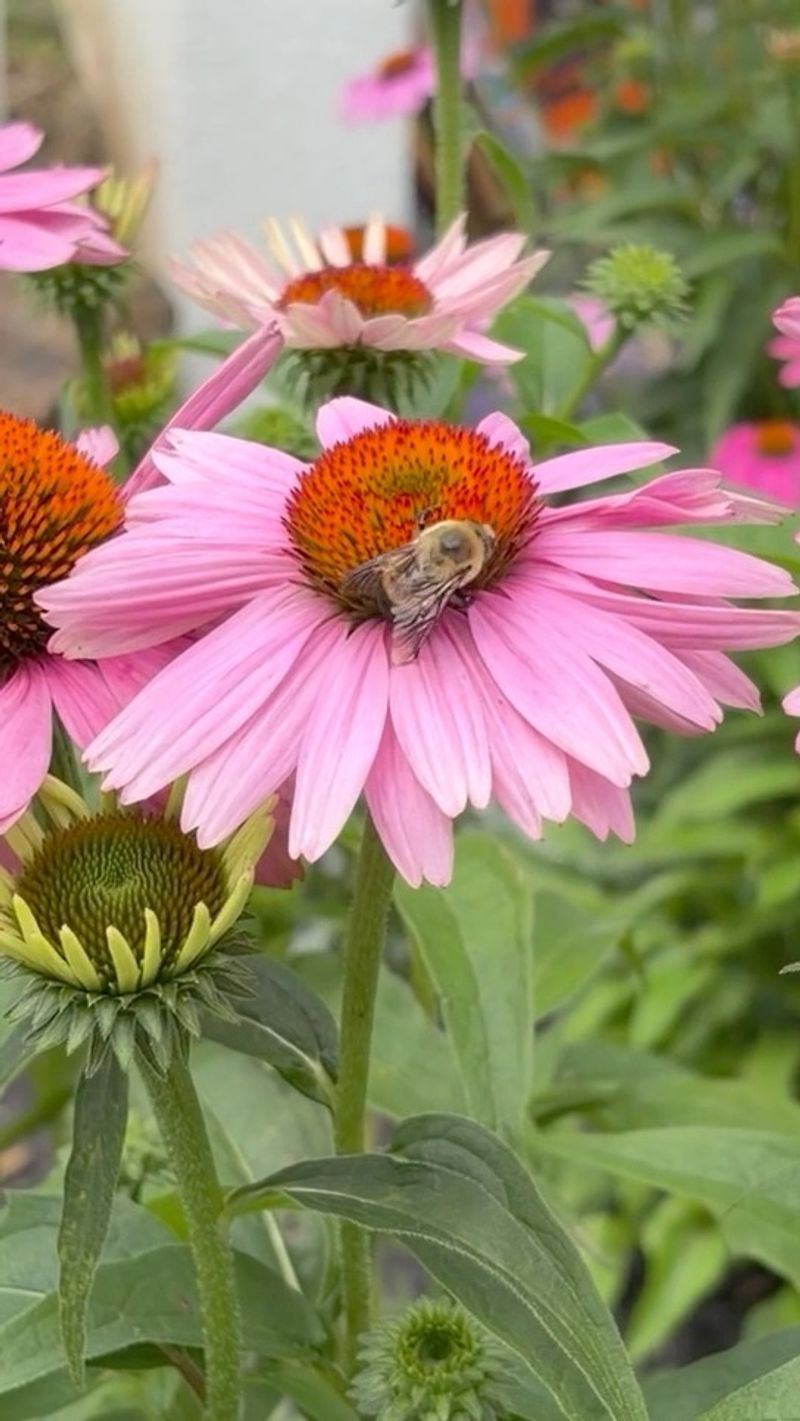
Walk through almost any well-kept Pennsylvania garden in late July or August and you are almost guaranteed to spot the cheerful, spiky blooms of Purple Coneflower.
Its drooping lavender-pink petals surrounding a raised, prickly orange-brown center make it one of the most recognizable native wildflowers in the entire region.
And unlike a lot of plants that fade fast, Echinacea keeps producing blooms well into August without slowing down.
Beyond its good looks, Purple Coneflower has a fascinating history. Native American tribes used it medicinally for centuries, and today it is still one of the most widely sold herbal supplements in the United States.
Many people recognize the name Echinacea from health food stores, where it is marketed for immune support. That rich history adds a layer of interest that most garden plants simply do not have.
From a gardening standpoint, it is about as forgiving as plants get. Full sun and well-drained soil are really all it needs to thrive.
It tolerates drought well once established, and it comes back reliably every year as a long-lived perennial. Dividing the clumps every few years helps keep the plants vigorous and encourages even more blooms.
Pollinators go absolutely wild for Coneflowers. Bees, butterflies, and even hummingbirds visit the blooms regularly throughout the summer.
When the flowers fade, the spiky seed heads become a favorite snack for goldfinches, so leaving them standing through winter is a great way to support local wildlife.
Purple Coneflower is a plant that genuinely earns its place in any Pennsylvania garden, offering beauty, wildlife value, and easy care all in one package.
4. Blanket Flower (Gaillardia)
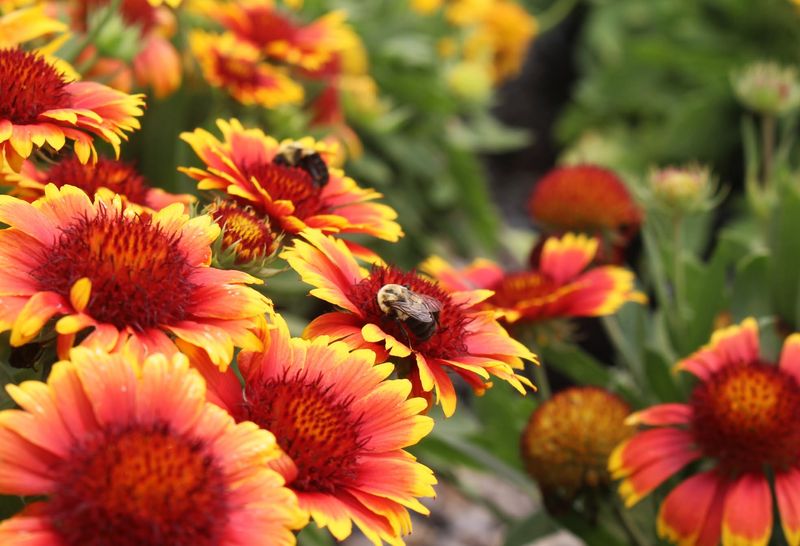
Named after the brilliantly patterned blankets crafted by Native American tribes, Blanket Flower brings that same bold energy straight into the garden. The blooms are a striking mix of red, orange, and yellow, often all appearing on the same flower at once.
That warm, fiery color combination is part of what makes Gaillardia one of the most eye-catching plants blooming in Pennsylvania in August.
Heat is genuinely no problem for Blanket Flower. While some plants sulk and stop blooming when temperatures climb, Gaillardia seems to thrive on it.
It starts flowering in early summer and keeps going strong all the way through fall, giving gardeners one of the longest bloom windows of any perennial available. That kind of staying power is hard to find.
Sandy or rocky, well-drained soil is where Blanket Flower feels most at home. Interestingly, it actually struggles in rich, overly fertilized soil, which is the opposite of what most gardeners expect.
Less is more when it comes to feeding this plant. Full sun is a must, and once it is established, it handles dry conditions remarkably well, making it a great option for low-water garden areas.
Regular deadheading keeps the blooms coming in waves throughout the season. Butterflies and bees visit the flowers constantly, making it a reliable addition to any pollinator garden.
The seed heads that form after blooming also attract small birds looking for an easy meal. Blanket Flower is a plant that rewards minimal effort with maximum color, which makes it a favorite among both beginner gardeners and seasoned growers across Pennsylvania.
5. New England Aster
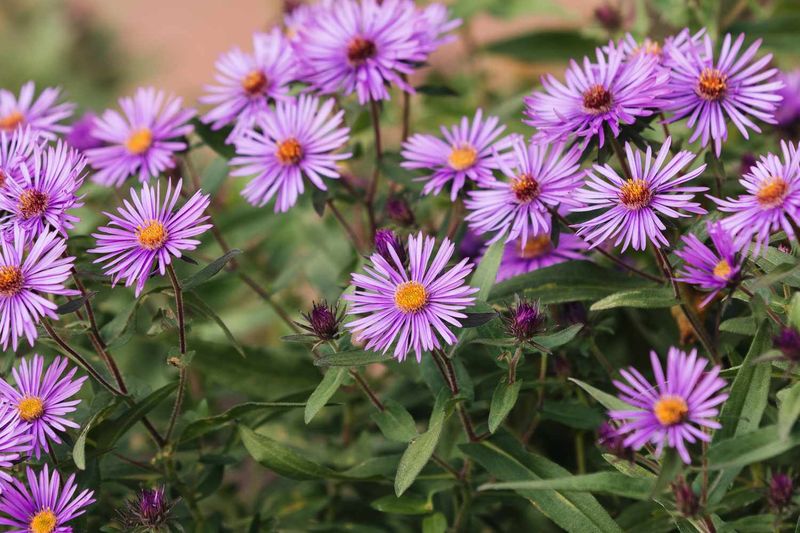
When most summer flowers are starting to fade, New England Aster is just getting warmed up.
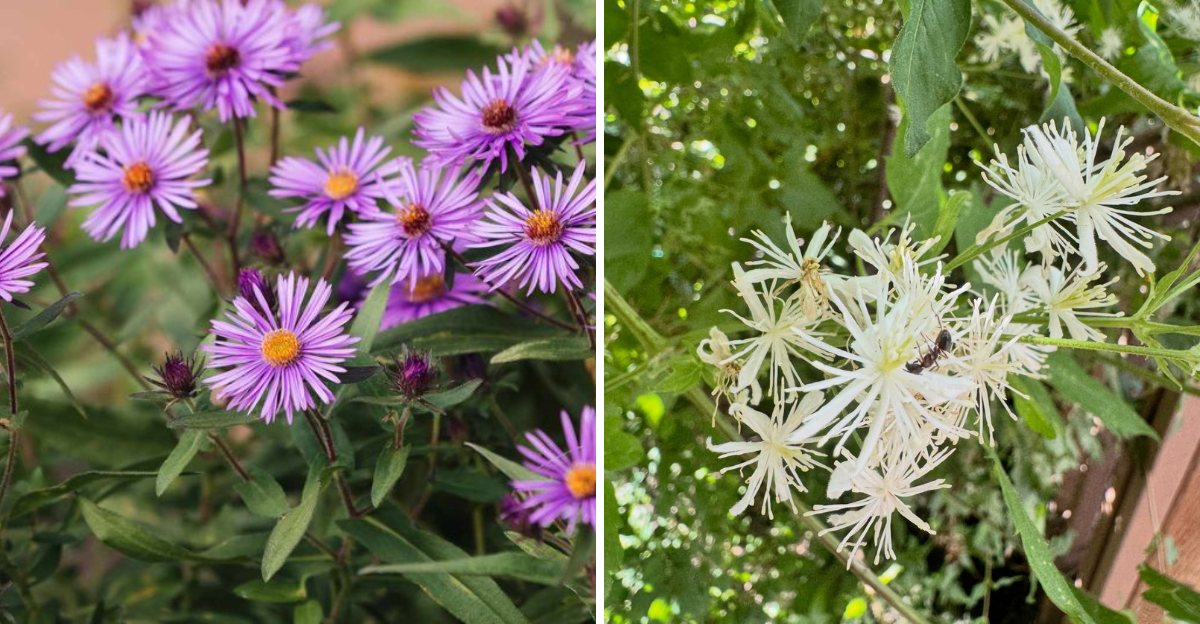
Its deep purple, violet, and pink blooms with bright yellow centers burst onto the scene from August through October, delivering some of the most vivid color seen anywhere in Pennsylvania during those late-season months.
Standing next to a full patch of New England Aster in bloom is genuinely one of the most impressive sights a garden can offer.
Monarch butterflies depend heavily on this plant during their fall migration south. As milkweed and other summer nectar sources dry up, New England Aster steps in as one of the most important fuel stops along their long journey.
Planting it is one of the most meaningful things a Pennsylvania gardener can do for wildlife conservation right now.
Growing conditions for New England Aster are pretty flexible. It prefers full sun and moist, average soil, but it adapts well to slightly drier conditions once established.
Plants can get quite tall, sometimes reaching four to six feet, so staking or pinching them back in early summer helps create a more compact, bushy shape that holds up better when fully loaded with flowers.
Beyond monarchs, bees and other late-season pollinators swarm the blooms in impressive numbers. Goldfinches and other seed-eating birds also visit the dried seed heads after bloom.
Dividing the clumps every two to three years keeps the plants healthy and encourages stronger flowering. New England Aster is not just surviving the end of summer in Pennsylvania.
It is genuinely thriving, and it brings critical support to the wildlife that depends on late-season blooms to make it through.
6. Virgin’s Bower (Clematis Virginiana)
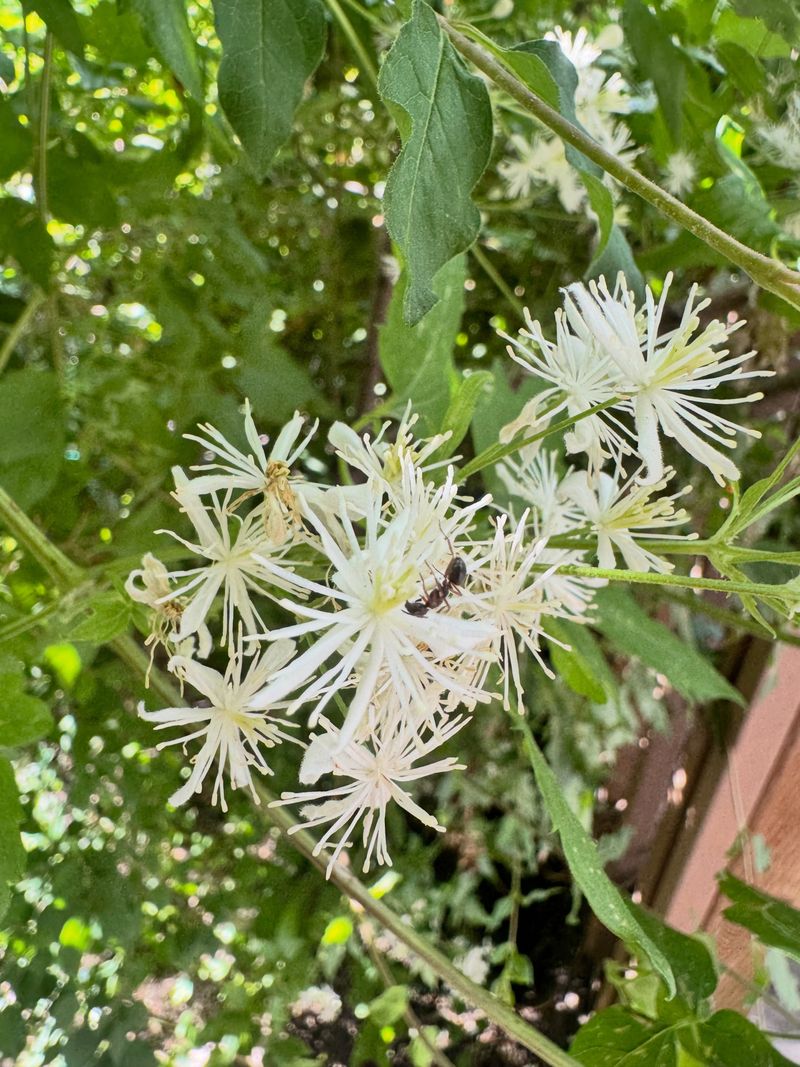
Most people think of Clematis as a cultivated garden vine with large, showy flowers. Virgin’s Bower is the wild, native cousin that takes a completely different approach.
Instead of a few big blooms, it erupts in masses of tiny, four-petaled white flowers that cover the vine from top to bottom by late summer.
The faint, sweet fragrance that drifts from the blooms on a warm August day is one of those subtle pleasures that makes being outside in Pennsylvania feel extra special.
This native climber thrives along woodland edges, fences, and stream banks, scrambling over shrubs and structures with impressive speed. It handles Pennsylvania’s late summer heat with a reliability that most other flowering vines simply cannot match.
While other plants are struggling to keep blooming, Virgin’s Bower is hitting full stride right when pollinators need it most.
Bees, wasps, and flies are drawn to the nectar-rich flowers in large numbers during August, making it a genuinely important plant for late-season pollinators.
When nectar sources become scarce as summer winds down, having a plant like this in the landscape makes a real difference for local insect populations.
After the flowers fade, the plant produces feathery, silvery seed clusters that catch the light beautifully and add visual interest well into fall. Birds use the fluffy seed material for nesting material in some cases.
Virgin’s Bower is fast-growing and can spread aggressively, so giving it a dedicated space where it has room to roam works best. In the right spot, it becomes a stunning, wildlife-friendly feature that asks for almost nothing in return.
7. Coreopsis
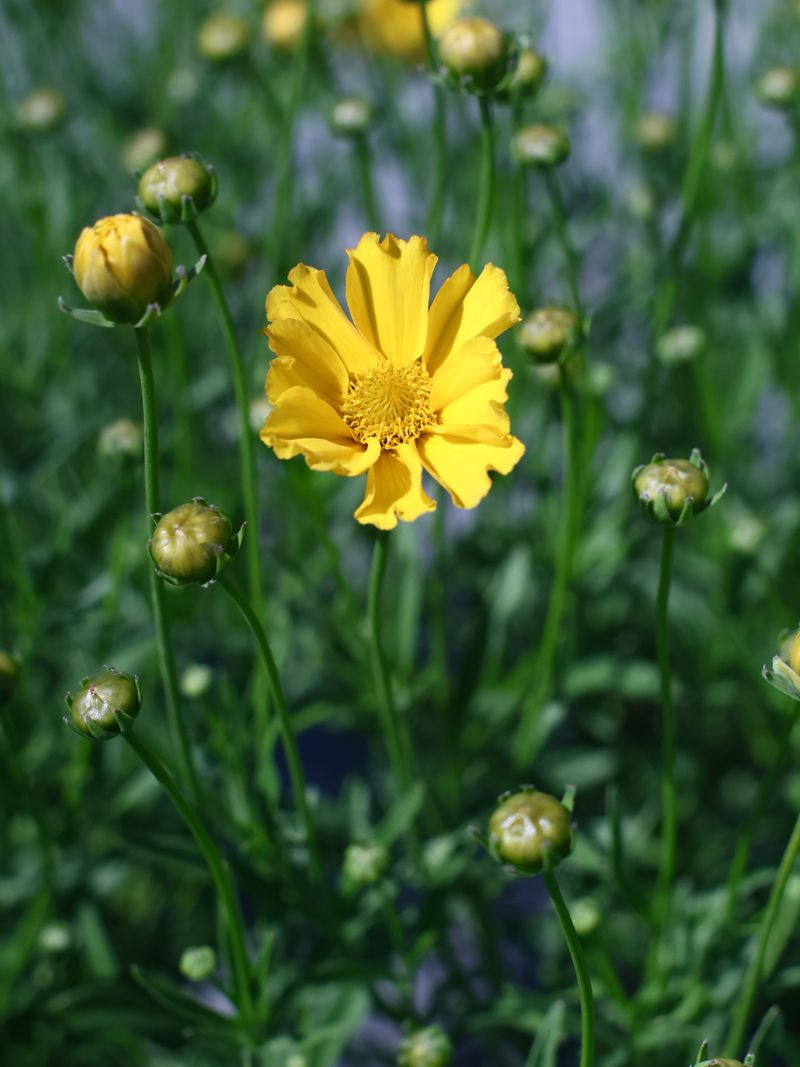
Some plants show up, do their job, and disappear. Coreopsis is not one of those plants. Known sometimes as Tickseed, it just keeps going, pushing out cheerful golden yellow blooms from early summer all the way into August and sometimes beyond.
Butterflies and bees treat it like a favorite diner, coming back again and again throughout the entire season.
What makes Coreopsis such a reliable performer is how little it asks for in return. Full sun and well-drained soil are the main requirements, and once it gets established, it handles heat and dry conditions without much complaint.
Pennsylvania summers can swing from soaking wet to bone dry within the same month, and Coreopsis adapts to both without losing its bloom power.
The key to keeping those blooms coming through August is deadheading. Removing spent flowers regularly signals the plant to keep producing new ones rather than putting energy into making seeds.
It only takes a few minutes every week or so, and the payoff is weeks of extra color that you would otherwise miss out on. Some gardeners do a harder cutback midseason to refresh the plant and encourage a fresh flush of blooms.
Coreopsis comes in both annual and perennial varieties, with perennial types like Coreopsis verticillata being especially well-suited to Pennsylvania gardens.
The threadleaf varieties have delicate, fine-textured foliage that adds a soft, airy look even when the plant is not in bloom.
Pairing it with taller plants like Purple Coneflower or Black-Eyed Susan creates a layered, naturalistic planting that looks great from midsummer all the way through the end of the growing season. It is a true workhorse of the warm-weather garden.