These Low Fuss Shrubs Are The New Boxwoods Of New York Front Yards

Walk down any older street in New York, and you can spot them instantly: those tidy green meatballs hugging the porch steps.
Boxwoods built their reputation on being neat, dependable, and almost furniture-like in a front yard. Lately, though, they have been battling boxwood blight and the hungry box tree moth, and homeowners are tired of spraying, pruning, and hoping for the best.
The good news smells a little spicy, looks glossy in January, and shrugs off deer and road salt without complaint. A handful of tough evergreen shrubs now deliver that same clipped, polished look with a fraction of the babysitting.
Some are native to the East Coast, some handle deep shade, and a few even feed birds through the cold months. Take a look at the replacements worth planting this season.
1. Inkberry Holly Brings A Boxwood Look With Less Fuss
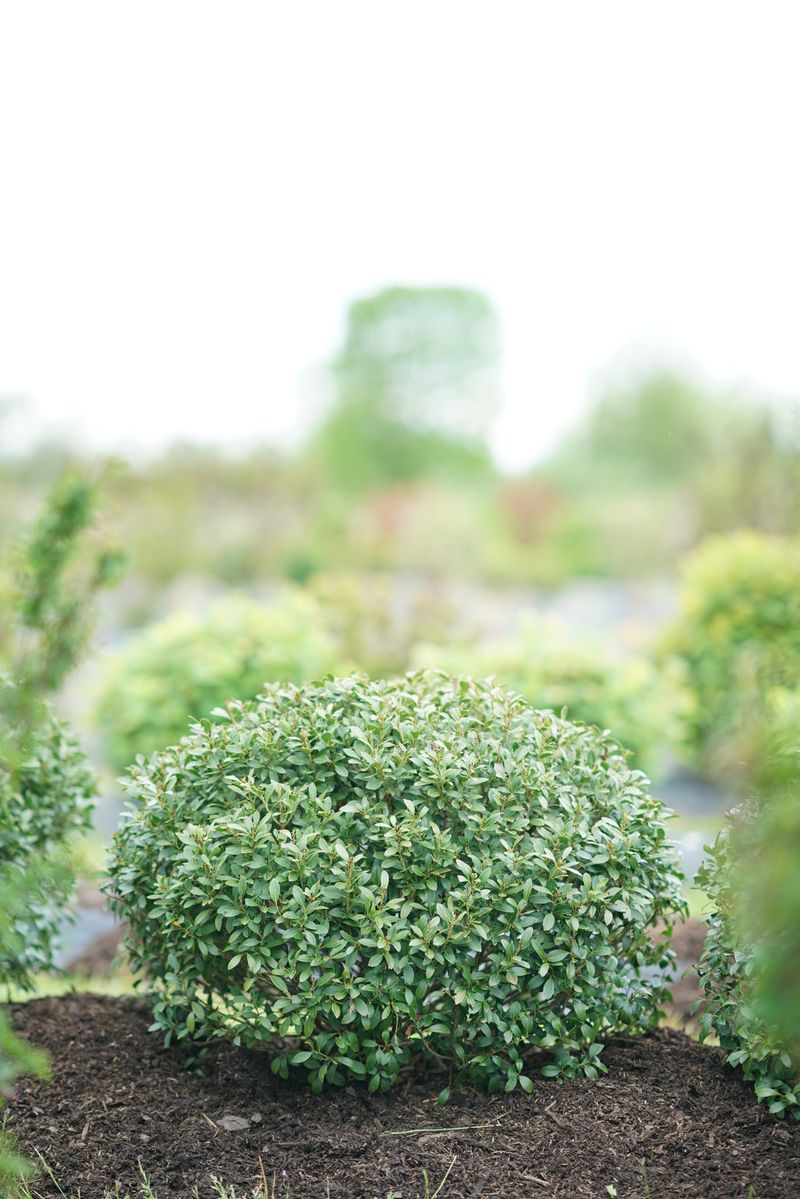
Squint at a row of inkberry holly and you would swear someone planted boxwood. Full sun keeps it densest, though light shade works fine.
Slightly acidic, steadily moist soil is the sweet spot, and sheltered sites help protect its evergreen foliage through severe winter cold.
Known botanically as Ilex glabra, it grows wild along the eastern coast, including parts of New York. Being a regional native means it already understands our wet springs and cold Januarys.
Deer tend to walk right past it, which matters if your neighborhood hosts a herd every winter. It also handles heavy clay, soggy corners, and a moderate dose of de-icing salt near the driveway.
Full sun keeps it densest, though light shade works fine. Slightly acidic, steadily moist soil is the sweet spot, so a layer of shredded bark mulch pays off.
Look for cultivars bred to act like boxwood. Gem Box and Strongbox stay compact at roughly two to four feet tall and wide, while older types can stretch four to eight feet.
Shearing is optional. Left alone, the shrub settles into a soft mound, and one trim in late spring sharpens it into a formal hedge.
Female plants set small black berries that hang on into winter. Robins and other birds clean them up when pickings get slim.
Growth is quicker than boxwood, so a young hedge fills in sooner. Gardeners often see a solid green line within three seasons.
One tip from experience: plant a few extra and let the lower branches stay. That keeps the base full instead of leggy.
2. Bayberry Offers Evergreen Structure And Salt Tolerance
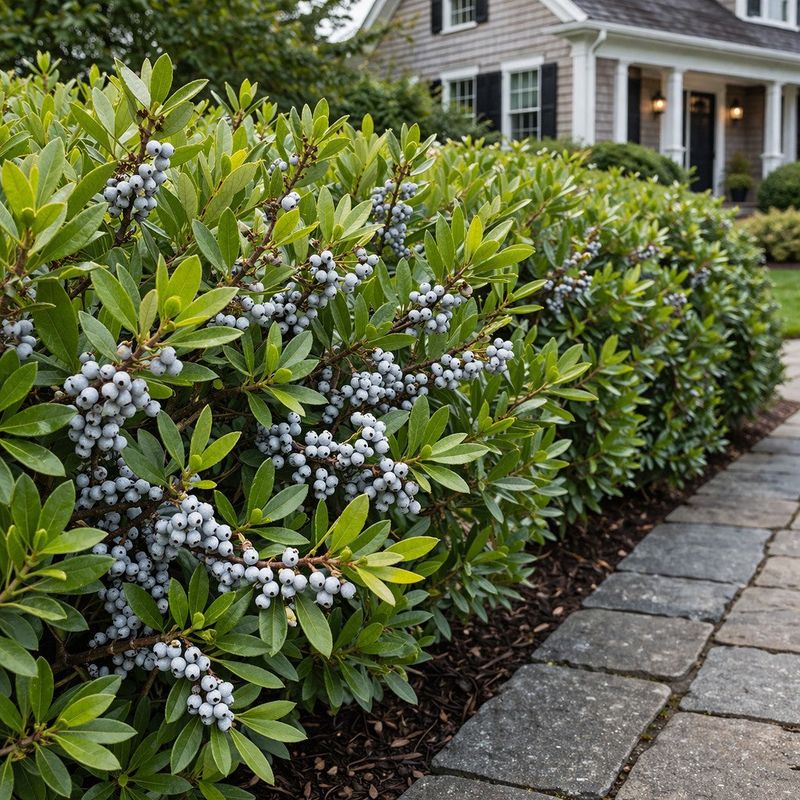
Crush a bayberry leaf between your fingers and the scent hits you right away, warm and spicy, a little like an old-fashioned candle. That fragrance is the reason colonists boiled the waxy berries for candlemaking centuries ago.
Northern bayberry, or Myrica pensylvanica, is native to New York State and built for rough conditions. Salt spray, road salt, sandy soil, and wind barely register.
Botanists call it semi-evergreen to deciduous depending on the winter, but the branching stays so thick that the plant reads as solid year-round. Birds use that tangle for shelter during storms.
Your New York Garden Changes Every Week. Your Plan Should Too.
Gardening in New York changes quickly throughout the season. Every Friday you’ll receive a simple weekly plan showing exactly what to plant, prune, fertilize, harvest, and protect so you never miss the right timing.
Size-wise, expect a rounded, multi-stemmed shrub around six to twelve feet tall and five to ten feet across. Prune it lower if you want a shoulder-height screen near the sidewalk.
Poor soil actually suits it. Skip the fertilizer and it still thickens up, since the roots partner with bacteria that pull nitrogen from the air.
Wet spots and dry spots both work, which is rare. Full sun to part shade keeps growth even.
Deer generally leave it alone. That alone makes it a favorite for Hudson Valley and Long Island properties.
Female plants produce those famous grayish-white waxy berries, but only if a male grows nearby. Yellow-rumped warblers depend on them through cold months.
Plant bayberry along a curb strip where salt trucks rumble past all winter. It handles the abuse while your neighbor replaces their struggling hedge every few years.
3. Japanese Holly Mimics Boxwood With Small, Dark Green Leaves
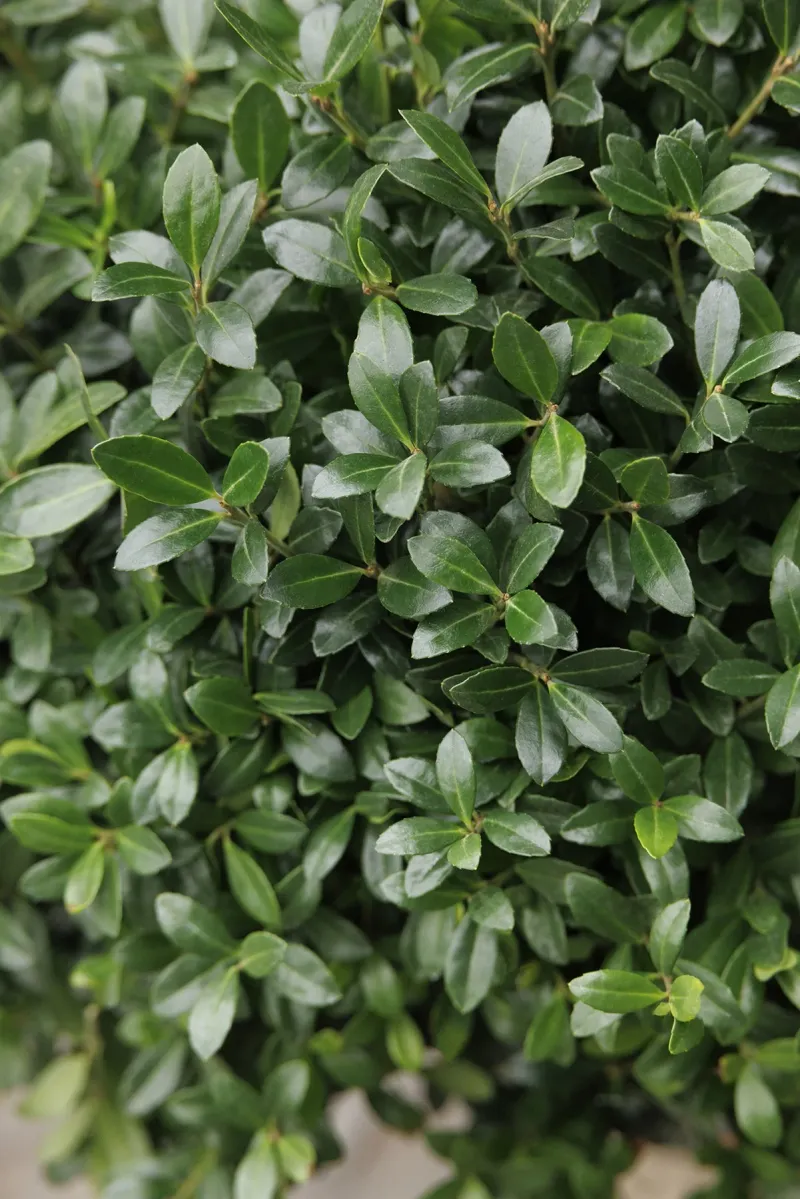
Plenty of shoppers have picked up a pot of Ilex crenata at the garden center convinced they grabbed a boxwood. The tiny, shiny, dark green ovals really do look identical from a few feet away.
Japanese holly earns its spot because it takes shearing beautifully. Cones, low hedges, rounded mounds, all of it holds shape with one or two trims a season.
Deer usually skip it, and the plant asks for very little once settled in. Rich, acidic, well-drained soil gives the best color.
Full sun to partial shade both work. Once the roots run deep, it tolerates dry stretches in August without wilting.
Cultivars vary a lot, so read the tag. Green Lustre forms a low mound, Compacta grows naturally rounded, and some types climb to ten feet if left unchecked.
City living suits this shrub. Urban pollution does not faze it, which explains why it shows up in so many Brooklyn and Queens front gardens.
Female plants carry small black berries through fall and winter. They are subtle rather than showy, adding quiet contrast against the foliage.
One caution worth mentioning: soggy soil invites root trouble. Improve drainage before planting if water pools after rain.
Give each shrub enough elbow room, roughly three feet apart for a hedge. Crowding leads to thin bases and extra pruning work later.
For anyone chasing that crisp, formal edge without blight worries, Japanese holly delivers the closest match available.
4. Dwarf Hinoki Cypress Adds Texture To Front Yards
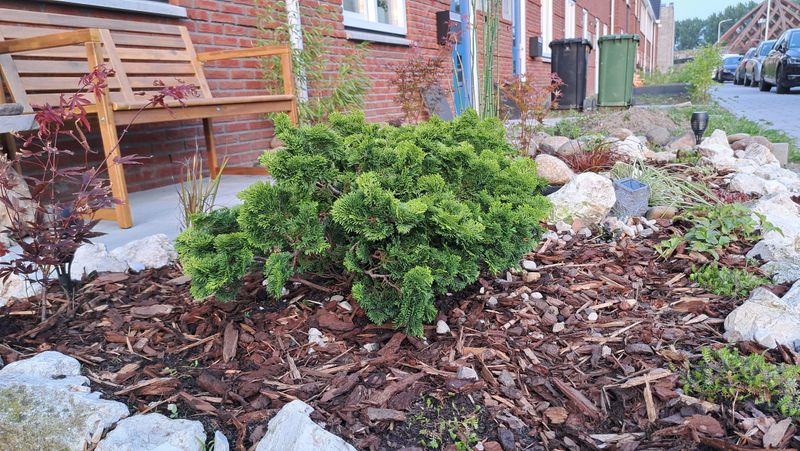
Texture lovers, pay attention. Dwarf Hinoki cypress trades flat little leaves for fan-shaped sprays of scale-like foliage that ripple like green seashells.
Chamaecyparis obtusa Nana grows slowly and irregularly, forming a compact globe with layers you want to touch. Run a hand across it and the surface feels almost feathery.
Read labels carefully before buying. Full-size Hinoki cypress becomes a tree, so dwarf selections are the ones meant for foundation beds.
Hardiness runs through USDA zones 5 to 9, covering nearly every corner of New York from Buffalo to Staten Island. Cold snaps rarely cause damage.
Deer show little interest, another quiet win. Full sun produces the richest color and tightest branching.
Drainage matters more than fertility here. Plant slightly high in a mounded bed if your soil leans heavy.
Pruning is minimal, which suits busy homeowners. Snip an odd wayward tip and step back, since heavy shearing ruins the natural layered look.
Pair one with low sedum or a sweep of dark mulch and the shrub becomes a sculpture. Symmetry is not its thing, and that irregular shape is exactly the charm.
Growth of a couple inches per year means it stays put for a long time. Buy the largest pot your budget allows for instant presence.
Winter is when it shines. While deciduous shrubs stand bare, those green fans hold snow like frosting on a cupcake.
5. Plum Yew Handles Shade Where Boxwoods May Struggle
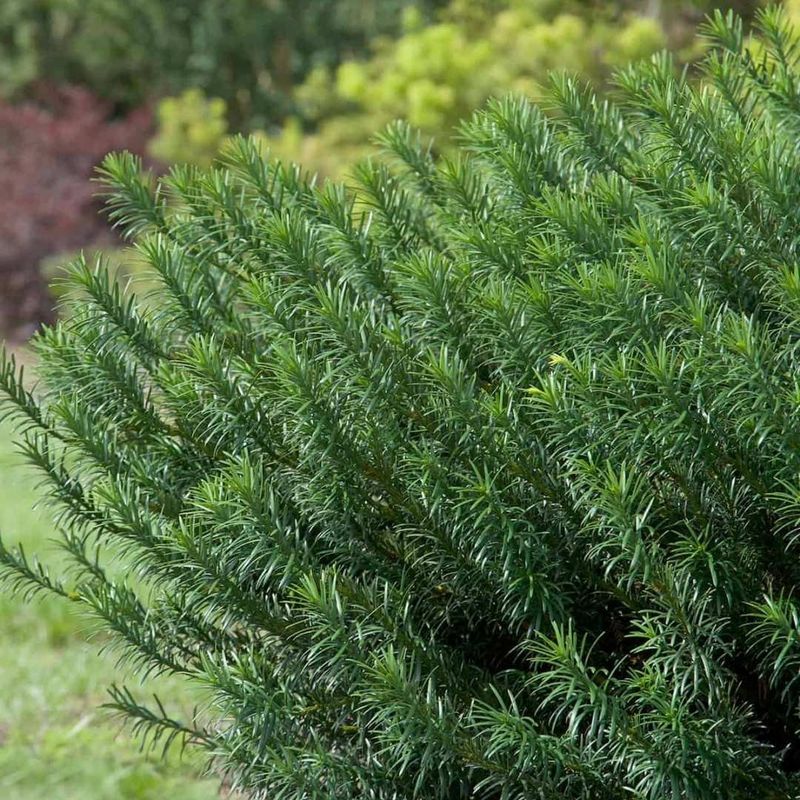
Got a gloomy strip under an old maple where nothing looks happy? Plum yew was practically made for that spot.
Cephalotaxus harringtonia grows contentedly anywhere from full sun to full shade, a range very few evergreens can claim. North-facing entries and shadowed side yards suddenly have an option.
Deer walk past it with almost total disinterest. Pests and diseases rarely bother it either, so maintenance stays light.
Unlike common yews, plum yew shrugs off summer heat and becomes drought tolerant after a season or two. Humid August weeks do not faze it.
The needles are fine, soft, and glossy, shifting between bluish-green and deep forest green. Texture reads refined rather than prickly.
Shearing works well if you want a formal hedge or clipped mound. Left natural, the branches arch gracefully.
Size depends entirely on the cultivar. The straight species can reach roughly ten feet tall and about as wide, while Yewtopia stays around three to four feet, making it a good fit for tight front yards in the milder parts of the state.
Soil is not a fussy subject. Most types and pH levels suit it, as long as water drains and does not sit.
Here is a fun bit of trivia: the common name comes from olive-shaped fruits on female plants that resemble tiny plums.
For shaded foundations where boxwood thins out and sulks, plum yew fills in with quiet confidence. Plant three in a row and the problem area looks intentional.
6. Blue Holly Adds Evergreen Color To Front Yard Borders
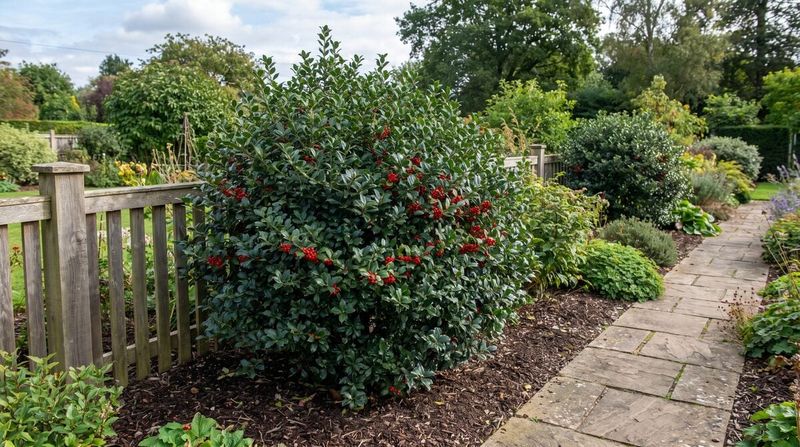
Red berries against blue-green leaves in the middle of a snowstorm is hard to beat. Blue holly delivers that picture every single winter.
Ilex x meserveae came from hybridizing work done by Kathleen Meserve, a Long Island gardener who wanted hollies tough enough for the cold. Her backyard experiments gave us the Blue Prince and Blue Princess series.
The leaves are shiny, serrated, and tinted with a smoky blue cast. Texture differs from boxwood, but the density is just as satisfying.
Pruning shapes it into crisp borders, low hedges, or foundation anchors. Late winter is the best time for a trim.
Berries require both a male and female plant nearby. One male can pollinate several females, so plan groupings accordingly.
Sun to part shade suits it, with acidic, well-drained soil producing the glossiest growth. A spring feeding formulated for hollies keeps color deep.
Winter wind can brown the foliage in exposed spots. Planting on a sheltered side of the house prevents that scorch.
Songbirds appreciate the fruit once cold weather softens it. Cardinals against those blue leaves make a nice view from the kitchen window.
Height varies by cultivar, generally hovering between four and eight feet with regular shaping. Keep it lower if it sits under windows.
For front yards across New York that need year-round structure plus a splash of holiday color, blue holly handles both jobs without drama.