These Low-Growing Oregon Natives Stop Weeds Between Stepping Stones Better Than Anything Else
Stepping stones look charming until the gaps turn into tiny weed beds. Oregon gardeners know those narrow spaces can be hard to keep clean, especially after rain softens the soil.
Low-growing natives can make the path feel finished while helping cover the open ground weeds love. The best choices stay short, spread gently, and handle light foot traffic without looking messy.
They can also soften the hard edges of stone in a way gravel never quite does. This is not about stuffing every crack with a random plant.
It is about choosing tough little growers that fit the light and moisture in that path. Once they settle in, those spaces can look greener, neater, and much easier to manage.
1. Pink Purslane Softens Damp Gaps Between Stones
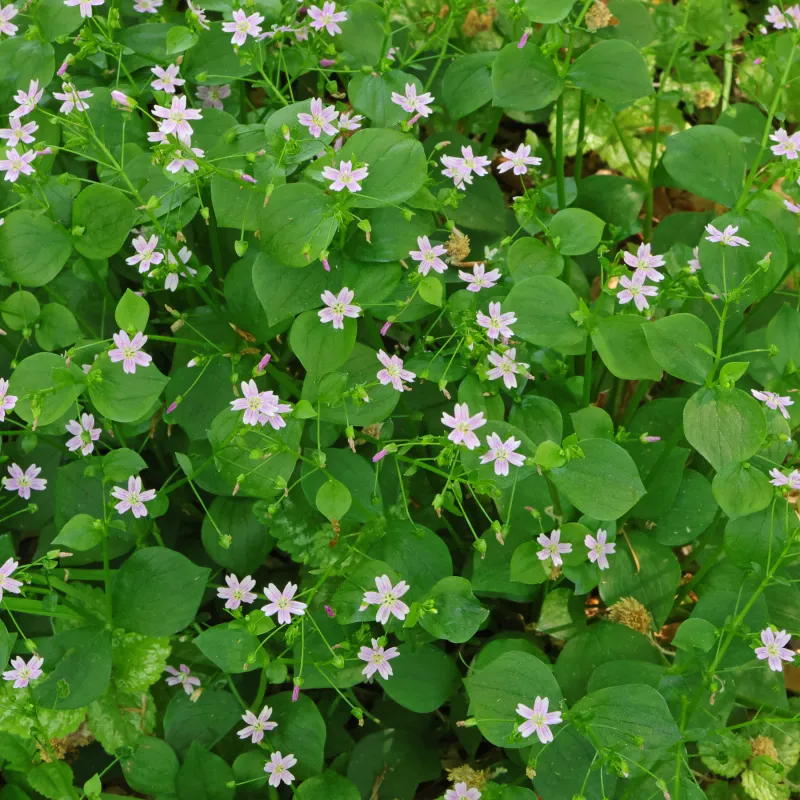
Few plants handle consistently wet soil between stepping stones as gracefully as Pink purslane.
Known botanically as Claytonia sibirica, this cheerful little plant naturally grows along creek banks and shaded stream edges throughout the Pacific Northwest.
It brings that same adaptability right to your garden path.
The leaves are soft, fleshy, and bright green, forming low rosettes that hug the ground beautifully.
In spring, it sends up clusters of small white flowers with delicate pink veins running through each petal. Those blooms last for weeks and attract tiny native pollinators to your yard.
Pink purslane through self-seeding, which means it gradually fills every gap without you having to do much at all. It does best in shaded or partially shaded areas where the soil stays consistently moist.
If your path runs near a downspout, rain garden, or shaded bed, this plant will absolutely thrive there.
Planting is simple. Start with small nursery transplants in early fall or early spring and water them in well.
Once established, they largely fend for themselves. Because they grow so densely, weed seeds simply cannot find enough light or bare soil to take hold.
Gardeners who have tried this plant often say it looks like something straight out of a fairy tale.
The combination of lush leaves and dainty flowers makes every stepping stone path feel like a woodland retreat worth showing off to neighbors.
2. Yerba Buena Brings Fragrance To Shady Path Edges
There is something truly special about a plant that smells like mint every time you brush against it.
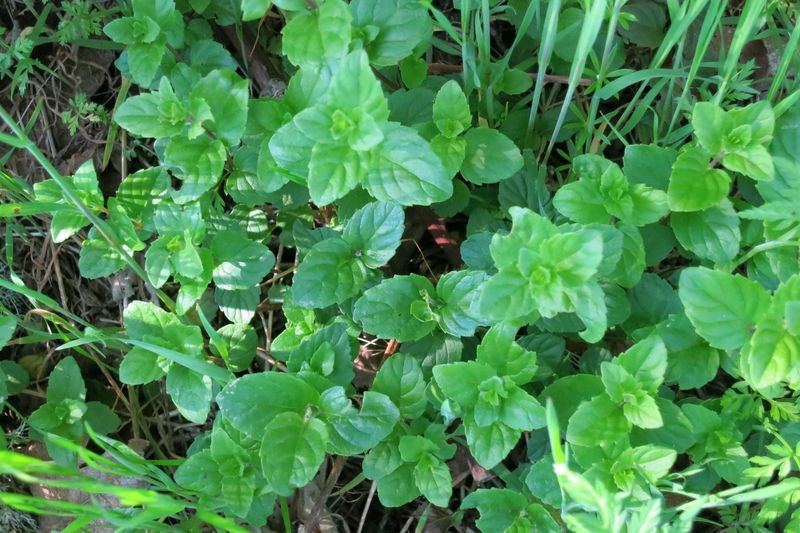
Yerba buena, or Satureja douglasii, is a native trailing herb that has been treasured across the Pacific Northwest for generations.
Indigenous communities used it for tea and medicine long before gardens even existed in Oregon.
The stems creep along the ground and root at their nodes, slowly forming a weed-smothering mat of small, rounded, aromatic leaves.
The scent is refreshing and slightly sweet, somewhere between spearmint and a forest breeze. Walking past it on a warm afternoon is genuinely pleasant.
Shaded spots are where yerba buena really shines. It thrives under trees, along north-facing walls, and anywhere the sun stays gentle and the soil holds a little moisture.
It handles dry shade better than most native groundcovers, which makes it extremely versatile for tricky path edges.
Your Oregon Garden Changes Every Week. Your Plan Should Too.
Gardening in Oregon changes quickly throughout the season. Every Friday you’ll receive a simple weekly plan showing exactly what to plant, prune, fertilize, harvest, and protect so you never miss the right timing.
Growth is steady but not aggressive. It spreads politely, filling gaps without swallowing up neighboring plants.
For best results, plant it in fall or early spring using nursery starts. Give it a light layer of leaf compost when planting and it will establish quickly.
Once settled in, yerba buena needs almost no attention. An occasional trim keeps it looking tidy.
The tiny white flowers that appear in summer are small but charming. For shady paths where fragrance matters as much as function, this plant delivers on every level without any drama or fuss.
3. Slender Cinquefoil Fills Sunny Open Spaces
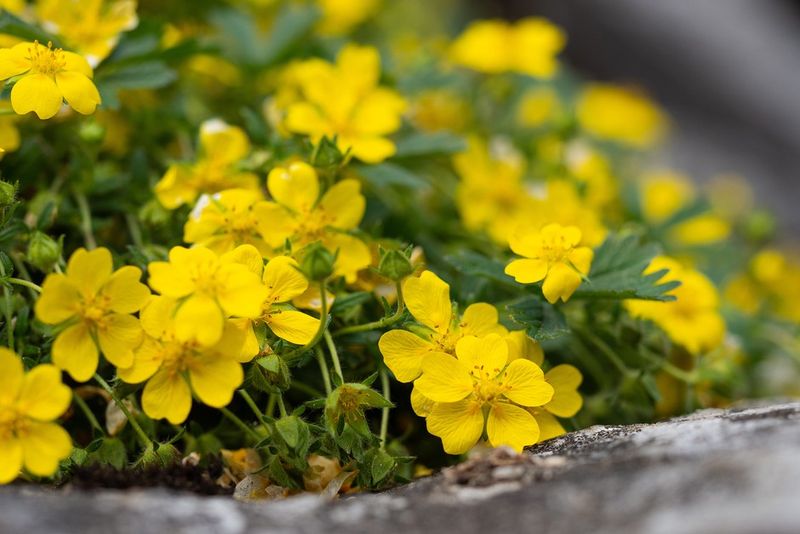
Sunny paths with dry or well-drained soil between the stones often seem impossible to plant. Most groundcovers want moisture and shade, but slender cinquefoil is built differently.
This native wildflower laughs at summer heat and dry spells, spreading steadily through spots where other plants give up entirely.
Potentilla gracilis is found naturally in open meadows, rocky hillsides, and sunny forest edges across the region. The leaves are deeply divided and slightly silvery-green, giving paths a feathery, textured look.
In late spring and early summer, cheerful yellow flowers pop up above the foliage on slender stems.
Those blooms are a big hit with native bees. If you want to support pollinators while keeping your path weed-free, this plant does both jobs at once.
The dense rosettes of leaves press flat against the ground, leaving no room for weed seedlings to squeeze through.
Planting is best done in fall to allow roots to establish before summer heat arrives. Slender cinquefoil tolerates poor, rocky, or sandy soil surprisingly well.
It actually performs better in lean conditions than in rich, heavily amended garden beds where it can get floppy.
Watering needs are minimal once the plant is established. A deep soak every week or two during the hottest months is usually enough.
For gardeners dealing with sunny, baking pathways where nothing seems to survive, slender cinquefoil is the reliable answer they have been looking for all along.
4. Creeping Buttercup Covers Moist Pathway Gaps
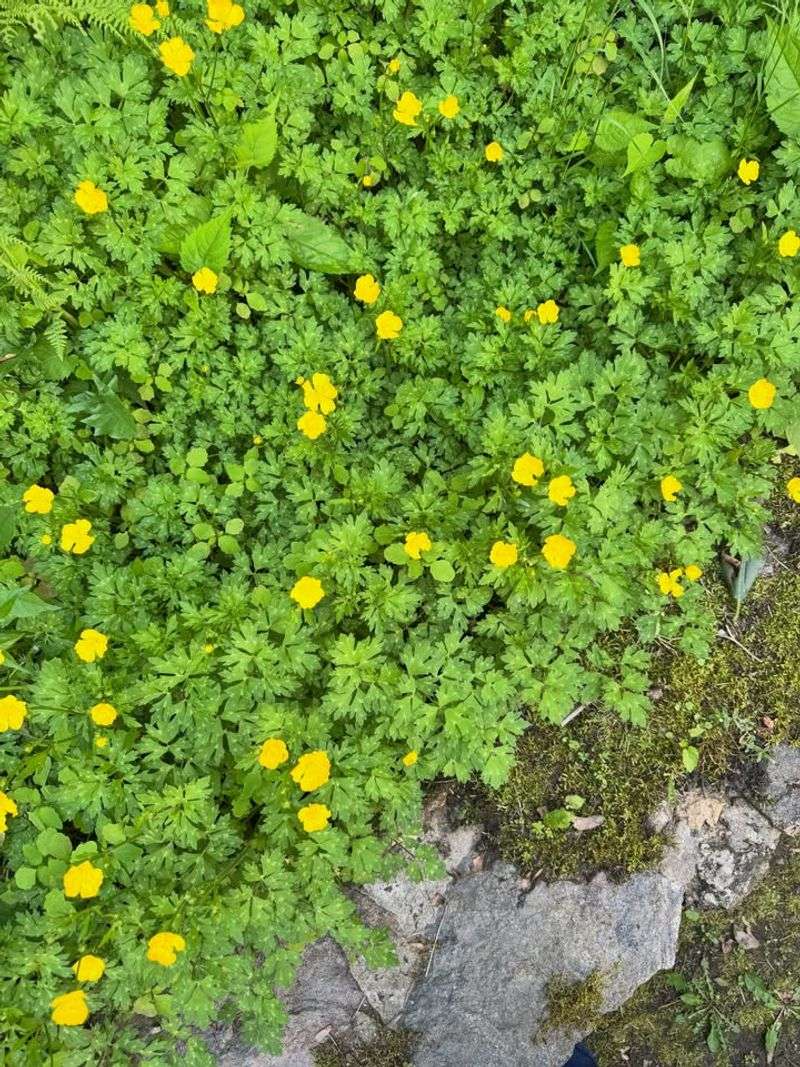
Moist, low-lying paths that collect water after rain can be a real challenge to plant. Most groundcovers rot in those conditions, but the native form of creeping buttercup handles standing moisture with ease.
It spreads quickly by sending out runners that root wherever they touch damp soil.
The glossy, three-lobed leaves form a thick, cheerful carpet that smothers weeds completely.
Bright yellow flowers appear from spring through early summer, giving the path a sunny, welcoming look even on overcast days.
The whole plant stays low, rarely growing taller than three or four inches.
One thing worth knowing is that there is an invasive non-native buttercup that looks similar.
When sourcing plants, always buy from a reputable native plant nursery and confirm you are getting Ranunculus repens in its native form or a well-behaved cultivar suited to your region.
The difference matters for your local ecosystem. Planting in fall gives the roots time to spread before spring growth kicks into high gear. Moist, rich soil is ideal, but this plant tolerates clay surprisingly well.
It is a strong choice for paths near ponds, rain gardens, or low-lying areas that stay soggy after storms.
Maintenance is minimal. Trim back any runners that creep too far onto the stones themselves.
Beyond that, the plant handles itself. Few groundcovers match its ability to cover damp gaps this thoroughly while still looking polished and intentional in a well-designed garden setting.
5. Twinflower Trails Lightly Through Woodland Walkways
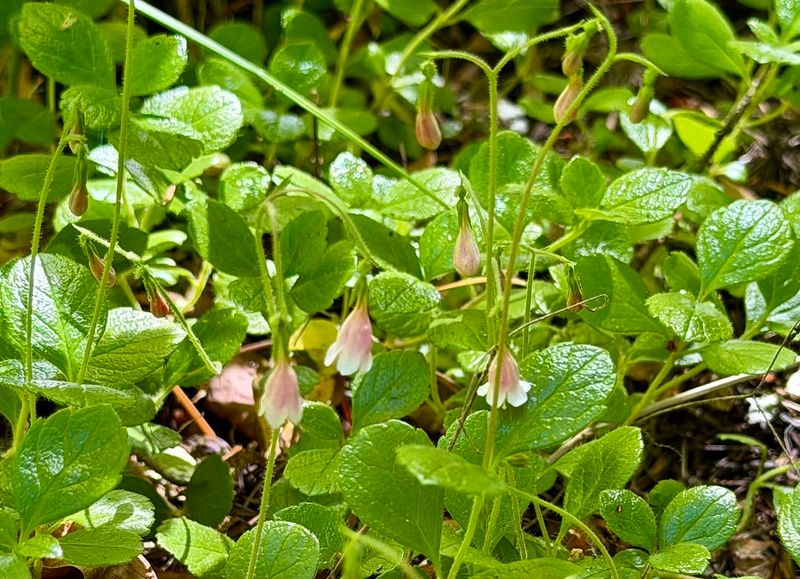
Not every groundcover needs to be bold or fast-growing to be effective. Twinflower, or Linnaea borealis, is one of those quiet, understated plants that earns deep admiration from everyone who grows it.
Named after the famous botanist Carl Linnaeus, it was reportedly his favorite plant, and it is easy to understand why.
Thin, wiry stems trail gracefully across the forest floor, connecting small clusters of rounded leaves.
In early summer, pairs of tiny pink bell-shaped flowers dangle from delicate forked stems, filling the air with a soft, sweet fragrance.
The effect is enchanting in a way that flashier plants rarely achieve. Twinflower thrives in cool, shaded woodland settings with moist, acidic soil. It is perfectly suited to paths that wind through conifer groves or shaded native plant gardens.
The plant stays very low, weaving between stones without ever becoming pushy or overwhelming its neighbors.
It is not the fastest spreader, so patience is needed in the first year or two. Plant it in fall using nursery starts and mulch lightly with pine needles or leaf litter to mimic its natural habitat.
Once it finds its footing, it spreads reliably and fills gaps with a delicate but weed-blocking mat.
For gardeners who want a path that feels like a walk through an old-growth forest, twinflower is the missing piece.
Its quiet beauty and gentle growth habit make it one of the most rewarding native groundcovers you can possibly grow between stepping stones.
6. Broadleaf Stonecrop Handles Dry Gravelly Cracks
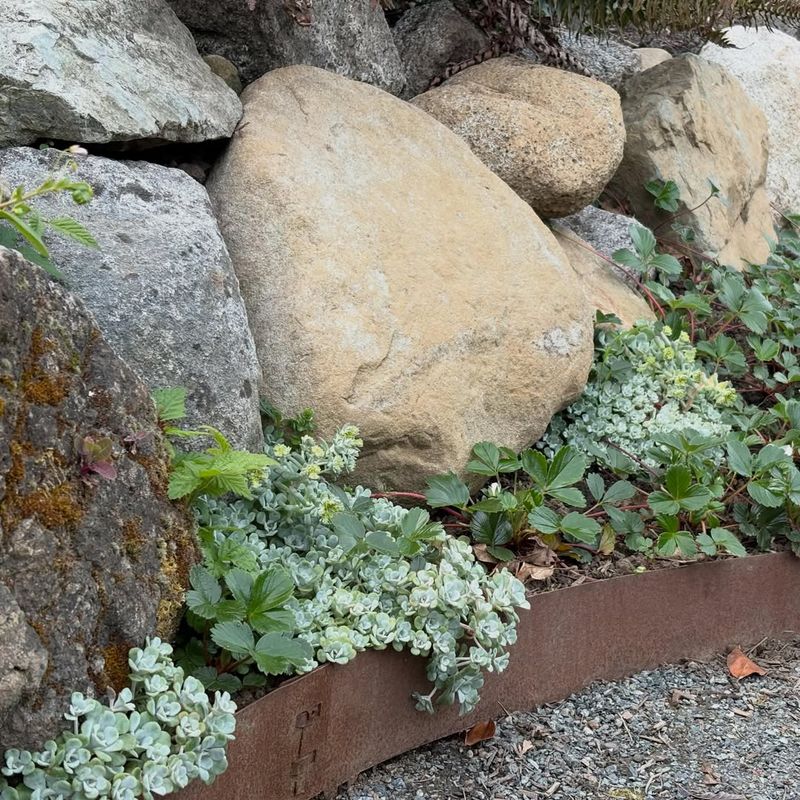
Rocky, gravelly paths baking in full sun are exactly where broadleaf stonecrop feels most at home.
Sedum spathulifolium is a native succulent that grows naturally on rocky outcrops, cliff faces, and gravelly slopes all across the Pacific Northwest.
It stores water in its thick, fleshy leaves, which means it barely notices summer drought.
The rosettes are stunning up close. Leaves are spoon-shaped and range from blue-green to silver-purple, often with a powdery coating that gives them an almost frosted appearance.
In late spring, clusters of small, starry yellow flowers rise above the foliage on short stems, drawing in native bees and other pollinators.
Between stepping stones, this plant forms a tight, weed-proof mat that requires almost no maintenance at all. It does not need rich soil.
In fact, it performs better in lean, fast-draining gravel or sandy mixes than in heavily amended garden beds. Adding extra compost can actually harm it by holding too much moisture around the roots.
Plant it in spring or fall by pressing small divisions or nursery starts into the gaps between stones. Water lightly for the first few weeks, then back off almost entirely.
Once established, supplemental watering is rarely needed except during extreme heat waves.
Few plants offer this level of beauty and toughness in such a compact package. For dry, sunny paths where weeds seem impossible to stop, broadleaf stonecrop is the low-maintenance solution that delivers season after season without complaint or fuss.
7. Oregon Wood-Sorrel Brightens Damp Shady Walkways
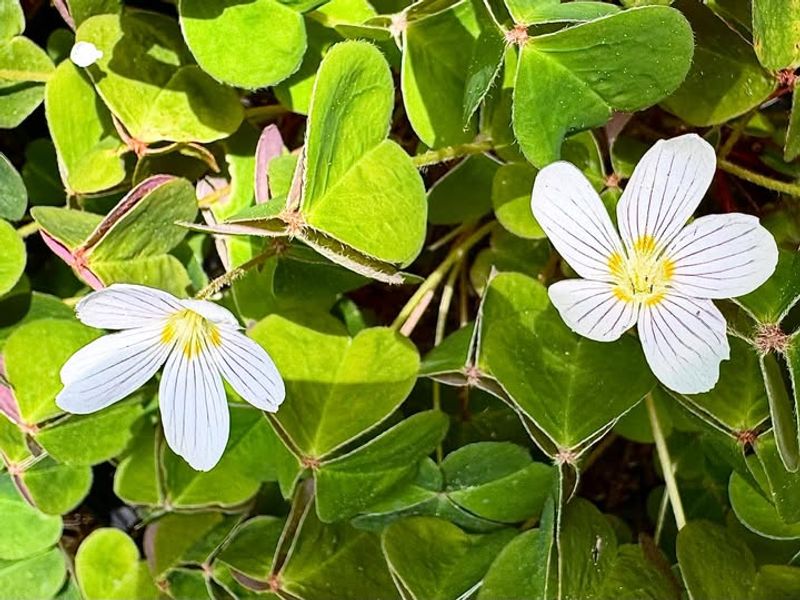
Walk through almost any old-growth forest in Oregon and you will find the forest floor blanketed in a sea of heart-shaped leaves.
That plant is Oregon wood-sorrel, Oxalis oregana, and it is one of the most naturally gifted weed suppressors in the entire Pacific Northwest native plant palette.
The leaves are clover-like, made up of three heart-shaped leaflets that fold downward at night or on very bright days.
Delicate pale pink or white flowers appear from spring through fall, dotting the green carpet with tiny, cheerful color.
The whole effect is lush, soft, and genuinely beautiful in shaded settings.
Damp, shaded paths under trees or along north-facing walls are ideal. Wood-sorrel spreads through underground rhizomes, slowly but steadily forming a dense mat that leaves absolutely no room for weeds to establish.
It handles deep shade better than almost any other native groundcover on this list.
Planting is straightforward. Use nursery starts or carefully divide clumps from an established patch in your own yard.
Fall planting works best, giving roots time to settle before spring growth begins. Keep the soil consistently moist during the first growing season and the plant will take off from there.
One bonus feature is that deer tend to avoid it. For gardeners in areas with heavy deer pressure, that matters a lot.
Wood-sorrel is tough, beautiful, shade-tolerant, and deer-resistant, making it a genuinely hard plant to beat for damp, dark stepping stone paths.
8. Native Mosses Suit Damp Shady Stone Walkways
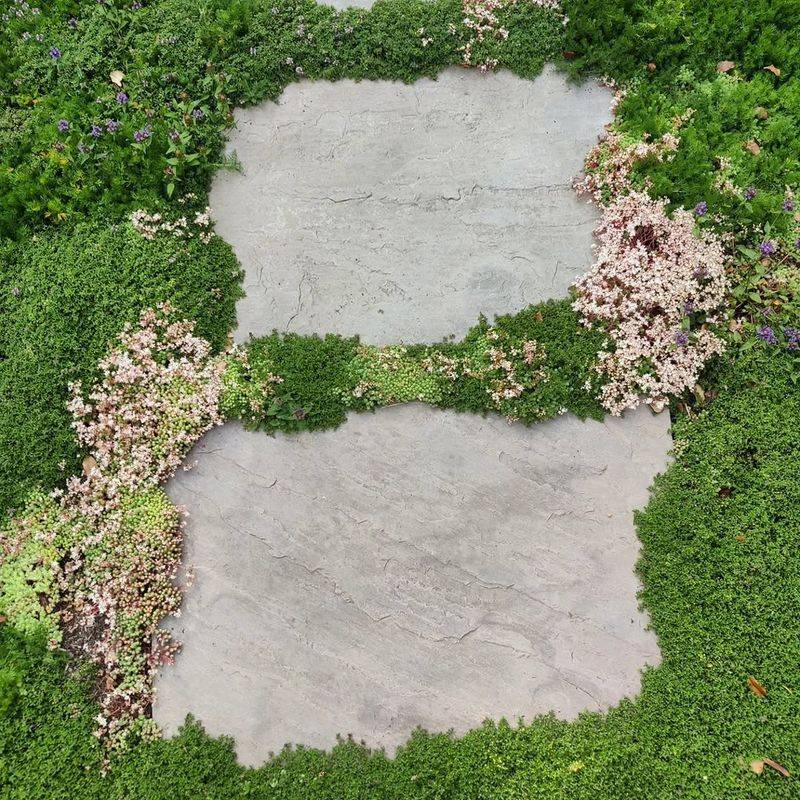
Few things look more naturally beautiful on a stone path than a thick, velvety carpet of moss filling every crack and gap.
Native mosses are not flashy or dramatic, but they create a look that feels ancient, peaceful, and completely at home in the Pacific Northwest landscape.
Many Oregon gardeners consider them the ultimate stepping stone companion.
Our region has dozens of native moss species suited to garden paths. Common ones include Kindbergia praelonga, Eurhynchium oreganum, and various Bryum species.
All of them stay incredibly low, never blocking views or crowding neighboring plants. They simply press into gaps and grow, slowly crowding out weeds through sheer density.
Shade and consistent moisture are the two non-negotiable requirements. Mosses do not have traditional roots, so they absorb water directly through their leaf-like structures.
Paths under tree canopies, near water features, or along shaded north walls are perfect environments for them to thrive and spread naturally.
Getting moss started is easier than most people think. Press small clumps firmly between stones and mist them daily for the first few weeks.
Blending moss with buttermilk and painting it onto stones is a popular method that speeds up establishment significantly. Avoid foot traffic on new moss for at least six weeks.
Once established, native moss needs almost nothing from you. No fertilizer, no pruning, no pest control.
Just occasional misting during dry spells. For shaded paths where a serene, low-maintenance solution is the goal, native mosses are genuinely hard to beat.