7 Ways To Get More Fruit From Pomegranate Trees In Arizona Heat
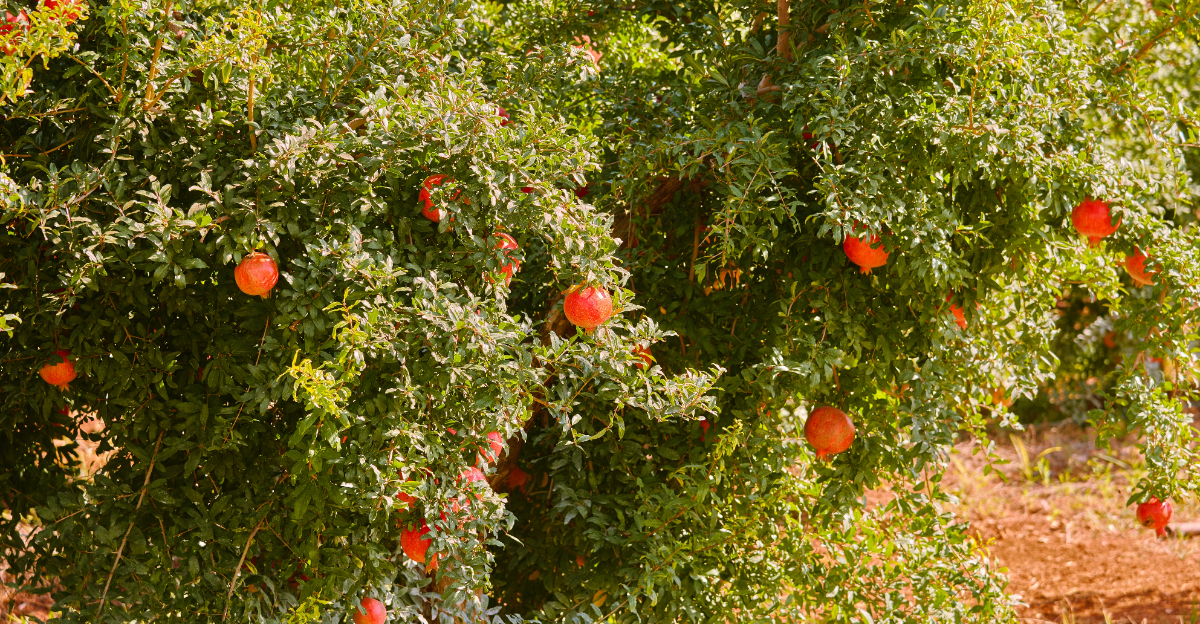
Arizona heat can be brutal, yet pomegranate trees often handle it better than expected when a few key details fall into place. Many trees grow well, look healthy, and still fall short when it comes to fruit, which can feel frustrating after all that effort.
Growth alone is not the same as production. Small changes in care can shift a tree from just surviving to actually producing the kind of harvest people hope for.
Timing, watering, and a few overlooked habits start to matter much more once temperatures climb.
Plenty of gardeners miss those small signals, especially during intense heat, and that is where results begin to drop off. A few smart adjustments can turn things around and help trees stay productive even when conditions feel harsh.
1. Deep Watering Helps Pomegranate Trees Set And Hold More Fruit
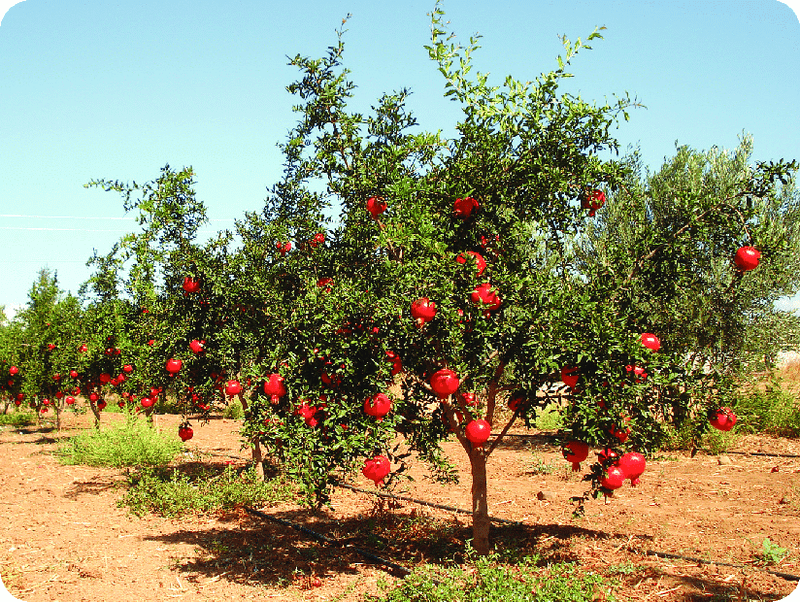
Shallow watering is one of the most common reasons pomegranate trees in Arizona drop fruit before it ever matures. When roots stay close to the surface because they’re chasing frequent, light moisture, the tree struggles during the hottest stretches of summer.
Fruit set suffers, and you end up with less to show for a full season of growth.
Watering deeply — and less often — encourages roots to push further down into the soil where temperatures are cooler and moisture lasts longer.
In Arizona, a good rule of thumb during the summer months is to water thoroughly once or twice a week, letting the soil dry out a bit between sessions.
Drip irrigation works well here because it delivers water slowly right where the roots can use it.
During fruit development, which typically runs from late spring through late summer, consistent deep watering matters more than almost anything else.
Inconsistent moisture is a known trigger for fruit splitting and drop, two problems Arizona growers deal with regularly.
Keeping soil moisture reasonably stable — not soggy, just steady — gives the tree what it needs to hold fruit through the heat.
Check soil moisture a few inches down before watering again. If it still feels damp, wait.
If it’s dry several inches below the surface, it’s time. Getting that rhythm right takes some trial and error, but your tree will show you what it needs over time.
2. Thinning Excess Fruit Improves Size And Prevents Branch Stress
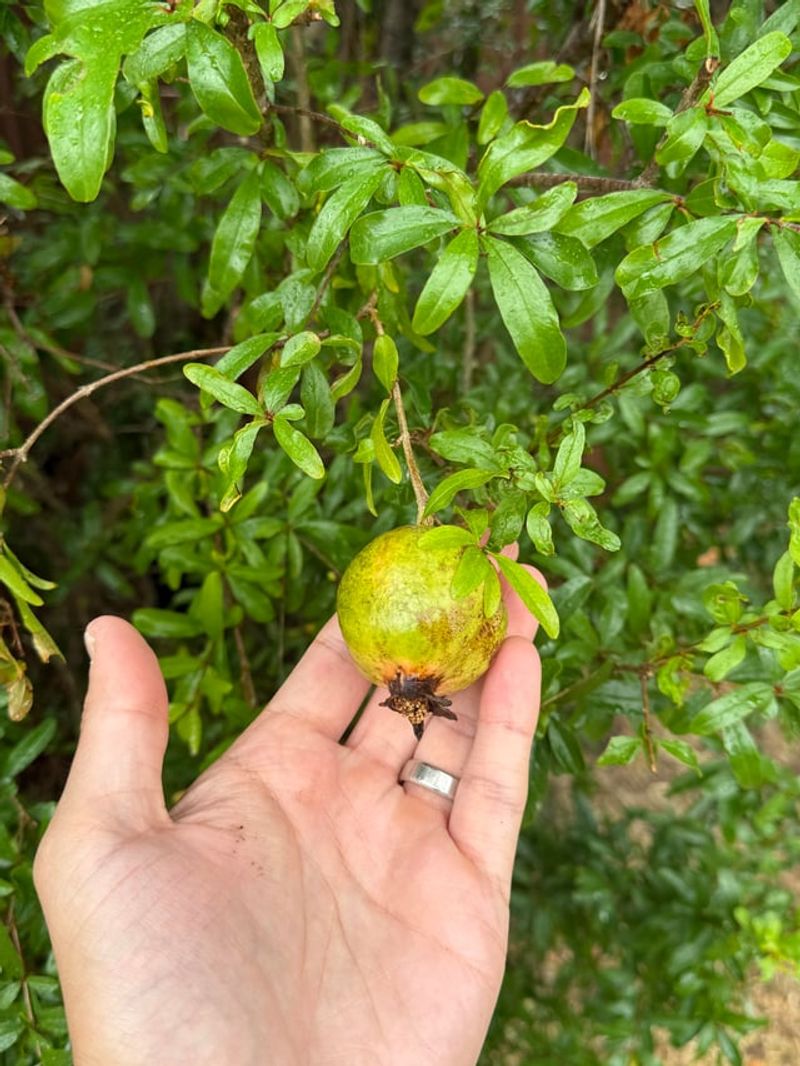
A pomegranate tree covered in dozens of tiny developing fruits looks impressive, but that image can be deceiving. When a tree tries to push energy into too many fruits at once, most of them end up small, underdeveloped, or prone to splitting before they ripen.
Arizona’s heat speeds up that stress considerably.
Thinning fruit early in the season — when pomegranates are still small and green — gives the remaining fruits a better shot at reaching full size and sweetness.
A reasonable target is to leave fruits spaced several inches apart on each branch, removing the smallest or most crowded ones first.
It feels counterintuitive to pull fruit off a tree you’ve been nurturing, but the results at harvest are usually worth it.
Your Arizona Garden Changes Every Week. Your Plan Should Too.
Gardening in Arizona changes quickly throughout the season. Every Friday you’ll receive a simple weekly plan showing exactly what to plant, prune, fertilize, harvest, and protect so you never miss the right timing.
Branch stress is another real concern. Heavily loaded branches can crack or bend under the combined weight of fruit and wind, especially during Arizona’s summer monsoon season.
Reducing that load early protects the structure of the tree and keeps it productive for future seasons.
Thinning also improves airflow through the canopy, which helps reduce fungal issues that can pop up during the humidity that monsoons bring. It’s a small task that takes maybe an hour on an established tree, but the payoff in fruit quality is noticeable.
Bigger, healthier pomegranates with fewer splits and cracks are a reasonable outcome when thinning is done consistently each year.
3. Full Sun Exposure Supports Strong Flowering And Fruit Development
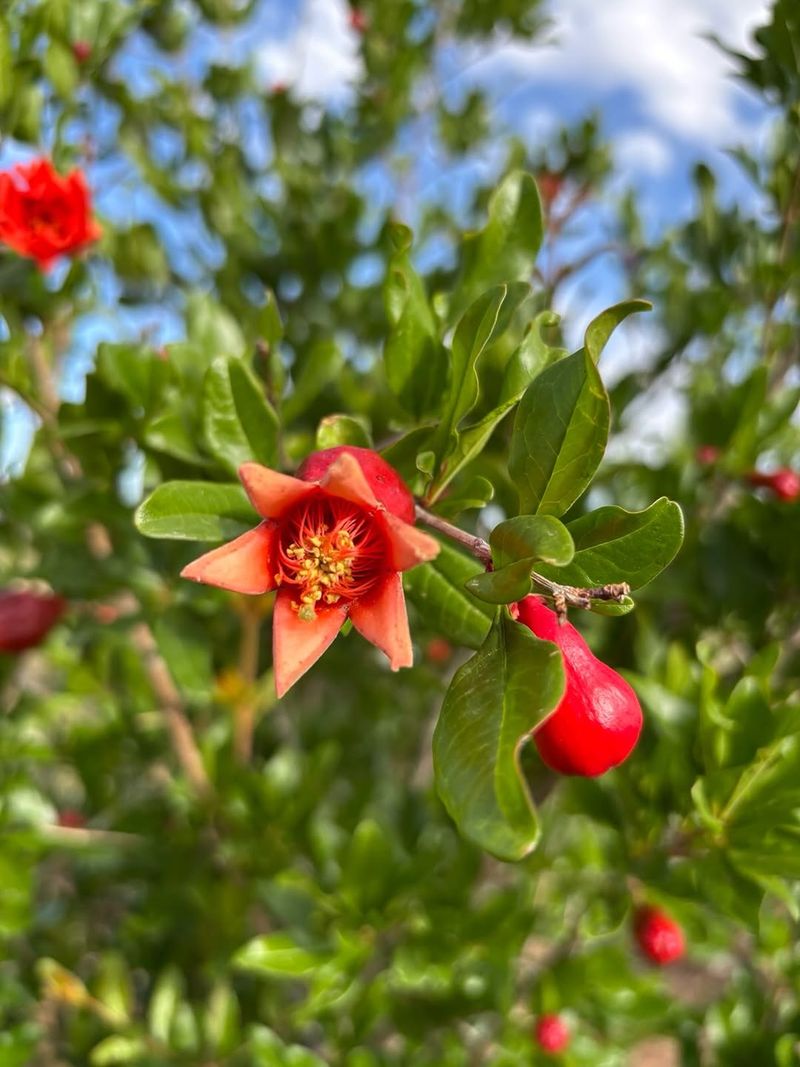
Pomegranates are built for heat, but they need direct sun to actually perform well. In Arizona, that usually isn’t the problem — shade is.
Trees planted too close to walls, fences, or larger trees often get blocked from afternoon light, which is exactly when pomegranates are doing some of their most important work during the growing season.
Aim for at least six to eight hours of direct sunlight daily, and if you have a choice, a south- or west-facing planting spot tends to work well in Arizona. More sun means more flower production, and more flowers means more opportunity for fruit set.
It’s a pretty direct relationship in pomegranates compared to some other fruit trees.
Flowering in Arizona typically kicks off in spring and can continue in waves through summer. Each flower is a potential fruit, so anything that interrupts that process — including insufficient light — cuts into your final yield.
Trees that get good sun from early morning through mid-afternoon tend to flower more consistently and hold fruit better through the hot months.
If you’ve noticed your tree flowering but not setting much fruit, sun exposure is worth evaluating before you assume something else is wrong.
Trim back competing vegetation, check for structures casting shade, and observe where direct light actually lands on the tree throughout the day.
Sometimes a simple pruning of nearby shrubs is all it takes to open things back up.
4. Proper Pruning Opens The Canopy And Boosts Fruit Production
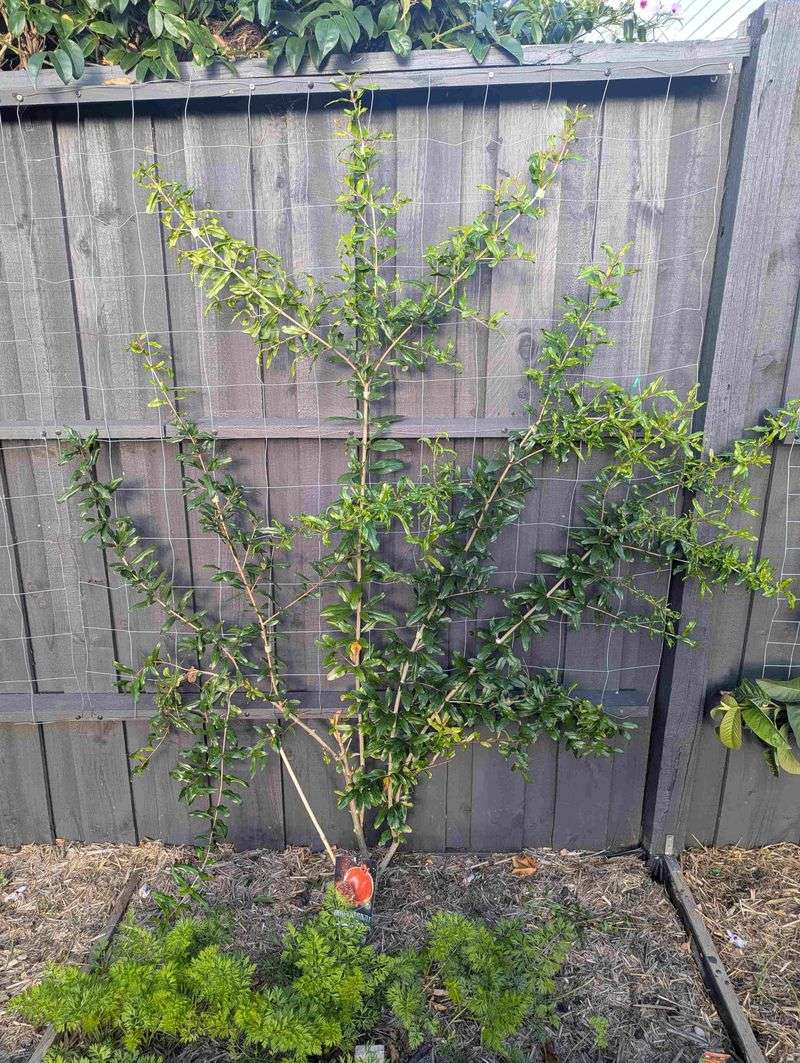
Left completely unpruned, a pomegranate tree becomes a tangled mess of crossing branches, suckers, and dense growth that blocks light from reaching the interior.
In Arizona’s climate, that kind of congestion also traps humidity during monsoon season, which can lead to fungal issues right when fruit is trying to ripen.
Late winter is the right window for major pruning in Arizona — after the coldest nights have passed but before new growth really pushes.
Suckers look vigorous, but they pull energy away from the fruiting wood above and rarely produce much on their own.
Opening the canopy isn’t about cutting the tree back drastically. It’s about creating space so sunlight can reach the inner branches and air can move through freely.
A well-pruned pomegranate in Arizona will typically push stronger new growth in spring, and that new growth is where the flowers and fruit come from.
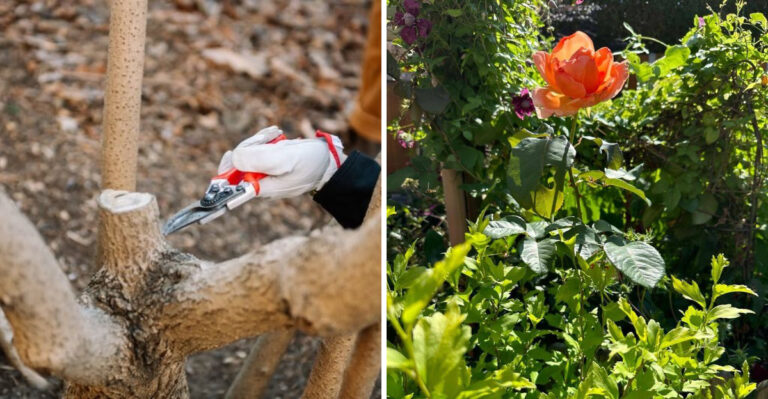
Keep your cuts clean and avoid leaving stubs, which can invite pests and disease. Sharp pruners make the job easier and cause less damage to the tree.
Most established pomegranates in Arizona benefit from annual pruning, even if it’s just a light session to remove problem growth and keep the shape open. Skipping years tends to make the job harder and the tree less productive over time.
5. Balanced Feeding Encourages More Flowers Without Excess Leaf Growth
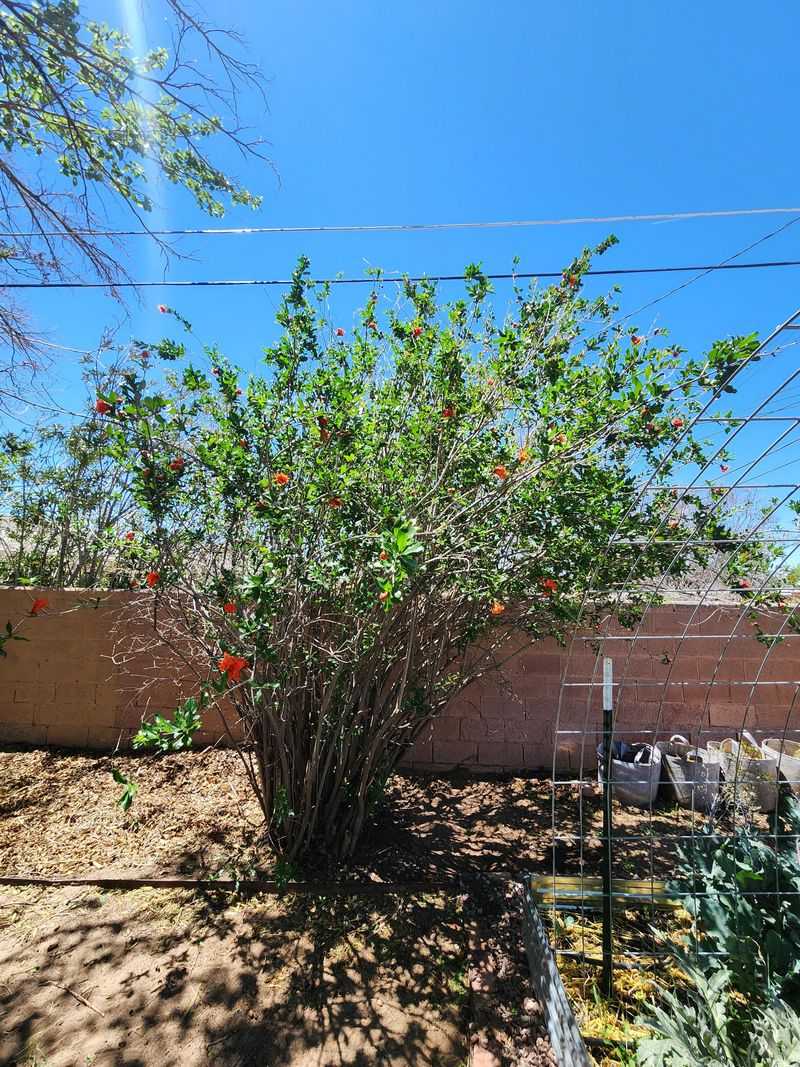
Feeding a pomegranate tree sounds straightforward, but getting it wrong in either direction causes real problems.
Too much nitrogen — especially from lawn fertilizers or fast-release products — pushes the tree into producing lush, dark green growth at the expense of flowers.
No flowers means no fruit, and that’s a frustrating outcome after months of waiting.
A balanced fertilizer, something with roughly equal parts nitrogen, phosphorus, and potassium, applied in early spring as the tree breaks dormancy, gives it what it needs without overdoing it.
Some Arizona growers also do a lighter application in early summer, but that’s optional and depends on how the tree looks.
Healthy, moderate growth with good flower production is the goal — not maximum leaf size.
Soil in many parts of Arizona tends to be alkaline and low in organic matter, which can affect how well nutrients are absorbed.
Adding compost around the base of the tree annually helps improve soil structure over time and supports better nutrient availability without the risks that come with heavy chemical feeding.
Watch the tree’s response after fertilizing. If you see a big flush of leafy growth but fewer flowers than expected, scale back next season.
If growth seems slow and leaves are pale, a modest increase might help. Pomegranates aren’t heavy feeders compared to some fruit trees, so restraint usually serves you better than generosity when it comes to fertilizer in Arizona gardens.
6. Mulch Keeps Soil Moisture Stable During Intense Heat
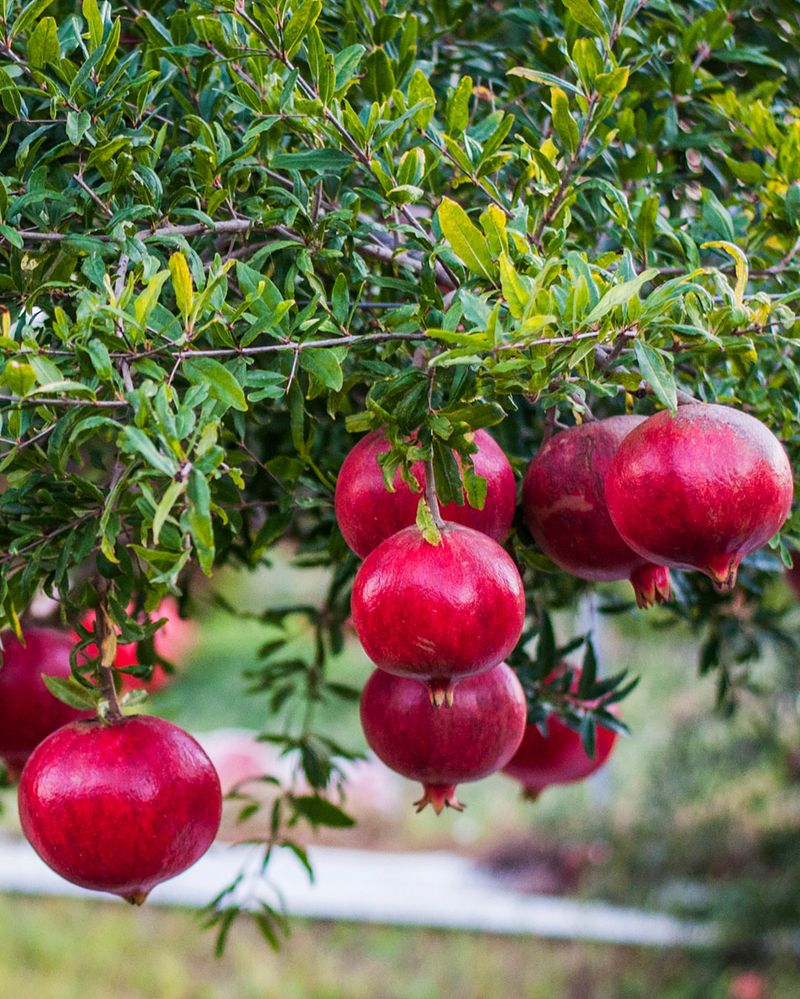
Arizona soil in July bakes. Surface temperatures on bare ground can reach levels that stress roots and evaporate moisture faster than most irrigation systems can replace it.
Mulch is one of the simplest tools available to fix that, and it’s often underused in Arizona fruit gardens.
A three- to four-inch layer of organic mulch — wood chips, straw, or shredded bark — spread around the base of a pomegranate tree does several things at once.
It slows evaporation, keeps soil temperatures more consistent, and gradually breaks down to add organic matter back into Arizona’s often depleted desert soils.
Keep the mulch pulled back a few inches from the trunk itself to avoid trapping moisture against the bark.
Moisture consistency matters a lot during fruit development. When soil swings dramatically between very dry and wet — which can happen during monsoon season if you’re not careful — pomegranates are more likely to split.
Mulch helps buffer those swings by slowing both drying and waterlogging.
Replenish mulch once or twice a year since it breaks down over time, especially during Arizona’s intense summers. It doesn’t need to be anything fancy — bulk wood chips from a local tree service often work just as well as bagged products and cost far less.
Over a full growing season, a properly mulched pomegranate tree in Arizona typically holds moisture noticeably longer between waterings, which also reduces the time you spend at the end of a hose.
7. Protecting Blossoms From Heat Stress Helps Improve Fruit Set
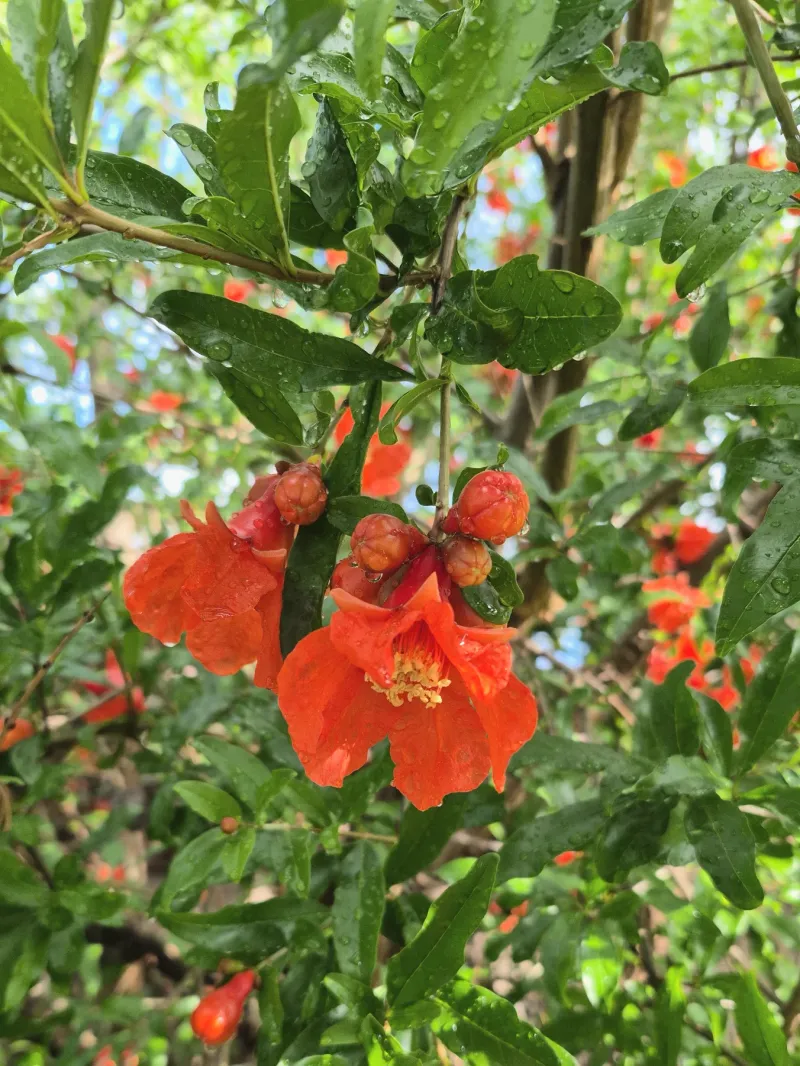
Pomegranate flowers are tougher than they look, but Arizona’s triple-digit afternoons can push even heat-tolerant blossoms past their limit.
When temperatures spike during the peak flowering window — typically late spring into early summer — flower drop increases and fewer fruits actually set.
It doesn’t happen every year, but in brutal heat stretches it’s a real factor.
One practical option is temporary shade cloth stretched over the tree during the hottest part of the day, usually from around noon through mid-afternoon. A thirty to forty percent shade cloth lets in plenty of light while knocking down the harshest direct heat.
It’s not a permanent solution, just a way to get blossoms through the toughest days of the season intact.
Adequate soil moisture during flowering also plays a role in blossom retention. A tree that’s water-stressed during bloom is more likely to shed flowers before they can develop into fruit.
Keeping watering consistent during this window — not overwatering, just steady — supports the tree through the stress without creating new problems.
Hand-pollinating is another option some Arizona growers use when fruit set seems low.
Pomegranates are mostly self-fertile, but moving pollen between flowers with a small brush during morning hours can give things a nudge, particularly during seasons when pollinator activity is lower than usual.
It sounds tedious, but on a smaller tree it takes only a few minutes and can noticeably improve how many blossoms actually turn into fruit by the end of the season.