These Oregon Flowering Shrubs Give You The Hydrangea Look Without The Summer Drama
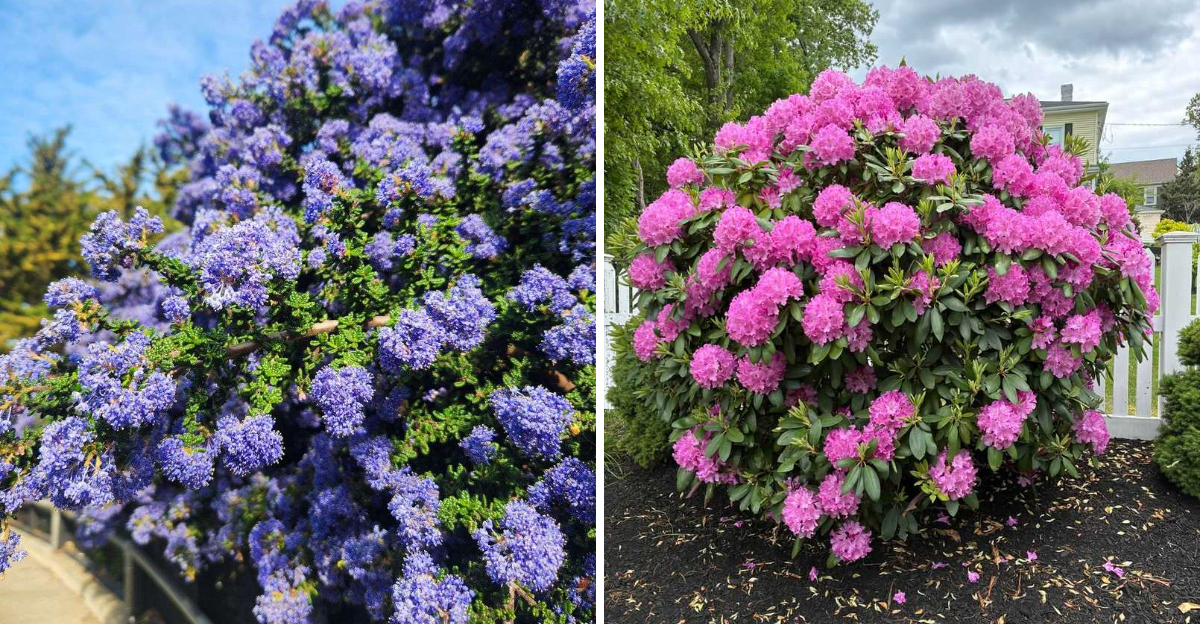
Hydrangeas can make an Oregon garden look lush in June and surprisingly needy by late July.
Large leaves lose moisture fast, flower heads can droop during hot afternoons, and a dry stretch may turn a once-easy shrub into the most demanding plant near the patio.
Oregon has native shrubs that create a similarly generous sense of volume without asking for the same treatment.
The best substitute depends on the site.
Pacific ninebark and Douglas spirea belong where soil stays moist. Oceanspray and Lewis mockorange handle much drier summer ground once established.
Red flowering currant offers early color, while western azalea and Pacific rhododendron favor cooler, acidic sites. Blueblossom adds evergreen structure and vivid spring flowers in Oregon’s mildest regions.
So which shrub fits the space you wanted a hydrangea to fill?
Start with drainage, summer moisture, sun, and mature size. Then choose the flower style you want.
The result can still feel full, colorful, and dramatic, without turning every warm week into a watering emergency beside your Oregon back door.
1. Plant Pacific Ninebark For White Flower Clusters
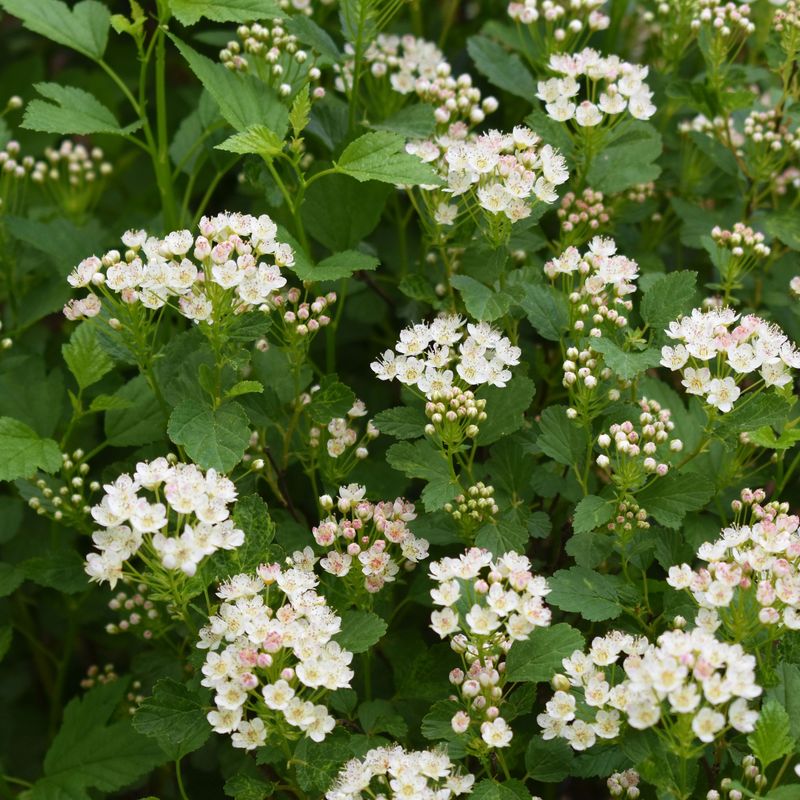
A broad, arching shrub can deliver the same generous garden presence people often want from a large hydrangea.
Pacific ninebark, Physocarpus capitatus, is native to Oregon and develops dense clusters of small white flowers in late spring.
Mature plants can reach roughly 5 to 20 feet tall, so this is not a compact substitute for a little foundation hydrangea. It works better as a background shrub, loose screen, or naturalized anchor with room to spread.
Moisture is the key distinction.
Pacific ninebark naturally occurs along streambanks, lake margins, swampy ground, and moist woods. It can take sun or shade, but it is not the choice for a bone-dry slope that receives no summer water.
Give it a low area, rain-garden edge, or consistently moist border where a thirstier ornamental already struggles.
The flowers create rounded white masses against fresh green foliage, followed by reddish to brown fruit clusters. Older stems develop peeling bark that adds texture after the leaves fall.
Skip constant shaping.
The open branching looks better when allowed to arch naturally, and the shrub becomes much easier to manage when it starts in a space large enough for its mature size.
Pacific ninebark does not solve drought.
It solves the opposite problem beautifully: a lush, flower-heavy shrub for Oregon ground that stays reliably moist without needing hydrangea-style fussing.
2. Let Oceanspray Carry The Creamy Plumes
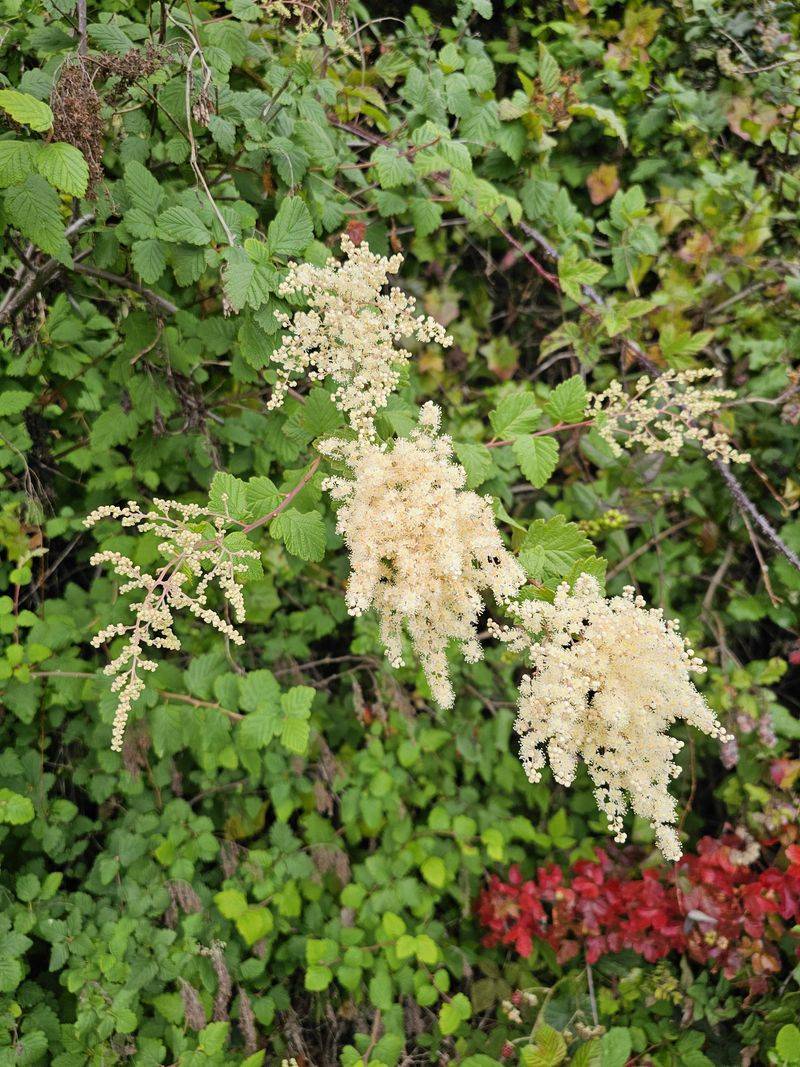
Dry summer ground changes the shortlist completely, and oceanspray is one of the strongest Oregon natives for that job.
Holodiscus discolor grows as a large deciduous shrub, often around 10 to 15 feet tall, with long clusters of creamy white flowers that appear in early summer.
The plumes hang from the branches rather than forming round mopheads, but they create the same full, frothy effect from across the yard.
Well-drained ground is where this shrub earns its reputation.
Oceanspray occurs naturally on dry to well-drained sites and tolerates both sun and some shade. Once roots are established, it can handle Oregon’s summer dry period far better than a bigleaf hydrangea planted in the same exposure.
Your Oregon Garden Changes Every Week. Your Plan Should Too.
Gardening in Oregon changes quickly throughout the season. Every Friday you’ll receive a simple weekly plan showing exactly what to plant, prune, fertilize, harvest, and protect so you never miss the right timing.
Leave the flower clusters after bloom where a more natural look suits the garden.
They fade to tan and can persist on the shrub, adding texture into the later season. The branching also provides a loose, layered shape instead of a tight formal outline.
Give the plant enough room.
A mature oceanspray is too large for a narrow strip beside a walkway, and repeated shearing can erase the graceful form that makes it appealing. A sunny slope, broad property edge, or dry woodland margin is a stronger fit.
This is the shrub for gardeners who like hydrangea volume but are tired of carrying the hose toward the hottest part of the yard every afternoon.
3. Grow Lewis Mockorange For Fragrant White Bloom
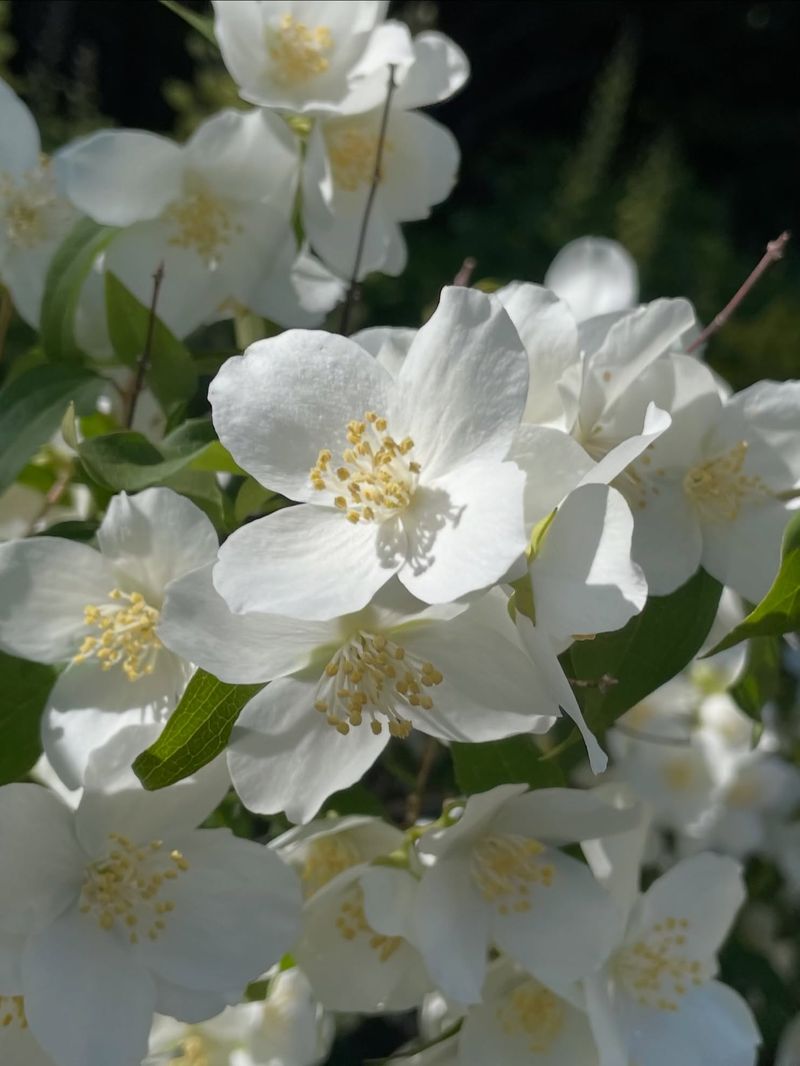
Fragrance can make a white-flowering shrub feel far more luxurious than flower size alone.
Lewis mockorange, Philadelphus lewisii, produces clusters of fragrant white flowers on broadly arching stems.
It is native to Oregon, commonly reaches about 5 to 10 feet tall, and tolerates sun to part shade across a wide range of ordinary garden soils.
That flexibility makes it one of the easier swaps on this list.
The bloom arrives in late spring to early summer rather than during the heart of August, so gardeners should treat it as a hydrangea-style presence rather than a matching bloom calendar.
Once established, its summer care can be much simpler in a well-chosen site.
Place it where the scent can do some work.
A path, patio edge, open window, or entry garden lets the fragrance become part of the experience instead of disappearing at the back fence. The arching form also softens corners without creating the stiff look of a clipped hedge.
Prune after flowering when size control is needed.
Remove older stems selectively rather than shaving the entire shrub into a ball. That keeps the framework open and preserves the relaxed shape.
One correction matters here: Lewis mockorange is not Oregon’s state flower. It is Idaho’s state flower.
Oregon gardeners still have every reason to claim it as a homegrown favorite. The shrub offers native status, strong fragrance, bright white bloom, and far less summer theatrics than a thirsty mophead hydrangea.
4. Try Red Flowering Currant For Spring Color
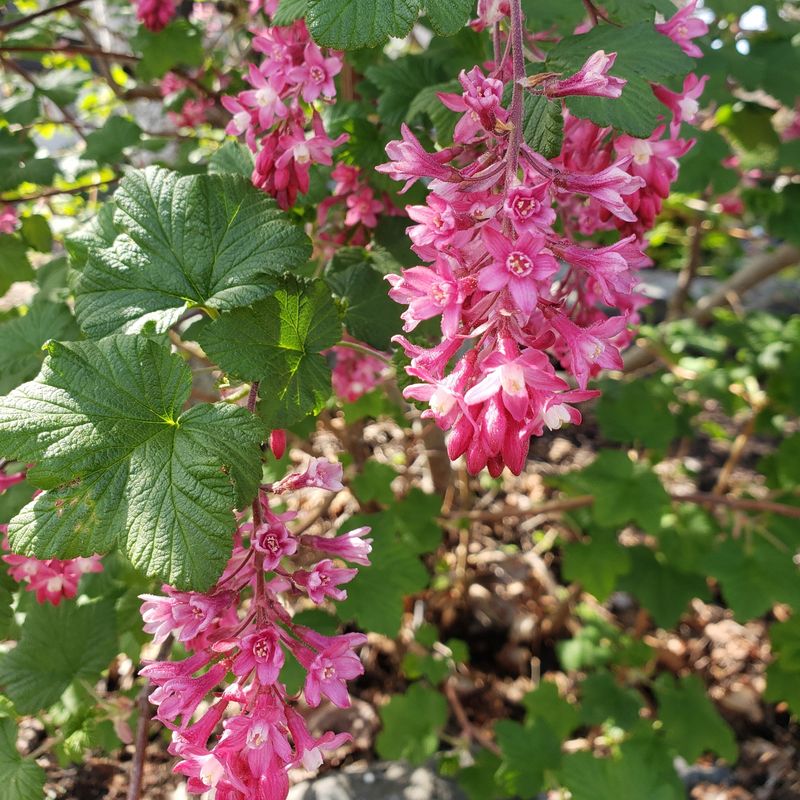
Spring color can carry a border long before hydrangeas have much to say.
Red flowering currant, Ribes sanguineum, is an Oregon native shrub that produces hanging clusters of pink, red, or sometimes white flowers in early spring.
Mature plants commonly reach about 8 to 10 feet tall, with an upright to rounded form that gives a border plenty of volume.
The timing is part of the appeal.
Flowering currant opens while many shrubs are still waking up, so it is especially useful near patios, windows, and woodland edges that need an early burst of color. Blue-black fruit follows later and can add another quiet season of interest.
Sun produces a strong display, though local exposure still matters.
Once established, the shrub handles Oregon’s summer dry pattern much better than a moisture-hungry hydrangea.
Late-summer foliage may look less polished during a long dry spell, but that seasonal tiredness does not automatically signal a serious problem.
Do not expect August flowers.
This plant earns its place by shifting the show forward on the calendar, then spending summer with fewer demands. Pair it with a later-blooming native where continuous color matters.
Give it room for an informal shape rather than trying to force it into a clipped box.
A red flowering currant may not copy a hydrangea flower head, but the dense hanging clusters create the same sense of abundance.
It trades summer babysitting for a spectacular spring opening act, which is a pretty fair garden bargain.
5. Use Douglas Spirea For Summer Pink
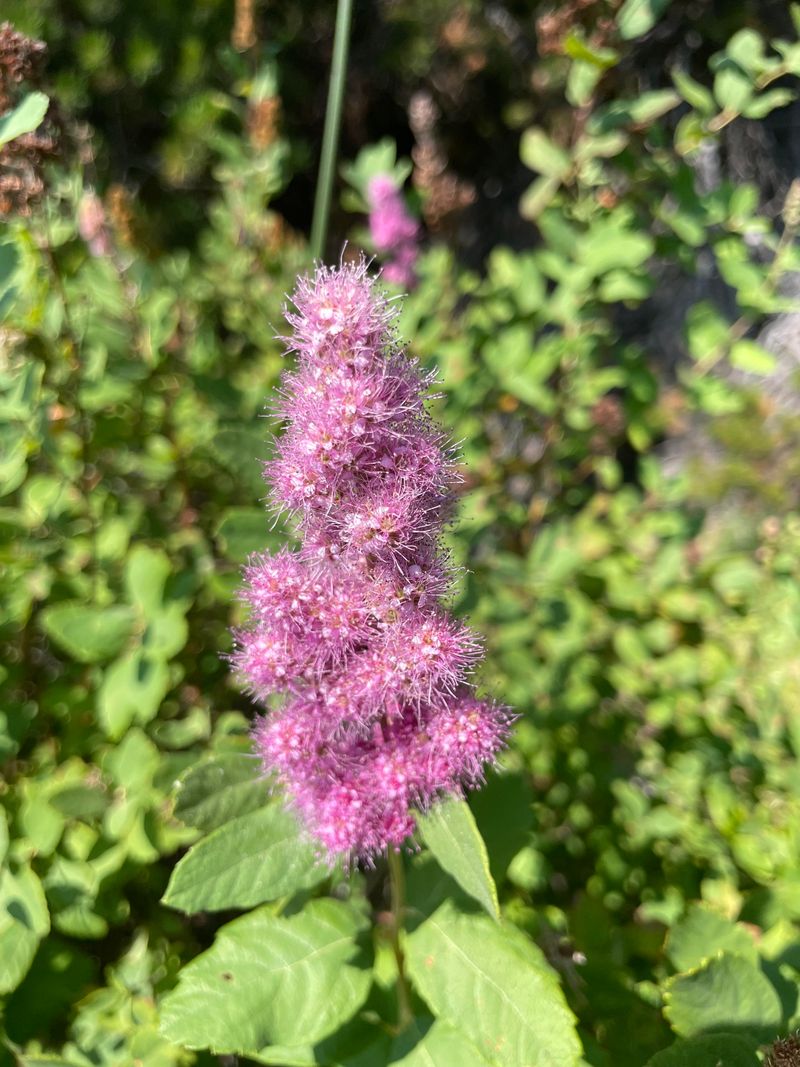
A wet summer corner does not need another shrub that complains about soggy feet.
Douglas spirea, Spiraea douglasii, thrives in wet areas and naturally occurs along marsh edges, streambanks, and wet meadows.
The Oregon native grows roughly 3 to 7 feet tall and spreads freely by suckers, creating dense colonies where moisture remains dependable.
The flower shape feels surprisingly hydrangea-adjacent.
Deep pink blooms crowd into upright, elongated clusters that stand above the foliage during summer. The effect is bold and substantial, especially when several stems flower together.
Use that spreading habit deliberately.
A rain garden, pond edge, broad swale, or wet naturalized bed gives Douglas spirea room to expand. A narrow formal border with hard edges can turn its enthusiasm into constant maintenance.
Sun supports strong growth and flowering.
The shrub can handle soil conditions that would make many ornamental flowering shrubs struggle, but its love of moisture means it should not be sold as a drought solution. It belongs on the wet end of the yard.
Brown seed heads can remain after flowering, adding texture beyond the pink bloom period.
Gardeners who prefer a cleaner appearance can remove older stems selectively without cutting the whole colony down.
Douglas spirea is a strong substitute for the gardener who loves big summer flower masses but has naturally damp ground.
Instead of pouring water onto a hydrangea every few days, put the moisture already present in the site to work with a shrub that actually wants it.
6. Give Western Azalea A Cooler Corner
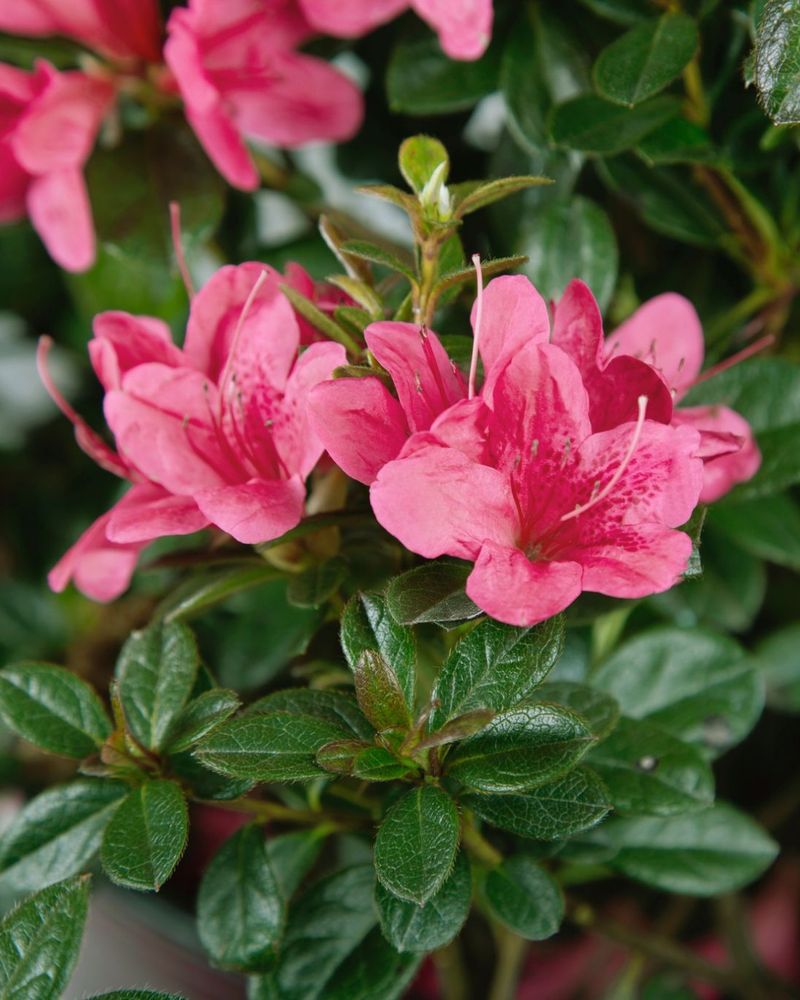
A cooler Oregon corner can support a flowering shrub with enough fragrance and bloom size to make hydrangeas feel almost ordinary.
Western azalea, Rhododendron occidentale, is native to southwestern Oregon and grows naturally near streams and other moist woodland sites.
The deciduous shrub can reach around 10 feet in garden conditions and carries strongly fragrant flowers in shades of white, salmon, and soft pink.
This is not a statewide drought shrub.
Western azalea belongs in moist, well-drained ground with sun to part shade, and it performs best where summer heat is moderated by regional climate or thoughtful placement.
Southwestern Oregon and cooler western sites give it a much more natural fit than a hot, exposed inland slope.
The flowers arrive from spring into early summer depending on location.
Fall adds another round of color as the foliage can shift through yellow, scarlet, or crimson before dropping.
Give the roots an acidic, organic-rich environment and steady establishment moisture.
A layer of leaf mulch helps protect the shallow root zone without burying the crown. During extended summer dry spells, this shrub may still need supplemental water, so it should never be pitched as a no-care replacement.
Its advantage is different.
Western azalea delivers large, fragrant clusters and a more regionally grounded personality in the cooler parts of Oregon.
Put it in the right corner and the plant feels effortless. Put it in a hot, dry exposure and the summer drama simply changes costumes.
7. Plant Blueblossom For Airy Blue Flowers
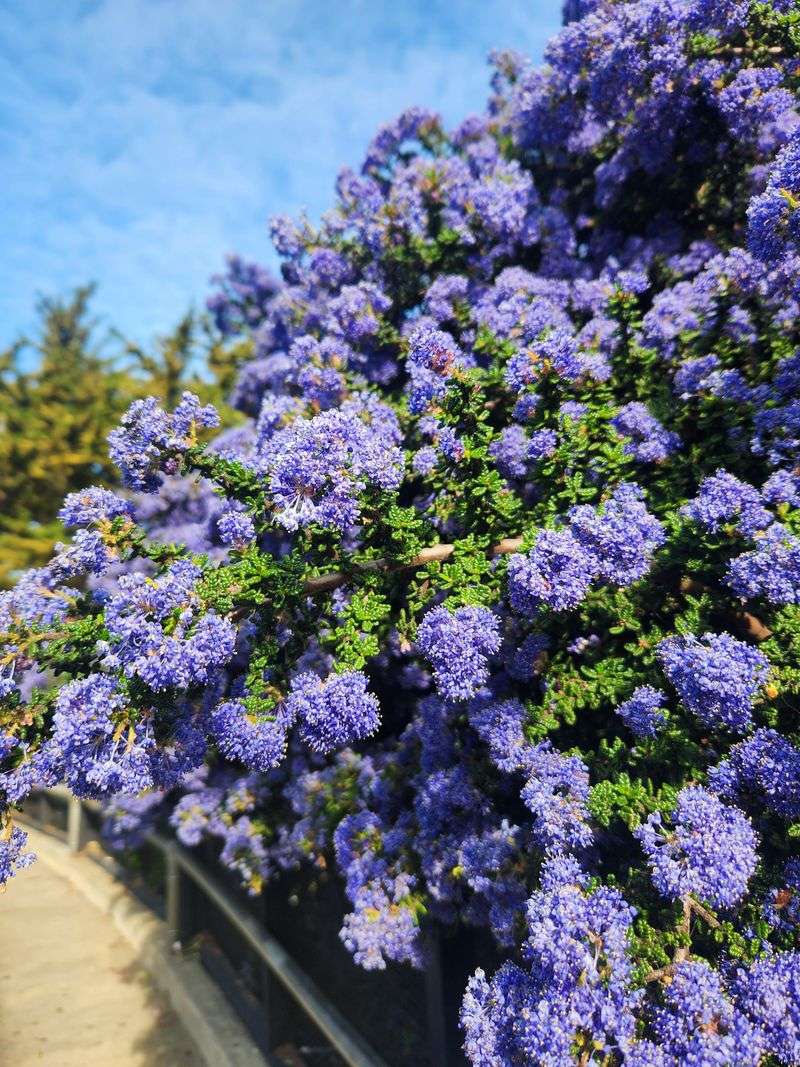
Evergreen foliage and blue flowers make blueblossom stand apart from nearly every shrub beside it.
Ceanothus thyrsiflorus is native to Oregon, but its natural range is concentrated in the Coast Range foothills and southwestern part of the state.
In suitable mild locations, it forms an upright evergreen shrub roughly 4 to 12 feet tall and covers itself with blue to pale flower clusters.
Drainage is non-negotiable.
This shrub performs best in sunny ground that sheds water quickly. It can struggle in cold inland winters and may freeze out in places where a hydrangea would survive easily.
That regional limitation deserves more attention than the flower color alone.
In the right part of Oregon, blueblossom can be remarkably low-fuss.
Established plants prefer restrained summer irrigation rather than constantly wet soil, and the evergreen leaves provide structure after flowering ends. Use it on a well-drained slope, sunny background bed, or broad border rather than a damp low spot.
Avoid heavy soil improvement that turns the root zone into a moisture trap.
The plant’s toughness comes from matching its natural conditions, not from making the soil richer than necessary.
Pollinators can make the flowering period especially lively, while the saturated blue creates a garden color hydrangeas rarely match without help from soil chemistry.
Blueblossom is not the universal answer for Oregon.
For a gardener in its mild, well-drained range, though, it may be the boldest way to trade a needy summer shrub for something far more comfortable with dry ground.
8. Let Pacific Rhododendron Fill Partial Shade
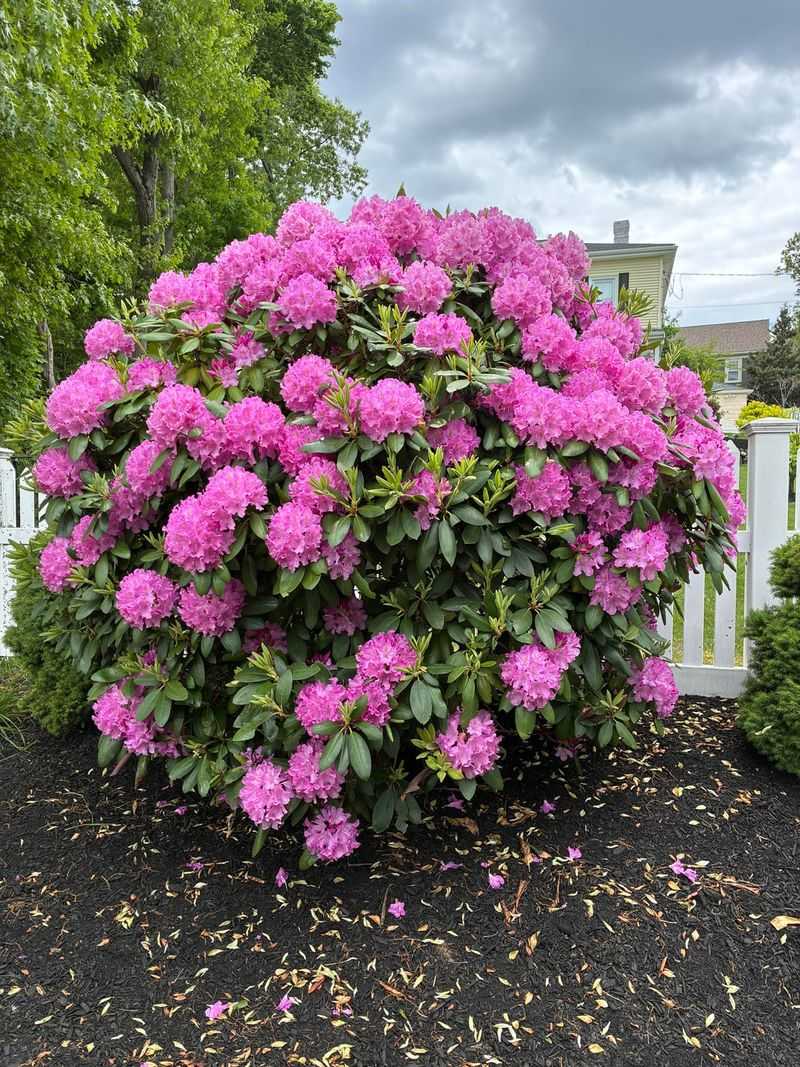
Large evergreen leaves and rounded flower clusters give Pacific rhododendron the closest visual connection to a classic hydrangea on this list.
Rhododendron macrophyllum is native to western Oregon, especially coastal foothills and the Cascades. It commonly grows around 6 to 12 feet tall in open garden settings, with mature plants capable of becoming larger over time.
The flowers range from pale pink to rosy purple and gather in substantial terminal clusters.
Partial shade often gives the shrub a comfortable woodland character, though it can tolerate more sun in suitable conditions.
Moist, well-drained, acidic soil supports the shallow roots, and a natural leaf mulch helps keep the root zone cooler during summer.
This is another plant that needs honest placement.
Pacific rhododendron is not a dry-slope substitute for hydrangea. It still appreciates summer moisture during extended dry periods, especially while young.
Its advantage comes from being a native evergreen adapted to western Oregon woodland conditions rather than from surviving neglect on hot pavement.
Allow time for establishment.
The shrub can be slow to settle, but the permanent foliage gives the garden structure even before a heavy bloom year arrives.
One state-flower mix-up is worth avoiding: Pacific rhododendron is Washington’s state flower, not Oregon’s.
That does nothing to reduce its value in an Oregon garden.
For a cool, partly shaded bed with acidic soil, it supplies the broad leaves, clustered flowers, and substantial presence hydrangea lovers want, while fitting the regional landscape much more naturally.