These 8 Plants Don’t Belong Near Your Roses
Your roses hold court in the garden, and they deserve neighbors who respect that status. But some plants lounging nearby are quietly working against them.
Certain companions pull nutrients straight from the soil, leaving your roses starved right when they need fuel the most. Others invite pests or pass along trouble that spreads to petals and leaves before you even notice.
And a few simply crowd the space and block the sun, turning a once-vibrant corner into a tangled, tired mess. Spotting these troublesome neighbors early can be the deciding factor between a bed that turns heads and one that quietly falls apart.
1. Mint
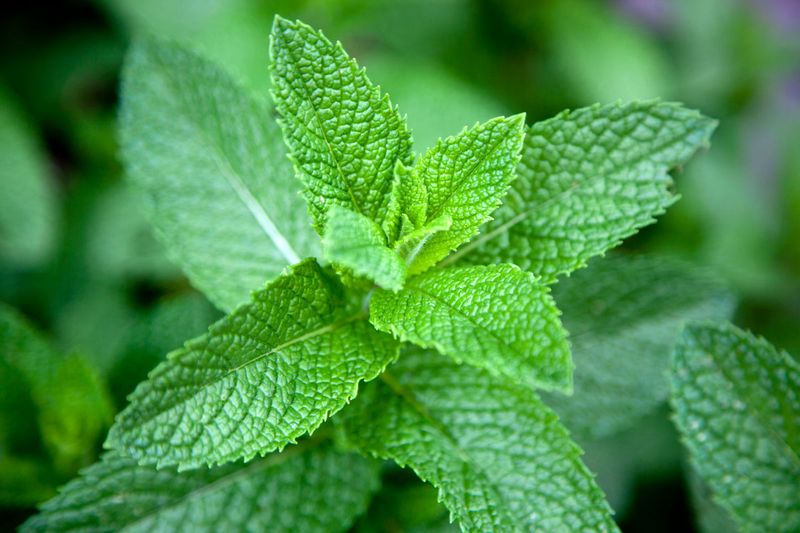
Mint smells amazing in your kitchen, but in your garden, it acts like an uninvited houseguest that overstays its welcome. Once it roots near your roses, it spreads fast and refuses to stop.
Mint sends out underground runners called rhizomes, creeping through the soil in every direction. Those runners steal water and nutrients meant for your roses before the blooms ever get a sip.
Your roses need room to breathe at the root level, and mint simply does not respect boundaries. The aggressive root system can wrap around rose roots, creating competition that weakens your plants over time.
Mint also creates dense ground cover that traps moisture against rose stems. That trapped moisture becomes a breeding ground for fungal problems like black spot and powdery mildew.
Some gardeners think mint repels pests and assume that makes it a helpful companion. The truth is, the damage mint causes far outweighs any minor pest-deterrent benefit near roses.
If you love mint and want it close to your garden, grow it in a buried container instead. A large pot sunk into the ground keeps those runners contained without sacrificing your roses.
Give mint at least four to six feet of distance from your rose beds to keep its spreading habit in check. Your roses will reward that small effort with healthier stems, stronger blooms, and far fewer fungal headaches all season long.
2. Fennel
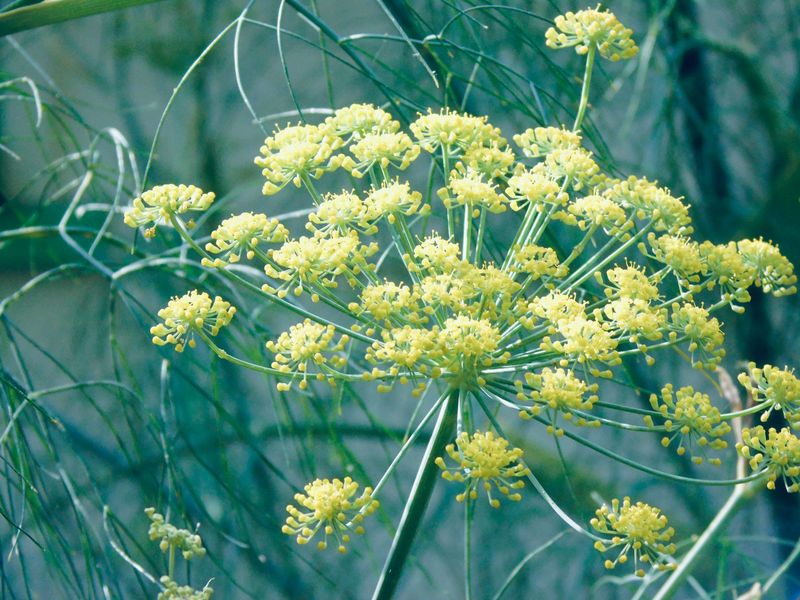
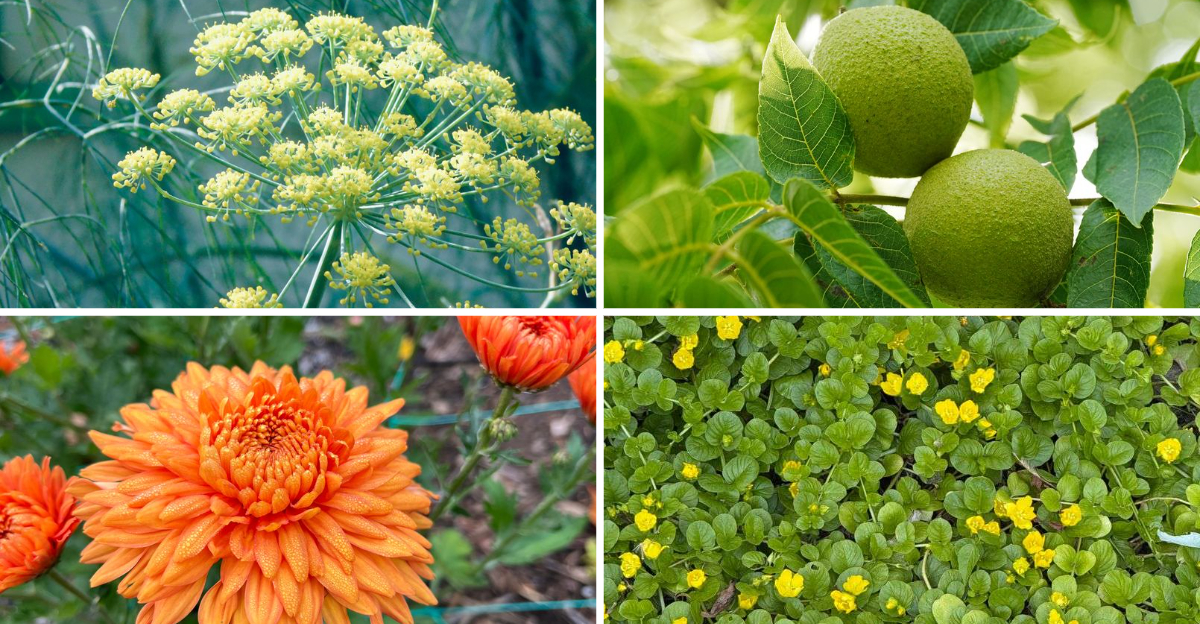
Fennel is the loner of the herb world, and for good reason. Many plants struggle to grow near it, and roses are no exception to that rule.
Fennel releases natural chemicals into the soil through its roots and decomposing leaves. This process, called allelopathy, can interfere with the growth of many nearby plants, roses included.
Those chemicals can interfere with root development and nutrient uptake in nearby plants. Roses planted too close to fennel may show yellowing leaves, stunted growth, and fewer flowers over time.
Fennel also grows tall and bushy, casting shade over shorter rose varieties nearby. Roses need at least six hours of full sun daily, and fennel can quietly rob them of that without you even noticing.
The scent of fennel is strong and can attract certain insects that are not beneficial to roses. Some of those insects carry diseases or cause leaf damage that compounds the stress your roses are already under.
Fennel is best grown in its own isolated corner of the yard, away from most other plants. Give it a dedicated raised bed or a large container if you want to enjoy it without sacrificing your garden’s harmony.
Keeping fennel far from your roses is one of the easiest ways to protect your plants. A little separation goes a long way toward keeping your rose bed thriving and full of color all summer.
3. Black Walnut
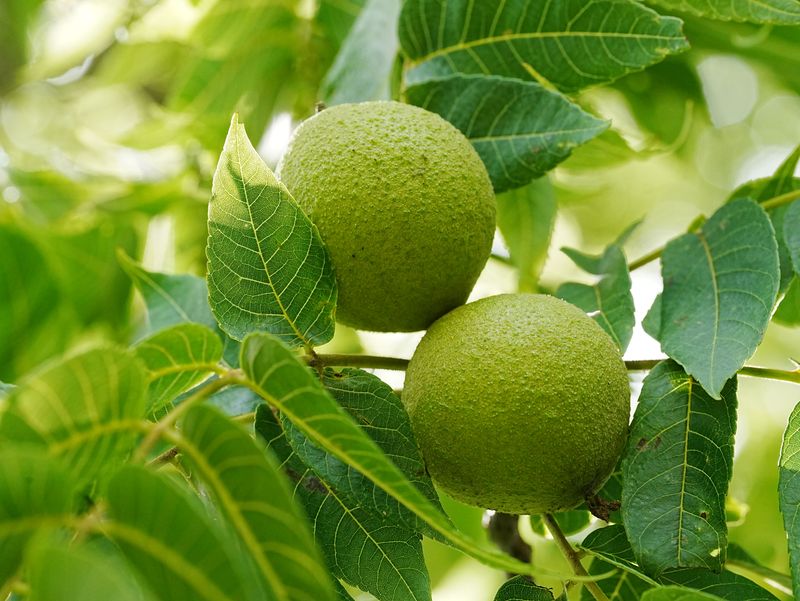
Few plants carry as fearsome a garden reputation as the black walnut tree. Gardeners who have lost roses to one nearby know exactly how destructive this tree can be.
Black walnut roots and husks release a toxic compound called juglone into the surrounding soil. That chemical is specifically harmful to a wide range of plants, and roses are highly sensitive to it.
Juglone can travel through the soil up to 50 to 80 feet from the tree’s trunk. That means your rose bed does not have to be right under the tree to suffer serious damage from it.
Roses exposed to juglone show symptoms like wilting, yellowing leaves, and a general failure to thrive. Many gardeners spend seasons trying to diagnose the problem before realizing a nearby black walnut is the culprit.
Even fallen leaves and rotting hulls from black walnuts leach juglone into the ground as they break down. Raking those leaves away from your rose beds is essential if a black walnut grows anywhere on your property.
If you have an established black walnut tree, consider relocating your rose bed entirely to a safer spot. Soil amendments and fertilizers do little to counteract juglone once it saturates the ground around your roses.
Respecting the reach of black walnut is smart gardening, not defeat. Your roses deserve soil that works with them, not against them, so choose their location wisely.
4. Chrysanthemums
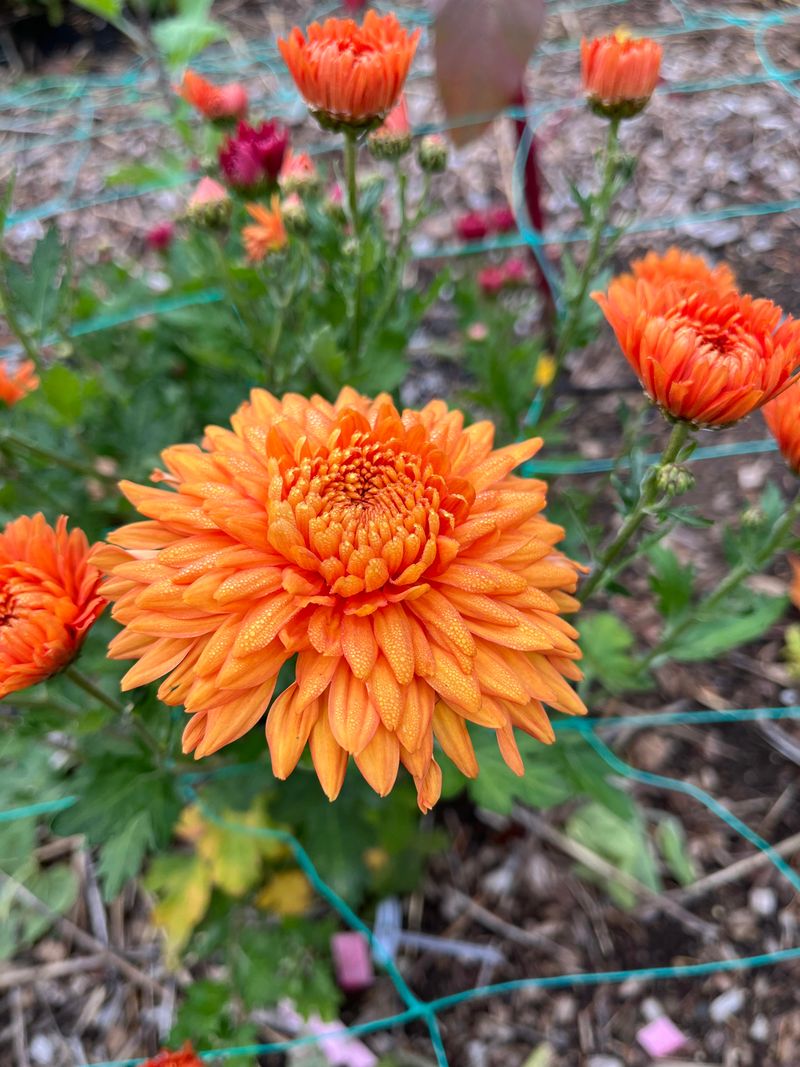
Chrysanthemums bring reliable color late into the season, and it’s tempting to tuck them in wherever space allows. Planting them close to your roses, though, invites a soil-borne problem that can linger for years.
Chrysanthemums are one of the most common hosts for verticillium wilt, a fungal disease that lives in the soil and enters through the roots. Roses share that same vulnerability, and the fungus can move between the two plants through contaminated soil, water, or tools.
Once verticillium settles into a rose’s root system, it clogs the plant’s water-conducting tissue from the inside. Affected canes wilt and brown on just one side while the rest of the plant looks deceptively normal for a while.
There is no reliable cure once verticillium takes hold, since the fungus can persist in soil for years after an infected plant is removed. That makes prevention, not treatment, the only real defense for a rose bed.
Beyond disease risk, chrysanthemums are shallow-rooted, heavy feeders that pull nutrients from the same topsoil layer roses depend on. Add their tendency to attract aphids and spider mites, and roses end up under extra pest pressure too.
Give chrysanthemums their own bed or a container instead, ideally with fresh, untouched soil. Rotating them away from areas where roses or other verticillium-susceptible plants have grown keeps that risk out of your garden entirely.
A little distance between mums and your rose beds protects both the soil and the blooms you’ve worked hard to grow.
5. Creeping Jenny
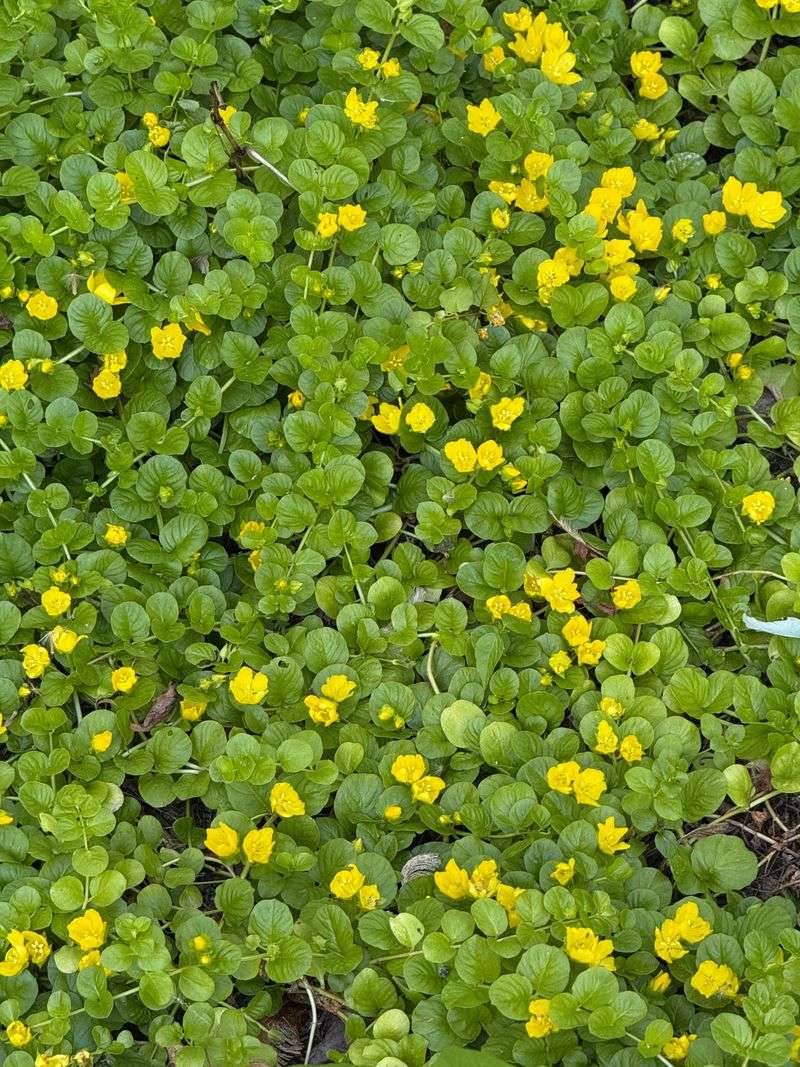
Creeping Jenny looks like a sweet, low-maintenance groundcover with its bright chartreuse leaves. But park it next to your roses, and you will quickly discover its less charming side.
This plant spreads by sending out long, trailing stems that root wherever they touch the soil. Before long, it forms a thick mat that smothers everything growing at ground level near your roses.
That dense mat traps moisture and organic debris against rose stems and crowns. Wet, stagnant conditions at the base of a rose are a perfect recipe for crown rot and fungal infections.
Creeping Jenny also competes directly with rose roots for water and nutrients in the top layer of soil. Since it spreads so quickly, it can establish a nutrient-grabbing network around your roses faster than you can pull it back.
The plant loves the same moist, well-drained soil conditions that roses prefer, which makes it a stubborn competitor. You essentially end up watering and fertilizing both plants at once, but only one of them is what you wanted there.
Removing creeping Jenny from around established roses can be surprisingly difficult without disturbing the rose roots. Prevention is far easier than trying to untangle it from a mature rose bed after the fact.
Use creeping Jenny in containers or hanging baskets where its trailing habit is actually an asset. Steering it clear of your roses is one of the simplest ways to protect your plants all season.
6. Tomatoes
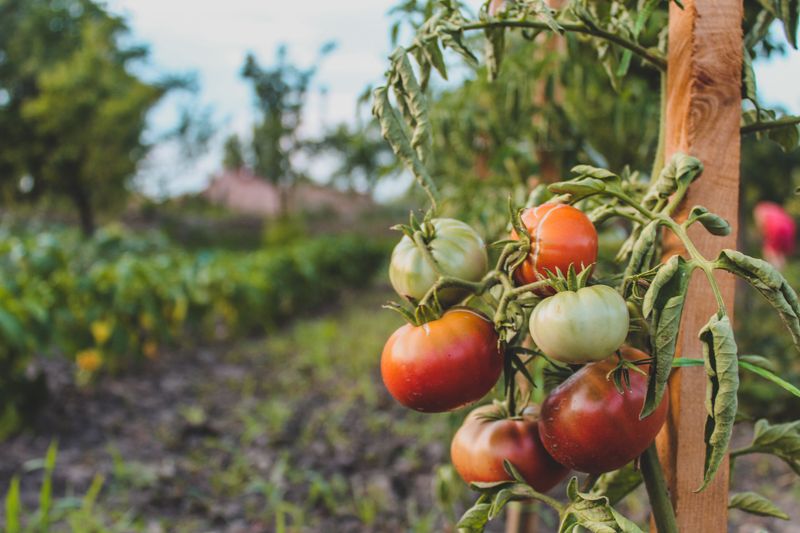
Tomatoes and roses might seem like an odd pairing, but plenty of gardeners have tried planting them together. The results are rarely good for either plant, especially your roses.
Both tomatoes and roses are prone to fungal problems like botrytis, which spreads easily between crowded plants once humidity builds up. Packing them close together turns that shared vulnerability into a concentrated risk zone for both.
Tomatoes also attract a long list of pests, including aphids, spider mites, and thrips. All three of those pests happen to love roses just as much as they love tomatoes, so proximity doubles your pest pressure fast.
The watering needs of tomatoes and roses are also different in subtle but important ways. Tomatoes prefer consistent deep watering, while roses benefit from soil that dries slightly between waterings to prevent root issues.
Growing them side by side means you are constantly compromising on one plant’s needs to meet the other’s. Over time, that compromise shows up as weaker plants, fewer blooms, and more disease problems across your whole garden space.
Tomatoes are also heavy feeders and will pull nitrogen and phosphorus from the soil aggressively. Roses need those same nutrients to produce strong canes and vibrant flowers through the growing season.
Keep your tomatoes in a dedicated vegetable bed far from your rose garden. Giving each plant its own space means both can thrive without dragging the other one down all summer long.
7. Boxwoods
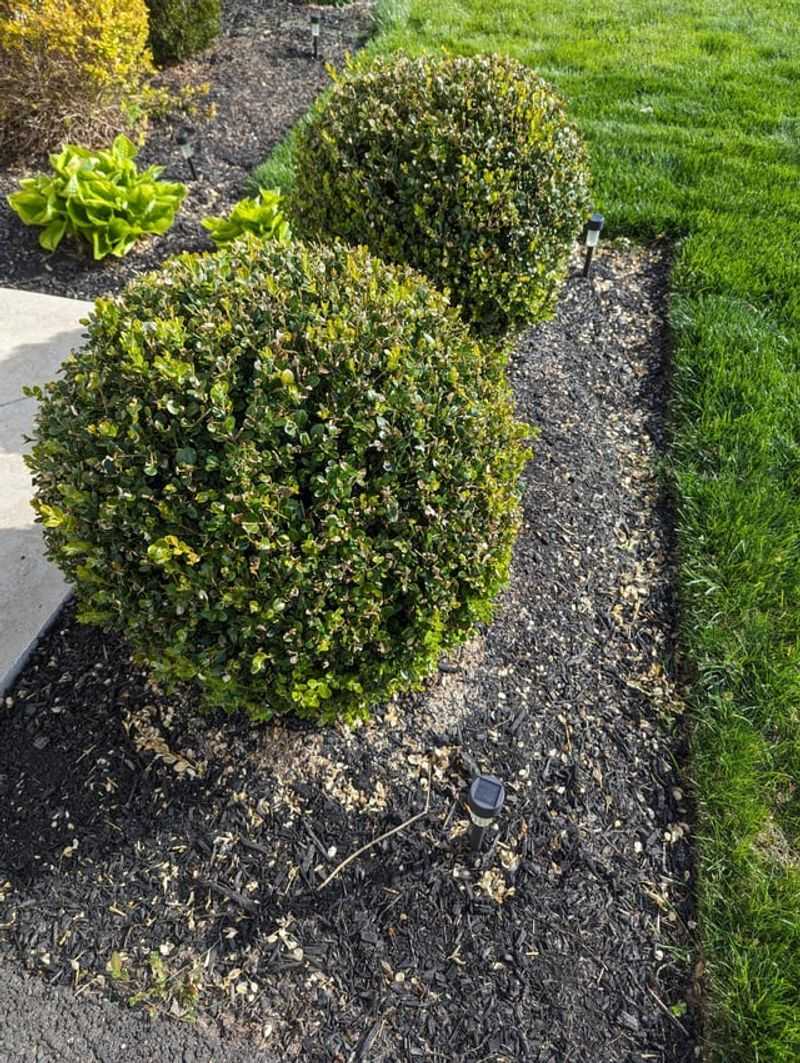
Boxwoods are classic garden staples, and they look sharp as a formal border or low hedge. Planting them right next to your roses, though, creates a slow-building problem you might not notice until damage is done.
Boxwoods have shallow, dense root systems that spread outward aggressively near the soil surface. That root network directly competes with rose roots for water and nutrients in the exact same soil zone.
Roses are already fairly demanding when it comes to consistent feeding and moisture. Adding boxwoods to the mix means those resources get divided, and roses typically end up with less than they need to perform well.
Boxwoods are also known carriers of boxwood blight, a fungal disease spread through water splash and contaminated soil. It won’t infect roses directly, but the lingering spores can trigger secondary issues nearby.
The dense structure of boxwoods restricts airflow around neighboring plants when they are trimmed into tight shapes. Poor air circulation around roses is one of the leading causes of powdery mildew and black spot outbreaks.
Boxwoods also cast partial shade along their base, especially as they mature and fill out over several seasons. Roses planted in that shadow zone receive less sun and produce noticeably fewer blooms as a result.
Use boxwoods as a backdrop or distant border rather than a close companion to your roses. A few feet of separation can make a dramatic difference in how well your roses perform each season.
8. Snapdragons
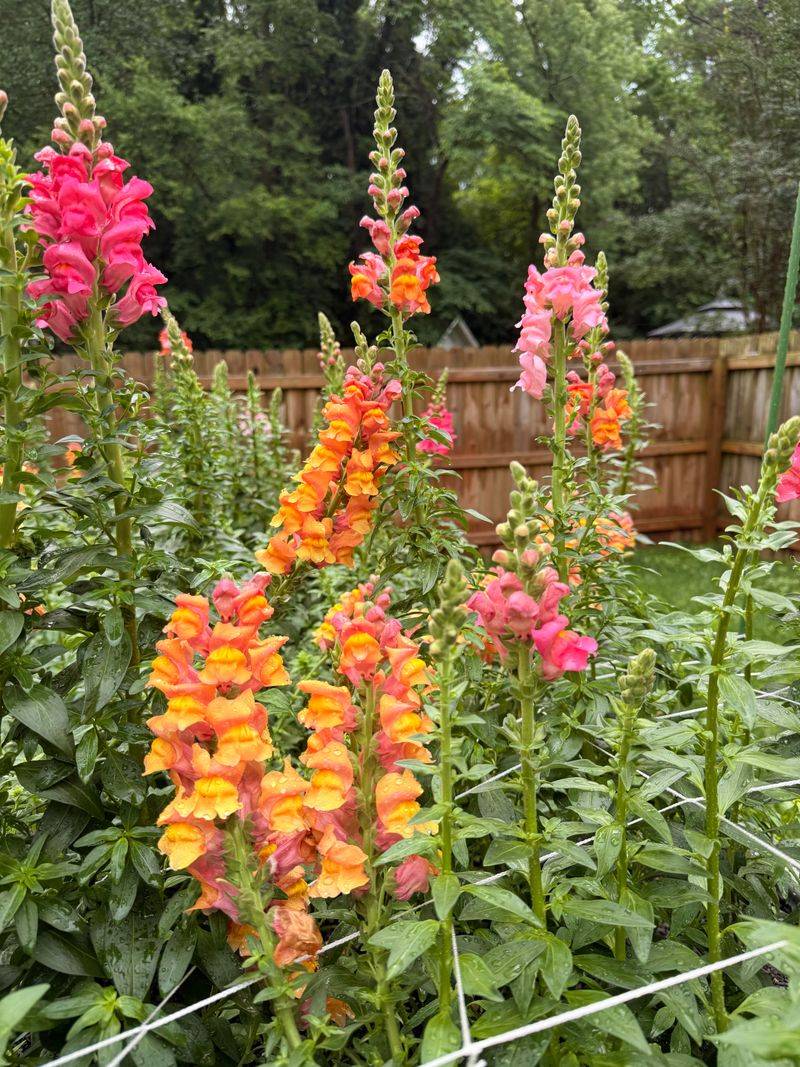
Snapdragons are cheerful, colorful, and wildly popular in home gardens across the country. Despite their charm, they carry a couple of problems that make them a risky neighbor for your roses.
Snapdragons are a known host for botrytis blight, a fungal disease that thrives in cool, damp conditions. Roses are just as susceptible, and planting the two close together gives the fungus an easy path between them.
Once botrytis takes hold on a rose, it shows up as gray, fuzzy mold on buds and petals, often turning flowers brown before they even open. Humid weather and poor air circulation between crowded plants make an outbreak far more likely.
Snapdragons also attract aphids and spider mites in large numbers, and both pests move readily onto nearby plants once their preferred host gets crowded. Roses are already frequent targets for the same two pests, so proximity just adds fuel to the fire.
That pest overlap means more frequent monitoring and treatment for both plants at once. Instead of one manageable problem, you end up managing two infestations that keep feeding into each other.
The irony is that snapdragons are often recommended as companion plants because of their bright color and vertical form. That visual appeal does not outweigh the disease and pest risks they bring when planted too close to roses.
Enjoy snapdragons in a separate cutting garden or container bed where they cannot threaten your roses. Protecting your rose garden from bad neighbors pays off with healthier blooms all season.