These 8 Plants Outperform Hibiscus During Florida Extreme Heat
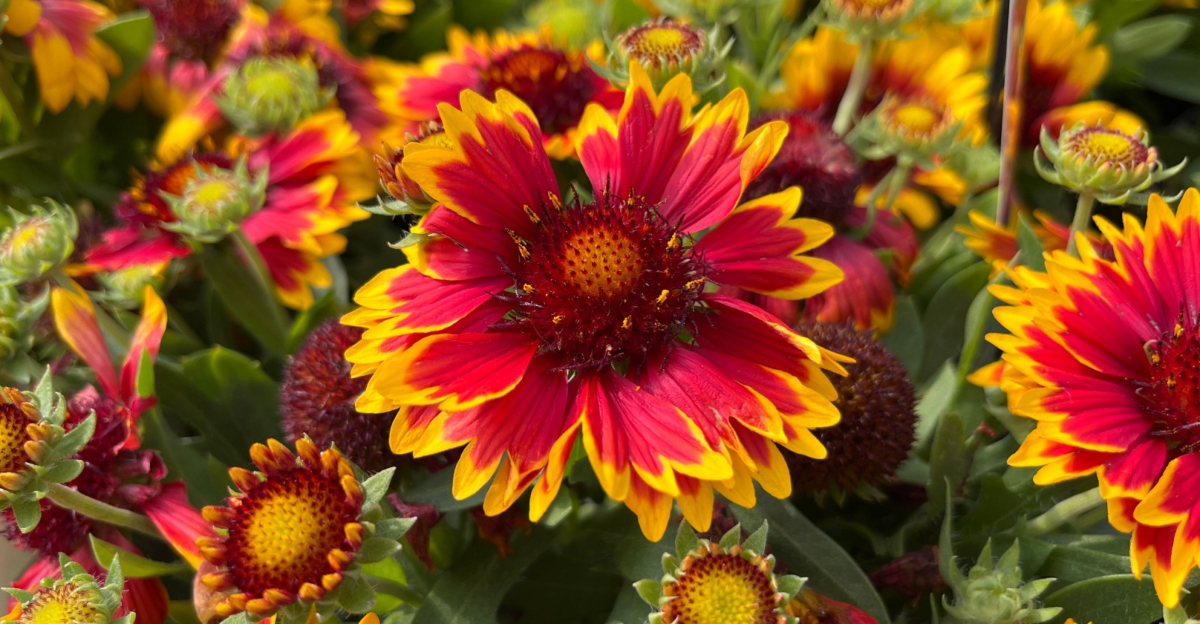
By mid-summer in Florida, a lot of gardens start to look tired. Blooms fade, leaves droop, and watering becomes a daily routine that still doesn’t seem to be enough.
Hibiscus often gets the blame for “not holding up,” but the real issue is that some plants simply aren’t built for weeks of extreme heat and humidity. What if your garden didn’t slow down in summer?
What if it actually looked better when temperatures peaked? There are plants that don’t just tolerate Florida heat, they thrive in it.
They keep flowering, stay full and colorful, and require far less babysitting than more delicate favorites. Swapping just a few struggling plants for better performers can completely change how your landscape looks and feels during the hottest months of the year.
Hibiscus doesn’t have to be your summer standard!
1. Firebush Keeps Blooming Even In Scorching Heat
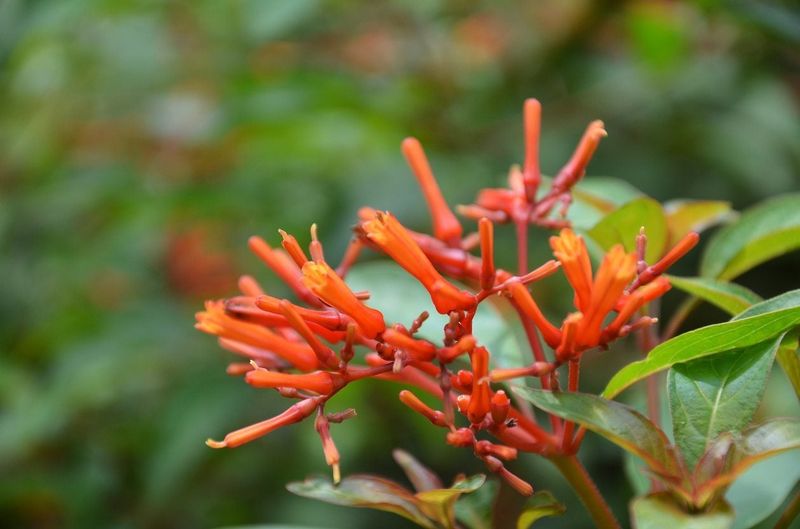
Firebush stands out as one of Florida’s most reliable bloomers when the mercury rises above 95 degrees. Native to the southern parts of the state, this shrub produces clusters of brilliant orange-red tubular flowers from spring through fall without missing a beat.
Hummingbirds and butterflies flock to firebush even during the hottest afternoons when most other plants have closed up shop for the day. The flowers keep coming no matter how intense the sun gets, and the plant actually seems to bloom more vigorously as temperatures climb.
Unlike hibiscus that demands regular fertilizing and careful watering schedules, firebush practically takes care of itself once established in Florida soil. It grows quickly to fill spaces in your landscape, reaching four to eight feet tall depending on how much you prune it back.
The plant tolerates both sandy and clay soils common throughout Florida without complaint. During extended dry spells, established plants might look slightly less lush but they bounce back immediately with the next rain.
Firebush also produces small berries that birds love, adding another layer of wildlife value to your yard.
In Central and South Florida, it stays evergreen year-round, while North Florida gardeners might see it behave more like a perennial that returns each spring stronger than before.
2. Blue Porterweed Doesn’t Quit In Full Sun
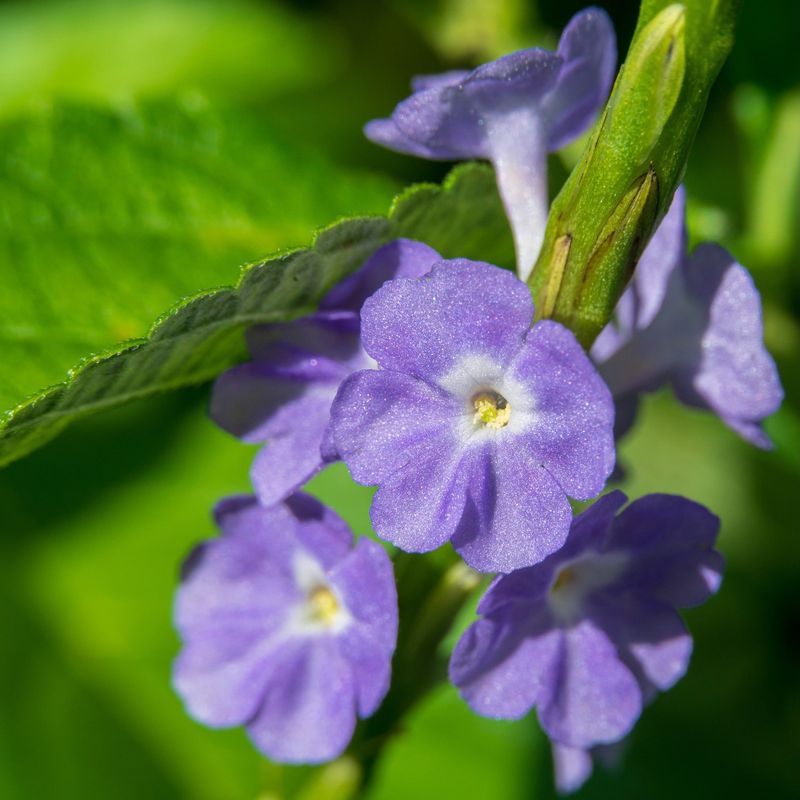
Anyone who’s tried growing delicate flowers in a Florida parking lot island knows the challenge of finding plants that handle relentless sun exposure. Blue porterweed laughs at these conditions, producing spikes of purple-blue flowers continuously throughout the growing season.
This Florida native thrives in the exact spots where hibiscus would struggle and eventually give up. Full sun all day long?
No problem for porterweed, which actually prefers these intense conditions. The flowers appear on tall spikes that butterflies can’t resist, making your garden a constant flutter of activity even at noon when the sun is most intense.
Each bloom spike opens gradually from bottom to top, ensuring weeks of color from each stem. Blue porterweed spreads readily through your garden beds, filling in gaps and creating a naturalized look without becoming truly invasive.
You can easily control its spread by pulling unwanted seedlings, which come up readily after rains.
In South Florida landscapes, this plant blooms year-round, while Central and North Florida gardeners enjoy blooms from late spring through the first frost.
The plant reseeds itself reliably, so you’ll have volunteers popping up in convenient spots each year without any effort on your part.
3. Coreopsis Won’t Wither In Drought Or Sun
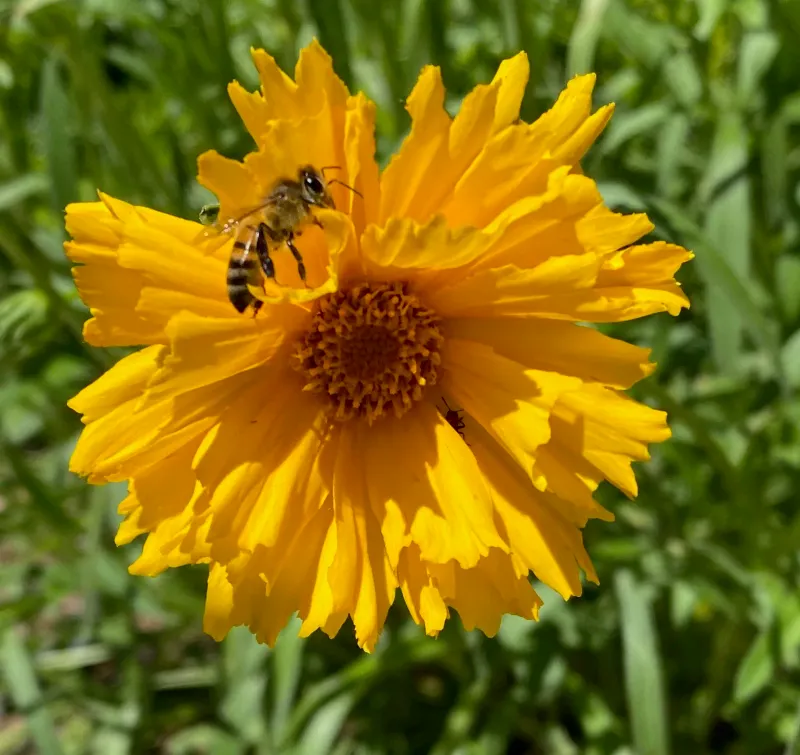
Florida’s state wildflower earned its title for good reason. Coreopsis produces cheerful yellow blooms that brighten landscapes across the state even during the driest, hottest months of summer.
Several species grow naturally throughout Florida, from the Panhandle down to the southern tip, each adapted to local conditions but all sharing remarkable heat tolerance. These plants bloom prolifically without the constant deadheading and fertilizing that hibiscus demands.
The thin, delicate-looking stems and flowers might fool you into thinking coreopsis needs babying, but nothing could be further from the truth. These tough natives handle weeks without rain once their roots establish, typically within the first growing season.
Butterflies and bees visit coreopsis flowers throughout the day, providing entertainment and helping pollinate your vegetable garden nearby. The plants self-sow readily, creating drifts of yellow that naturalize in your landscape without any help from you.
Coreopsis works beautifully in both formal garden beds and wildflower meadows across Florida’s diverse regions. The plants bloom most heavily in spring and fall but continue flowering sporadically through summer heat that would stop hibiscus cold.
Cutting back spent flowers encourages fresh blooms, but even neglected plants keep producing color month after month.
4. Beach Sunflower Thrives When Others Wilt
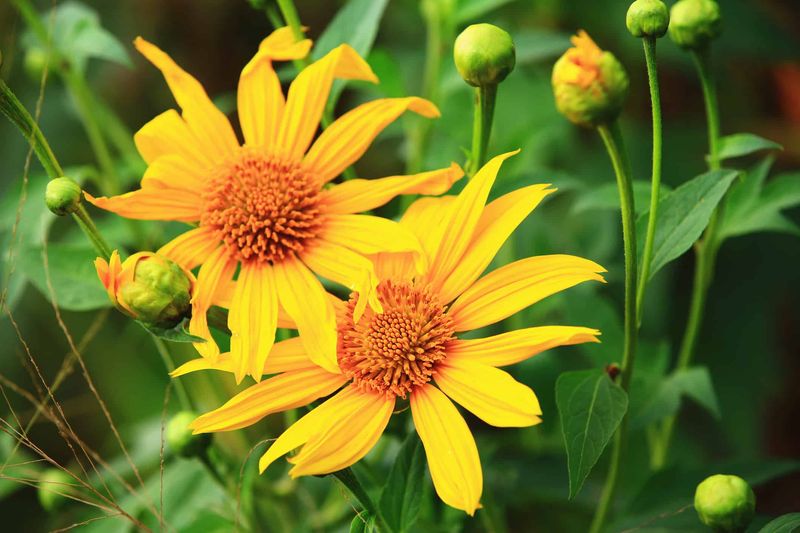
Growing along Florida’s coastlines where salt spray, sand, and scorching sun team up to challenge plants, beach sunflower proves its toughness every single day. This low-growing native spreads along the ground, covering areas with glossy green leaves and bright yellow flowers.
The blooms appear almost year-round in South Florida and from spring through fall in northern parts of the state. Each flower features the classic sunflower shape with yellow petals surrounding a dark center that bees absolutely love.
Beach sunflower tolerates the kind of neglect that would send hibiscus into a spiral of bud drop and leaf yellowing. In fact, this plant often performs better when you ignore it completely rather than fussing over it with extra water and fertilizer.
The spreading habit makes beach sunflower perfect for covering slopes, filling in parking lot islands, or creating a flowering groundcover that stays under two feet tall.
It roots wherever stems touch the ground, quickly filling in bare spots without becoming a maintenance nightmare.
This sunflower handles both sandy and heavier soils throughout Florida, adapting to whatever conditions you give it.
During the absolute hottest weeks of summer, beach sunflower keeps blooming while more temperamental plants shut down completely, making it a true champion for Florida gardens.
5. Salvia Attracts Butterflies Without Extra Care
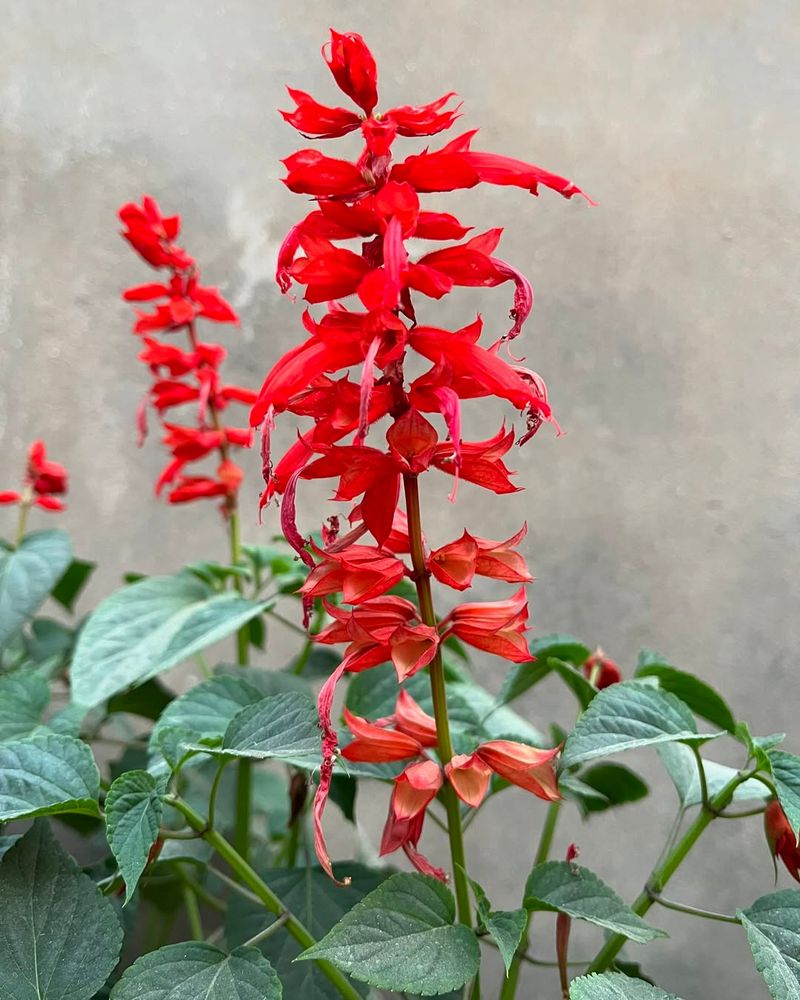
Walk through any successful Florida butterfly garden during peak summer heat and you’ll likely spot salvia covered with butterflies, hummingbirds, and bees. Several salvia species thrive in Florida’s climate, with tropical sage (Salvia coccinea) leading the pack for heat tolerance.
The tubular red, pink, or white flowers appear on tall spikes that stand well above the foliage, making them easy for pollinators to spot from a distance. Unlike hibiscus that attracts mainly bees, salvia brings in a diverse crowd of beneficial insects and birds.
Once established in your Florida landscape, salvia handles extended dry periods without the dramatic wilting and leaf drop that hibiscus displays when it misses a watering.
The plants might look slightly less perky during extreme drought but they recover quickly without losing buds or flowers.
Salvia reseeds generously throughout Florida gardens, giving you new plants each year in slightly different spots. You can easily control this tendency by deadheading spent flowers, or embrace it and enjoy the naturalized look of salvias popping up in unexpected places.
The plant grows quickly to fill spaces in your beds, reaching two to three feet tall and wide within a single growing season. Salvia tolerates the intense afternoon sun that causes hibiscus to suffer, continuing to bloom cheerfully through the hottest parts of Florida summer days.
6. Gaillardia Stays Vibrant When Temperatures Soar
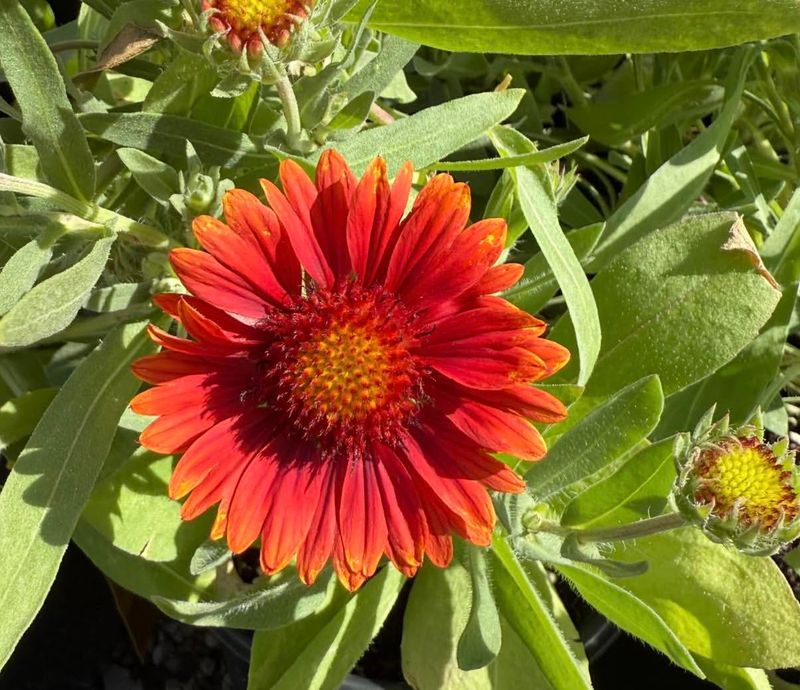
Sporting bold red and yellow flowers that look like miniature sunbursts, gaillardia brings reliable color to Florida gardens when heat sends other plants into survival mode. This tough native wildflower blooms from spring through fall without the constant attention hibiscus requires.
The daisy-like flowers sit atop sturdy stems that don’t flop over during Florida’s afternoon thunderstorms. Each bloom lasts for days, and deadheading spent flowers brings on waves of fresh blooms throughout the growing season.
Gaillardia actually prefers the lean, sandy soils common throughout much of Florida, performing better in these conditions than in rich, heavily amended beds. Too much fertilizer and water can actually weaken the plants and reduce flowering.
Butterflies visit gaillardia flowers constantly during daylight hours, and goldfinches appreciate the seeds that form if you leave some spent blooms on the plants. This dual-purpose appeal makes gaillardia valuable for wildlife-friendly landscapes across the state.
The plants tolerate both coastal conditions and inland heat, adapting readily to different regions of Florida from the Panhandle to the Keys.
During the absolute hottest stretches of summer, gaillardia keeps pumping out colorful blooms while hibiscus struggles with bud drop and wilting.
Established plants handle drought remarkably well, bouncing back quickly after rain without showing the stress damage common in less adapted species.
7. Beautyberry Handles Heat And Adds Wildlife Value
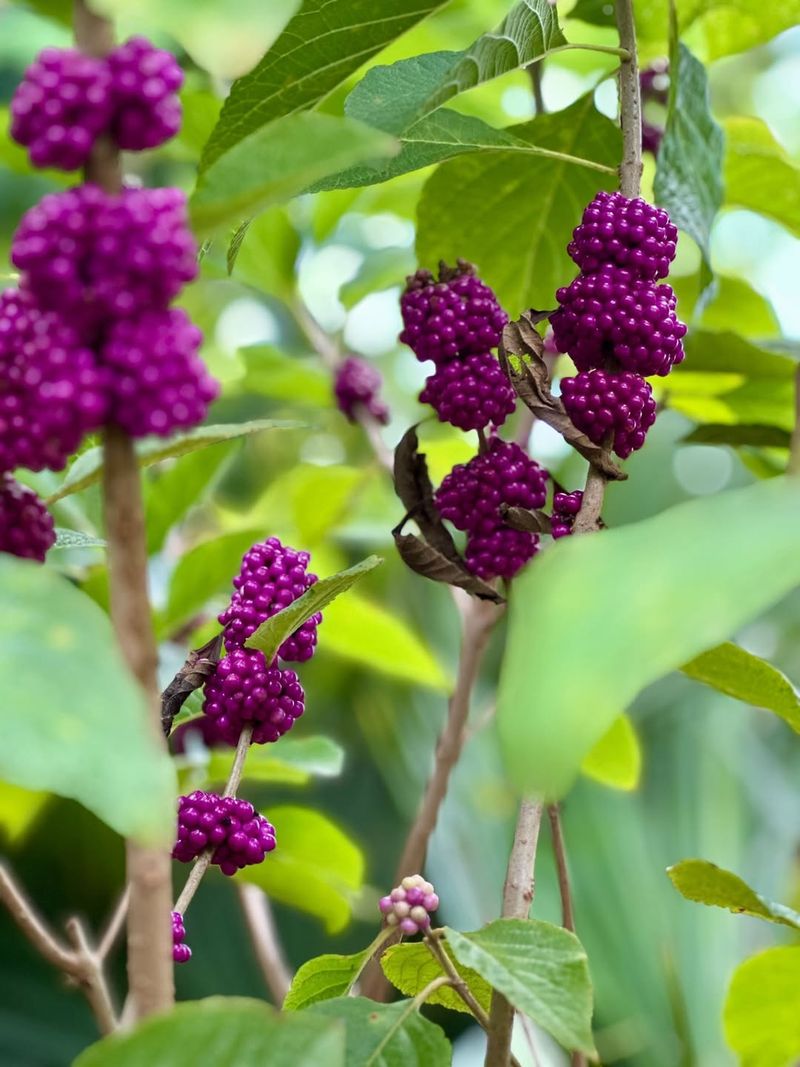
While most gardeners think of beautyberry for its spectacular purple berries that appear in fall, this Florida native also deserves recognition for its remarkable heat tolerance throughout the growing season. The shrub grows naturally in Florida woodlands but adapts beautifully to garden conditions in full sun or partial shade.
During summer’s peak heat, beautyberry maintains healthy green foliage without the leaf drop and wilting that plague hibiscus in similar conditions. Small pink flowers appear in clusters along the stems in summer, attracting various pollinators despite the intense heat.
The real show begins in late summer and fall when clusters of brilliant purple berries develop where the flowers once bloomed.
These berries attract dozens of bird species, making your Florida garden a wildlife hotspot from late August through winter.
Beautyberry handles both the sandy soils of Central Florida and the heavier soils found in other regions without complaint. The shrub grows quickly to six feet tall and wide, creating a substantial presence in your landscape without requiring constant pruning and shaping.
Unlike hibiscus that demands regular fertilizing and careful watering schedules, beautyberry thrives on benign neglect once established.
The plant tolerates drought well, though occasional watering during extended dry spells keeps it looking its best and ensures heavy berry production for fall and winter bird watching.
8. Muhly Grass Doesn’t Mind The Hottest Days
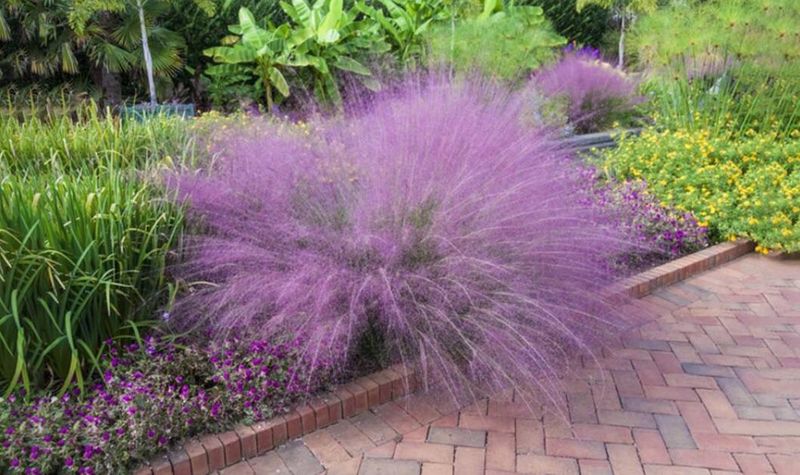
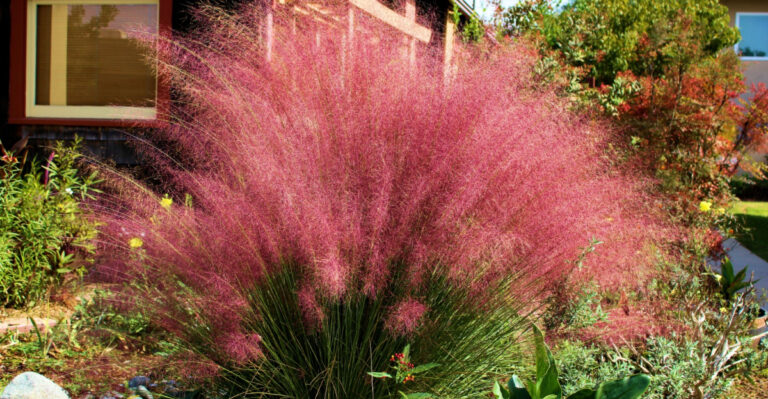
Few plants create as much drama in the Florida landscape as muhly grass when its pink plumes emerge in fall, but this native grass earns its place year-round through exceptional heat and drought tolerance. The fine-textured foliage forms neat clumps that stay attractive even during the most brutal summer weather.
While hibiscus demands constant attention during Florida’s hot season, muhly grass simply grows steadily without complaint. The grass tolerates full sun exposure that would stress many flowering shrubs, maintaining its form and color through weeks of 95-degree temperatures.
Muhly grass requires virtually no maintenance beyond an annual cutting back in late winter to remove old foliage before new growth emerges.
No deadheading, no fertilizing, no pest control—just occasional watering during establishment and then almost total independence.
The spectacular fall display begins in September or October across most of Florida, when airy pink plumes rise above the foliage and glow in the sunlight. These plumes persist for months, providing color and texture through fall and into early winter.
Muhly grass works beautifully as a specimen plant, in mass plantings, or mixed with other heat-tolerant perennials throughout Florida landscapes. The grass tolerates both coastal and inland conditions, adapting to sandy or heavier soils without fuss.
During summer heat waves that leave hibiscus looking stressed and struggling, muhly grass simply keeps growing steadily toward its spectacular fall performance.