These Tough Shrubs Thrive In Texas Heat And Drought
Gardening in Texas can be a test of patience. Hot summers, blazing sun, and long stretches without rain can turn even the most carefully planned landscapes into a challenge.
Not every plant can handle these conditions, but some shrubs are built to thrive where others struggle.
Tough, heat- and drought-tolerant shrubs bring resilience and beauty to your yard. They offer greenery, structure, and even colorful blooms without needing constant watering or protection from the sun.
Many of these hardy varieties also require minimal maintenance, making them perfect for busy gardeners or anyone looking to conserve water.
By choosing the right shrubs for Texas conditions, you can create a landscape that stays vibrant and healthy through the toughest months.
With durable plants in the right spots, your yard can be both attractive and low-maintenance, proving that strong, resilient greenery can flourish even under Texas’s harshest conditions.
1. Texas Sage
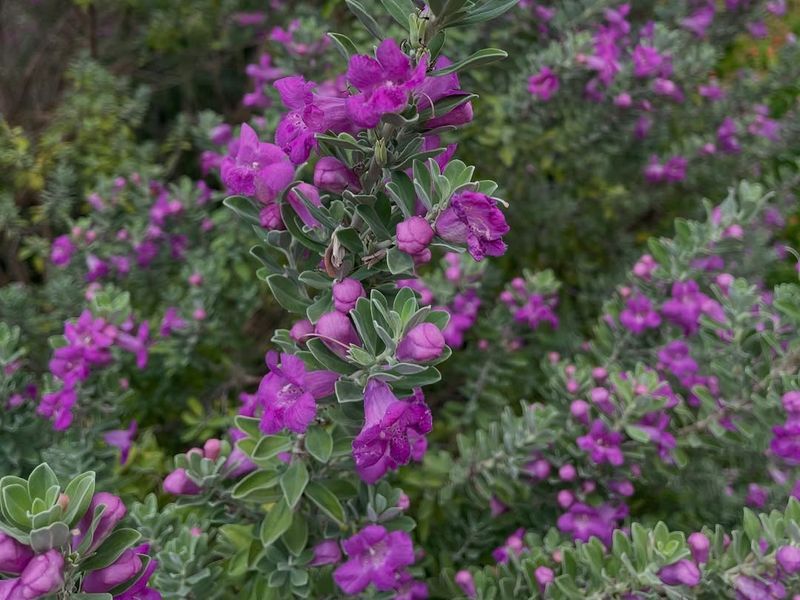
Walk through almost any neighborhood in San Antonio or El Paso, and you’ll likely spot Texas Sage growing proudly along fences and driveways. This shrub is a true Texas classic, and for good reason.
With its soft, silvery leaves and bright purple blooms, it’s one of the most beautiful low-maintenance plants you can grow in the Lone Star State.
Texas Sage is sometimes called the Barometer Bush because it tends to bloom right after rainfall. Gardeners love this quirk because it almost feels like the plant is celebrating the rain.
The purple flowers are small but plentiful, and they cover the entire shrub when conditions are right.
Full sun is where this shrub truly shines. It loves hot, dry conditions and actually struggles in areas with too much shade or water.
Plant it in well-drained or even rocky soil, and it will reward you with years of beauty without much effort.
One of the best things about Texas Sage is how little water it needs once it’s established. It’s perfectly suited for xeriscaping, which is a style of gardening that focuses on saving water.
That makes it a smart choice for Texas homeowners who want a great-looking yard without a high water bill.
Pruning is minimal with this shrub. You can shape it lightly after blooming, but it naturally keeps a neat, rounded form.
It typically grows between four and eight feet tall, making it useful as a privacy screen or a bold accent plant in any Texas garden.
2. Yaupon Holly
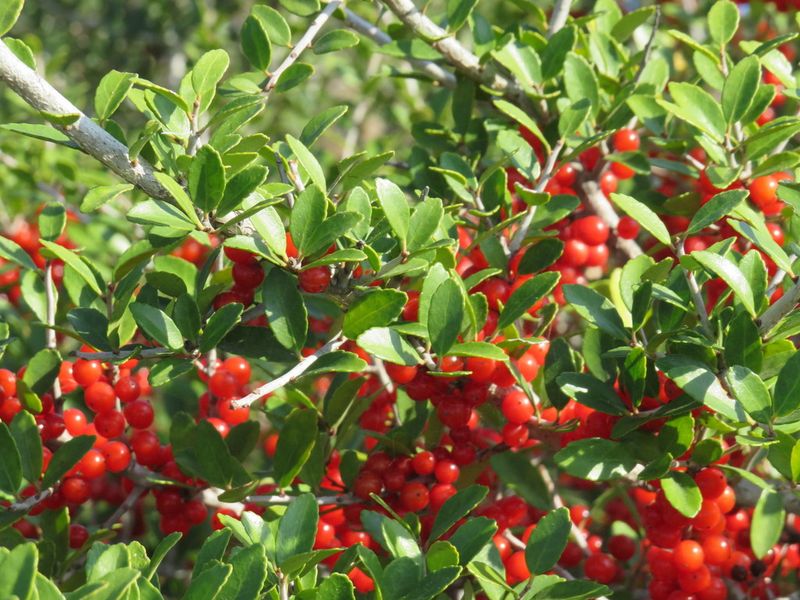
If you’ve ever driven through the Hill Country or spotted a thick, green hedge along a Texas highway, there’s a good chance you were looking at Yaupon Holly.
This tough evergreen shrub has been thriving across Texas for centuries, and it’s one of the most adaptable plants you can add to your landscape.
Yaupon Holly keeps its small, dark green leaves all year long, which makes it a great choice for gardeners who want consistent color even in winter. The female plants produce cheerful red berries that birds absolutely love.
Watching birds flock to your yard during the colder months is a bonus that many Texas gardeners enjoy.
What really sets this shrub apart is its toughness. It handles heat, drought, poor soils, and even occasional flooding better than most plants.
From Houston’s humidity to the dry plains of West Texas, Yaupon Holly finds a way to survive and look good doing it.
As a privacy hedge, few shrubs match up to Yaupon Holly. It can be trimmed into tight, formal shapes or left to grow naturally into a wilder, more relaxed look.
Either way, it creates a solid screen that blocks wind and noise while adding green color to your property.
Yaupon Holly also happens to be one of the only native North American plants that contains caffeine.
Indigenous communities brewed it into a ceremonial tea for thousands of years. That little fun fact makes this tough Texas shrub even more fascinating to grow.
3. Red Yucca
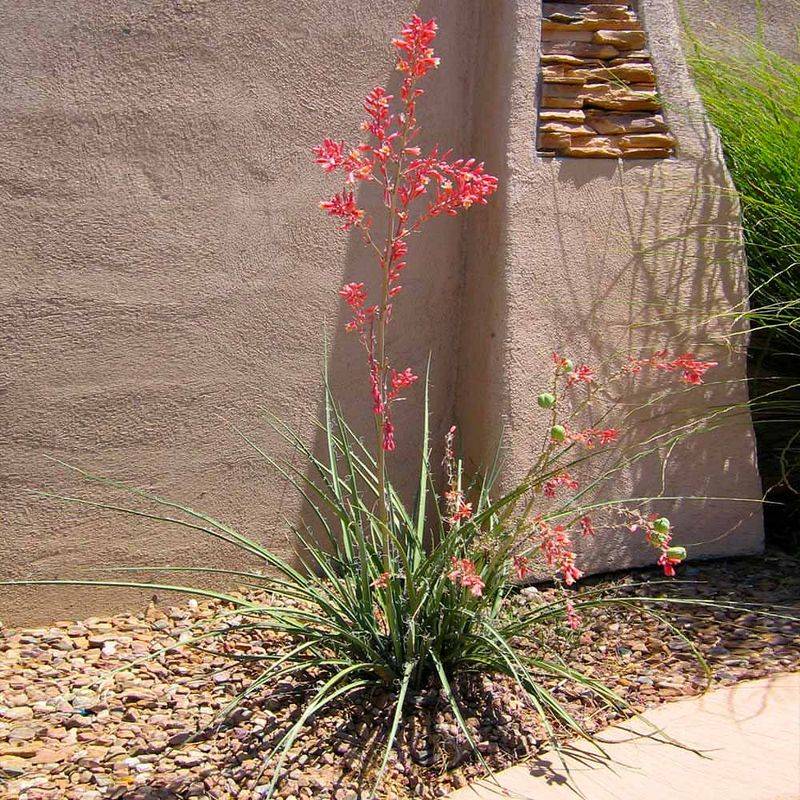
Picture this: a hummingbird hovering over a tall, coral-red flower spike while the Texas sun blazes overhead. That’s the magic of Red Yucca, one of the most eye-catching and low-maintenance plants you can grow in the state.
Despite its name, Red Yucca isn’t actually a true yucca, but it earns its tough reputation all the same.
The plant forms a clump of long, narrow, arching leaves that stay green year-round. In late spring, tall flower stalks shoot up from the center, sometimes reaching five or six feet high.
Those striking coral-pink blooms last for months, drawing hummingbirds and bees throughout the summer season.
Hot and dry conditions are where Red Yucca feels most at home. It thrives in full sun and sandy or rocky soils, making it perfect for the tough growing conditions found across central and west Texas. Once it gets established, it barely needs any irrigation at all.
Red Yucca works beautifully in a variety of landscape styles. Use it as a bold focal point in a desert garden, line it along a walkway, or group several plants together for a dramatic mass planting. Its texture and height add real visual interest to any yard.
Maintenance is refreshingly simple. Remove the old flower stalks once blooming is done, and trim away any dry leaves from the base.
That’s about it. For Texas gardeners looking for a plant that delivers big visual impact with minimal work, Red Yucca is hard to beat.
4. Mexican Feather Grass
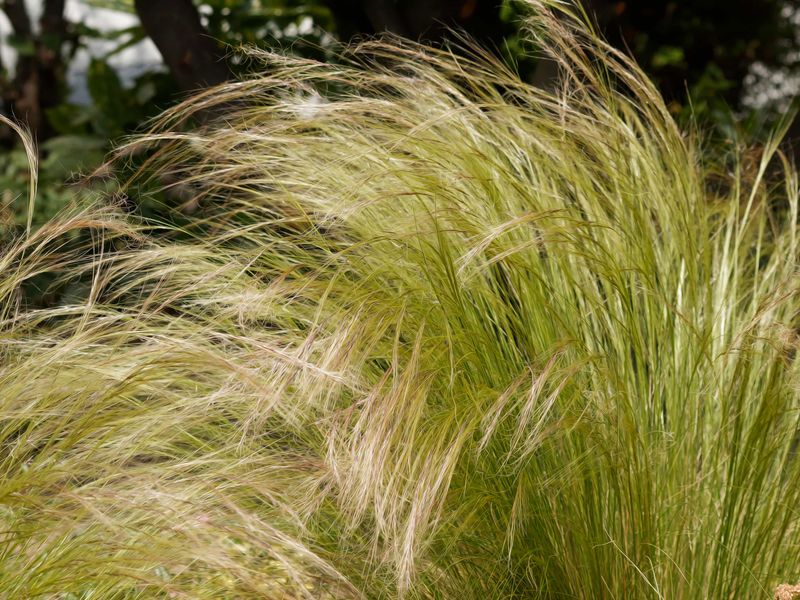
Few plants bring movement and softness to a Texas garden quite like Mexican Feather Grass. When a breeze rolls through, its fine, hair-like blades ripple and shimmer like golden waves.
It’s the kind of plant that makes a garden feel alive, even on a hot summer afternoon when nothing else seems to be moving.
Technically an ornamental grass, Mexican Feather Grass behaves like a shrub when used in borders or mass plantings.
It forms tidy clumps that reach about two feet tall and wide, creating a soft, flowing texture that contrasts beautifully with spiky plants like yucca or bold bloomers like esperanza.
Texas heat doesn’t slow this grass down one bit. It actually prefers dry, sunny conditions and well-drained soil.
Overwatering is more of a problem than underwatering for this plant, so it fits perfectly into water-wise landscapes across the state. From Austin to Amarillo, it handles the climate with ease.
The color of Mexican Feather Grass changes through the seasons in a really pleasing way. It starts out bright green in spring, then shifts to a warm, golden straw color by midsummer.
That golden tone holds through fall and winter, giving the garden texture and warmth even in cooler months.
One thing to keep in mind is that this grass can self-seed fairly freely in some Texas gardens. Removing seed heads before they fully mature helps keep spreading under control.
Overall, it’s a graceful, carefree plant that adds charm and movement to any sunny Texas landscape.
5. Esperanza
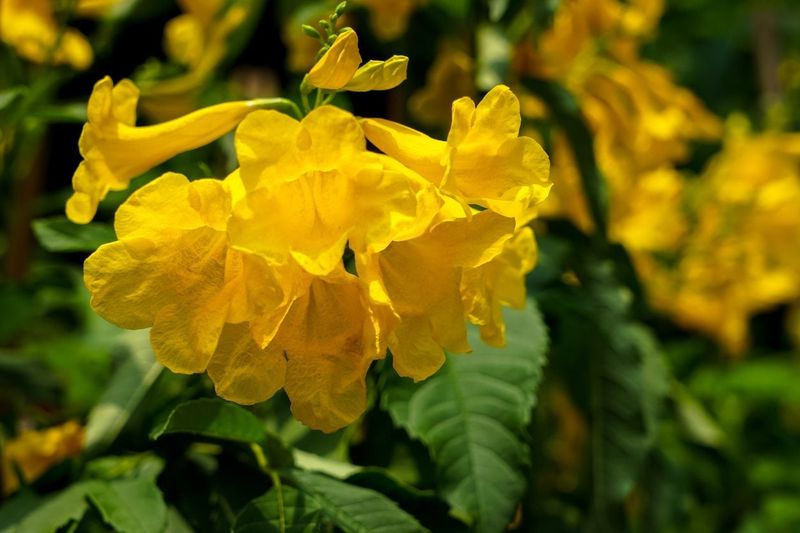
Bright, bold, and absolutely packed with energy, Esperanza is the kind of shrub that stops people in their tracks.
Those vivid yellow trumpet-shaped flowers seem to glow in the Texas sun, and they just keep coming from late spring all the way through fall. If your yard needs a serious splash of color, this is the plant to reach for.
The name Esperanza means hope in Spanish, and this shrub certainly lives up to it. Even during the driest and hottest stretches of a Texas summer, it keeps blooming.
Once established, it handles drought with impressive toughness and rarely needs extra watering beyond natural rainfall. Full sun is a must for Esperanza. The more sun it gets, the more it blooms.
It grows quickly and can reach six to eight feet tall in a single season in warmer parts of Texas. In areas with mild winters, it may behave as a perennial, coming back year after year from established roots.
Pollinators go absolutely wild for Esperanza. Bees, butterflies, and hummingbirds visit the flowers constantly throughout the blooming season.
Planting it near a patio or garden seating area turns your outdoor space into a lively, buzzing scene that’s genuinely fun to watch.
Pruning Esperanza in early spring encourages bushy, full growth and even more flowers. Cut it back hard before new growth begins, and it will reward you with a vigorous flush of stems and blooms.
For Texas gardeners who want maximum color with minimal fuss, Esperanza is an absolute winner.
6. Bottlebrush
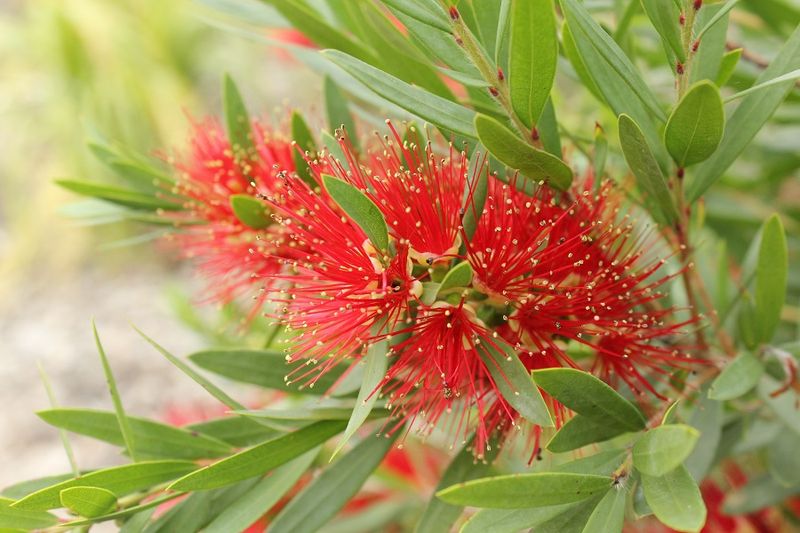
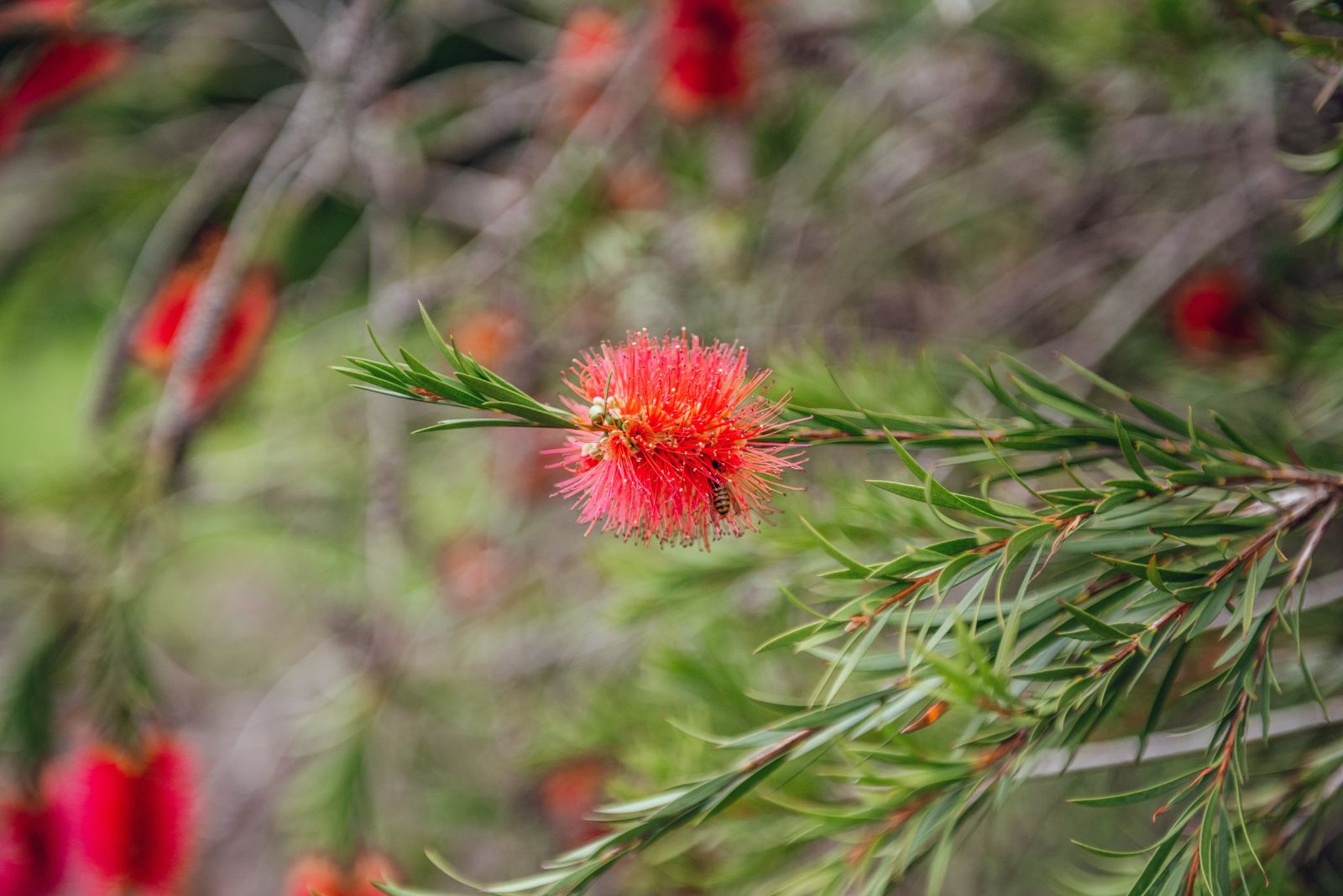
There’s nothing quite like seeing a Bottlebrush shrub in full bloom for the first time. Those long, bright red flower spikes look exactly like the brushes you’d use to clean a bottle, which is exactly how this plant got its memorable name.
It’s a showstopper in any Texas yard, and pollinators can’t seem to stay away from it.
Bottlebrush handles Texas heat and drought with real toughness. It loves full sun and well-drained soil, which makes it a natural fit for the hot, dry conditions found across much of the state.
Once established, it needs very little supplemental watering, making it a smart choice for water-conscious Texas gardeners.
The blooms typically appear in spring and sometimes again in fall, drawing in bees, butterflies, and hummingbirds. The flowers are made up of hundreds of tiny stamens that create that distinctive brush-like appearance. Up close, they’re really quite fascinating to look at.
Bottlebrush shrubs can grow anywhere from six to fifteen feet tall depending on the variety, so there’s a size that works for almost any space. Smaller varieties work well in containers or as low borders, while larger ones make impressive specimen plants or informal screens along property lines.
Pruning right after flowering helps keep Bottlebrush compact and encourages a second round of blooms. It’s not a fussy plant, but it does appreciate good drainage.
Plant it in a sunny spot in your Texas landscape and give it a little time to settle in, and it will reward you with years of stunning color.
7. Rockrose
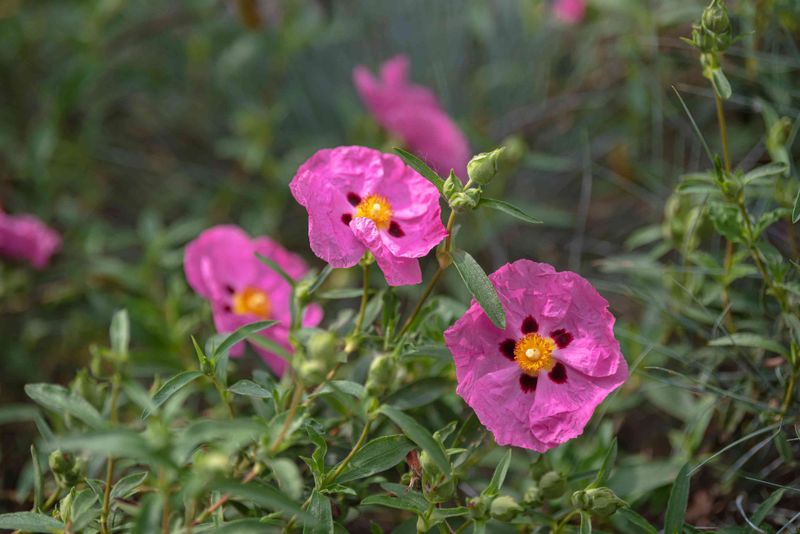
Rockrose has a quiet confidence about it. While other plants struggle and wilt under the relentless Texas sun, Rockrose just keeps going, producing delicate, papery blooms that look almost too pretty to belong to such a tough plant.
It’s proof that resilience and beauty can absolutely go hand in hand. Native to the Mediterranean region, Rockrose was practically built for hot, dry climates. It thrives in poor, rocky, or sandy soils where other shrubs would quickly give up.
That makes it a natural fit for Texas gardens, especially in areas with thin, fast-draining soil that challenges most other plants.
The flowers come in shades of white, pink, and soft purple, depending on the variety. Each bloom only lasts a single day, but the plant produces so many flowers that it looks continuously covered in color throughout spring and into early summer.
The overall effect is soft, romantic, and completely charming. Rockrose stays evergreen through the year, keeping its gray-green or dark green leaves even during dry spells.
That consistent foliage makes it useful as a year-round anchor in the garden, providing structure and color even when it’s not in bloom. It typically grows two to four feet tall and wide.
Once established in a Texas landscape, Rockrose needs very little attention. Skip the fertilizer, skip the heavy watering, and definitely skip the fussy soil amendments.
This shrub actually performs better when left alone in tough conditions. For gardeners who want reliable beauty with almost no effort, Rockrose is a perfect choice.