These 8 Tropical Looking Florida Plants Look Stunning In Pots All Summer With Less Water
Florida container gardens can go from gorgeous to thirsty in a hurry. One hot afternoon, one missed watering, and that lush patio display starts looking tired before the day is even over.
That does not mean every summer pot needs to be a high-maintenance diva. Some plants bring the same bold, tropical look with thicker leaves, tougher roots, slower growth, or natural drought tolerance that helps them handle heat with less fuss.
Pots also solve problems the ground can’t. Thorny plants can sit away from walkways.
Toxic plants can be placed out of reach. Large growers stay easier to manage.
Spiky or spreading plants become statement pieces instead of landscape headaches. That is the sweet spot for a Florida summer container garden: dramatic plants, lower water needs, smarter placement, and far fewer hose-dragging afternoons.
1. Grow Bird Of Paradise For Bold Tropical Container Impact
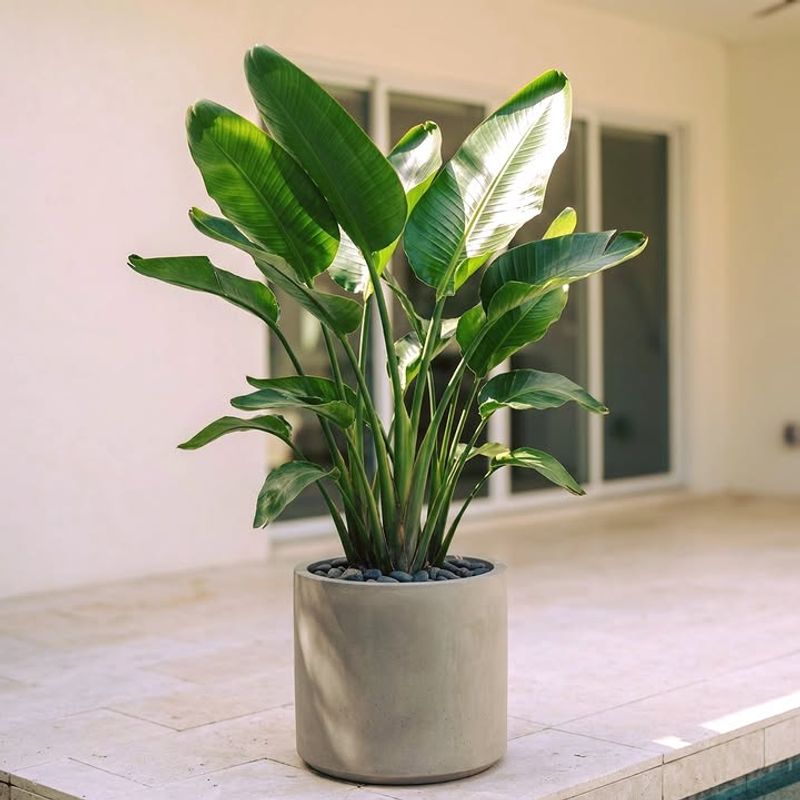
Few plants command attention quite like a Bird of Paradise standing tall in a container on a Florida porch.
The broad, paddle-shaped leaves give off serious tropical energy, and when the plant matures enough to bloom, those vivid orange and blue flowers stop people in their tracks.
Growing it in a pot lets you position it exactly where you want that visual drama without letting it take over your yard.
Bird of Paradise (Strelitzia reginae) is surprisingly heat-tolerant and handles Florida summers well once it settles in. It prefers full sun to light shade and, once established in a container, tolerates periods of dryness much better than most people expect.
You will still need to water regularly during hot spells, but it does not need daily soaking the way many tropical showstoppers do.
Container growing is especially smart for this plant because Bird of Paradise can form large clumps in the ground and eventually reach impressive sizes. A large, sturdy pot gives the root system room to develop while keeping the plant at a manageable scale.
Use a well-draining potting mix and make sure your container has good drainage holes.
One honest heads-up: the seeds are toxic if eaten, so keep that in mind around curious kids or pets.
A pot placed on an elevated surface or a porch railing area helps with that concern nicely.
2. Use Coontie For Low Water Native Structure In Pots
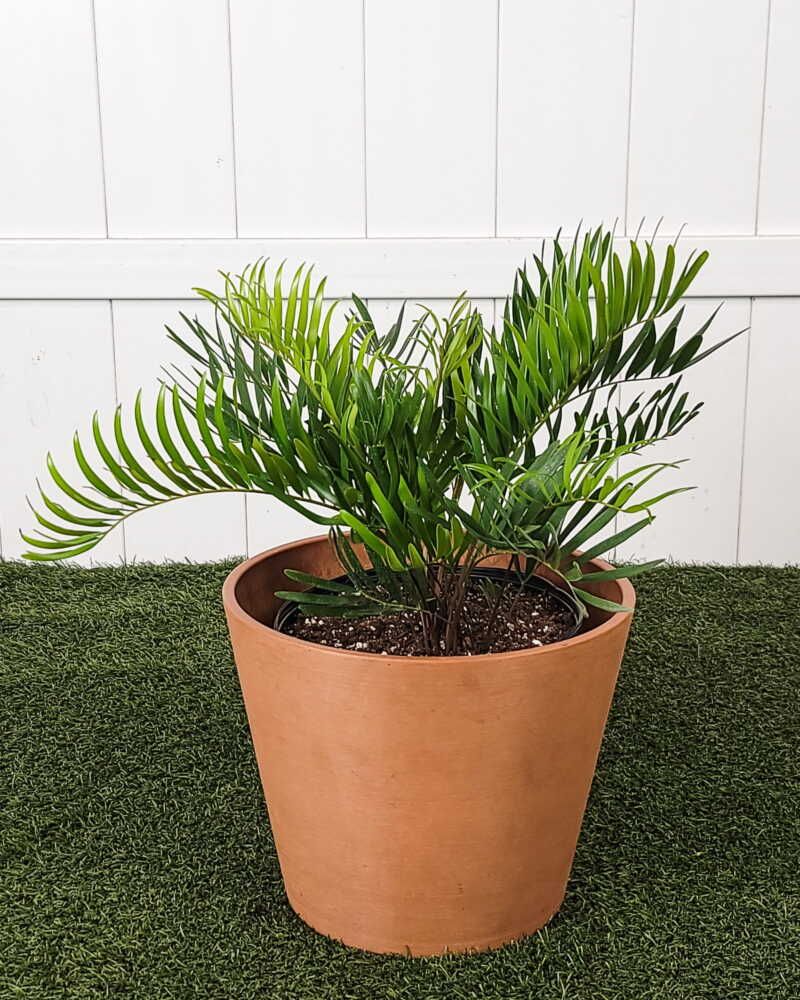
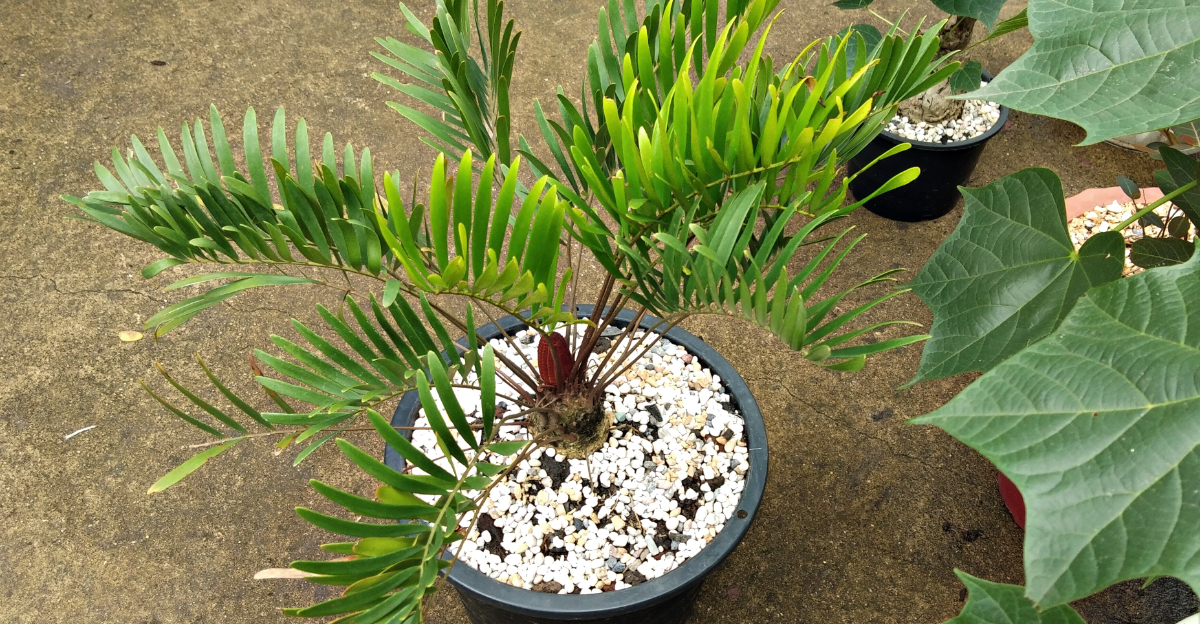
Coontie is one of those plants that makes Florida gardeners feel genuinely proud. It is a true Florida native, one of the only cycads naturally found in the state, and it has been thriving here long before anyone thought about drought-tolerant landscaping trends.
The dark green, feathery fronds give it a prehistoric, structural look that pairs beautifully with modern containers and minimalist patio designs.
From a water standpoint, Coontie is remarkable. Once established, it handles dry conditions with ease and rarely needs supplemental watering beyond normal rainfall in most parts of Florida.
It grows slowly, which actually works in your favor in a container because you will not be repotting it every season. It also supports the Atala butterfly, a native species that uses Coontie as its only larval host plant, making it a genuinely wildlife-friendly choice.
Your Florida Garden Changes Every Week. Your Plan Should Too.
Gardening in Florida changes quickly throughout the season. Every Friday you’ll receive a simple weekly plan showing exactly what to plant, prune, fertilize, harvest, and protect so you never miss the right timing.
Here is the part worth knowing upfront: all parts of the Coontie plant are toxic if eaten, particularly the seeds. This is not a minor detail if you have dogs, cats, or small children who explore the garden.
Growing Coontie in a container lets you place it somewhere intentional, like a raised planter on a deck or a pot positioned out of easy reach.
That kind of controlled placement is one of the biggest advantages of container gardening with this beautiful but potentially harmful native plant.
3. Add Dwarf Firebush For Color That Handles Heat And Drought
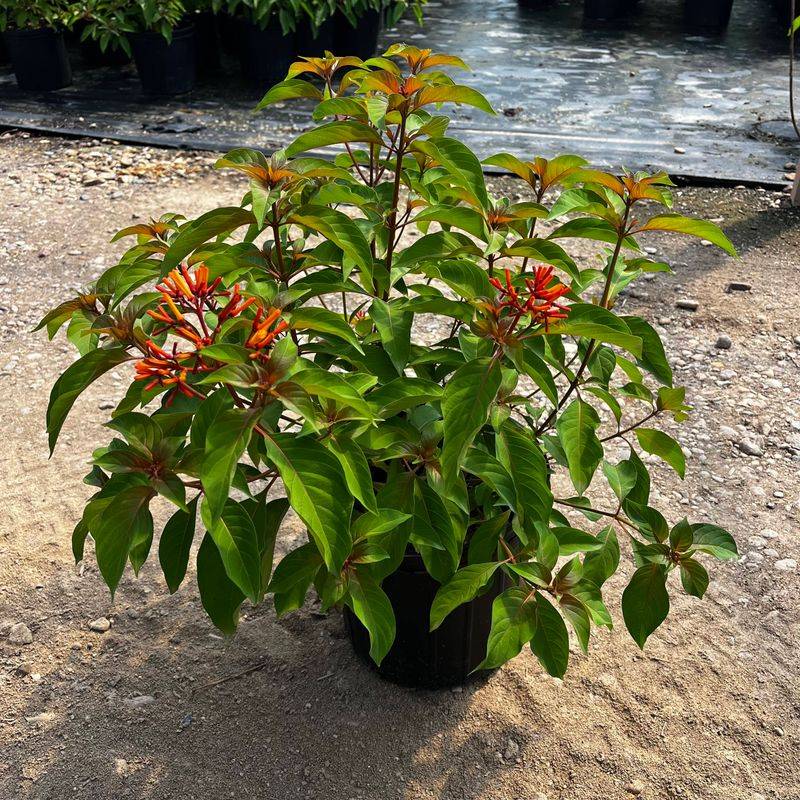
Imagine a plant that blooms in fiery orange-red all summer long, attracts hummingbirds and butterflies to your patio, and barely flinches when the temperature hits 95 degrees. That is Dwarf Firebush in a nutshell.
It brings serious color to container gardens during the exact months when most flowering plants start struggling, which makes it a standout choice for Florida gardeners who want visual payoff with less fuss.
Dwarf Firebush (Hamelia patens var. glabra or compact cultivars) thrives in full sun and handles heat and moderate drought far better than many similarly showy plants.
Once it is established in a container with good drainage, it can go longer between waterings without losing its blooming momentum.
The tubular flowers are irresistible to pollinators, so you get the bonus of a lively, buzzing, fluttering scene right on your porch or patio.
One thing to be clear about: many of the compact dwarf forms sold at garden centers are not the same as the true native Hamelia patens. Some are cultivars or hybrids that may not carry the same ecological value as the straight native species.
Container growing helps keep dwarf or compact firebush forms more controlled, but gardeners should still avoid letting seedlings spread and should choose native firebush when ecological value is the top priority.
Keep your Dwarf Firebush in a pot with well-draining mix, fertilize lightly in spring and summer, and trim it back occasionally to keep it full and bushy all season long.
4. Plant Crown Of Thorns For Long Lasting Blooms With Minimal Water
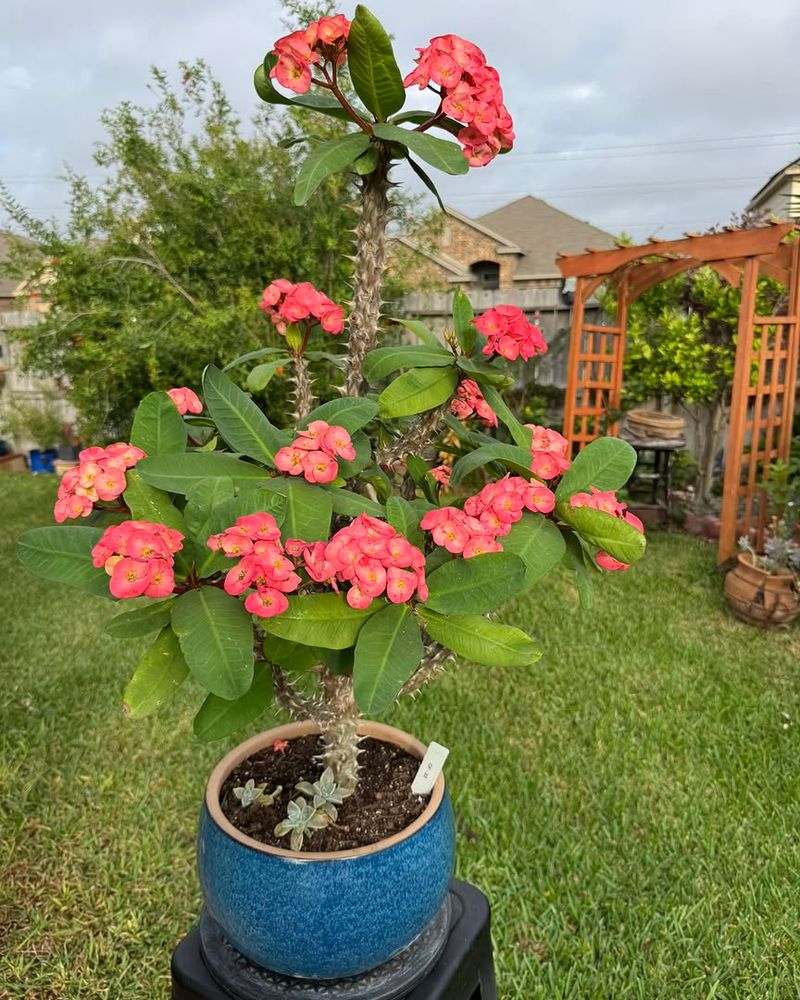
There is something almost defiant about Crown of Thorns. While other potted plants are begging for water in the Florida heat, this one is sitting in a sunny spot blooming cheerfully with far less watering than many summer container flowers.
Euphorbia milii is one of the toughest flowering plants you can grow in a container in Florida, and its long-lasting blooms in shades of red, pink, yellow, and orange make it look far more delicate than it actually is.
Crown of Thorns is succulent by nature, storing water in its thick stems. This means it can handle dry spells that would stress out most flowering plants.
In Florida, where summer rain can be unpredictable, that drought resilience is a genuine advantage. It performs best in full sun and actually blooms more consistently when it experiences a bit of drought stress between waterings.
Overwatering is the most common mistake people make with this plant.
The cautions here are real and worth taking seriously. Crown of Thorns has sharp, dense thorns along its stems, and its milky sap is irritating to skin and eyes and toxic if ingested.
Children and pets should not have unsupervised access to this plant.
Growing it in a container is a smart solution because you can place it on a high surface, hang it at eye level, or tuck it into a corner of the patio that is out of the main traffic flow while still enjoying its remarkable continuous color all summer long.
5. Choose Yucca For Striking Shape And Dry Tolerance
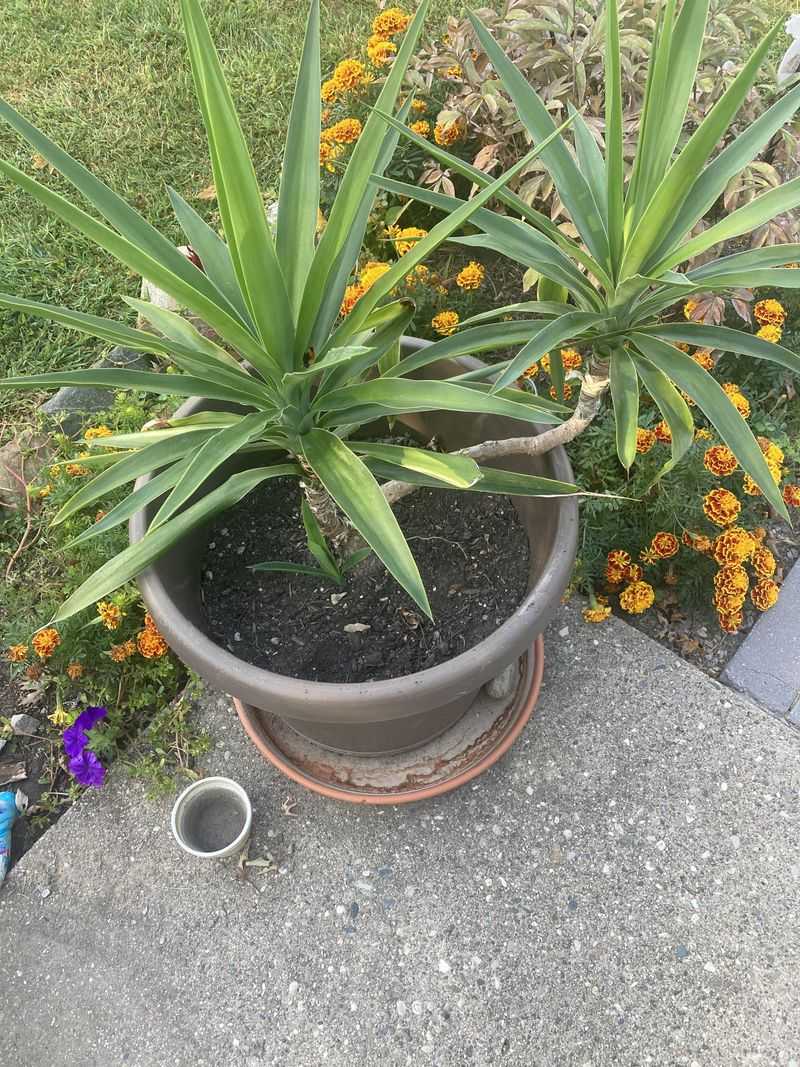
Bold, architectural, and almost effortlessly low-maintenance, Yucca is the kind of plant that looks like it was designed specifically for Florida summers.
The stiff, sword-like leaves radiate outward in a dramatic rosette shape that gives any patio or entryway an instant sculptural upgrade.
And once it is settled into a container, it is remarkably self-sufficient during hot, dry stretches that would stress out most other plants.
Yucca species like Yucca gloriosa and Yucca filamentosa are well-adapted to Florida conditions. They thrive in full sun, tolerate sandy and well-draining soils, and store enough moisture in their thick leaves and root systems to handle periods without rain.
In a container with a coarse, well-draining potting mix, Yucca needs watering only when the soil has dried well, which is usually far less often than thirsty tropical container plants.
The practical caution with Yucca is straightforward: those leaf tips are genuinely sharp. Planting Yucca in the ground along a walkway or near a play area is not ideal because the pointed tips are at a height that can catch people off guard.
A container solves this problem elegantly. You can position the pot somewhere intentional, away from foot traffic, and move it if your layout changes.
Choose a heavy pot to prevent tipping in summer storms, and enjoy this low-demand showpiece all season without much fuss at all.
6. Add Agave For Sculptural Drama In Sunny Containers
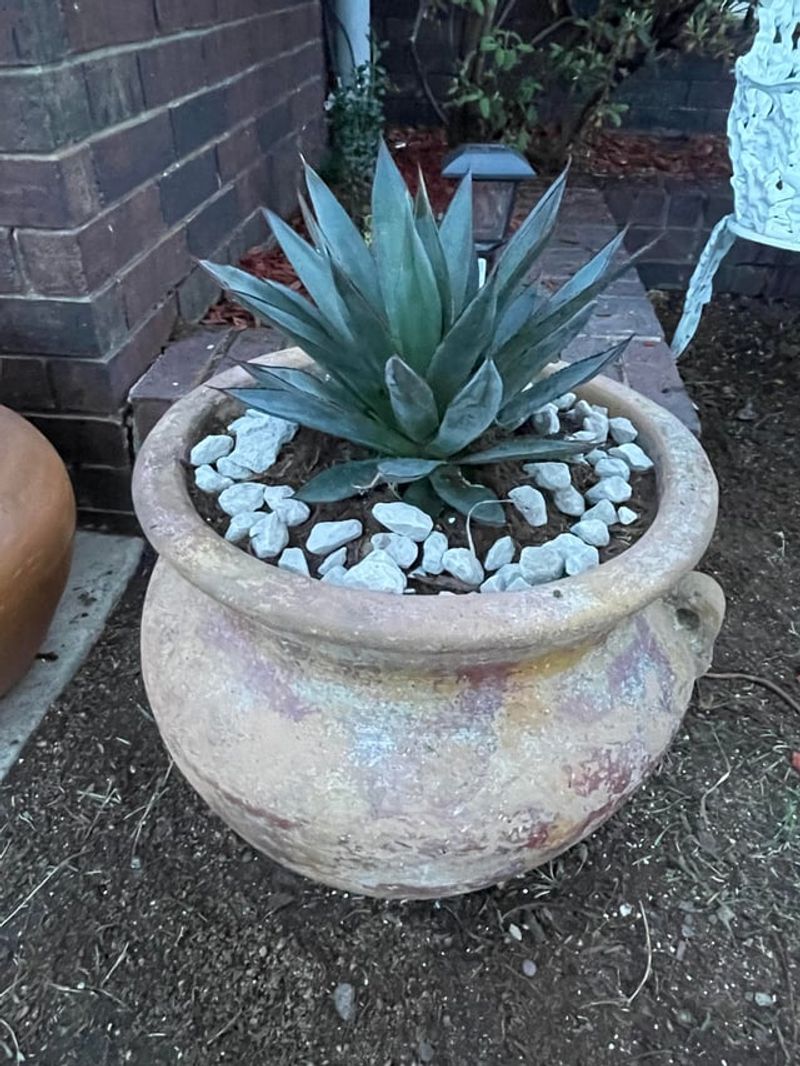
Agave plants have a presence that is hard to ignore. The thick, fleshy leaves arranged in a tight rosette create a bold geometric form that looks stunning against a white wall, poolside, or on a sun-drenched patio.
Florida gardeners have embraced Agave as a container plant for good reason: it handles intense heat and long dry spells with almost no complaints, making it one of the lowest-maintenance dramatic plants you can grow in the state.
Species like Agave americana and smaller agaves can work well in containers across Florida, but agave choice matters because UF/IFAS notes certain species may be invasive.
They prefer full sun and excellent drainage, and they store water in their thick leaves, allowing them to go extended periods between waterings.
In a pot, the drainage is easier to control than in Florida’s often-shallow, sandy soils, which helps prevent the root rot that can occur if the plant sits in water after heavy summer rains.
Agave does come with a clear caution: the leaf tips end in rigid, needle-sharp spines, and many species have serrated edges along the leaves as well. Placing an Agave in the ground near a pathway, children’s play area, or pet run is asking for trouble.
A container gives you full control over placement. Position it somewhere with visual impact but low foot traffic, like a corner of a deck or the end of a porch.
Also be aware that most Agave species bloom once and then the main plant declines, though offsets often continue growing.
7. Grow Aloe For Easy Care Texture And Heat Resistance
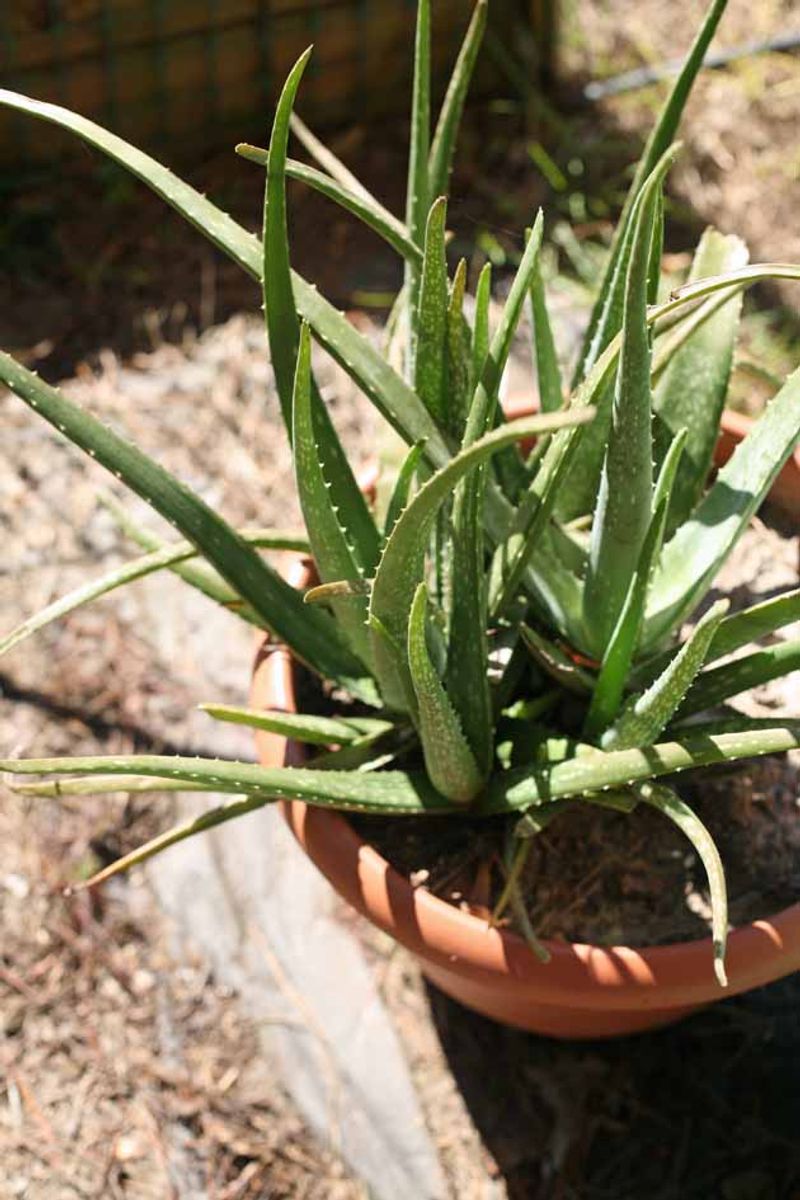
Aloe has been a household staple for generations, and for good reason. Beyond its familiar fleshy leaves, Aloe is a genuinely beautiful succulent that brings interesting texture and form to container gardens.
The upright, fleshy green leaves with serrated edges give it a look that reads as tropical and sculptural at the same time, and it fits right in on a Florida patio without demanding much in return.
Aloe vera and several related species handle Florida heat with ease. They are built to store water in their thick leaves, which means they can go a week or more between waterings even during summer, as long as the container drains well.
Full sun to light shade both work, though in the most intense afternoon sun in South Florida, a little afternoon shade can keep the leaves looking their best.
Aloe is also one of the most forgiving plants for beginner container gardeners because it bounces back quickly from neglect.
The one real vulnerability Aloe has in Florida is cold. North Florida gardeners should be especially careful, since UF/IFAS notes aloe can be injured by frost in North Florida.
Growing Aloe in a container means you can move it to a protected spot under an overhang or indoors on the rare nights when temperatures threaten to drop.
That flexibility alone makes container growing the smarter choice for this easy-care, heat-resistant succulent that earns its place on any Florida porch.
8. Use Silver Saw Palmetto For A Unique Tropical Container Look
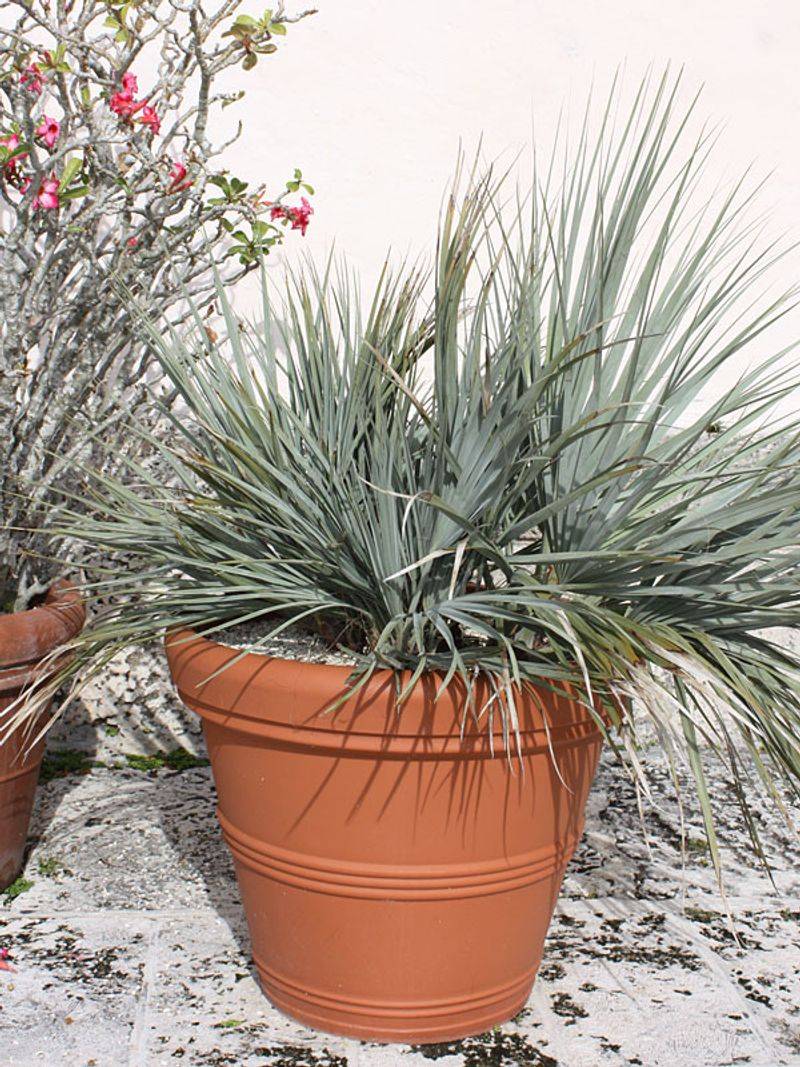
Most people walk past Saw Palmetto in the Florida scrub without giving it a second look, but the silver form of this native plant is something else entirely.
Serenoa repens in its silver-blue variety has fan-shaped fronds with a cool, metallic sheen that photographs beautifully and looks genuinely exotic in a container setting.
It brings a wild Florida native aesthetic to patios and porches that no imported tropical can quite replicate.
Silver Saw Palmetto is extraordinarily drought-tolerant once established, which makes it an excellent candidate for low-water container gardening. It is adapted to Florida’s sandy soils, high heat, and unpredictable rainfall, and it asks for very little once it has settled in.
Growth is generally slow, which is often a benefit in a container since you will not usually be fighting a rapidly expanding root system or constantly repotting. It is also a valuable wildlife plant, providing food and shelter for birds and small animals.
In the ground, Saw Palmetto can spread and become awkward near structures, irrigation systems, or firewise buffer zones where you want to limit woody vegetation.
The serrated leaf stems, which give it the name Saw Palmetto, can also scratch and cut, making placement near pathways tricky.
A container addresses all of these concerns at once. You get the beauty and the native plant credentials without the management headaches.
Use a wide, heavy pot and full sun placement for the best results with this underappreciated Florida native gem.