8 Things Florida Gardeners Should Watch Out For When Growing Ixora
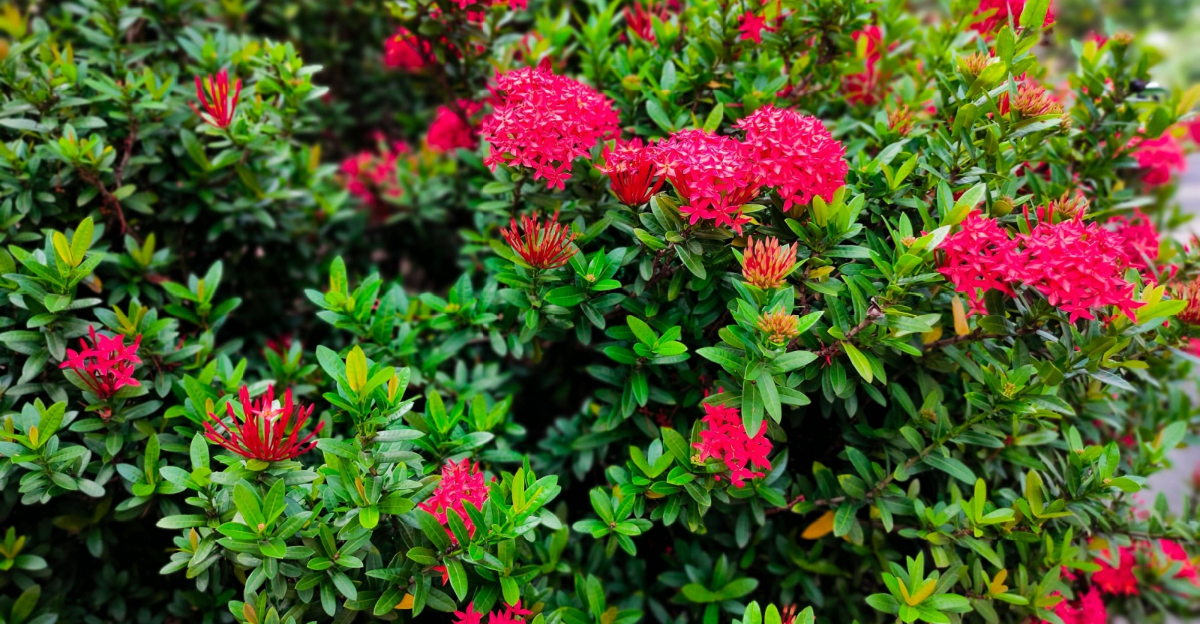
Ixora can look like an easy win in a Florida garden. The glossy leaves stay attractive, the flower clusters bring bold color, and the plant seems built for heat.
Then the problems start. Leaves turn yellow, blooms slow down, growth stalls, and a shrub that should look full and vibrant starts looking tired and stubborn.
That is where many gardeners get caught off guard. Ixora does grow well in Florida, but it can also be surprisingly picky about soil, watering, nutrients, and placement.
Small mistakes tend to show up fast, and once the plant starts struggling, it does not always bounce back quickly. A healthy ixora usually comes down to catching trouble early instead of waiting for obvious decline.
The challenge is not just keeping it alive. It is keeping it colorful, dense, and healthy enough to look the way you expected from the start.
1. Alkaline Soil Can Turn A Healthy Ixora Yellow Fast
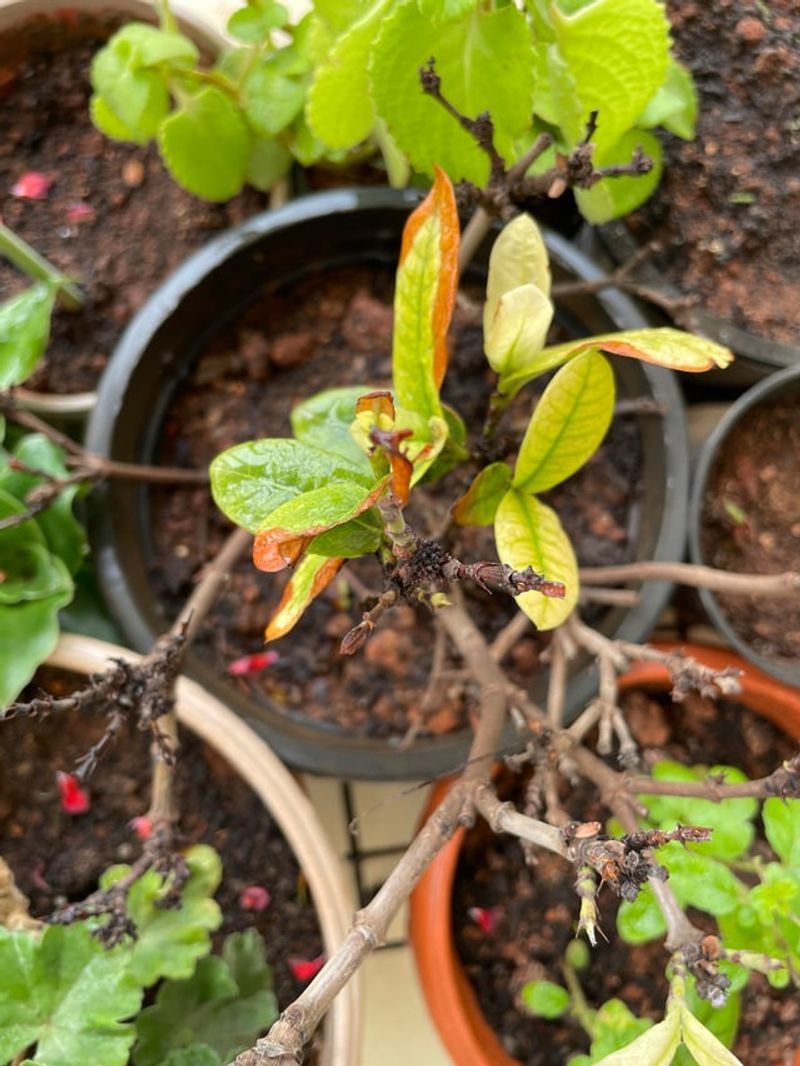
Yellowing leaves on an ixora shrub are one of the most common complaints Florida gardeners bring up, and the culprit is usually the soil itself. Ixora (Ixora coccinea) prefers slightly acidic soil with a pH between 5.0 and 5.5, but much of Florida’s native soil leans alkaline.
That mismatch creates a condition called chlorosis, where the plant cannot absorb iron and manganese properly even when those nutrients are present in the ground.
According to UF/IFAS, the yellowing typically shows up between the leaf veins first, leaving a telltale green-veined pattern on otherwise pale leaves. Many gardeners mistake this for a watering problem and start adjusting irrigation, which does not fix anything because the real issue is pH, not moisture.
Testing your soil before planting ixora is a smart first step that can save you a lot of frustration down the road.
Lowering soil pH can be done gradually by working in acidic organic matter like peat moss or using sulfur-based soil amendments. Fertilizers formulated for acid-loving plants, such as azalea or gardenia blends, also help ixora access the nutrients it needs.
Staying on top of soil chemistry in Florida is not optional with this plant; it is the foundation everything else depends on.
2. Sidewalks And Foundations Can Create Trouble Spots For Ixora
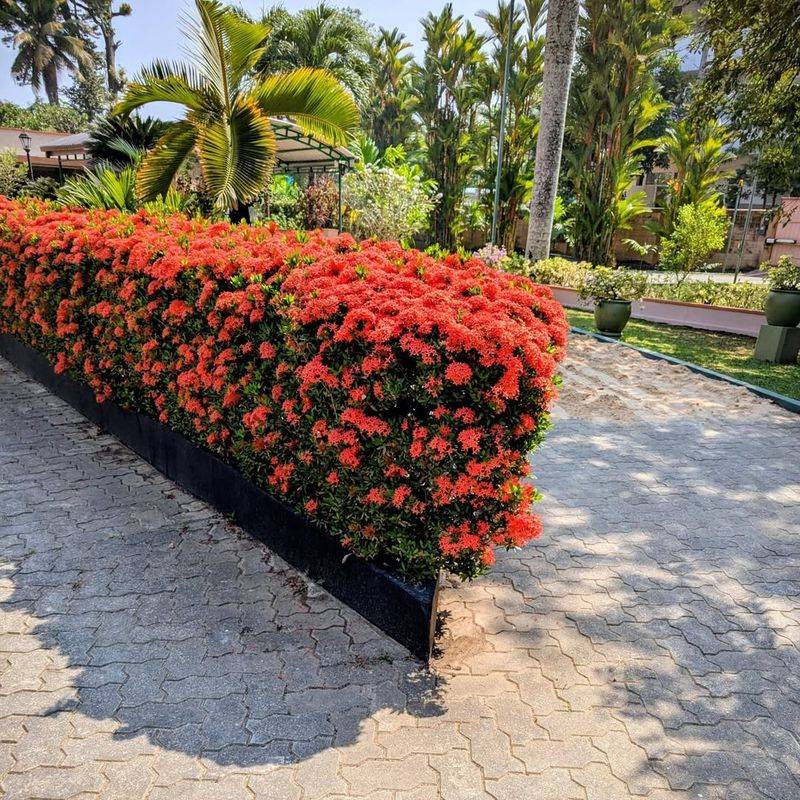
Planting ixora right next to a concrete driveway, sidewalk, or home foundation might seem like a smart landscaping move since those spots often get plenty of sun. The problem is that concrete leaches lime into the surrounding soil over time, and lime raises soil pH significantly.
For a plant that already struggles in alkaline conditions, that extra pH push from nearby hardscape can make an already difficult situation much worse.
Florida homeowners often notice that ixora planted near the house or along a walkway tends to yellow out faster and bloom less reliably than shrubs planted farther out in the landscape. That pattern is not a coincidence.
The soil closest to concrete structures tends to be more alkaline, drier in some spots, and harder for roots to navigate as they expand. Compacted soil near foundations also limits the airflow and drainage that ixora roots need to function well.
A good rule of thumb is to give ixora at least three to four feet of clearance from any concrete structure, or more if the area has heavy hardscape on multiple sides. Raised planting beds with amended, acidic soil can work well in situations where concrete surrounds are unavoidable.
Thinking carefully about placement before you plant will save you from chasing a pH problem that never fully goes away.
3. Too Much Pruning Can Cost You Plenty Of Blooms
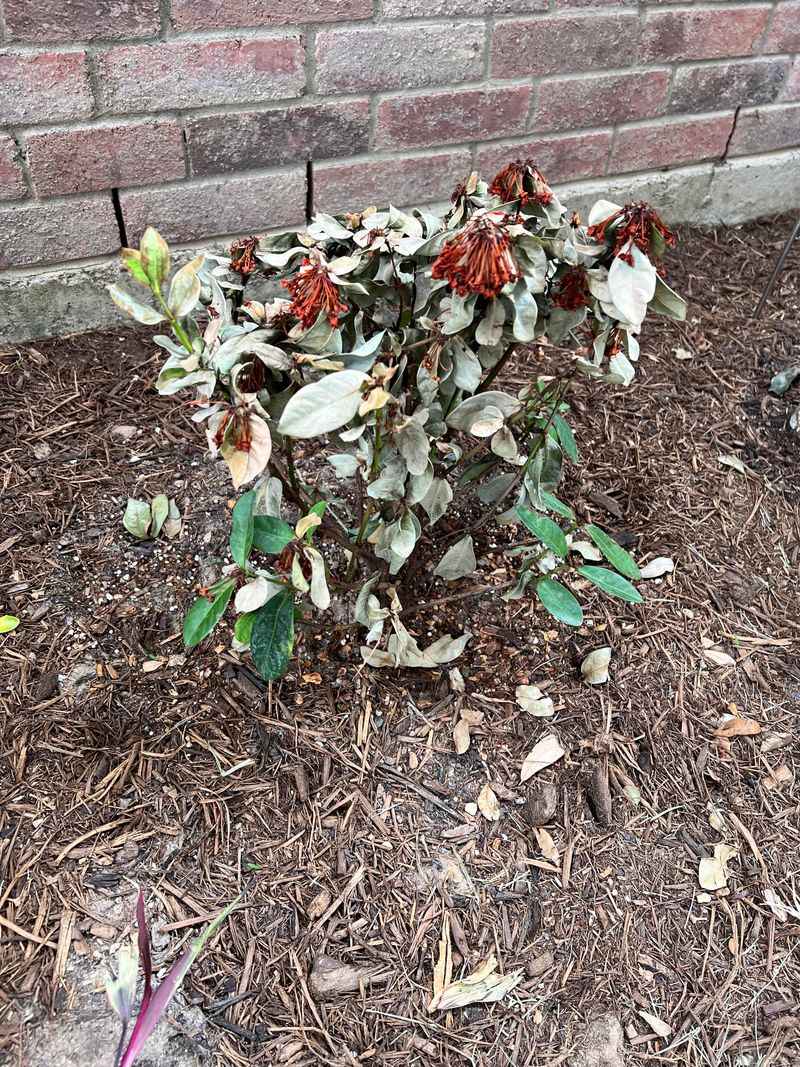
Few things are more frustrating than a well-trimmed ixora that refuses to bloom. If you have been shaping your shrub regularly and wondering where all the flowers went, the pruning schedule is almost certainly the reason.
Ixora produces its flower clusters, called corymbs, at the tips of new growth, and when you cut those tips off repeatedly, you are removing the very spots where blooms would have developed.
Heavy shearing, especially with electric hedge trimmers, is a common habit in Florida landscaping because it keeps shrubs looking neat and uniform. Unfortunately, that approach is one of the worst things you can do for ixora’s flowering performance.
Plants that get sheared into tight geometric shapes may look tidy, but they often produce very few blooms because the outer layer of cut stems never gets a chance to develop flower buds before the next trim comes along.
UF/IFAS recommends using hand pruners to selectively remove branches rather than shearing the entire plant at once. Light shaping right after a flush of blooms finishes is a much better strategy than constant cutting on a fixed schedule.
Giving ixora time to push out new growth between trims means more stem tips, and more stem tips means more places for flowers to form. Patience with the pruners pays off in a big way come bloom season.
4. Soggy Soil Can Hold Ixora Back From The Start
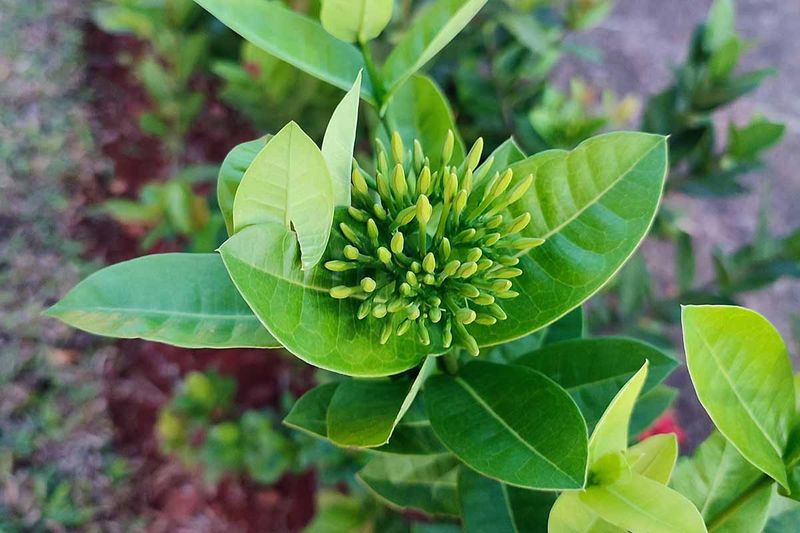
Moisture balance is everything with ixora, and getting it wrong on the wet side is just as damaging as letting the plant dry out completely. Ixora likes consistent moisture, but it absolutely cannot tolerate sitting in waterlogged soil for extended periods.
Roots that stay wet too long are cut off from the oxygen they need to function, and that leads to root stress that weakens the entire plant from the ground up.
Florida’s rainy season brings intense downpours that can saturate garden beds quickly, especially in yards with heavy clay soil or low-lying areas where water tends to collect. Gardeners who plant ixora in those spots often notice the shrub looking sluggish, failing to push out new growth, or developing soft, discolored stems near the base.
By the time those symptoms are obvious, root damage may already be significant.
Before planting, it is worth observing how water moves through your yard after a heavy rain. If a spot stays wet for more than a day, it is not the right place for ixora without some serious soil improvement first.
Mixing in coarse organic matter to loosen heavy soil, planting in raised beds, or choosing a naturally elevated spot in the yard are all practical ways to give ixora the drainage it needs to establish strong roots and perform well through Florida’s wet summers.
5. Nutrient Deficiencies Can Show Up Right On The Leaves
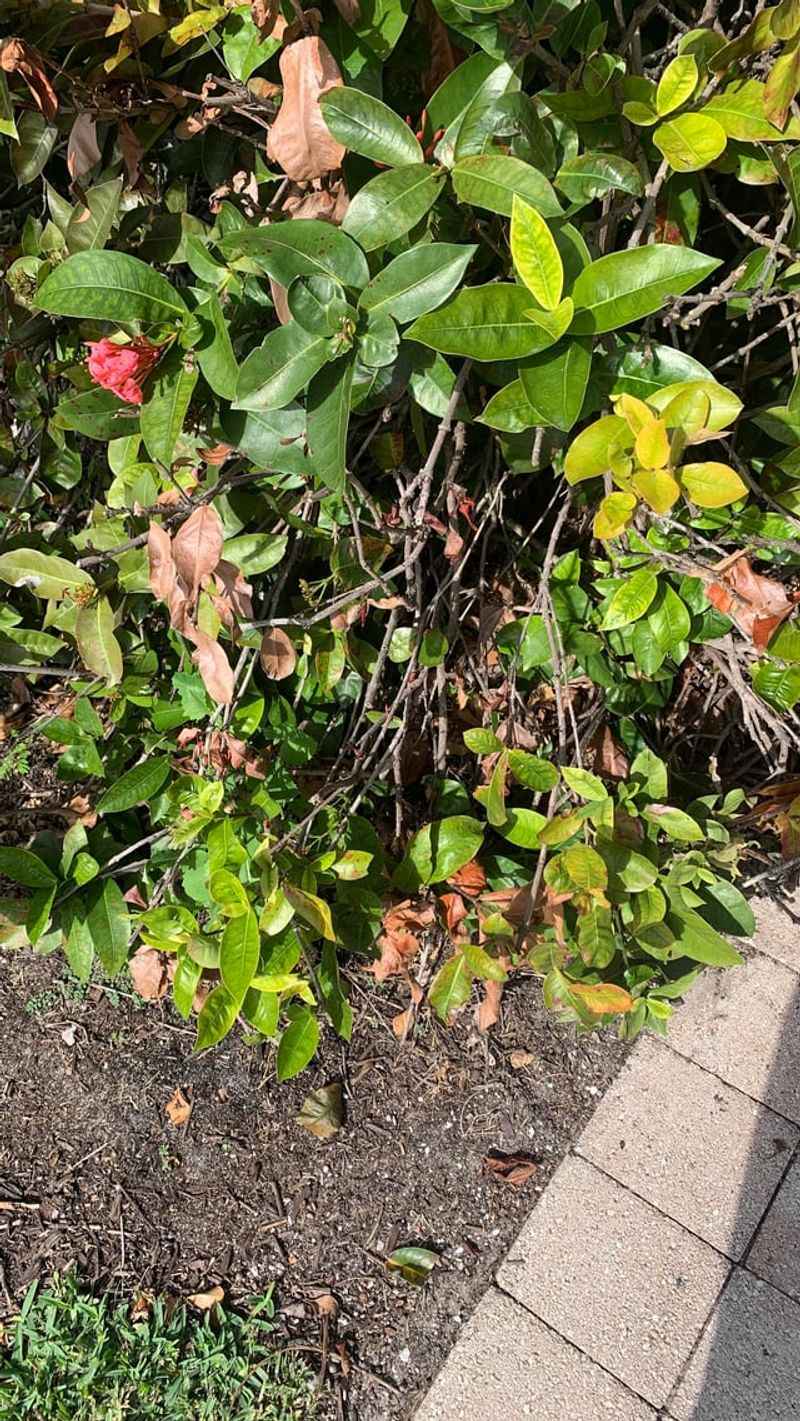
Leaves are basically a report card for how well your ixora is doing nutritionally, and they are worth reading carefully. Iron deficiency is the most common issue, producing that classic yellowing between the veins that looks almost like a map drawn on the leaf surface.
Manganese deficiency shows up in a similar way but tends to affect younger leaves at the tips of branches first, while older leaves lower on the plant may still look relatively green.
What makes nutrient deficiencies tricky in Florida is that the soil often contains plenty of iron and manganese, but the high pH locks those minerals into forms the plant cannot absorb. Simply adding more fertilizer does not solve the problem if the pH is still too high.
Foliar sprays containing chelated iron or manganese can give ixora a faster boost while you work on correcting the soil chemistry at a deeper level.
Magnesium deficiency is another one that shows up in Florida ixora gardens, often producing a general yellowing of older leaves that can be confused with other problems. A soil test through your local UF/IFAS extension office can identify exactly which nutrients are out of balance and help you put together a fertilizer plan that actually addresses the right deficiencies.
Guessing at nutrient problems without testing often leads to over-fertilizing, which creates its own set of issues.
6. Full Sun Helps Ixora Put On Its Best Flower Show
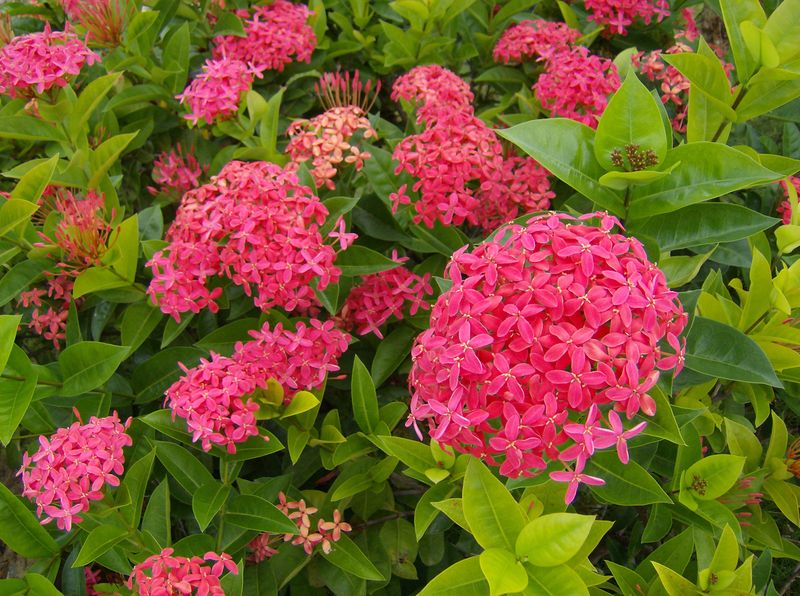
Nothing brings out ixora’s best performance quite like a spot with generous, unobstructed sunlight. This is a plant that evolved in tropical regions where the sun is strong and consistent, and it carries that preference into Florida landscapes.
Ixora planted in full sun, meaning at least six hours of direct light per day, tends to produce far more flower clusters than the same plant growing in shadier conditions.
Shade from large trees, fences, or buildings is one of the most overlooked reasons why ixora fails to bloom the way gardeners expect it to. A shrub that looks perfectly healthy in terms of leaf color and size might still produce very few flowers simply because it is not getting enough light to trigger strong flowering.
Moving a struggling plant to a sunnier spot sometimes produces a dramatic improvement without any other changes at all.
Florida’s summer sun can be intense, and some gardeners worry about leaf scorch in the hottest afternoon hours. In most parts of the state, ixora handles full sun very well as long as it has consistent moisture and good soil conditions.
Morning sun with a bit of dappled shade in the late afternoon is a workable compromise if full sun is not available, but maximum bloom production really does favor the sunniest spots in the yard. Prioritizing light when choosing a planting location is one of the smartest decisions you can make for this shrub.
7. Aphids And Scale Can Trigger Bigger Problems Than You Expect
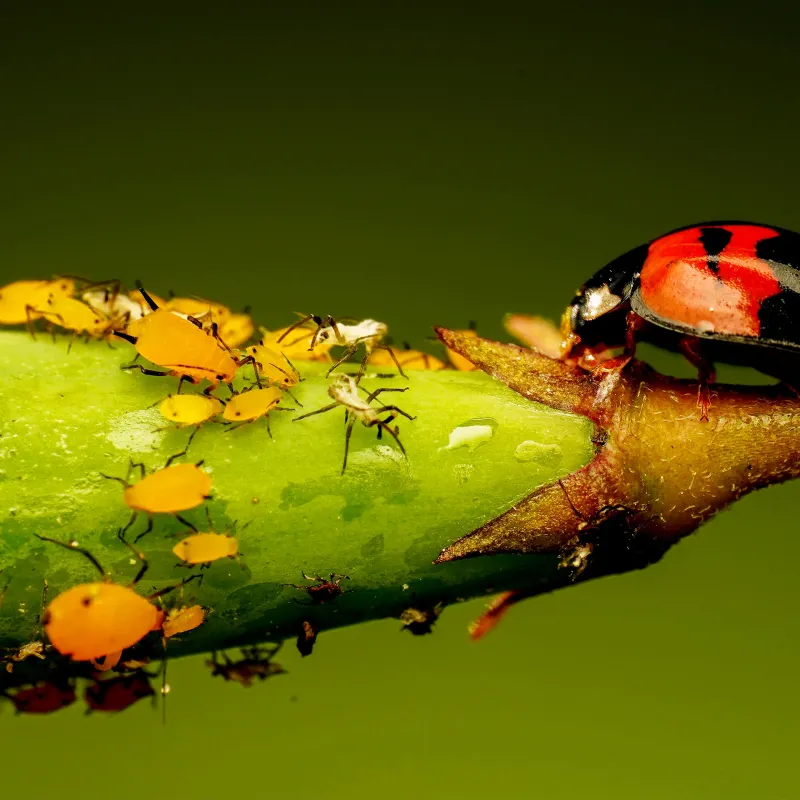
Soft-bodied pests like aphids and scale insects have a way of sneaking up on gardeners before the damage becomes obvious. Both of these insects feed by piercing plant tissue and drawing out sap, which weakens stems over time and causes leaves to curl, distort, or look generally unhealthy.
On ixora, you might first notice clusters of tiny insects on new growth tips or a sticky residue coating the upper surface of leaves.
That sticky coating is called honeydew, and it is a byproduct of sap-feeding insects. Left unchecked, honeydew attracts a fungus called sooty mold, which coats leaves in a dark, powdery layer that blocks sunlight and makes the plant look like it has been dusted with charcoal.
Sooty mold does not infect the plant directly, but it can reduce the leaf’s ability to photosynthesize effectively, which slows growth and makes the shrub look terrible.
Checking the undersides of leaves and along stems every couple of weeks is the best way to catch pest pressure early in Florida’s warm climate, where insect populations can build quickly year-round. Insecticidal soap sprays or neem oil applied thoroughly to all leaf surfaces are effective options for managing aphids and soft scale.
For armored scale, a horticultural oil spray tends to work better. Staying observant is really the most powerful pest management tool available to any Florida gardener.
8. The Wrong Planting Spot Can Make Ixora Struggle In Florida
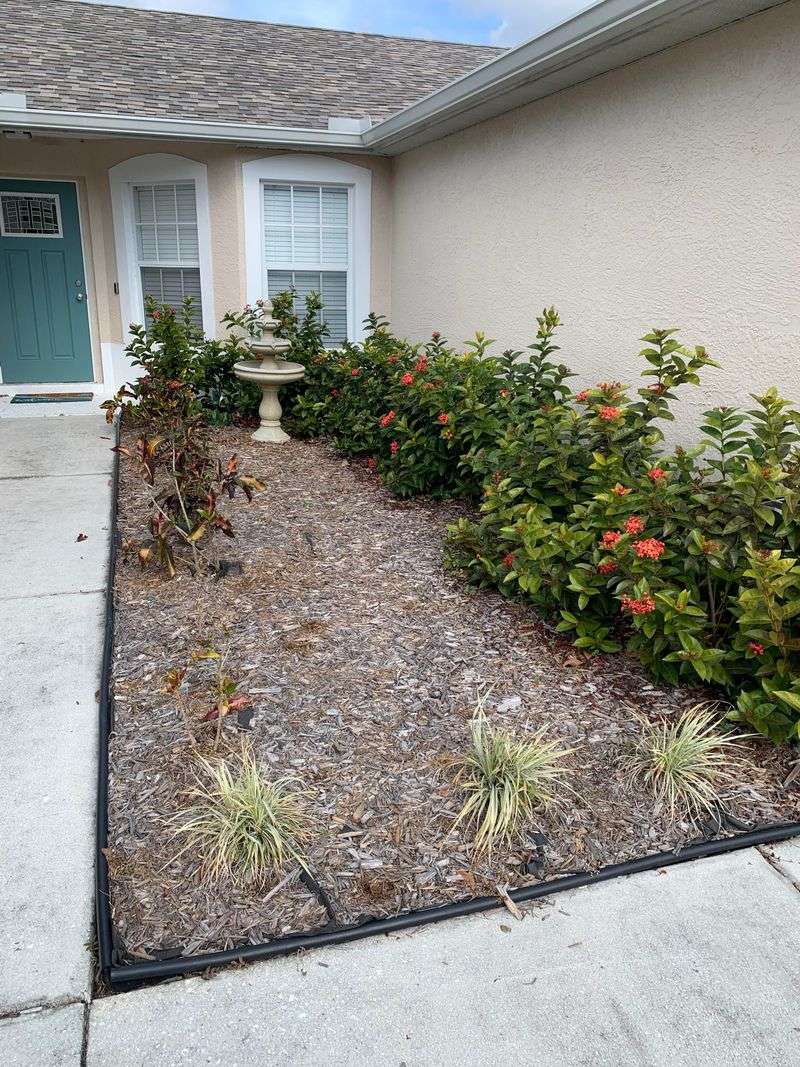
Site selection might sound like a simple decision, but for ixora in Florida, it is one of the most consequential choices a gardener makes. Choosing a spot that combines good sun exposure, well-draining soil, and safe distance from concrete structures sets the plant up for long-term success.
Choosing a spot that gets only a few hours of light, sits in a low area that collects water, and borders a concrete walkway stacks the deck against even the healthiest transplant.
Florida’s landscape diversity means that conditions can vary dramatically from one yard to the next, or even from one corner of a yard to another. A spot on the south or east side of a property often delivers the best combination of light and warmth for ixora, while north-facing beds or areas shaded by large oaks may not give the plant enough energy to bloom reliably.
Soil type, drainage patterns, and proximity to hardscape all factor into how well ixora settles in and grows.
Taking time to observe a potential planting spot through a few rain events and across different times of day is genuinely useful before committing to a location. Amending soil with peat moss, choosing a spot with natural slope for drainage, and keeping concrete well away from the root zone are all practical steps that pay dividends for years.
Getting the site right from the beginning is far easier than trying to fix a struggling plant after it has been in the ground for a season.