Things White Mushrooms In Your Oregon Yard Might Be Telling You
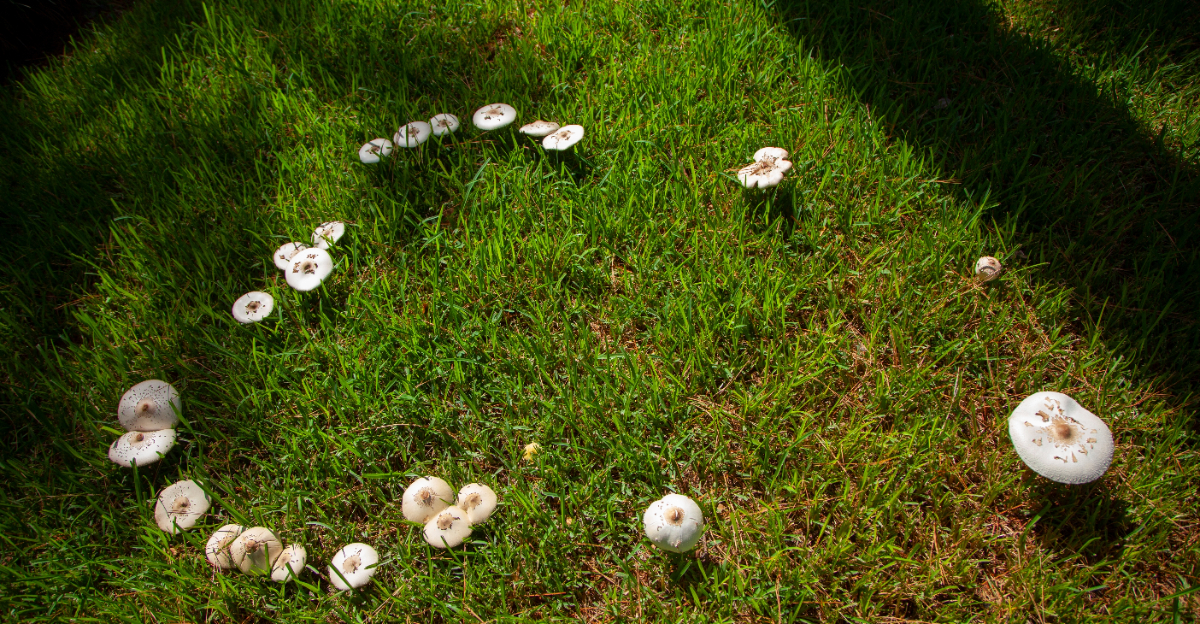
You step outside on a damp Oregon morning, coffee in hand, and there they are. Little pale buttons standing in the grass like they paid rent.
They were not there yesterday, which somehow makes it stranger. Overnight, your lawn turned into a tiny village of soft white caps.
Most folks reach for a rake and scrape them away. That works for about a day, and then the village rebuilds itself.
Here is the thing: those pale caps are messengers. They are reporting on what is happening under your grass, from buried wood to soggy soil to the health of the roots below.
1. Hidden Moisture Sitting Just Below Your Grass
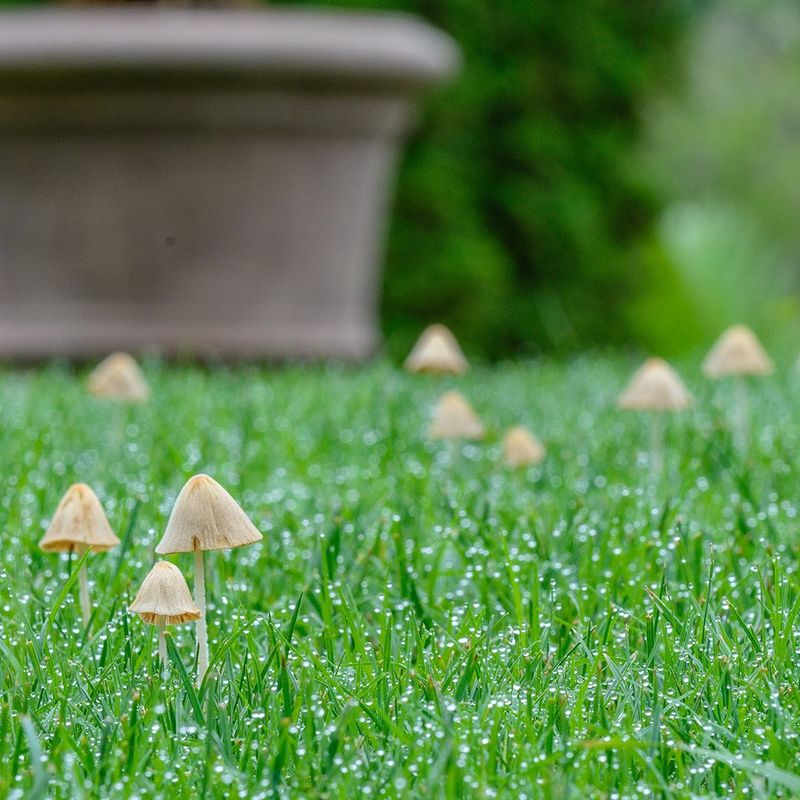
Water is the number one thing those pale caps are gossiping about. Fungi spend most of their lives as invisible threads in the soil, and they only bother making mushrooms when moisture levels stay high long enough to make it worth the effort.
In Oregon, that is basically October through June. Still, a patch that fruits while the rest of the lawn looks fine is worth a closer look.
Grab a screwdriver and push it into the soil near the mushrooms, then try again in a dry part of the yard. If it slides in easily where the caps are, water is lingering there.
Common culprits include a sprinkler head that sprays longer than its neighbors, a low spot that collects runoff from the driveway, or a downspout dumping right onto the turf. Clay soils under many Willamette Valley yards hold water like a sponge, which makes the problem worse.
Fixes are usually simple and cheap. Water deeply but less often so the surface has time to dry, aim downspouts toward a gravel bed, and aerate compacted areas in early fall.
Fun bit of trivia: mushrooms are mostly water themselves, often more than ninety percent. That is why they shrivel into papery scraps within a day or two once the sun finally shows up.
Seeing the caps is not a failure on your part. Take it as a free moisture map of your yard.
2. Buried Wood And Old Roots Breaking Down
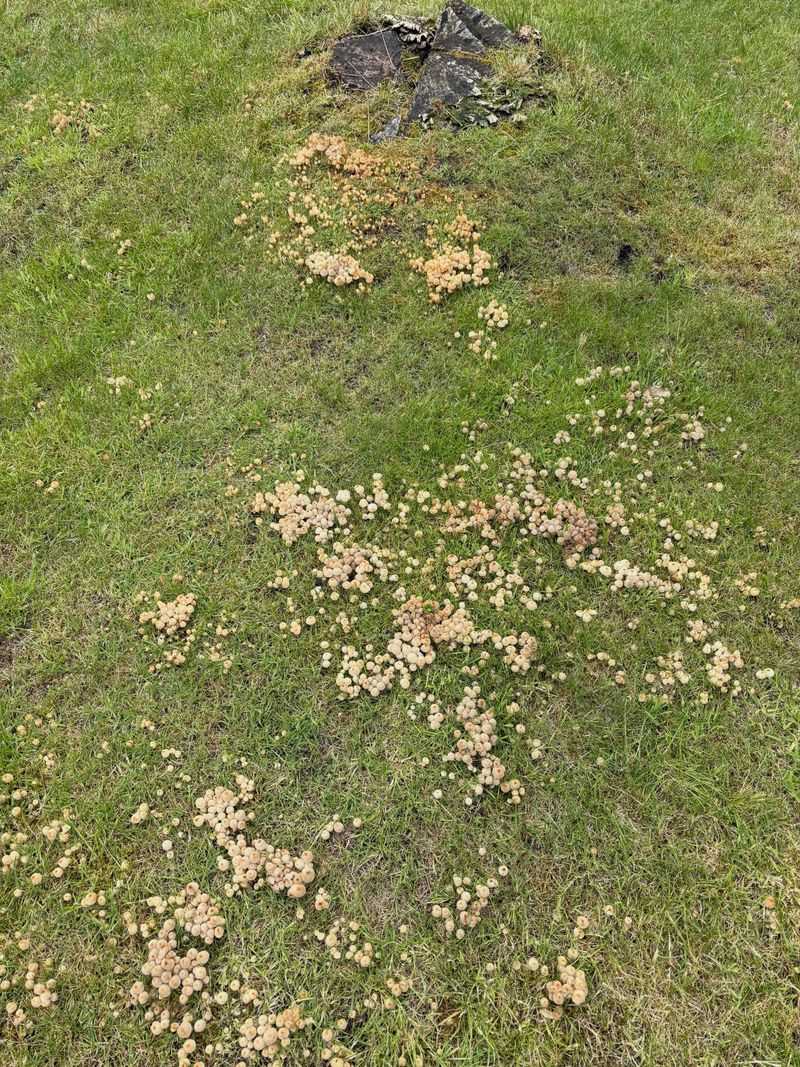
Ever notice the caps forming a rough circle in one spot, year after year? There is a good chance something wooden is buried right underneath.
Many Oregon neighborhoods were built on land that was once forested with Douglas fir, and stumps were often ground down rather than fully removed. Construction crews also bury scrap lumber, sawdust, and root balls without much thought.
Wood is basically a slow-release meal for fungi. As the threads chew through cellulose and lignin, they release energy, and mushrooms pop up as the visible part of that feast.
You may also see the grass above that spot behaving oddly. Sometimes it looks greener because the breakdown releases nitrogen, and sometimes it thins out because the soil has gone spongy and loose.
The honest answer here is patience. A buried stump can take five to fifteen years to finish decomposing, and no spray will speed that up meaningfully.
Your Oregon Garden Changes Every Week. Your Plan Should Too.
Gardening in Oregon changes quickly throughout the season. Every Friday you’ll receive a simple weekly plan showing exactly what to plant, prune, fertilize, harvest, and protect so you never miss the right timing.
If the mushrooms bother you, mow over them or knock them down with a rake before they release spores. Topdressing the area with a few inches of quality soil and reseeding can help the turf look even again.
Digging out the old wood is the only permanent solution, though it means tearing up sod and hauling debris. For most homeowners, that is more trouble than a handful of harmless caps deserves.
Think of it as your yard quietly recycling a tree that stood there long before your house did.
3. Healthy Soil Life Working Behind The Scenes
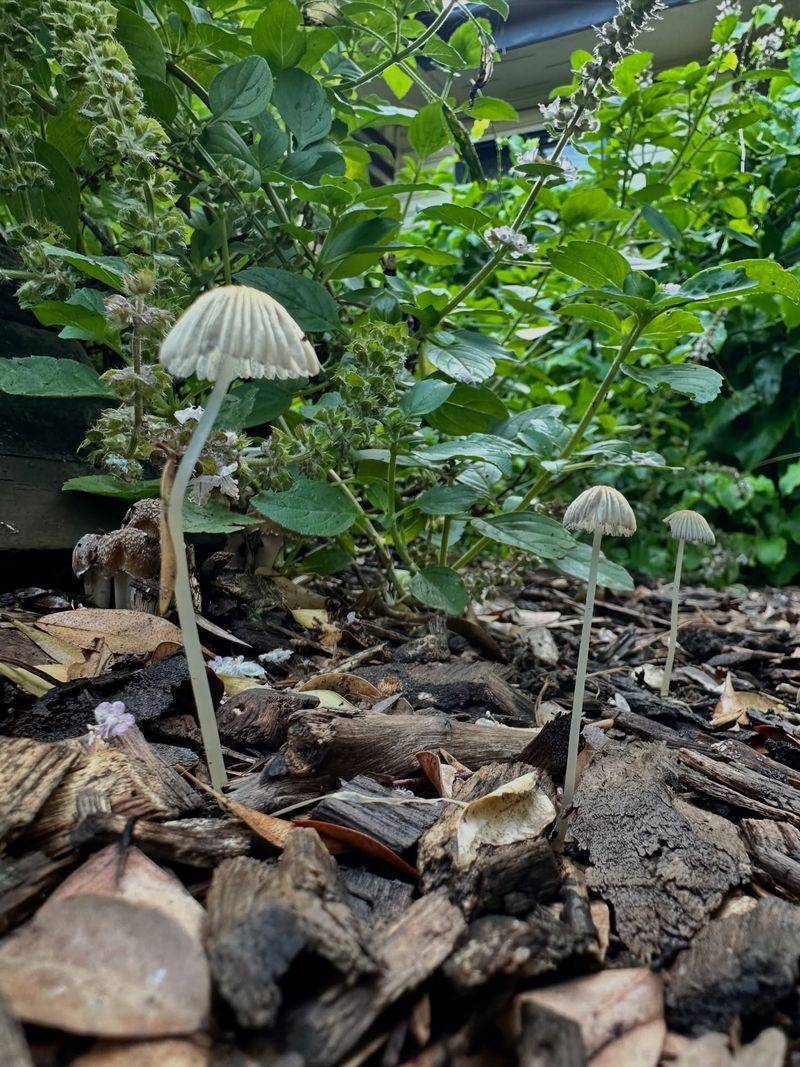
Plot twist: the caps are often a compliment. Fungi are the cleanup crew of the soil world, and their presence usually means your yard has organic matter, decent structure, and living things doing their jobs.
Underground, fungal threads called mycelium form networks that can stretch for yards. They break grass clippings, leaf litter, and old roots into nutrients that plant roots can actually absorb.
Some species go further and partner directly with plants. Mycorrhizal fungi wrap around roots and trade water and minerals for sugars, which is a deal both sides benefit from.
Lawns treated heavily with fungicides and synthetic fertilizers often show fewer mushrooms, but they also tend to lean on you harder for feeding and watering. A yard with visible fungal activity is usually doing more of its own work.
Oregon gardeners who mulch with bark, compost, or leaf mold tend to see the most caps, especially along bed edges. That is the mulch turning into soil, right on schedule.
So before reaching for a product, ask whether the mushrooms are actually causing harm. In most cases they are not damaging grass at all.
A quick word of caution: helpful in the soil does not mean safe on a plate. Plenty of pale, ordinary-looking species are toxic, so admire them and leave the foraging to trained experts.
Your lawn is essentially telling you the recycling system is online.
4. Thatch Buildup Feeding The Fungus
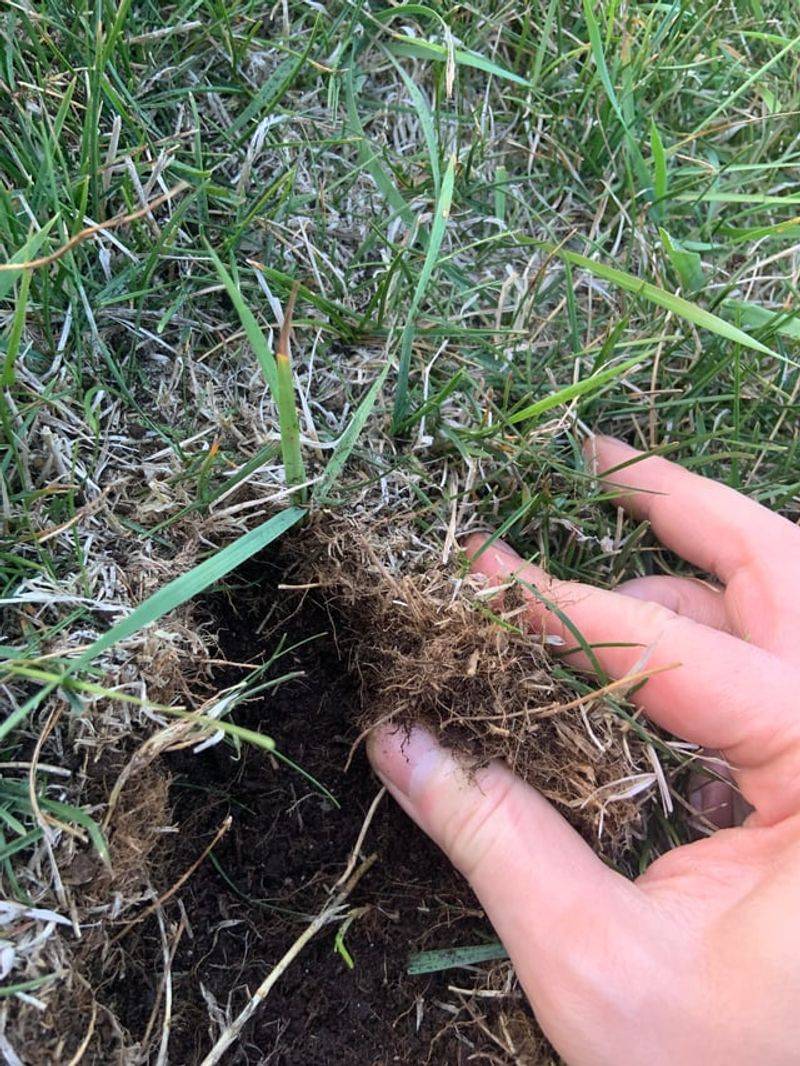
Run your fingers down to the base of your grass. If you hit a spongy brown mat before you reach soil, you have found thatch, and fungi love it.
Thatch is the layer of dry stems, roots, and runners that builds up faster than it decomposes. A thin layer is normal and even protective, but anything over half an inch starts causing trouble.
That mat holds water like a wrung-out towel and stays damp long after the surface dries. Fungi settle in and start producing caps, often in patches that follow the thickest thatch.
Ryegrass and bentgrass, both common in Oregon lawns, are prone to building thatch quickly. Heavy nitrogen feeding and shallow watering make the layer grow even faster.
The cure is mechanical. Renting a dethatcher or power rake in early fall pulls that mat loose, and core aeration follows nicely by opening channels for air and water.
Leaving grass clippings on the lawn does not cause thatch, despite what neighbors may insist. Clippings are mostly water and break down within days.
Once the mat is thinned out, moisture drains through to the root zone where it belongs. Mushrooms usually taper off within a season or two.
Bonus payoff: your grass roots grow deeper, your fertilizer works better, and the whole lawn handles summer heat with less fuss. The caps were just pointing at a maintenance chore you had been putting off.
5. Too Much Shade From Trees And Fences
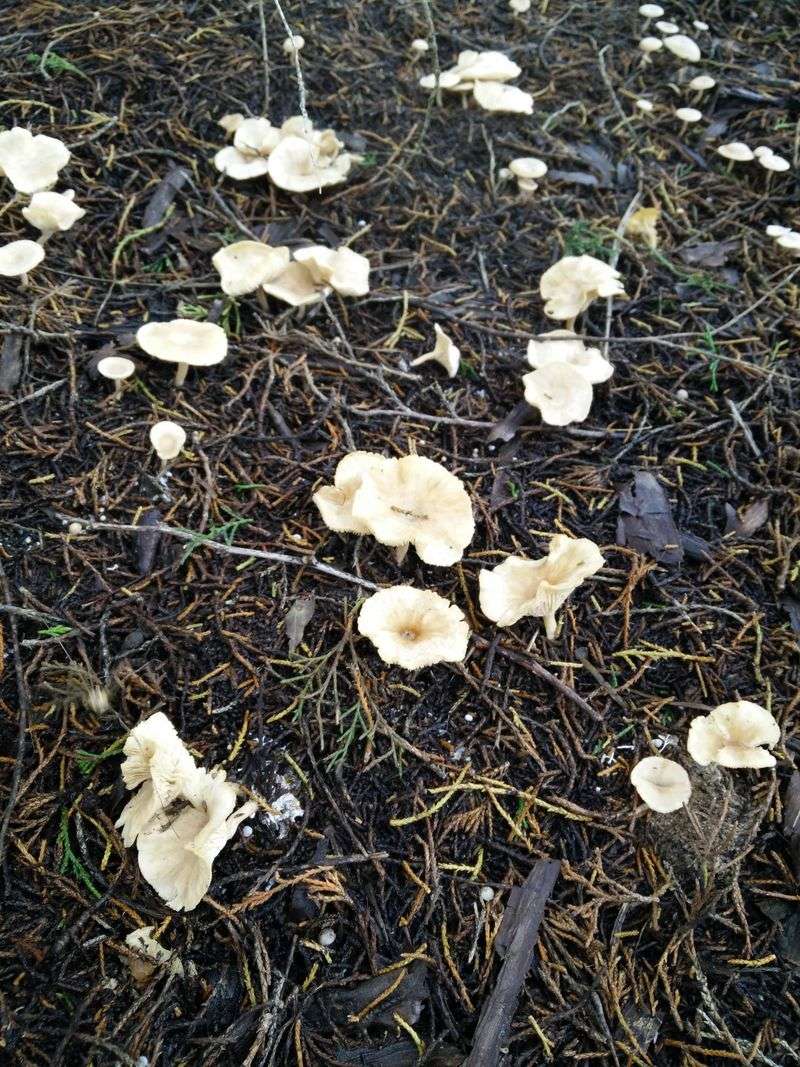
Shady corners are mushroom hot spots. Sunlight dries soil and warms it, and where sun cannot reach, dampness settles in for a long stay.
Oregon yards are famous for this. Tall firs, big-leaf maples, north-facing fences, and eaves all create pockets that stay cool and wet for months at a stretch.
Take a look at where your caps cluster. Chances are they favor the drip line of a tree, the strip beside a fence, or the shady side of the house.
Grass struggles in those same spots, which makes the mushrooms stand out more. Thin turf leaves bare soil exposed, giving fungal threads an easy runway.
Pruning lower tree limbs and thinning dense canopy lets in dappled light and improves airflow. Even a modest amount of extra sun can shorten how long the ground stays soggy.
Where shade is permanent, stop fighting it. Fine fescue blends tolerate low light far better than ryegrass, and groundcovers like sword fern, wild ginger, or kinnikinnick actually thrive there.
Some homeowners lean all the way in and build a shade garden with bark paths and stepping stones. Mushrooms look charming in that setting rather than out of place.
Adjust watering in shady zones too, since they need noticeably less than sunny areas. One sprinkler setting for the whole yard tends to drown the dark corners.
The caps are simply mapping your shade for you, free of charge.
6. Compacted Soil With Poor Drainage
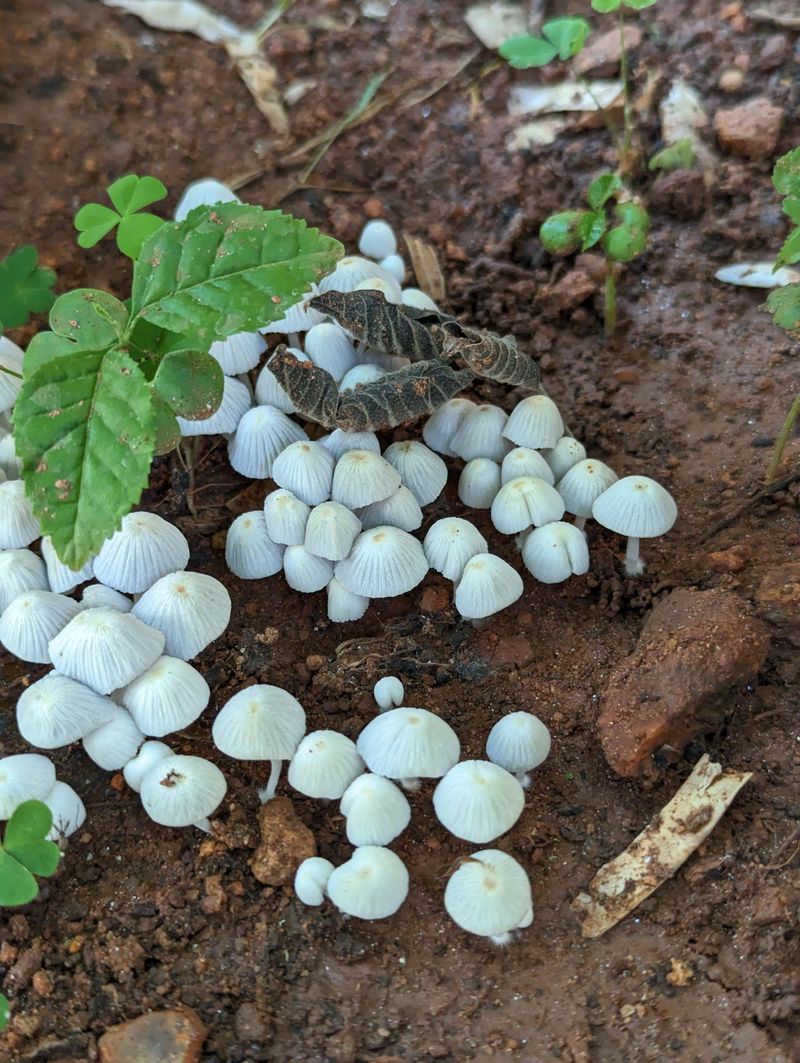
Hard, packed ground and mushrooms go together more often than people expect. When soil gets squeezed tight, water cannot soak downward, so it sits near the surface and creates fungus-friendly conditions.
Compaction sneaks up on a yard. Foot traffic, kids playing soccer, dogs sprinting the same route to the fence, and construction equipment from years ago all press soil particles together.
Add Oregon clay to the mix and you get a layer that behaves like a dinner plate. Rain pools on top, roots stay shallow, and the whole system stalls.
Look for supporting clues besides the caps. Puddles that linger after a shower, thin grass along walkways, and moss creeping in all point to the same issue.
Core aeration is the workhorse fix here. Pulling plugs of soil out creates space for air, water, and roots, and it is best done in fall when rains help everything settle.
Following aeration with a topdressing of compost gives soil microbes something to work with. Over a few seasons, that turns dense clay into something noticeably crumblier.
Rerouting traffic helps too. A stepping stone path or gravel strip along a well-worn route saves the grass and the soil beneath it.
Worth remembering: mushrooms are not the problem you need to solve. Deal with the drainage, and the caps become an occasional visitor rather than a permanent feature.
7. Pet Waste Or Excess Nitrogen In The Turf
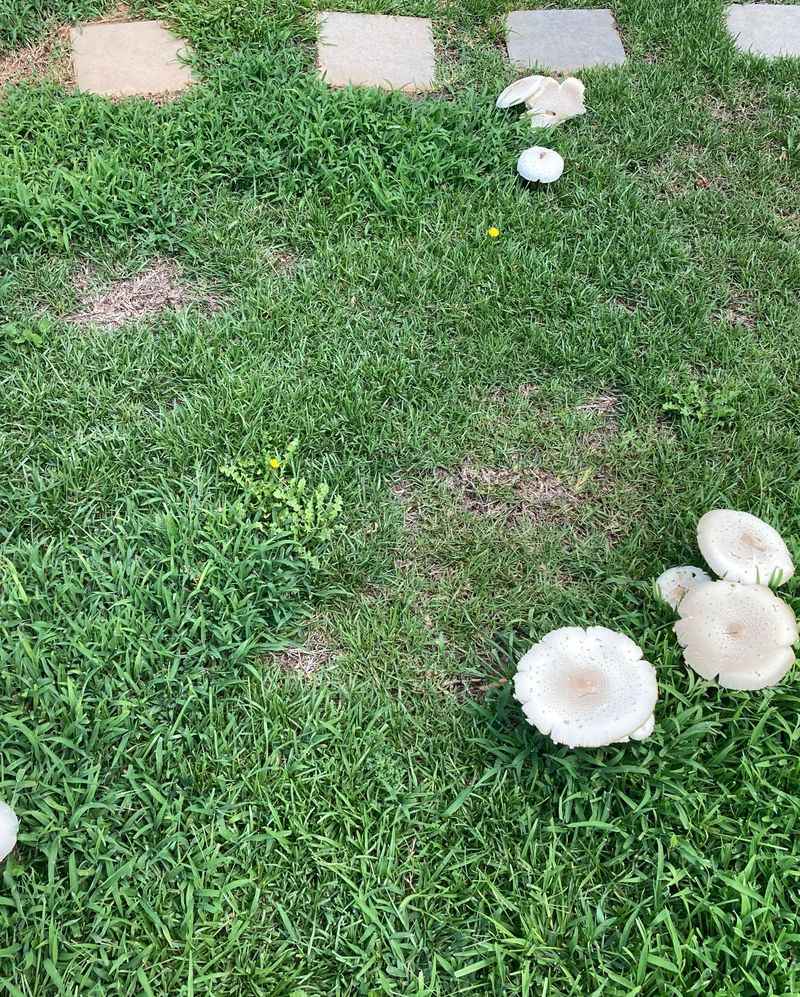
Some mushrooms are picky, and a whole group of them prefers ground that is rich in nitrogen. That means their favorite hangouts include spots where pets do their business or where fertilizer got a little heavy handed.
You might spot a dark green ring of extra-lush grass right beside the caps. Nitrogen acts like a growth switch for both the turf and the fungi feeding on organic waste.
Dog owners often see this pattern along fence lines and favorite corners. Manure-based fertilizers and unfinished compost can trigger the same response in garden beds.
Cleaning up waste promptly makes a real difference, and rinsing the area with water dilutes what soaked in. A gallon or two poured over the spot spreads the nitrogen out instead of leaving it concentrated.
Fertilizer habits deserve a look as well. Spreading half rates twice rather than one heavy dose keeps grass fed without loading the soil with more than it can use.
Oregon rains flush a lot of that excess nitrogen into storm drains and eventually into streams, so lighter feeding helps beyond your own fence. Slow-release formulas are gentler on both counts.
Keep small children and curious pets away from any caps you find, since a few nitrogen-loving species are genuinely unpleasant to swallow. Pick them, bag them, and toss them in the trash rather than the compost pile.
Read those caps as a nudge about cleanup routines.
8. Fairy Rings Signaling Deeper Turf Trouble
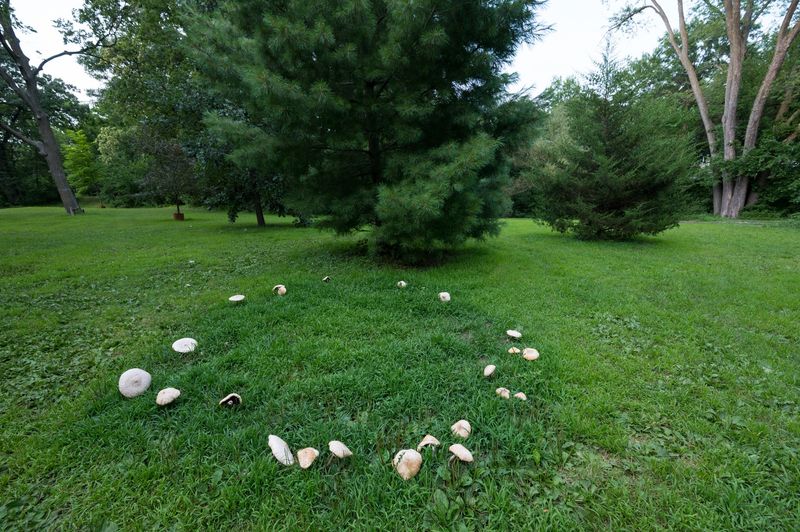
Circles and arcs of white caps have inspired folklore for centuries, with old stories claiming they marked where fairies danced through the night. The real explanation is less magical but far more interesting to a homeowner.
A single fungus colony starts at one point and grows outward in every direction at a steady pace. The oldest center fades out, the living edge keeps expanding, and mushrooms appear along that advancing rim.
Rings tend to show a band of very green grass, sometimes with a brown band beside it. That brown zone is the warning sign, because dense mycelium can make soil water-repellent and starve roots of moisture.
Test it by watering the ring and watching where the water goes. If it beads up and runs off, you are dealing with hydrophobic soil.
Aeration through the ring, combined with a wetting agent and deep slow watering, usually breaks the water barrier. Adding a bit of nitrogen to the surrounding lawn helps mask the color difference too.
Stubborn rings sometimes need soil replacement, digging out a foot deep and a foot past the edge. Most Oregon homeowners find the gentler approach good enough.
Rings expand a few inches to a couple of feet each year, so tracking them tells you how long the colony has lived there. Some have been going for decades.
Fun ending thought: fungi like these belong to the same family as one of the largest organisms ever found in Oregon’s forests.