Think Twice Before Touching This Caterpillar In Your Texas Garden
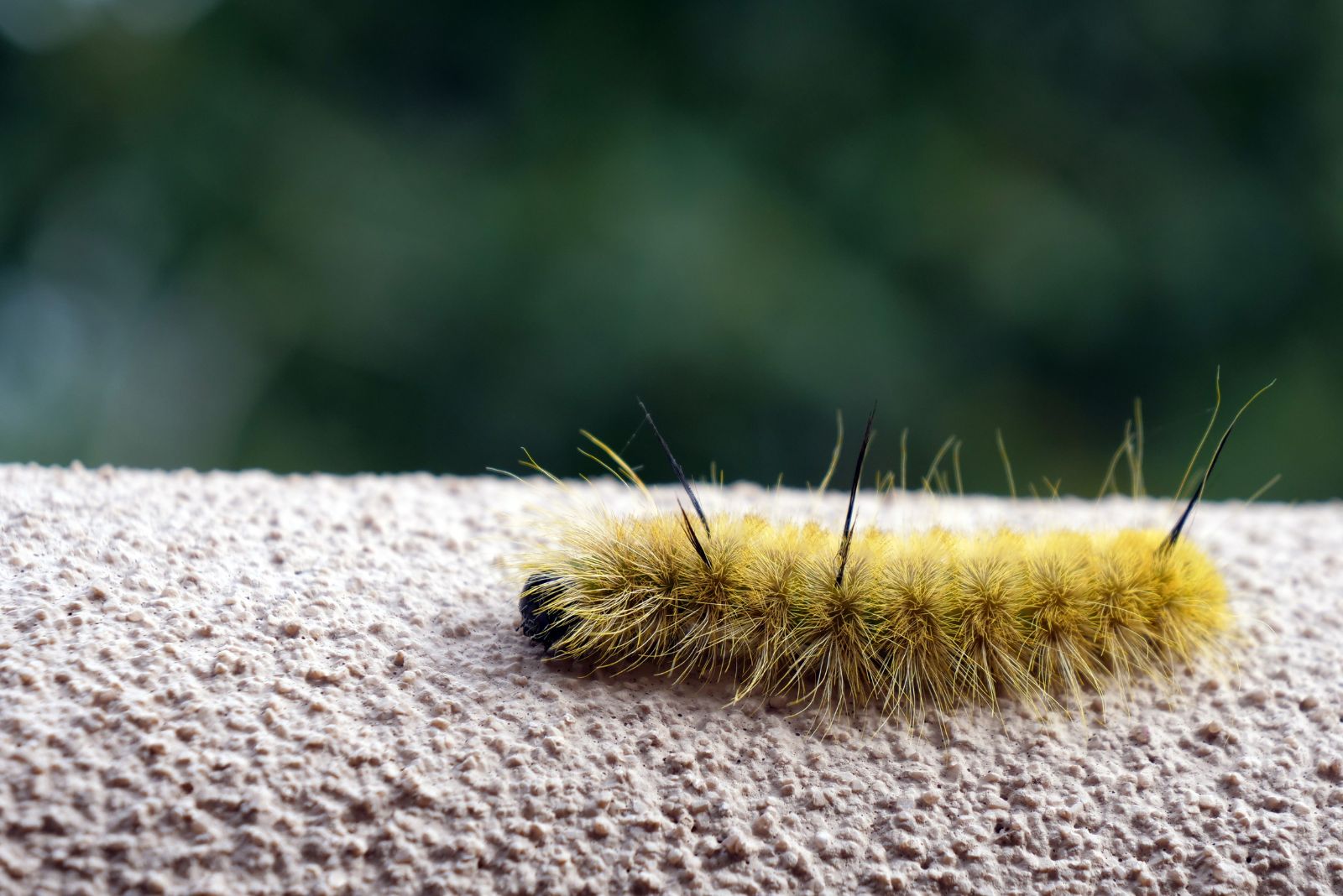
Some garden visitors are easy to ignore, while others deserve a little more respect. In Texas, one fuzzy-looking caterpillar can seem oddly harmless at first, almost like the kind of tiny creature a curious kid or gardener might want to pick up without a second thought.
That is where the trouble starts. Not every soft-looking insect is safe to touch, and this one has a way of catching people off guard.
Its bright, hairy appearance can make it stand out on leaves, flowers, and shrubs, especially during the warmer months when gardens are full of life. But those little hairs are not just for show.
They can irritate skin and leave behind a painful reminder that nature does not always come with a warning label. The American dagger moth caterpillar may be small, but it is one of those backyard surprises you will want to recognize before getting too close.
If you spend time gardening, pulling weeds, or checking plants by hand, knowing what this caterpillar looks like could save you from a very unpleasant encounter.
What Is The American Dagger Moth Caterpillar?
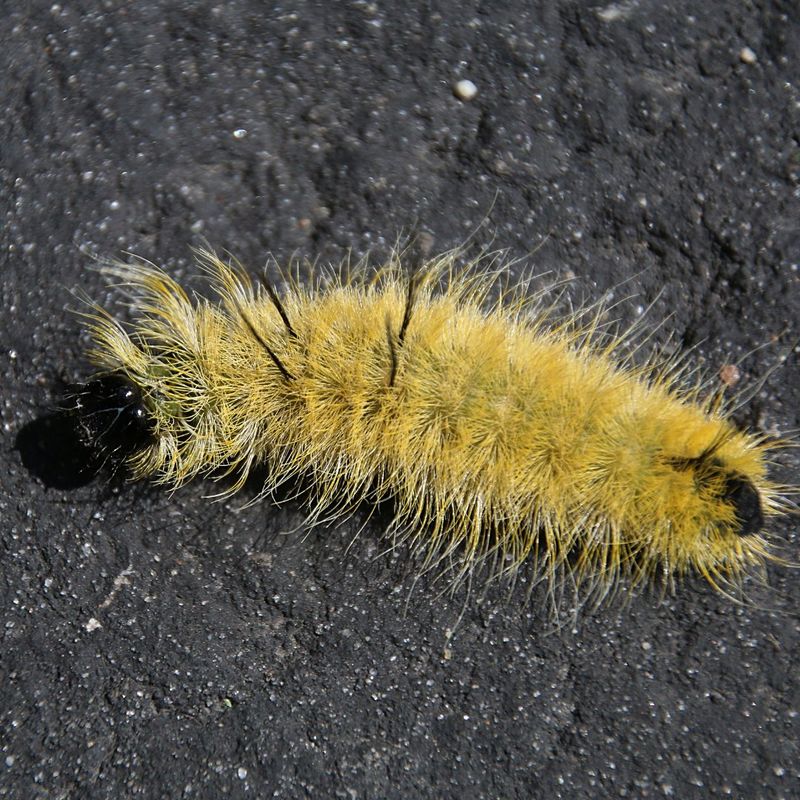
Bright yellow, covered in fluffy hairs, and hard to miss, the American Dagger Moth caterpillar is one of the most eye-catching insects you will find crawling through a Texas garden. Its scientific name is Acronicta americana, and it belongs to the moth family Noctuidae.
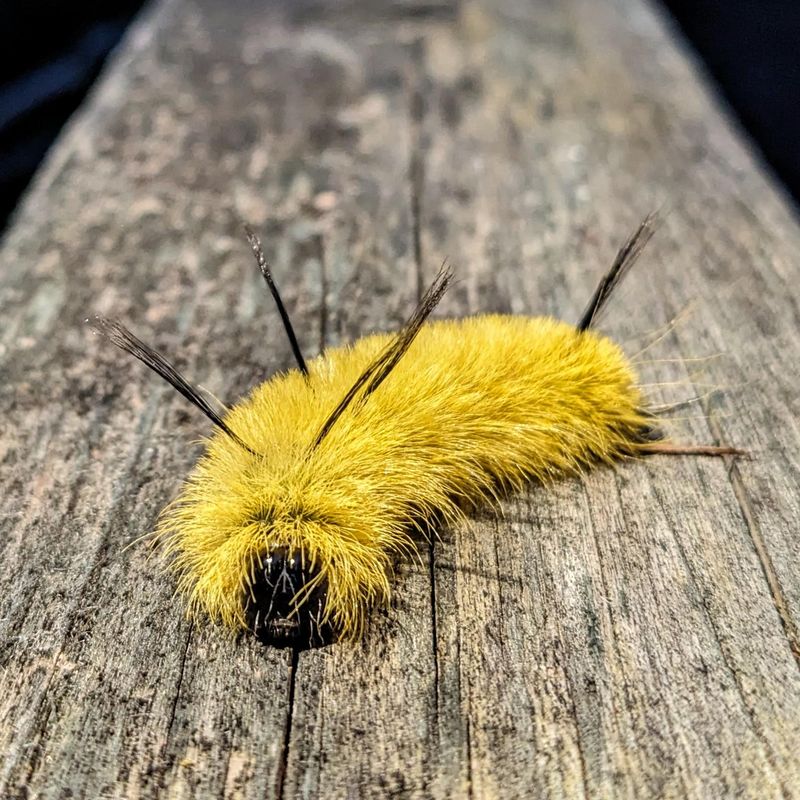
The body is a vivid yellow or pale yellow-white, and it is covered with dense, soft-looking hairs called setae. Along its back, you will notice long, black pencil-like tufts that stick straight up.
There are also a couple of shorter black tufts near the tail end. Many people see it and assume it is harmless because it looks so soft and fuzzy. That assumption is where things can go wrong.
The caterpillar goes through several stages before it eventually transforms into the American Dagger Moth, which is a grayish-white moth with dark markings. The full life cycle includes egg, larva (the caterpillar stage), pupa, and adult moth.
In Texas, you are most likely to encounter this caterpillar during late summer and early fall. It favors wooded areas, backyards with mature trees, and gardens with plenty of leafy plants.
Oak trees, elm trees, and birch trees are among its favorites. Across Texas, especially in central and eastern parts of the state, this caterpillar is a regular seasonal visitor.
Spotting one is not unusual, so knowing what you are looking at makes all the difference when you are out working in the yard.
Why You Should Think Twice Before Touching It
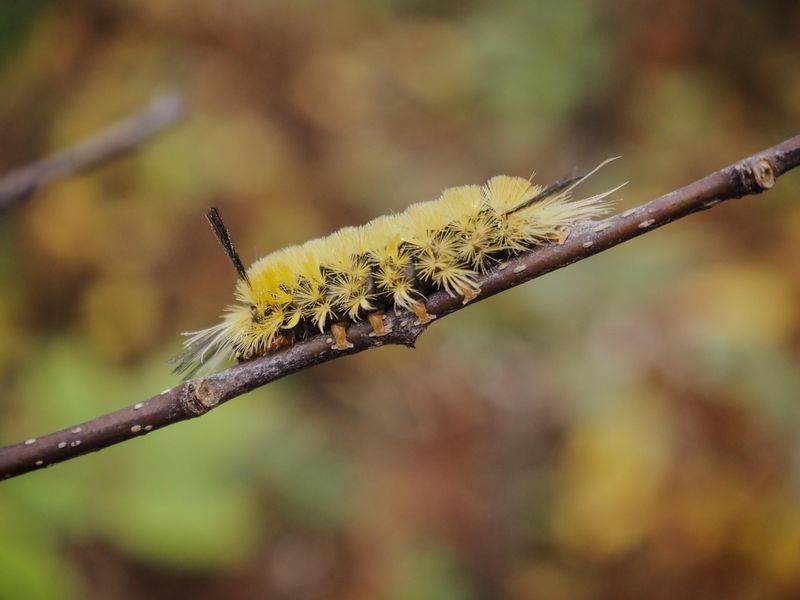
Here is the thing about the American Dagger Moth caterpillar: it is not going to chase you, and it is not venomous in the traditional sense. But those long, beautiful hairs on its body are not just for show.
The setae, which are the bristly hairs covering its body, can break off and embed themselves in your skin when touched. For many people, this causes a reaction that ranges from mild itching to a noticeable rash.
Reactions vary from person to person. Some folks touch one and feel nothing at all. Others end up with red, irritated skin that itches for several hours. People with sensitive skin or allergies may have a stronger response, including swelling or a more intense rash.
Kids are especially at risk because they are naturally curious and more likely to pick up something that looks interesting.
Across Texas, reports of skin irritation from fuzzy caterpillars are fairly common during the fall months when these critters are most active. The American Dagger Moth caterpillar is not considered dangerous, and reactions rarely require medical attention.
Still, an afternoon of itching and redness is no fun for anyone. Think of it like brushing up against stinging nettles in the garden.
It is not a medical emergency, but you will definitely wish you had been more careful. A little awareness goes a long way when you are spending time outdoors in Texas.
How To Identify It In Your Garden (And Not Confuse It)
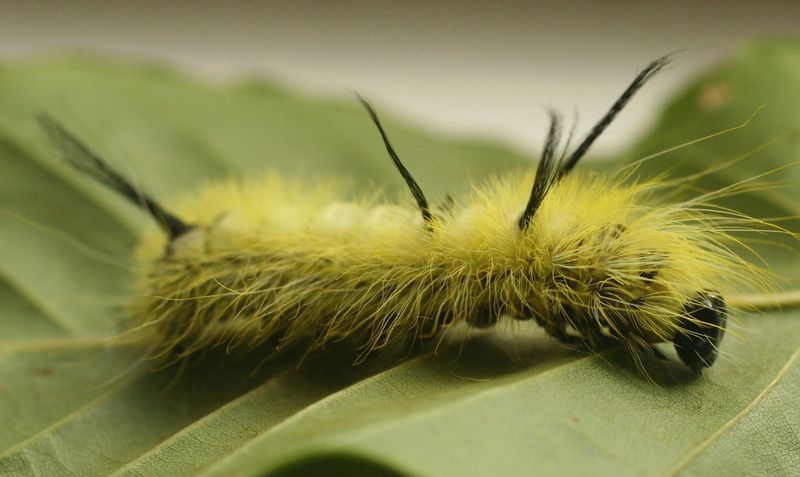
Knowing exactly what you are looking at can save you from an unpleasant surprise. The American Dagger Moth caterpillar has a few very specific traits that set it apart from other fuzzy caterpillars in Texas.
First, the body color is a bright, almost neon yellow or pale yellow-white. The entire body is covered in dense, soft hairs.
Then there are those distinctive long, black pencil-like tufts that rise from the back, usually in two or three clusters. Near the tail, there is often a single longer black tuft pointing backward.
Texas is also home to other fuzzy caterpillars that might look similar at first glance. The Hickory Tussock Moth caterpillar, for example, is white with black markings and can cause similar skin irritation.
The Banded Tussock Moth caterpillar has a paler look with orange and gray tufts. Neither of these has the same vivid yellow color as the American Dagger, so color is your best clue.
You are most likely to find the American Dagger Moth caterpillar on the undersides of leaves, along the edges of shrubs, or crawling up the bark of oak and elm trees. In Texas gardens, check your trees carefully during late summer.
Sometimes they drop from branches and land on garden furniture, pathways, or even on you. Spotting one before you accidentally touch it is much better than the alternative. Take a moment to look before you reach into a shrub or pick up a branch.
Is It Harmful To Your Plants Or Just Passing Through?
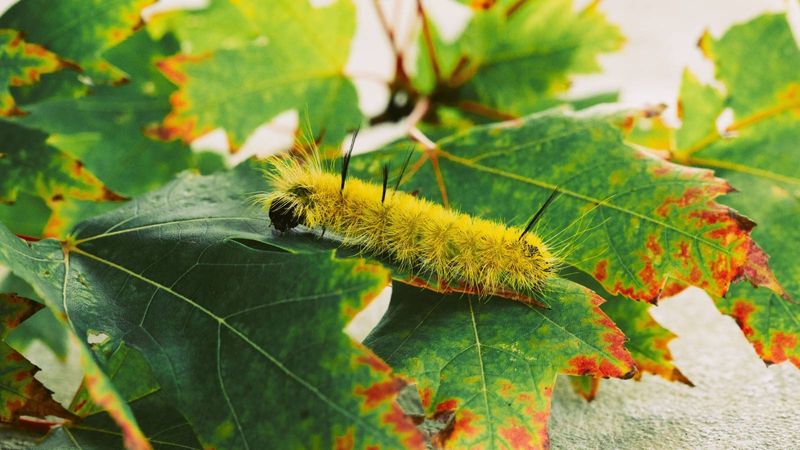
Gardeners in Texas often worry when they spot a caterpillar munching on their plants. The American Dagger Moth caterpillar does feed on leaves, and it has a broad appetite.
Oak trees are a top choice, but it also feeds on elm, ash, birch, maple, and a variety of other deciduous trees. If you have mature trees in your Texas yard, there is a good chance this caterpillar has visited them at some point.
The good news is that a single caterpillar, or even a handful of them, is unlikely to cause serious damage to a healthy tree. Trees can handle losing some leaves without too much trouble.
It becomes more of a concern when caterpillar populations spike and large numbers of them are feeding on the same plant at the same time. That level of infestation is not common with this species, but it can happen in certain years when conditions are just right.
From an ecological standpoint, the American Dagger Moth caterpillar plays a helpful role in the Texas ecosystem. It serves as a food source for birds, parasitic wasps, and other insects.
When it eventually transforms into a moth, it becomes part of the food web for bats and larger insects. So while it might nibble on your oak tree, it is contributing to the balance of nature in your backyard.
Unless you notice significant leaf loss or a large group of them feeding together, there is usually no reason to panic or take action.
What To Do If You Find One In Your Yard
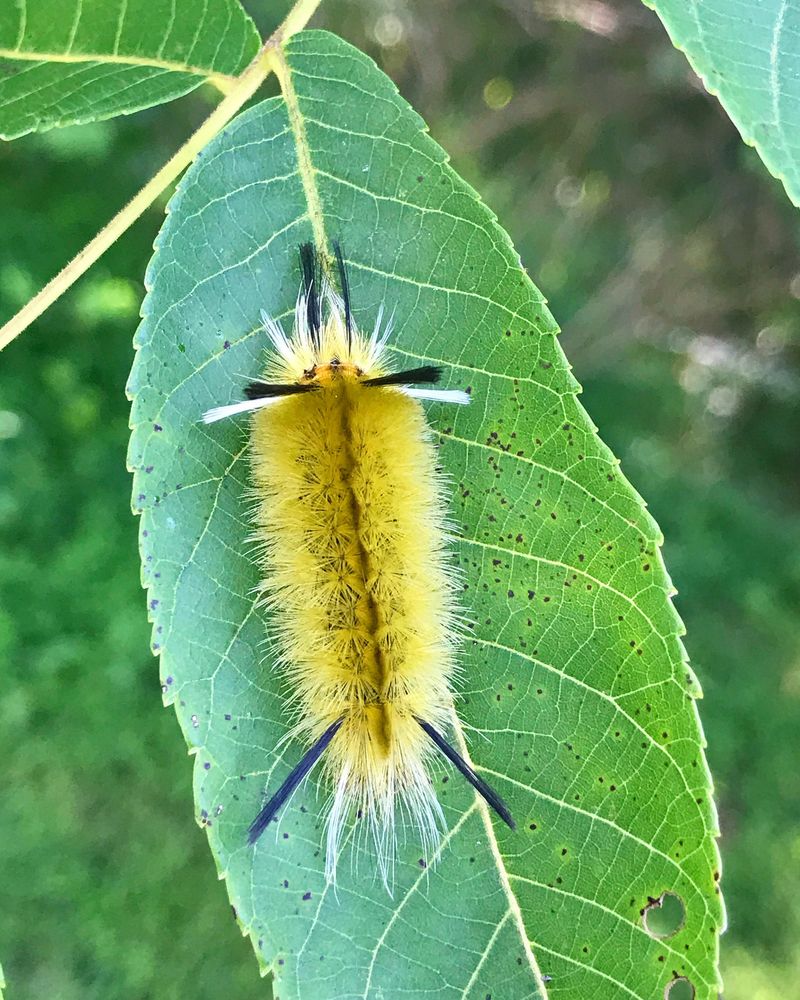
Finding one of these caterpillars in your Texas yard does not mean you need to panic or immediately reach for a spray bottle. Most of the time, the best option is simply to leave it alone.
The caterpillar is just doing its thing, eating leaves and getting ready to pupate. If it is not in a spot where people or pets are likely to brush against it, there is no need to move it at all.
If the caterpillar is somewhere that feels problematic, like a high-traffic walkway, a children’s play area, or a spot where your dog loves to sniff around, then relocating it makes sense. Never use your bare hands to pick it up.
Instead, grab a pair of thick gardening gloves and gently scoop the caterpillar onto a stick or a piece of cardboard. Move it to a nearby shrub, tree, or patch of vegetation where it can continue its life cycle without bothering anyone.
Some people in Texas also use long tweezers or tongs to move caterpillars safely. The key is to avoid any direct skin contact with the hairs.
Even gloves that are too thin might allow the bristly setae to poke through, so thicker leather or rubber gloves are a smarter choice. After handling, wash your gloves and any tools thoroughly.
If you have kids who spend time in the garden, this is a great opportunity to teach them about caterpillars and why some things in nature are better admired from a safe distance.
What Happens If You Touch It (And What To Do Next)
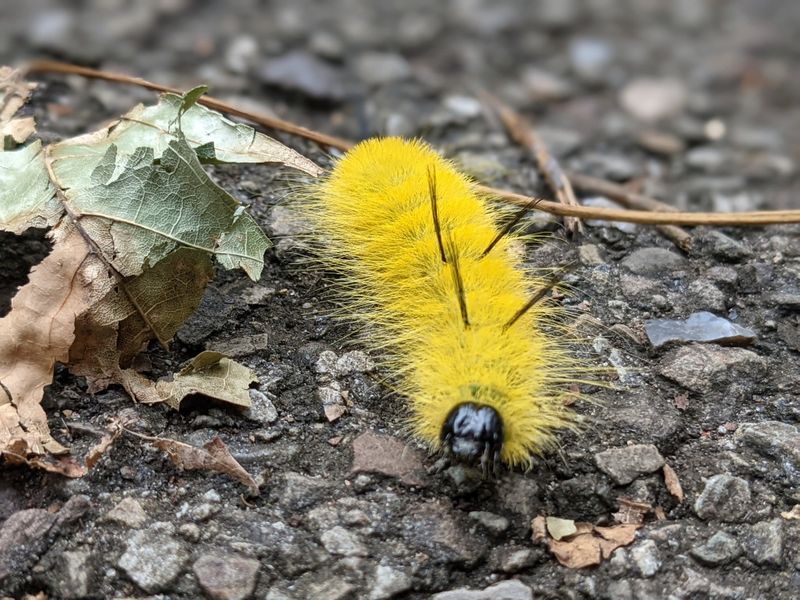
Accidents happen, especially in the garden. If you touch an American Dagger Moth caterpillar, you might feel a mild tingling or itching sensation almost right away.
Within a short time, the skin that made contact could turn red and develop a rash or small bumps. The intensity of the reaction depends on your skin sensitivity and how much contact you had with the hairs.
The first thing to do is avoid rubbing the area. Rubbing can push the tiny hairs deeper into your skin and make things worse.
Instead, use a piece of tape, like regular masking tape or even a strip of duct tape, and press it gently over the affected area. Then peel the tape away slowly.
This helps lift the embedded hairs out of your skin. After that, wash the area thoroughly with soap and warm water.
Once the area is clean, applying a hydrocortisone cream or an over-the-counter anti-itch cream can help calm the irritation. A cold pack or cool, damp cloth can also reduce redness and discomfort.
Most reactions clear up within a few hours to a day. In rare situations, people with strong allergies might experience more significant symptoms like swelling or difficulty breathing.
If that happens, seek medical attention right away. For the vast majority of people across Texas who accidentally touch one of these caterpillars, though, a little first aid at home is all that is needed to feel better quickly.
Should You Remove Them Or Let Nature Be?
Deciding whether to remove the American Dagger Moth caterpillar from your Texas garden is a question worth thinking through carefully. On one hand, these caterpillars are a natural part of the local ecosystem.
Birds like chickadees, blue jays, and orioles actively seek them out as a protein-rich snack. Parasitic wasps also use them as hosts for their larvae, which helps keep caterpillar populations in check over time.
Leaving them alone is usually the right call if you spot just one or two caterpillars on a large tree. They will finish their feeding, drop to the ground, spin a cocoon, and emerge as moths later in the season.
The whole process supports the broader food web that keeps Texas gardens healthy and balanced. Removing them unnecessarily can actually disrupt that natural cycle.
On the other hand, removal makes sense in specific situations. If you have a heavy infestation where dozens of caterpillars are stripping a young or already stressed tree, stepping in is reasonable.
The same goes for high-traffic areas of your yard where children or pets could easily come into contact with them. In those cases, relocate them using gloves and tools rather than using pesticides, which can harm beneficial insects and other wildlife.
The goal is balance. Texas gardeners who understand the role these caterpillars play in nature are better equipped to make smart, thoughtful decisions that protect both their plants and the local ecosystem they share their yard with every season.