This Container Gardening Mistake May End More North Carolina Pots In August Than Any Disease Or Pest
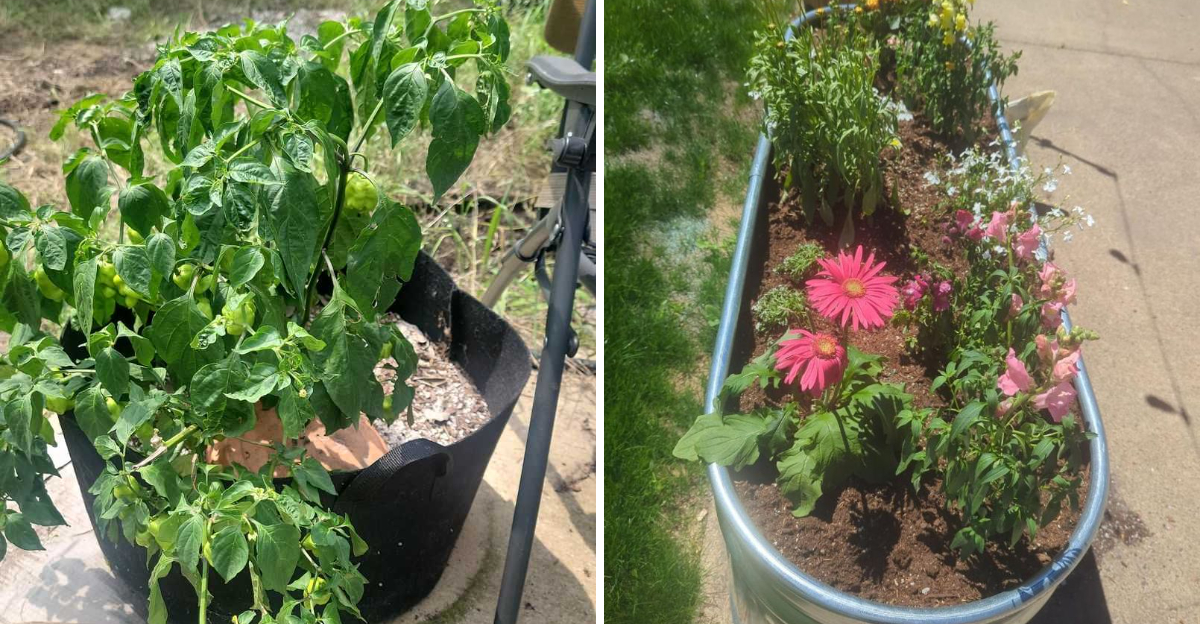
North Carolina container plants can look betrayed even after you watered them.
That is the maddening August trick.
You pour water into the pot, it rushes out the drainage hole, and everything looks handled. Meanwhile, the root ball may still be sitting there dry as a cracker, wondering why help skipped the meeting.
Once potting mix dries too far, it can shrink away from the container wall and turn stubbornly water-resistant. The next drink slides down the gap, misses the roots, and leaves the plant wilting in full porch heat.
Rude? Absolutely. Common? Very.
This mistake can finish off summer pots faster than most pests because gardeners think they are watering correctly while the plant never actually gets moisture where it matters.
So how do you stop August containers from faking a good soak?
Start by checking the root ball, slowing the water, soaking deeply, and refusing to trust drainage holes as proof. The pot may be leaking. The roots may still be thirsty.
Bone Dry Potting Mix Is The Mistake
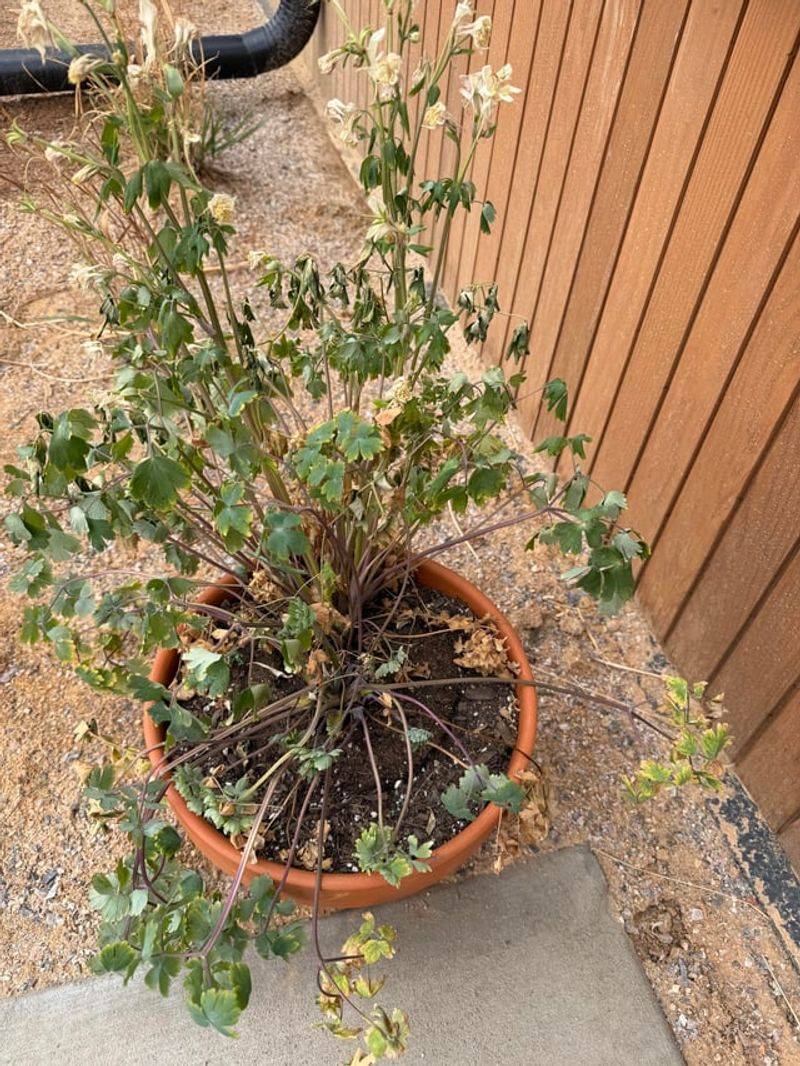
Run your finger around the inside rim of any pot that has been sitting in August sun for a few days.
Chances are good you will feel a gap, sometimes a quarter inch or wider, between the potting mix and the container wall.
That gap is the enemy of every plant you are trying to keep alive this summer.
Peat-based and pine bark potting mixes, the kind sold at nearly every garden center in North Carolina, are excellent at holding moisture when they stay consistently damp.
NC State Extension points out that these mixes can become almost impossible to rewet once they dry out completely.
The mix shrinks as it dries, pulling away from the pot edges and hardening into something that feels more like a dry sponge brick than garden soil.
When you pour water over hardened potting mix, physics takes over in the worst way.
Water finds the path of least resistance, which is straight down that gap between the mix and the pot wall. It flows out the drainage hole in seconds, and you see water draining and assume the job is done.
The root ball in the center barely gets touched.
Roots sitting in dry, shrunken media cannot absorb nutrients, cannot cool themselves, and cannot support the leaves and blooms up top.
Wilting at noon, crispy leaf edges, and suddenly dropping flowers are all signs the mix has crossed into the danger zone. Catching it early makes all the difference.
Check Moisture Before Heat Peaks
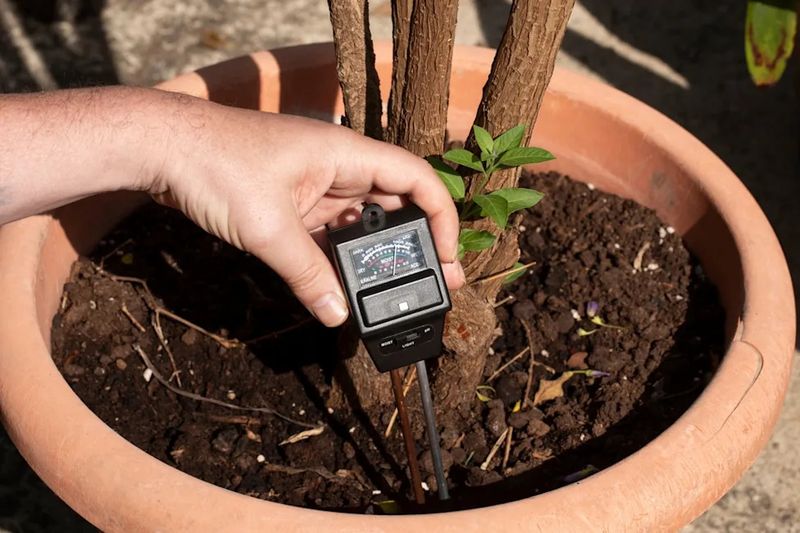
A wilted pot at noon is already behind schedule.
By the time leaves droop and stems go soft in the August afternoon heat, the potting mix has likely been dry for hours, and plants have been working overtime just to stay upright.
Morning checks change everything about how well your containers survive the summer.
Get outside before 9 a.m. when temperatures in the Piedmont and Coastal Plain are still manageable.
Press your finger about an inch into the potting mix of each container. If it feels dry at that depth, water right then. Do not wait until you see stress signs.
Your North Carolina Garden Changes Every Week. Your Plan Should Too.
Gardening in North Carolina changes quickly throughout the season. Every Friday you’ll receive a simple weekly plan showing exactly what to plant, prune, fertilize, harvest, and protect so you never miss the right timing.
In August, stress signs mean the plant is already struggling hard.
Lift small pots with one hand.
A pot that feels surprisingly light is almost certainly dry at the root level, even if the surface looks slightly damp from morning dew or a brief sprinkle the night before. Weight is one of the fastest and most reliable moisture checks you have.
NC State recommends checking containers daily during hot weather, and in August that advice is worth following closely.
Small pots may need water twice a day when temperatures stay above 90 degrees.
Building a quick morning walk-through into your routine, coffee in hand, takes only a few minutes and can save weeks of work growing a healthy pot back from the edge.
Soak Until Water Runs Through
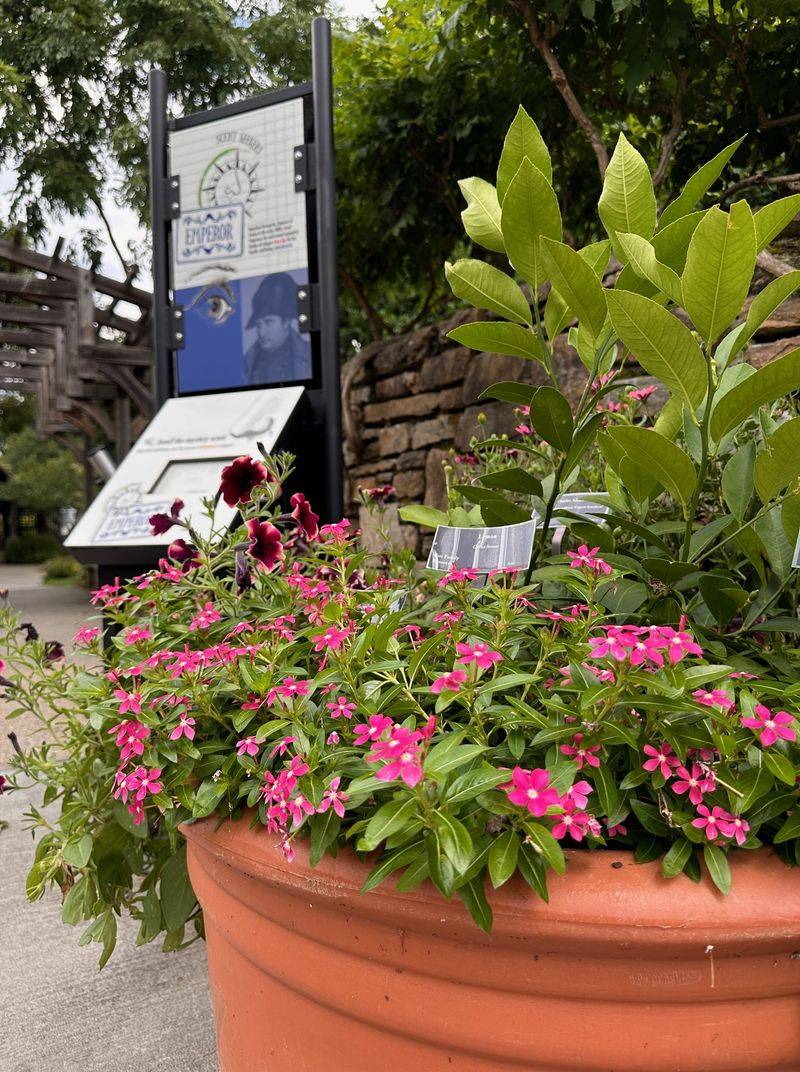
Water rushing out the bottom of a pot after just a few seconds is not proof the plant got watered.
In a bone-dry container, that fast exit means water found the gap and ran straight through without wetting the root ball at all.
Slow and steady is the only approach that actually works when media has dried out.
Set your hose to a gentle flow or use a watering can with a rose head.
Pour water slowly over the entire surface of the potting mix, not just the center. Move the water around so every part of the surface gets wet.
Wait. Let the water soak in for thirty seconds to a minute before adding more. Repeat this two or three times until you see steady, slow dripping from the drainage hole that continues for more than just a few seconds.
For pots that are severely dry, try bottom watering.
Set the container in a bucket, tub, or saucer filled with a few inches of water and let it sit for twenty to thirty minutes. The potting mix will slowly wick moisture upward from the bottom, rewetting the entire root zone evenly.
Some gardeners add a tiny drop of dish soap to their watering can when dealing with very dry media.
The soap acts as a wetting agent, breaking the surface tension of the hardened mix and helping water penetrate faster.
NC State Extension notes that wetting agents can help rehydrate difficult media without harming plants when used sparingly.
Move Pots Off Hot Concrete
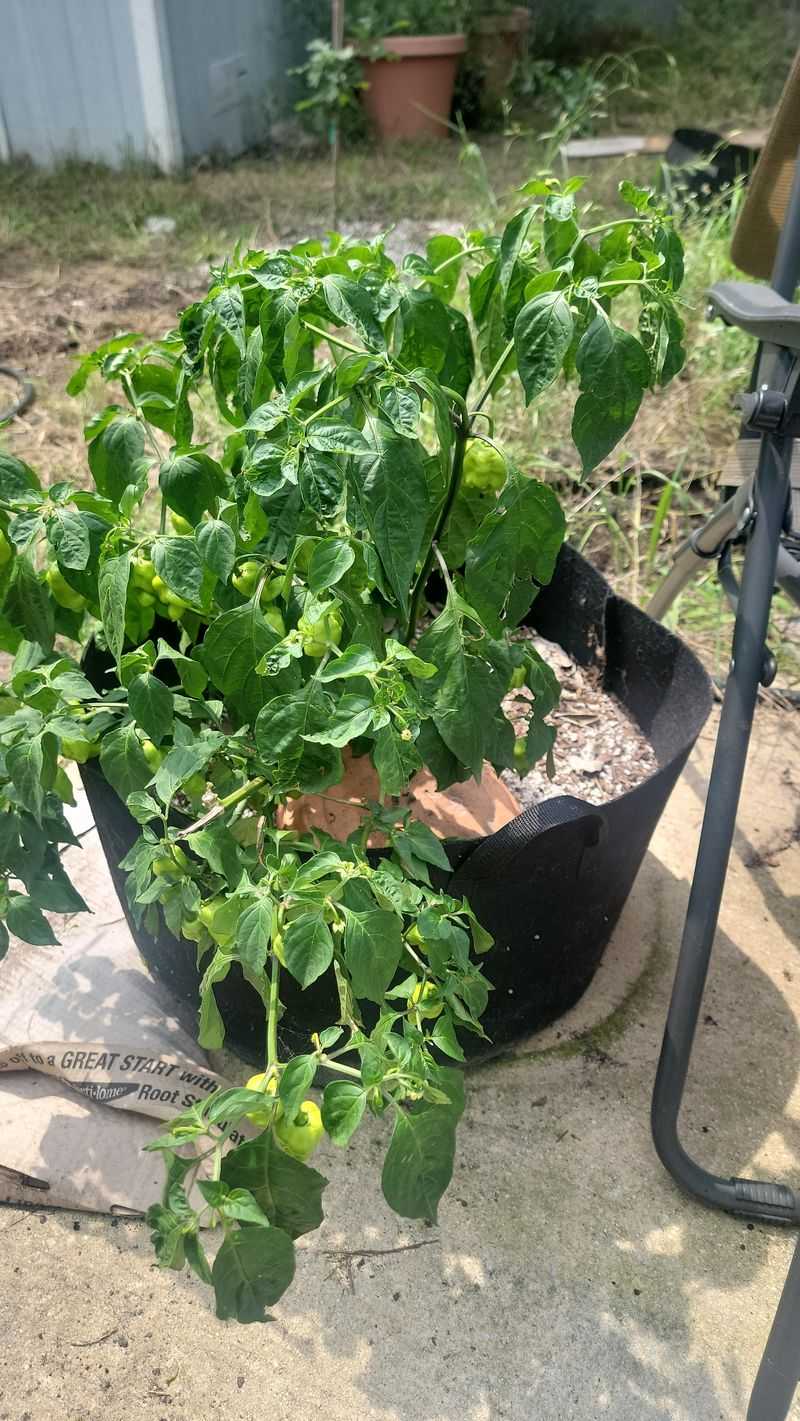
A small pot sitting on hot concrete in a North Carolina August is fighting battles from two directions at once.
The sun hammers the top while the concrete radiates stored heat straight through the pot walls and into the root zone.
Roots cooked from below cannot function properly no matter how much water you pour in from the top.
Concrete and asphalt surfaces can reach 150 degrees Fahrenheit or higher on a clear August afternoon.
That heat transfers directly into dark-colored plastic and ceramic pots, raising root-zone temperatures to levels that damage root cells and shut down the plant’s ability to move water and nutrients.
Symptoms look exactly like drought stress, because in a way, that is exactly what it is.
Moving pots off concrete and onto a wooden deck, a gravel surface, or even a few bricks creates an air gap underneath that dramatically lowers root-zone temperatures.
Pot feet serve a double purpose by improving drainage and reducing heat transfer at the same time. They cost very little and make a real difference.
If moving pots is not practical, try placing a thick folded burlap sack or a doubled-up piece of outdoor rug under the containers.
Even a half-inch of insulation between a hot surface and the pot bottom can drop root-zone temperatures by ten degrees or more.
Cooler roots stay active, absorb water efficiently, and keep plants looking strong through the hottest weeks of the year.
Group Containers For Light Shade
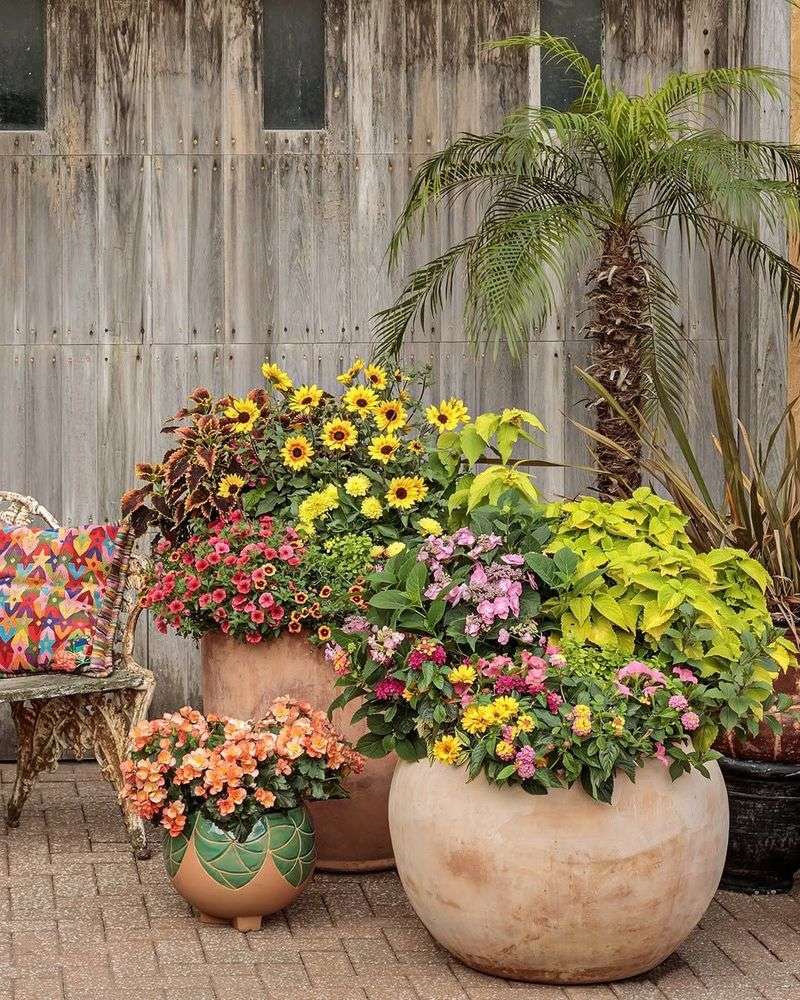
Scattered pots spread across an open sunny patio look beautiful in May. By August, each isolated container is a heat island, exposed to full sun from every angle with hot dry air moving freely around it.
Grouping containers together is one of the simplest changes you can make, and it costs absolutely nothing.
When you cluster pots close together, the plants themselves create a canopy effect.
Leaves shade neighboring pots, reducing direct sun hitting the container walls. The air between grouped plants stays a few degrees cooler and holds more humidity than the open air around solo pots.
That small difference in microclimate adds up to less evaporation and less stress on roots throughout the day.
Taller plants placed on the west side of a group can block the brutal late-afternoon sun that hits hardest between 2 p.m. and 5 p.m. in North Carolina summers.
A large pot of elephant ears, a trellis with sweet potato vine, or even a potted shrub can cast enough shade to protect smaller, more delicate containers sitting nearby.
Grouping also makes watering more efficient.
You can walk a hose or watering can through a cluster quickly rather than chasing individual pots scattered across a large space.
Think of it as building a little plant community where everyone looks out for each other. Pots that have friends nearby simply hold up better when August turns brutal.
Add Mulch To The Soil Surface
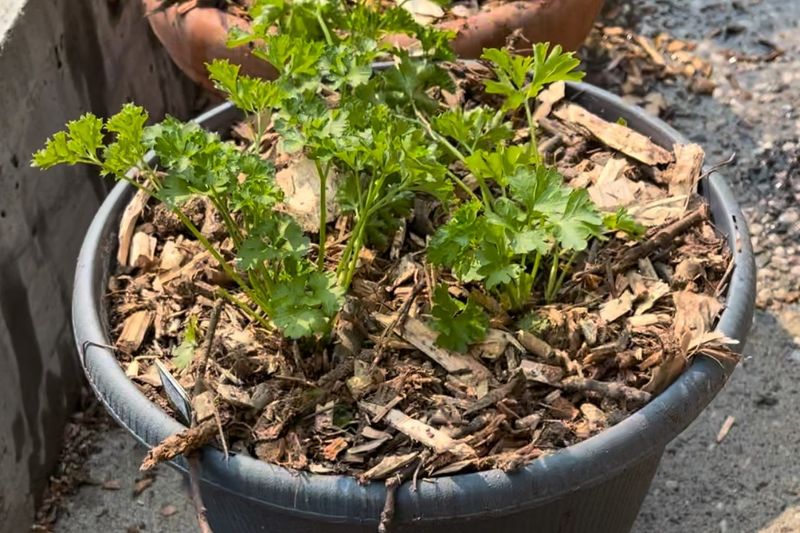
Many gardeners mulch their garden beds without a second thought, but the surface of a container pot is almost always left bare.
That bare potting mix sits in direct sun, loses moisture to evaporation at a shocking rate, and heats up fast.
A thin layer of mulch on top of your containers fixes this with almost no effort.
Pine bark mini nuggets work beautifully in containers and happen to be widely available at garden centers across North Carolina.
Spread a half-inch to one-inch layer over the potting mix surface, keeping mulch away from plant stems to prevent rot.
That thin layer acts like a lid, slowing evaporation and keeping the top layer of potting mix from hardening into a crust that resists water penetration.
Shredded leaves, which are free if you saved any from last fall, work just as well.
Coco coir is another excellent option that holds a little moisture itself while protecting the surface below.
Check underneath the mulch layer when you do your morning moisture checks.
The surface might feel dry on top while the potting mix below stays nicely damp, which is exactly what you want.
Mulching containers is one of those small habits that serious container gardeners swear by. It is easy, inexpensive, and the plants notice the difference almost immediately in the brutal heat of a Carolina August.
Upgrade Tiny Pots Fast
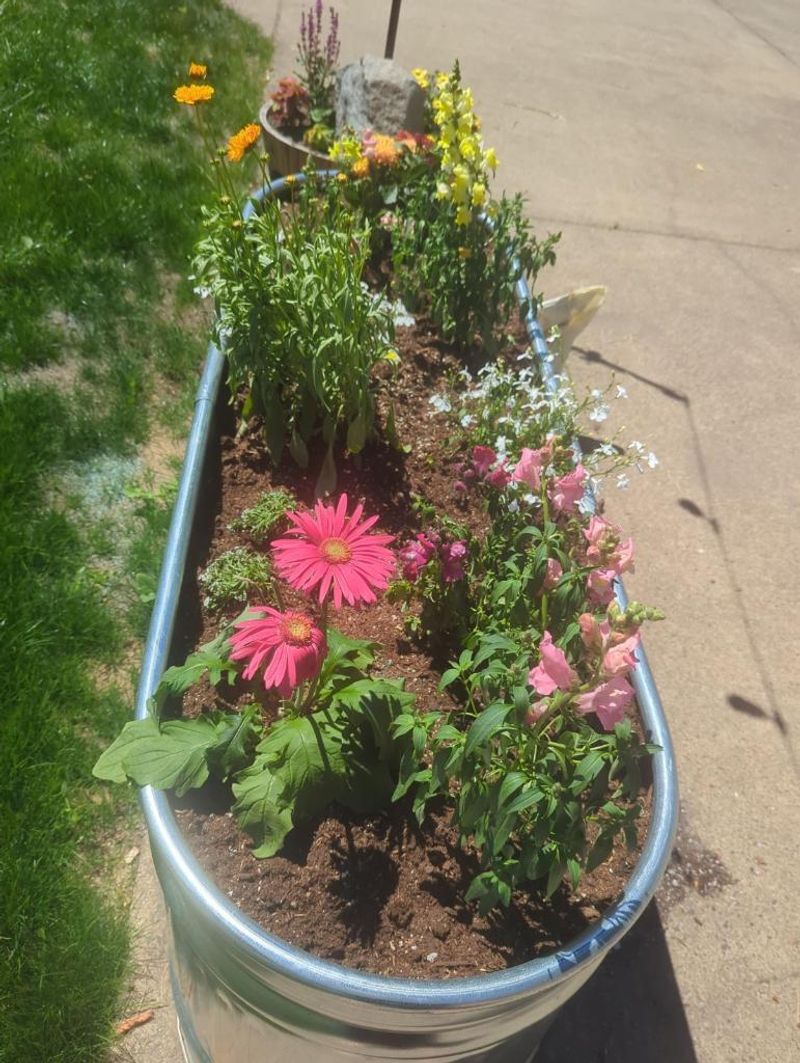
Tiny pots are charming in spring. By August, they are a liability.
Small containers dry out so fast in summer heat that they can go from adequately moist to bone dry in just a few hours on a sunny day.
The math is simple and a little brutal.
A small volume of potting mix holds very little water to begin with. Roots in a small pot quickly fill every inch of available space, leaving almost no media to hold moisture between waterings.
On a 95-degree day with low humidity and any breeze at all, a four-inch pot might need water twice before noon.
If you have small pots that are struggling and wilting daily no matter how often you water, the fastest fix is repotting into a larger container right now.
Bump up to a pot at least twice the diameter of the current one. Use fresh potting mix, water the plant in thoroughly, and move it to a spot with afternoon shade.
Plants that looked miserable in tiny pots often bounce back within a few days once they have more soil volume around their roots.
Look for containers with light colors when upgrading, since white, cream, and light gray pots absorb far less heat than dark brown or black ones.
Self-watering containers with built-in reservoirs are worth every penny in August and keep moisture available to roots even between waterings.