This Destructive Pest Targets Pennsylvania Sweet Corn At An Alarming Rate
There are few things more satisfying in a Pennsylvania garden than sweet corn at peak season.
The anticipation that builds through the growing weeks, the moment you peel back the husk on a perfectly filled ear, the flavor that makes everything you bought at the grocery store seem like a pale imitation.
But that satisfaction has a serious enemy, and it’s been showing up in Pennsylvania sweet corn patches with increasing intensity each season. One destructive pest targets sweet corn at exactly the moment it matters most.
It doesn’t give much warning. By the time most Pennsylvania gardeners discover the damage, the pest is already deep in the ear, protected from most treatments, and the harvest that looked promising from the outside is compromised in ways that become obvious only when you’re standing there holding a cob you were genuinely looking forward to.
Reports from home gardeners and small farm growers across Pennsylvania have been increasing, and the pest is becoming harder to manage as its pressure builds through the season.
Corn Earworms Attack Developing Ears
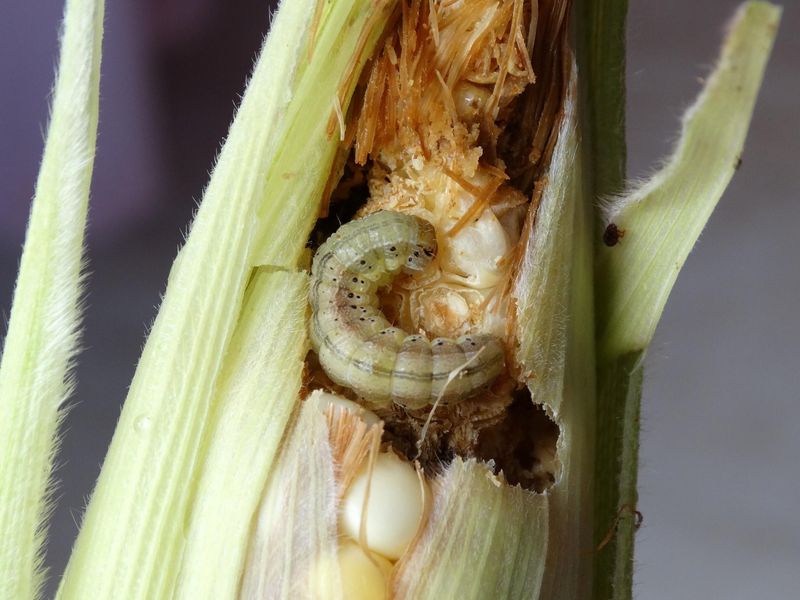
Few pests are as sneaky or as destructive as the corn earworm when it comes to sweet corn. This caterpillar has one goal once it hatches: find its way into a developing corn ear and start eating. And that is exactly what it does, wasting no time at all.
The larvae, which are the worm-like young of the corn earworm moth, burrow directly into the ear after hatching near the silk. Once inside, they feed on the tender, developing kernels.
The damage they cause is not just cosmetic. Chewed-up kernels mean less corn for you to enjoy, and the waste left behind by the caterpillar can cause mold and rot to spread inside the ear.
Corn earworm larvae come in different colors. Some are green, some are tan, and others are nearly black.
They can grow up to almost two inches long before they leave the ear to pupate in the soil. Each larva typically stays in one ear, but that one larva can ruin a significant portion of the cob.
For Pennsylvania sweet corn growers, this pest is a consistent seasonal challenge. The earworm does not just appear randomly.
It follows predictable patterns tied to moth flight activity and silking timing. Knowing that larvae will almost certainly appear gives growers a reason to stay alert.
Protecting your corn starts with understanding what you are up against. The corn earworm is aggressive, fast-moving, and well-adapted to surviving inside the ear where many control methods cannot reach.
Staying one step ahead of this pest makes all the difference when harvest time arrives.
Fresh Corn Silks Are The Main Target
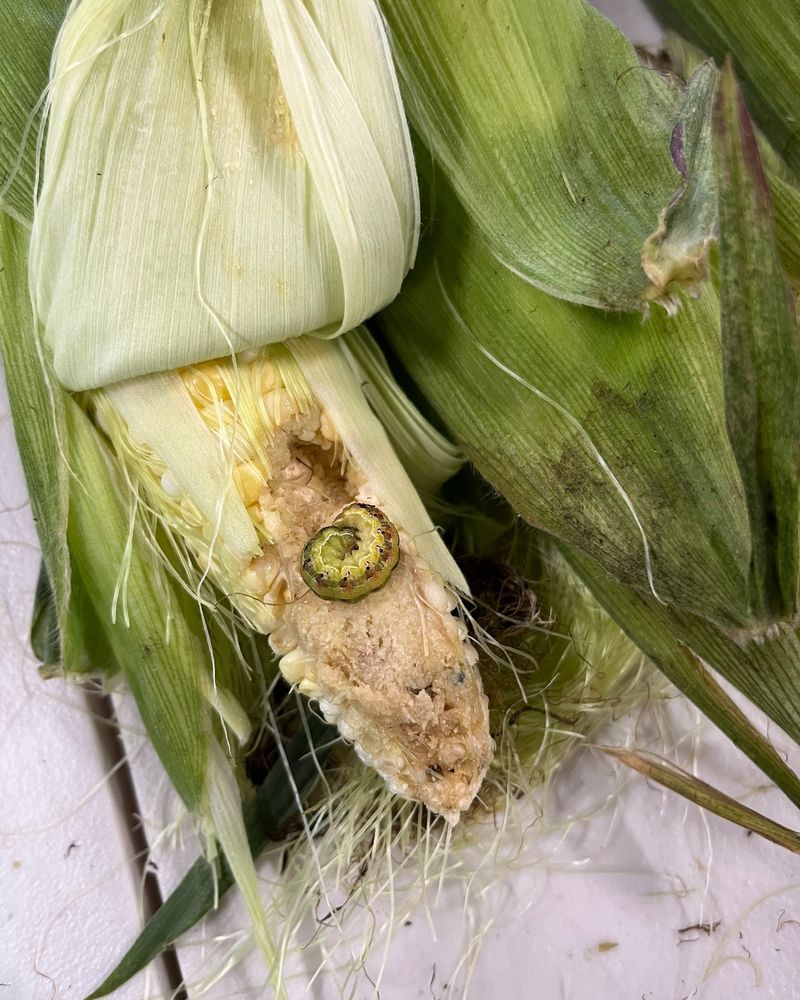
Believe it or not, the whole problem starts with something as delicate as corn silk. Those soft, thread-like strands that poke out from the top of a developing ear are exactly what adult corn earworm moths are looking for when they search for a place to lay their eggs.
Your Pennsylvania Garden Changes Every Week. Your Plan Should Too.
Gardening in Pennsylvania changes quickly throughout the season. Every Friday you’ll receive a simple weekly plan showing exactly what to plant, prune, fertilize, harvest, and protect so you never miss the right timing.
The silk is the gateway, and once eggs are laid there, trouble is not far behind. Adult corn earworm moths are active at night. They fly through fields and gardens, searching for corn plants that are in the silking stage.
When a female moth finds fresh silk, she lays her eggs right on or near it. A single moth can lay hundreds of eggs over her lifetime, so even a small number of moths can lead to a big infestation fast.
Once the eggs hatch, the tiny caterpillars do not wander far. They immediately start moving down the silk toward the ear.
The silk acts almost like a guide path, leading the young larvae straight to the kernels. By the time most growers notice anything is wrong, the larvae are already inside the husk and well on their way to causing damage.
Silking is one of the most important and vulnerable stages of sweet corn growth. During this period, the plant is open to attack in a way it is not at any other time.
Monitoring your corn plants closely during silking can help you catch early signs of moth activity before eggs hatch and larvae enter the ear.
Checking silk condition regularly and watching for egg deposits gives you a real advantage in managing this pest before it gets out of hand.
The Damage Often Starts At The Tip
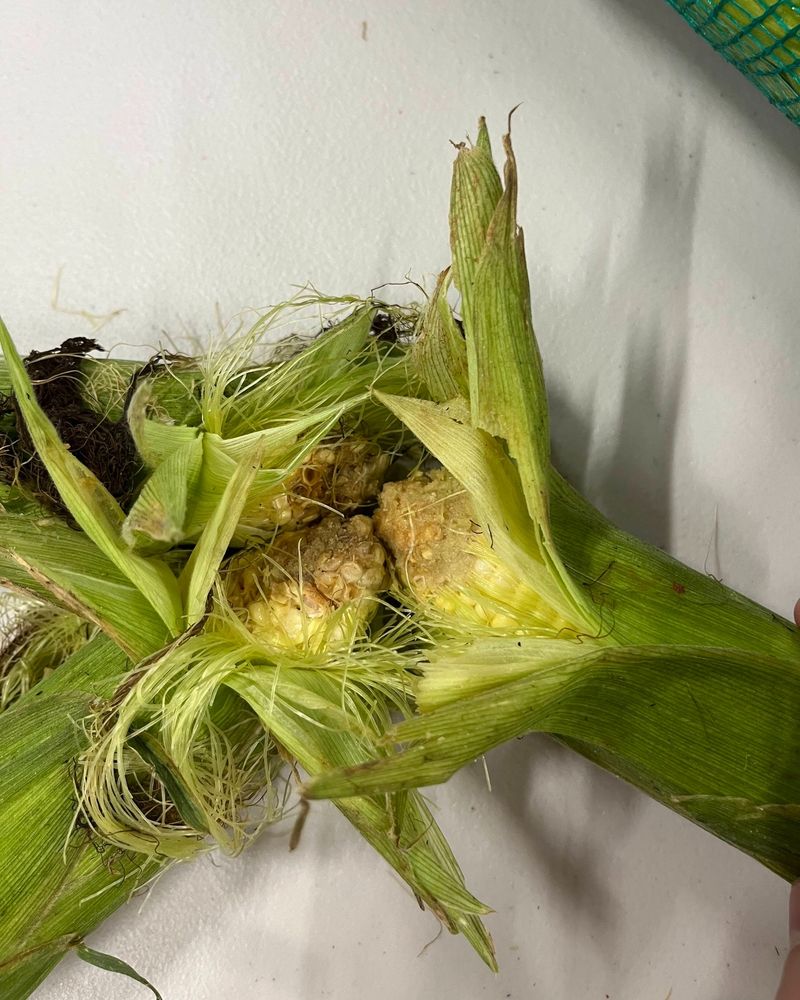
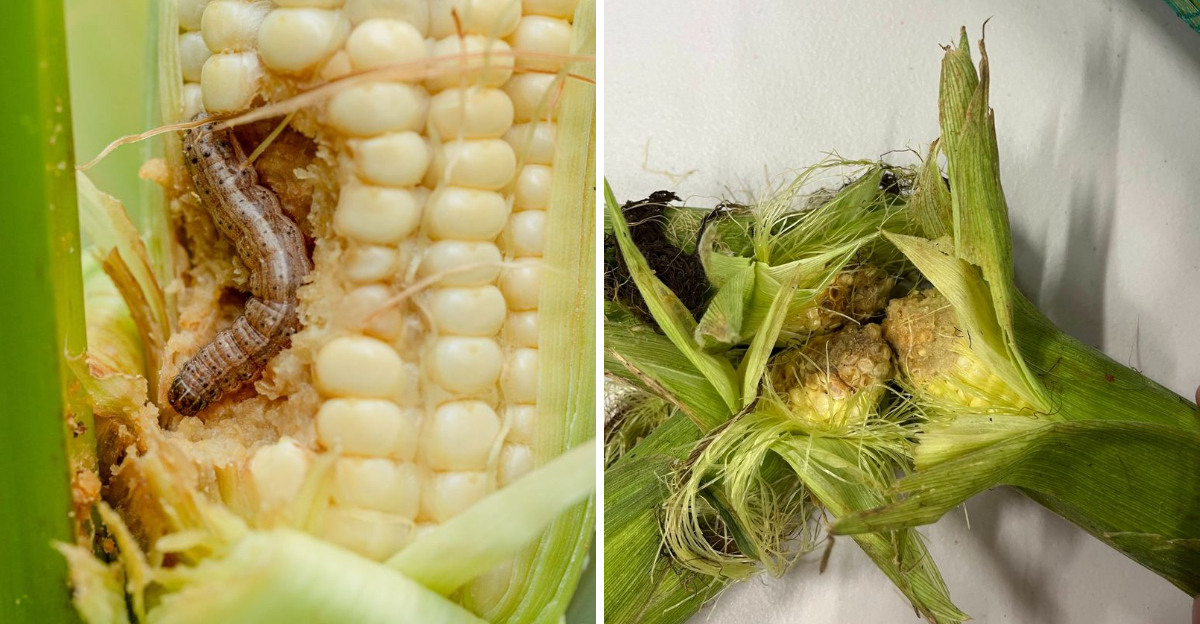
Pull back the husk on an infested ear of sweet corn and you will likely see the same thing every time: chewed kernels, dark waste material called frass, and sometimes the caterpillar itself, all concentrated near the tip of the cob.
The tip is where the damage almost always begins, and it is the first place you should look when scouting for corn earworm activity.
The reason damage starts at the tip is simple. That is where the silk attaches to the kernels, and larvae follow the silk straight down to that spot.
Young caterpillars begin feeding at the very top of the ear, working their way down as they grow. In heavy infestations, the damage can extend several inches into the cob, making a large portion of the ear unusable.
Beyond the physical damage to kernels, the frass left behind creates another serious problem. Moisture gets trapped inside the ear along with the waste material, creating perfect conditions for fungal growth and rot.
An ear that looks fine on the outside can be completely spoiled on the inside because of secondary mold that developed after earworm feeding.
For home gardeners, finding an earworm at the tip of an otherwise healthy ear can be frustrating but manageable. Many gardeners simply cut off the damaged tip and enjoy the rest of the cob.
For commercial growers, however, even minor tip damage can make ears unmarketable, which adds up to real financial losses across an entire field.
Checking ears at harvest by pulling back the husk helps you assess just how much pressure your corn faced during the season and plan better for next year.
Late-Summer Corn Can Face Greater Pressure
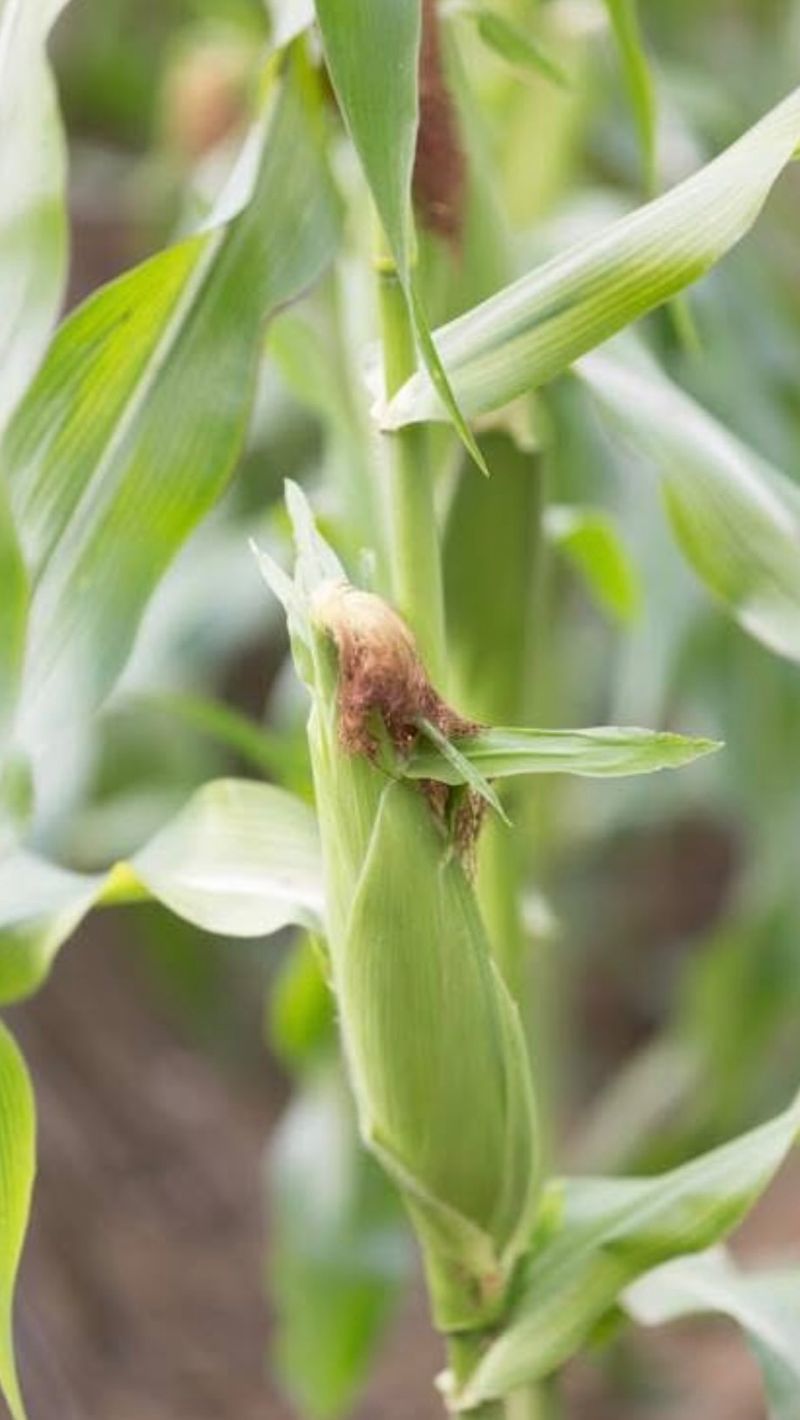
Timing matters a lot when it comes to corn earworm pressure, and late-season plantings often get hit the hardest. As summer moves into August and early September in Pennsylvania, moth populations tend to build up.
More moths in the air means more eggs on silk, and that means more larvae making their way into developing ears.
Corn earworm moths do not spend all their time in Pennsylvania. Many of them migrate northward from southern states as the season progresses.
This migration adds to the local population that has been building since spring. By late summer, the combination of local moths and migrating adults can create significant pest pressure that early-season corn growers may never experience.
Pennsylvania’s agricultural monitoring programs track corn earworm populations throughout the growing season using pheromone traps. These traps attract male moths and give researchers and extension agents a way to measure how many moths are flying at any given time.
Trap counts help growers understand when pressure is high and when to step up their management efforts.
When trap counts are high, the window between egg-laying and larval entry into the ear gets very short. Growers with late-season corn need to be especially alert and ready to respond quickly.
Waiting even a few days too long can mean the difference between a protected crop and one that is heavily infested.
Planting schedules can be adjusted to avoid peak moth flight periods, though this is not always practical. Knowing the seasonal trends in your area helps you make smarter decisions about when to plant and when to be most watchful during the growing season.
Once Caterpillars Enter The Ear, Control Gets Harder
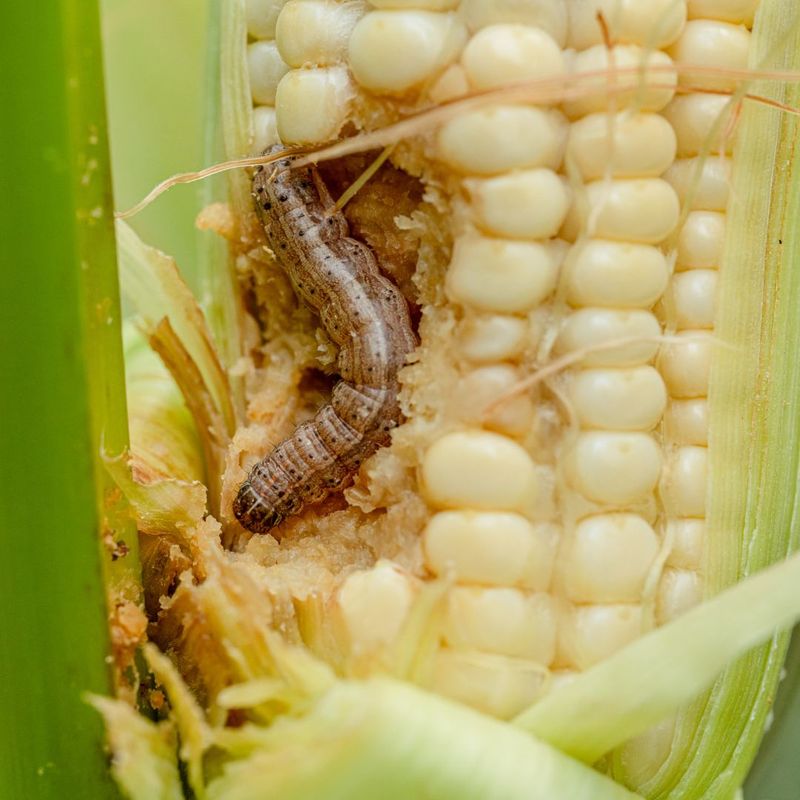
Here is one of the most frustrating truths about managing corn earworm: once the caterpillar is inside the ear, your options shrink dramatically.
The husk that protects the developing kernels also shields the larvae from most sprays and other control measures applied from the outside. Getting ahead of the problem before larvae enter the ear is absolutely critical.
Insecticide sprays can be effective, but only if they are applied during a very specific window. That window is during silking, when eggs are hatching and tiny larvae are still on the surface of the silk before they tunnel into the ear.
Once a larva has burrowed past the husk, contact insecticides have little to no effect because they simply cannot reach the pest.
Timing applications correctly requires regular monitoring. Growers need to know when their corn is silking, how many moths are flying in the area, and how quickly eggs are expected to hatch based on temperature.
Warmer weather speeds up development, which means the timeline from egg to ear entry can be very short during hot spells.
Some growers apply mineral oil directly to the silk tips after pollination is complete. The oil creates an unfavorable environment for young larvae trying to move down the silk.
This method works best for small gardens where individual ears can be treated by hand, and it is a practical option for home growers who want to avoid chemical sprays.
The key takeaway is that prevention and early action are far more effective than trying to manage an infestation after larvae have already settled inside the ear. Acting early always gives you better results with this pest.
Regular Scouting Can Save The Harvest
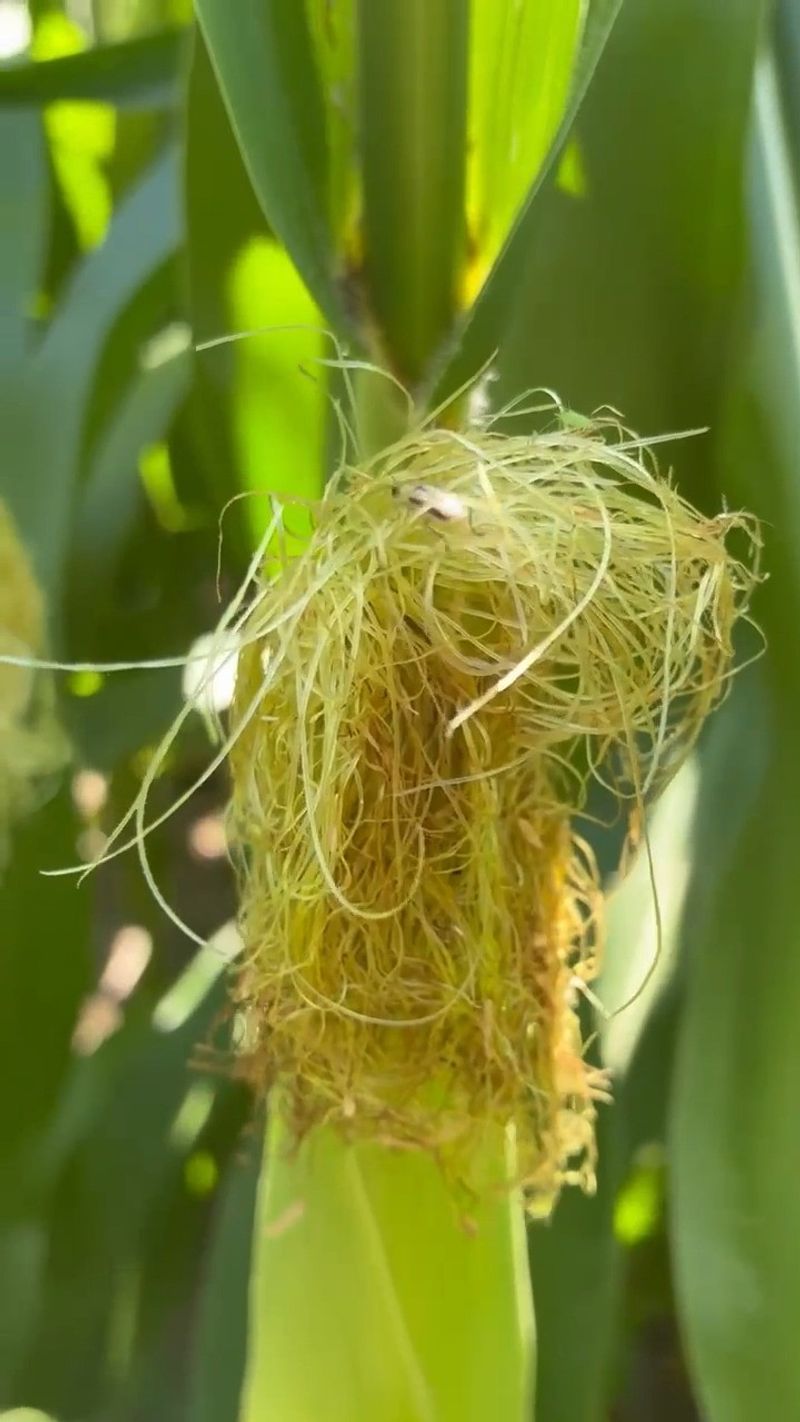
Walking your corn field or garden regularly might seem like a simple task, but it is one of the most powerful tools you have against corn earworm.
Scouting, which means actively looking for signs of pest activity on a consistent schedule, gives you real-time information about what is happening in your crop. That information helps you act at the right moment.
Start checking your corn as soon as silking begins. Look at the silk closely for tiny eggs, which are small, round, and pale in color.
Watch for fresh frass near the silk tips, which signals that larvae have recently hatched and begun feeding. Check multiple plants across different parts of your garden or field to get an accurate picture of overall infestation levels.
Scouting every two to three days during silking is a solid routine for home gardeners. Commercial growers often scout daily when moth trap counts are high.
The more frequently you check, the more likely you are to catch the problem early enough to do something about it before larvae disappear into the ear.
Keep records of what you find each time you scout. Note how many ears show signs of activity, how many moths are caught in traps, and what stage your corn is in.
Over time, these records help you recognize patterns and predict when pressure will be heaviest in future seasons.
Early detection truly does give growers the best possible chance to protect developing ears. A small amount of time spent scouting each week can prevent significant losses at harvest.
Think of it as an investment in your crop that pays off every single time you pull back a husk and find healthy, undamaged corn.