This Is How Texas Gardeners Grow Big Strawberry Harvests In Containers
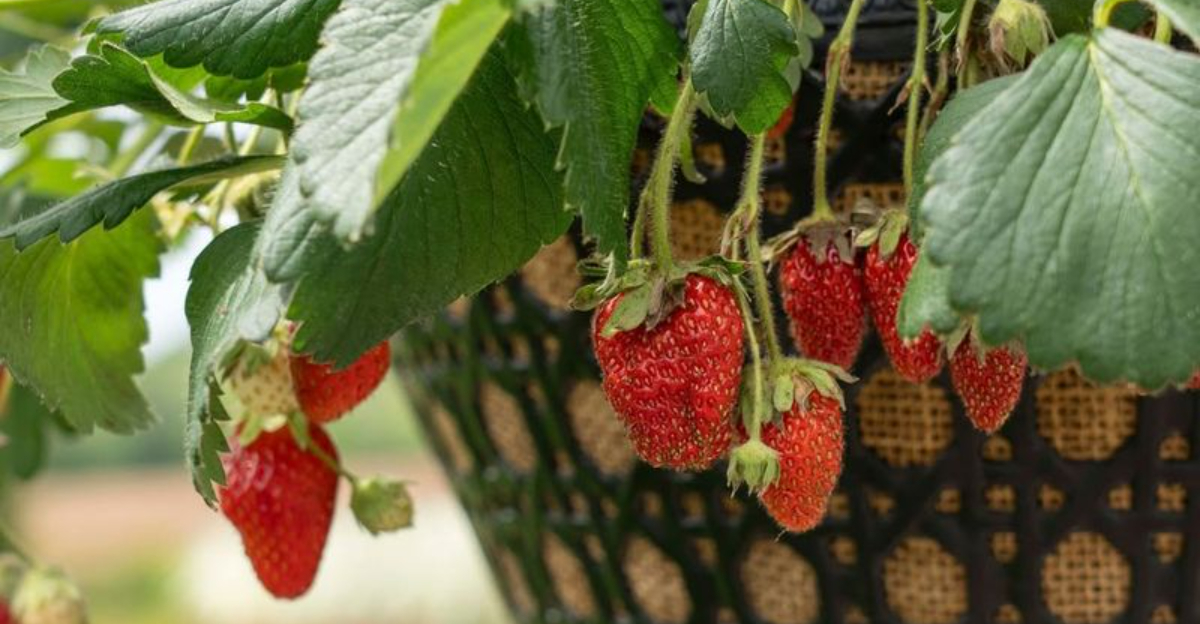
Growing strawberries in Texas can feel tricky, especially when summer heat arrives fast and garden space is limited. That’s why more Texas gardeners are turning to containers to grow sweet, juicy strawberries right at home.
Containers make it easier to control soil, watering, and sunlight, which are all key to getting a bigger harvest. With the right setup, strawberries can thrive on patios, balconies, and even small yards across the state.
Many gardeners are surprised by how productive container-grown strawberries can be. Big strawberry harvests are possible in containers with the right care.
Texas gardeners don’t need large garden beds to enjoy fresh strawberries. Containers make strawberry growing simple, flexible, and rewarding.
When space is tight, containers open the door to better results. Texas weather brings challenges like sudden heat, strong sun, and dry conditions, but containers help gardeners adapt quickly.
Plants can be moved to shade, watered more precisely, and protected when temperatures rise. Choosing the right container, variety, and care routine makes all the difference.
With a little planning and smart growing habits, Texas gardeners can enjoy healthy plants and generous strawberry harvests straight from their containers season after season.
1. Choose Heat-Tolerant Strawberry Varieties That Thrive In Texas Climates
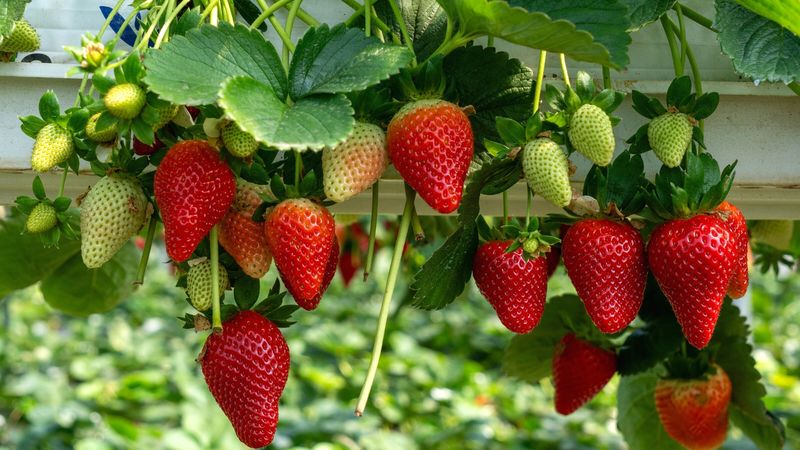
Not all strawberry varieties can handle the intense Texas sun and heat that arrives earlier and lasts longer than in many other regions. Selecting varieties specifically bred for warmer climates gives your container garden a significant advantage from the very start.
Chandler, Sweet Charlie, and Sequoia are three varieties that Texas gardeners consistently recommend because they produce well even when temperatures climb into the 90s during late spring.
June-bearing varieties tend to produce one large crop in spring, which works perfectly for Texas since the harvest happens before the most brutal summer heat arrives.
Everbearing and day-neutral types can provide multiple smaller harvests throughout the growing season, but they require more careful attention during hot spells.
Many experienced Texas container gardeners prefer June-bearing types like Chandler for their reliability and impressive berry size.
When shopping for plants, look for certified disease-free stock from reputable nurseries that understand Texas growing conditions. Starting with healthy plants adapted to heat stress means less frustration and better results.
Local garden centers often carry varieties that perform well in your specific region, whether you are in humid East Texas, the Hill Country, or the drier western areas.
Temperature tolerance matters tremendously because strawberries that wilt and struggle in heat will never produce the large, sweet berries you want.
Heat-tolerant varieties maintain better foliage health, continue flowering during warm periods, and develop fruit with excellent flavor despite challenging conditions.
Choosing the right variety is the foundation that makes all other growing techniques more effective and rewarding.
2. Use Large Containers With Excellent Drainage For Healthy Root Systems
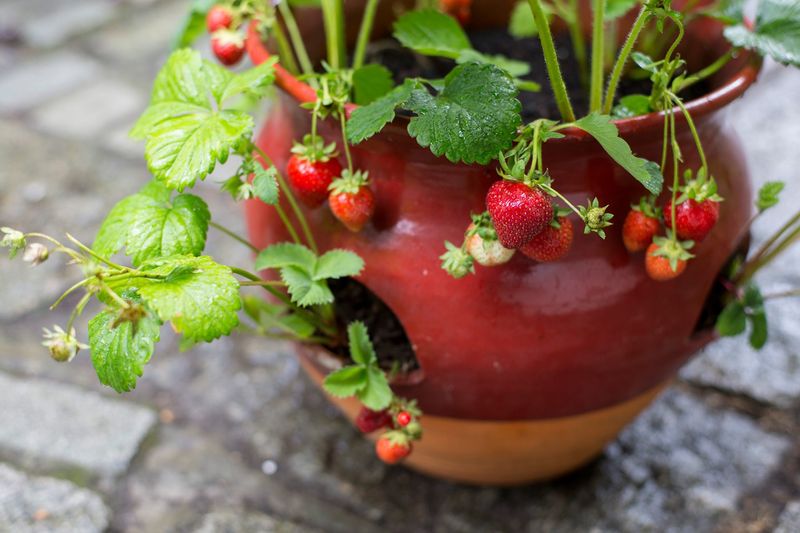
Container size directly impacts how well your strawberry plants grow and produce fruit throughout the season. Each strawberry plant needs adequate space for its root system to spread out and access nutrients and water efficiently.
A container that holds at least two to three gallons of soil per plant provides enough room for robust root development, which translates to stronger plants and bigger harvests.
Drainage holes are absolutely essential because strawberries cannot tolerate waterlogged soil, which leads to root problems and reduced fruit production.
Texas gardeners often deal with heavy afternoon thunderstorms during spring, so excess water must drain away quickly.
Drill additional holes in the bottom of containers if needed, and elevate pots slightly on bricks or pot feet to ensure water flows freely away from the roots.
Wider containers work better than deep, narrow ones because strawberry roots spread horizontally rather than growing straight down. Rectangular planters, window boxes, and wide bowls all work wonderfully for strawberries.
Many Texas gardeners love using fabric grow bags because they provide excellent drainage and air circulation to roots, preventing heat buildup in the container during hot weather.
Material choice matters too, especially in Texas heat. Light-colored containers reflect sunlight and keep soil temperatures cooler than dark pots.
Terra cotta breathes well but dries out quickly, requiring more frequent watering. Plastic containers retain moisture longer, which can be helpful during dry spells but requires careful monitoring to prevent overwatering.
Matching your container type to your watering habits and local climate conditions sets your strawberry plants up for success from planting day forward.
3. Create The Perfect Soil Mix With Proper Nutrients And pH Balance
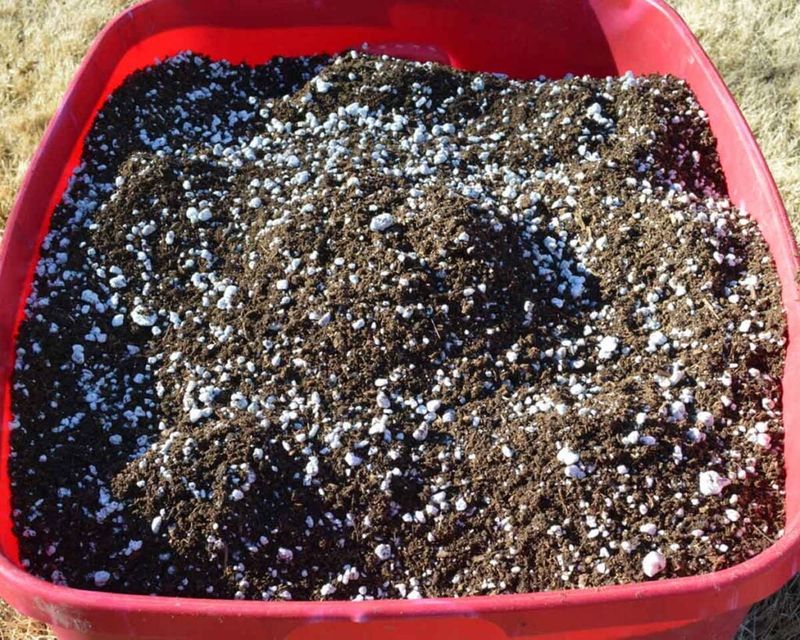
Soil quality makes or breaks container strawberry growing because plants rely entirely on what you provide in that limited space. Regular garden soil compacts too much in containers, restricting root growth and drainage.
Creating a custom mix or purchasing quality potting soil designed for containers gives strawberries the light, fluffy growing medium they need to thrive and produce abundantly.
A winning combination for Texas strawberry containers includes equal parts quality potting mix, compost, and perlite or vermiculite. The potting mix provides structure and basic nutrients, while compost adds organic matter and beneficial microorganisms.
Perlite or vermiculite improves drainage and prevents compaction over time, which is particularly important during the long Texas growing season when containers get watered repeatedly.
Strawberries prefer slightly acidic soil with a pH between 5.5 and 6.5, which allows them to absorb nutrients efficiently.
Testing your soil mix before planting takes just minutes and can be done with inexpensive kits available at garden centers throughout Texas. If your pH is too high, adding a small amount of sulfur or peat moss helps lower it to the ideal range.
Mixing in a slow-release fertilizer formulated for fruiting plants at planting time provides steady nutrition for several weeks. Texas gardeners often add a handful of worm castings to each container because they improve soil structure and provide gentle, long-lasting nutrients.
Refreshing the top few inches of soil with new compost halfway through the growing season gives plants a nutrient boost right when they need it most for fruit production.
4. Master The Watering Schedule To Keep Plants Productive Without Overwatering
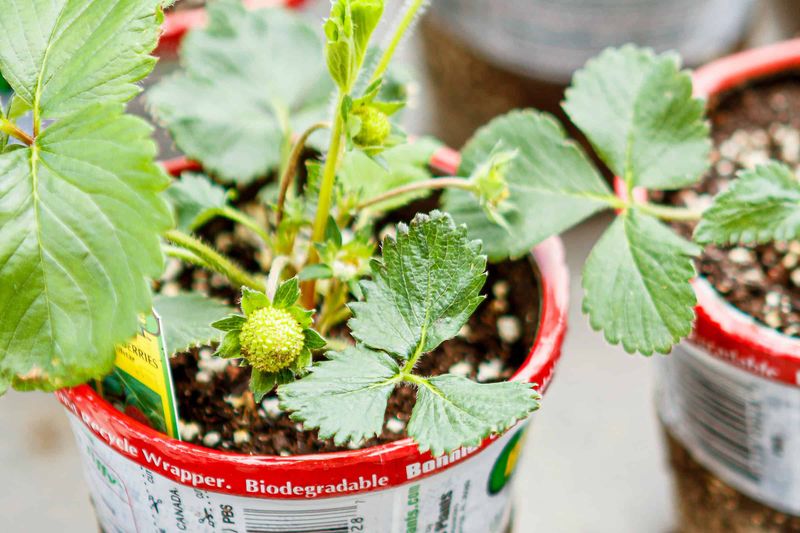
Watering container strawberries correctly requires more attention than in-ground plants because containers dry out faster, especially during Texas heat waves.
Strawberries need consistent moisture to develop sweet, juicy berries, but too much water causes root problems and encourages disease. Finding the right balance is one of the most important skills Texas container gardeners develop.
Checking soil moisture daily by sticking your finger about two inches into the soil tells you whether watering is needed. If the soil feels dry at that depth, it is time to water thoroughly until water runs from the drainage holes.
During cooler spring weather, this might mean watering every two to three days, but in late May and June, containers may need water every single day or even twice daily during extreme heat.
Early morning watering works best because it allows foliage to dry before evening, reducing disease risk. Watering at the soil level rather than overhead keeps leaves dry and prevents fungal issues that thrive in humid Texas conditions.
Drip irrigation or soaker hoses work wonderfully for container strawberries if you have multiple pots to manage.
Mulching the soil surface with a thin layer of straw or shredded leaves helps retain moisture and keeps soil temperatures more stable during temperature swings. This simple step can reduce watering frequency and protect roots from heat stress.
During particularly hot stretches common across Texas in late spring, moving containers to locations with afternoon shade helps reduce water stress and keeps plants producing longer into the season.
5. Provide Optimal Sunlight Exposure While Protecting From Extreme Afternoon Heat
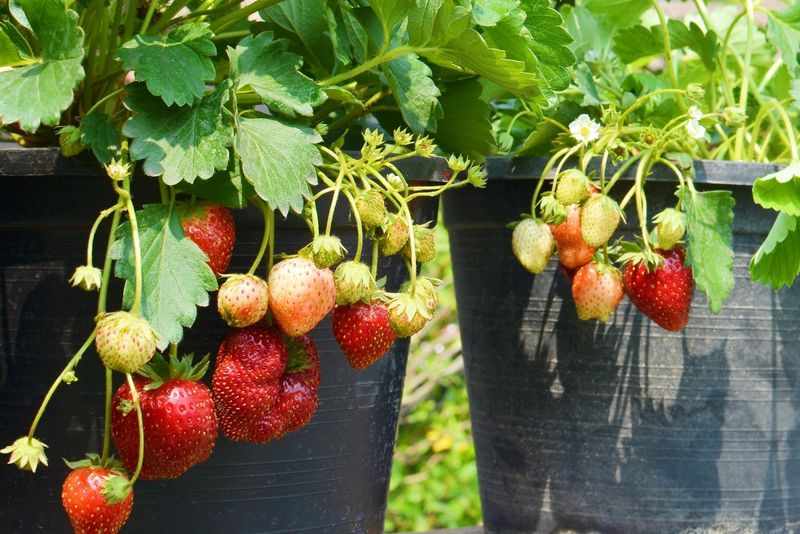
Strawberries are sun-loving plants that need plenty of light to produce sweet, flavorful berries, but Texas afternoon sun can be overwhelming even for heat-tolerant varieties.
Balancing light exposure throughout the day maximizes fruit production while preventing heat stress that reduces yields.
Most Texas gardeners find that six to eight hours of sunlight with some afternoon protection works perfectly for container strawberries.
Positioning containers where they receive full morning sun but get shade during the hottest part of the afternoon creates ideal growing conditions. Morning light is less intense and helps plants photosynthesize efficiently without overheating.
East-facing patios, porches, or balconies work wonderfully for this purpose and are common in homes across Texas cities and suburbs.
The mobility of containers is one of their greatest advantages in the Texas climate. As seasons progress and the sun angle changes, you can move pots to better locations.
During mild March and April weather, containers can handle more direct sun, but by May, shifting them to spots with dappled afternoon shade helps maintain productivity.
Light-colored walls and fences reflect additional light onto plants without adding heat, effectively extending productive growing time.
Some creative Texas gardeners use shade cloth suspended above containers during the hottest weeks, filtering intense rays while still allowing plenty of light through.
This technique extends the harvest season by several weeks in many Texas regions. Monitoring your plants for signs of heat stress like wilting leaves or slowed growth helps you adjust placement before problems affect fruit production.
6. Fertilize Regularly With Balanced Nutrients Throughout The Growing Season
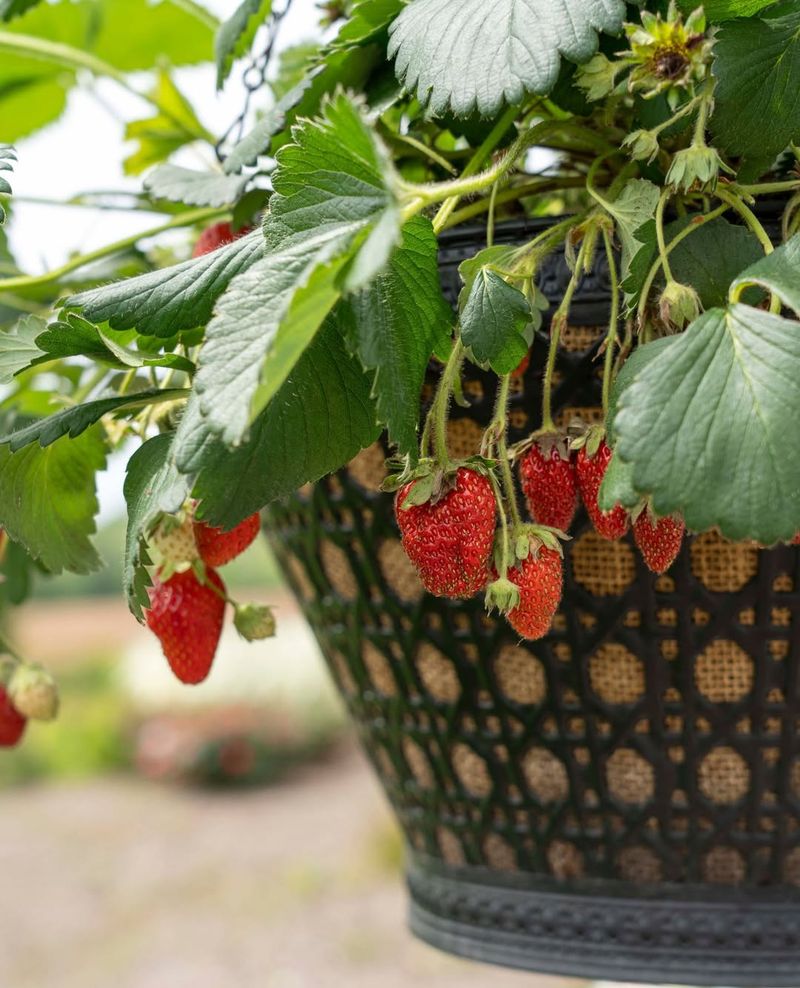
Container-grown strawberries need regular feeding because nutrients wash out of pots much faster than from garden beds. Every time you water, small amounts of nutrients drain away, so replenishing them consistently keeps plants healthy and productive.
A well-fed strawberry plant produces more flowers, sets more fruit, and develops larger, sweeter berries than plants that struggle with nutrient deficiencies.
Starting two weeks after planting, apply a balanced liquid fertilizer diluted to half strength every two weeks throughout the growing season. Fertilizers with equal or near-equal numbers like 10-10-10 or 5-5-5 work well for strawberries.
Many Texas gardeners prefer organic options like fish emulsion or seaweed extract because they provide nutrients while also improving soil health and beneficial microbe populations.
When flowers start appearing, switching to a fertilizer slightly higher in phosphorus and potassium than nitrogen supports fruit development. Too much nitrogen late in the season produces lush foliage at the expense of berries.
Reading plant signals helps you adjust feeding schedules based on what you observe rather than following a rigid calendar.
Foliar feeding by spraying diluted fertilizer directly on leaves provides a quick nutrient boost that plants can absorb immediately. This technique works especially well during the rapid fruit development phase when strawberries need extra resources.
Compost tea made from quality compost is another favorite among Texas organic gardeners because it provides gentle nutrition plus beneficial organisms that protect plants from diseases common in humid conditions found throughout much of Texas during spring growing season.
7. Practice Proper Pruning And Runner Management For Maximum Fruit Production
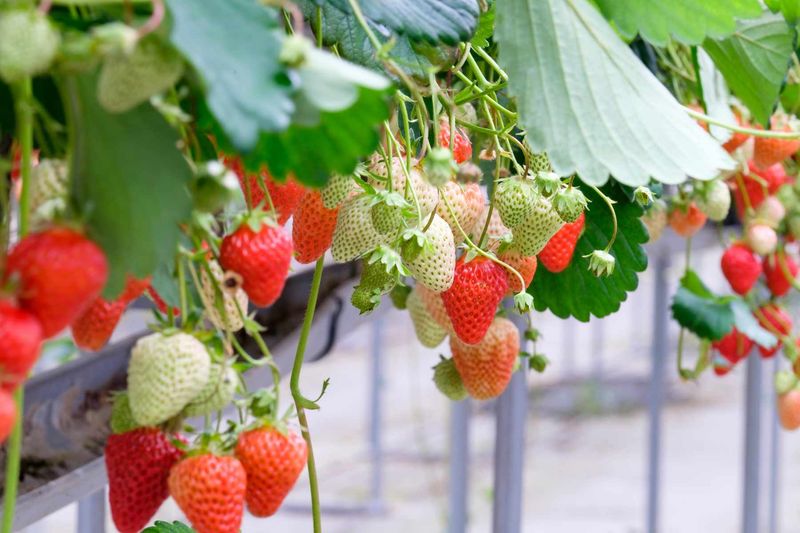
Strawberry plants naturally produce runners, which are long stems that develop new baby plants at their tips. While runners are how strawberries reproduce in nature, they drain energy away from fruit production in container gardens.
Managing runners strategically helps your plants focus energy on growing big, delicious berries rather than expanding their territory.
Removing runners as soon as you notice them keeps the mother plant productive throughout the season. Simply snip them off at the base with clean scissors or pruning shears.
This redirection of energy results in noticeably larger berries and longer harvest periods, which Texas gardeners appreciate since the productive season can be relatively short before summer heat arrives.
Some experienced Texas container gardeners allow one or two runners per plant to develop if they want to propagate new plants for the next season.
These baby plants can be rooted in small pots placed next to the mother plant while still attached. Once rooted, cut the runner connecting them, and you have free new plants ready for fall planting.
Removing old, yellowing leaves throughout the growing season improves air circulation and reduces disease pressure in the humid Texas climate.
Better airflow around plants helps foliage dry faster after watering or rain, preventing fungal issues. Trim off any damaged or diseased leaves immediately to prevent problems from spreading.
Keeping plants tidy and well-maintained makes it easier to spot developing berries and harvest them at peak ripeness when they offer the best flavor and sweetness that makes homegrown strawberries so much better than store-bought ones.