This Is Why Every Arizona Yard Needs A Palo Verde By The Patio
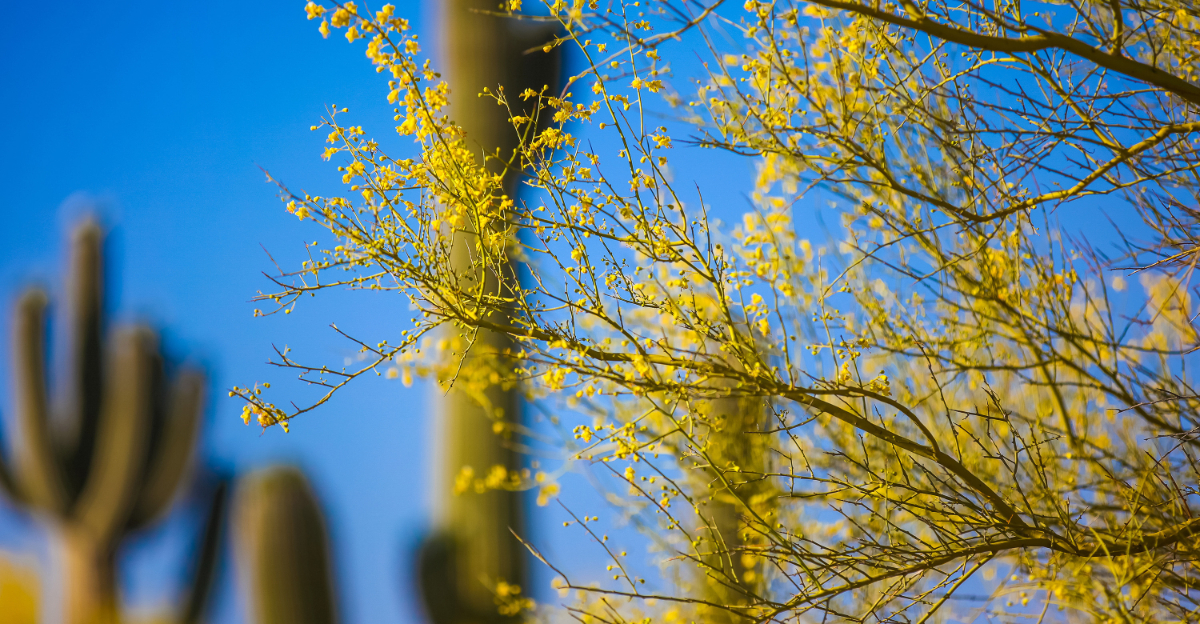
Some trees just decorate a yard. The Palo Verde rewrites it, turning bare desert dirt into a living splash of gold every spring. Arizona homeowners who plant one aren’t just adding shade. They’re adding a mood.
Here’s the twist: this tree thrives on neglect. Forget the watering schedule and the constant fussing, and it still shows up looking like it belongs on a postcard. Try that with a maple.
Underneath its canopy, temperatures drop and conversations linger longer than planned. The branches filter sunlight instead of blocking it, so your patio stays bright, breezy, and cool all at once, a rare combination in a desert climate.
By the time those yellow blooms hit their peak, neighbors will be asking questions you’ll be more than happy to answer. Keep reading, because the reasons this tree belongs by your patio go well beyond its looks.
Filtered Shade Makes Palo Verde Perfect For Patio Comfort
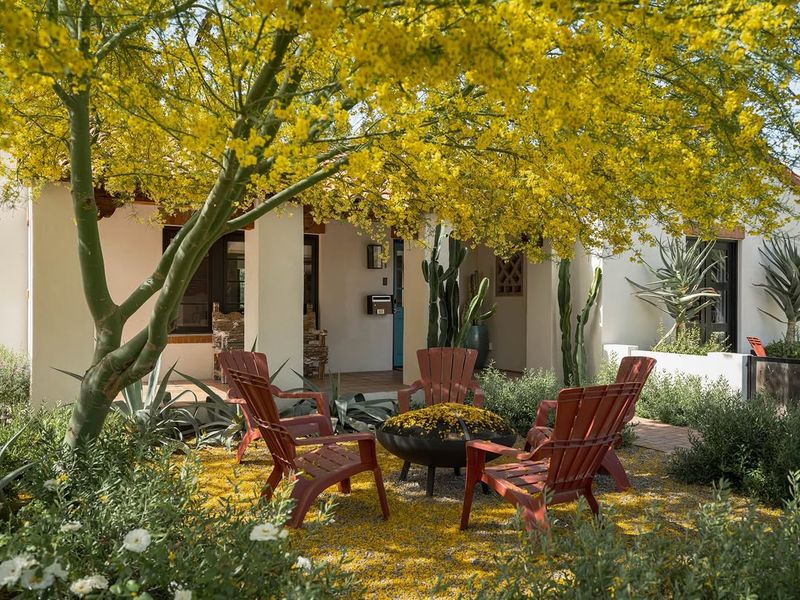
Sitting under a Palo Verde on a hot afternoon feels like nature turned the thermostat down. The tree does not block the sky entirely, and that is exactly the point.
Filtered shade is gentler than dense shade from a solid canopy. It lets soft, broken light through while still cutting the harsh intensity of direct desert sun.
Research on shade trees shows that surface temperatures underneath a canopy can drop by as much as 20 degrees Fahrenheit. That kind of cooling makes your patio furniture touchable again after noon.
The Palo Verde’s small leaflets and open branch structure scatter sunlight naturally. You get a soft, shifting pattern of light and shadow that feels alive and refreshing.
Dense-canopy trees often create a dark, heavy feel that can make a patio feel closed in. The Palo Verde keeps things bright and airy while still shielding you from the worst of the heat.
Potted plants under the tree also benefit from the filtered light. Succulents, herbs, and container flowers can thrive in that protected zone without getting scorched.
The cooling effect is not just about comfort. Shaded patios mean lower indoor temperatures too, since less heat radiates through nearby walls and windows.
Arizona yards dealing with brutal summer afternoons benefit hugely from this kind of smart, natural cooling. A Palo Verde by the patio is one of the most effective and beautiful solutions you can plant.
Open Canopy Structure Lets Cooling Breezes Pass Through
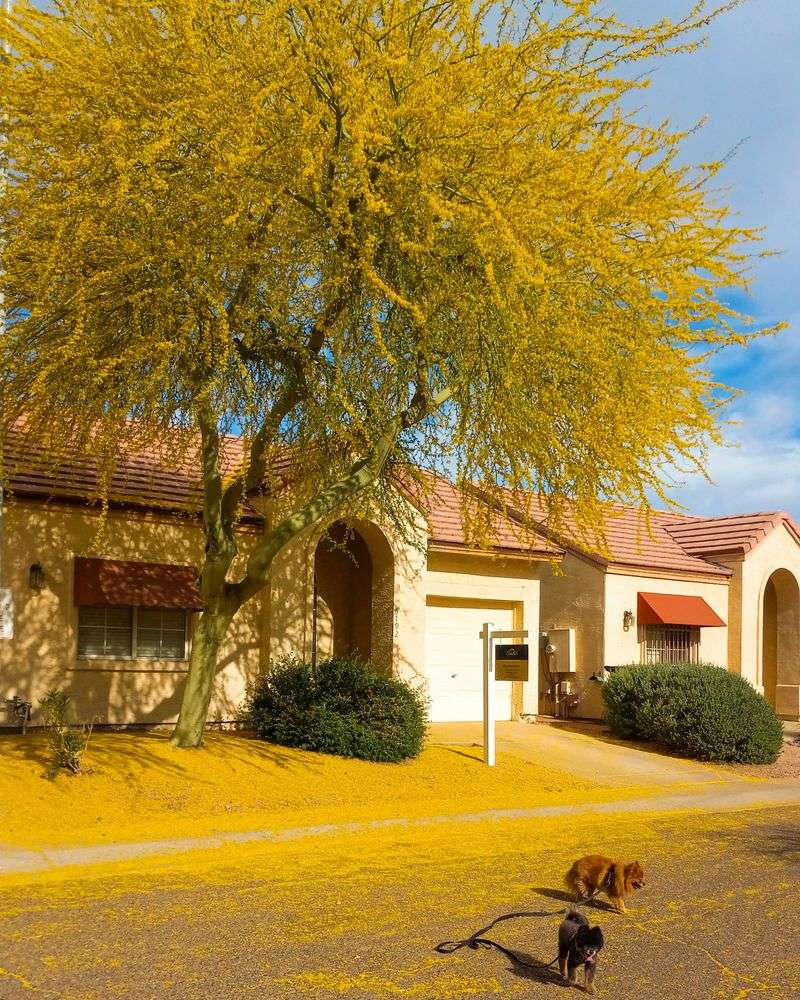
Most trees act like walls against the wind, but the Palo Verde works more like a screen door. Air flows right through its open canopy with very little resistance.
That open structure is one of the most underrated features of this native tree. When an afternoon breeze rolls in, nothing stops it from reaching your patio chairs.
The branches of a Palo Verde are thin, flexible, and widely spaced. There is plenty of room between them for air to move freely in any direction.
A dense tree like a mulberry or ash can actually trap heat around a patio by blocking airflow. The Palo Verde avoids that problem entirely because of how it naturally grows.
Your Arizona Garden Changes Every Week. Your Plan Should Too.
Gardening in Arizona changes quickly throughout the season. Every Friday you’ll receive a simple weekly plan showing exactly what to plant, prune, fertilize, harvest, and protect so you never miss the right timing.
Patios shaded by Palo Verdes tend to feel noticeably cooler than those shaded by solid-canopy trees. The combination of shade and airflow is a powerful one-two punch against desert heat.
The tree also sways beautifully in the wind, creating a gentle visual movement that adds life to your outdoor space. Watching those green branches shift in the breeze is genuinely relaxing.
Even in calm conditions, the open structure prevents heat from building up underneath the canopy. Hot air rises and escapes easily rather than pooling around your seating area.
Choosing a tree that works with the breeze instead of against it is smart desert landscaping. The Palo Verde makes that choice easy and gorgeous at the same time.
Low Water Needs Suit This Tree To Desert Patios
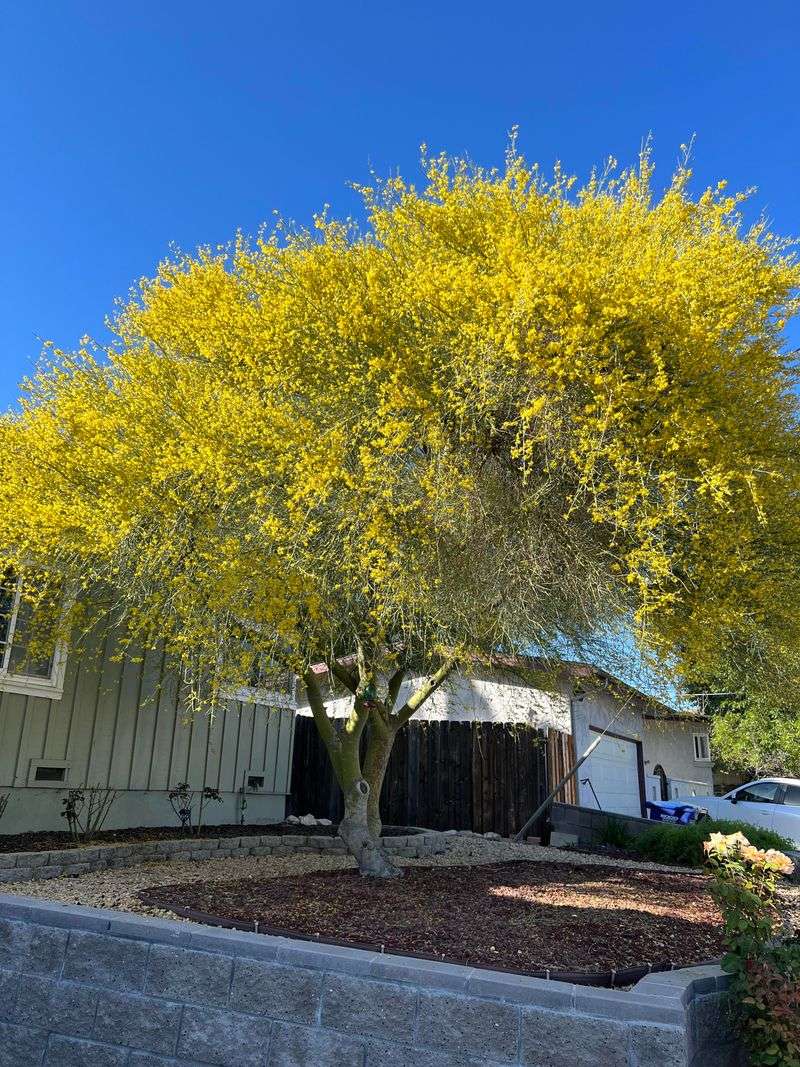
One of the best things about the Palo Verde is how little it asks from you. Once established, this tree survives on rainfall alone in many parts of the state.
Most shade trees demand regular deep watering to stay healthy in the desert heat. The Palo Verde flips that script entirely, drawing on deep soil moisture and drought-adapted roots.
The green bark of the tree is not just pretty. It actually performs photosynthesis, which means the tree can keep producing energy even when it drops its leaves during dry spells.
That green-bark trick is uncommon in the plant world and gives the Palo Verde a serious survival advantage. It stays productive and healthy even when water is scarce.
For homeowners watching their water bills climb each summer, this tree is a genuine relief. Planting a Palo Verde means you are not adding a major water demand to your yard.
Established trees typically need deep watering only a few times per month during the hottest stretch of summer. Young trees need a bit more attention, but they establish quickly.
Drip irrigation works well for the first year or two while roots spread out. After that, many homeowners simply let the monsoon season handle most of the watering work.
Saving water while gaining shade and beauty is the kind of deal that feels almost too good. The Palo Verde delivers on every part of that promise, season after season.
Spring Blooms Add Color Without Heavy Leaf Litter
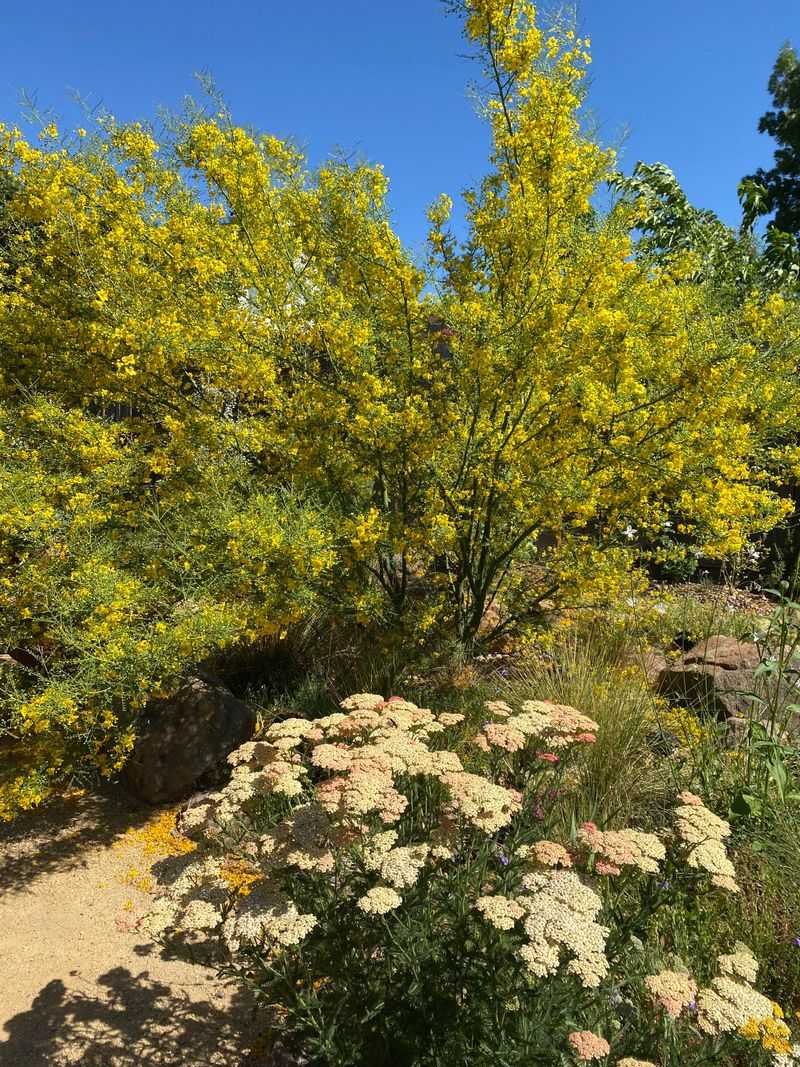
Every spring, the Palo Verde puts on a show that genuinely stops people in their tracks. The entire tree erupts in bright yellow blooms that are almost impossible to ignore.
For a few weeks in April and May, this tree looks like it is made of sunshine. The flowers blanket every branch in a dense, vivid yellow that lights up the whole yard.
After the blooms fade, the tree does not dump a heavy load of leaves across your Arizona patio. The tiny leaflets that do fall are so small they barely register as cleanup work.
Compare that to a block-away neighbor with a large ash tree dropping thick leaf carpets every season. The Palo Verde is dramatically easier to maintain around a patio or pool area.
The blooms themselves do drop, but they are light and dry out quickly in the desert air. A quick sweep or a single pass with a leaf blower handles it in minutes.
Pollinators go absolutely wild for those yellow flowers. Bees and butterflies visit regularly during bloom season, turning your patio into a front-row seat for nature.
The seed pods that follow the flowers are also manageable and add an interesting texture to the tree’s look. Some wildlife species feed on those pods, adding even more backyard biodiversity.
Getting bold seasonal color without the heavy cleanup burden is a rare combination in desert landscaping. The Palo Verde pulls it off with a kind of effortless desert charm.
Fast Growth Delivers Shade Sooner Than Other Desert Trees
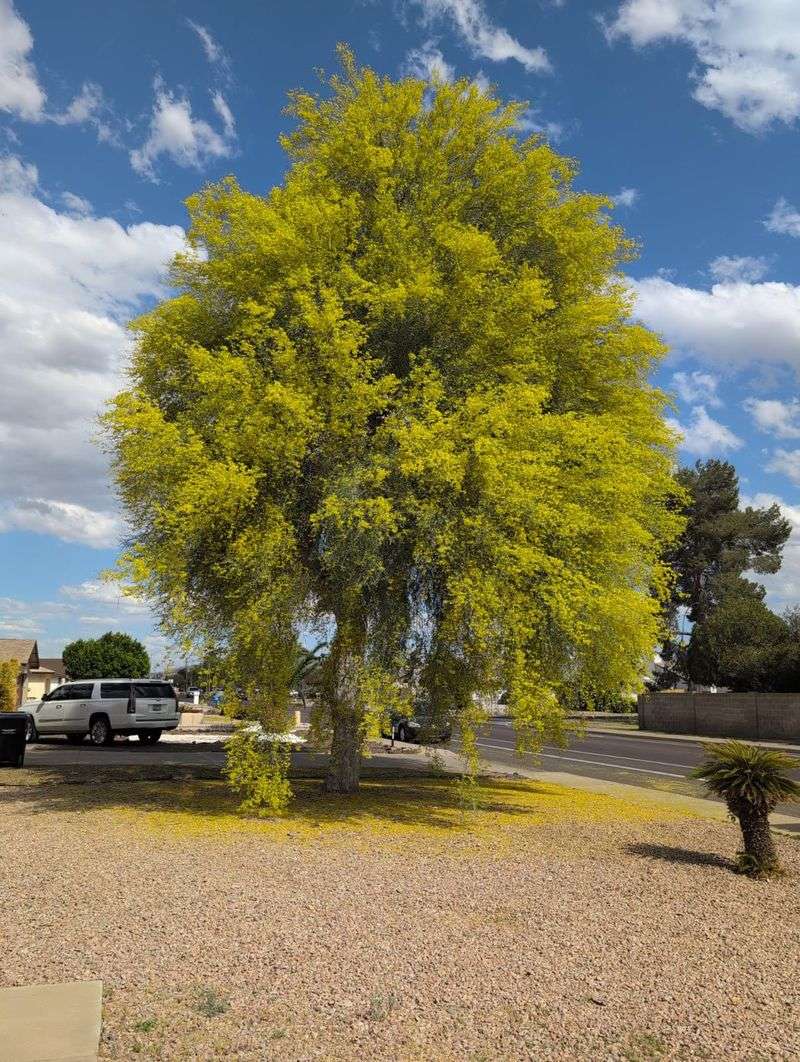
Waiting years for a tree to grow large enough to shade your patio is genuinely frustrating. The Palo Verde skips most of that waiting period with impressively fast growth.
Under good conditions, a Palo Verde can grow two to three feet per year. That pace puts usable shade over your seating area much faster than slower-growing desert alternatives.
Mesquite trees grow reasonably fast too, but they often need more water and pruning to stay tidy. The Palo Verde tends to keep a cleaner shape with less intervention needed.
Planting a young Palo Verde today means you could be sitting in real shade within three to five years. That timeline is genuinely encouraging compared to slower ornamental trees.
The Blue Palo Verde is especially known for its vigorous growth habit, while the smaller Foothills Palo Verde offers a slower, more compact alternative. Either variety works well near a patio, depending on the amount of space available.
Faster growth also means the tree starts offering ecological benefits sooner. Birds begin nesting, pollinators start visiting, and the cooling effect kicks in before you expect it.
Watering a young tree deeply and infrequently encourages roots to grow down rather than spreading shallow. Deep roots lead to a stronger, more wind-resistant tree as it matures.
Getting results quickly without sacrificing beauty or toughness is exactly what busy homeowners want from a landscape tree. The Palo Verde delivers that faster than almost anything else suited to desert conditions.
Placement Tips For Maximum Patio Cooling Benefit
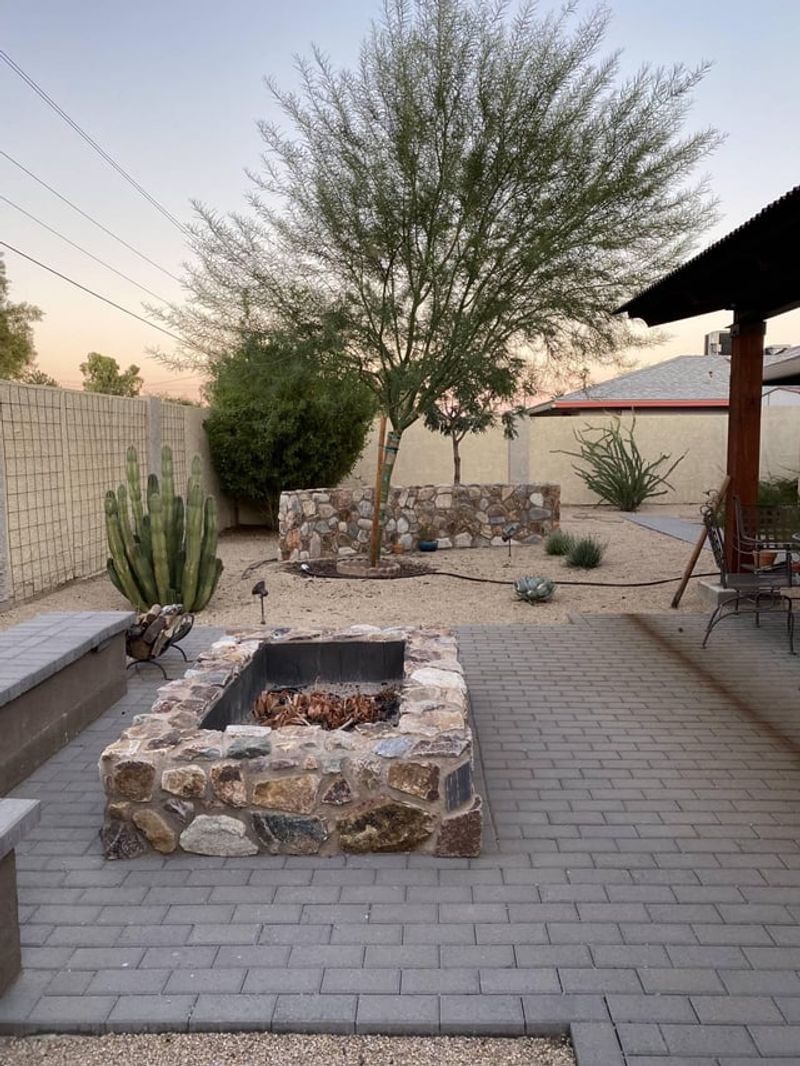
Knowing where to plant your Palo Verde makes a significant difference in how much cooling you actually get. Smart placement turns a good tree into a great one.
The southwest side of your patio is the most strategic spot for a shade tree in the desert Southwest. That position blocks the brutal late-afternoon sun that hits hardest between 2 and 6 p.m.
A tree planted on the west side alone will shade you in the afternoon but miss the morning heat. Pairing a southwest placement with a smaller shrub or shade structure on the east side covers more hours.
Keep the trunk at least eight to ten feet from the patio edge and any structures. That spacing gives roots room to spread without lifting pavers or cracking walls over time.
Avoid planting directly under roof overhangs or near low eaves. The Palo Verde needs vertical space to reach its natural height without constant pruning battles against your roofline.
Planting two Palo Verdes at diagonal corners of a patio creates overlapping shade zones. That setup can nearly eliminate direct sun exposure during peak afternoon hours in summer.
Check the mature size of your specific variety before you plant. The Blue Palo Verde tops out around 30 feet, while the Desert Museum hybrid typically reaches 20 to 25 feet, making it ideal for smaller patios.
A well-placed Palo Verde by the patio is one of the smartest investments an Arizona homeowner can make for long-term outdoor comfort and beauty.